

Volume 14, Issue 2 (Spring 2026)
PCP 2026, 14(2): 185-196 |
Back to browse issues page




Download citation:
BibTeX | RIS | EndNote | Medlars | ProCite | Reference Manager | RefWorks
Send citation to:


BibTeX | RIS | EndNote | Medlars | ProCite | Reference Manager | RefWorks
Send citation to:
Mahmoudi Mehr M, Dasht Bozorgi Z, Jayervand H, Talebzadeh Shoushtari M. Metacognitive and Mindfulness Training Effects on Academic Boredom and Rumination in Procrastinating Students. PCP 2026; 14 (2) :185-196
URL: http://jpcp.uswr.ac.ir/article-1-1065-en.html
URL: http://jpcp.uswr.ac.ir/article-1-1065-en.html
Mostafa Mahmoudi Mehr1 

 , Zahra Dasht Bozorgi *2 , Hamdollah Jayervand3 , Marzieh Talebzadeh Shoushtari1
, Zahra Dasht Bozorgi *2 , Hamdollah Jayervand3 , Marzieh Talebzadeh Shoushtari1
1- Department of Psychology, Ahv.C., Islamic Azad University, Ahvaz, Iran
2- Department of Psychology, Ahv.C., Islamic Azad University, Ahvaz, Iran ,zdashtbzrgi@gmail.com
3- Department of Psychology, Il.C., Islamic Azad University, Ilam, Iran
2- Department of Psychology, Ahv.C., Islamic Azad University, Ahvaz, Iran ,
3- Department of Psychology, Il.C., Islamic Azad University, Ilam, Iran
Full-Text [PDF 824 kb]
(94 Downloads)
| Abstract (HTML) (738 Views)
Full-Text: (74 Views)
Introduction
The developmental period of adolescence is universally recognized as a crucial yet highly vulnerable, phase marked by significant emotional and cognitive stressors (Baker et al., 2025). For high school students, this period is compounded by the intense pressure of preparing for higher education and navigating a complex academic landscape (Saqib et al., 2023). Consequently, the psychological and scholastic challenges faced by these students consistently remain a central focus for parents and educational authorities. Among these challenges, academic procrastination stands out as a prevalent and heterogeneous psychological phenomenon, defined by a complex interplay of cognitive, emotional, and behavioral components (Rezaei & Zebardast, 2021). At its core, procrastination involves the voluntary and deliberate delay of important tasks, despite the individual being fully aware of the potential negative and often irreversible consequences of such behavior. In the academic domain, this manifests as irrational delays in completing schoolwork, ultimately leading to disinterest and academic underachievement (González-Brignardello et al., 2023). Procrastination is recognized as a significant predictor of educational quality, given its association with a host of negative outcomes, including anxiety, tension, depression, low academic self-confidence, and aggressive interpersonal behaviors (Karimi Moonaghi & Baloochi Beydokhti, 2017). Furthermore, it has been demonstrated to reduce both the quality and quantity of learning, and is often linked to underdeveloped study skills, poor organizational capacity, and increased stress that can precipitate poor performance or even lead to students abandoning their studies altogether (Rad et al., 2025). Identifying the roots and consequences of academic procrastination is therefore paramount to formulating effective preventive and therapeutic strategies that can enhance the overall quality of education and foster resilient learning environments.
Students’ daily academic experiences expose them to persistent challenges and pressures, leading to a host of emotional and cognitive difficulties. One pervasive issue experienced by students worldwide is academic boredom, a frequent obstacle to scholastic success that can manifest in observable behaviors, such as failing grades, grade repetition, and voluntary or involuntary school dropout (Bekker et al., 2022). Psychologically, boredom is conceptualized as a multi-component emotion encompassing affective (unpleasant and distressing feelings), cognitive (altered perception of time), physiological (reduced physical arousal), and motivational (an urge to change the activity or escape the situation) components (Mombeini et al., 2025). Although seemingly transient, the reported outcomes of academic boredom are alarming. Researchers have identified detrimental effects on both physical and mental well-being, demonstrating links with negative conditions such as stress, depression, anxiety, anger, aggression, substance abuse, and school attrition (Farina et al., 2025). Understanding the precursors and ramifications of academic boredom is crucial for developing appropriate coping mechanisms to revitalize student motivation and interest in learning.
Another critical psychological sequela in this population is rumination, which typically originates when adolescents struggle with effective emotional regulation, thereby increasing their vulnerability to disorders, such as depression and anxiety (Young et al., 2019). Rumination is defined as an extended and often maladaptive focus on the causes, meanings, and consequences of negative emotions, typically centered on the self (Mousavi et al., 2023). When negative thoughts persist and are coupled with low self-esteem, they create a persistent, negative thought loop that defines the ruminative process. This thought pattern is a major risk factor, capable of predicting the onset of depressive episodes and other psychological disorders (Schweizer et al., 2018; Amani & Heidari, 2025). In a school context, rumination can take various forms, such as continuously replaying academic failures or social worries (Leigh et al., 2025). As an inefficient coping mechanism, it not only disrupts concentration and learning process but also significantly exacerbates stress, anxiety, and depression levels among students (Guo et al., 2025). Psychological interventions targeting rumination are therefore necessary to reinforce emotional regulation skills and help students regulate their attentional focus effectively.
To address the intertwined issues of academic procrastination, boredom, and rumination, researchers have explored various therapeutic approaches. Mindfulness training, derived from cognitive behavioral principles and regarded as a core component of third-wave psychotherapeutic models, has recently gained prominence (Ahanian Moghaddam et al., 2025). Mindfulness is defined as the non-judgmental, present-moment awareness of one’s experience and an intentional self-regulation of attention directed toward that experience (Chems-Maarif et al., 2025). For students with academic procrastination, this approach serves as a potent strategy against delayed behaviors and motivational deficits (Rad et al., 2023). By teaching them to focus on the present moment and non-judgmentally recognize their thoughts and emotions, mindfulness encourages students to confront, rather than avoid, responsibilities (Saadipour et al., 2020). Studies consistently support the efficacy of this approach, demonstrating its ability to reduce rumination and test anxiety, mitigate academic boredom, improve school well-being, and foster academic hope and self-efficacy (Abedi et al., 2023; Babadi et al., 2024).
A parallel and equally robust approach is metacognitive strategies training, which lies at the heart of educational cognitive psychology by emphasizing the skill of “learning how to learn” (Stanton et al., 2021). Metacognition refers to an individual’s knowledge and understanding of their own cognitive system and how it operates, essentially “cognition about cognition” (Ghahvechi-Hosseini et al., 2015). This knowledge enables learners to assess their learning progress, utilize information effectively to achieve goals, and judiciously select and apply learning strategies. For procrastinating students, metacognitive training plays a vital role in identifying and managing their tendency toward delays (Zhianifard et al., 2024). Research further indicates that heightened metacognitive awareness predicts better academic adjustment and outcomes, mediated by factors such as internal locus of control (Jain et al., 2017; Jain et al., 2018). By utilizing techniques such as systematic planning, self-assessment, and goal refinement, students enhance their self-awareness and self-regulation (Rashidzade et al., 2019). Prior research has highlighted the successful application of metacognitive training in improving students’ interpersonal emotional regulation, reducing cognitive errors, academic self-handicapping, and significantly decreasing rumination while boosting academic self-efficacy (Cécillon et al., 2024).
Despite substantial evidence for the independent efficacy of mindfulness training (a third-wave approach emphasizing emotion and attentional regulation) and metacognitive strategies training (a cognitive-behavioral approach targeting thought and learning processes), direct head-to-head comparisons remain scarce. Students with academic procrastination commonly exhibit concurrent deficits in emotional management (leading to rumination) and learning process management (contributing to boredom). A direct comparison of these paradigms is thus essential to determine whether one offers superior or complementary benefits in addressing this dual impairment, thereby informing optimal, resource-efficient interventions in educational settings. Given this necessity, the primary aim of the present study was to compare the effectiveness of metacognitive strategies training and mindfulness training on reducing academic boredom and rumination in male high school students struggling with academic procrastination.
Materials and Methods
Design
This study employed a randomized controlled trial design, utilizing a pre-test-post-test format with a one-month follow-up assessment.
Participants
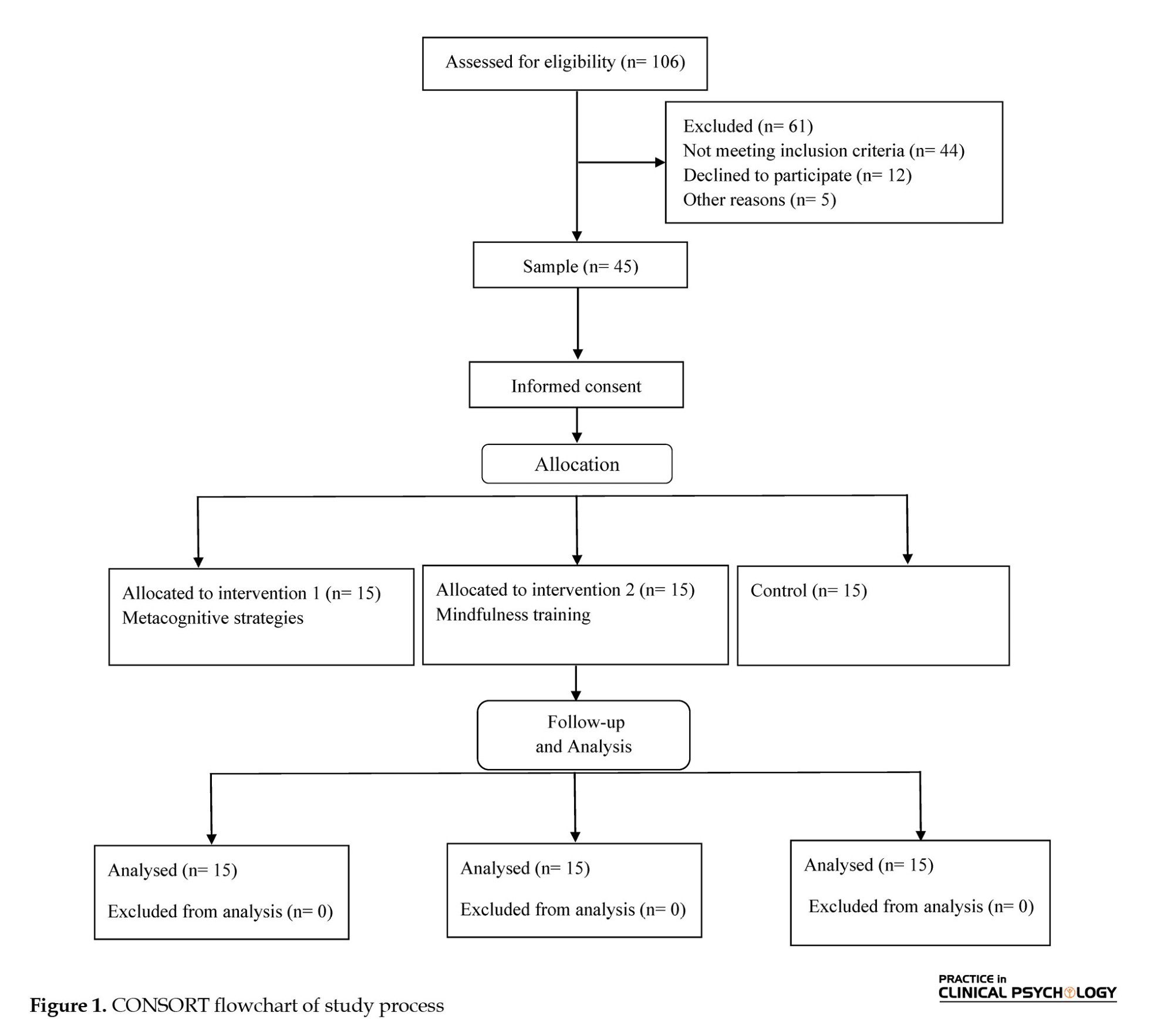
The statistical population comprised all male high school students in Dezful County, Iran, during the 2024–2025 academic year. Through cluster random sampling, two schools were initially selected, and within these, random classrooms were chosen. A total of 45 students who scored high on the academic procrastination measure, indicating pronounced academic procrastination, were recruited as the final sample. Following recruitment, participants were randomly allocated using simple random assignment (a lottery method) to one of three groups: metacognitive strategies training (n=15), mindfulness training (n=15), or the control group (n=15) (Figure 1). The modest sample size (n=45; n=15 per group), while sufficient to detect large effects as observed post hoc (achieved power >0.99 for key interactions assuming η²=0.76–0.87), limits generalizability to broader populations. The inclusion criteria included male students aged 13-15, enrollment in high school, and an elevated score on the procrastination assessment. The exclusion criteria included having a pre-existing clinical diagnosis of a major psychiatric disorder, concurrent participation in other psychological interventions, or absence from more than two training sessions. All procedures adhered to the ethical standards stipulated by the institutional review board.
Instruments
Dutch boredom scale (DUBS): The construct of academic boredom was assessed using an adapted version of the DUBS, originally developed by Reijseger et al. (2013) to measure boredom across five facets. The version used here comprises 8 items specifically adapted for the academic context to measure the three core factors of academic boredom: exhaustion, cynicism, and inefficacy. Responses are recorded on a 5-point frequency scale (e.g., 1=never to 5=always). Total scores range from 8 to 40, with scores above the third quartile indicating high levels of academic boredom. The original DUBS has sound psychometric properties (alpha=0.82) (Rimaz et al., 2020). In the current study, the Cronbach’s α for this adapted scale was found to be high (alpha=0.84), confirming its reliability.
Rumination-response scale (RRS): The RRS, developed by Nolen-Hoeksema et al. (2008), assesses the tendency to focus passively and repeatedly on distress symptoms, their causes and consequences. The RRS is a 22-item self-report questionnaire with subscales including Brooding and Reflection. Participants rate how often they engage in each response when feeling sad, using a 4-point scale (1=almost never to 4=almost always). The total score ranges from 22 to 88. Higher scores are interpreted as higher levels of maladaptive rumination and psychological distress. Prior research with Iranian student samples consistently reports high reliability (alpha=0.91) (Aghebati et al., 2020). In this study, the RRS also demonstrated excellent internal consistency, with a Cronbach’s α of 0.92.
Procedure
Data were collected in three distinct phases: Pre-test, post-test, and follow-up. In the initial phase, all 45 selected participants, irrespective of group assignment, completed the three research instruments: The procrastination assessment scale–students, the DUBS, and the RRS. Following the pre-test, the experimental groups commenced their respective intervention programs immediately, while the control group received no intervention during this period. Both intervention groups were led by a trained clinical psychologist. The mindfulness training group received eight weekly 90-minute sessions, while the metacognitive strategies group received ten weekly 90-minute sessions; this difference in session number represents a potential dosage confound that should be considered when interpreting equivalence of outcomes. Upon the conclusion of the intervention sessions, all three groups completed the instruments again (post-test phase). To assess the long-term durability of the observed treatment effects, a final data collection phase (follow-up) was conducted one month after the post-test. The brief one-month follow-up period provides initial evidence of maintenance but limits conclusions regarding longer-term sustainability. Additionally, outcomes relied exclusively on self-report measures, and no formal treatment fidelity checks or manipulation checks were conducted. Participants in the control group were offered the opportunity to receive one of the effective interventions upon completion of the follow-up period, as part of the ethical commitment to the study participants.
Interventions
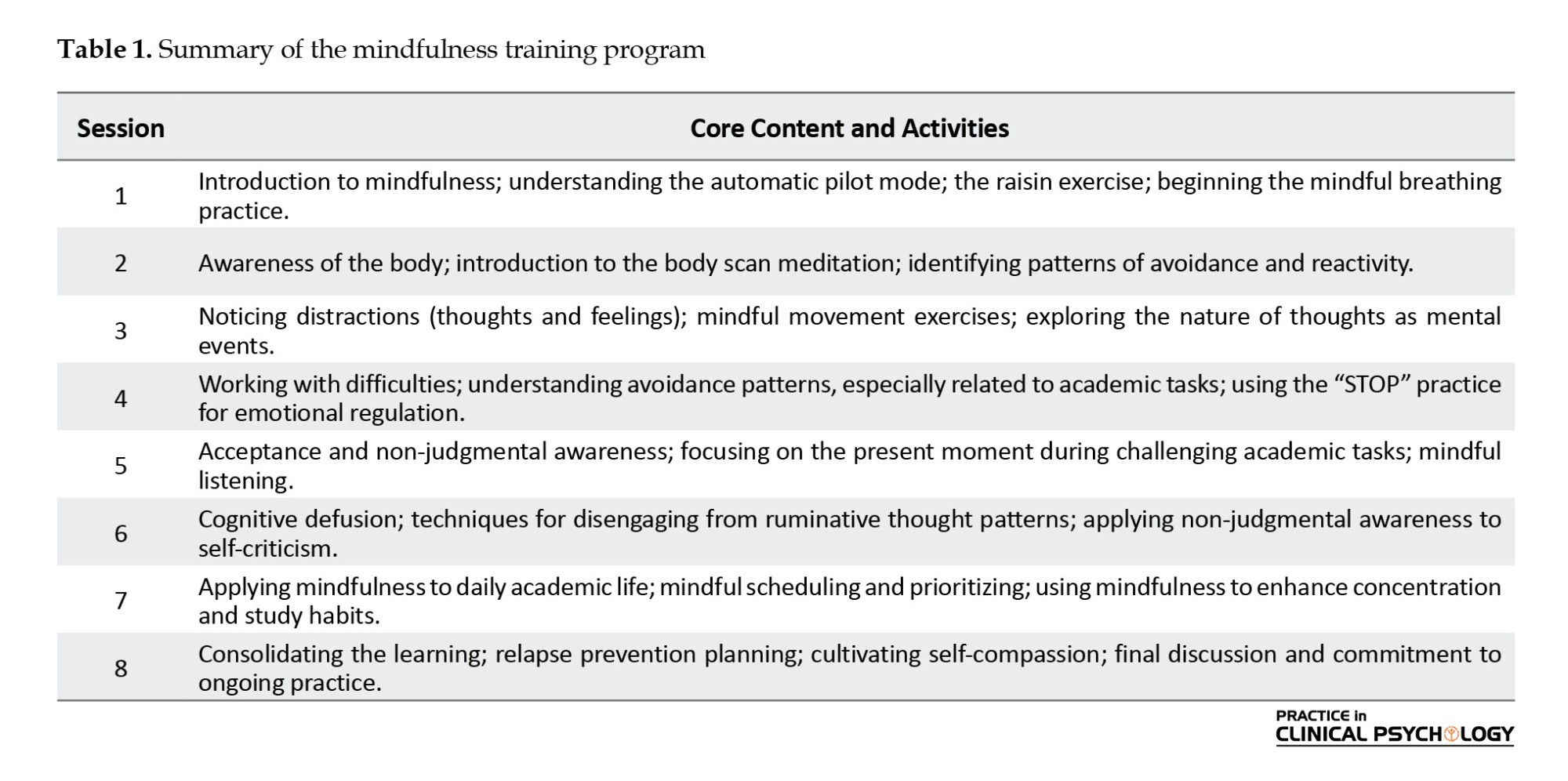
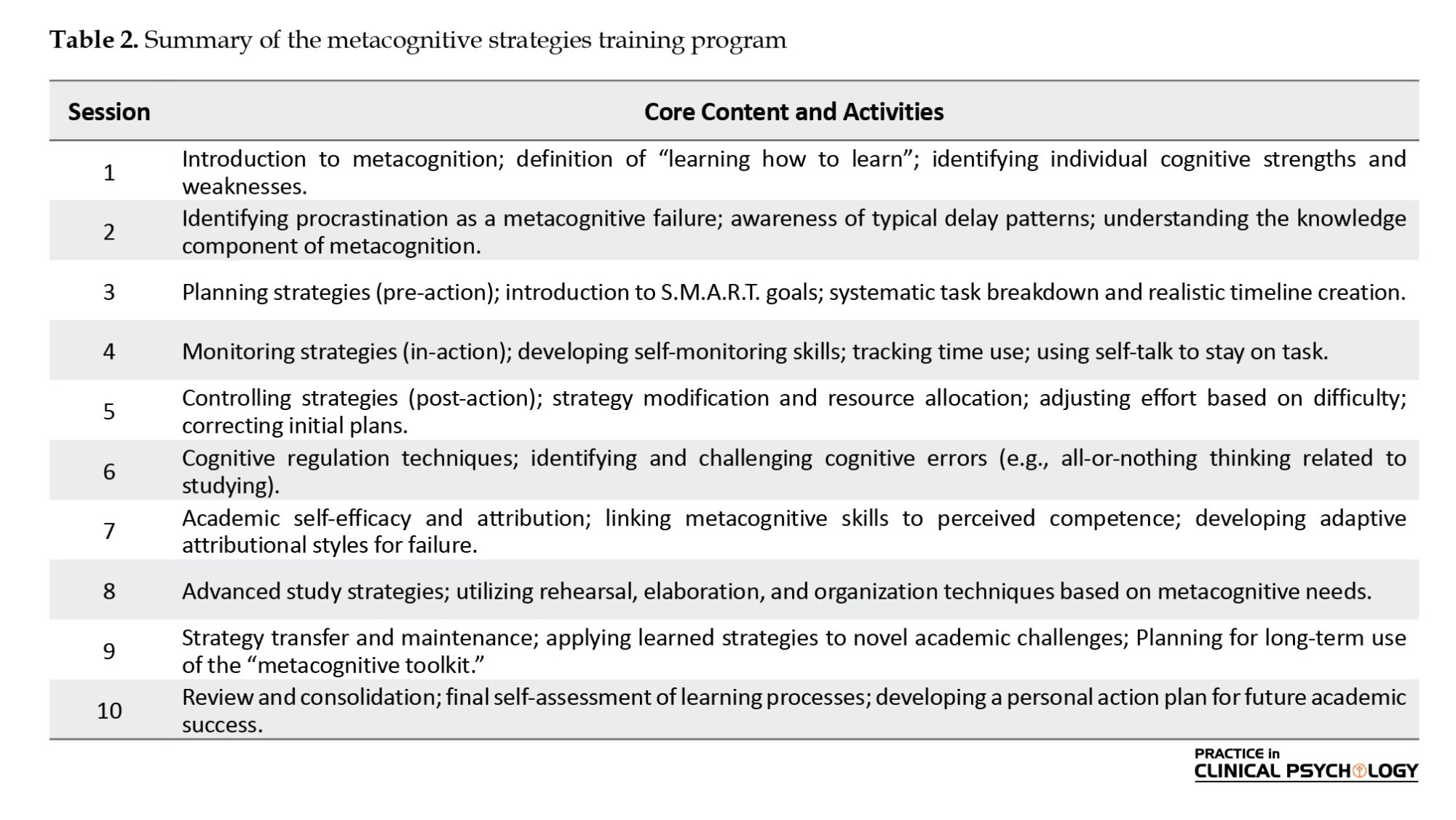
The two intervention programs—mindfulness training and metacognitive strategies training—were systematically administered to their respective experimental groups. The mindfulness training group received eight weekly 90-minute sessions, and the metacognitive strategies training group received ten weekly 90-minute sessions. Table 1 presents the session details for the mindfulness training, and Table 2 presents the metacognitive strategies training sessions.
Data analysis
Data were analyzed using SPSS software, version 27. Descriptive statistics (Mean±SD) were used to summarize the data. The primary inferential statistical method was repeated-measures analysis of variance (ANOVA), employed to test the differential effects of the interventions across the three time points (pre-test, post-test, and follow-up) for both academic boredom and rumination. Bonferroni post-hoc tests were utilized to conduct pairwise comparisons among the three groups when a significant main effect was detected.
Results
The participant cohort comprised 45 male high school students from Dezful County, aged 13–15 years (14.24±0.83), representative of the normative developmental phase associated with this educational tier. Parental educational attainment was diverse, with 40% holding high school diplomas, 35% possessing bachelor’s degrees, and 25% having postgraduate qualifications.
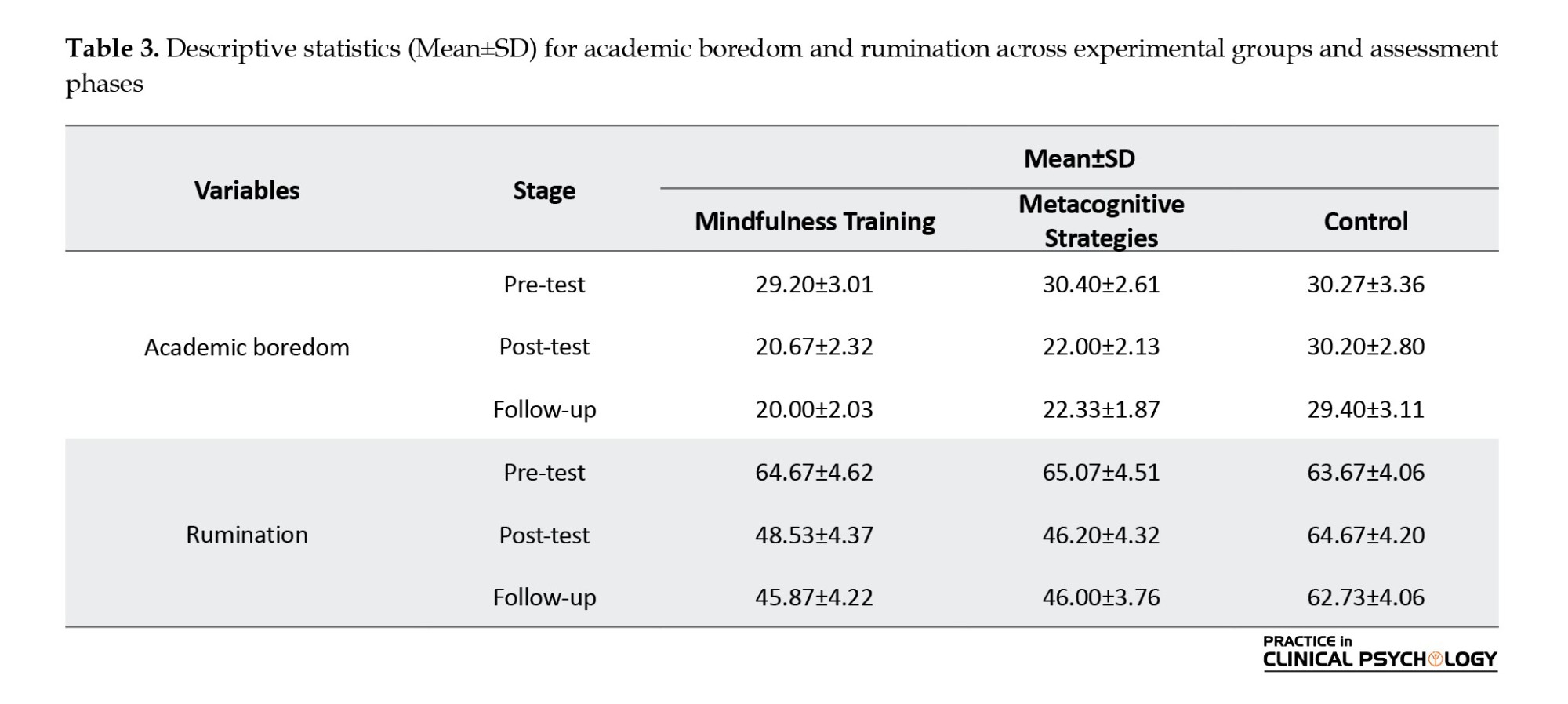
As illustrated in Table 3, pre-test scores revealed comparable baseline levels of academic boredom and rumination across the mindfulness training (29.20±3.01 for boredom; 64.67±4.62 for rumination), metacognitive strategies (30.40±2.61; 65.07±4.51), and control groups (30.27±3.36; 63.67±4.06), underscoring the homogeneity of the sample at entry. Post-intervention, both experimental groups exhibited marked declines in symptom severity, with mindfulness participants showing reductions to 20.67±2.32) for boredom and 48.53±4.37) for rumination, while metacognitive participants reached 22.00±2.13) and 46.20±4.32), respectively. The control group maintained near-baseline levels (30.20±2.80; 64.67±4.20). At one-month follow-up, these gains persisted and slightly consolidated in the experimental arms (mindfulness: 20.00±2.03, 45.87±4.22; metacognitive: 22.33±1.87; 46.00±3.76), contrasted by stability in controls (29.40±3.11, 62.73±4.06).
Prior to conducting the primary inferential analyses, assumptions underlying repeated-measures ANOVA were rigorously evaluated. Normality of residuals was confirmed using Shapiro-Wilk tests (all P>0.05 across dependent variables and time points), and homogeneity of variance-covariance matrices was verified via Box’s M test (P>0.05). Sphericity was assessed with Mauchly’s test; where violated (e.g. for rumination time effects, χ²=12.45, P=0.002), Greenhouse-Geisser corrections were applied to adjust degrees of freedom. Levene’s test indicated equal variances across groups (all P>0.05), supporting the robustness of the parametric approach. These checks affirmed the suitability of ANOVA for detecting intervention effects without distributional biases.
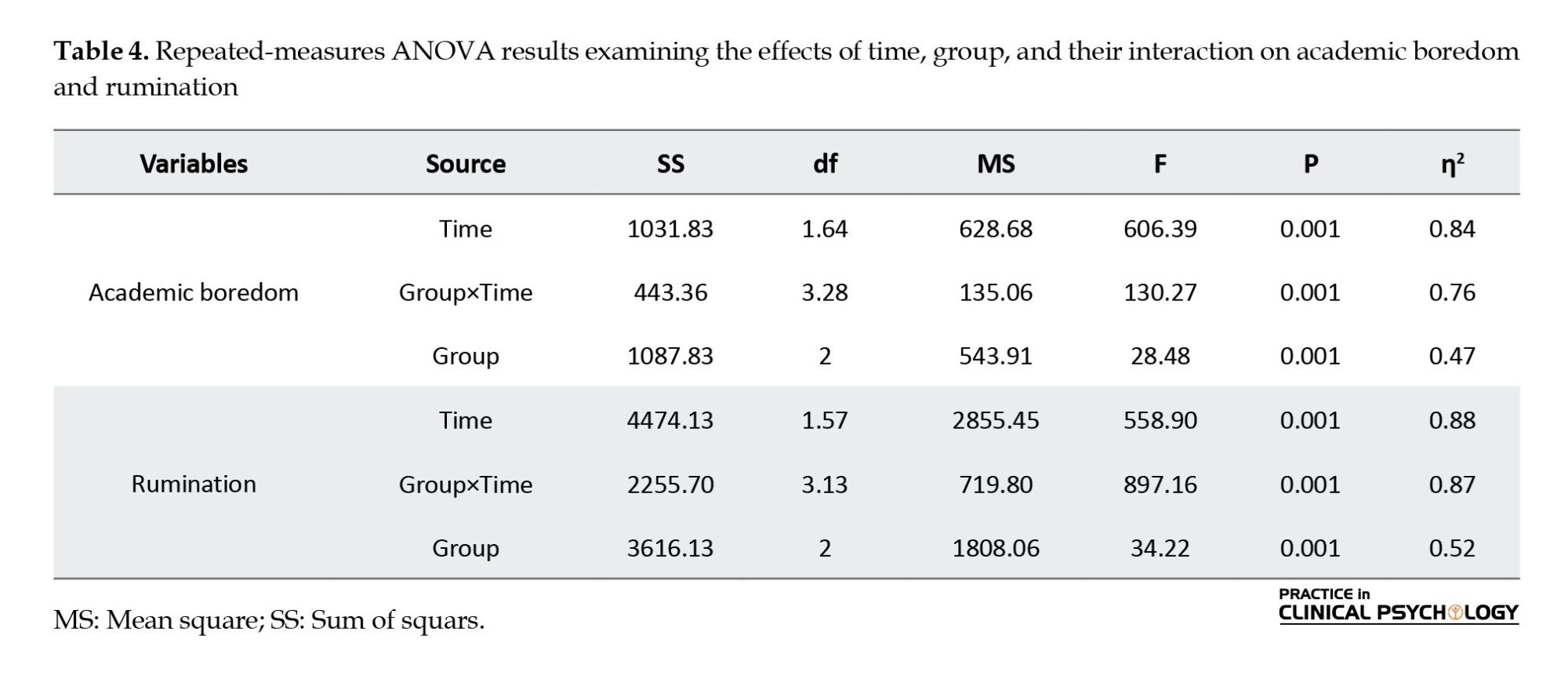
The repeated-measures ANOVA results, detailed in Table 4, demonstrated significant main effects for time on both outcomes, indicating substantial overall reductions across assessment phases (academic boredom: F=606.39, P<0.001, partial η²=0.84, representing a very large effect; rumination: F=558.90, P<0.001, partial η²=0.88, representing a very large effect). Critically, the group×time interaction emerged as highly significant for each variable (boredom: F=130.27, P<0.001, partial η²=0.76, very large effect; rumination: F=897.16, P<0.001, partial η²=0.87, very large effect), reflecting differential trajectories attributable to the interventions. A significant main effect of group further highlighted baseline and sustained disparities (boredom: F=28.48, P<0.001, partial η²=0.47, large effect; rumination: F=34.22, P<0.001, partial η²=0.52, large effect).
Bonferroni post hoc analyses of within- and between-group differences confirmed significant pre- to post-test declines in academic boredom for both intervention groups (mindfulness: Mean difference=8.53, P<0.001; metacognitive: Mean difference=8.40, P<0.001), with negligible change in controls (mean difference=0.07, P=0.999). These reductions endured at follow-up, yielding even larger pre- to follow-up differences (mindfulness: 9.20, P<0.001; metacognitive: 8.07, P<0.001) and non-significant post- to follow-up shifts, indicative of stable remission. For rumination, parallel patterns emerged, with pronounced post-test drops (mindfulness: mean difference=16.13, P<0.001; metacognitive: 18.86, P<0.001) versus controls (1.00, P=0.999), further amplified by follow-up (mindfulness: 18.80, P<0.001; metacognitive: 19.07, P<0.001). Intergroup comparisons revealed no significant pre-test differences across groups for either outcome, validating randomization efficacy. Post-intervention and at follow-up, both experimental groups diverged markedly from controls on both outcomes (all P<0.001), with no significant distinctions between the mindfulness and metacognitive interventions at any assessment phase (all P>0.05). These results highlight the interventions’ equipotent efficacy in fostering group-level improvements, free from differential superiority, and underscore their practical applicability in resource-constrained educational settings.
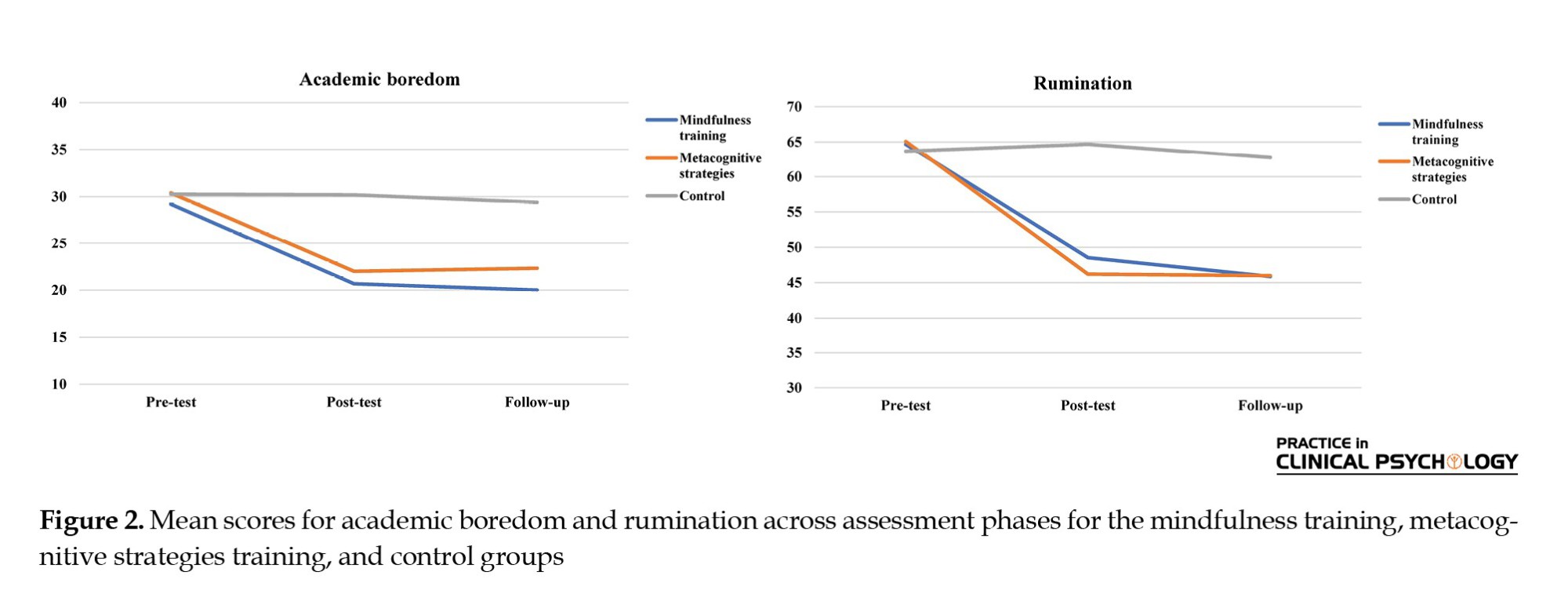
Figure 2 shows the temporal trajectories of academic boredom and rumination across the three assessment phases 2, visually confirming the substantial reductions in both outcomes for the intervention groups relative to the stable pattern observed in the control group.
Discussion
The current randomized controlled trial aimed to compare the therapeutic efficacy of metacognitive strategies training and mindfulness training in mitigating the detrimental psychological and academic sequelae—specifically academic boredom and rumination—associated with academic procrastination in male high school students. The robust statistical findings, evidenced by a highly significant group × time interaction, compellingly demonstrate that both interventions were significantly more effective than the control condition. Furthermore, a key finding showed no statistically significant difference in the magnitude of improvement between the two active intervention groups. These results offer crucial insights into the clinical application of both cognitive-behavioral and third-wave approaches in educational settings.
The effectiveness of metacognitive strategies training in reducing academic boredom and rumination aligns strongly with theoretical models of self-regulated learning (Cécillon et al., 2024). Academic procrastination is often viewed as a fundamental failure of executive functions, resulting from poor planning and monitoring (González-Brignardello et al., 2023). Metacognitive strategies training directly addresses this deficit by training students in the three core phases of self-regulation: planning (forethought), monitoring (performance control), and evaluating (self-reflection) (Ghahvechi-Hosseini et al., 2015). The resulting enhancement of agency and competence may counteract the cycle of low self-efficacy that often fuels rumination over past failures (Stanton et al., 2021). Our findings are supported by studies, such as Keyvan et al. (2025), who consistently show that explicit training in metacognitive self-regulation leads to increased academic achievement and significantly reduced academic distress.
Likewise, the demonstrated efficacy of mindfulness training provides further evidence for the integration of third-wave strategies into educational psychology. Rumination, characterized by passive and repetitive focus on negative thoughts, is sustained by a lack of attentional control and emotional avoidance (Leigh et al., 2025). Mindfulness, by cultivating a non-judgmental, present-moment awareness, functions as an attentional disengagement strategy (Ahanian Moghaddam et al., 2025). This shift may break the automatic link between difficult thoughts and subsequent emotional-behavioral reactions (Abedi et al., 2023). This core mechanism likely contributes to the significant reduction observed in both rumination and academic boredom. These results are congruent with the findings of Perry-Parrish et al. (2016), who reported that mindfulness-based programs significantly reduce maladaptive coping styles, including rumination, by improving emotional clarity and acceptance in adolescent populations.
Perhaps the most informative outcome of this clinical trial is the finding that the two interventions, despite their distinct theoretical origins, yielded comparable efficacy for reducing both academic boredom and rumination. This equivalence suggests a high degree of functional overlap when applied to the multi-layered challenge of academic procrastination, which involves both affective (rumination, boredom) and cognitive/behavioral deficits. Both pathways may converge on improved self-regulatory control, though direct measures of proposed mechanisms (e.g. decentering or executive function enhancement) were not included and thus remain speculative. We hypothesize that mindfulness training, by enhancing attentional regulation and non-reactive observation, indirectly improves the cognitive monitoring necessary for effective planning and execution—a key component of metacognition (Rad et al., 2023). Conversely, metacognitive strategies training, by imposing structure and forcing systematic planning and self-evaluation, demands a higher level of conscious, present-moment attention, thereby acting as a form of applied mindfulness (Zhianifard et al., 2024). Therefore, for a population struggling with a mixture of emotional dysregulation and executive function deficits, both pathways effectively lead to the same functional outcome: improved self-regulatory control and reduced emotional distress. This equivalence provides essential flexibility for school counselors, suggesting that either approach can be tailored based on the specific needs or preferences of the students or the institutional capacity.
Crucially, the therapeutic gains were maintained at the one-month follow-up assessment. This persistence suggests that the interventions facilitated the acquisition and internalization of durable, generalized skills, rather than merely inducing temporary motivational or short-term placebo effects. Whether the students learned to implement concrete planning strategies (metacognitive strategies training) or practice non-reactive awareness (mindfulness training), the acquired skills became integrated into their routine response repertoire, strongly supporting the long-term viability of incorporating both mindfulness training and metacognitive strategies training into preventative and early intervention programs in educational settings. However, the brief follow-up period and reliance on self-report measures preclude strong claims about objective, longer-term behavioral changes.
Despite the rigorous design and large observed effect sizes, several limitations temper the interpretation and generalizability of these findings. The sample was restricted to male high school students aged 13–15 from a single city in Iran, precluding extrapolation to female students, other age groups, or diverse cultural contexts—particularly given documented gender differences in rumination and responsiveness to mindfulness interventions. All outcomes were based exclusively on self-report questionnaires, raising concerns about shared method variance, social desirability bias, and demand characteristics; inclusion of behavioral observations, academic performance indicators, or teacher/parent ratings would strengthen future investigations. Additionally, the unequal number of sessions (8 versus 10) introduces a potential dosage confound that may influence interpretations of equivalence. Potential expectancy effects were not assessed, and treatment fidelity was not formally monitored. Finally, individual moderators (e.g., baseline procrastination severity or cultural factors) were not explored.
Conclusion
The findings conclusively demonstrate that both metacognitive strategy training and mindfulness training are highly effective interventions for alleviating academic boredom and rumination among male high school students struggling with academic procrastination. Crucially, the observed therapeutic gains were comparable between the two distinct approaches and were maintained at the one-month follow-up, suggesting short-term persistence of improvements in self-regulatory and emotional coping skills. Despite limitations, including the modest sample size, restricted follow-up duration, and exclusive reliance on self-report measures, these results strongly advocate for the flexible integration of both cognitive-behavioral and third-wave paradigms within school counseling to foster resilient academic environments.
Ethical Considerations
Compliance with ethical guidelines
This study was approved by the Ethics Committee of Islamic Azad University, Ahvaz Branch, Ahvaz, Iran (Code: IR.IAU.AHVAZ.REC.1404.032).
Funding
This research did not receive any grant from funding agencies in the public, commercial, or non-profit sectors.
Authors' contributions
All authors contributed equally to the conception and design of the study, data collection and analysis, interpretation of the results, and drafting of the manuscript. Each author approved the final version of the manuscript for submission.
Conflict of interest
The authors declared no conflict of interest.
Acknowledgments
The authors would like to thank all students who participated in this study for their time and cooperation.
References
The developmental period of adolescence is universally recognized as a crucial yet highly vulnerable, phase marked by significant emotional and cognitive stressors (Baker et al., 2025). For high school students, this period is compounded by the intense pressure of preparing for higher education and navigating a complex academic landscape (Saqib et al., 2023). Consequently, the psychological and scholastic challenges faced by these students consistently remain a central focus for parents and educational authorities. Among these challenges, academic procrastination stands out as a prevalent and heterogeneous psychological phenomenon, defined by a complex interplay of cognitive, emotional, and behavioral components (Rezaei & Zebardast, 2021). At its core, procrastination involves the voluntary and deliberate delay of important tasks, despite the individual being fully aware of the potential negative and often irreversible consequences of such behavior. In the academic domain, this manifests as irrational delays in completing schoolwork, ultimately leading to disinterest and academic underachievement (González-Brignardello et al., 2023). Procrastination is recognized as a significant predictor of educational quality, given its association with a host of negative outcomes, including anxiety, tension, depression, low academic self-confidence, and aggressive interpersonal behaviors (Karimi Moonaghi & Baloochi Beydokhti, 2017). Furthermore, it has been demonstrated to reduce both the quality and quantity of learning, and is often linked to underdeveloped study skills, poor organizational capacity, and increased stress that can precipitate poor performance or even lead to students abandoning their studies altogether (Rad et al., 2025). Identifying the roots and consequences of academic procrastination is therefore paramount to formulating effective preventive and therapeutic strategies that can enhance the overall quality of education and foster resilient learning environments.
Students’ daily academic experiences expose them to persistent challenges and pressures, leading to a host of emotional and cognitive difficulties. One pervasive issue experienced by students worldwide is academic boredom, a frequent obstacle to scholastic success that can manifest in observable behaviors, such as failing grades, grade repetition, and voluntary or involuntary school dropout (Bekker et al., 2022). Psychologically, boredom is conceptualized as a multi-component emotion encompassing affective (unpleasant and distressing feelings), cognitive (altered perception of time), physiological (reduced physical arousal), and motivational (an urge to change the activity or escape the situation) components (Mombeini et al., 2025). Although seemingly transient, the reported outcomes of academic boredom are alarming. Researchers have identified detrimental effects on both physical and mental well-being, demonstrating links with negative conditions such as stress, depression, anxiety, anger, aggression, substance abuse, and school attrition (Farina et al., 2025). Understanding the precursors and ramifications of academic boredom is crucial for developing appropriate coping mechanisms to revitalize student motivation and interest in learning.
Another critical psychological sequela in this population is rumination, which typically originates when adolescents struggle with effective emotional regulation, thereby increasing their vulnerability to disorders, such as depression and anxiety (Young et al., 2019). Rumination is defined as an extended and often maladaptive focus on the causes, meanings, and consequences of negative emotions, typically centered on the self (Mousavi et al., 2023). When negative thoughts persist and are coupled with low self-esteem, they create a persistent, negative thought loop that defines the ruminative process. This thought pattern is a major risk factor, capable of predicting the onset of depressive episodes and other psychological disorders (Schweizer et al., 2018; Amani & Heidari, 2025). In a school context, rumination can take various forms, such as continuously replaying academic failures or social worries (Leigh et al., 2025). As an inefficient coping mechanism, it not only disrupts concentration and learning process but also significantly exacerbates stress, anxiety, and depression levels among students (Guo et al., 2025). Psychological interventions targeting rumination are therefore necessary to reinforce emotional regulation skills and help students regulate their attentional focus effectively.
To address the intertwined issues of academic procrastination, boredom, and rumination, researchers have explored various therapeutic approaches. Mindfulness training, derived from cognitive behavioral principles and regarded as a core component of third-wave psychotherapeutic models, has recently gained prominence (Ahanian Moghaddam et al., 2025). Mindfulness is defined as the non-judgmental, present-moment awareness of one’s experience and an intentional self-regulation of attention directed toward that experience (Chems-Maarif et al., 2025). For students with academic procrastination, this approach serves as a potent strategy against delayed behaviors and motivational deficits (Rad et al., 2023). By teaching them to focus on the present moment and non-judgmentally recognize their thoughts and emotions, mindfulness encourages students to confront, rather than avoid, responsibilities (Saadipour et al., 2020). Studies consistently support the efficacy of this approach, demonstrating its ability to reduce rumination and test anxiety, mitigate academic boredom, improve school well-being, and foster academic hope and self-efficacy (Abedi et al., 2023; Babadi et al., 2024).
A parallel and equally robust approach is metacognitive strategies training, which lies at the heart of educational cognitive psychology by emphasizing the skill of “learning how to learn” (Stanton et al., 2021). Metacognition refers to an individual’s knowledge and understanding of their own cognitive system and how it operates, essentially “cognition about cognition” (Ghahvechi-Hosseini et al., 2015). This knowledge enables learners to assess their learning progress, utilize information effectively to achieve goals, and judiciously select and apply learning strategies. For procrastinating students, metacognitive training plays a vital role in identifying and managing their tendency toward delays (Zhianifard et al., 2024). Research further indicates that heightened metacognitive awareness predicts better academic adjustment and outcomes, mediated by factors such as internal locus of control (Jain et al., 2017; Jain et al., 2018). By utilizing techniques such as systematic planning, self-assessment, and goal refinement, students enhance their self-awareness and self-regulation (Rashidzade et al., 2019). Prior research has highlighted the successful application of metacognitive training in improving students’ interpersonal emotional regulation, reducing cognitive errors, academic self-handicapping, and significantly decreasing rumination while boosting academic self-efficacy (Cécillon et al., 2024).
Despite substantial evidence for the independent efficacy of mindfulness training (a third-wave approach emphasizing emotion and attentional regulation) and metacognitive strategies training (a cognitive-behavioral approach targeting thought and learning processes), direct head-to-head comparisons remain scarce. Students with academic procrastination commonly exhibit concurrent deficits in emotional management (leading to rumination) and learning process management (contributing to boredom). A direct comparison of these paradigms is thus essential to determine whether one offers superior or complementary benefits in addressing this dual impairment, thereby informing optimal, resource-efficient interventions in educational settings. Given this necessity, the primary aim of the present study was to compare the effectiveness of metacognitive strategies training and mindfulness training on reducing academic boredom and rumination in male high school students struggling with academic procrastination.
Materials and Methods
Design
This study employed a randomized controlled trial design, utilizing a pre-test-post-test format with a one-month follow-up assessment.
Participants
The statistical population comprised all male high school students in Dezful County, Iran, during the 2024–2025 academic year. Through cluster random sampling, two schools were initially selected, and within these, random classrooms were chosen. A total of 45 students who scored high on the academic procrastination measure, indicating pronounced academic procrastination, were recruited as the final sample. Following recruitment, participants were randomly allocated using simple random assignment (a lottery method) to one of three groups: metacognitive strategies training (n=15), mindfulness training (n=15), or the control group (n=15) (Figure 1). The modest sample size (n=45; n=15 per group), while sufficient to detect large effects as observed post hoc (achieved power >0.99 for key interactions assuming η²=0.76–0.87), limits generalizability to broader populations. The inclusion criteria included male students aged 13-15, enrollment in high school, and an elevated score on the procrastination assessment. The exclusion criteria included having a pre-existing clinical diagnosis of a major psychiatric disorder, concurrent participation in other psychological interventions, or absence from more than two training sessions. All procedures adhered to the ethical standards stipulated by the institutional review board.
Instruments
Dutch boredom scale (DUBS): The construct of academic boredom was assessed using an adapted version of the DUBS, originally developed by Reijseger et al. (2013) to measure boredom across five facets. The version used here comprises 8 items specifically adapted for the academic context to measure the three core factors of academic boredom: exhaustion, cynicism, and inefficacy. Responses are recorded on a 5-point frequency scale (e.g., 1=never to 5=always). Total scores range from 8 to 40, with scores above the third quartile indicating high levels of academic boredom. The original DUBS has sound psychometric properties (alpha=0.82) (Rimaz et al., 2020). In the current study, the Cronbach’s α for this adapted scale was found to be high (alpha=0.84), confirming its reliability.
Rumination-response scale (RRS): The RRS, developed by Nolen-Hoeksema et al. (2008), assesses the tendency to focus passively and repeatedly on distress symptoms, their causes and consequences. The RRS is a 22-item self-report questionnaire with subscales including Brooding and Reflection. Participants rate how often they engage in each response when feeling sad, using a 4-point scale (1=almost never to 4=almost always). The total score ranges from 22 to 88. Higher scores are interpreted as higher levels of maladaptive rumination and psychological distress. Prior research with Iranian student samples consistently reports high reliability (alpha=0.91) (Aghebati et al., 2020). In this study, the RRS also demonstrated excellent internal consistency, with a Cronbach’s α of 0.92.
Procedure
Data were collected in three distinct phases: Pre-test, post-test, and follow-up. In the initial phase, all 45 selected participants, irrespective of group assignment, completed the three research instruments: The procrastination assessment scale–students, the DUBS, and the RRS. Following the pre-test, the experimental groups commenced their respective intervention programs immediately, while the control group received no intervention during this period. Both intervention groups were led by a trained clinical psychologist. The mindfulness training group received eight weekly 90-minute sessions, while the metacognitive strategies group received ten weekly 90-minute sessions; this difference in session number represents a potential dosage confound that should be considered when interpreting equivalence of outcomes. Upon the conclusion of the intervention sessions, all three groups completed the instruments again (post-test phase). To assess the long-term durability of the observed treatment effects, a final data collection phase (follow-up) was conducted one month after the post-test. The brief one-month follow-up period provides initial evidence of maintenance but limits conclusions regarding longer-term sustainability. Additionally, outcomes relied exclusively on self-report measures, and no formal treatment fidelity checks or manipulation checks were conducted. Participants in the control group were offered the opportunity to receive one of the effective interventions upon completion of the follow-up period, as part of the ethical commitment to the study participants.
Interventions
The two intervention programs—mindfulness training and metacognitive strategies training—were systematically administered to their respective experimental groups. The mindfulness training group received eight weekly 90-minute sessions, and the metacognitive strategies training group received ten weekly 90-minute sessions. Table 1 presents the session details for the mindfulness training, and Table 2 presents the metacognitive strategies training sessions.
Data analysis
Data were analyzed using SPSS software, version 27. Descriptive statistics (Mean±SD) were used to summarize the data. The primary inferential statistical method was repeated-measures analysis of variance (ANOVA), employed to test the differential effects of the interventions across the three time points (pre-test, post-test, and follow-up) for both academic boredom and rumination. Bonferroni post-hoc tests were utilized to conduct pairwise comparisons among the three groups when a significant main effect was detected.
Results
The participant cohort comprised 45 male high school students from Dezful County, aged 13–15 years (14.24±0.83), representative of the normative developmental phase associated with this educational tier. Parental educational attainment was diverse, with 40% holding high school diplomas, 35% possessing bachelor’s degrees, and 25% having postgraduate qualifications.
As illustrated in Table 3, pre-test scores revealed comparable baseline levels of academic boredom and rumination across the mindfulness training (29.20±3.01 for boredom; 64.67±4.62 for rumination), metacognitive strategies (30.40±2.61; 65.07±4.51), and control groups (30.27±3.36; 63.67±4.06), underscoring the homogeneity of the sample at entry. Post-intervention, both experimental groups exhibited marked declines in symptom severity, with mindfulness participants showing reductions to 20.67±2.32) for boredom and 48.53±4.37) for rumination, while metacognitive participants reached 22.00±2.13) and 46.20±4.32), respectively. The control group maintained near-baseline levels (30.20±2.80; 64.67±4.20). At one-month follow-up, these gains persisted and slightly consolidated in the experimental arms (mindfulness: 20.00±2.03, 45.87±4.22; metacognitive: 22.33±1.87; 46.00±3.76), contrasted by stability in controls (29.40±3.11, 62.73±4.06).
Prior to conducting the primary inferential analyses, assumptions underlying repeated-measures ANOVA were rigorously evaluated. Normality of residuals was confirmed using Shapiro-Wilk tests (all P>0.05 across dependent variables and time points), and homogeneity of variance-covariance matrices was verified via Box’s M test (P>0.05). Sphericity was assessed with Mauchly’s test; where violated (e.g. for rumination time effects, χ²=12.45, P=0.002), Greenhouse-Geisser corrections were applied to adjust degrees of freedom. Levene’s test indicated equal variances across groups (all P>0.05), supporting the robustness of the parametric approach. These checks affirmed the suitability of ANOVA for detecting intervention effects without distributional biases.
The repeated-measures ANOVA results, detailed in Table 4, demonstrated significant main effects for time on both outcomes, indicating substantial overall reductions across assessment phases (academic boredom: F=606.39, P<0.001, partial η²=0.84, representing a very large effect; rumination: F=558.90, P<0.001, partial η²=0.88, representing a very large effect). Critically, the group×time interaction emerged as highly significant for each variable (boredom: F=130.27, P<0.001, partial η²=0.76, very large effect; rumination: F=897.16, P<0.001, partial η²=0.87, very large effect), reflecting differential trajectories attributable to the interventions. A significant main effect of group further highlighted baseline and sustained disparities (boredom: F=28.48, P<0.001, partial η²=0.47, large effect; rumination: F=34.22, P<0.001, partial η²=0.52, large effect).
Bonferroni post hoc analyses of within- and between-group differences confirmed significant pre- to post-test declines in academic boredom for both intervention groups (mindfulness: Mean difference=8.53, P<0.001; metacognitive: Mean difference=8.40, P<0.001), with negligible change in controls (mean difference=0.07, P=0.999). These reductions endured at follow-up, yielding even larger pre- to follow-up differences (mindfulness: 9.20, P<0.001; metacognitive: 8.07, P<0.001) and non-significant post- to follow-up shifts, indicative of stable remission. For rumination, parallel patterns emerged, with pronounced post-test drops (mindfulness: mean difference=16.13, P<0.001; metacognitive: 18.86, P<0.001) versus controls (1.00, P=0.999), further amplified by follow-up (mindfulness: 18.80, P<0.001; metacognitive: 19.07, P<0.001). Intergroup comparisons revealed no significant pre-test differences across groups for either outcome, validating randomization efficacy. Post-intervention and at follow-up, both experimental groups diverged markedly from controls on both outcomes (all P<0.001), with no significant distinctions between the mindfulness and metacognitive interventions at any assessment phase (all P>0.05). These results highlight the interventions’ equipotent efficacy in fostering group-level improvements, free from differential superiority, and underscore their practical applicability in resource-constrained educational settings.
Figure 2 shows the temporal trajectories of academic boredom and rumination across the three assessment phases 2, visually confirming the substantial reductions in both outcomes for the intervention groups relative to the stable pattern observed in the control group.
Discussion
The current randomized controlled trial aimed to compare the therapeutic efficacy of metacognitive strategies training and mindfulness training in mitigating the detrimental psychological and academic sequelae—specifically academic boredom and rumination—associated with academic procrastination in male high school students. The robust statistical findings, evidenced by a highly significant group × time interaction, compellingly demonstrate that both interventions were significantly more effective than the control condition. Furthermore, a key finding showed no statistically significant difference in the magnitude of improvement between the two active intervention groups. These results offer crucial insights into the clinical application of both cognitive-behavioral and third-wave approaches in educational settings.
The effectiveness of metacognitive strategies training in reducing academic boredom and rumination aligns strongly with theoretical models of self-regulated learning (Cécillon et al., 2024). Academic procrastination is often viewed as a fundamental failure of executive functions, resulting from poor planning and monitoring (González-Brignardello et al., 2023). Metacognitive strategies training directly addresses this deficit by training students in the three core phases of self-regulation: planning (forethought), monitoring (performance control), and evaluating (self-reflection) (Ghahvechi-Hosseini et al., 2015). The resulting enhancement of agency and competence may counteract the cycle of low self-efficacy that often fuels rumination over past failures (Stanton et al., 2021). Our findings are supported by studies, such as Keyvan et al. (2025), who consistently show that explicit training in metacognitive self-regulation leads to increased academic achievement and significantly reduced academic distress.
Likewise, the demonstrated efficacy of mindfulness training provides further evidence for the integration of third-wave strategies into educational psychology. Rumination, characterized by passive and repetitive focus on negative thoughts, is sustained by a lack of attentional control and emotional avoidance (Leigh et al., 2025). Mindfulness, by cultivating a non-judgmental, present-moment awareness, functions as an attentional disengagement strategy (Ahanian Moghaddam et al., 2025). This shift may break the automatic link between difficult thoughts and subsequent emotional-behavioral reactions (Abedi et al., 2023). This core mechanism likely contributes to the significant reduction observed in both rumination and academic boredom. These results are congruent with the findings of Perry-Parrish et al. (2016), who reported that mindfulness-based programs significantly reduce maladaptive coping styles, including rumination, by improving emotional clarity and acceptance in adolescent populations.
Perhaps the most informative outcome of this clinical trial is the finding that the two interventions, despite their distinct theoretical origins, yielded comparable efficacy for reducing both academic boredom and rumination. This equivalence suggests a high degree of functional overlap when applied to the multi-layered challenge of academic procrastination, which involves both affective (rumination, boredom) and cognitive/behavioral deficits. Both pathways may converge on improved self-regulatory control, though direct measures of proposed mechanisms (e.g. decentering or executive function enhancement) were not included and thus remain speculative. We hypothesize that mindfulness training, by enhancing attentional regulation and non-reactive observation, indirectly improves the cognitive monitoring necessary for effective planning and execution—a key component of metacognition (Rad et al., 2023). Conversely, metacognitive strategies training, by imposing structure and forcing systematic planning and self-evaluation, demands a higher level of conscious, present-moment attention, thereby acting as a form of applied mindfulness (Zhianifard et al., 2024). Therefore, for a population struggling with a mixture of emotional dysregulation and executive function deficits, both pathways effectively lead to the same functional outcome: improved self-regulatory control and reduced emotional distress. This equivalence provides essential flexibility for school counselors, suggesting that either approach can be tailored based on the specific needs or preferences of the students or the institutional capacity.
Crucially, the therapeutic gains were maintained at the one-month follow-up assessment. This persistence suggests that the interventions facilitated the acquisition and internalization of durable, generalized skills, rather than merely inducing temporary motivational or short-term placebo effects. Whether the students learned to implement concrete planning strategies (metacognitive strategies training) or practice non-reactive awareness (mindfulness training), the acquired skills became integrated into their routine response repertoire, strongly supporting the long-term viability of incorporating both mindfulness training and metacognitive strategies training into preventative and early intervention programs in educational settings. However, the brief follow-up period and reliance on self-report measures preclude strong claims about objective, longer-term behavioral changes.
Despite the rigorous design and large observed effect sizes, several limitations temper the interpretation and generalizability of these findings. The sample was restricted to male high school students aged 13–15 from a single city in Iran, precluding extrapolation to female students, other age groups, or diverse cultural contexts—particularly given documented gender differences in rumination and responsiveness to mindfulness interventions. All outcomes were based exclusively on self-report questionnaires, raising concerns about shared method variance, social desirability bias, and demand characteristics; inclusion of behavioral observations, academic performance indicators, or teacher/parent ratings would strengthen future investigations. Additionally, the unequal number of sessions (8 versus 10) introduces a potential dosage confound that may influence interpretations of equivalence. Potential expectancy effects were not assessed, and treatment fidelity was not formally monitored. Finally, individual moderators (e.g., baseline procrastination severity or cultural factors) were not explored.
Conclusion
The findings conclusively demonstrate that both metacognitive strategy training and mindfulness training are highly effective interventions for alleviating academic boredom and rumination among male high school students struggling with academic procrastination. Crucially, the observed therapeutic gains were comparable between the two distinct approaches and were maintained at the one-month follow-up, suggesting short-term persistence of improvements in self-regulatory and emotional coping skills. Despite limitations, including the modest sample size, restricted follow-up duration, and exclusive reliance on self-report measures, these results strongly advocate for the flexible integration of both cognitive-behavioral and third-wave paradigms within school counseling to foster resilient academic environments.
Ethical Considerations
Compliance with ethical guidelines
This study was approved by the Ethics Committee of Islamic Azad University, Ahvaz Branch, Ahvaz, Iran (Code: IR.IAU.AHVAZ.REC.1404.032).
Funding
This research did not receive any grant from funding agencies in the public, commercial, or non-profit sectors.
Authors' contributions
All authors contributed equally to the conception and design of the study, data collection and analysis, interpretation of the results, and drafting of the manuscript. Each author approved the final version of the manuscript for submission.
Conflict of interest
The authors declared no conflict of interest.
Acknowledgments
The authors would like to thank all students who participated in this study for their time and cooperation.
References
Abedi, E., Yousefi, E., Khajepour, L., & Jokar, S. (2023). The effectiveness of mindfulness training on academic adjustment, academic anxiety and academic hope of students. Journal of Adolescent and Youth Psychological Studies, 4(8), 28-40. [DOI:10.61838/kman.jayps.4.8.4]
Aghebati, A., Joekar, S., Alimoradi, H., & Ataie, S. (2020). Psychometric properties of the Persian version of Co-Rumination Questionnaire. Iranian Journal of Psychiatry and Behavioral Sciences, 14(2), e68464. [DOI:10.5812/ijpbs.68464]
Ahanian Moghaddam, P., Atashpour, S. H., & Golparvar, M. (2025). Comparing the effectiveness of combined schema therapy and mindfulness with schema therapy and CBT on psychological flexibility. Practice in Clinical Psychology, 13(1), 33. [DOI:10.32598/jpcp.13.1.981.1]
Amani, M., & Heidari, Z. (2025). The mediating role of emotion regulation, entrapment, and depression between effortful control, rumination, and suicidal ideation. Practice in Clinical Psychology, 13(2), 129. [DOI:10.32598/jpcp.13.2.966.1]
Babadi, P., Marashian, F. S., & Safarzadeh, S. (2024). The impact of positive mindfulness training on academic well-being among medical students. Research and Development in Medical Education, 13(1), 28-28. [DOI:10.34172/rdme.33253]
Baker, A. E., Galván, A., & Fuligni, A. J. (2025). The connecting brain in context: How adolescent plasticity supports learning and development. Developmental Cognitive Neuroscience, 71, 101486. [DOI:10.1016/j.dcn.2024.101486] [PMID]
Bekker, C. I., Rothmann, S., & Kloppers, M. M. (2022). The happy learner: Effects of academic boredom, burnout, and engagement. Frontiers in Psychology, 13, 974486. [DOI:10.3389/fpsyg.2022.974486] [PMID]
Cécillon, F. X., Mermillod, M., Leys, C., Lachaux, J. P., Le Vigouroux, S., & Shankland, R. (2024). Trait anxiety, emotion regulation, and metacognitive beliefs: An observational study incorporating separate network and correlation analyses to examine associations with executive functions and academic achievement. Children, 11(1), 123. [DOI:10.3390/children11010123] [PMID]
Chems-Maarif, R., Cavanagh, K., Baer, R., Gu, J., & Strauss, C. (2025). Defining mindfulness: A review of existing definitions and suggested refinements. Mindfulness, 16(1), 1-20. [DOI:10.1007/s12671-024-02507-2]
Farina, E., Ornaghi, V., & Pepe, A. (2025). School burnout and well-being in adolescence: Trait emotional intelligence as a protective factor. Trends in Psychology, 1-22. [DOI:10.1007/s43076-025-00465-9]
Ghahvechi-Hosseini, F., Fathi Ashtiani, A., & Satkin, M. (2015). Comparing metacognitive therapy with cognitive therapy on reducing test anxiety and meta-worry in students. Practice in Clinical Psychology, 3(3), 203.
González-Brignardello, M. P., Sánchez-Elvira Paniagua, A., & López-González, M. Á. (2023). Academic procrastination in children and adolescents: A scoping review. Children, 10(6), 1016. [DOI:10.3390/children10061016] [PMID]
Guo, K., Chen, S., Hui, Z., Guo, F., Xiang, J., & Li, D. (2025). Physical activity and internalization problems in middle school students: the chain mediating role of rumination thinking and peer acceptance. Scientific Reports, 15(1), 23976. [DOI:10.1038/s41598-025-09202-9] [PMID]
Jain, D., Tiwari, G. K., & Awasthi, I. (2017). Impact of Metacognitive Awareness on Academic Adjustment and Academic Outcome of the Students. The International Journal of Indian Psychology, 5(1), 123-138. [DOI:10.25215/0501.034]
Jain, D., Tiwari, G. K., & Awasthi, I. (2018). Metacognitive awareness and academic locus of control as the predictors of academic adjustment. Polish Psychological Bulletin, 49(4), 432-441. [DOI:10.24425/119512] [PMID]
Karimi Moonaghi, H., & Baloochi Beydokhti, T. (2017). Academic procrastination and its characteristics: A narrative review. Future of Medical Education Journal, 7(2), 43-50. [DOI:10.22038/fmej.2017.9049]
Keyvan, K., Marashian, F. S., & Dasht Bozorgi, Z. (2025). The effectiveness of self-regulation strategy training on academic flourishing and optimism in students with academic procrastination tendencies. International Journal of School Health, 12(3), 141-149. [DOI:10.30476/intjsh.2025.104751.1461]
Leigh, E., Taylor, L., Cole, V., & Smith, P. (2025). Why is rumination unhelpful in adolescents? Two studies examining the causal role of abstract processing. Journal of Affective Disorders, 379, 213-222. [DOI:10.1016/j.jad.2025.03.058] [PMID]
Mombeini, J., Abbaspour, Z., Sodani, M., & Farhadi Rad, H. (2025). Explaining the process of academic boredom in gifted students: A qualitative research. Psychological Achievements [Unpublished]. [DOI:10.22055/psy.2025.49747.3440]
Mousavi, S., Mousavi, S., & Shahsavari, M. R. (2023). Effectiveness of compassion-focused therapy on social anxiety and rumination among female heads of households. Journal of Clinical Research in Paramedical Sciences, 12(2), e139058. [DOI:10.5812/jcrps-139058]
Nolen-Hoeksema, S., Wisco, B. E., & Lyubomirsky, S. (2008). Rethinking Rumination. Perspectives on Psychological Science, 3(5), 400-424. [DOI:10.1111/j.1745-6924.2008.00088.x] [PMID]
Perry-Parrish, C., Copeland-Linder, N., Webb, L., Shields, A. H., & Sibinga, E. M. (2016). Improving self-regulation in adolescents: current evidence for the role of mindfulness-based cognitive therapy. Adolesc Health Med Ther, 7, 101-108. [DOI:10.2147/ahmt.S65820] [PMID]
Rad, H. F., Bordbar, S., Bahmaei, J., Vejdani, M., & Yusefi, A. R. (2025). Predicting academic procrastination of students based on academic self-efficacy and emotional regulation difficulties. Scientific Reports, 15(1), 3003. [DOI:10.1038/s41598-025-87664-7] [PMID]
Rad, H. S., Samadi, S., Sirois, F. M., & Goodarzi, H. (2023). Mindfulness intervention for academic procrastination: A randomized control trial. Learning and Individual Differences, 101, 102244. [DOI:10.1016/j.lindif.2022.102244]
Rashidzade, A., Badri, R., Fathi Azar, E., & Hashemi, T. (2019). The effectiveness of self-regulated metacognitive strategies training on educational resilience and educational procrastination. Journal of Educational Innovations, 18(1), 139-158. [DOI:10.22034/jei.2019.88547]
Reijseger, G., Schaufeli, W. B., Peeters, M. C., Taris, T. W., van Beek, I., & Ouweneel, E. (2013). Watching the paint dry at work: Psychometric examination of the Dutch Boredom Scale. Anxiety, Stress, and Coping, 26(5), 508-525. [DOI:10.1080/10615806.2012.720676] [PMID]
Rezaei, S., & Zebardast, A. (2021). The mediating role of cognitive emotion regulation strategies on mindfulness, anxiety, and academic procrastination in high schoolers. Practice in Clinical Psychology, 9(2), 133. [DOI:10.32598/jpcp.9.2.731.1]
Rimaz, S., Mohammadi, I., Abolghasemi, J., Taheri, F., & Moradi, Y. (2020). Psychometric properties of a Farsi version of the Dutch boredom scale questionnaire (DUBS) in Iranian University of Medical Sciences employees. Iran Occupational Health, 17(1), 11-24. [Link]
Saadipour, E., Soltanizadeh, H., & Ebrahim Ghavam, S. (2020). The Effect of Mindfulness Training on Academic Procrastination in Students with High and Low Test Anxiety. Journal of Child Mental Health, 6(4), 266. [DOI:10.29252/jcmh.6.4.24]
Saqib, M., Hisham-Ul-Hassan, K., Shadab, I., & Mehmood, N. (2023). Impact of academic stress on secondary school student’s performance: A qualitative exploration. Journal of Asian Development Studies, 12, 1068-1079. [DOI:10.62345/jads.2023.12.4.85]
Schweizer, T. H., Olino, T. M., Dyson, M. W., Laptook, R. S., & Klein, D. N. (2018). Developmental origins of rumination in middle childhood: The roles of early temperament and positive parenting. Journal of Clinical Child & Adolescent Psychology, 47(sup1), S409-s420. [DOI:10.1080/15374416.2017.1359787] [PMID]
Stanton, J. D., Sebesta, A. J., & Dunlosky, J. (2021). Fostering metacognition to support student learning and performance. CBE--Life Sciences Education, 20(2), fe3. [DOI:10.1187/cbe.20-12-0289] [PMID]
Young, K. S., Sandman, C. F., & Craske, M. G. (2019). Positive and negative emotion regulation in adolescence: Links to anxiety and depression. Brain Sciences, 9(4), 76. [DOI:10.3390/brainsci9040076] [PMID]
Zhianifard, A., Sohrabi, Z., Barry, A., Norouzi, A., Mirzaee, Z., Zabihi Zazoly, A., Nosrati, S., & Nouri Khaneghah, Z. (2024). Impact of Virtual Instruction on Cognitive and Metacognitive Strategies in Alleviating Academic Procrastination among Medical Students. Health Education and Health Promotion, 12(1), 153-158. [DOI:10.58209/hehp.12.1.153]
Type of Study: Original Research Article |
Subject:
Cognitive behavioral
Received: 2025/10/23 | Accepted: 2025/12/29 | Published: 2026/04/27
Received: 2025/10/23 | Accepted: 2025/12/29 | Published: 2026/04/27
| Rights and permissions | |
 |
This work is licensed under a Creative Commons Attribution-NonCommercial 4.0 International License. |

This is an open access article distributed under the terms of the Creative Commons Attribution License (CC-By-NC), which permits use, distribution, and reproduction in any medium, provided the original work is properly cited and is not used for commercial purposes.
Contact Information