

Volume 14, Issue 2 (Spring 2026)
Pract Clin Psychol 2026, 14(2): 127-140 |
Back to browse issues page




Download citation:
BibTeX | RIS | EndNote | Medlars | ProCite | Reference Manager | RefWorks
Send citation to:


BibTeX | RIS | EndNote | Medlars | ProCite | Reference Manager | RefWorks
Send citation to:
Rostami P, Rostami M. Mindfulness-based Stress Reduction Training for Self-compassion and Attention in Students With Academic Procrastination. Pract Clin Psychol 2026; 14 (2) :127-140
URL: http://jpcp.uswr.ac.ir/article-1-1061-en.html
URL: http://jpcp.uswr.ac.ir/article-1-1061-en.html

1- Department of Counseling, Faculty of Humanities and Social Sciences, University of Kurdistan, Sanandaj, Iran.
2- Department of Counseling, Faculty of Humanities and Social Sciences, University of Kurdistan, Sanandaj, Iran. ,m.rostami@uok.ac.ir
2- Department of Counseling, Faculty of Humanities and Social Sciences, University of Kurdistan, Sanandaj, Iran. ,
Keywords: Academic procrastination, Attention deficit, Mindfulness-based stress reduction (MBSR), Self-compassion
Full-Text [PDF 735 kb]
(865 Downloads)
| Abstract (HTML) (2255 Views)
Full-Text: (1175 Views)
Introduction
Procrastination is one of the most common maladaptive behaviors across various domains of life and reflects a failure of self-regulation (Peixoto et al., 2021). It involves the unnecessary and voluntary delay of crucial tasks despite being aware of potential negative outcomes (Sirois & Pychyl, 2016). Unlike strategic delay, procrastination often leads to distress, guilt, and poor performance (Klingsieck et al., 2013). It is particularly prevalent in academic settings, where between 80% and 90% of students report some degree of procrastination (Haghbin, 2015; Islas, 2018). Academic procrastination is associated with various adverse consequences, such as lower academic achievement, school dropout (Kim & Seo, 2015), and increased risk of depression and anxiety (Klassen et al., 2008).
Recent research suggests that procrastination can be a maladaptive response to stress, particularly among individuals who evaluate themselves harshly and critically. Lower levels of self-compassion are strongly related to higher levels of procrastination (Sirois, 2023). Self-compassion—defined as treating oneself with kindness and understanding during moments of failure rather than engaging in self-criticism (Neff, 2023; Shirvani et al., 2019)—is a key adaptive quality that promotes self-regulation, reduces stress, and protects against negative emotional responses. Evidence shows that positive self-compassion, rather than the mere absence of self-judgment, is more strongly associated with well-being and psychological resilience (Pandey et al., 2021a). Self-compassion also serves as an emotion regulation strategy that buffers against test anxiety and procrastination (Neff, 2023). Individuals who chronically postpone tasks often engage in ruminative self-criticism about their past failures, reinforcing self-blame and distress (Liu et al., 2023).
Attention deficit symptoms are another critical factor associated with procrastination. Students with attention difficulties often experience distractibility, poor concentration, and disorganized behavior (Lahey et al., 1998; Barkley, 2015). They tend to shift attention from important to irrelevant tasks, leading to frequent delays in task initiation and completion (Niermann & Scheres, 2014). Empirical evidence supports a robust association between inattention symptoms of attention‑deficits/hyperactivity disorder (ADHD)—not necessarily hyperactivity or impulsivity—and general procrastination behavior (e.g. Peixoto et al., 2021). For example, in one study (Niermann & Scheres, 2014), attention deficits was significantly correlated with procrastination even after controlling for hyperactivity-impulsivity symptoms. Thus, both low self-compassion and attention deficits appear to play central roles in the persistence of procrastinatory behaviors.
Given the academic, emotional, and behavioral consequences of procrastination, it is essential to identify interventions that strengthen self-regulation and reduce these risk factors. Within the framework of positive psychology, interventions that cultivate inner strengths, such as self-compassion, mindfulness, and self-affirmation, have shown promising effects. For instance, self-affirmation and compassion-based interventions enhance well-being and self-esteem even in subclinical populations (Pandey et al., 2021b; Tiwari et al., 2025). Among these approaches, mindfulness-based interventions, especially mindfulness-based stress reduction (MBSR), have gained increasing empirical support across clinical, social, and educational settings (Kabat-Zinn & Hanh, 2013; Ryan, 2012). MBSR aims to foster awareness of the present moment through non-judgmental attention, thereby promoting calmness, focus, and emotional balance (Creswell, 2017; Gu, 2015). Research demonstrates that mindfulness enhances attention, emotion regulation, and persistence in goal-directed behaviors while reducing stress-related rumination (Mao et al., 2024). Individuals with higher levels of mindfulness levels tend to report greater self-compassion (Schutte & Malouff, 2025).
MBSR has been widely recognized as an effective approach for enhancing mental health and managing stress, not only among clinical populations but also in healthy individuals (Marchand, 2012). In recent years, mindfulness-based programs have been increasingly implemented in educational contexts to foster attention, emotion regulation, motivation, and social-emotional competence among students (Flook et al., 2012; Schonert-Reichl & Lawlor, 2015). Research evidence indicates that MBSR interventions can significantly improve students’ capacity for sustained attention and self-regulation, thereby promoting academic engagement and psychological well-being (Zenner et al., 2014). Empirical studies have also shown that mindfulness-based interventions can reduce procrastination and its related risk factors by enhancing psychological capital and academic optimism (Black et al., 2012; Hashemi, 2020). In addition, mindfulness training has been found to facilitate cognitive flexibility and working memory while simultaneously strengthening self-compassion, key mechanisms that counteract self-critical thinking and maladaptive avoidance tendencies (Kuyken et al., 2010; Gu et al., 2015). Collectively, these findings support the view that mindfulness-based approaches, particularly MBSR, hold strong potential as preventive and therapeutic strategies for addressing academic procrastination by targeting both emotional and attentional mechanisms.
MBSR can be conceptualized within the broader self-regulation framework (Baumeister & Heatherton, 1996; Zimmerman, 2000), which posits that effective goal-directed behavior depends on the coordinated regulation of emotional and cognitive processes. Within this framework, mindfulness exerts its effects on academic procrastination through two complementary mechanisms that together constitute a dual-pathway model of self-regulation (Tang et al., 2015). The affective-regulatory pathway emphasizes the role of emotional awareness and acceptance in reducing self-critical and ruminative thinking that often underlies avoidance behaviors. Through enhanced metacognitive awareness, individuals learn to relate to experiences of failure or stress with self-compassion rather than self-judgment, thereby reducing the emotional discomfort that drives procrastination (Neff, 2023; Brewer et al., 2011). The cognitive-control pathway, in turn, involves improvements in sustained and executive attention that enable individuals to maintain focus on effortful but goal-relevant tasks, minimizing susceptibility to distractions and impulsive tendencies associated with attention deficits (Jha et al., 2007; Moore et al., 2012). Thus, by simultaneously fostering self-compassion and strengthening attentional regulation, MBSR promotes adaptive self-regulation, offering an integrated approach to mitigating academic procrastination—a maladaptive pattern rooted in both emotional dysregulation and cognitive inattention (Sirois & Pychyl, 2016; Peixoto et al., 2021).
Although previous studies have examined the effects of mindfulness on self-compassion (Schutte & Malouff, 2025) and attention (Jha et al., 2007; Moore et al., 2012), few have explored both mechanisms simultaneously in the context of academic procrastination. Moreover, despite growing evidence on the benefits of mindfulness, limited research has investigated its effectiveness for academic procrastination and its underlying psychological mechanisms, particularly self-compassion and attention deficits (Golestani Bakhat & Shokri, 2013). Given the high prevalence and negative consequences of procrastination among students, this study aimed to examine the effectiveness of MBSR training in enhancing self-compassion and reducing attention deficit symptoms in students with academic procrastination.
Materials and Methods
Research design and participants
A quasi-experimental method was employed, consisting of a pre-test–post-test control group design with a one-month follow-up. The study sample consisted of 30 female students enrolled in a lower secondary school in Sanandaj City, Iran, during the 2023–2024 academic year. Participants were selected through purposive sampling according to predefined inclusion and exclusion criteria and were randomly assigned into two groups: an intervention group and a control group, each containing 15 students. Moreover, Corey and Corey (2002) emphasized that small group formats—consisting of approximately 12 participants and one facilitator—create an optimal environment for member interaction, engagement in individual activities, and the development of group cohesion. Consistent with this recommendation, several previous studies have employed comparable sample sizes in implementing MBSR programs (e.g. Piri et al., 2025).
The analysis of the participants’ demographic information indicated that the participants were studying in the seventh, eighth, and ninth grades, with frequencies of 10, 8, and 12 students, respectively, corresponding to 33.3%, 26.7%, and 40% of the total number of students. Most participants were thus in the ninth grade. The students’ ages ranged from 13 to 16 years, with the highest percentage (30%) being 16 years old. Most students (33.3%) had an overall grade point average between 16 and 17 out of 20, indicating a moderate level of academic performance. The inclusion criteria included students scoring above the average on the Tuckman procrastination scale (TPS) and the Youth self-report (YSR), and below average on the Self-Compassion Scale, no diagnosis of serious psychological disorders, and informed consent obtained from both students and their parents. The exclusion criteria included missing two or more intervention sessions, concurrent participation in other psychological programs, failure to complete assigned exercises and instructions during the sessions, and concurrent use of psychiatric medication.
Instruments
TPS: The TPS was developed by Tuckman (1991) to assess academic procrastination. The scale consists of 16 items rated on a 4-point Likert scale. Twelve items are scored directly, and four items are reverse-scored. Higher scores on the TPS indicate greater levels of procrastination. The scale has been translated and standardized in Iran (Saboorirad et al., 2024). Its internal consistency in Iranian samples has been confirmed with a Cronbach’s α of 0.78. In the original sample, Tuckman (1991) reported an internal consistency of 0.86, and Akinsola et al. (2007) reported 0.88. In the current study, the TPS showed a Cronbach’s α of 0.845.
Self-compassion scale–short form (SCS-SF). The SCS-SF, developed by Raes et al. (2011), is designed to assess individuals’ levels of self-compassion. The instrument includes 12 items rated on a 5-point Likert scale ranging from 1 (almost never) to 5 (almost always), with higher total scores indicating greater self-compassion. The original version demonstrated satisfactory internal consistency (Cronbach’s α=0.86), while Wasylki et al. (2012) reported a reliability coefficient of 0.93. In Iranian validation studies, the Cronbach’s α for the total score was 0.91 (Shahbazi et al., 2015). In the present research, the internal consistency of the scale was found to be 0.823.
Youth self-report scale (YSR). To assess attention problems, the present study used the YSR developed by Achenbach and Rescorla (1991). The YSR was developed to evaluate behavioral problems in adolescents aged 11 to 18 and is completed by the adolescent. Respondents rate each item based on their behavior over the past six months using a 3-point scale (0=not true, 1=somewhat or sometimes true, 2=very true or often true). In this study, only the attention problems subscale was used, which includes items 1, 4, 8, 10, 13, 17, 41, 61, and 78, with a score range of 0 to 18. The reliability and validity of the YSR have been confirmed globally and in Iran (Minaee, 2006). For adolescent samples, the total scale has shown a Cronbach’s α of 0.93. In the present study, the Cronbach’s α for the Attention Problems subscale was estimated as 0.783. Intervention
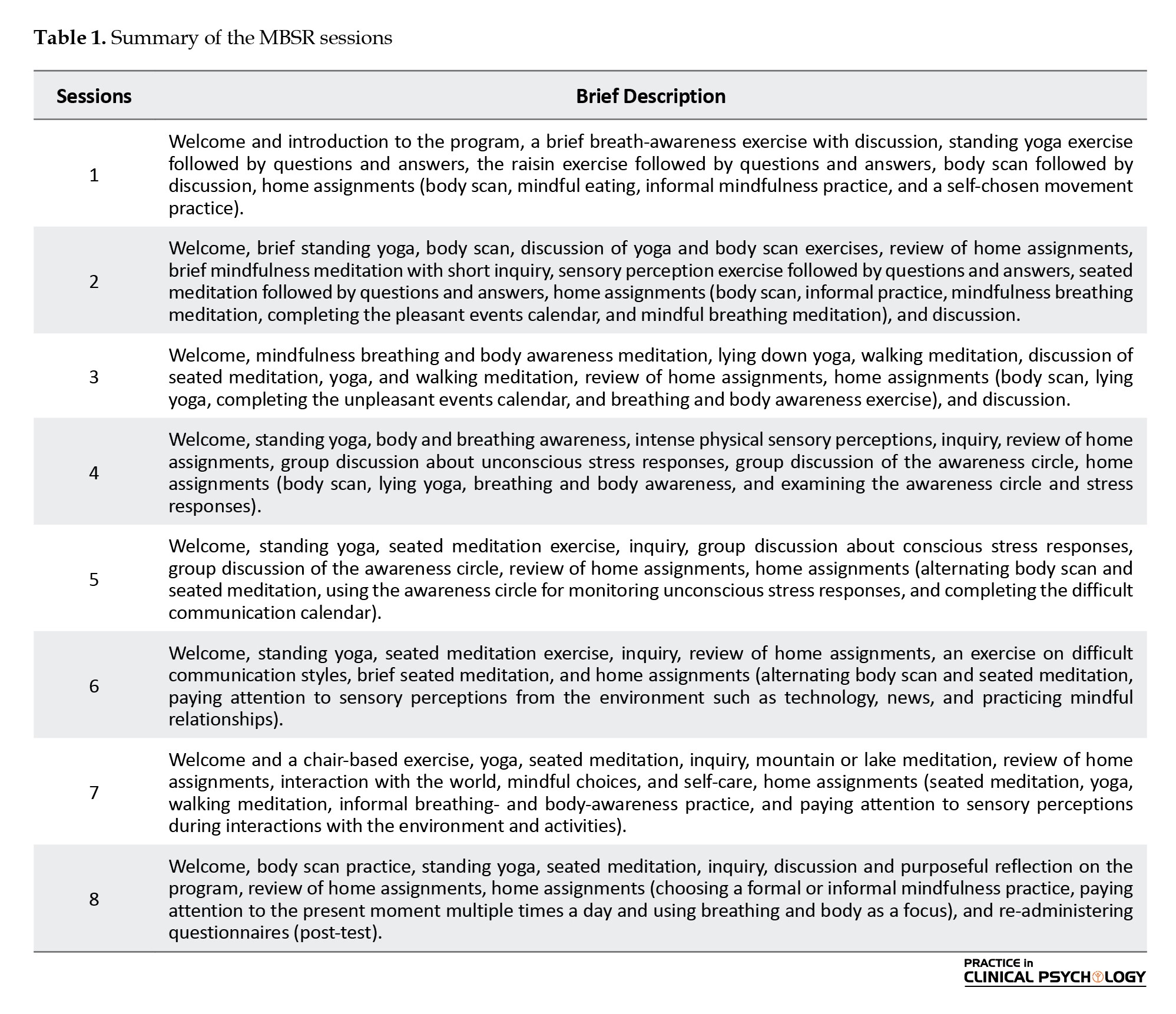
The MBSR program consisted of eight 90-minute sessions. The intervention was conducted by a master’s student who had completed a specialized MBSR workshop prior to implementing the program. All sessions were delivered strictly according to the standardized protocol outlined in The MBSR workbook by Woods and Rockman (2021), which has been translated and published in Iran. Throughout the intervention, the facilitator was under continuous supervision by a qualified supervisor, with weekly meetings held to ensure adherence to the protocol and fidelity of implementation. Table 1 presents a summary of the session content. This program has been widely applied in both Iranian and international studies following the same structure.
Procedure
In this study, after obtaining approval for the initial design, receiving an ethics code, and acquiring necessary permissions from the university and the Education Department, the researcher visited selected schools to explain the study’s objectives and procedures and to obtain the cooperation from school principals. A lower secondary school for girls, which had shown significant academic decline, was randomly selected, and 30 students were identified through a review of academic performance and an initial screening process. They were randomly assigned to two groups of 15 participants each (intervention and control). Consent forms were prepared, and after obtaining written consent from both parents and students, the research procedure was initiated. Participants assigned to the intervention group received eight sessions of MBSR, each lasting 90 minutes, conducted by an experienced school counselor. In contrast, those in the control group did not receive any intervention during the study period. Post-test assessments were administered to both groups 48 hours after the completion of the final session, followed by a one-month follow-up evaluation. Ethical principles—including privacy protection, confidentiality, informed consent, and voluntary participation—were carefully observed. Data were analyzed using descriptive statistics and repeated-measures multivariate analysis of variance (MANOVA) in SPSS software, version 24.
Results
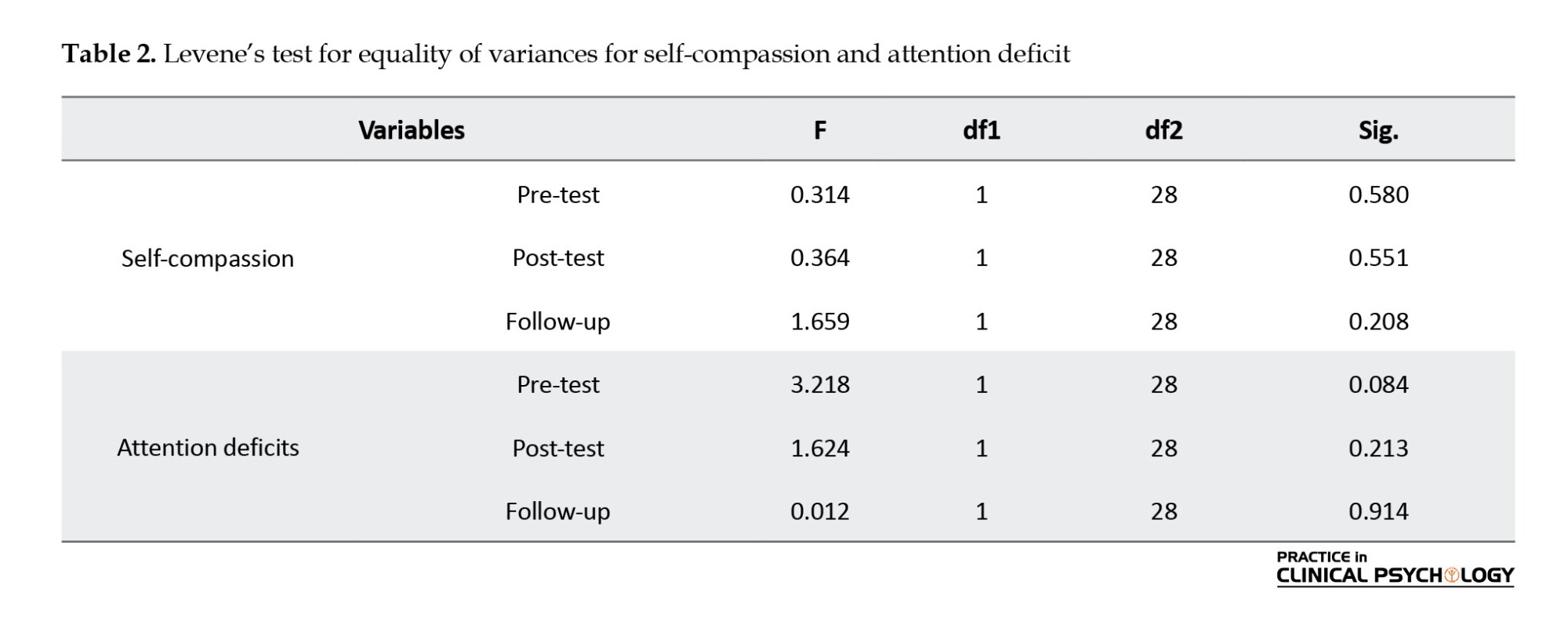
The descriptive statistics and assumption checks confirmed the appropriateness of the data for inferential analysis. The pre-test mean scores for academic procrastination, the primary inclusion criterion, were 46.60 for the control group and 47.07 for the intervention group, indicating higher‑than‑average levels of procrastination according to the TPS. Levene’s test demonstrated no significant differences in variances between groups for self-compassion and attention deficits at any measurement point, supporting the assumption of homogeneity (Table 2).
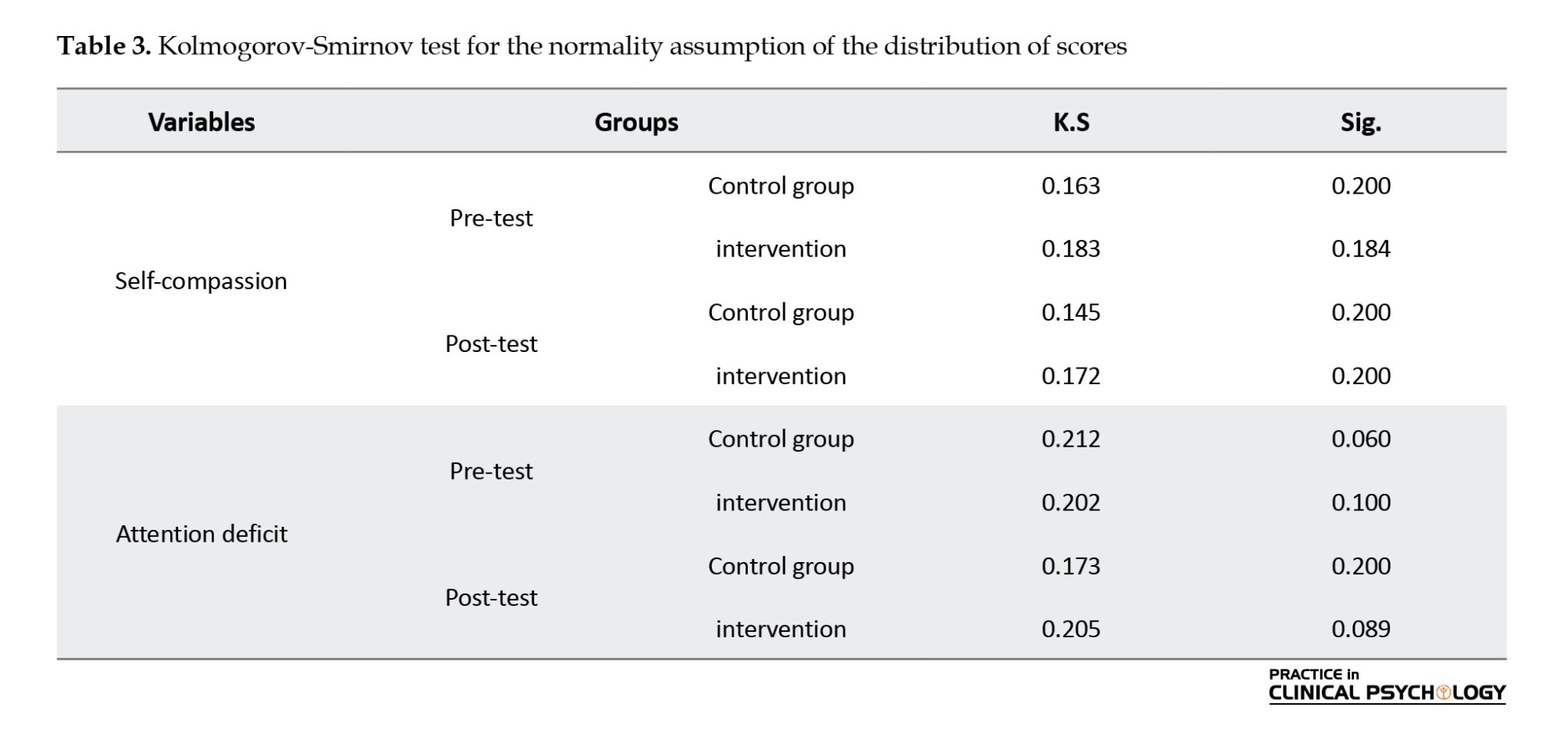
Similarly, the Kolmogorov–Smirnov test indicated the normality of score distributions for all variables (Table 3). Furthermore, all subsequent inferential analyses were conducted with a 95% confidence interval (CI), providing a robust estimate of the range within which the true mean differences are likely to fall.
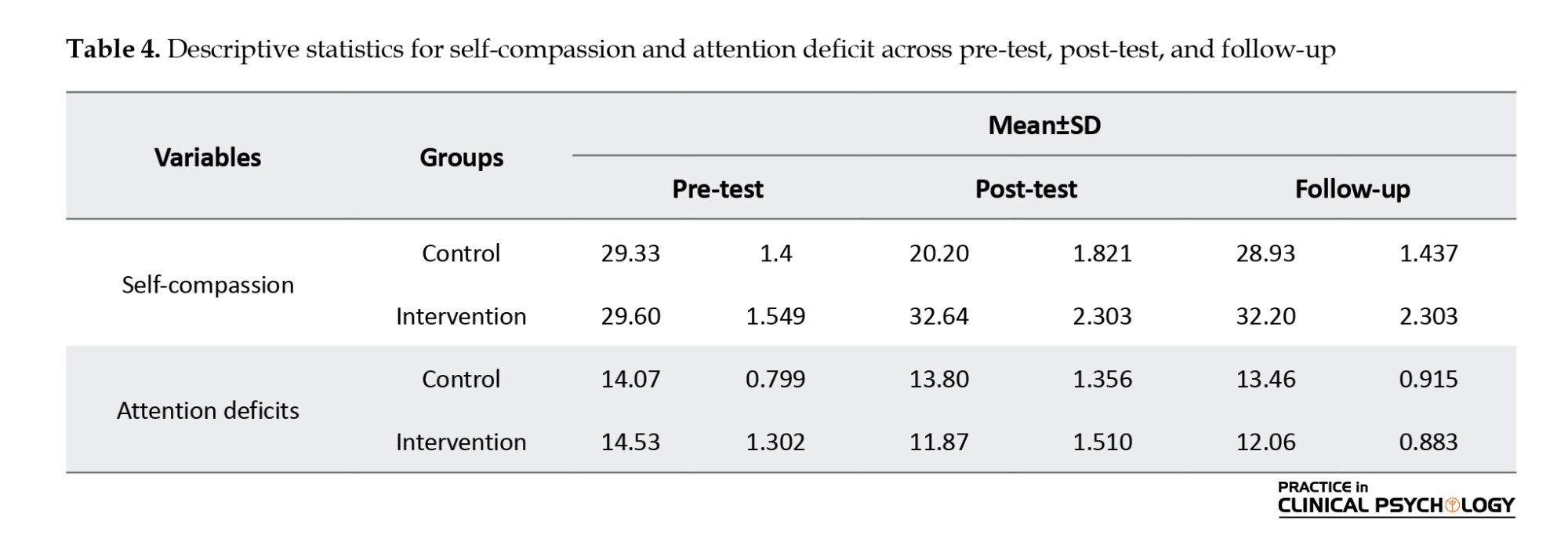
Descriptive statistics indicated that, following the MBSR intervention, self-compassion increased while levels of attention deficits decreased in the intervention group (Table 4). In contrast, the control group exhibited minimal changes across all stages. These descriptive trends suggest a potential effect of the intervention on the targeted outcomes.
MANOVA was conducted to examine the overall effect of MBSR training on self-compassion and attention deficits. Preliminary checks, including Box’s M test, supported the homogeneity of covariance matrices. The effect sizes were substantial, with eta squared (η²) values of 0.657 for self-compassion and 0.424 for attention deficits (Table 5), indicating that the intervention accounted for a large proportion of the variance in post-test scores.
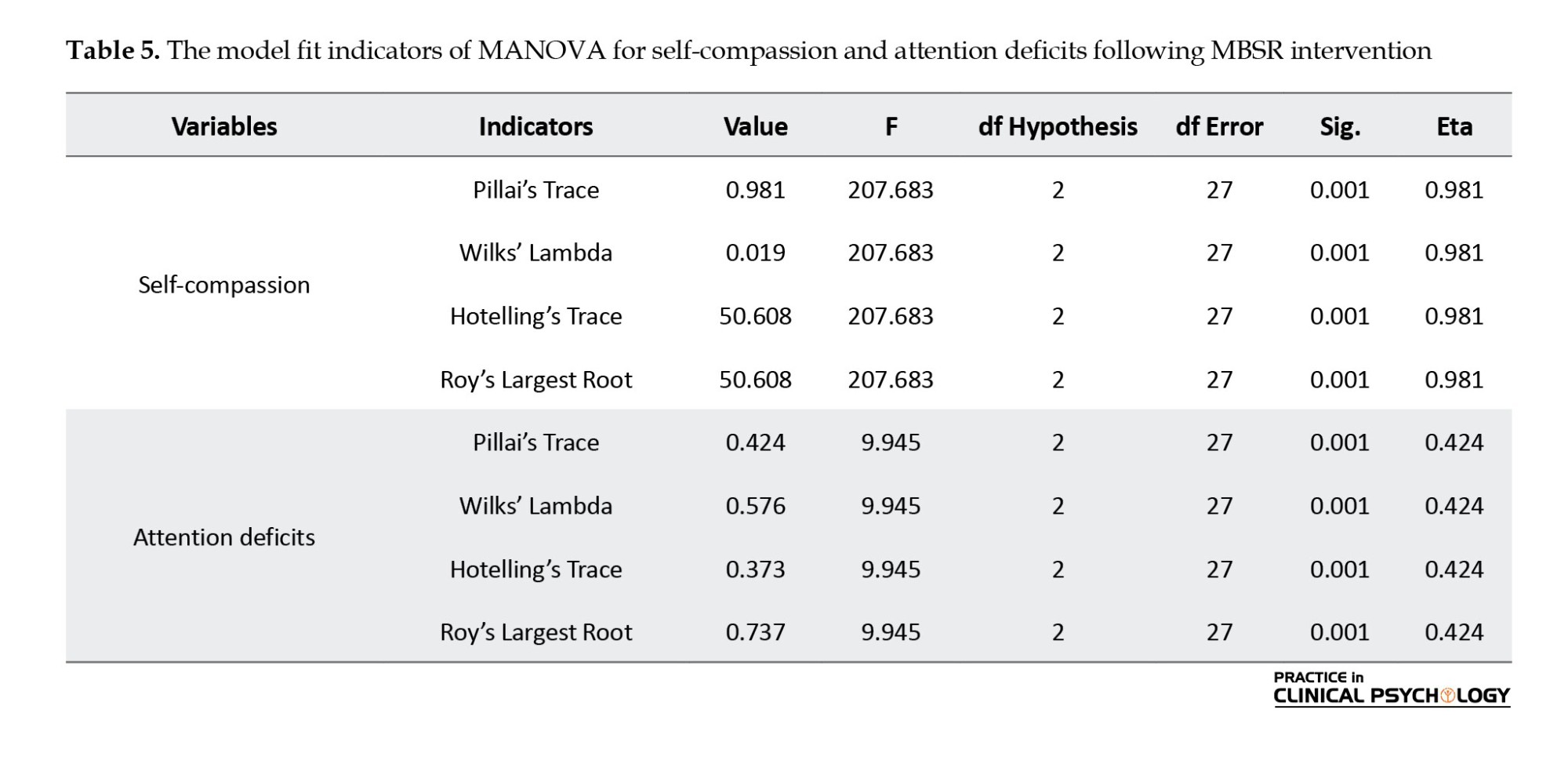
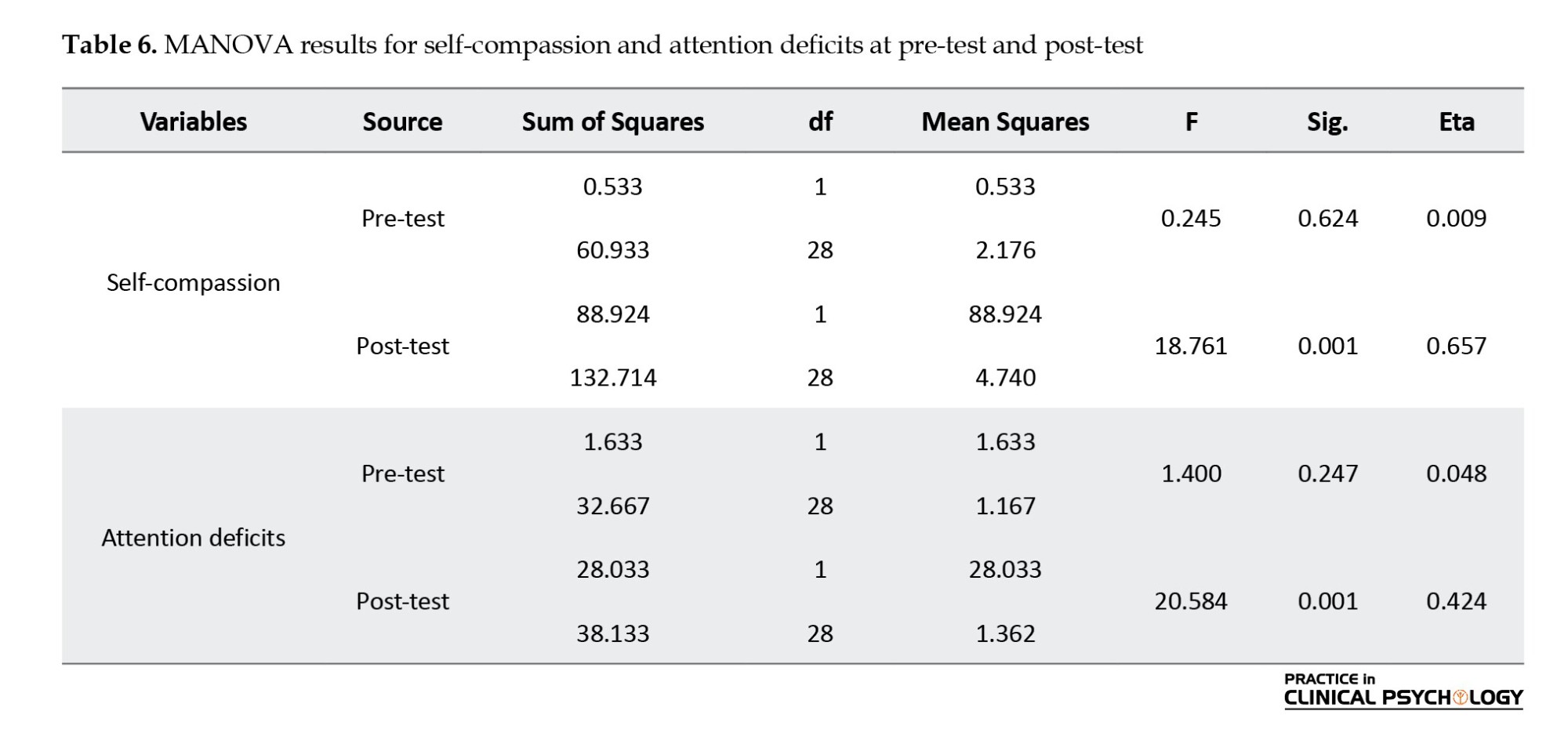
According to Table 6, the MBSR intervention had a significant effect on self-compassion and attention deficits. Specifically, multivariate tests indicated significant differences between the intervention and control groups in the post-intervention phase for self-compassion and for attention deficits. The results confirm that MBSR training significantly increases self-compassion and reduces attention deficits in students with academic procrastination (P<0.001).
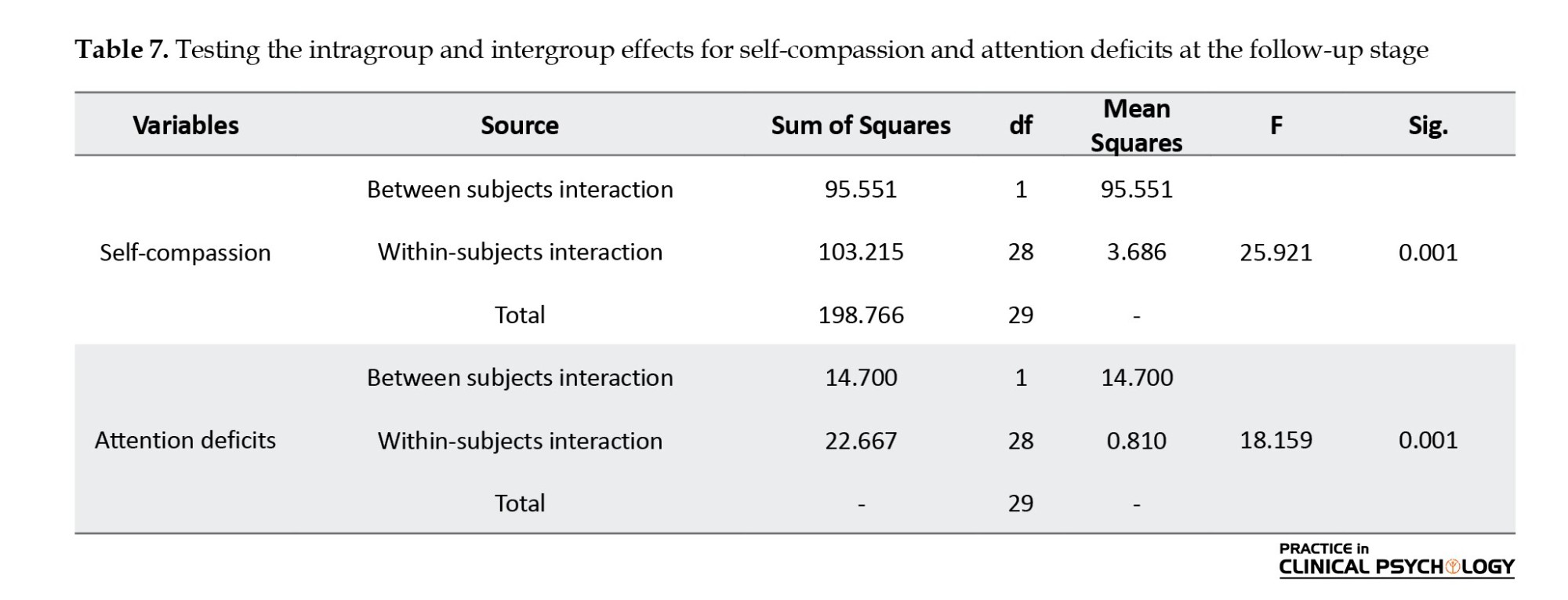
An analysis of follow-up effects using within‑group and between‑group F-tests revealed that the improvements in self-compassion and reductions in attention deficits were largely maintained one month after the intervention (Table 7).
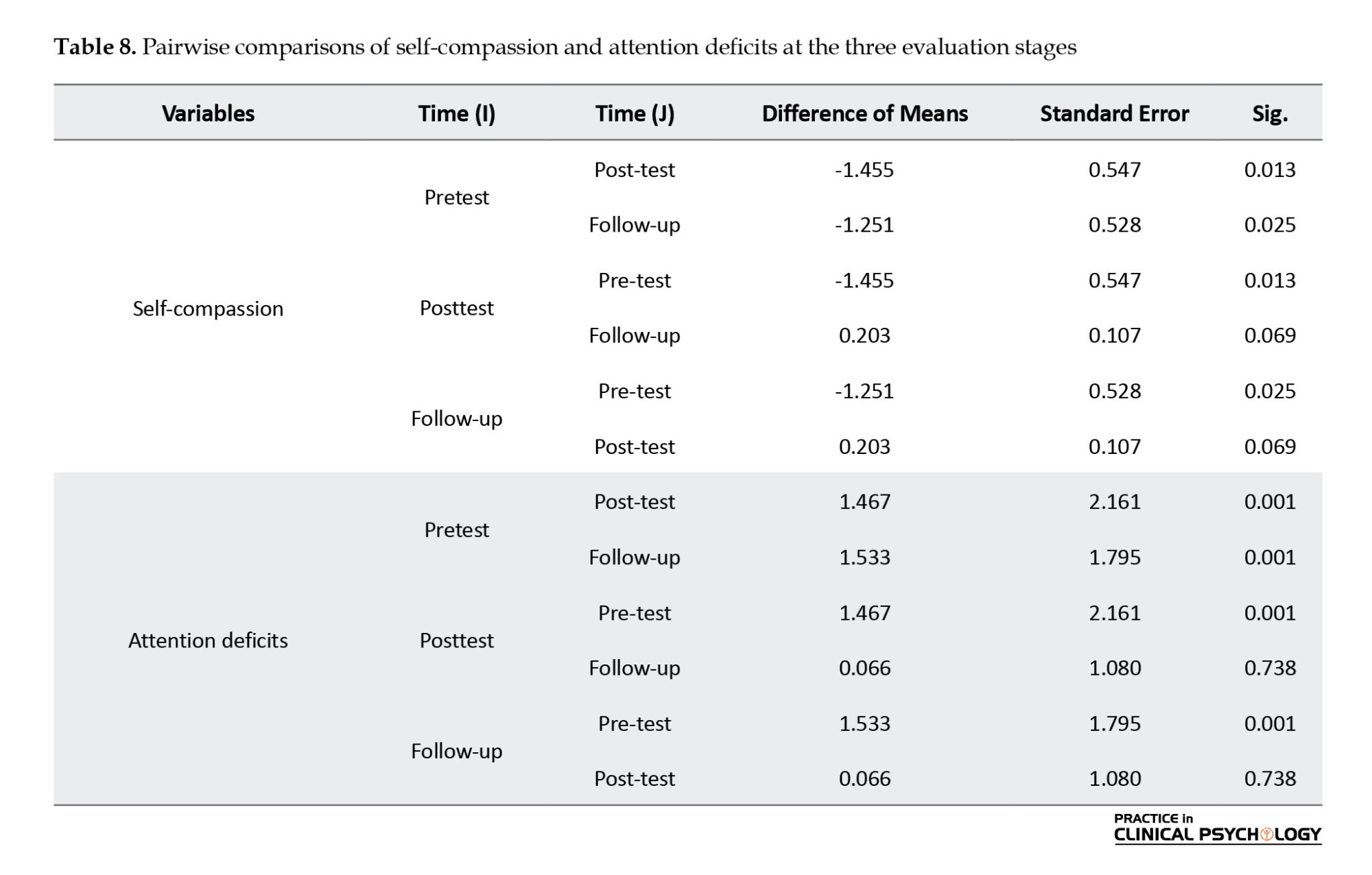
Pairwise comparisons using Bonferroni correction confirmed statistically significant increases in self-compassion and decreases in attention deficits between the pre-test and post-test, and between pre-test and follow-up in the intervention group (P<0.05). Differences between the post-test and follow-up stages were not statistically significant, suggesting the stability of the intervention effects over time (Table 8)
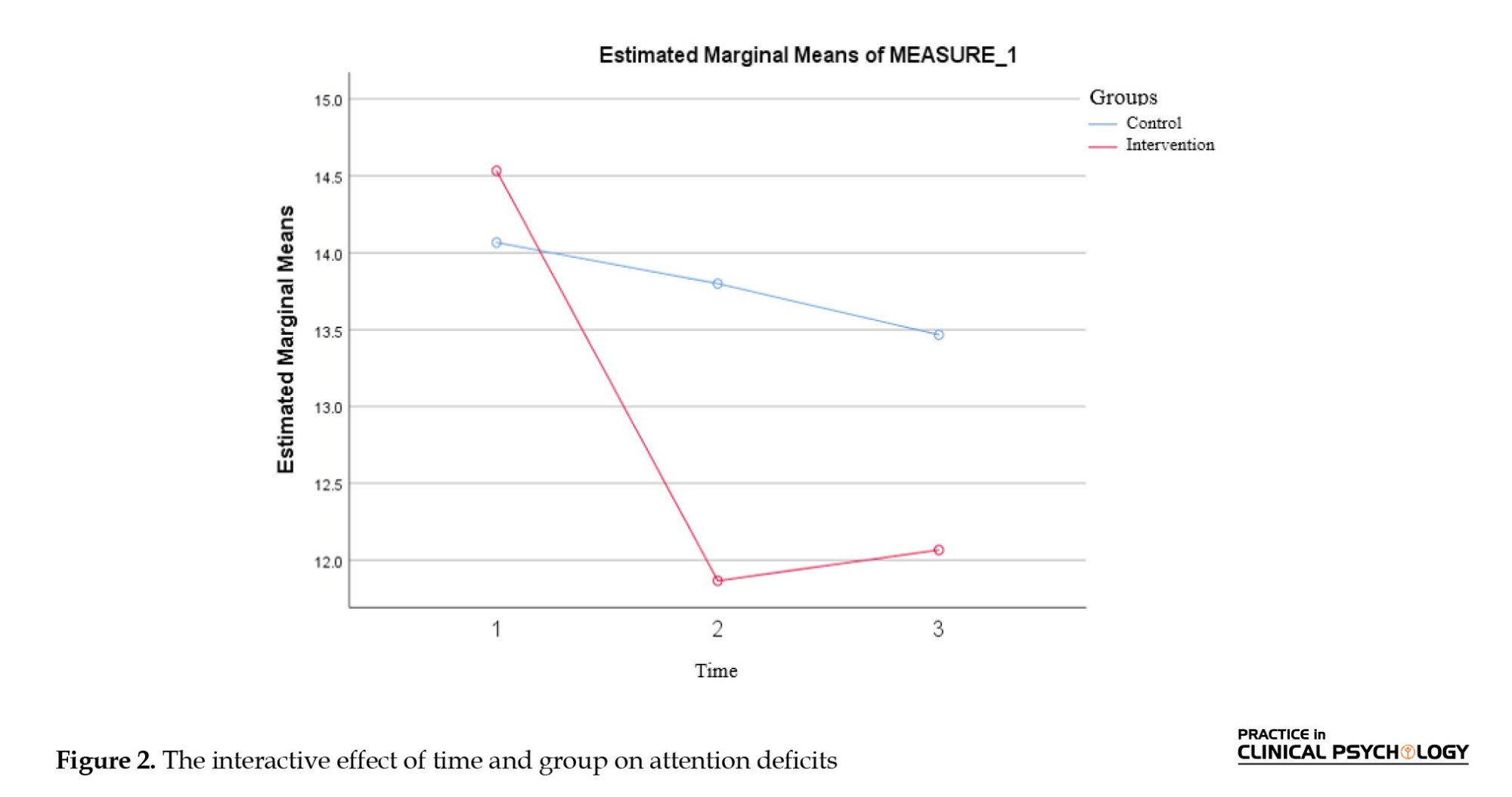
Figures 1 and 2 further illustrate these trends, showing that the control group scores remained relatively stable across all assessment points.
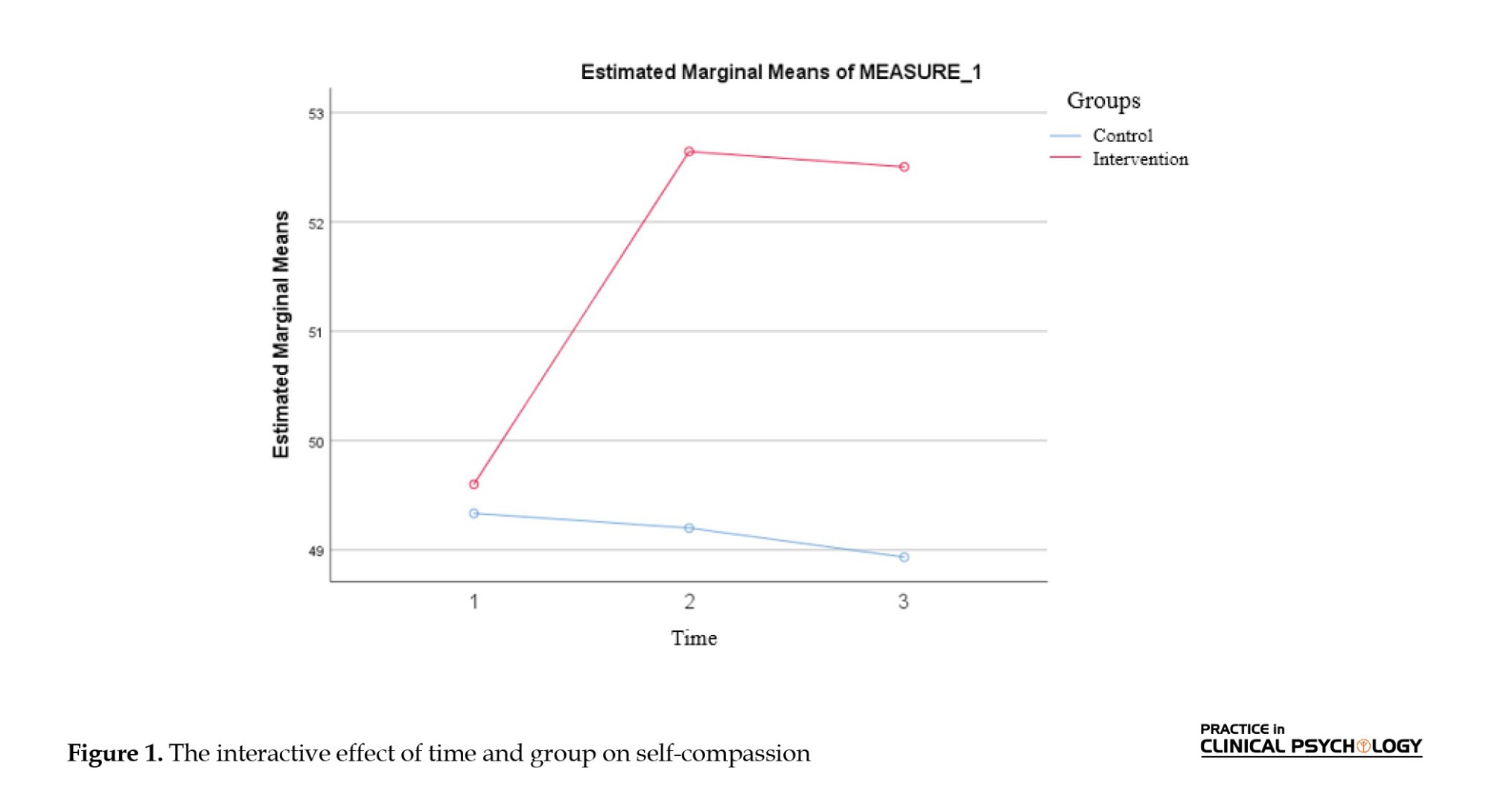
In contrast, the intervention group exhibited marked increases in self-compassion and decreases in attention deficits following the intervention, with only minor changes at follow-up. These results indicate that MBSR training effectively enhances self-compassion and reduces attention-related difficulties in students exhibiting academic procrastination, with effects persisting at least one month post-intervention.
Discussion
This study investigated the effectiveness of MBSR on self-compassion and attention deficits among students exhibiting academic procrastination. The findings revealed that MBSR significantly enhanced self-compassion and reduced attention deficits in the intervention group compared to the control group. These results align with prior research demonstrating that mindfulness training can improve self-compassion and cognitive functioning in adolescents and university students (Evans et al., 2018; Newsome et al., 2012; Neff, 2023; Schutte & Malouff, 2025; Chu & Mak, 2020; Raes et al., 2011; Sumantry & Stewart, 2021).
The enhancement of self-compassion appears to occur through cultivating a non-judgmental and accepting perspective toward oneself, which mitigates negative self-evaluation and rumination typically associated with academic procrastination (Momeni et al., 2014; Gazer & Esmaeili, 2016). Specifically, students who received MBSR training learned to approach challenging academic situations without denial or exaggeration, to focus on constructive strategies, and to reduce self-blame and isolation. Consistent with Tiwari et al. (2020), self-compassion functions as an intrapersonal resource, enabling emotional regulation, sustaining motivation, and maintaining psychological flexibility in stressful contexts. Within the framework of academic procrastination, these mechanisms allow students to respond to setbacks with understanding and care, rather than self-criticism, thereby reducing maladaptive procrastination behaviors. Moreover, mindfulness training fosters metacognitive awareness, allowing students to observe thoughts and emotions without over-identification or rumination, which reduces self-critical tendencies and emotional reactivity (Neff, 2023; Schutte & Malouff, 2025). By cultivating self-kindness and recognition of shared human experiences, MBSR encourages adaptive responses to academic difficulties, mitigating the emotional consequences of procrastination (Evans et al., 2018; Newsome et al., 2012; Raes et al., 2011; Chu & Mak, 2020).
From a cognitive-neuroscientific perspective, mindfulness practices within MBSR are associated with increased activation of the prefrontal cortex and decreased activation of the amygdala, reflecting enhanced top-down regulation of emotion and diminished automatic reactivity to stressors (Tang et al., 2015). This neural modulation signifies a shift from impulsive, emotion-driven responses toward deliberate, cognitively mediated regulation. When students encounter task-related frustration or delay, this neural balance allows them to refrain from spiraling into self-critical thought patterns, such as “I am a failure.” Instead, through metacognitive monitoring, they can recognize such thoughts as transient mental events— “I am having the thought that I am a failure”—thereby reducing self-identification with negative self-appraisals and fostering a more compassionate inner dialogue. This transition from self-critical, evaluative processing to acceptance-based self-referential processing constitutes a key neurocognitive mechanism through which mindfulness enhances self-compassion (Brewer et al., 2011).
In addition to improving self-compassion, the study demonstrated that MBSR effectively enhances attention regulation among students with academic procrastination. Mindfulness involves deliberate attention control, enabling individuals to focus on the present moment while minimizing distraction (Chu & Mak, 2020; Sumantry & Stewart, 2021). MBSR practices—including breath awareness, body scanning, and focused meditation—train participants to monitor and redirect attention, enhancing sustained attention and cognitive control (Fakhrmand et al., 2019; Moore, Gruber, Derose, & Malinowski, 2012). Prior studies support these effects; for instance, Zamani-Amirzakaria, Fazilat-Pour, and Towhidi (2018) reported that MBSR improved sustained attention and reduced academic burnout among undergraduate female students. Similarly, Campbell et al. (2012) observed reductions in rumination and improvements in mindful attention in clinical populations.
Mindfulness practices further enhance attention by strengthening the capacity to observe internal distractions and redirect focus toward goal-relevant tasks, which is critical for managing procrastination behaviors (Jensen, 2012; Zamani-Amirzakaria et al., 2018). This improvement in attentional control also supports metacognitive regulation, allowing students to identify automatic avoidance patterns and adjust cognitive strategies in real time (Barkley, 2015; Creswell, 2017). By integrating attentional training with awareness of self-critical thoughts, MBSR not only reduces lapses in attention but also promotes cognitive flexibility, enabling students to persist in academic tasks while minimizing emotional interference from anxiety or negative self-evaluation. Consequently, through the dual pathways of self-compassion enhancement and attention regulation, MBSR offers a comprehensive mechanism to address the cognitive and emotional challenges underlying academic procrastination.
Furthermore, MBSR enhances metacognitive awareness—the capacity to observe one’s thoughts, emotions, and distractions without becoming entangled in them. Students who develop this awareness can recognize internal cues, such as “I am feeling bored” or “I am worrying about the exam result” without automatically disengaging from their academic tasks. This reflective awareness fosters a sense of psychological distance, enabling individuals to respond intentionally rather than react impulsively and to consciously redirect attention toward the task at hand (Jha et al., 2007). By strengthening this self-regulatory capacity, MBSR directly targets a core mechanism underlying procrastination—the habitual substitution of an aversive but essential activity with a more pleasurable yet less important one. This interpretation aligns with empirical evidence showing that mindfulness-based training improves attentional persistence and reduces avoidance tendencies in academic contexts (Zamani-Amirzakaria et al., 2018; Jensen, 2012; Campbell et al., 2012).
Conclusion
While these results are promising, several limitations should be acknowledged. One of the main limitations of the present study is the small sample size (n=30) and the inclusion of only female lower secondary school students from a single school in a limited geographic region. While these characteristics were acknowledged, their implications for external validity warrant further discussion. Specifically, the restricted sample limits the generalizability of the findings to other populations, including male students, students from various educational levels, or those from diverse socio-cultural and geographic backgrounds. Future research should include larger and more diverse samples, encompassing multiple schools, genders, and geographic regions, to confirm and extend these results. Second, the study did not include active control interventions or take measures to control potential confounding variables, which may have influenced the observed effects. Future studies should incorporate comparative interventions (e.g. mindfulness-based cognitive therapy) and design strategies to account for potential confounders.
Despite these limitations, the present findings have clear practical implications. School counselors and psychologists can implement MBSR programs to enhance self-compassion and attention regulation among students prone to academic procrastination. By fostering self-compassion, MBSR helps students manage negative emotions and self-critical thoughts, thereby promoting emotional resilience, motivation, and academic engagement. Furthermore, the improvement in attention control observed in this study suggests that integrating MBSR into educational programs could enhance students’ focus, learning efficiency, and overall academic performance. In conclusion, MBSR represents a promising intervention for addressing the psychological and cognitive challenges associated with academic procrastination. By simultaneously cultivating self-compassion and attentional skills, this approach enables students to adopt a more adaptive and flexible approach to academic challenges, reduce maladaptive procrastination behaviors, and promote positive mental health outcomes. Future research should aim to replicate these findings in broader populations and to explore the long-term sustainability of MBSR’s benefits.
Ethical Considerations
Compliance with ethical guidelines
The study protocol was approved by the Ethics Committee of Kurdistan University, Sanandaj, Iran (Code: IR.UOK.REC.1403.025) and was conducted in accordance with the ethical principles of the Declaration of Helsinki.
Funding
This article is extracted from master thesis of Parastoo Rostami, approved by, Kurdistan University, Sanandaj, Iran.
Authors' contributions
All authors contributed equally to the conception, design, data collection, analysis, and writing of this manuscript.
Conflict of interest
The authors declared no conflicts of interest.
Acknowledgments
The authors express their appreciation to the school administrators, students, and all individuals who contributed to the successful completion of this research.
References
Procrastination is one of the most common maladaptive behaviors across various domains of life and reflects a failure of self-regulation (Peixoto et al., 2021). It involves the unnecessary and voluntary delay of crucial tasks despite being aware of potential negative outcomes (Sirois & Pychyl, 2016). Unlike strategic delay, procrastination often leads to distress, guilt, and poor performance (Klingsieck et al., 2013). It is particularly prevalent in academic settings, where between 80% and 90% of students report some degree of procrastination (Haghbin, 2015; Islas, 2018). Academic procrastination is associated with various adverse consequences, such as lower academic achievement, school dropout (Kim & Seo, 2015), and increased risk of depression and anxiety (Klassen et al., 2008).
Recent research suggests that procrastination can be a maladaptive response to stress, particularly among individuals who evaluate themselves harshly and critically. Lower levels of self-compassion are strongly related to higher levels of procrastination (Sirois, 2023). Self-compassion—defined as treating oneself with kindness and understanding during moments of failure rather than engaging in self-criticism (Neff, 2023; Shirvani et al., 2019)—is a key adaptive quality that promotes self-regulation, reduces stress, and protects against negative emotional responses. Evidence shows that positive self-compassion, rather than the mere absence of self-judgment, is more strongly associated with well-being and psychological resilience (Pandey et al., 2021a). Self-compassion also serves as an emotion regulation strategy that buffers against test anxiety and procrastination (Neff, 2023). Individuals who chronically postpone tasks often engage in ruminative self-criticism about their past failures, reinforcing self-blame and distress (Liu et al., 2023).
Attention deficit symptoms are another critical factor associated with procrastination. Students with attention difficulties often experience distractibility, poor concentration, and disorganized behavior (Lahey et al., 1998; Barkley, 2015). They tend to shift attention from important to irrelevant tasks, leading to frequent delays in task initiation and completion (Niermann & Scheres, 2014). Empirical evidence supports a robust association between inattention symptoms of attention‑deficits/hyperactivity disorder (ADHD)—not necessarily hyperactivity or impulsivity—and general procrastination behavior (e.g. Peixoto et al., 2021). For example, in one study (Niermann & Scheres, 2014), attention deficits was significantly correlated with procrastination even after controlling for hyperactivity-impulsivity symptoms. Thus, both low self-compassion and attention deficits appear to play central roles in the persistence of procrastinatory behaviors.
Given the academic, emotional, and behavioral consequences of procrastination, it is essential to identify interventions that strengthen self-regulation and reduce these risk factors. Within the framework of positive psychology, interventions that cultivate inner strengths, such as self-compassion, mindfulness, and self-affirmation, have shown promising effects. For instance, self-affirmation and compassion-based interventions enhance well-being and self-esteem even in subclinical populations (Pandey et al., 2021b; Tiwari et al., 2025). Among these approaches, mindfulness-based interventions, especially mindfulness-based stress reduction (MBSR), have gained increasing empirical support across clinical, social, and educational settings (Kabat-Zinn & Hanh, 2013; Ryan, 2012). MBSR aims to foster awareness of the present moment through non-judgmental attention, thereby promoting calmness, focus, and emotional balance (Creswell, 2017; Gu, 2015). Research demonstrates that mindfulness enhances attention, emotion regulation, and persistence in goal-directed behaviors while reducing stress-related rumination (Mao et al., 2024). Individuals with higher levels of mindfulness levels tend to report greater self-compassion (Schutte & Malouff, 2025).
MBSR has been widely recognized as an effective approach for enhancing mental health and managing stress, not only among clinical populations but also in healthy individuals (Marchand, 2012). In recent years, mindfulness-based programs have been increasingly implemented in educational contexts to foster attention, emotion regulation, motivation, and social-emotional competence among students (Flook et al., 2012; Schonert-Reichl & Lawlor, 2015). Research evidence indicates that MBSR interventions can significantly improve students’ capacity for sustained attention and self-regulation, thereby promoting academic engagement and psychological well-being (Zenner et al., 2014). Empirical studies have also shown that mindfulness-based interventions can reduce procrastination and its related risk factors by enhancing psychological capital and academic optimism (Black et al., 2012; Hashemi, 2020). In addition, mindfulness training has been found to facilitate cognitive flexibility and working memory while simultaneously strengthening self-compassion, key mechanisms that counteract self-critical thinking and maladaptive avoidance tendencies (Kuyken et al., 2010; Gu et al., 2015). Collectively, these findings support the view that mindfulness-based approaches, particularly MBSR, hold strong potential as preventive and therapeutic strategies for addressing academic procrastination by targeting both emotional and attentional mechanisms.
MBSR can be conceptualized within the broader self-regulation framework (Baumeister & Heatherton, 1996; Zimmerman, 2000), which posits that effective goal-directed behavior depends on the coordinated regulation of emotional and cognitive processes. Within this framework, mindfulness exerts its effects on academic procrastination through two complementary mechanisms that together constitute a dual-pathway model of self-regulation (Tang et al., 2015). The affective-regulatory pathway emphasizes the role of emotional awareness and acceptance in reducing self-critical and ruminative thinking that often underlies avoidance behaviors. Through enhanced metacognitive awareness, individuals learn to relate to experiences of failure or stress with self-compassion rather than self-judgment, thereby reducing the emotional discomfort that drives procrastination (Neff, 2023; Brewer et al., 2011). The cognitive-control pathway, in turn, involves improvements in sustained and executive attention that enable individuals to maintain focus on effortful but goal-relevant tasks, minimizing susceptibility to distractions and impulsive tendencies associated with attention deficits (Jha et al., 2007; Moore et al., 2012). Thus, by simultaneously fostering self-compassion and strengthening attentional regulation, MBSR promotes adaptive self-regulation, offering an integrated approach to mitigating academic procrastination—a maladaptive pattern rooted in both emotional dysregulation and cognitive inattention (Sirois & Pychyl, 2016; Peixoto et al., 2021).
Although previous studies have examined the effects of mindfulness on self-compassion (Schutte & Malouff, 2025) and attention (Jha et al., 2007; Moore et al., 2012), few have explored both mechanisms simultaneously in the context of academic procrastination. Moreover, despite growing evidence on the benefits of mindfulness, limited research has investigated its effectiveness for academic procrastination and its underlying psychological mechanisms, particularly self-compassion and attention deficits (Golestani Bakhat & Shokri, 2013). Given the high prevalence and negative consequences of procrastination among students, this study aimed to examine the effectiveness of MBSR training in enhancing self-compassion and reducing attention deficit symptoms in students with academic procrastination.
Materials and Methods
Research design and participants
A quasi-experimental method was employed, consisting of a pre-test–post-test control group design with a one-month follow-up. The study sample consisted of 30 female students enrolled in a lower secondary school in Sanandaj City, Iran, during the 2023–2024 academic year. Participants were selected through purposive sampling according to predefined inclusion and exclusion criteria and were randomly assigned into two groups: an intervention group and a control group, each containing 15 students. Moreover, Corey and Corey (2002) emphasized that small group formats—consisting of approximately 12 participants and one facilitator—create an optimal environment for member interaction, engagement in individual activities, and the development of group cohesion. Consistent with this recommendation, several previous studies have employed comparable sample sizes in implementing MBSR programs (e.g. Piri et al., 2025).
The analysis of the participants’ demographic information indicated that the participants were studying in the seventh, eighth, and ninth grades, with frequencies of 10, 8, and 12 students, respectively, corresponding to 33.3%, 26.7%, and 40% of the total number of students. Most participants were thus in the ninth grade. The students’ ages ranged from 13 to 16 years, with the highest percentage (30%) being 16 years old. Most students (33.3%) had an overall grade point average between 16 and 17 out of 20, indicating a moderate level of academic performance. The inclusion criteria included students scoring above the average on the Tuckman procrastination scale (TPS) and the Youth self-report (YSR), and below average on the Self-Compassion Scale, no diagnosis of serious psychological disorders, and informed consent obtained from both students and their parents. The exclusion criteria included missing two or more intervention sessions, concurrent participation in other psychological programs, failure to complete assigned exercises and instructions during the sessions, and concurrent use of psychiatric medication.
Instruments
TPS: The TPS was developed by Tuckman (1991) to assess academic procrastination. The scale consists of 16 items rated on a 4-point Likert scale. Twelve items are scored directly, and four items are reverse-scored. Higher scores on the TPS indicate greater levels of procrastination. The scale has been translated and standardized in Iran (Saboorirad et al., 2024). Its internal consistency in Iranian samples has been confirmed with a Cronbach’s α of 0.78. In the original sample, Tuckman (1991) reported an internal consistency of 0.86, and Akinsola et al. (2007) reported 0.88. In the current study, the TPS showed a Cronbach’s α of 0.845.
Self-compassion scale–short form (SCS-SF). The SCS-SF, developed by Raes et al. (2011), is designed to assess individuals’ levels of self-compassion. The instrument includes 12 items rated on a 5-point Likert scale ranging from 1 (almost never) to 5 (almost always), with higher total scores indicating greater self-compassion. The original version demonstrated satisfactory internal consistency (Cronbach’s α=0.86), while Wasylki et al. (2012) reported a reliability coefficient of 0.93. In Iranian validation studies, the Cronbach’s α for the total score was 0.91 (Shahbazi et al., 2015). In the present research, the internal consistency of the scale was found to be 0.823.
Youth self-report scale (YSR). To assess attention problems, the present study used the YSR developed by Achenbach and Rescorla (1991). The YSR was developed to evaluate behavioral problems in adolescents aged 11 to 18 and is completed by the adolescent. Respondents rate each item based on their behavior over the past six months using a 3-point scale (0=not true, 1=somewhat or sometimes true, 2=very true or often true). In this study, only the attention problems subscale was used, which includes items 1, 4, 8, 10, 13, 17, 41, 61, and 78, with a score range of 0 to 18. The reliability and validity of the YSR have been confirmed globally and in Iran (Minaee, 2006). For adolescent samples, the total scale has shown a Cronbach’s α of 0.93. In the present study, the Cronbach’s α for the Attention Problems subscale was estimated as 0.783. Intervention
The MBSR program consisted of eight 90-minute sessions. The intervention was conducted by a master’s student who had completed a specialized MBSR workshop prior to implementing the program. All sessions were delivered strictly according to the standardized protocol outlined in The MBSR workbook by Woods and Rockman (2021), which has been translated and published in Iran. Throughout the intervention, the facilitator was under continuous supervision by a qualified supervisor, with weekly meetings held to ensure adherence to the protocol and fidelity of implementation. Table 1 presents a summary of the session content. This program has been widely applied in both Iranian and international studies following the same structure.
Procedure
In this study, after obtaining approval for the initial design, receiving an ethics code, and acquiring necessary permissions from the university and the Education Department, the researcher visited selected schools to explain the study’s objectives and procedures and to obtain the cooperation from school principals. A lower secondary school for girls, which had shown significant academic decline, was randomly selected, and 30 students were identified through a review of academic performance and an initial screening process. They were randomly assigned to two groups of 15 participants each (intervention and control). Consent forms were prepared, and after obtaining written consent from both parents and students, the research procedure was initiated. Participants assigned to the intervention group received eight sessions of MBSR, each lasting 90 minutes, conducted by an experienced school counselor. In contrast, those in the control group did not receive any intervention during the study period. Post-test assessments were administered to both groups 48 hours after the completion of the final session, followed by a one-month follow-up evaluation. Ethical principles—including privacy protection, confidentiality, informed consent, and voluntary participation—were carefully observed. Data were analyzed using descriptive statistics and repeated-measures multivariate analysis of variance (MANOVA) in SPSS software, version 24.
Results
The descriptive statistics and assumption checks confirmed the appropriateness of the data for inferential analysis. The pre-test mean scores for academic procrastination, the primary inclusion criterion, were 46.60 for the control group and 47.07 for the intervention group, indicating higher‑than‑average levels of procrastination according to the TPS. Levene’s test demonstrated no significant differences in variances between groups for self-compassion and attention deficits at any measurement point, supporting the assumption of homogeneity (Table 2).
Similarly, the Kolmogorov–Smirnov test indicated the normality of score distributions for all variables (Table 3). Furthermore, all subsequent inferential analyses were conducted with a 95% confidence interval (CI), providing a robust estimate of the range within which the true mean differences are likely to fall.
Descriptive statistics indicated that, following the MBSR intervention, self-compassion increased while levels of attention deficits decreased in the intervention group (Table 4). In contrast, the control group exhibited minimal changes across all stages. These descriptive trends suggest a potential effect of the intervention on the targeted outcomes.
MANOVA was conducted to examine the overall effect of MBSR training on self-compassion and attention deficits. Preliminary checks, including Box’s M test, supported the homogeneity of covariance matrices. The effect sizes were substantial, with eta squared (η²) values of 0.657 for self-compassion and 0.424 for attention deficits (Table 5), indicating that the intervention accounted for a large proportion of the variance in post-test scores.
According to Table 6, the MBSR intervention had a significant effect on self-compassion and attention deficits. Specifically, multivariate tests indicated significant differences between the intervention and control groups in the post-intervention phase for self-compassion and for attention deficits. The results confirm that MBSR training significantly increases self-compassion and reduces attention deficits in students with academic procrastination (P<0.001).
An analysis of follow-up effects using within‑group and between‑group F-tests revealed that the improvements in self-compassion and reductions in attention deficits were largely maintained one month after the intervention (Table 7).
Pairwise comparisons using Bonferroni correction confirmed statistically significant increases in self-compassion and decreases in attention deficits between the pre-test and post-test, and between pre-test and follow-up in the intervention group (P<0.05). Differences between the post-test and follow-up stages were not statistically significant, suggesting the stability of the intervention effects over time (Table 8)
Figures 1 and 2 further illustrate these trends, showing that the control group scores remained relatively stable across all assessment points.
In contrast, the intervention group exhibited marked increases in self-compassion and decreases in attention deficits following the intervention, with only minor changes at follow-up. These results indicate that MBSR training effectively enhances self-compassion and reduces attention-related difficulties in students exhibiting academic procrastination, with effects persisting at least one month post-intervention.
Discussion
This study investigated the effectiveness of MBSR on self-compassion and attention deficits among students exhibiting academic procrastination. The findings revealed that MBSR significantly enhanced self-compassion and reduced attention deficits in the intervention group compared to the control group. These results align with prior research demonstrating that mindfulness training can improve self-compassion and cognitive functioning in adolescents and university students (Evans et al., 2018; Newsome et al., 2012; Neff, 2023; Schutte & Malouff, 2025; Chu & Mak, 2020; Raes et al., 2011; Sumantry & Stewart, 2021).
The enhancement of self-compassion appears to occur through cultivating a non-judgmental and accepting perspective toward oneself, which mitigates negative self-evaluation and rumination typically associated with academic procrastination (Momeni et al., 2014; Gazer & Esmaeili, 2016). Specifically, students who received MBSR training learned to approach challenging academic situations without denial or exaggeration, to focus on constructive strategies, and to reduce self-blame and isolation. Consistent with Tiwari et al. (2020), self-compassion functions as an intrapersonal resource, enabling emotional regulation, sustaining motivation, and maintaining psychological flexibility in stressful contexts. Within the framework of academic procrastination, these mechanisms allow students to respond to setbacks with understanding and care, rather than self-criticism, thereby reducing maladaptive procrastination behaviors. Moreover, mindfulness training fosters metacognitive awareness, allowing students to observe thoughts and emotions without over-identification or rumination, which reduces self-critical tendencies and emotional reactivity (Neff, 2023; Schutte & Malouff, 2025). By cultivating self-kindness and recognition of shared human experiences, MBSR encourages adaptive responses to academic difficulties, mitigating the emotional consequences of procrastination (Evans et al., 2018; Newsome et al., 2012; Raes et al., 2011; Chu & Mak, 2020).
From a cognitive-neuroscientific perspective, mindfulness practices within MBSR are associated with increased activation of the prefrontal cortex and decreased activation of the amygdala, reflecting enhanced top-down regulation of emotion and diminished automatic reactivity to stressors (Tang et al., 2015). This neural modulation signifies a shift from impulsive, emotion-driven responses toward deliberate, cognitively mediated regulation. When students encounter task-related frustration or delay, this neural balance allows them to refrain from spiraling into self-critical thought patterns, such as “I am a failure.” Instead, through metacognitive monitoring, they can recognize such thoughts as transient mental events— “I am having the thought that I am a failure”—thereby reducing self-identification with negative self-appraisals and fostering a more compassionate inner dialogue. This transition from self-critical, evaluative processing to acceptance-based self-referential processing constitutes a key neurocognitive mechanism through which mindfulness enhances self-compassion (Brewer et al., 2011).
In addition to improving self-compassion, the study demonstrated that MBSR effectively enhances attention regulation among students with academic procrastination. Mindfulness involves deliberate attention control, enabling individuals to focus on the present moment while minimizing distraction (Chu & Mak, 2020; Sumantry & Stewart, 2021). MBSR practices—including breath awareness, body scanning, and focused meditation—train participants to monitor and redirect attention, enhancing sustained attention and cognitive control (Fakhrmand et al., 2019; Moore, Gruber, Derose, & Malinowski, 2012). Prior studies support these effects; for instance, Zamani-Amirzakaria, Fazilat-Pour, and Towhidi (2018) reported that MBSR improved sustained attention and reduced academic burnout among undergraduate female students. Similarly, Campbell et al. (2012) observed reductions in rumination and improvements in mindful attention in clinical populations.
Mindfulness practices further enhance attention by strengthening the capacity to observe internal distractions and redirect focus toward goal-relevant tasks, which is critical for managing procrastination behaviors (Jensen, 2012; Zamani-Amirzakaria et al., 2018). This improvement in attentional control also supports metacognitive regulation, allowing students to identify automatic avoidance patterns and adjust cognitive strategies in real time (Barkley, 2015; Creswell, 2017). By integrating attentional training with awareness of self-critical thoughts, MBSR not only reduces lapses in attention but also promotes cognitive flexibility, enabling students to persist in academic tasks while minimizing emotional interference from anxiety or negative self-evaluation. Consequently, through the dual pathways of self-compassion enhancement and attention regulation, MBSR offers a comprehensive mechanism to address the cognitive and emotional challenges underlying academic procrastination.
Furthermore, MBSR enhances metacognitive awareness—the capacity to observe one’s thoughts, emotions, and distractions without becoming entangled in them. Students who develop this awareness can recognize internal cues, such as “I am feeling bored” or “I am worrying about the exam result” without automatically disengaging from their academic tasks. This reflective awareness fosters a sense of psychological distance, enabling individuals to respond intentionally rather than react impulsively and to consciously redirect attention toward the task at hand (Jha et al., 2007). By strengthening this self-regulatory capacity, MBSR directly targets a core mechanism underlying procrastination—the habitual substitution of an aversive but essential activity with a more pleasurable yet less important one. This interpretation aligns with empirical evidence showing that mindfulness-based training improves attentional persistence and reduces avoidance tendencies in academic contexts (Zamani-Amirzakaria et al., 2018; Jensen, 2012; Campbell et al., 2012).
Conclusion
While these results are promising, several limitations should be acknowledged. One of the main limitations of the present study is the small sample size (n=30) and the inclusion of only female lower secondary school students from a single school in a limited geographic region. While these characteristics were acknowledged, their implications for external validity warrant further discussion. Specifically, the restricted sample limits the generalizability of the findings to other populations, including male students, students from various educational levels, or those from diverse socio-cultural and geographic backgrounds. Future research should include larger and more diverse samples, encompassing multiple schools, genders, and geographic regions, to confirm and extend these results. Second, the study did not include active control interventions or take measures to control potential confounding variables, which may have influenced the observed effects. Future studies should incorporate comparative interventions (e.g. mindfulness-based cognitive therapy) and design strategies to account for potential confounders.
Despite these limitations, the present findings have clear practical implications. School counselors and psychologists can implement MBSR programs to enhance self-compassion and attention regulation among students prone to academic procrastination. By fostering self-compassion, MBSR helps students manage negative emotions and self-critical thoughts, thereby promoting emotional resilience, motivation, and academic engagement. Furthermore, the improvement in attention control observed in this study suggests that integrating MBSR into educational programs could enhance students’ focus, learning efficiency, and overall academic performance. In conclusion, MBSR represents a promising intervention for addressing the psychological and cognitive challenges associated with academic procrastination. By simultaneously cultivating self-compassion and attentional skills, this approach enables students to adopt a more adaptive and flexible approach to academic challenges, reduce maladaptive procrastination behaviors, and promote positive mental health outcomes. Future research should aim to replicate these findings in broader populations and to explore the long-term sustainability of MBSR’s benefits.
Ethical Considerations
Compliance with ethical guidelines
The study protocol was approved by the Ethics Committee of Kurdistan University, Sanandaj, Iran (Code: IR.UOK.REC.1403.025) and was conducted in accordance with the ethical principles of the Declaration of Helsinki.
Funding
This article is extracted from master thesis of Parastoo Rostami, approved by, Kurdistan University, Sanandaj, Iran.
Authors' contributions
All authors contributed equally to the conception, design, data collection, analysis, and writing of this manuscript.
Conflict of interest
The authors declared no conflicts of interest.
Acknowledgments
The authors express their appreciation to the school administrators, students, and all individuals who contributed to the successful completion of this research.
References
Akinsola, M.K. Tella, A., & Tella, A. (2007). Correlates of academic procrastination and mathematics achievement of university undergraduate students Eurasia. Journal of Mathematics, Science & Technology Education, 3(4), 363-370. [DOI:10.12973/ejmste/75415]
Barkley, R.A. (2015). Attention-deficit hyperactivity disorder: a handbook for diagnosis and treatment. 4th edition. New York: The Guilford Press. [Link]
Baumeister, R. F., & Heatherton, T. F. (1996). Self-regulation failure: An overview. Psychological Inquiry, 7(1), 1-15. [DOI:10.1207/s15327965pli0701_1]
Black, D. S., Sussman, S., Johnson, C. A., & Milam, J. (2012). Trait mindfulness helps shield decision-making from translating into health-risk behavior. The Journal of adolescent health: official publication of the Society for Adolescent Medicine, 51(6), 588-592. [DOI:10.1016/j.jadohealth.2012.03.011] [PMID]
Brewer, J. A., Worhunsky, P. D., Gray, J. R., Tang, Y. Y., Weber, J., & Kober, H. (2011). Meditation experience is associated with differences in default mode network activity and connectivity. Proceedings of the National Academy of Sciences, 108(50), 20254-20259. [DOI:10.1073/pnas.1112029108] [PMID]
Campbell, T. S., Labelle, L. E., Bacon, S. L., Faris, P., & Carlson, L. E. (2012). Impact of Mindfulness-Based Stress Reduction (MBSR) on attention, rumination and resting blood pressure in women with cancer: A waitlist-controlled study. Journal of Behavioral Medicine, 35(3), 262-271. [DOI:10.1007/s10865-011-9357-1] [PMID]
Chu, S. T. W., & Mak, W. W. S. (2020). How mindfulness enhances meaning in life: A meta-analysis of correlational studies and randomized controlled trials. Mindfulness, 11(1), 177-193. [DOI:10.1007/s12671-019-01258-9]
Zenner, C., Herrnleben-Kurz, S., & Walach, H. (2014). Mindfulness-based interventions in schools- A systematic review and meta-analysis. Frontiers in Psychology, 5, 603. [DOI:10.3389/fpsyg.2014.00603]
Corey, M. S., & Corey, G. (2002). Groups, process and practice. Monterey: Brooks/Cole. [Link]
Creswell, J.D. (2017). Mindfulness Interventions. Annual Review of Psychology, 68, 491-516. [DOI:10.1146/annurev-psych-042716-051139] [PMID]
Evans, S., Wyka, K., Blaha, K. T., & Allen, E. S. (2018). Self-compassion mediates improvement in well-being in a mindfulness-based stress reduction program in a community-based sample. Mindfulness, 9(4), 1280-1287. [DOI:10.1007/s12671-017-0872-1]
Fakhrmand, A., Ebrahimi Meymand, H.A., & Fazalizpour, M. (2019). The effectiveness of mindfulness-based cognitive behavioral intervention on working memory in patients with multiple sclerosis and healthy individuals. Psychological Methods and Models, 10(4), 125-146. [Link]
Flook, L., Goldberg, S. B., Pinger, L., & Davidson, R. J. (2015). Promoting prosocial behavior and self-regulatory skills in preschool children through a mindfulness-based kindness curriculum. Developmental Psychology, 51(1), 44-51. [DOI:10.1037/a0038256.] [PMID]
Gazer, A., & Esmaeili, M. (2016). The effectiveness of mindfulness-based stress reduction therapy on self-compassion in women with asthma. Paper presented at: International Conference on New Horizons in Educational Sciences, Psychology and Social Trauma, Tehran, Iran, 2017, July, 1. [Link]
Golestani Bakhat, T., & Shokri, M. (2013). Relationship between Academic Procrastination with meta cognitive beliefs. Social Cognition, 2(1), 89-100. [Link]
Gu, J., Strauss, C., Bond, R., & Cavanagh, K. (2015). How do mindfulness-based cognitive therapy and mindfulness-based stress reduction improve mental health and wellbeing? A systematic review and meta-analysis of mediation studies. Clinical Psychology Review, 37, 1-12. [DOI:10.1016/j.cpr.2015.01.006] [PMID]
Haghbin, M. (2015). Conceptualization and operationalization of delay: Development and validation of the multifaceted measure of academic procrastination and the delay questionnaire [doctoral dissertation]. Ottawa: Carleton University. [DOI:10.22215/etd/2015-11051]
Hashemi, F., Dortaj, F., Farrokhi, N., & Nasrollahi, B. (2020). Effectiveness of mindfulness training on components of students’ academic optimism (social confidence, academic emphasis and identity sense). Scientific Journal of Social Psychology, 7(53), 101-108. [Link]
Islas, M. S. (2018). An exploration of the triadic model of procrastination: Arousal, avoidant, and decisional procrastination in adults [doctoral dissertation]. Los Angeles: California State University. [Link]
Jensen, C. G., Vangkilde, S., Frokjaer, V., & Hasselbalch, S. G. (2012). Mindfulness training affects attention-Or is its attentional effort? Journal of Experimental Psychology, 141(1), 106-123. [DOI:10.1037/a0024931] [PMID]
Jha, A. P., Krompinger, J., & Baime, M. J. (2007). Mindfulness training modifies subsystems of attention. Cognitive, Affective, & Behavioral Neuroscience, 7(2), 109-119. [DOI:10.3758/CABN.7.2.109] [PMID]
Kabat-Zinn, J., & Hanh, T. N. (2013). Full Catastrophe living (revised edition): Using the wisdom of your body and mind to face stress, pain, and illness. New York: Bantam. [Link]
Kim, K. R., & Seo, E. H. (2015). The relationship between procrastination and academic performance: A meta-analysis. Personality and Individual Differences, 82, 26-3. [DOI:10.1016/j.paid.2015.02.038]
Klassen, R.M. & Kuzucu, E. (2008). Academic procrastinationand motivation of adolescents in Turkey. Educational Psychology, 29(1), 69-81. [DOI:10.1080/01443410701814129]
Klingsieck, K. B., Grund, A., Schmid, S., & Fries, S. (2013). Why students procrastinate: A qualitative approach. Journal of College Student Development, 54(4), 397-412. [DOI:10.1353/csd.2013.0060]
Kuyken, W., Watkins, E., Holden, E., White, K., Taylor, R. S., Byford, S., Evans, A., Radford, S., Teasdale, J. D., & Dalgleish, T. (2010). How does mindfulness-based cognitive therapy work? Behaviour Research and Therapy, 48(11), 1105-1112. [DOI:10.1016/j.brat.2010.08.003] [PMID]
Lahey, B.B., Pelham, E., Stein, M.A., Loney, J., Trapani, C., & Nugent, K., et al. (1998) Validity of DSM-IV attention-deficit/hyperactivity disorder for younger children. Journal of the American Academy of Child and Adolescent Psychiatry, 37(7), 695-702. [DOI:10.1097/00004583-199807000-00008] [PMID]
Liu, L., Zhang, T., & Xie, X. (2023). Negative life events and procrastination among adolescents: The roles of negative emotions and rumination, as well as the potential gender differences. Behavioral Sciences, 13(2), 176. [DOI:10.3390/bs13020176] [PMID]
Mao, Y., Zhang, J., Liu, Y., & Wang, Y. (2024). Mindfulness matters: Unveiling the relationship between trait mindfulness and procrastination - A three level meta-analysis. The Journal of General Psychology, 152(3), 475-496. [DOI:10.1080/00221309.2024.2407426] [PMID]
Marchand W. R. (2012). Mindfulness-based stress reduction, mindfulness-based cognitive therapy, and Zen meditation for depression, anxiety, pain, and psychological distress. Journal of Psychiatric Practice, 18(4), 233-252. [DOI:10.1097/01.pra.0000416014.53215.86] [PMID]
Minaee, A. (2006). Adaptation and standardization of child behavior checklist, youth self-report, and teacher’s report forms. Journal of Exceptional Children, 6(1), 529-558. [DOI:20.1001.1.16826612.1385.6.1.3.6]
Momeni, F., Shahidi, S., Motabi, F., & Heydari, M. (2014). The role of identification of deficits in emotional regulation, mindfulness and self-compassion in women with generalized anxiety disorder and normal women. Journal of New Psychological Research, 9(34), 147-172. [Link]
Moore, A., Gruber, T., Derose, J., & Malinowski, P. (2012). Regular, brief mindfulness meditation practice improves electrophysiological markers of attentional control. Frontiers in Human Neuroscience, 6, 18. [DOI:10.3389/fnhum.2012.00018] [PMID]
Neff, K. D. (2023). Self-compassion: Theory, method, research, and intervention. Annual Review of Psychology, 74, 193-218. [DOI:10.1146/annurev-psych-020822-014836] [PMID]
Newsome, S., Waldo, M., & Gruszka, C. (2012). Mindfulness group work: Preventing stress and increasing self-compassion among helping professionals in training. Journal for Specialists in Group Work, 37(4), 297-311. [DOI:10.1080/01933922.2012.690832]
Niermann, H. C. M., & Scheres, A. (2014). The relation between procrastination and symptoms of attention-deficit hyperactivity disorder (ADHD) in undergraduate students. International Journal of Methods in Psychiatric Research, 23(4), 411-421. [DOI:10.1002/mpr.1440] [PMID]
Pandey, R., Tiwari, G. K., & Rai, P. K. (2021a). Restoring and preserving capacity of self-affirmation for well-being in Indian adults with non-clinical depressive tendencies. Current Issues in Personality Psychology, 9(2), 135-147. [DOI:10.5114/cipp.2021.105260] [PMID]
Pandey, R., Tiwari, G. K., Parihar, P., & Rai, P. K. (2021b). Positive, not negative, self‐compassion mediates the relationship between self‐esteem and well‐being. Psychology and Psychotherapy: Theory, Research and Practice, 94(1), 1-15. [DOI:10.1111/papt.12259] [PMID]
Peixoto, E.M., Pallini, A.C., Vallerand, R.J., Rahimi, S., & Silva, M.V. (2021). The role of passion for studies on academic procrastination and mental health during the COVID-19 pandemic. Social Psychology of Education, 24(3), 877- 893. [DOI:10.1007/s11218-021-09636-9] [PMID]
Piri, R., Golmohammad nezhad Bahrami, G. and Habibikaleybar, R. (2025). [The effectiveness of mindfulness-based stress reduction training on academic expectations stress and self-handicapping in senior high school girls (Persian)]. Journal of Educational Psychology Studies, 22(57), 86-59. [DOI:10.22111/jeps.2025.45565.5424]
Raes, F., Pommier, E., Neff, K. D., & Van Gucht, D. (2011). Construction and factorial validation of a short form of the self-compassion scale. Clinical psychology & psychotherapy, 18(3), 250-255. [DOI:10.1002/cpp.702] [PMID]
Ryan, C. T. (2012). A mindful nation: How a simple practice can help us reduce stress, improve performance, and recapture the American spirit. Carlsbad: Hay House, Inc. [DOI:10.1007/s12671-012-0185-3]
Saboorirad, S., Armand, M. and Mohammadi Farhamand, G. (2024). [Life satisfaction based on cognitive errors with the mediating role of procrastination in students with cyberspace addiction (Persian)]. Cultural Psychology, 7(2), 65-80. [DOI:10.30487/jcp.2023.364540.1489]
Schonert-Reichl, K. A., Oberle, E., Lawlor, M. S., Abbott, D., Thomson, K., & Oberlander, T. F., et al. (2015). Enhancing cognitive and social-emotional development through a simple-to-administer mindfulness-based school program for elementary school children: A randomized controlled trial. Developmental Psychology, 51(1), 52-66. [DOI:10.1037/a0038454] [PMID]
Schutte, N., & Malouff, J. (2025). The Link between mindfulness and self-compassion: A meta-analysis. International Journal of Applied Positive Psychology, 10(2), 34. [DOI:10.1007/s41042-025-00228-y]
Shahbazi, M., Rajabi, G., Maghami, E., & Jolodari, A. (2015). Confirmatory factor analysis of the Persian version of the self-compassion rating scale-revised. Psychological Models and Methods, 6(19), 31-46. [Link]
Shirvani, S., Fallah, M. H., & Sedrpoushan, N. (2019). The study of the effectiveness of compilation parenting education based on ACT, CFT and enriched whit islamic teachings on first elementary children’s self-esteem and self-compassion of their parents. Iranian Journal of Educational Sociology, 2(4), 44-55. [DOI:10.29252/ijes.2.4.44]
Sirois F. M. (2023). Procrastination and Stress: A Conceptual Review of Why Context Matters. International Journal of Environmental Research and Public Health, 20(6), 5031. [DOI:10.3390/ijerph20065031] [PMID]
Sirois, F. M., & Pychyl, T. A. (2016). Procrastination, health, and well-being. Cambridge: Elsevier Academic Press. [DOI:10.1016/c2014-0-03741-0]
Sumantry, D., & Stewart, K. E. (2021). Meditation, mindfulness, and attention: A meta-analysis. Mindfulness, 12(6), 1332-1349. [DOI:10.1007/s12671-021-01593-w]
Tang, Y. Y., Hölzel, B. K., & Posner, M. I. (2015). The neuroscience of mindfulness meditation. Nature Reviews Neuroscience, 16(4), 213-225. [DOI:10.1038/nrn3916] [PMID]
Tiwari, G. K., Choudhary, A., Singh, A., Shukla, A., Macorya, A. K., Pandey, A., & Singh, A. K. (2025). Enhancing self‐esteem: evaluating the effects of a self‐affirmation intervention among indian adults with subclinical depression. Counselling and Psychotherapy Research, 25(1), e12892. [DOI:10.1002/capr.12892]
Tiwari, G. K., Pandey, R., Rai, P. K., Pandey, R., Verma, Y., Parihar, P., et al. (2020). Self-compassion as an intrapersonal resource of perceived positive mental health outcomes: A thematic analysis. Mental Health, Religion & Culture, 23(7), 550-569. [DOI:10.1080/13674676.2020.1774524]
Tuckman, B. W. (1991). The development and concurrent validity of the procrastination scale. Educational and Psychological Measurement, 51, 473-480. [DOI:10.1177/0013164491512022]
Wasylkiw, L., MacKinnon, A. L., & MacLellan, A. M. (2012). Exploring the link between self-compassion and body image in university women. Body Image, 9(2), 236-245. [DOI:10.1016/j.bodyim.2012.01.007] [PMID]
Woods, S. L & Rackman, P. (2021). Mindfulness-based stress reduction (protocol, practice, and teaching skills). Oakland: New Harbinger Publications. [Link]
Zamani-Amirzakaria, R., Fazilat-Pour, M., & Towhidi, A. (2018). The effectiveness of mindfulness-based stress reduction training on sustained attention and academic boredom. Journal of Cognitive Strategies in Learning, 6(10), 77-93. [DOI:10.22084/j.psychogy.2017.11556.1431]
Zimmerman, B. J. (2000). Attaining self-regulation: A social cognitive perspective. In Boekaerts, M., Pintrich, P. R., & Zeidner , M. (Eds.) Handbook of self-regulation (pp. 13-39). Cambridge: Academic Press. [DOI:10.1016/B978-012109890-2/50031-7]
Type of Study: Original Research Article |
Subject:
Rehabilitation
| Rights and permissions | |
 |
This work is licensed under a Creative Commons Attribution-NonCommercial 4.0 International License. |

This is an open access article distributed under the terms of the Creative Commons Attribution-NonCommercial 4.0 (CC-By-NC 4.0), which permits use, distribution, and reproduction in any medium, provided the original work is properly cited and is not used for commercial purposes.
Contact Information