

Volume 14, Issue 2 (Spring 2026)
Pract Clin Psychol 2026, 14(2): 141-150 |
Back to browse issues page




Download citation:
BibTeX | RIS | EndNote | Medlars | ProCite | Reference Manager | RefWorks
Send citation to:


BibTeX | RIS | EndNote | Medlars | ProCite | Reference Manager | RefWorks
Send citation to:
Ferrell K D. Black Women’s Resilience: Navigating Psychological Oppression in Education. Pract Clin Psychol 2026; 14 (2) :141-150
URL: http://jpcp.uswr.ac.ir/article-1-1003-en.html
URL: http://jpcp.uswr.ac.ir/article-1-1003-en.html

Women’s Resource Center, Eastern Michigan University, Ypsilanti, United States. , kdixson@emich.edu
Full-Text [PDF 539 kb]
(312 Downloads)
| Abstract (HTML) (2004 Views)
Full-Text: (321 Views)
Introduction
In America, a corrosive system of racism permeates government and communities, as well as educational institutions. This system is a form of structural injustice embedded in our society, which justified enslavement and continues to rationalize inequality in housing, health care, finances, employment, the criminal justice system, and education. Shapiro and Oliver (1997) argued that racial inequality is perpetuated through systemic barriers that limit educational opportunities. This system specifically impedes Black students’ educational and economic success and shapes the lives of Black Americans. For all students to experience equity in schooling, systems and supportive relationships must be put in place to ensure that each student has the support needed for their academic success and that resources and opportunities are equitable.
Educational inequality encompasses a wide range of oppressive mechanisms, such as marginalization or unequal distribution of academic resources, which disrupt students’ academic success. These systems are interconnected with social injustices and negatively shape the lives of minoritized students, especially Black females. Overlapping systems applied to a marginalized group, such as Black females, produce even greater racial inequality. Because of America’s history of racial inequality, Black females experience oppression in school, yet their voices have rarely been represented in the literature. Hence, this qualitative study focuses on how Black women professionals narrate their past schooling experiences, and the findings highlight the challenges they navigated in educational environments. By shedding light on a group of Black women’s experiences of educational oppression, researchers, policy makers, and educators can devise strategies to better support this sociodemographic group in P–12 schooling as well as in higher education.
Background
Historically, racial inequality has prevented Black American females from progressing professionally and educationally. Black females have suffered through marginalization in education for generations and are constantly at risk of school failure (Evans-Winters, 2005; Love, 2019; Price-Dennis & Muhammad, 2021). Despite that risk, the needs of Black female students often go unnoticed by administrators and educators (Evans-Winters, 2005; Love, 2019; Ricks, 2014) much less the wider public. Addressing marginalization in education requires solutions and conversations around social-emotional growth, school climate, school discipline issues, and policy changes that are tailored to address both gender and racial bias.
The marginalization of Black girls and women in education is more than just a social phenomenon. Morris (2016) stated that Black females are already stereotyped as “irate, insubordinate, disrespectful, uncooperative, uncontrollable, and social deviants” (p. 1), and entering schools that are lacking a positive school climate, and a supportive academic and physical environment causes them to have dreadful schooling experiences. To understand the impacts of these adverse structural circumstances on Black females, one must find methods and data collection tools to explore oppression and unveil the existence of marginalization.
Materials and Methods
Research design
The current study was conducted using a dual-layered design, combining qualitative research inquiry with a phenomenological approach (Creswell, 2007). Utilizing qualitative inquiry and phenomenology yielded additional elements to human experience and gave structure to the lived experiences of the participants (Creswell, 2013; Wertz et al., 2011). This was done by observing the participants’ stories in their unique language and allowing them to freely express themselves without barriers, giving meaning to their experience in its natural state. The overall goal of the adapted research design was to: place participants stories at the center of the analysis, establish a dual-layered theory and methodology to make sense of what occurs in their everyday lives from their standpoints, and acknowledge their unique past schooling experiences.
In this study, observation and phenomenological interviewing were utilized to explore how Black women narrate their schooling experience. Participants were Black women residing in the Midwest region of the United States, aged 18-65 years. Participants received email invitations to participate in the study through an outreach letter outlining the study criteria. The researcher emailed the invitations to academic professionals working at predominantly White institutions. The outreach letter demonstrated that the investigative study was focused on how Black women professionals with various working backgrounds conceptualized their schooling experiences. The individuals participated in a series of three Zoom meeting interviews (Seidman, 2013).
Data collection and coding process
Data were collected through one-on-one audio-recorded Zoom interviews. Additionally, observational field notes (Bailey, 2007) were utilized as a method of data collection that captured how oppression had shaped the participants’ views, and at the same time, revealed various ways that racism and gender had influenced their schooling.
To reduce the impact of the researcher’s personal lived experience on the coding and interpretation of data three strategies were employed: a) Through reflexive journaling and documenting assumptions before and during the analysis, the researcher consciously set aside experiences and biases to engage with the data more openly; b) researcher engaged in member checking, which involved asking participants to review and validate the findings to ensure that their lived experiences were accurately represented; and c) the researcher engaged in peer debriefing with colleagues to review themes, identify possible biases, and offer alternative interpretations (Creswell, 2007). In this research, there was no formal coding process. The researcher documented repeated words and phrases that appeared verbatim throughout the participants’ stories. These repeated words that emerged from the collected data were coded as themes. In this study, an open non-structured approach allowed the researcher to systematically engage with the data to identify and group ideas. The idea was to focus on themes from the entire narratives rather than on segmented codes. Phenomenological research prioritizes the personal lived experience of the participant rather than predefined categories (Guest et al., 2012). Phenomenological research seeks to explore and describe how individuals experience a phenomenon from a first-person perspective. In this case, using a structured coding system can distort participants’ authentic experiences, impose outside categories on the data, or prevent the emergence of unexpected meanings (Creswell, 2007). Therefore, an open approach allowed the meaning to emerge from the participants’ words and perspectives (Guest et al., 2012).
The reliability and validity of the findings were ensured through rigorous strategies aligned with phenomenological, qualitative standards while exploring psychological oppression of Black women in schooling. In the coding process, member checking for credibility, reflexive journaling, and peer debriefing were utilized. Using these methods during the informal coding process, thematic analysis development, and overall research helped to ensure methodological soundness.
Results
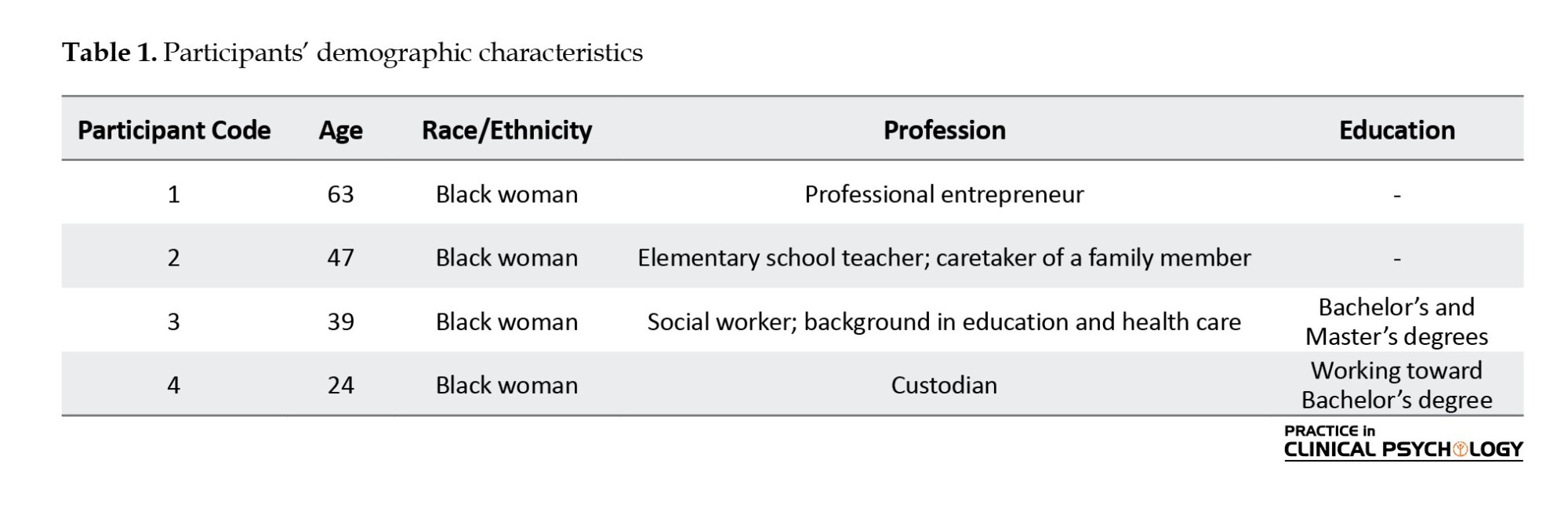
The participants in this study were four Black females. Table 1 presents the participants’ demographic data:
Inductive thematic analysis
Data analysis revealed five key themes from the participants’ interviews pertaining to marginalization: microaggression, trauma, stereotype, invisibility, and outcast. The researcher used verbatim interview excerpts and ethnographic records to demonstrate each finding. The identified themes were supported by interview data and observational field notes. To allow the researcher to explore participants’ lived experiences without imposing preconceived theories or categories for topics concerning marginalization in academic literature, the researcher chose a data-driven based inductive thematic analysis approach. This approach means that themes emerge from the data without pre-defined categories or codes. This is essential to consider when identifying emerging themes. The steps that were used in this thematic analysis was reading the data to be familiarized with the content, identifying phrases, passages and keywords that captured the essence of the data, creating a structured system to identify, refine and categorize data, revisit the data and themes to make sure that the themes accurately reflect patterns of the data, name the themes, and report the findings by providing detailed descriptions for the data and its meaning (Guest et al., 2012).
Microaggression
The theme of microaggression emerged from the participants’ stories as language used to express ridicule, underlying hostility, and intentional biases toward one’s ethnicity. Across historical, theoretical, and scholarly literature, the term microaggression is directly connected to racism. Microaggression is connected to multiple forms of racial prejudice and structural racism (Williams, 2019). The term can be defined as subtle indignities and offenses that members of racial minority groups experience in their daily lives that involve the interaction between perpetrator and recipient (Torres et al., 2010). Torres et al. (2010) also stated microaggressions as a “modern form of racism comprising subtle daily racial slights and insults and overt forms of discrimination” (p. 1075).
One participant shared an example of her elementary school experience: “I remember this young White woman who was terrible! Who had no business teaching young Black children at all…before I knew what microaggressions were… I just remember her saying terrible stuff to everyone” (P. 3). Similarly, one participant shared an example of described her elementary school experiences of racism and intentional biases: “I remember the White teachers being racist. One teacher agreed to tutor me. Because we didn’t pay her that day, she got angry and actually showed up at my house harassing us for her money” (P. 4).
In contrast, the other one described her middle school experiences of intentional biases with a White teacher: “Mr. Haynes picked on me a lot. I remember I put my head down on the desk, and he told me to go and stand in front of the window and to look at the birdies” (P. 1). While the three mentioned participants focused on their teachers’ hostility, the last one, who attended a diverse middle school, focused on her peers’ hostility: “I was fed up. I said to the girl, You wanna fight? Let’s do it! The teacher was very disappointed in me” (P. 2). From these examples, it is clear all the participants experienced microaggressions whether by their teachers or their peers.
Trauma
The theme of trauma emerged from the participants’ stories as language used to express a deeply disturbing experience that significantly alters one’s life. Based on historical references, theoretical documentation, and academic scholarly writings, this term is connected to the perception of a person’s traumatic experience. Trauma is a series of experiences or impacts from social conditions (Haines, 2019). Hardy (2013) defined trauma as the “victim’s perception of the traumatic experience, and how the experience can actually leave a person with feelings of hopelessness, helplessness, and a yearning for a sense of safety or survival (p. 25)”.
All four participants recounted examples of trauma at home because of social conditions within their family. One of the participants experienced challenges in middle school, stating, “I would say, there was a lot of trauma there. Turbulent things happened in my home life, and that spilled over into school (P. 2)”. Similarly, another participant described enduring years of abuse and trauma in her home life from her mother: “I will never forget. My mom put my hand in the fire on a gas stove (P. 1)”. She went on to describe a hidden mark on her scalp from the abuse: “I also remember when my mother did my hair; she played tic tac toe in my head with a spike-heeled shoe (P. 1)”. In contrast, another participant described trauma in her childhood home life: “After my parents divorced, I lived with my mom from ages 8-13. She was an alcoholic. I was always late to school. She forgot to pick me up because she was always drunk (P3)”. Another participant also described trauma in her childhood homelife: “My brother and me had disabilities. I never got the help I needed from my parents or from school. When my parents divorced a lot of traumatic things happened (P. 4)”. Hardy (2013) described trauma as a hidden wound that is interconnected with internalized devaluation and ultimately oppression.
Stereotype
The theme of stereotype emerged from the participants’ stories as language used to express distorted perceptions. A stereotype is a form of misrepresentation that is demonstrated in media images of Black women, disempowering them through racist images (Harris-Perry, 2011; Poran, 2006). For Black women, such experiences of racial hatred are often perpetuated by stereotypes that degrade or hypersexualize them (Curry, 2017; Henning, 2021; Love, 2019).
As an example of stereotyping, one participant discussed her elementary school experiences with how Black students were stereotyped by White teachers: “It was always stuff about hair styles and hair needing to be combed more (P. 3)”. She seemed to connect this experience to the social and ethnic identities of Black children. In this context, stereotyping can be observed in the form of humiliation or an offensive action specific to one’s ethnicity and identity, which is degrading. She stated: “The teacher said stereotypes about little Black boys and little Black girls. Everything was talking back! All of the teachers were White. That’s what I pretty much remember (P. 3)”. In comparison, the other participant discussed her middle school experiences of stereotyping coming from her peers: “There was a White boy who always called me and my friend ‘Sharkeisha’. After we told him that’s not our names, he laughed and kept calling us both ‘Sharkeisha’. I feel like he was stereotyping us (P. 4)”.
Another participant discussed her high school experiences transitioning from a majority Black school to a majority White school: “I was made fun of because I didn’t have the right clothes to wear. One girl laughed and said I looked like a Muslim (P. 2)”. In this context, stereotyping can be seen in the form of an offensive action specific to one’s ethnicity and identity which is degrading. The other participant discussed her academic struggles with transitioning from a diverse middle school to a predominately White high school: “I recall always being afraid of my teachers. I was scared to ask for help. I didn’t ask questions; I didn’t want to be embarrassed (P. 1)”. It is important to understand that not all participants experienced stereotyping perpetrated by their teachers; some experienced it from peers. Although the details vary from participant to participant, all four participants described experiencing stereotyping that led to feelings of degradation.
Invisibility
The theme of invisibility emerged from the participants’ stories as language used to express feelings of being unnoticed and unacknowledged. Black girls’ feelings of invisibility stem from the school environment and a collection of institutional policies and practices (Morris, 2016). Parham (1999) defined invisibility as a) a global phenomenon for African people due to European colonization, b) a syndrome related to socially oppressive phenomena, and c) a process experienced by Black people under conditions of White supremacy. Mosley (1980) described Black women’s experiences of oppression in education as a) feeling invisible, because it is never advantageous to be unseen, b) “constantly being bumped up against by those of poor vision, and c) often doubting that she really exists (p. 307)”.
One of the participants described her transition from middle school to high school, stating: “It was about me being more accepted by peers. I felt like I was nothing. I felt invisible (P2)”. Another participant shared her learning challenges with a middle school teacher: “Some of the teachers helped me. But when you don’t say nothing when you really need help, they won’t help you. The teachers see you, but they don’t see you, they look right over you (P1)”. Another participant expressed feeling invisible in the school hallways as well as in class: “Sometimes in the school hallways I feel invisible. In class I am invisible except when the teacher calls on me to comment on things dealing with Black history (P. 4)”. Na’va noted similar feelings of going unnoticed in high school and challenges with her math teacher: “I was failing my math class because I wasn’t getting the knowledge. She used language suggesting that I was “retarded” because I did not grasp basic concepts. I internalized the blame. I felt dumb (P3)”. Hence, all participants’ experienced a form of invisibility and it is important to note that feelings of invisibility can severely impair a person’s self-esteem and personal growth (Morris, 2016; Wyatt, 1999).
Outcast
The theme of outcast emerged from the participants’ stories as language used to express feelings of exclusion, ostracism, isolation, or alienation within social and cultural contexts. No historical references, academic resources, or scholarly documentation were directly linked to the term outcast. Diekema (1992) offered a useful perspective on forms of isolation, describing “otherimposed aloneness” as the state of being secluded or disconnected from interactions with others. Additionally, Morris (2016) suggested that isolation is a form of being an outcast regarding a socioeconomic experiences of Black girls. However, Mosley (1980) pointedly stated that Black women are “isolated, their academic opportunities are limited by barriers that have nothing to do with their preparation, qualifications, or competency” (p. 306-307). To illustrate the term outcast, one of the participants explained her challenging experience in the classroom: “I was pointed out a lot. I was embarrassed, sad, and I felt dumb. I felt like a unicorn…like... I felt like a pimple on somebody’s face …just like an outcast (P. 4)”.
Another participant described her home life: “I remember getting whippings for having a bed-wetting problem. I was picked on a lot; I was the outcast of the family (P. 1)”. The other one shared her high school experience: “I had feelings of not fitting in, not being accepted by my peers (P. 2)”. Another participant discussed challenges with fitting in with her transition from a diverse private school to a predominately Black high school: “This transition was really different. It was scary (P3)”. Hence, all of the participants connected their experiences to a form of outcast within social and cultural contexts. Despite societal prohibition against the use of racist language, one of the most offensive words used as a symbol of violence toward Black people in America unfolded as an oppressive experience for one of the participants. While the term “nigger” was not considered a major theme, it emerged as an uncommon yet critical theme. Adegbembo and MacQuarrie (2017) stated nigger is a slur that “[imposes] contempt on [blacks] as an inferior race (p. 17)”. To illustrate how this phrase was used as a slur, one of the participants discussed how growing up in a predominately Black neighborhood was like a village, a place full of love. However, outside of the community she experienced a racial slur: “I do remember being called a nigger a couple of times when I went over into a White neighborhood (P. 2)”. Unfortunately, this term remains in use and is deeply connected to black people’s historical, social, and cultural identities.
Discussion
This study has implications for Black female professionals in various career and educational pathways. However, the findings have significant implications for clinicians and therapists interested in intervention methods for clinical training programs and may inform policies around treatment and diagnosis for mental health conditions. This study has implications for teachers, administrators, and political leaders working to support student schooling experiences as well as provide professional development for educators. Finally, the results may benefit educational researchers examining Black females’ schooling experiences. Given the recent increase in mental health concerns, addressing this issue is timely and essential. Understanding the complex nature of Black women professionals’ experiences of oppression in schooling is paramount. The participants characterized their encounters and described their feelings inclusive of social, cultural, and/or psychological oppression in education.
The findings have direct implications for clinical psychology practice, particularly in the treatment of female adolescents and adults with trauma and anxiety. The results suggest that incorporating emotion regulation strategies may enhance therapeutic outcomes for Black females. This addresses a critical gap in the literature and responds to a growing clinical need, as rates of trauma and anxiety continue to rise. This analysis aimed to observe units of meaning in the collected data and then to identify, analyze, organize, describe, and report themes within a dataset (Braun & Clarke, 2006). Therefore, a small dataset of four participants allowed for the identification and reporting of specific themes that emerged from their stories. Experiences shared in this research shed light on various ways Black females experience and navigate psychological oppression. Despite extensive research on Black women’s oppression in education, limited attention has been paid to various ways Black women professionals experience and narrate psychological oppression in their schooling which this study aims to address. It was imperative to add and amplify the voices of the participants to existing literature because they bring perspectives on psychological oppression in education that have often been missing from the literature.
This research underscores the importance of understanding and critically examining Black females’ schooling experiences. Analysis of the interviews revealed evidence of feelings of oppression and forms of isolation linked to marginalization. Mosley (1980) noted that Black women are “isolated, their academic opportunities are limited by barriers that have nothing to do with their preparation, qualifications, or competency” (p. 306-307). This analysis reveals the ways in which participants used selfreflective memories to express their experiences of oppression or marginalization in educational environments. Creswell (2007) considered reflecting on essential themes to be “what constitute the nature of lived experience” (p. 59). Essential themes, such as microaggression, trauma, stereotype, invisibility, and outcast, emerged as a language to describe the nature of the participants’ lived experience concerning oppression in education.
Marginalization continuously showed up in the participants’ stories, supporting the notion that the participants experienced oppression and isolation in education. The thematic analysis reveals intersecting social injustices that played a key role in their educational experiences. Findings may inform interventions for clients experiencing trauma and psychological oppression in school. The phenomenological approach made it possible to capture critical thematic accounts of the participants’ lived experience.
In this study, participants revealed recurring patterns concerning trauma, psychological oppression, racialized and gendered microaggressions, marginalization and institutional neglect, which were contributors to a persistent sense of psychological distress (Erving et al., 2022). The participants’ narratives illustrate how educational environments intended to foster positive development and growth often became spaces of harm, reinforcing systemic inequities (Morris, 2016). Throughout their narratives, central themes of trauma and isolation were shaped by repeated experiences of being devalued or overlooked by educators and peers. This aligns existing literature showing how chronic exposure to discrimination erodes academic engagement (Leath et al., 2019).
Participants often described developing coping mechanisms such as internalizing deep-rooted trauma, emotional suppression, which compounded psychological distress and perpetuated a cycle of silence and feeling voiceless and invisible (Anderson & Stevenson, 2019). Moreover, some participants described finding strength in academic success and mentorship, which findings point to a critical need for educational institutions to prioritize equity-driven reforms (Harper, 2010). Creating inclusive environments for Black girls and women is essential for dismantling psychological distress in education.
Conclusion
Everyday experiences of racism negatively affect the educational and social realities of Black women professionals. This research provided an opportunity to represent their situated worlds of being Black women professionals in the United States and a platform for a population of marginalized people whose stories are not commonly represented in the academic literature. It unveiled the complexities of intersectional oppressions, revealed how oppression shaped their educational experiences, and included the narration of their stories in their own voices. While analysis of these interviews showed that these oppressive experiences were connected to marginalization and shaped the participants’ views and influenced their everyday lives.
This study used theoretical frameworks that challenge oppression, such as intersectionality and critical race feminism theory, which examine the intersections of identities, such as being Black, a woman, and a professional and help researchers and educators to better understand Black female experiences and the impact of marginalization and to create strategies to support their education. Ultimately, through sharing their lived experiences, Black females can amplify their voices and express themselves in empowering ways so that readers can see the world through their eyes. Shedding light on the trauma and isolation Black women experienced socially and educationally as a result of microaggression and stereotyping helps remove the outcast status of Black women and places their lived experiences at the center of the analysis.
Limitations and recommendations for future research
While the scope of this research is limited, the potential implications are profound. The main limitations in this study include: a) the study may not be applicable to the entire Black women population in the United States because the study focused on a specific group; b) the inclusion criteria requiring participants to have a professional background excluded Black women who do not work in professional settings; and, c) the geographic location of the study was limited to Black women in the Midwest region. It is imperative that more stories from Black women across diverse geographic regions and career backgrounds continue to be written. Future research broaden both participant demographics and geographic reach when exploring Black women’s lived experiences, the various forms of marginalization they experience, and effective schooling intervention methods. Broader research across disciplines on Black females can provide a wider lens through which to examine their voices and experiences. Furthermore, to ensure educational equity for Black females, educators and administrators must address how community members and families can assist schools with combatting the oppressive experiences of Black females. In addition, an examination of educational oppression resulting from racism and gender discrimination could lead educators, administrators, policymakers, and advocates to engage in reform to counteract negative educational outcomes. Therefore, researchers should develop new studies to explore the degree and prevalence of oppression in story the schooling of Black females.
Ethical Considerations
Compliance with ethical guidelines
This study was approved by the Ethics Committee of Eastern Michigan University, Ypsilanti, United States (Code: UHSRC-FY21-22-123).
Funding
This research did not receive any grant from funding agencies in the public, commercial, or non-profit sectors.
Acknowledgments
The author expresses her appreciation to all participants.
References
In America, a corrosive system of racism permeates government and communities, as well as educational institutions. This system is a form of structural injustice embedded in our society, which justified enslavement and continues to rationalize inequality in housing, health care, finances, employment, the criminal justice system, and education. Shapiro and Oliver (1997) argued that racial inequality is perpetuated through systemic barriers that limit educational opportunities. This system specifically impedes Black students’ educational and economic success and shapes the lives of Black Americans. For all students to experience equity in schooling, systems and supportive relationships must be put in place to ensure that each student has the support needed for their academic success and that resources and opportunities are equitable.
Educational inequality encompasses a wide range of oppressive mechanisms, such as marginalization or unequal distribution of academic resources, which disrupt students’ academic success. These systems are interconnected with social injustices and negatively shape the lives of minoritized students, especially Black females. Overlapping systems applied to a marginalized group, such as Black females, produce even greater racial inequality. Because of America’s history of racial inequality, Black females experience oppression in school, yet their voices have rarely been represented in the literature. Hence, this qualitative study focuses on how Black women professionals narrate their past schooling experiences, and the findings highlight the challenges they navigated in educational environments. By shedding light on a group of Black women’s experiences of educational oppression, researchers, policy makers, and educators can devise strategies to better support this sociodemographic group in P–12 schooling as well as in higher education.
Background
Historically, racial inequality has prevented Black American females from progressing professionally and educationally. Black females have suffered through marginalization in education for generations and are constantly at risk of school failure (Evans-Winters, 2005; Love, 2019; Price-Dennis & Muhammad, 2021). Despite that risk, the needs of Black female students often go unnoticed by administrators and educators (Evans-Winters, 2005; Love, 2019; Ricks, 2014) much less the wider public. Addressing marginalization in education requires solutions and conversations around social-emotional growth, school climate, school discipline issues, and policy changes that are tailored to address both gender and racial bias.
The marginalization of Black girls and women in education is more than just a social phenomenon. Morris (2016) stated that Black females are already stereotyped as “irate, insubordinate, disrespectful, uncooperative, uncontrollable, and social deviants” (p. 1), and entering schools that are lacking a positive school climate, and a supportive academic and physical environment causes them to have dreadful schooling experiences. To understand the impacts of these adverse structural circumstances on Black females, one must find methods and data collection tools to explore oppression and unveil the existence of marginalization.
Materials and Methods
Research design
The current study was conducted using a dual-layered design, combining qualitative research inquiry with a phenomenological approach (Creswell, 2007). Utilizing qualitative inquiry and phenomenology yielded additional elements to human experience and gave structure to the lived experiences of the participants (Creswell, 2013; Wertz et al., 2011). This was done by observing the participants’ stories in their unique language and allowing them to freely express themselves without barriers, giving meaning to their experience in its natural state. The overall goal of the adapted research design was to: place participants stories at the center of the analysis, establish a dual-layered theory and methodology to make sense of what occurs in their everyday lives from their standpoints, and acknowledge their unique past schooling experiences.
In this study, observation and phenomenological interviewing were utilized to explore how Black women narrate their schooling experience. Participants were Black women residing in the Midwest region of the United States, aged 18-65 years. Participants received email invitations to participate in the study through an outreach letter outlining the study criteria. The researcher emailed the invitations to academic professionals working at predominantly White institutions. The outreach letter demonstrated that the investigative study was focused on how Black women professionals with various working backgrounds conceptualized their schooling experiences. The individuals participated in a series of three Zoom meeting interviews (Seidman, 2013).
Data collection and coding process
Data were collected through one-on-one audio-recorded Zoom interviews. Additionally, observational field notes (Bailey, 2007) were utilized as a method of data collection that captured how oppression had shaped the participants’ views, and at the same time, revealed various ways that racism and gender had influenced their schooling.
To reduce the impact of the researcher’s personal lived experience on the coding and interpretation of data three strategies were employed: a) Through reflexive journaling and documenting assumptions before and during the analysis, the researcher consciously set aside experiences and biases to engage with the data more openly; b) researcher engaged in member checking, which involved asking participants to review and validate the findings to ensure that their lived experiences were accurately represented; and c) the researcher engaged in peer debriefing with colleagues to review themes, identify possible biases, and offer alternative interpretations (Creswell, 2007). In this research, there was no formal coding process. The researcher documented repeated words and phrases that appeared verbatim throughout the participants’ stories. These repeated words that emerged from the collected data were coded as themes. In this study, an open non-structured approach allowed the researcher to systematically engage with the data to identify and group ideas. The idea was to focus on themes from the entire narratives rather than on segmented codes. Phenomenological research prioritizes the personal lived experience of the participant rather than predefined categories (Guest et al., 2012). Phenomenological research seeks to explore and describe how individuals experience a phenomenon from a first-person perspective. In this case, using a structured coding system can distort participants’ authentic experiences, impose outside categories on the data, or prevent the emergence of unexpected meanings (Creswell, 2007). Therefore, an open approach allowed the meaning to emerge from the participants’ words and perspectives (Guest et al., 2012).
The reliability and validity of the findings were ensured through rigorous strategies aligned with phenomenological, qualitative standards while exploring psychological oppression of Black women in schooling. In the coding process, member checking for credibility, reflexive journaling, and peer debriefing were utilized. Using these methods during the informal coding process, thematic analysis development, and overall research helped to ensure methodological soundness.
Results
The participants in this study were four Black females. Table 1 presents the participants’ demographic data:
Inductive thematic analysis
Data analysis revealed five key themes from the participants’ interviews pertaining to marginalization: microaggression, trauma, stereotype, invisibility, and outcast. The researcher used verbatim interview excerpts and ethnographic records to demonstrate each finding. The identified themes were supported by interview data and observational field notes. To allow the researcher to explore participants’ lived experiences without imposing preconceived theories or categories for topics concerning marginalization in academic literature, the researcher chose a data-driven based inductive thematic analysis approach. This approach means that themes emerge from the data without pre-defined categories or codes. This is essential to consider when identifying emerging themes. The steps that were used in this thematic analysis was reading the data to be familiarized with the content, identifying phrases, passages and keywords that captured the essence of the data, creating a structured system to identify, refine and categorize data, revisit the data and themes to make sure that the themes accurately reflect patterns of the data, name the themes, and report the findings by providing detailed descriptions for the data and its meaning (Guest et al., 2012).
Microaggression
The theme of microaggression emerged from the participants’ stories as language used to express ridicule, underlying hostility, and intentional biases toward one’s ethnicity. Across historical, theoretical, and scholarly literature, the term microaggression is directly connected to racism. Microaggression is connected to multiple forms of racial prejudice and structural racism (Williams, 2019). The term can be defined as subtle indignities and offenses that members of racial minority groups experience in their daily lives that involve the interaction between perpetrator and recipient (Torres et al., 2010). Torres et al. (2010) also stated microaggressions as a “modern form of racism comprising subtle daily racial slights and insults and overt forms of discrimination” (p. 1075).
One participant shared an example of her elementary school experience: “I remember this young White woman who was terrible! Who had no business teaching young Black children at all…before I knew what microaggressions were… I just remember her saying terrible stuff to everyone” (P. 3). Similarly, one participant shared an example of described her elementary school experiences of racism and intentional biases: “I remember the White teachers being racist. One teacher agreed to tutor me. Because we didn’t pay her that day, she got angry and actually showed up at my house harassing us for her money” (P. 4).
In contrast, the other one described her middle school experiences of intentional biases with a White teacher: “Mr. Haynes picked on me a lot. I remember I put my head down on the desk, and he told me to go and stand in front of the window and to look at the birdies” (P. 1). While the three mentioned participants focused on their teachers’ hostility, the last one, who attended a diverse middle school, focused on her peers’ hostility: “I was fed up. I said to the girl, You wanna fight? Let’s do it! The teacher was very disappointed in me” (P. 2). From these examples, it is clear all the participants experienced microaggressions whether by their teachers or their peers.
Trauma
The theme of trauma emerged from the participants’ stories as language used to express a deeply disturbing experience that significantly alters one’s life. Based on historical references, theoretical documentation, and academic scholarly writings, this term is connected to the perception of a person’s traumatic experience. Trauma is a series of experiences or impacts from social conditions (Haines, 2019). Hardy (2013) defined trauma as the “victim’s perception of the traumatic experience, and how the experience can actually leave a person with feelings of hopelessness, helplessness, and a yearning for a sense of safety or survival (p. 25)”.
All four participants recounted examples of trauma at home because of social conditions within their family. One of the participants experienced challenges in middle school, stating, “I would say, there was a lot of trauma there. Turbulent things happened in my home life, and that spilled over into school (P. 2)”. Similarly, another participant described enduring years of abuse and trauma in her home life from her mother: “I will never forget. My mom put my hand in the fire on a gas stove (P. 1)”. She went on to describe a hidden mark on her scalp from the abuse: “I also remember when my mother did my hair; she played tic tac toe in my head with a spike-heeled shoe (P. 1)”. In contrast, another participant described trauma in her childhood home life: “After my parents divorced, I lived with my mom from ages 8-13. She was an alcoholic. I was always late to school. She forgot to pick me up because she was always drunk (P3)”. Another participant also described trauma in her childhood homelife: “My brother and me had disabilities. I never got the help I needed from my parents or from school. When my parents divorced a lot of traumatic things happened (P. 4)”. Hardy (2013) described trauma as a hidden wound that is interconnected with internalized devaluation and ultimately oppression.
Stereotype
The theme of stereotype emerged from the participants’ stories as language used to express distorted perceptions. A stereotype is a form of misrepresentation that is demonstrated in media images of Black women, disempowering them through racist images (Harris-Perry, 2011; Poran, 2006). For Black women, such experiences of racial hatred are often perpetuated by stereotypes that degrade or hypersexualize them (Curry, 2017; Henning, 2021; Love, 2019).
As an example of stereotyping, one participant discussed her elementary school experiences with how Black students were stereotyped by White teachers: “It was always stuff about hair styles and hair needing to be combed more (P. 3)”. She seemed to connect this experience to the social and ethnic identities of Black children. In this context, stereotyping can be observed in the form of humiliation or an offensive action specific to one’s ethnicity and identity, which is degrading. She stated: “The teacher said stereotypes about little Black boys and little Black girls. Everything was talking back! All of the teachers were White. That’s what I pretty much remember (P. 3)”. In comparison, the other participant discussed her middle school experiences of stereotyping coming from her peers: “There was a White boy who always called me and my friend ‘Sharkeisha’. After we told him that’s not our names, he laughed and kept calling us both ‘Sharkeisha’. I feel like he was stereotyping us (P. 4)”.
Another participant discussed her high school experiences transitioning from a majority Black school to a majority White school: “I was made fun of because I didn’t have the right clothes to wear. One girl laughed and said I looked like a Muslim (P. 2)”. In this context, stereotyping can be seen in the form of an offensive action specific to one’s ethnicity and identity which is degrading. The other participant discussed her academic struggles with transitioning from a diverse middle school to a predominately White high school: “I recall always being afraid of my teachers. I was scared to ask for help. I didn’t ask questions; I didn’t want to be embarrassed (P. 1)”. It is important to understand that not all participants experienced stereotyping perpetrated by their teachers; some experienced it from peers. Although the details vary from participant to participant, all four participants described experiencing stereotyping that led to feelings of degradation.
Invisibility
The theme of invisibility emerged from the participants’ stories as language used to express feelings of being unnoticed and unacknowledged. Black girls’ feelings of invisibility stem from the school environment and a collection of institutional policies and practices (Morris, 2016). Parham (1999) defined invisibility as a) a global phenomenon for African people due to European colonization, b) a syndrome related to socially oppressive phenomena, and c) a process experienced by Black people under conditions of White supremacy. Mosley (1980) described Black women’s experiences of oppression in education as a) feeling invisible, because it is never advantageous to be unseen, b) “constantly being bumped up against by those of poor vision, and c) often doubting that she really exists (p. 307)”.
One of the participants described her transition from middle school to high school, stating: “It was about me being more accepted by peers. I felt like I was nothing. I felt invisible (P2)”. Another participant shared her learning challenges with a middle school teacher: “Some of the teachers helped me. But when you don’t say nothing when you really need help, they won’t help you. The teachers see you, but they don’t see you, they look right over you (P1)”. Another participant expressed feeling invisible in the school hallways as well as in class: “Sometimes in the school hallways I feel invisible. In class I am invisible except when the teacher calls on me to comment on things dealing with Black history (P. 4)”. Na’va noted similar feelings of going unnoticed in high school and challenges with her math teacher: “I was failing my math class because I wasn’t getting the knowledge. She used language suggesting that I was “retarded” because I did not grasp basic concepts. I internalized the blame. I felt dumb (P3)”. Hence, all participants’ experienced a form of invisibility and it is important to note that feelings of invisibility can severely impair a person’s self-esteem and personal growth (Morris, 2016; Wyatt, 1999).
Outcast
The theme of outcast emerged from the participants’ stories as language used to express feelings of exclusion, ostracism, isolation, or alienation within social and cultural contexts. No historical references, academic resources, or scholarly documentation were directly linked to the term outcast. Diekema (1992) offered a useful perspective on forms of isolation, describing “otherimposed aloneness” as the state of being secluded or disconnected from interactions with others. Additionally, Morris (2016) suggested that isolation is a form of being an outcast regarding a socioeconomic experiences of Black girls. However, Mosley (1980) pointedly stated that Black women are “isolated, their academic opportunities are limited by barriers that have nothing to do with their preparation, qualifications, or competency” (p. 306-307). To illustrate the term outcast, one of the participants explained her challenging experience in the classroom: “I was pointed out a lot. I was embarrassed, sad, and I felt dumb. I felt like a unicorn…like... I felt like a pimple on somebody’s face …just like an outcast (P. 4)”.
Another participant described her home life: “I remember getting whippings for having a bed-wetting problem. I was picked on a lot; I was the outcast of the family (P. 1)”. The other one shared her high school experience: “I had feelings of not fitting in, not being accepted by my peers (P. 2)”. Another participant discussed challenges with fitting in with her transition from a diverse private school to a predominately Black high school: “This transition was really different. It was scary (P3)”. Hence, all of the participants connected their experiences to a form of outcast within social and cultural contexts. Despite societal prohibition against the use of racist language, one of the most offensive words used as a symbol of violence toward Black people in America unfolded as an oppressive experience for one of the participants. While the term “nigger” was not considered a major theme, it emerged as an uncommon yet critical theme. Adegbembo and MacQuarrie (2017) stated nigger is a slur that “[imposes] contempt on [blacks] as an inferior race (p. 17)”. To illustrate how this phrase was used as a slur, one of the participants discussed how growing up in a predominately Black neighborhood was like a village, a place full of love. However, outside of the community she experienced a racial slur: “I do remember being called a nigger a couple of times when I went over into a White neighborhood (P. 2)”. Unfortunately, this term remains in use and is deeply connected to black people’s historical, social, and cultural identities.
Discussion
This study has implications for Black female professionals in various career and educational pathways. However, the findings have significant implications for clinicians and therapists interested in intervention methods for clinical training programs and may inform policies around treatment and diagnosis for mental health conditions. This study has implications for teachers, administrators, and political leaders working to support student schooling experiences as well as provide professional development for educators. Finally, the results may benefit educational researchers examining Black females’ schooling experiences. Given the recent increase in mental health concerns, addressing this issue is timely and essential. Understanding the complex nature of Black women professionals’ experiences of oppression in schooling is paramount. The participants characterized their encounters and described their feelings inclusive of social, cultural, and/or psychological oppression in education.
The findings have direct implications for clinical psychology practice, particularly in the treatment of female adolescents and adults with trauma and anxiety. The results suggest that incorporating emotion regulation strategies may enhance therapeutic outcomes for Black females. This addresses a critical gap in the literature and responds to a growing clinical need, as rates of trauma and anxiety continue to rise. This analysis aimed to observe units of meaning in the collected data and then to identify, analyze, organize, describe, and report themes within a dataset (Braun & Clarke, 2006). Therefore, a small dataset of four participants allowed for the identification and reporting of specific themes that emerged from their stories. Experiences shared in this research shed light on various ways Black females experience and navigate psychological oppression. Despite extensive research on Black women’s oppression in education, limited attention has been paid to various ways Black women professionals experience and narrate psychological oppression in their schooling which this study aims to address. It was imperative to add and amplify the voices of the participants to existing literature because they bring perspectives on psychological oppression in education that have often been missing from the literature.
This research underscores the importance of understanding and critically examining Black females’ schooling experiences. Analysis of the interviews revealed evidence of feelings of oppression and forms of isolation linked to marginalization. Mosley (1980) noted that Black women are “isolated, their academic opportunities are limited by barriers that have nothing to do with their preparation, qualifications, or competency” (p. 306-307). This analysis reveals the ways in which participants used selfreflective memories to express their experiences of oppression or marginalization in educational environments. Creswell (2007) considered reflecting on essential themes to be “what constitute the nature of lived experience” (p. 59). Essential themes, such as microaggression, trauma, stereotype, invisibility, and outcast, emerged as a language to describe the nature of the participants’ lived experience concerning oppression in education.
Marginalization continuously showed up in the participants’ stories, supporting the notion that the participants experienced oppression and isolation in education. The thematic analysis reveals intersecting social injustices that played a key role in their educational experiences. Findings may inform interventions for clients experiencing trauma and psychological oppression in school. The phenomenological approach made it possible to capture critical thematic accounts of the participants’ lived experience.
In this study, participants revealed recurring patterns concerning trauma, psychological oppression, racialized and gendered microaggressions, marginalization and institutional neglect, which were contributors to a persistent sense of psychological distress (Erving et al., 2022). The participants’ narratives illustrate how educational environments intended to foster positive development and growth often became spaces of harm, reinforcing systemic inequities (Morris, 2016). Throughout their narratives, central themes of trauma and isolation were shaped by repeated experiences of being devalued or overlooked by educators and peers. This aligns existing literature showing how chronic exposure to discrimination erodes academic engagement (Leath et al., 2019).
Participants often described developing coping mechanisms such as internalizing deep-rooted trauma, emotional suppression, which compounded psychological distress and perpetuated a cycle of silence and feeling voiceless and invisible (Anderson & Stevenson, 2019). Moreover, some participants described finding strength in academic success and mentorship, which findings point to a critical need for educational institutions to prioritize equity-driven reforms (Harper, 2010). Creating inclusive environments for Black girls and women is essential for dismantling psychological distress in education.
Conclusion
Everyday experiences of racism negatively affect the educational and social realities of Black women professionals. This research provided an opportunity to represent their situated worlds of being Black women professionals in the United States and a platform for a population of marginalized people whose stories are not commonly represented in the academic literature. It unveiled the complexities of intersectional oppressions, revealed how oppression shaped their educational experiences, and included the narration of their stories in their own voices. While analysis of these interviews showed that these oppressive experiences were connected to marginalization and shaped the participants’ views and influenced their everyday lives.
This study used theoretical frameworks that challenge oppression, such as intersectionality and critical race feminism theory, which examine the intersections of identities, such as being Black, a woman, and a professional and help researchers and educators to better understand Black female experiences and the impact of marginalization and to create strategies to support their education. Ultimately, through sharing their lived experiences, Black females can amplify their voices and express themselves in empowering ways so that readers can see the world through their eyes. Shedding light on the trauma and isolation Black women experienced socially and educationally as a result of microaggression and stereotyping helps remove the outcast status of Black women and places their lived experiences at the center of the analysis.
Limitations and recommendations for future research
While the scope of this research is limited, the potential implications are profound. The main limitations in this study include: a) the study may not be applicable to the entire Black women population in the United States because the study focused on a specific group; b) the inclusion criteria requiring participants to have a professional background excluded Black women who do not work in professional settings; and, c) the geographic location of the study was limited to Black women in the Midwest region. It is imperative that more stories from Black women across diverse geographic regions and career backgrounds continue to be written. Future research broaden both participant demographics and geographic reach when exploring Black women’s lived experiences, the various forms of marginalization they experience, and effective schooling intervention methods. Broader research across disciplines on Black females can provide a wider lens through which to examine their voices and experiences. Furthermore, to ensure educational equity for Black females, educators and administrators must address how community members and families can assist schools with combatting the oppressive experiences of Black females. In addition, an examination of educational oppression resulting from racism and gender discrimination could lead educators, administrators, policymakers, and advocates to engage in reform to counteract negative educational outcomes. Therefore, researchers should develop new studies to explore the degree and prevalence of oppression in story the schooling of Black females.
Ethical Considerations
Compliance with ethical guidelines
This study was approved by the Ethics Committee of Eastern Michigan University, Ypsilanti, United States (Code: UHSRC-FY21-22-123).
Funding
This research did not receive any grant from funding agencies in the public, commercial, or non-profit sectors.
Acknowledgments
The author expresses her appreciation to all participants.
References
Adegbembo, B. F., & MacQuarrie, C. (2017). The word nigger as racialized and non-racialized: A Foucauldian discourse analysis on the n-word in a Canadian society. Journal of Undergraduate Ethnic Minority Psychology, 2332(9300), 3. [Link]
Anderson, R. E., & Stevenson, H. C. (2019). RECASTing racial stress and trauma: Theorizing the healing potential of racial socialization in families. The American psychologist, 74(1), 63–75. [Link]
Bailey, C. (2007). A guide to qualitative field research. Washington: Sage. [Link]
Braun, V. & Clarke, V. (2006). Using thematic analysis in psychology. Qualitative Research in Psychology, 3(2), 77-101. [Link]
Creswell, J. (2007). Qualitative inquiry research and design. Washington: Sage. [Link]
Creswell, J.W. (2013). Qualitative inquiry & research design: Choosing among five approaches. Washington: Sage. [Link]
Curry, T. (2017). The man-not: Race, class, genre and the dilemmas of Black manhood. Philadelphia: Temple University Press. [Link]
Diekema, D. (1992). Aloneness and social reform. Symbolic Interaction, 15(4), 481-500. [Link]
Essed, P. (1991). Understanding everyday racism: An interdisciplinary theory. Washington: SAGE Publications. [Link]
Erving, C. L., Williams, T. R., Frierson, W., & Derisse, M. (2022). Gendered racial microaggressions, psychosocial resources, and depressive symptoms among black women attending a Historically Black University. Society and Mental Health, 12(3), 230–247. [PMID]
Evans-Winters, V. (2005). Teaching black girls: Resiliency in urban classrooms. New York: Peter Lang US. [Link]
Guest, G., MacQueen, K., Namey, E. (2012). Applied thematic analysis. Washington: SAGE Publications. [Link]
Haines, S. K. (2019). The politics of trauma: Somatics, healing, and social justice. Berkeley: North Atlantic Books. [Link]
Hardy, K. V. (2013). Healing the hidden wounds of racial trauma. Reclaiming Children and Youth, 22(1), 24. [Link]
Harper, S. R. (2010). An anti-deficit achievement framework for research on students of color in STEM. New Directions for Institutional Research, 2010(148), 63–74. [Link]
Harris-Perry, M. (2011). Sister citizen: Shame, stereotypes, and Black women in America. Journal of Women, Politics & Policy, 36, 116-118. [Link]
Henning, K. (2021). The rage of innocence: How America criminalizes black youth. New York: Knopf Doubleday Publishing. [Link]
Leath, S., Mathews, C., Harrison, A., & Chavous, T. (2019). Racial identity, racial discrimination, and classroom engagement outcomes among black girls and boys in predominantly black and predominantly white school districts. American Educational Research Journal, 56(4), 1318-1352. [DOI:10.3102/0002831218816955]
Lewis, A. (2003). Everyday race-making: Navigating racial boundaries in schools. American Behavioral Scientist, 47(3), 283-305. [DOI:10.1177/0002764203256188]
Love, B. (2019). We want to do more than survive: Abolitionist teaching and the pursuit of educational freedom. Boston: Beacon Press. [Link]
Morris, M. (2018) The pushout. The criminalization of Black girls in school. New York: The New Press. [Link]
Mosely, M. (1980). Black women administrators in higher education: An endangered species. Journal of Black Studies, 10(3), 295-310. [Link]
Parham, T. (1999). Invisibility syndrome in African descent people: Understanding the cultural manifestations of the Struggle for Self-Affirmation. The Counseling Psychologist, 27(6):1. [Link]
Poran, M. (2006). The politics of protection: Body image, social pressures, and the misrepresentation of young Black women. Berlin: Springer. [Link]
Price-Dennis, D. & Muhammad, G.E. (2021). Black girls literacies: Transforming lives and literacy practices. Milton Park: Routledge. [Link]
Ricks, S. (2014). Falling through the cracks: Black girls and education. Interdisciplinary Journal of Teaching and Learning, 4, 1. [Link]
Seidman, I. (2013). Interviewing as qualitative research (4th ed.). New York: Teacher’s College Press. [Link]
Shapiro, T., & Oliver, M. (1997). Black wealth/white wealth: A new perspective on racial Inequality. Milton Park: Routledge. [Link]
Torres, L., Driscoll, M. & Burrow, A. (2010). Racial microaggressions and psychological functioning among highly achieving African Americans: A mixed-methods approach. Journal of Social and Clinical Psychology, 29(10), 1074. [Link]
Wertz, F. J., Charmez, K., McMullen, L. M., Josselson, R., Anderson, R., & McSpadden, E. (2011). Five ways of doing qualitative analysis: Phenomenological psychology, grounded theory, discourse analysis, narrative research, and intuitive inquiry. New York: Guilford Press. [Link]
Williams, M. (2019). Microaggressions: Clarification, evidence and impact. Washington: Sage. [Link]
Wyatt, G. (1999). Beyond invisibility of African American males: The effects on women and families. The Counseling Psychologist, 27(6), 802-809. [DOI:10.1177/0011000099276004]
Type of Study: Original Research Article |
Subject:
Family and group therapy
| Rights and permissions | |
 |
This work is licensed under a Creative Commons Attribution-NonCommercial 4.0 International License. |

This is an open access article distributed under the terms of the Creative Commons Attribution-NonCommercial 4.0 (CC-By-NC 4.0), which permits use, distribution, and reproduction in any medium, provided the original work is properly cited and is not used for commercial purposes.
Contact Information