
Volume 14, Issue 4 (Autumn 2026)
Pract Clin Psychol 2026, 14(4): 291-304 |
Back to browse issues page


Download citation:
BibTeX | RIS | EndNote | Medlars | ProCite | Reference Manager | RefWorks
Send citation to:


BibTeX | RIS | EndNote | Medlars | ProCite | Reference Manager | RefWorks
Send citation to:
Parvizi M, Shirazi E. Child Mental Health During Recurrent Armed Conflict in Iran: A Narrative Review. Pract Clin Psychol 2026; 14 (4) :291-304
URL: http://jpcp.uswr.ac.ir/article-1-1134-en.html
URL: http://jpcp.uswr.ac.ir/article-1-1134-en.html

1- Department of Psychiatry, Mental Health Research Center, School of Medicine, Iran University of Medical Sciences, Tehran, Iran. , parvizimaedeh@gmail.com
2- Department of Psychiatry, Mental Health Research Center, School of Medicine, Iran University of Medical Sciences, Tehran, Iran.
2- Department of Psychiatry, Mental Health Research Center, School of Medicine, Iran University of Medical Sciences, Tehran, Iran.
Full-Text [PDF 694 kb]
(178 Downloads)
| Abstract (HTML) (728 Views)
Full-Text: (106 Views)
Introduction
Armed conflict affects children and adolescents through direct violence; injury; bereavement; displacement; family disruption; and interruption of education, healthcare, caregiving, and other systems supporting healthy development. Effects vary by developmental stage, cumulative exposure, caregiver functioning, disability, family resources, and access to protective support (Peltonen, 2025; Umphrey et al., 2026; Vostanis, 2024).
The conflict that escalated in Iran on February 28, 2026, followed by renewed attacks beginning on June 27, 2026, resulted in reported civilian casualties and disruption of child-related services. Available figures from official and humanitarian sources represent different reporting periods, source bases, and verification procedures; therefore, they are presented as source-specific reports rather than directly comparable estimates (Becatoros et al., 2026; Hafezi & McDowall, 2026; IRNA, 2026). Conflict-related events, including disruption of schools, healthcare facilities, and community environments, may affect children not only through direct exposure to violence but also through changes in safety, routines, and access to supportive systems.
International evidence links conflict exposure with posttraumatic stress symptoms, anxiety, depression, sleep disturbance, grief, behavioral difficulties, and functional impairment among children and adolescents (Peltonen, 2025; Umphrey et al., 2026; Vostanis, 2024). However, Iran-specific evidence regarding representative child mental-health outcomes and long-term consequences remains limited. Evidence from other conflict-affected populations can inform understanding of possible mechanisms and responses but should not be interpreted as direct estimates of prevalence or outcomes among Iranian children.
This review conceptualizes recurrent armed conflict as a multidimensional exposure that may influence child and adolescent mental health through interconnected pathways, including direct conflict exposure and continuing threat, caregiver and family disruption, interruption of education and healthcare, and loss of safety and protective environments. These pathways may contribute to psychological symptoms, functional impairment, and altered developmental trajectories, while family, community, and service responses may provide protective effects.
The review is organized around 4 interconnected domains: Conflict exposure and continuing threat; developmental, caregiver, and family pathways; psychological and functional consequences; and protective and service responses.
Evidence is distinguished throughout as Iran-specific evidence, evidence derived from other conflict settings, or humanitarian and professional guidance.
Civilian protection and artificial intelligence-enabled decision-support systems (AI-DSS) are considered only insofar as they relate to child safety, disruption of protective environments, and conditions supporting psychosocial recovery. This review does not estimate national prevalence, evaluate the effectiveness of Iranian services, determine responsibility for specific incidents, or make legal conclusions (Dorsey, 2025; ICRC, 2024).
Materials and Methods
This narrative review employed a focused evidence synthesis approach to examine the mental-health and developmental consequences of recurrent armed conflict among children and adolescents, with particular attention to Iran’s 2026 conflict context, child protection concerns, and emerging mental-health responses. The review integrated clinical, developmental, humanitarian, and contextual evidence rather than estimating pooled prevalence or intervention effects.
Literature search strategy
We identified evidence through a focused search of PubMed/MEDLINE, Scopus, Web of Science, Google Scholar, and relevant institutional sources. Additional methods included backward and forward citation tracking and targeted search of the World Health Organization (WHO), UNICEF, ICRC, and Iranian health-related institutions. We searched for manuscripts and updated the search through July 24, 2026. No language restrictions were applied.
Search strategies were adapted for each database and combined the following concepts:
(“child” OR “adolescent” OR “youth” OR “pediatric”) AND
(“armed conflict” OR “war” OR “bombardment” OR “violence” OR “recurrent threat”) AND
(“mental health” OR “psychological distress” OR “posttraumatic stress” OR “PTSD” OR “anxiety” OR “depression” OR “grief” OR “sleep disturbance” OR “caregiver” OR “psychosocial support”).
For Iran-specific evidence, we added terms such as (“Iran” OR “Iranian”). Targeted searches also addressed developmental disabilities, education and healthcare disruption, civilian protection, AI-DSS, and international humanitarian law.
Eligibility criteria and evidence identification
Sources were eligible if they addressed one or more of the following domains: mental-health or developmental consequences of armed conflict among children and adolescents; caregiver, family, educational, healthcare, or protection-related pathways affecting child wellbeing; psychosocial or clinical responses relevant to conflict-affected children; and Iran-specific conflict indicators, service responses, or child-related reports.
Sources were selected based on relevance, methodological quality, directness of evidence, and contribution to the review objectives. We excluded adult-only studies, unrelated studies, insufficiently described sources, and substantially overlapping reports.
Because this review was narrative, source identification and selection were performed through iterative assessment rather than independent duplicate screening. When overlapping information was identified, we prioritized the most direct, recent, and authoritative source.
Evidence classification and synthesis
Evidence sources were classified into 5 categories: peer-reviewed empirical studies and reviews, including observational studies, systematic reviews, meta-analyses, and intervention studies; official administrative or service reports; humanitarian situation reports; media reports used only for time-sensitive contextual information when primary verification was unavailable; and human-rights investigations describing documented investigations or allegations while distinguishing them from judicial findings.
Peer-reviewed studies informed psychological mechanisms, developmental pathways, and intervention evidence, whereas official and humanitarian reports informed conflict context, service availability, and implementation indicators. Media reports and human-rights investigations were interpreted cautiously and were not considered equivalent to clinical evidence.
Throughout the review, evidence was distinguished as Iran-specific evidence, evidence from other conflict-affected settings, or humanitarian and professional guidance. The final narrative synthesis included 32 selected sources representing clinical research, developmental science, humanitarian evidence, service reports, and contextual documentation.
Methodological limitations of the review approach
As a narrative review, this study did not involve formal risk-of-bias assessment, quantitative meta-analysis, or PRISMA-based systematic screening. These characteristics allowed integration of heterogeneous clinical, humanitarian, service, and contextual evidence but limit reproducibility compared with systematic review methodologies.
Results
Overview of the evidence
Thirty-two sources were included in the final narrative synthesis. Evidence was organized according to the role of each source within the review framework, including conflict exposure, developmental and family pathways, mental-health outcomes, service responses, and child protection considerations.
Peer-reviewed empirical studies and reviews provided evidence regarding psychological outcomes, developmental mechanisms, and interventions across conflict-affected populations. Iran-specific evidence primarily consisted of administrative reports, humanitarian situation reports, and service-related documentation describing conflict indicators, service mobilization, and response structures. Media reports and human-rights investigations were used only for incident-specific context and were not treated as equivalent to empirical clinical evidence (Raeisi, Shalbafan, Chegini, et al., 2026; Raeisi, Shalbafan, Hajebi, et al., 2026; Raeisi et al., 2025).
Representative epidemiological studies of conflict-affected Iranian children were not identified. Therefore, we used evidence from international conflict settings to inform potential psychological and developmental pathways, while Iran-specific conclusions were limited to available contextual and service-related information.
Table 1 summarizes the characteristics of included evidence.
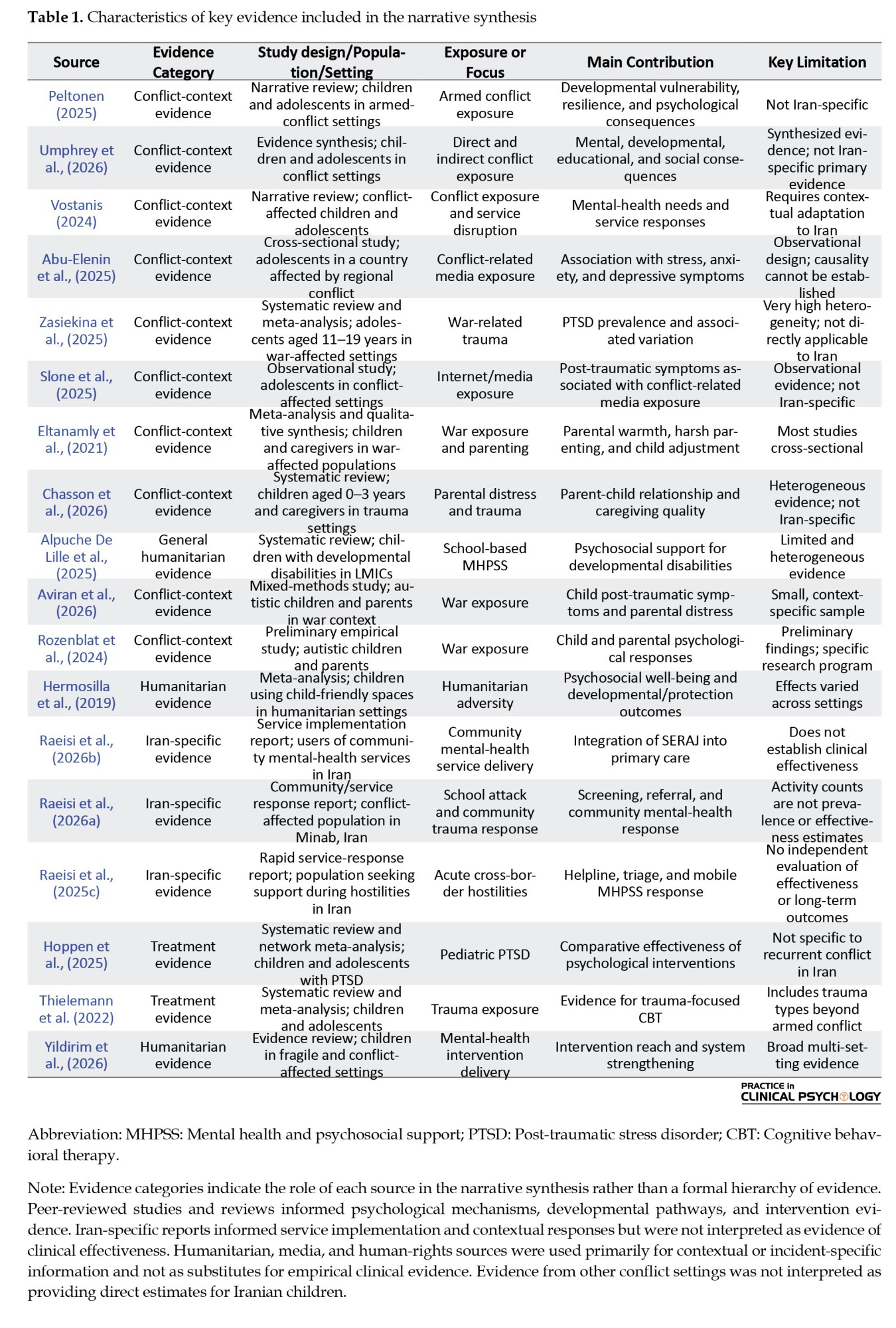
The categorization reflects the narrative synthesis approach rather than a formal hierarchy of evidence.
Time-stamped conflict context and child exposure in Iran
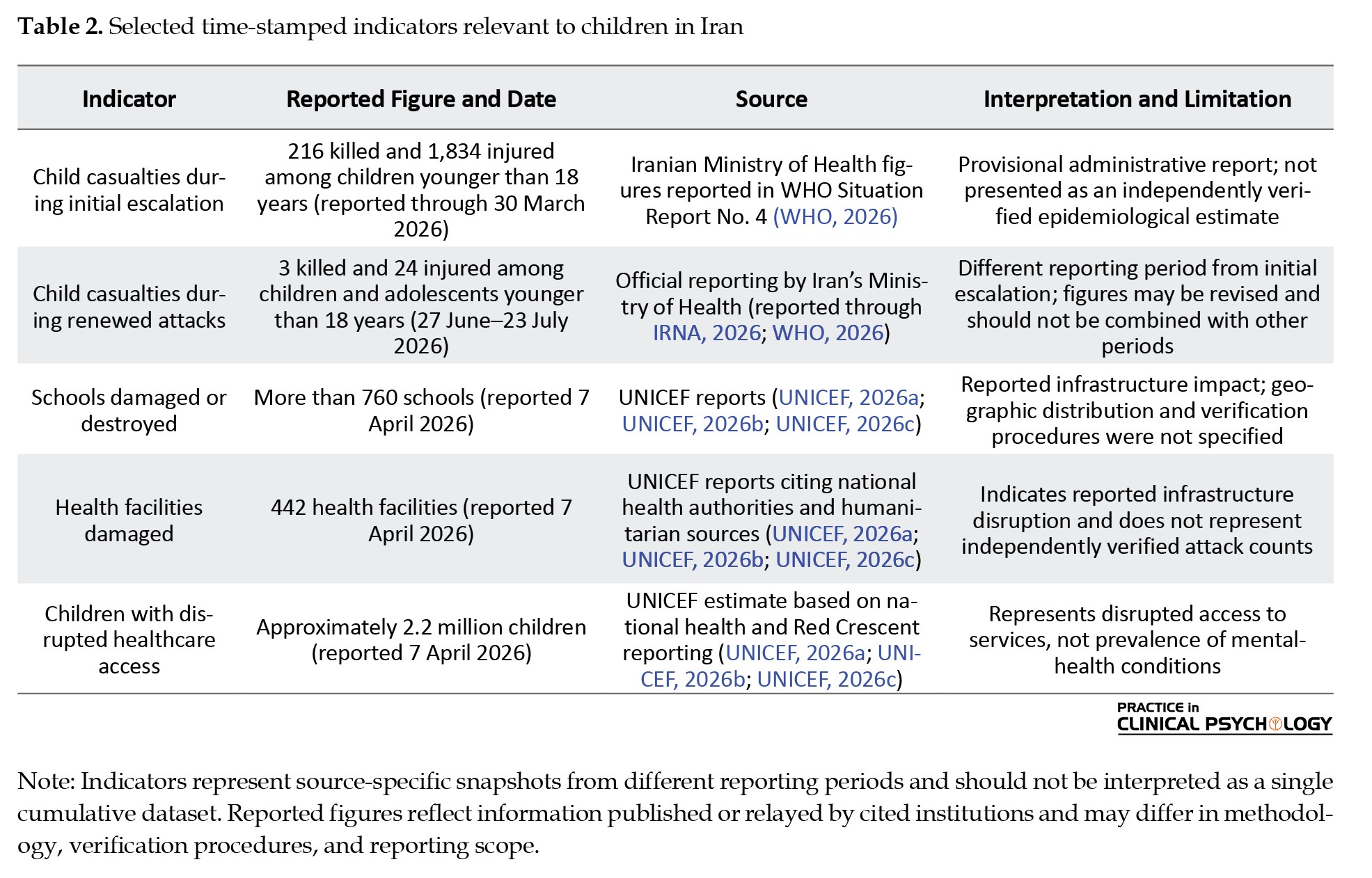
Iran-specific conflict indicators are presented as time-stamped, source-specific reports rather than as a single cumulative dataset. Available figures originate from different reporting periods, source bases, and verification procedures; therefore, they should not be combined or interpreted as directly comparable estimates.
The WHO situation report No. 4, covering 27 March–2 April 2026, relayed Iranian Ministry of Health figures reporting 216 deaths and 1834 injuries among children younger than 18 years (WHO, 2026). On April 7, 2026, UNICEF reported that more than 760 schools and 442 health facilities had been damaged or destroyed and estimated that disruption of healthcare services affected approximately 2.2 million children in Iran (UNICEF, 2026a, 2026b, 2026c). A separate UNICEF regional report estimated that more than 1.2 million children had been displaced across the wider region during the first month of escalation; this figure is not an Iran-specific estimate (UNICEF, 2026a).
During renewed attacks from June 27 to July 23, 2026, Iran’s Ministry of Health reported 55 deaths and 629 injuries, including 3 deaths and 24 injuries among children and adolescents younger than 18 (IRNA, 2026). These figures derive from different reporting periods and verification procedures and should therefore not be combined with earlier reports as a single cumulative estimate.
Conflict exposure extends beyond physical injury. Recurrent attacks, warnings, displacement, school disruption, service interruption, and uncertainty about family members may affect children by disrupting safety, routines, and protective environments. However, representative Iranian data comparing psychological outcomes across regions, exposure levels, or developmental groups remain unavailable.
Mental health and developmental consequences
Armed conflict may influence child and adolescent mental health in multiple ways, including direct exposure to violence, continuing threat, bereavement, disruption of developmental environments, and loss of safety and routines. Evidence from international conflict settings has associated conflict exposure with posttraumatic stress symptoms, anxiety, depressive symptoms, sleep disturbance, somatic complaints, behavioral difficulties, and impaired educational or daily functioning (Peltonen, 2025; Umphrey et al., 2026; Vostanis, 2024)
However, psychological symptoms after conflict should not necessarily be interpreted as psychiatric disorders. Clinical significance depends on symptom duration, severity, functional impairment, developmental stage, cumulative exposure, available support, and whether threat remains ongoing. Furthermore, international findings should not be considered direct estimates of mental-health outcomes among Iranian children because representative Iranian epidemiological and longitudinal data remain unavailable (Vostanis, 2024).
Trauma-related symptoms and mental health outcomes
A 2025 systematic review and meta-analysis of adolescents aged 11–19 years estimated a pooled posttraumatic stress disorder (PTSD) prevalence of 29.4% (95% CI, 18.7%, 43.0%) across conflict settings (Zasiekina et al., 2025). However, substantial heterogeneity (I²=99.4%) indicates considerable variation across populations, contexts, exposure patterns, and measurement approaches. Therefore, this estimate provides evidence of a potential mental-health burden in conflict settings but cannot be directly applied to Iranian children.
Recurrent threat, anticipatory anxiety, and sleep
Recurrent conflict differs from exposure to a completed traumatic event. When danger remains active, children may experience realistic fear, uncertainty, vigilance, disrupted sleep, concentration difficulties, and impaired emotional regulation. In such contexts, distress may reflect both responses to actual ongoing threats and trauma-related symptoms (Umphrey et al., 2026; Vostanis, 2024). Evidence regarding these processes among Iranian children remains limited.
Grief, developmental disruption, and loss of trusted environments
Conflict-related bereavement may occur together with displacement, separation from caregivers, loss of education, economic disruption, and damage to environments normally associated with safety. Developmental stage influences children’s understanding of death, expression of distress, and reliance on caregivers for emotional regulation and meaning-making. Damage to schools, healthcare facilities, and homes may therefore affect psychological wellbeing by weakening protective environments (Umphrey et al., 2026).
Digital and media exposure
Exposure to conflict-related television, internet, and social-media content may represent an additional pathway of distress. Studies from conflict-affected settings have reported associations between greater media exposure and higher levels of posttraumatic stress symptoms, anxiety, depressive symptoms, and psychological distress among adolescents (Abu-Elenin et al., 2025; Slone et al., 2025). These findings are observational and do not establish causality. Effects may vary according to exposure intensity, graphic content, direct conflict experience, prior vulnerability, and caregiver mediation.
Caregiver and family-level pathways
Conflict-related effects on children may occur not only through direct exposure to violence but also through changes in caregiver functioning and family environments. War-related stress, displacement, bereavement, economic disruption, and uncertainty may influence caregivers’ emotional availability, parenting behaviors, and ability to maintain protective routines, which may affect child adjustment (Eltanamly et al., 2021).
Studies from other conflict-affected populations have reported associations between parental distress and child emotional or behavioral difficulties; however, much of this evidence is cross-sectional and does not establish causal pathways (Eltanamly et al., 2021). In early childhood, caregiver posttraumatic stress and distress have also been associated with less sensitive or inconsistent caregiving (Chasson et al., 2026).
Supporting caregivers is therefore an important component of child mental-health responses during conflict. Such support may include practical assistance, access to psychosocial resources, strengthening caregiving capacity, and referral for specialized care when severe distress or functional impairment is present (Chasson et al., 2026; Inter-Agency Standing Committee, 2007; WHO & UNHCR, 2015; WHO et al., 2011).
Family separation, caregiver injury, disappearance, detention, or death may create additional protection needs. Children separated from caregivers require safe caregiving arrangements and access to child-protection and family-tracing mechanisms. Evidence regarding caregiver distress, family-level mechanisms, and their longitudinal effects among Iranian children during recurrent conflict remains limited.
Disruption of education, health care, and protective systems
Education, healthcare, and child protection systems provide important developmental and psychological support during childhood. Conflict-related disruption of these systems may therefore affect child mental health indirectly by reducing safety, routine, social connection, access to care, and opportunities for early identification and support. School closure, damage, displacement, or fear of returning to school may interrupt learning and remove protective functions provided by educational environments, including peer relationships, supportive adults, structured routines, and referral pathways to health and psychosocial services (Inter-agency Network for Education in Emergencies (INEE), 2024; Umphrey et al., 2026).
Healthcare disruption may affect access to essential medicines, rehabilitation, emergency care, developmental services, and ongoing psychiatric or medical treatment. These effects may be particularly important for children with pre-existing vulnerabilities. Iran-specific reports of damage to schools and health facilities should therefore be interpreted not only as infrastructure indicators but also as potential disruptions to developmental and psychosocial support systems (UNICEF, 2026a, 2026b).
Accordingly, child mental-health responses during recurrent conflict should extend beyond clinical interventions and integrate educational continuity, primary healthcare, child protection, caregiver support, and referral systems (Inter-Agency Standing Committee, 2007; UNICEF, 2026a, 2026b; WHO & UNHCR, 2015).
Children with pre-existing and heightened vulnerabilities
Vulnerability to conflict-related mental-health consequences is not evenly distributed among children. Those who experience injury, bereavement, displacement, separation from caregivers, repeated exposure to attacks, poverty, overcrowding, or reduced access to services may require prioritized assessment and support (Umphrey et al., 2026; Vostanis, 2024).
Children with pre-existing psychiatric, neurological, developmental, or chronic medical conditions may face additional challenges because conflict can disrupt medication, rehabilitation, education, communication support, and established caregiving routines. This group includes children with autism spectrum disorder, attention-deficit hyperactivity disorder, intellectual disability, and sensory impairments, who may require adapted communication, predictable routines, accessible information, and individualized support planning (Inter-Agency Standing Committee, 2019; WHO & UNHCR, 2015).
Evidence regarding children with developmental disabilities during armed conflict remains limited and is mainly derived from specific conflict settings outside Iran. Studies involving autistic children and caregivers have reported increased parent-reported posttraumatic symptoms and caregiver distress; however, these findings are based on small, context-specific samples and should not be generalized directly to Iranian children (Aviran et al., 2026; Rozenblat et al., 2024).
Evidence regarding school-based mental-health and psychosocial support for children with developmental disabilities in low- and middle-income countries is also limited and heterogeneous. Humanitarian planning should therefore prioritize accessibility, continuity of existing care, caregiver support, and individualized adaptation while recognizing that specific intervention models require further evaluation in conflict contexts (Alpuche De Lille et al., 2025).
Community resilience and social protection
Community-based support can help restore routine, social connection, and access to protective resources during and after conflict. Structured activities such as play, art, storytelling, sports, and peer interaction may support psychosocial wellbeing when provided through safe environments and linked to appropriate referral pathways (Hermosilla et al., 2019; Inter-Agency Standing Committee, 2007).
Resilience should be understood as a capacity supported by protective environments and social resources, rather than adaptation to preventable harm or a substitute for institutional protection (Fayaz, 2026; Hermosilla et al., 2019). Community-based activities should therefore complement physical safety, educational continuity, healthcare access, caregiver support, and specialist mental-health services when needed (Hermosilla et al., 2019; Inter-Agency Standing Committee, 2007; WHO & UNHCR, 2015; WHO et al., 2011).
Facilitators should avoid pressuring children to disclose traumatic experiences or repeatedly recount distressing events. Supportive approaches should instead emphasize safety, practical needs, connection with caregivers and services, and identifying children who require additional assessment or referral (WHO & UNHCR, 2015; WHO, 2011).
Iranian reports describing mobile teams, helplines, and community mental-health services primarily document service mobilization and implementation activities. They do not establish clinical effectiveness, population coverage, equity, or long-term outcomes (Raeisi, Shalbafan, Chegini, et al., 2026; Raeisi, Shalbafan, Hajebi, et al., 2026; Raeisi et al., 2025). All children need protection, basic services, reliable information, supportive caregiving, and restored predictable routines. In contrast, children with persistent distress or functional impairment may require focused psychosocial interventions or specialist care.
Evidence-based mental health and psychosocial support
Mental health and psychosocial support (MHPSS) approaches in humanitarian settings are generally organized as layered systems that respond to different levels of need, ranging from protection and basic services to focused psychosocial interventions and specialized mental healthcare (Inter-Agency Standing Committee, 2007; WHO & UNHCR, 2015). This approach is particularly relevant for children affected by recurrent armed conflict because not all children exposed to threat develop mental disorders, while some require targeted assessment and treatment.
At the foundational level, all children require safety, protection, reliable information, supportive caregiving, restoration of routines, access to education, and essential health services. These measures do not represent treatment of psychiatric disorders but provide protective conditions that may reduce distress and support recovery. Children with persistent distress, significant functional impairment, or high-risk symptoms may require focused psychosocial interventions, whereas severe or complex presentations require specialist assessment and clinical care. Psychological first aid (PFA) is recommended as an early supportive approach after emergencies. PFA focuses on safety, practical assistance, connection with supportive individuals, and linkage with appropriate services rather than requiring children to repeatedly describe traumatic experiences (WHO et al., 2011). Its purpose is immediate support and stabilization, not diagnosis or trauma processing.
For children and adolescents with clinically significant posttraumatic stress symptoms, trauma-focused cognitive behavioral interventions have among the strongest available evidence for reducing PTSD symptoms and related emotional difficulties (Hoppen et al., 2025; Thielemann et al., 2022). However, most available evidence comes from conflict-affected populations outside Iran, and these findings should not be interpreted as direct evidence of effectiveness during recurrent armed conflict in Iran.
The proposed MHPSS pathway for Iran presented in this review is therefore an evidence-informed, author-proposed framework rather than a validated model of care. Implementing it requires evaluating feasibility, acceptability, accessibility, equity, safety, and clinical outcomes across developmental stages, exposure levels, geographic regions, and vulnerability profiles. Table 2 summarizes the proposed Iranian MHPSS pathway and its alignment with different levels of support.
In conditions of ongoing threat, psychological interventions should be integrated with restoration of safety and essential services. Recurrent conflict differs from exposure to a completed traumatic event because children may continue to experience realistic danger, uncertainty, and disruption of protective environments. Effective responses therefore require coordination among mental-health services, healthcare systems, schools, caregivers, and child-protection mechanisms.
Iranian Service Responses and System Implications
Iran has health-system platforms that may support child mental-health responses during recurrent conflict, including primary healthcare structures, the 4030 helpline, SERAJ community mental-health centers, and mobile mental-health teams. However, available evidence primarily describes service organization, implementation activities, and operational capacity rather than demonstrated clinical effectiveness. During recent hostilities, reports described expanding the 4030 helpline capacity and deploying mobile mental-health teams. These findings indicate emergency response mobilization and service availability but do not establish symptom improvement, population coverage, equity of access, or long-term outcomes (Raeisi et al., 2025).
Similarly, reports following the Minab school attack described community screening and referral activities through mental-health services. These figures should be interpreted as indicators of service activity and referral processes rather than estimates of psychiatric prevalence or intervention effectiveness (Raeisi, Shalbafan, Chegini, et al., 2026).
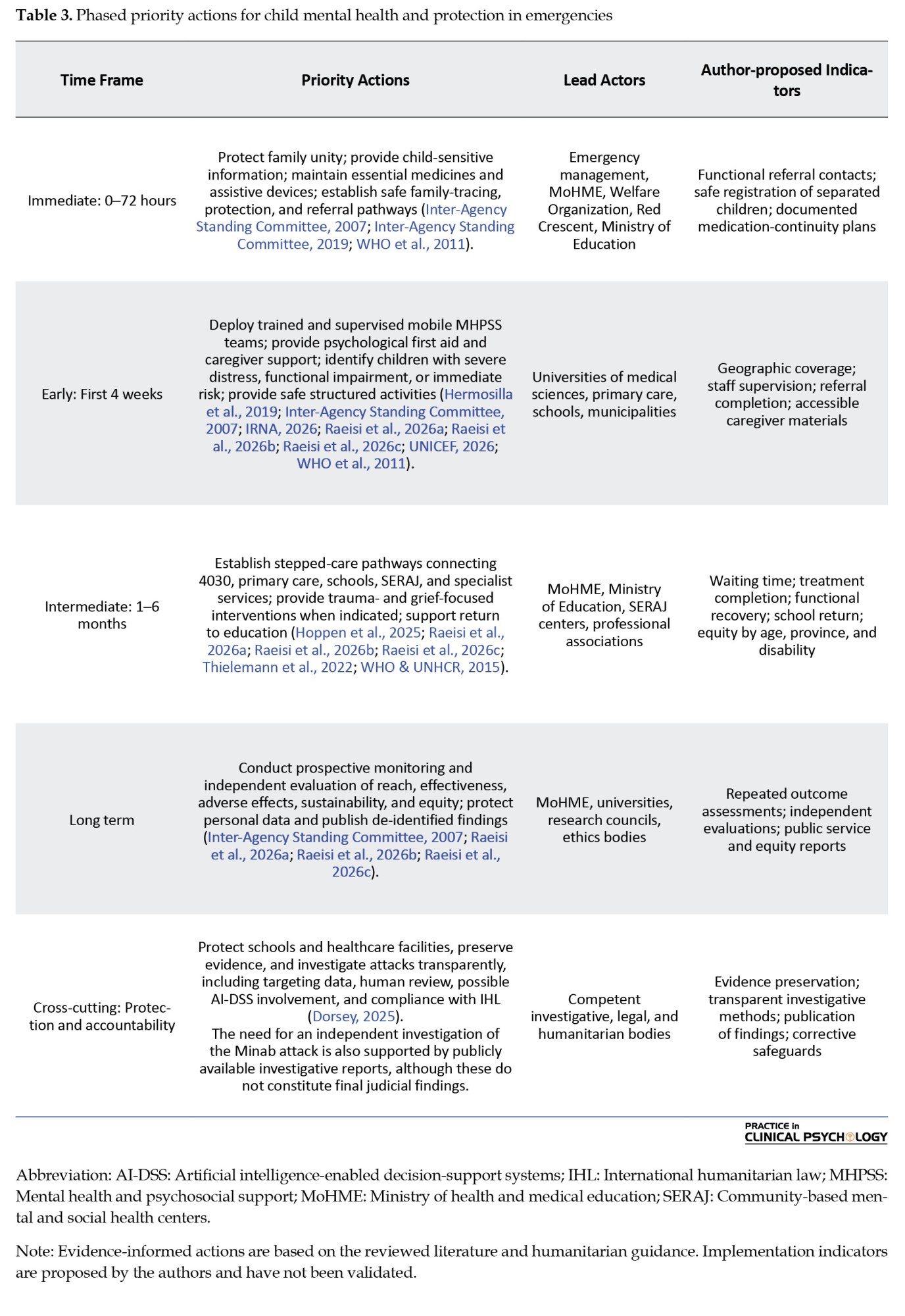
Future evaluation of Iranian child mental-health responses should examine service reach, referral completion, clinical and functional outcomes, continuity of care, and equity across age groups, geographic regions, exposure levels, and vulnerability profiles. Integration of emergency response capacity with routine healthcare, educational systems, caregiver support, child protection mechanisms, and specialist referral pathways may strengthen responses to child mental-health needs during recurrent conflict. Table 3 presents proposed indicators for future evaluation of child mental-health responses in conflict settings.
Civilian protection, ai-enabled decision support, and accountability
A layered MHPSS approach is recommended in humanitarian settings because children affected by conflict have different needs, ranging from basic safety and supportive environments to specialized clinical care. These approaches typically combine universal support, focused psychosocial interventions, and specialist services based on severity, functional impairment, and risk indicators (Inter-Agency Standing Committee, 2007; WHO & UNHCR, 2015).
All children need protection, essential services, reliable information, supportive caregiving, and restored predictable routines during and after emergencies. Children with persistent distress or functional impairment may benefit from focused psychosocial interventions delivered by trained providers, whereas severe or complex presentations require specialist assessment and treatment.
The layered MHPSS framework and the proposed Iranian service pathway presented in this review represent an evidence-informed, author-proposed model rather than an established or independently validated intervention pathway.
Psychological first aid provides practical and non-intrusive support following emergencies by emphasizing safety, immediate needs, connection with supportive people, and linkage with appropriate services rather than requiring children to describe traumatic experiences (WHO, 2011) repeatedly. Referral for specialist assessment should be considered when children show persistent distress, significant functional impairment, or high-risk symptoms.
Among children and adolescents with clinically significant posttraumatic stress symptoms, trauma-focused cognitive behavioral interventions have some of the strongest available evidence for reducing PTSD symptoms and related emotional difficulties (Hoppen et al., 2025; Thielemann et al., 2022). However, most evidence comes from settings outside Iran and should not be interpreted as direct evidence of effectiveness during recurrent armed conflict in Iran. During continuing threat conditions, interventions should address both psychological symptoms and ongoing safety needs because recurrent conflict differs from exposure to a completed traumatic event.
Discussion
This review indicates that the mental-health consequences of recurrent armed conflict arise through interacting developmental, family, service, and protection pathways rather than direct exposure alone. Conflict may affect children through psychological threat, caregiver distress and disruption of family functioning, interruption of education and healthcare, and loss of safety within protective environments. These mechanisms may vary according to developmental stage, vulnerability, and access to supportive resources (Umphrey et al., 2026; Vostanis, 2024).
International evidence consistently associates conflict exposure with posttraumatic stress symptoms, anxiety, depression, grief, sleep disturbance, and functional impairment among children and adolescents (Peltonen, 2025; Umphrey et al., 2026; Vostanis, 2024). However, these findings should not be interpreted as direct estimates for Iranian children because representative epidemiological and longitudinal data from Iran remain unavailable. Current Iran-specific evidence mainly describes conflict indicators, service mobilization, and emerging response structures rather than population-level mental-health outcomes or evaluated intervention effectiveness (Raeisi, Shalbafan, Chegini, et al., 2026; Raeisi, Shalbafan, Hajebi, et al., 2026; Raeisi et al., 2025).
Interpretation of international evidence in the Iranian context should consider cultural and contextual factors, including family structures, expressions of distress and grief, help-seeking patterns, stigma, regional differences, disability, and access to educational and healthcare systems. Furthermore, recurrent conflict differs from exposure to a completed traumatic event because children may experience continuing uncertainty, realistic fear, and disruption of daily routines alongside trauma-related symptoms. Therefore, responses should integrate restoration of safety and essential services with developmentally appropriate psychological support rather than focusing only on symptom reduction.
Important evidence gaps remain, including the absence of representative longitudinal studies of Iranian children, limited independent evaluation of mental health and psychosocial services, insufficient evidence regarding children with developmental disabilities, and limited understanding of adaptation under recurrent conflict conditions. Future research should prioritize prospective studies across developmental stages and exposure levels, evaluation of service reach and outcomes, investigation of caregiver and educational pathways, and development of culturally appropriate stepped-care models. These priorities represent evidence-informed research directions rather than validated intervention effects.
Civilian protection is relevant to psychosocial recovery because safety, continuity of education, healthcare access, and trust in protective environments influence children’s recovery conditions. However, questions regarding legal responsibility, intent, or AI involvement in specific incidents remain outside the evidentiary scope of this review.
Study limitations
This review has several limitations. First, it was conducted as a focused narrative review rather than a systematic review. Although multiple databases and institutional sources were searched, it did not include independent duplicate screening, formal risk-of-bias assessment, or quantitative synthesis. Therefore, interpret the findings as an integrated narrative synthesis rather than a systematic estimate of effects.
Second, representative longitudinal epidemiological data on child and adolescent mental health during armed conflict in Iran remain limited. Consequently, much of the evidence on psychological outcomes, developmental mechanisms, and interventions comes from other conflict-affected settings and may not fully represent Iran’s cultural, social, geographic, and healthcare context.
Third, Iran-specific reports mainly describe conflict indicators, service mobilization, and implementation activities rather than independently evaluated effectiveness, equity, population coverage, or long-term outcomes. Incident-specific information, including casualty and infrastructure reports, also reflects different sources, reporting periods, and verification procedures.
Finally, publicly available information regarding the Minab school attack and possible AI-enabled decision-support systems does not establish judicial findings, intent, responsibility, or technological involvement. These issues were therefore discussed only as contextual factors relevant to child protection and psychosocial recovery rather than as established legal or forensic conclusions.
Conclusion
Recurrent armed conflict may influence child and adolescent mental health through interconnected pathways involving direct exposure to threat, bereavement, caregiver distress, disruption of education and healthcare, and weakening of protective environments. Available evidence highlights the need to integrate mental-health responses with safety, essential services, caregiver support, educational continuity, and access to specialized care when clinically indicated (Inter-Agency Standing Committee, 2007; Peltonen, 2025; Umphrey et al., 2026; Vostanis, 2024; WHO & UNHCR, 2015; WHO, 2011).
Iran-specific evidence mainly covers conflict indicators, service mobilization, and response structures rather than representative estimates of child mental-health outcomes or demonstrated intervention effectiveness. Existing platforms, including the 4030 helpline, SERAJ centers, primary healthcare services, and mobile mental-health teams, may support emergency responses; however, systematic evaluation is needed to assess their effectiveness, equity, and long-term outcomes.
The MHPSS framework and evaluation priorities proposed in this review should be considered evidence-informed and author-proposed rather than validated models of care. Future research should examine their feasibility, acceptability, reach, and outcomes across developmental stages, exposure levels, geographic regions, and vulnerability profiles.
Ethical Considerations
Compliance with ethical guidelines
This narrative review was based on published literature and publicly available reports; therefore, ethical approval was not required.
Funding
This research did not receive any grant from funding agencies in the public, commercial, or non-profit sectors.
Authors' contributions
All authors contributed equally to the conception and design of the study, data collection and analysis, interpretation of the results, and drafting of the manuscript. Each author approved the final version of the manuscript for submission.
Conflict of interest
The authors declared no conflict of interest.
Acknowledgments
The authors express their deepest respect and gratitude to all children and families affected by war, whose experiences remind us of our collective responsibility to protect their mental health.
References
Abu-Elenin, M. M., Radwan, M. M., Rabie, M. M., Eldabaa, M. M., El Wahab, M. M. A., & Shatat, Y. M., et al. (2025). The repercussions of watching scenes of the escalating conflict in Gaza strip on the mental health of adolescents in a neighboring country. BMC Public Health, 25(1), 1590. [DOI:10.1186/s12889-025-22550-5] [PMID]
Alpuche De Lille, M. J., Teixeira da Silva, R., & Smythe, T. (2025). School-based mental health and psychosocial support interventions for children and adolescents with developmental disabilities in low- and middle-income countries: A systematic review. Tropical Medicine & International Health : TM & IH, 30(8), 763–781. [DOI:10.1111/tmi.70000] [PMID]
Aviran, S. G., Nitzan, T., Rozenblat, S., Graucher, T., Ophir, S., & Vaisman, T. M., et al. (2026). Autistic children and their parents during war - A mixed-methods study. Psychiatry Research, 361, 117163. [DOI:10.1016/j.psychres.2026.117163] [PMID]
Becatoros, E., Khaled, F., & Binkley, C. (2026). US military launches new strikes on Iran as clashes escalate over shipping routes [Internet]. Retrieved from: [Link]
Chasson, M., Ben-Shlomo, S., & Lyons-Ruth, K. (2026). Early Parent-Child Relationship in the Shadow of War-Related Trauma: A Systematic Review. Trauma, Violence & Abuse, 27(3), 887–903. [DOI:10.1177/15248380251325222] [PMID]
Dorsey, J. (2025). The erosion of human(e) judgement in targeting? Quantification logics, AI-enabled decision support systems and proportionality assessments in IHL. International Review of the Red Cross, 107(930), 1041-1071. [DOI:10.1017/S1816383125100969]
Eltanamly, H., Leijten, P., Jak, S., & Overbeek, G. (2021). Parenting in Times of War: A Meta-Analysis and Qualitative Synthesis of War Exposure, Parenting, and Child Adjustment. Trauma, Violence & Abuse, 22(1), 147–160. [DOI:10.1177/1524838019833001] [PMID]
Fayaz, I. (2026). Resilience in Children Survivors of Armed Conflict: A Systematic Scoping Review of Risk and Protective Factors. Journal of Child & Adolescent Trauma, 19(3), 1083–1098. [DOI:10.1007/s40653-026-00828-z] [PMID]
Hafezi, P., & Mcdowall, A. (2026). US attacks deepen hardship, not dissent, in Iran’s restive south [Internet]. Retrieved from: [Link]
Hermosilla, S., Metzler, J., Savage, K., Musa, M., & Ager, A. (2019). Child friendly spaces impact across five humanitarian settings: A meta-analysis. BMC Public Health, 19(1), 576. [DOI:10.1186/s12889-019-6939-2] [PMID]
Hoppen, T. H., Wessarges, L., Jehn, M., Mutz, J., Kip, A., & Schlechter, P., et al. (2025). Psychological Interventions for Pediatric Posttraumatic Stress Disorder: A Systematic Review and Network Meta-Analysis. JAMA Psychiatry, 82(2), 130-141. [DOI:10.1001/jamapsychiatry.2024.3908] [PMID]
ICRC. (2024). International Humanitarian Law and the Challenges of Contemporary Armed Conflicts: Building a Culture of Compliance for IHL to Protect Humanity in Today’s and Future Conflicts. Geneva: International Committee of the Red Cross. [Link]
Inter-agency Network for Education in Emergencies (INEE). (2024). Minimum Standards for Education: Preparedness, Response, Recovery. New York: Inter-agency Network for Education in Emergencies (INEE). [DOI:10.3362/9781788534444]
Inter-Agency Standing Committee. (2007). IASC Guidelines on Mental Health and Psychosocial Support in Emergency Settings. Geneva: Inter-Agency Standing Committee. [Link]
Inter-Agency Standing Committee. (2019). IASC Guidelines on the Inclusion of Persons with Disabilities in Humanitarian Action. Geneva: Inter-Agency Standing Committee. [Link]
IRNA. (2026). 629 injured and 55 killed in US airstrikes (Persian) [Internet]. Retrieved from: [Link]
Peltonen, K. (2025). Children and war - vulnerability and resilience. European Journal of Developmental Psychology, 22(3), 340-352. [DOI:10.1080/17405629.2024.2382410]
Raeisi, A., Shalbafan, M., Chegini, M., Ghoddousi, S. E., Bahramnejad, A., & Chakeri Hakami, M., et al. (2026a). Mental health consequences of the Minab school bombing in southern Iran: Community-based response and the role of the ministry of health. Asian Journal of Psychiatry, 121, 105030. [DOI:10.1016/j.ajp.2026.105030] [PMID]
Raeisi, A., Shalbafan, M., Hajebi, A., Etemad, K., Fathi, H. R., & Nasirimahini, Z., et al. (2026b). From pilot to the 100th center based on the SERAJ model: Embedding communitybased mental and social health centers into iran’s primary healthcare network. The International Journal of Social Psychiatry, 207640261425503. [DOI:10.1177/00207640261425503] [PMID]
Raeisi, A., Zarafshan, H., Bahramnejad, A., Ghaffarzadeh Razzaghi, M., Asadi, A., & Fathi, H. R., et al. (2025c). Coordinated mental health and psychosocial support in Iran following acute cross-border hostilities (Jun 13, 2025 - Jun 24, 2025): A rapid response from Iran’s Ministry of Health and Medical Education. Asian Journal of Psychiatry, 112, 104684. [DOI:10.1016/j.ajp.2025.104684] [PMID]
Rozenblat, S., Nitzan, T., Matz Vaisman, T., Shusel, R., Rum, Y., & Ashtamker, M., et al. (2024). Autistic children and their parents in the context of war: Preliminary findings. Stress and Health : Journal of the International Society for the Investigation of Stress, 40(5), e3442. [DOI:10.1002/smi.3442] [PMID]
Slone, M., Peer, A., & Egozi, M. (2025). Adolescent vulnerability to internet media exposure: The role of self-mastery in mitigating posttraumatic symptoms. International Journal of Environmental Research and Public Health, 22(4), 589. [DOI:10.3390/ijerph22040589] [PMID]
Thielemann, J. F. B., Kasparik, B., König, J., Unterhitzenberger, J., & Rosner, R. (2022). A systematic review and meta-analysis of trauma-focused cognitive behavioral therapy for children and adolescents. Child Abuse & Neglect, 134, 105899. [DOI:10.1016/j.chiabu.2022.105899] [PMID]
Umphrey, L., Patel, A., Alayyan, A., Haq, H. A., Suchdev, P. S., & Schonfeld, D. J., et al. (2026). The Effects of Armed Conflict on Children and Adolescents: Policy Statement. Pediatrics, 157(3), e2025075748. [DOI:10.1542/peds.2025-075748] [PMID]
UNICEF. (2026a). The brutality of war measured in children’s lives as hostilities escalate in Iran. Retrieved from: [Link]
United Nations Children’s Fund (UNICEF). (2026). Humanitarian crisis for children deepens after one month of war in the Middle East. Retrieved from: [Link]
UNICEF. (2026c). UNICEF Statement on Hostilities in the Middle East. Retrieved from: [Link]
Vostanis, P. (2024). Mental health provision for children affected by war and armed conflicts. European Child & Adolescent Psychiatry, 33(9), 3293-3299. [DOI:10.1007/s00787-024-02492-w] [PMID]
WHO. (2026). WHO situation report: Middle East escalation of conflict. Geneva: WHO. [Link]
WHO, & UNHCR. (2015). mhGAP Humanitarian Intervention Guide (mhGAP-HIG): Clinical Management of Mental, Neurological and Substance Use Conditions in Humanitarian Emergencies. Geneva: World Health Organization. [Link]
WHO, War Trauma Foundation, & World Vision International. (2011). Psychological first aid: Guide for field workers. Geneva: World Health Organization. [Link]
Yildirim, S., Gutierrez-Torres, M. A., Byansi, W., Ventevogel, P., Bosqui, T., & Betancourt, T. S. (2026). Evidence based mental health interventions for children in fragile and conflict affected settings: Expanding reach and system strengthening. BMJ, 392. [DOI:10.1136/bmj-2025-086043]
Zasiekina, L., Griffin, A., Blakemore, S. J., Hlova, I., & Bignardi, G. (2025). Prevalence of war-related posttraumatic stress disorder in adolescents: A systematic review and meta-analysis. European Journal of Psychotraumatology, 16(1), 2497167. [DOI:10.1080/20008066.2025.2497167] [PMID]
Armed conflict affects children and adolescents through direct violence; injury; bereavement; displacement; family disruption; and interruption of education, healthcare, caregiving, and other systems supporting healthy development. Effects vary by developmental stage, cumulative exposure, caregiver functioning, disability, family resources, and access to protective support (Peltonen, 2025; Umphrey et al., 2026; Vostanis, 2024).
The conflict that escalated in Iran on February 28, 2026, followed by renewed attacks beginning on June 27, 2026, resulted in reported civilian casualties and disruption of child-related services. Available figures from official and humanitarian sources represent different reporting periods, source bases, and verification procedures; therefore, they are presented as source-specific reports rather than directly comparable estimates (Becatoros et al., 2026; Hafezi & McDowall, 2026; IRNA, 2026). Conflict-related events, including disruption of schools, healthcare facilities, and community environments, may affect children not only through direct exposure to violence but also through changes in safety, routines, and access to supportive systems.
International evidence links conflict exposure with posttraumatic stress symptoms, anxiety, depression, sleep disturbance, grief, behavioral difficulties, and functional impairment among children and adolescents (Peltonen, 2025; Umphrey et al., 2026; Vostanis, 2024). However, Iran-specific evidence regarding representative child mental-health outcomes and long-term consequences remains limited. Evidence from other conflict-affected populations can inform understanding of possible mechanisms and responses but should not be interpreted as direct estimates of prevalence or outcomes among Iranian children.
This review conceptualizes recurrent armed conflict as a multidimensional exposure that may influence child and adolescent mental health through interconnected pathways, including direct conflict exposure and continuing threat, caregiver and family disruption, interruption of education and healthcare, and loss of safety and protective environments. These pathways may contribute to psychological symptoms, functional impairment, and altered developmental trajectories, while family, community, and service responses may provide protective effects.
The review is organized around 4 interconnected domains: Conflict exposure and continuing threat; developmental, caregiver, and family pathways; psychological and functional consequences; and protective and service responses.
Evidence is distinguished throughout as Iran-specific evidence, evidence derived from other conflict settings, or humanitarian and professional guidance.
Civilian protection and artificial intelligence-enabled decision-support systems (AI-DSS) are considered only insofar as they relate to child safety, disruption of protective environments, and conditions supporting psychosocial recovery. This review does not estimate national prevalence, evaluate the effectiveness of Iranian services, determine responsibility for specific incidents, or make legal conclusions (Dorsey, 2025; ICRC, 2024).
Materials and Methods
This narrative review employed a focused evidence synthesis approach to examine the mental-health and developmental consequences of recurrent armed conflict among children and adolescents, with particular attention to Iran’s 2026 conflict context, child protection concerns, and emerging mental-health responses. The review integrated clinical, developmental, humanitarian, and contextual evidence rather than estimating pooled prevalence or intervention effects.
Literature search strategy
We identified evidence through a focused search of PubMed/MEDLINE, Scopus, Web of Science, Google Scholar, and relevant institutional sources. Additional methods included backward and forward citation tracking and targeted search of the World Health Organization (WHO), UNICEF, ICRC, and Iranian health-related institutions. We searched for manuscripts and updated the search through July 24, 2026. No language restrictions were applied.
Search strategies were adapted for each database and combined the following concepts:
(“child” OR “adolescent” OR “youth” OR “pediatric”) AND
(“armed conflict” OR “war” OR “bombardment” OR “violence” OR “recurrent threat”) AND
(“mental health” OR “psychological distress” OR “posttraumatic stress” OR “PTSD” OR “anxiety” OR “depression” OR “grief” OR “sleep disturbance” OR “caregiver” OR “psychosocial support”).
For Iran-specific evidence, we added terms such as (“Iran” OR “Iranian”). Targeted searches also addressed developmental disabilities, education and healthcare disruption, civilian protection, AI-DSS, and international humanitarian law.
Eligibility criteria and evidence identification
Sources were eligible if they addressed one or more of the following domains: mental-health or developmental consequences of armed conflict among children and adolescents; caregiver, family, educational, healthcare, or protection-related pathways affecting child wellbeing; psychosocial or clinical responses relevant to conflict-affected children; and Iran-specific conflict indicators, service responses, or child-related reports.
Sources were selected based on relevance, methodological quality, directness of evidence, and contribution to the review objectives. We excluded adult-only studies, unrelated studies, insufficiently described sources, and substantially overlapping reports.
Because this review was narrative, source identification and selection were performed through iterative assessment rather than independent duplicate screening. When overlapping information was identified, we prioritized the most direct, recent, and authoritative source.
Evidence classification and synthesis
Evidence sources were classified into 5 categories: peer-reviewed empirical studies and reviews, including observational studies, systematic reviews, meta-analyses, and intervention studies; official administrative or service reports; humanitarian situation reports; media reports used only for time-sensitive contextual information when primary verification was unavailable; and human-rights investigations describing documented investigations or allegations while distinguishing them from judicial findings.
Peer-reviewed studies informed psychological mechanisms, developmental pathways, and intervention evidence, whereas official and humanitarian reports informed conflict context, service availability, and implementation indicators. Media reports and human-rights investigations were interpreted cautiously and were not considered equivalent to clinical evidence.
Throughout the review, evidence was distinguished as Iran-specific evidence, evidence from other conflict-affected settings, or humanitarian and professional guidance. The final narrative synthesis included 32 selected sources representing clinical research, developmental science, humanitarian evidence, service reports, and contextual documentation.
Methodological limitations of the review approach
As a narrative review, this study did not involve formal risk-of-bias assessment, quantitative meta-analysis, or PRISMA-based systematic screening. These characteristics allowed integration of heterogeneous clinical, humanitarian, service, and contextual evidence but limit reproducibility compared with systematic review methodologies.
Results
Overview of the evidence
Thirty-two sources were included in the final narrative synthesis. Evidence was organized according to the role of each source within the review framework, including conflict exposure, developmental and family pathways, mental-health outcomes, service responses, and child protection considerations.
Peer-reviewed empirical studies and reviews provided evidence regarding psychological outcomes, developmental mechanisms, and interventions across conflict-affected populations. Iran-specific evidence primarily consisted of administrative reports, humanitarian situation reports, and service-related documentation describing conflict indicators, service mobilization, and response structures. Media reports and human-rights investigations were used only for incident-specific context and were not treated as equivalent to empirical clinical evidence (Raeisi, Shalbafan, Chegini, et al., 2026; Raeisi, Shalbafan, Hajebi, et al., 2026; Raeisi et al., 2025).
Representative epidemiological studies of conflict-affected Iranian children were not identified. Therefore, we used evidence from international conflict settings to inform potential psychological and developmental pathways, while Iran-specific conclusions were limited to available contextual and service-related information.
Table 1 summarizes the characteristics of included evidence.
The categorization reflects the narrative synthesis approach rather than a formal hierarchy of evidence.
Time-stamped conflict context and child exposure in Iran
Iran-specific conflict indicators are presented as time-stamped, source-specific reports rather than as a single cumulative dataset. Available figures originate from different reporting periods, source bases, and verification procedures; therefore, they should not be combined or interpreted as directly comparable estimates.
The WHO situation report No. 4, covering 27 March–2 April 2026, relayed Iranian Ministry of Health figures reporting 216 deaths and 1834 injuries among children younger than 18 years (WHO, 2026). On April 7, 2026, UNICEF reported that more than 760 schools and 442 health facilities had been damaged or destroyed and estimated that disruption of healthcare services affected approximately 2.2 million children in Iran (UNICEF, 2026a, 2026b, 2026c). A separate UNICEF regional report estimated that more than 1.2 million children had been displaced across the wider region during the first month of escalation; this figure is not an Iran-specific estimate (UNICEF, 2026a).
During renewed attacks from June 27 to July 23, 2026, Iran’s Ministry of Health reported 55 deaths and 629 injuries, including 3 deaths and 24 injuries among children and adolescents younger than 18 (IRNA, 2026). These figures derive from different reporting periods and verification procedures and should therefore not be combined with earlier reports as a single cumulative estimate.
Conflict exposure extends beyond physical injury. Recurrent attacks, warnings, displacement, school disruption, service interruption, and uncertainty about family members may affect children by disrupting safety, routines, and protective environments. However, representative Iranian data comparing psychological outcomes across regions, exposure levels, or developmental groups remain unavailable.
Mental health and developmental consequences
Armed conflict may influence child and adolescent mental health in multiple ways, including direct exposure to violence, continuing threat, bereavement, disruption of developmental environments, and loss of safety and routines. Evidence from international conflict settings has associated conflict exposure with posttraumatic stress symptoms, anxiety, depressive symptoms, sleep disturbance, somatic complaints, behavioral difficulties, and impaired educational or daily functioning (Peltonen, 2025; Umphrey et al., 2026; Vostanis, 2024)
However, psychological symptoms after conflict should not necessarily be interpreted as psychiatric disorders. Clinical significance depends on symptom duration, severity, functional impairment, developmental stage, cumulative exposure, available support, and whether threat remains ongoing. Furthermore, international findings should not be considered direct estimates of mental-health outcomes among Iranian children because representative Iranian epidemiological and longitudinal data remain unavailable (Vostanis, 2024).
Trauma-related symptoms and mental health outcomes
A 2025 systematic review and meta-analysis of adolescents aged 11–19 years estimated a pooled posttraumatic stress disorder (PTSD) prevalence of 29.4% (95% CI, 18.7%, 43.0%) across conflict settings (Zasiekina et al., 2025). However, substantial heterogeneity (I²=99.4%) indicates considerable variation across populations, contexts, exposure patterns, and measurement approaches. Therefore, this estimate provides evidence of a potential mental-health burden in conflict settings but cannot be directly applied to Iranian children.
Recurrent threat, anticipatory anxiety, and sleep
Recurrent conflict differs from exposure to a completed traumatic event. When danger remains active, children may experience realistic fear, uncertainty, vigilance, disrupted sleep, concentration difficulties, and impaired emotional regulation. In such contexts, distress may reflect both responses to actual ongoing threats and trauma-related symptoms (Umphrey et al., 2026; Vostanis, 2024). Evidence regarding these processes among Iranian children remains limited.
Grief, developmental disruption, and loss of trusted environments
Conflict-related bereavement may occur together with displacement, separation from caregivers, loss of education, economic disruption, and damage to environments normally associated with safety. Developmental stage influences children’s understanding of death, expression of distress, and reliance on caregivers for emotional regulation and meaning-making. Damage to schools, healthcare facilities, and homes may therefore affect psychological wellbeing by weakening protective environments (Umphrey et al., 2026).
Digital and media exposure
Exposure to conflict-related television, internet, and social-media content may represent an additional pathway of distress. Studies from conflict-affected settings have reported associations between greater media exposure and higher levels of posttraumatic stress symptoms, anxiety, depressive symptoms, and psychological distress among adolescents (Abu-Elenin et al., 2025; Slone et al., 2025). These findings are observational and do not establish causality. Effects may vary according to exposure intensity, graphic content, direct conflict experience, prior vulnerability, and caregiver mediation.
Caregiver and family-level pathways
Conflict-related effects on children may occur not only through direct exposure to violence but also through changes in caregiver functioning and family environments. War-related stress, displacement, bereavement, economic disruption, and uncertainty may influence caregivers’ emotional availability, parenting behaviors, and ability to maintain protective routines, which may affect child adjustment (Eltanamly et al., 2021).
Studies from other conflict-affected populations have reported associations between parental distress and child emotional or behavioral difficulties; however, much of this evidence is cross-sectional and does not establish causal pathways (Eltanamly et al., 2021). In early childhood, caregiver posttraumatic stress and distress have also been associated with less sensitive or inconsistent caregiving (Chasson et al., 2026).
Supporting caregivers is therefore an important component of child mental-health responses during conflict. Such support may include practical assistance, access to psychosocial resources, strengthening caregiving capacity, and referral for specialized care when severe distress or functional impairment is present (Chasson et al., 2026; Inter-Agency Standing Committee, 2007; WHO & UNHCR, 2015; WHO et al., 2011).
Family separation, caregiver injury, disappearance, detention, or death may create additional protection needs. Children separated from caregivers require safe caregiving arrangements and access to child-protection and family-tracing mechanisms. Evidence regarding caregiver distress, family-level mechanisms, and their longitudinal effects among Iranian children during recurrent conflict remains limited.
Disruption of education, health care, and protective systems
Education, healthcare, and child protection systems provide important developmental and psychological support during childhood. Conflict-related disruption of these systems may therefore affect child mental health indirectly by reducing safety, routine, social connection, access to care, and opportunities for early identification and support. School closure, damage, displacement, or fear of returning to school may interrupt learning and remove protective functions provided by educational environments, including peer relationships, supportive adults, structured routines, and referral pathways to health and psychosocial services (Inter-agency Network for Education in Emergencies (INEE), 2024; Umphrey et al., 2026).
Healthcare disruption may affect access to essential medicines, rehabilitation, emergency care, developmental services, and ongoing psychiatric or medical treatment. These effects may be particularly important for children with pre-existing vulnerabilities. Iran-specific reports of damage to schools and health facilities should therefore be interpreted not only as infrastructure indicators but also as potential disruptions to developmental and psychosocial support systems (UNICEF, 2026a, 2026b).
Accordingly, child mental-health responses during recurrent conflict should extend beyond clinical interventions and integrate educational continuity, primary healthcare, child protection, caregiver support, and referral systems (Inter-Agency Standing Committee, 2007; UNICEF, 2026a, 2026b; WHO & UNHCR, 2015).
Children with pre-existing and heightened vulnerabilities
Vulnerability to conflict-related mental-health consequences is not evenly distributed among children. Those who experience injury, bereavement, displacement, separation from caregivers, repeated exposure to attacks, poverty, overcrowding, or reduced access to services may require prioritized assessment and support (Umphrey et al., 2026; Vostanis, 2024).
Children with pre-existing psychiatric, neurological, developmental, or chronic medical conditions may face additional challenges because conflict can disrupt medication, rehabilitation, education, communication support, and established caregiving routines. This group includes children with autism spectrum disorder, attention-deficit hyperactivity disorder, intellectual disability, and sensory impairments, who may require adapted communication, predictable routines, accessible information, and individualized support planning (Inter-Agency Standing Committee, 2019; WHO & UNHCR, 2015).
Evidence regarding children with developmental disabilities during armed conflict remains limited and is mainly derived from specific conflict settings outside Iran. Studies involving autistic children and caregivers have reported increased parent-reported posttraumatic symptoms and caregiver distress; however, these findings are based on small, context-specific samples and should not be generalized directly to Iranian children (Aviran et al., 2026; Rozenblat et al., 2024).
Evidence regarding school-based mental-health and psychosocial support for children with developmental disabilities in low- and middle-income countries is also limited and heterogeneous. Humanitarian planning should therefore prioritize accessibility, continuity of existing care, caregiver support, and individualized adaptation while recognizing that specific intervention models require further evaluation in conflict contexts (Alpuche De Lille et al., 2025).
Community resilience and social protection
Community-based support can help restore routine, social connection, and access to protective resources during and after conflict. Structured activities such as play, art, storytelling, sports, and peer interaction may support psychosocial wellbeing when provided through safe environments and linked to appropriate referral pathways (Hermosilla et al., 2019; Inter-Agency Standing Committee, 2007).
Resilience should be understood as a capacity supported by protective environments and social resources, rather than adaptation to preventable harm or a substitute for institutional protection (Fayaz, 2026; Hermosilla et al., 2019). Community-based activities should therefore complement physical safety, educational continuity, healthcare access, caregiver support, and specialist mental-health services when needed (Hermosilla et al., 2019; Inter-Agency Standing Committee, 2007; WHO & UNHCR, 2015; WHO et al., 2011).
Facilitators should avoid pressuring children to disclose traumatic experiences or repeatedly recount distressing events. Supportive approaches should instead emphasize safety, practical needs, connection with caregivers and services, and identifying children who require additional assessment or referral (WHO & UNHCR, 2015; WHO, 2011).
Iranian reports describing mobile teams, helplines, and community mental-health services primarily document service mobilization and implementation activities. They do not establish clinical effectiveness, population coverage, equity, or long-term outcomes (Raeisi, Shalbafan, Chegini, et al., 2026; Raeisi, Shalbafan, Hajebi, et al., 2026; Raeisi et al., 2025). All children need protection, basic services, reliable information, supportive caregiving, and restored predictable routines. In contrast, children with persistent distress or functional impairment may require focused psychosocial interventions or specialist care.
Evidence-based mental health and psychosocial support
Mental health and psychosocial support (MHPSS) approaches in humanitarian settings are generally organized as layered systems that respond to different levels of need, ranging from protection and basic services to focused psychosocial interventions and specialized mental healthcare (Inter-Agency Standing Committee, 2007; WHO & UNHCR, 2015). This approach is particularly relevant for children affected by recurrent armed conflict because not all children exposed to threat develop mental disorders, while some require targeted assessment and treatment.
At the foundational level, all children require safety, protection, reliable information, supportive caregiving, restoration of routines, access to education, and essential health services. These measures do not represent treatment of psychiatric disorders but provide protective conditions that may reduce distress and support recovery. Children with persistent distress, significant functional impairment, or high-risk symptoms may require focused psychosocial interventions, whereas severe or complex presentations require specialist assessment and clinical care. Psychological first aid (PFA) is recommended as an early supportive approach after emergencies. PFA focuses on safety, practical assistance, connection with supportive individuals, and linkage with appropriate services rather than requiring children to repeatedly describe traumatic experiences (WHO et al., 2011). Its purpose is immediate support and stabilization, not diagnosis or trauma processing.
For children and adolescents with clinically significant posttraumatic stress symptoms, trauma-focused cognitive behavioral interventions have among the strongest available evidence for reducing PTSD symptoms and related emotional difficulties (Hoppen et al., 2025; Thielemann et al., 2022). However, most available evidence comes from conflict-affected populations outside Iran, and these findings should not be interpreted as direct evidence of effectiveness during recurrent armed conflict in Iran.
The proposed MHPSS pathway for Iran presented in this review is therefore an evidence-informed, author-proposed framework rather than a validated model of care. Implementing it requires evaluating feasibility, acceptability, accessibility, equity, safety, and clinical outcomes across developmental stages, exposure levels, geographic regions, and vulnerability profiles. Table 2 summarizes the proposed Iranian MHPSS pathway and its alignment with different levels of support.
In conditions of ongoing threat, psychological interventions should be integrated with restoration of safety and essential services. Recurrent conflict differs from exposure to a completed traumatic event because children may continue to experience realistic danger, uncertainty, and disruption of protective environments. Effective responses therefore require coordination among mental-health services, healthcare systems, schools, caregivers, and child-protection mechanisms.
Iranian Service Responses and System Implications
Iran has health-system platforms that may support child mental-health responses during recurrent conflict, including primary healthcare structures, the 4030 helpline, SERAJ community mental-health centers, and mobile mental-health teams. However, available evidence primarily describes service organization, implementation activities, and operational capacity rather than demonstrated clinical effectiveness. During recent hostilities, reports described expanding the 4030 helpline capacity and deploying mobile mental-health teams. These findings indicate emergency response mobilization and service availability but do not establish symptom improvement, population coverage, equity of access, or long-term outcomes (Raeisi et al., 2025).
Similarly, reports following the Minab school attack described community screening and referral activities through mental-health services. These figures should be interpreted as indicators of service activity and referral processes rather than estimates of psychiatric prevalence or intervention effectiveness (Raeisi, Shalbafan, Chegini, et al., 2026).
Future evaluation of Iranian child mental-health responses should examine service reach, referral completion, clinical and functional outcomes, continuity of care, and equity across age groups, geographic regions, exposure levels, and vulnerability profiles. Integration of emergency response capacity with routine healthcare, educational systems, caregiver support, child protection mechanisms, and specialist referral pathways may strengthen responses to child mental-health needs during recurrent conflict. Table 3 presents proposed indicators for future evaluation of child mental-health responses in conflict settings.
Civilian protection, ai-enabled decision support, and accountability
A layered MHPSS approach is recommended in humanitarian settings because children affected by conflict have different needs, ranging from basic safety and supportive environments to specialized clinical care. These approaches typically combine universal support, focused psychosocial interventions, and specialist services based on severity, functional impairment, and risk indicators (Inter-Agency Standing Committee, 2007; WHO & UNHCR, 2015).
All children need protection, essential services, reliable information, supportive caregiving, and restored predictable routines during and after emergencies. Children with persistent distress or functional impairment may benefit from focused psychosocial interventions delivered by trained providers, whereas severe or complex presentations require specialist assessment and treatment.
The layered MHPSS framework and the proposed Iranian service pathway presented in this review represent an evidence-informed, author-proposed model rather than an established or independently validated intervention pathway.
Psychological first aid provides practical and non-intrusive support following emergencies by emphasizing safety, immediate needs, connection with supportive people, and linkage with appropriate services rather than requiring children to describe traumatic experiences (WHO, 2011) repeatedly. Referral for specialist assessment should be considered when children show persistent distress, significant functional impairment, or high-risk symptoms.
Among children and adolescents with clinically significant posttraumatic stress symptoms, trauma-focused cognitive behavioral interventions have some of the strongest available evidence for reducing PTSD symptoms and related emotional difficulties (Hoppen et al., 2025; Thielemann et al., 2022). However, most evidence comes from settings outside Iran and should not be interpreted as direct evidence of effectiveness during recurrent armed conflict in Iran. During continuing threat conditions, interventions should address both psychological symptoms and ongoing safety needs because recurrent conflict differs from exposure to a completed traumatic event.
Discussion
This review indicates that the mental-health consequences of recurrent armed conflict arise through interacting developmental, family, service, and protection pathways rather than direct exposure alone. Conflict may affect children through psychological threat, caregiver distress and disruption of family functioning, interruption of education and healthcare, and loss of safety within protective environments. These mechanisms may vary according to developmental stage, vulnerability, and access to supportive resources (Umphrey et al., 2026; Vostanis, 2024).
International evidence consistently associates conflict exposure with posttraumatic stress symptoms, anxiety, depression, grief, sleep disturbance, and functional impairment among children and adolescents (Peltonen, 2025; Umphrey et al., 2026; Vostanis, 2024). However, these findings should not be interpreted as direct estimates for Iranian children because representative epidemiological and longitudinal data from Iran remain unavailable. Current Iran-specific evidence mainly describes conflict indicators, service mobilization, and emerging response structures rather than population-level mental-health outcomes or evaluated intervention effectiveness (Raeisi, Shalbafan, Chegini, et al., 2026; Raeisi, Shalbafan, Hajebi, et al., 2026; Raeisi et al., 2025).
Interpretation of international evidence in the Iranian context should consider cultural and contextual factors, including family structures, expressions of distress and grief, help-seeking patterns, stigma, regional differences, disability, and access to educational and healthcare systems. Furthermore, recurrent conflict differs from exposure to a completed traumatic event because children may experience continuing uncertainty, realistic fear, and disruption of daily routines alongside trauma-related symptoms. Therefore, responses should integrate restoration of safety and essential services with developmentally appropriate psychological support rather than focusing only on symptom reduction.
Important evidence gaps remain, including the absence of representative longitudinal studies of Iranian children, limited independent evaluation of mental health and psychosocial services, insufficient evidence regarding children with developmental disabilities, and limited understanding of adaptation under recurrent conflict conditions. Future research should prioritize prospective studies across developmental stages and exposure levels, evaluation of service reach and outcomes, investigation of caregiver and educational pathways, and development of culturally appropriate stepped-care models. These priorities represent evidence-informed research directions rather than validated intervention effects.
Civilian protection is relevant to psychosocial recovery because safety, continuity of education, healthcare access, and trust in protective environments influence children’s recovery conditions. However, questions regarding legal responsibility, intent, or AI involvement in specific incidents remain outside the evidentiary scope of this review.
Study limitations
This review has several limitations. First, it was conducted as a focused narrative review rather than a systematic review. Although multiple databases and institutional sources were searched, it did not include independent duplicate screening, formal risk-of-bias assessment, or quantitative synthesis. Therefore, interpret the findings as an integrated narrative synthesis rather than a systematic estimate of effects.
Second, representative longitudinal epidemiological data on child and adolescent mental health during armed conflict in Iran remain limited. Consequently, much of the evidence on psychological outcomes, developmental mechanisms, and interventions comes from other conflict-affected settings and may not fully represent Iran’s cultural, social, geographic, and healthcare context.
Third, Iran-specific reports mainly describe conflict indicators, service mobilization, and implementation activities rather than independently evaluated effectiveness, equity, population coverage, or long-term outcomes. Incident-specific information, including casualty and infrastructure reports, also reflects different sources, reporting periods, and verification procedures.
Finally, publicly available information regarding the Minab school attack and possible AI-enabled decision-support systems does not establish judicial findings, intent, responsibility, or technological involvement. These issues were therefore discussed only as contextual factors relevant to child protection and psychosocial recovery rather than as established legal or forensic conclusions.
Conclusion
Recurrent armed conflict may influence child and adolescent mental health through interconnected pathways involving direct exposure to threat, bereavement, caregiver distress, disruption of education and healthcare, and weakening of protective environments. Available evidence highlights the need to integrate mental-health responses with safety, essential services, caregiver support, educational continuity, and access to specialized care when clinically indicated (Inter-Agency Standing Committee, 2007; Peltonen, 2025; Umphrey et al., 2026; Vostanis, 2024; WHO & UNHCR, 2015; WHO, 2011).
Iran-specific evidence mainly covers conflict indicators, service mobilization, and response structures rather than representative estimates of child mental-health outcomes or demonstrated intervention effectiveness. Existing platforms, including the 4030 helpline, SERAJ centers, primary healthcare services, and mobile mental-health teams, may support emergency responses; however, systematic evaluation is needed to assess their effectiveness, equity, and long-term outcomes.
The MHPSS framework and evaluation priorities proposed in this review should be considered evidence-informed and author-proposed rather than validated models of care. Future research should examine their feasibility, acceptability, reach, and outcomes across developmental stages, exposure levels, geographic regions, and vulnerability profiles.
Ethical Considerations
Compliance with ethical guidelines
This narrative review was based on published literature and publicly available reports; therefore, ethical approval was not required.
Funding
This research did not receive any grant from funding agencies in the public, commercial, or non-profit sectors.
Authors' contributions
All authors contributed equally to the conception and design of the study, data collection and analysis, interpretation of the results, and drafting of the manuscript. Each author approved the final version of the manuscript for submission.
Conflict of interest
The authors declared no conflict of interest.
Acknowledgments
The authors express their deepest respect and gratitude to all children and families affected by war, whose experiences remind us of our collective responsibility to protect their mental health.
References
Abu-Elenin, M. M., Radwan, M. M., Rabie, M. M., Eldabaa, M. M., El Wahab, M. M. A., & Shatat, Y. M., et al. (2025). The repercussions of watching scenes of the escalating conflict in Gaza strip on the mental health of adolescents in a neighboring country. BMC Public Health, 25(1), 1590. [DOI:10.1186/s12889-025-22550-5] [PMID]
Alpuche De Lille, M. J., Teixeira da Silva, R., & Smythe, T. (2025). School-based mental health and psychosocial support interventions for children and adolescents with developmental disabilities in low- and middle-income countries: A systematic review. Tropical Medicine & International Health : TM & IH, 30(8), 763–781. [DOI:10.1111/tmi.70000] [PMID]
Aviran, S. G., Nitzan, T., Rozenblat, S., Graucher, T., Ophir, S., & Vaisman, T. M., et al. (2026). Autistic children and their parents during war - A mixed-methods study. Psychiatry Research, 361, 117163. [DOI:10.1016/j.psychres.2026.117163] [PMID]
Becatoros, E., Khaled, F., & Binkley, C. (2026). US military launches new strikes on Iran as clashes escalate over shipping routes [Internet]. Retrieved from: [Link]
Chasson, M., Ben-Shlomo, S., & Lyons-Ruth, K. (2026). Early Parent-Child Relationship in the Shadow of War-Related Trauma: A Systematic Review. Trauma, Violence & Abuse, 27(3), 887–903. [DOI:10.1177/15248380251325222] [PMID]
Dorsey, J. (2025). The erosion of human(e) judgement in targeting? Quantification logics, AI-enabled decision support systems and proportionality assessments in IHL. International Review of the Red Cross, 107(930), 1041-1071. [DOI:10.1017/S1816383125100969]
Eltanamly, H., Leijten, P., Jak, S., & Overbeek, G. (2021). Parenting in Times of War: A Meta-Analysis and Qualitative Synthesis of War Exposure, Parenting, and Child Adjustment. Trauma, Violence & Abuse, 22(1), 147–160. [DOI:10.1177/1524838019833001] [PMID]
Fayaz, I. (2026). Resilience in Children Survivors of Armed Conflict: A Systematic Scoping Review of Risk and Protective Factors. Journal of Child & Adolescent Trauma, 19(3), 1083–1098. [DOI:10.1007/s40653-026-00828-z] [PMID]
Hafezi, P., & Mcdowall, A. (2026). US attacks deepen hardship, not dissent, in Iran’s restive south [Internet]. Retrieved from: [Link]
Hermosilla, S., Metzler, J., Savage, K., Musa, M., & Ager, A. (2019). Child friendly spaces impact across five humanitarian settings: A meta-analysis. BMC Public Health, 19(1), 576. [DOI:10.1186/s12889-019-6939-2] [PMID]
Hoppen, T. H., Wessarges, L., Jehn, M., Mutz, J., Kip, A., & Schlechter, P., et al. (2025). Psychological Interventions for Pediatric Posttraumatic Stress Disorder: A Systematic Review and Network Meta-Analysis. JAMA Psychiatry, 82(2), 130-141. [DOI:10.1001/jamapsychiatry.2024.3908] [PMID]
ICRC. (2024). International Humanitarian Law and the Challenges of Contemporary Armed Conflicts: Building a Culture of Compliance for IHL to Protect Humanity in Today’s and Future Conflicts. Geneva: International Committee of the Red Cross. [Link]
Inter-agency Network for Education in Emergencies (INEE). (2024). Minimum Standards for Education: Preparedness, Response, Recovery. New York: Inter-agency Network for Education in Emergencies (INEE). [DOI:10.3362/9781788534444]
Inter-Agency Standing Committee. (2007). IASC Guidelines on Mental Health and Psychosocial Support in Emergency Settings. Geneva: Inter-Agency Standing Committee. [Link]
Inter-Agency Standing Committee. (2019). IASC Guidelines on the Inclusion of Persons with Disabilities in Humanitarian Action. Geneva: Inter-Agency Standing Committee. [Link]
IRNA. (2026). 629 injured and 55 killed in US airstrikes (Persian) [Internet]. Retrieved from: [Link]
Peltonen, K. (2025). Children and war - vulnerability and resilience. European Journal of Developmental Psychology, 22(3), 340-352. [DOI:10.1080/17405629.2024.2382410]
Raeisi, A., Shalbafan, M., Chegini, M., Ghoddousi, S. E., Bahramnejad, A., & Chakeri Hakami, M., et al. (2026a). Mental health consequences of the Minab school bombing in southern Iran: Community-based response and the role of the ministry of health. Asian Journal of Psychiatry, 121, 105030. [DOI:10.1016/j.ajp.2026.105030] [PMID]
Raeisi, A., Shalbafan, M., Hajebi, A., Etemad, K., Fathi, H. R., & Nasirimahini, Z., et al. (2026b). From pilot to the 100th center based on the SERAJ model: Embedding communitybased mental and social health centers into iran’s primary healthcare network. The International Journal of Social Psychiatry, 207640261425503. [DOI:10.1177/00207640261425503] [PMID]
Raeisi, A., Zarafshan, H., Bahramnejad, A., Ghaffarzadeh Razzaghi, M., Asadi, A., & Fathi, H. R., et al. (2025c). Coordinated mental health and psychosocial support in Iran following acute cross-border hostilities (Jun 13, 2025 - Jun 24, 2025): A rapid response from Iran’s Ministry of Health and Medical Education. Asian Journal of Psychiatry, 112, 104684. [DOI:10.1016/j.ajp.2025.104684] [PMID]
Rozenblat, S., Nitzan, T., Matz Vaisman, T., Shusel, R., Rum, Y., & Ashtamker, M., et al. (2024). Autistic children and their parents in the context of war: Preliminary findings. Stress and Health : Journal of the International Society for the Investigation of Stress, 40(5), e3442. [DOI:10.1002/smi.3442] [PMID]
Slone, M., Peer, A., & Egozi, M. (2025). Adolescent vulnerability to internet media exposure: The role of self-mastery in mitigating posttraumatic symptoms. International Journal of Environmental Research and Public Health, 22(4), 589. [DOI:10.3390/ijerph22040589] [PMID]
Thielemann, J. F. B., Kasparik, B., König, J., Unterhitzenberger, J., & Rosner, R. (2022). A systematic review and meta-analysis of trauma-focused cognitive behavioral therapy for children and adolescents. Child Abuse & Neglect, 134, 105899. [DOI:10.1016/j.chiabu.2022.105899] [PMID]
Umphrey, L., Patel, A., Alayyan, A., Haq, H. A., Suchdev, P. S., & Schonfeld, D. J., et al. (2026). The Effects of Armed Conflict on Children and Adolescents: Policy Statement. Pediatrics, 157(3), e2025075748. [DOI:10.1542/peds.2025-075748] [PMID]
UNICEF. (2026a). The brutality of war measured in children’s lives as hostilities escalate in Iran. Retrieved from: [Link]
United Nations Children’s Fund (UNICEF). (2026). Humanitarian crisis for children deepens after one month of war in the Middle East. Retrieved from: [Link]
UNICEF. (2026c). UNICEF Statement on Hostilities in the Middle East. Retrieved from: [Link]
Vostanis, P. (2024). Mental health provision for children affected by war and armed conflicts. European Child & Adolescent Psychiatry, 33(9), 3293-3299. [DOI:10.1007/s00787-024-02492-w] [PMID]
WHO. (2026). WHO situation report: Middle East escalation of conflict. Geneva: WHO. [Link]
WHO, & UNHCR. (2015). mhGAP Humanitarian Intervention Guide (mhGAP-HIG): Clinical Management of Mental, Neurological and Substance Use Conditions in Humanitarian Emergencies. Geneva: World Health Organization. [Link]
WHO, War Trauma Foundation, & World Vision International. (2011). Psychological first aid: Guide for field workers. Geneva: World Health Organization. [Link]
Yildirim, S., Gutierrez-Torres, M. A., Byansi, W., Ventevogel, P., Bosqui, T., & Betancourt, T. S. (2026). Evidence based mental health interventions for children in fragile and conflict affected settings: Expanding reach and system strengthening. BMJ, 392. [DOI:10.1136/bmj-2025-086043]
Zasiekina, L., Griffin, A., Blakemore, S. J., Hlova, I., & Bignardi, G. (2025). Prevalence of war-related posttraumatic stress disorder in adolescents: A systematic review and meta-analysis. European Journal of Psychotraumatology, 16(1), 2497167. [DOI:10.1080/20008066.2025.2497167] [PMID]
Type of Study: Review paper |
Subject:
Psychiatry
| Rights and permissions | |
 |
This work is licensed under a Creative Commons Attribution-NonCommercial 4.0 International License. |

This is an open access article distributed under the terms of the Creative Commons Attribution-NonCommercial 4.0 (CC-By-NC 4.0), which permits use, distribution, and reproduction in any medium, provided the original work is properly cited and is not used for commercial purposes.
Contact Information