

Volume 14, Issue 4 (Autumn 2026)
Pract Clin Psychol 2026, 14(4): 357-376 |
Back to browse issues page



Download citation:
BibTeX | RIS | EndNote | Medlars | ProCite | Reference Manager | RefWorks
Send citation to:


BibTeX | RIS | EndNote | Medlars | ProCite | Reference Manager | RefWorks
Send citation to:
Hamidi M, Bayazi M H, Mirzadeh M, Teymori S. Comparing Parent-child Interaction Therapy-based Parent Training and Parent Management Training for Behavioral Problems in Children With Attentiondeficit/hyperactivity Disorder. Pract Clin Psychol 2026; 14 (4) :357-376
URL: http://jpcp.uswr.ac.ir/article-1-1112-en.html
URL: http://jpcp.uswr.ac.ir/article-1-1112-en.html

1- Department of Psychology, ToJ.C., Islamic Azad University, Torbat Jam, Iran.
2- Department of Psychology, ToJ.C., Islamic Azad University, Torbat Jam, Iran. ,mh.bayazi@iau.ac.ir
3- Department of Psychiatry, MMS.C., Islamic Azad University, Mashhad, Iran.
2- Department of Psychology, ToJ.C., Islamic Azad University, Torbat Jam, Iran. ,
3- Department of Psychiatry, MMS.C., Islamic Azad University, Mashhad, Iran.
Keywords: Attention-deficit/hyperactivity disorder (ADHD), Parent training based on parent-child interaction therapy (PCIT) protocol, Parent management training (PMT), Behavioral problems
Full-Text [PDF 856 kb]
(81 Downloads)
| Abstract (HTML) (1230 Views)
Discussion
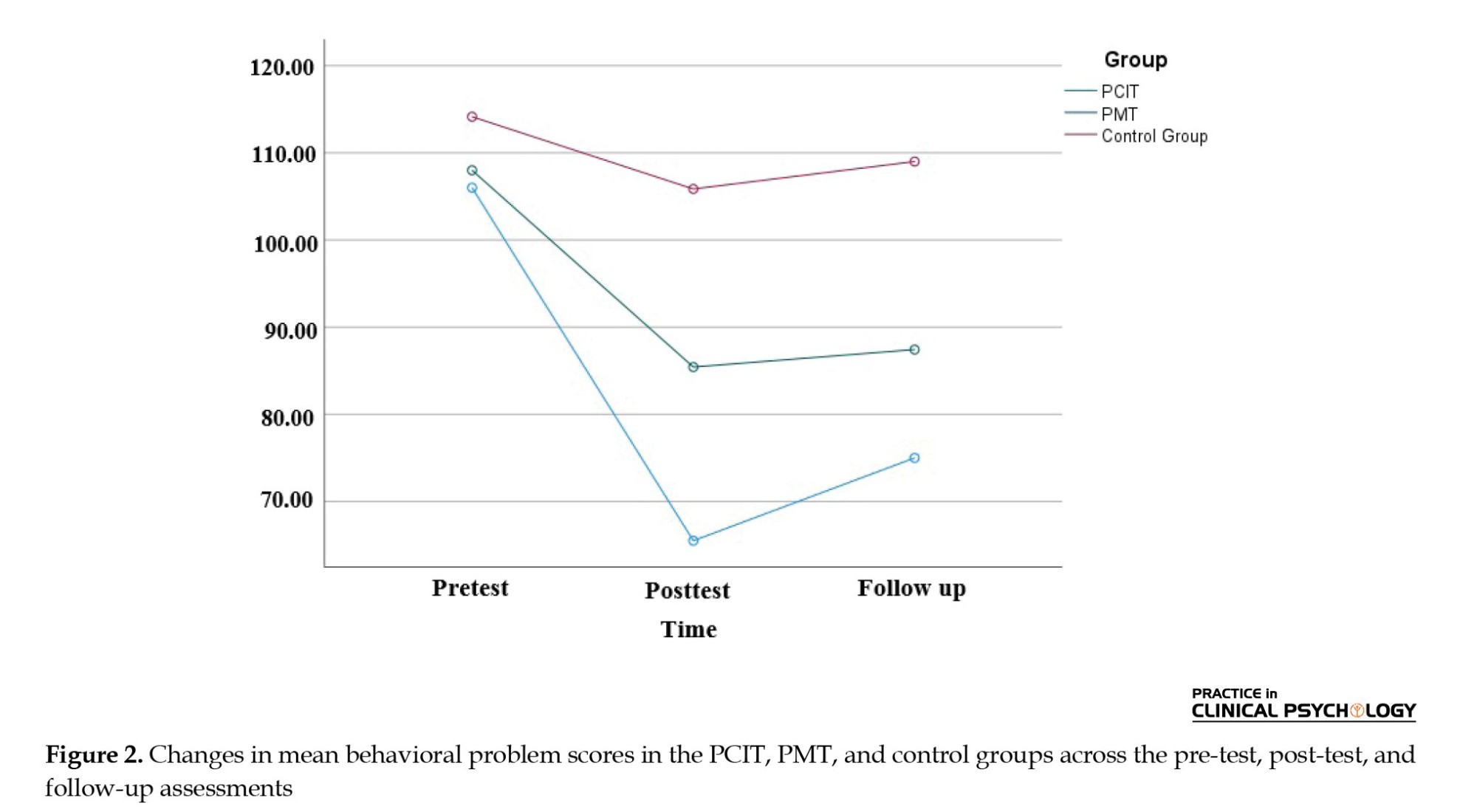
The present study compared the effectiveness of PCIT and PMT in reducing behavioral problems among preschool children diagnosed with ADHD. The findings demonstrated that both interventions produced significant clinical improvements in children’s behavioral problems from pre-test to post-test, and these therapeutic gains were largely maintained at the two-month follow-up. However, children whose parents participated in the PCIT program showed significantly greater clinical improvements than those receiving PMT, suggesting that although both parent-based interventions are effective, PCIT may provide additional therapeutic benefits for preschool children diagnosed with ADHD.
These findings extend the growing body of evidence supporting behavioral parent-training interventions as first-line psychosocial interventions for young preschool children diagnosed with ADHD. Previous systematic reviews and meta-analyses have consistently reported that both PCIT and PMT improve disruptive behaviors, strengthen parenting practices, and enhance parent-child relationships (Sohrabi et al., 2020; Hamidzadeh et al., 2019). However, most previous investigations evaluated these interventions independently, making direct comparisons difficult. By evaluating both interventions under identical methodological conditions, including comparable participant characteristics, intervention settings, assessment procedures, and follow-up evaluations, the present study provides stronger comparative evidence regarding their relative effectiveness. The superior outcomes observed in the PCIT group therefore contribute novel evidence to an area where direct comparative studies remain limited.
PCIT’s greater effectiveness may stem from its unique therapeutic components. Although both PCIT and PMT are grounded in social learning theory and behavioral principles, PCIT incorporates real-time therapist coaching during parent-child interactions, allowing parents to practice and refine newly acquired behavioral management skills immediately. This live coaching format promotes greater intervention fidelity, accelerates parental skill acquisition, and enables therapists to provide immediate corrective feedback. In contrast, traditional PMT primarily relies on psychoeducation, discussion, and home practice, requiring parents to translate therapeutic principles into everyday interactions independently. Consequently, PCIT may facilitate faster, more consistent behavioral change by integrating direct behavioral rehearsal with ongoing professional guidance.
Another plausible mechanism involves clinical improvements in the quality of the parent-child relationship. Preschool children diagnosed with ADHD frequently experience coercive interaction patterns characterized by repeated criticism, conflict, inconsistent discipline, and emotional dysregulation. Such interaction cycles reinforce oppositional and disruptive behaviors while simultaneously increasing parental stress. PCIT directly targets these dysfunctional interaction patterns through child-directed interaction strategies, positive reinforcement, reflective communication, and emotionally responsive parenting. Strengthening attachment security and increasing positive parent–child interactions may reduce children’s emotional reactivity, improve compliance, and facilitate the development of self-regulation (Bradly, 2003). These mechanisms may partly explain why behavioral clinical improvements were larger in the PCIT group than in the PMT group.
The effectiveness of PMT observed in the present study is likewise consistent with contemporary evidence demonstrating that structured parent-management interventions substantially reduce disruptive behaviors in preschool children diagnosed with ADHD. PMT equips parents with practical behavioral management techniques including positive reinforcement, clear behavioral expectations, consistent consequences, strategic ignoring of minor inappropriate behaviors, and effective use of non-physical disciplinary strategies. Through repeated application of these principles, parents become more consistent in responding to child behaviors, thereby reducing environmental contingencies that maintain disruptive behaviors. The significant clinical improvements observed among participants receiving PMT therefore reinforce previous findings indicating that behavioral parent training represents an effective component of comprehensive ADHD management.
The present findings are broadly consistent with recent evidence demonstrating the effectiveness of behavioral parent-training interventions for preschool children diagnosed with ADHD and disruptive behavior disorders. Contemporary meta-analyses have reported moderate-to-large reductions in externalizing behaviors following both PCIT and PMT, accompanied by clinical improvements in parenting competence, parent-child relationships, and family functioning. The present study supports these conclusions while extending previous research by directly comparing the 2 interventions within the same experimental framework. This design minimizes methodological variability from differences in participant characteristics, intervention protocols, therapists, and outcome measures, providing a more reliable comparison of intervention efficacy.
Although both interventions are consistent with previous literature, the greater clinical improvement observed in the PCIT group deserves particular attention. Previous investigations have suggested that the live coaching component of PCIT promotes greater parental engagement, improves intervention adherence, and facilitates immediate correction of ineffective parenting behaviors. These characteristics distinguish PCIT from conventional parent-training programs and may explain its relatively larger effect on behavioral outcomes. Moreover, because preschool children rely heavily on caregiver interactions for emotional and behavioral regulation, interventions that directly modify parent-child interactions may produce broader developmental benefits than approaches focusing primarily on behavioral management strategies alone.
The present findings also differ from previous reports in some ways. While several studies have reported comparable effectiveness across different parent-training approaches, variations in participant age, ADHD severity, comorbid disorders, intervention duration, cultural context, and follow-up period may substantially influence outcomes. The current study included preschool children recruited from specialized clinical settings. It used standardized intervention protocols delivered by trained clinicians, which may have contributed to the relatively robust intervention effects observed. Consequently, differences across studies should be interpreted within the context of methodological heterogeneity rather than as contradictory evidence.
Based on the research findings, intervention processes for behavioral disorders in children and adolescents, which are based on education, management, and implementation by parents in the home environment and in real conditions, have a significant effect on reducing the rate of behavioral disorders in children. This finding is consistent with Holland et al. (2004) and Corni et al. (2014), who found that positive parenting training reduces oppositional defiant disorder. Recent research has also shown that parent training has effects, such as creating healthy relationships, expressing affection, correct interactions, reducing conflicts, tension, and misbehavior in families of children with oppositional defiant disorder (Sanders, Bor, & Morawska, 2008; Jensen-Hart et al., 2012; Mikolajewski et al., 2017; Morgan et al., 2005; Yaghoubi et al., 2025).
This study’s findings are consistent with those of other studies in this field. For example, Pirnia et al. (2017) showed that PCIT reduces interpersonal conflicts (parent-child), aggression, and stubbornness, and also increases acceptance and understanding of each other (Pirnia et al., 2017). In addition, studies by Landreth (2012), Bratton et al. (2014), Barkley (2016), and Azizi (2018), which examined PCIT training, were consistent with this study’s results. Also, research by Saunders (2008), Jensen et al. (2012), and Sohrabi (2020), who used the PMT training method, showed that this method reduces negative parent-child interactions, increases positive interactions and problem-solving, and improves child and parent performance. Our research also had such results (Barkley, 2016; Saunders et al., 2008; Jensen Hart et al., 2012; Sohrabi et al., 2020; Hamidzadeh et al., 2019; Garza et al., 2009; Azizi et al., 2018).
In explaining the results, it can be said that both of these trainings are multifaceted models that present concepts and skills related to reducing negative symptoms (aggression, stubbornness, negative resistance of the child), improving parent-child relationships, increasing appropriate behavior, and acquiring skills in an integrated way within a theoretical framework and applied techniques. Because parents and children influence each other, this skill must be taught to parents, in addition to children, in a clinical setting so they can act as specialists at home (natural environment). This condition builds self-efficacy in the child and parent (Saffariantoosi & Khaleghi, 2024), maintains training effectiveness, supports healthy relationships, and creates appropriate relationship patterns and greater long-term family adaptation and participation.
The present findings corroborate previous research supporting the efficacy of PCIT in improving children’s behavioral functioning. Consistent with studies by Eyberg and Pincus (1999), Eyberg et al. (2008), and Soleimani and Farahani (2024), the current study showed that PCIT effectively reduced both the severity and frequency of behavioral problems. Many children’s behavioral disorders are rooted in negative parent-child interactions. Patterson (1982), Patterson (2002) also refers to this issue in the theory of coercion. Negative parental behaviors such as yelling and threatening cause irresponsible and disobedient behaviors to be reinforced and even lead to more violence.
The therapeutic mechanisms underlying PCIT involve disrupting the coercive interaction patterns that often maintain children’s behavioral problems. By training parents in consistent, positive, and non-punitive parenting practices, the intervention promotes secure parent-child relationships. It enhances parents’ ability to respond effectively to their children’s developmental and emotional needs. Parents learn to reinforce appropriate behaviors through positive attention while reducing reinforcement of disruptive behaviors using evidence-based strategies such as selective attention and planned ignoring. These changes in parenting behavior improve children’s self-regulation, social competence, and behavioral adjustment, resulting in healthier parent–child interactions and long-term reductions in disruptive behaviors. This research background also shows that the parent-child play therapy protocol reduces parenting stress and parental stress (Davidson & Stagnitti, 2021). This study did not address this issue. PCIT is a well-established behavioral intervention that combines cognitive-behavioral principles with operant conditioning techniques to reduce disruptive behaviors in children aged approximately 2–7 years (Thomas et al., 2017). The intervention focuses on improving the parent-child relationship through structured coaching that teaches parents positive interaction strategies. These strategies include behavior-specific praise, reflective responding, emotion reflection, and imitation of the child’s appropriate play behaviors. By strengthening positive parent-child interactions, PCIT enhances parenting competence and facilitates improvements in children’s behavioral and emotional functioning. These skills not only strengthen the child’s self-esteem, but also increase his willingness to cooperate and participate (Lieneman et al., 2017).
On the other hand, this therapy helps reduce children’s behavioral inconsistencies by educating parents on effective disciplinary processes. In this method, parents learn to use clear, consistent commands, express expectations appropriately, and consider logical consequences for the child’s inappropriate behaviors. PMT is grounded in behavioral learning principles and equips parents with practical strategies for managing children’s disruptive behaviors. Core components include consistent discipline, time-out procedures, and response-cost techniques involving the temporary removal of privileges. By improving parenting practices and increasing environmental consistency, PMT aims to enhance children’s self-regulation, behavioral adjustment, and adaptive functioning (Ward et al., 2016).
The comparative analysis demonstrated that both PCIT and PMT significantly improved children’s behavioral problems. However, PCIT produced significantly greater improvements than PMT. In this regard, no research comparing both methods was observed. This result can be explained as follows: parental management training is very similar to the positive parenting method in terms of content, implementation, and target population; parts of their processes overlap, and both teach positive parenting (Kazdin, 2008). In addition, both training programs are based on social learning principles. Parental management training and positive parenting emphasize the actions of parents in response to children’s behavior, in such a way that instead of harsh punishment, they use deprivation and silence; and in response to appropriate child behavior, they use positive reinforcement; as a result, they have a similar effect on improving behavioral problems.
Overall, the findings support the hypothesis that the intervention effectively improved the targeted outcomes. Collectively, the evidence shows a difference in effectiveness between PCIT and PMT in improving children’s behavioral problems, and PCIT was more effective. These results are significant at the 0.001 level based on the paired comparison, meaning both trainings were effective and produced clinical improvement in children’s behavioral problems. Still, the paired-comparison results showed that the PCIT training program was more successful than PMT training and improved children’s behavioral problems more.
The follow-up results indicated that the treatment effects of the PCIT-based parent training program diminished over time, as reflected by a reduction in the clinical improvements observed at post-test. However, this decrease was not significant compared to the post-test.
Regarding PMT, it also resulted in a decrease in clinical improvement in behavioral problems. In this regard, no research was observed. Both parent management and positive parenting programs refer to positive parenting and how parents respond to the child’s behavior, with the difference that some parent management programs emphasize interaction and coordination between parents in the child’s interactions (Shahim et al., 2007). One possible explanation for the slight decline in intervention effects during the follow-up period is the inconsistent implementation of parenting strategies in the home environment. Parents who cannot apply the learned techniques consistently may gradually lose some of the behavioral gains achieved during the intervention. Because the same therapists delivered both intervention groups, therapist-related factors are unlikely to explain these differences. Instead, sustained parental engagement, consistent practice of the acquired skills, and continued adherence to the intervention principles are likely critical to maintaining long-term intervention benefits. Accumulating evidence suggests that PMT is an effective approach for reducing children’s disruptive behaviors.
The intervention focuses on enhancing parents’ behavioral management competencies through structured instruction in positive reinforcement, consistent discipline, and effective communication, thereby improving both child behavior and the quality of parent-child interactions. These trainings typically include strengthening positive parent-child engagement, increasing attention to adaptive behaviors, and improving parent-child communication. In addition, parents learn to give clear, concise instructions to their child, respond to positive behaviors with love and attention, avoid focusing too much on minor negative behaviors, and use non-punitive methods to manage the consequences of behavioral problems (Helander et al., 2024). However, access to PMT is often limited because of limited service availability, cost, and logistical challenges. Unlike traditional child-focused interventions, PCIT emphasizes parents’ central role in the therapeutic process. Under the guidance of trained clinicians, parents learn effective interaction and behavior-management skills, enabling them to serve as primary agents of change and support their children’s long-term emotional and behavioral adjustment (Linville et al., 2024).
Data analysis showed that both PCIT and PMT interventions similarly improved children’s behavioral problems, but PMT led to a decrease in clinical improvement in the follow-up phase. As shown in the results, significant differences were observed between the pre-test and post-test assessments, as well as between the pre-test and follow-up assessments, for all outcome variables (P<0.01). In contrast, we found no statistically significant differences between the post-test and follow-up assessments (P>0.05). These findings indicate that the interventions produced clinically meaningful improvements in maladaptive behaviors among participants in the intervention groups. Furthermore, the absence of significant differences between the post-test and follow-up assessments suggests that these treatment gains were maintained over time, demonstrating the sustained effectiveness of the interventions.
These findings, rather than simply demonstrating that the intervention was effective, suggest that the clinical improvements observed may reflect significant changes in the underlying cognitive and behavioral processes targeted by the intervention. This interpretation aligns with previous studies that reported similar benefits, although differences in participant characteristics, intervention duration, and outcome measures may explain discrepancies between studies. Several mechanisms may explain these findings, including increased cognitive control, improved emotion regulation, and stronger adaptive coping skills. From a clinical perspective, the results support including this intervention in routine practice as a complementary approach to improving patient outcomes. However, further multicenter studies with larger samples and longer follow-up periods are needed to confirm the durability and generalizability of these effects.
Possible mechanisms underlying the findings
Several complementary mechanisms may explain the clinical improvements observed following both interventions. From a behavioral perspective, PCIT and PMT both modify the reinforcement contingencies that maintain disruptive behaviors. Parents learn to increase positive reinforcement for appropriate behaviors while reducing inadvertent reinforcement of undesirable behaviors through greater consistency, predictable consequences, and structured behavioral expectations. According to social learning theory, these changes alter children’s behavioral repertoire by increasing adaptive behaviors and reducing coercive parent-child interaction cycles.
Beyond behavioral learning principles, clinical improvements may also reflect enhanced emotional regulation within the parent-child relationship. Preschool children diagnosed with ADHD frequently experience difficulties regulating emotional responses because of deficits in executive functioning, inhibitory control, and attentional regulation. Parent-training interventions provide caregivers with strategies to respond calmly and consistently during emotionally challenging situations, reducing emotional escalation and promoting adaptive self-regulation in children. Repeated exposure to emotionally supportive interactions may gradually strengthen children’s capacity to tolerate frustration, follow instructions, and regulate impulsive behaviors.
Attachment-related mechanisms may further explain PCIT’s superiority. Unlike conventional parent-training approaches, PCIT deliberately strengthens the emotional quality of parent–child interactions through child-directed play, positive attention, reflective listening, behavioral descriptions, and labeled praise. These experiences foster greater emotional security and increase children’s motivation to cooperate with parental requests. Improved attachment quality may therefore enhance the effectiveness of behavioral management strategies by increasing children’s responsiveness to parental guidance rather than relying solely on external behavioral consequences.
Furthermore, therapist-guided coaching during actual parent-child interactions likely contributes to higher intervention fidelity. Immediate feedback allows therapists to correct maladaptive parenting responses in real time before they become habitual. Consequently, parents may acquire effective behavioral skills more rapidly and implement them more consistently in everyday situations. This process may partly explain the larger intervention effects observed in the PCIT group compared with PMT.
Conclusion
In conclusion, the present study provides evidence that both PMT and PCIT are effective interventions for reducing behavioral problems among preschool children diagnosed with ADHD. However, PCIT demonstrated superior clinical effectiveness, suggesting that interventions combining behavioral management principles with direct parent-child interaction and live therapist coaching may offer additional therapeutic advantages. Rather than simply reducing disruptive behaviors, these interventions appear to strengthen parent-child relationships, enhance parental competence, and promote adaptive behavioral regulation in children. Collectively, the findings support integrating structured parent-training programs into routine clinical practice and provide important comparative evidence that may help clinicians select the most appropriate psychosocial intervention for young preschool children diagnosed with ADHD.
Identifying more efficient intervention methods with larger effect sizes saves time and money. Previous studies have examined the effectiveness of parenting programs as preventive interventions, but they have less often compared the effectiveness of these methods than this study. It seems that both interventions can help as a comprehensive intervention program for behavioral problems in preschool children diagnosed with ADHD. Still, when choosing the type of intervention, more research on behavioral problems is needed; in addition to positive parenting programs, PMT-based interventions to improve behavioral problems also seem necessary, or at least useful. Therefore, these results can support the use of PMT and PCIT to improve behavioral problems in preschool children diagnosed with ADHD, so that by educating them, the emergence, exacerbation, and transformation of symptoms of this disorder into other disorders can be prevented. Also, considering the effectiveness of these two methods in improving behavioral problems of preschool children diagnosed with ADHD in childhood and adolescence, whose rate of referrals to intervention centers is increasing, and because many children in society show traits of preschool children diagnosed with ADHD with less severity. The results showed that teaching these techniques to parents and implementing them at home and in the living environment reduces ADHD symptoms. It seems that today’s intervention approaches should be implemented outside clinical settings and intervention centers and used more in real environments, with parents’ participation, since they play the greatest role and have the most time. The effectiveness of these interventions may lie in the fact that parents are directly involved during the intervention and witness their children’s success.
Clinical implications
The present findings have several important clinical implications for the management of preschool children diagnosed with ADHD. First, the results reinforce current clinical recommendations that behavioral parent-training interventions should be considered first-line psychosocial interventions for young preschool children diagnosed with ADHD, particularly before implementing more intensive psychological interventions. Both PCIT and PMT demonstrated clinically meaningful reductions in behavioral problems, supporting their integration into routine child mental health services.
Second, PCIT’s superior performance suggests that interventions incorporating direct parent-child interaction and live therapist coaching may produce greater clinical improvements in behavioral functioning than parent-focused educational programs alone. This distinction is particularly relevant for clinicians working with families characterized by high levels of parent–child conflict, coercive interaction patterns, or impaired emotional communication. In such cases, interventions that simultaneously strengthen attachment relationships while teaching behavioral management strategies may provide broader therapeutic benefits.
Third, these findings emphasize the importance of active parental involvement throughout intervention. Because behavioral difficulties in young children primarily emerge within family interactions, interventions that empower parents to become effective agents of behavioral change are likely to produce more durable clinical improvements than approaches directed exclusively toward the child. Consequently, incorporating structured parent-training programs into community mental health clinics, pediatric services, and early intervention programs may substantially improve long-term clinical outcomes while reducing the need for more intensive and costly interventions. Finally, the maintenance of intervention gains during follow-up suggests that parents successfully generalized the acquired behavioral management skills beyond the therapeutic setting. Such maintenance is particularly important because ADHD is a chronic neurodevelopmental disorder requiring long-term behavioral support rather than short-term symptom reduction. Therefore, strengthening parental competence may represent one of the most sustainable strategies for improving children’s developmental trajectories.
Strengths of the study
Several methodological strengths should be acknowledged. To our knowledge, this study is among the few investigations directly comparing PCIT and PMT under identical experimental conditions in preschool children diagnosed with ADHD. The inclusion of a control group, standardized intervention protocols, random allocation, and follow-up assessment enhances the internal validity of the findings. Furthermore, therapist supervision and intervention fidelity monitoring increased confidence that both intervention protocols were delivered consistently across participants. These methodological characteristics strengthen the reliability of the observed intervention effects and contribute valuable comparative evidence to the existing literature.
Study limitations
Despite these strengths, several limitations should be considered when interpreting the findings. First, the relatively small sample size may have limited statistical power and reduced the results’ generalizability. Second, participants were recruited through convenience sampling from a limited geographical region, increasing the risk of selection bias and limiting external validity. Third, the authors assessed behavioral outcomes primarily through parent-reported questionnaires. Although the Eyberg child behavior inventory is a well-validated instrument, relying on a single informant may introduce reporting bias. Future studies should incorporate multiple informants, including teachers, clinicians, and independent behavioral observations.
Another limitation concerns the relatively short follow-up period. Although intervention gains were generally maintained over 2 months, longer follow-up assessments are necessary to determine whether behavioral clinical improvements persist throughout later childhood. Additionally, potentially influential variables such as parental mental health, parenting stress, socioeconomic status, ADHD symptom severity, intervention adherence outside therapy sessions, and medication adherence were not examined as possible moderators or mediators of intervention response. Investigating these factors would provide a more comprehensive understanding of the mechanisms responsible for intervention success
Future directions
Future research should prioritize large-scale, multicenter randomized controlled trials that directly compare evidence-based parent-training interventions across diverse cultural and clinical settings. Longer follow-up periods extending 6 to 12 months would provide more robust evidence regarding the durability of intervention effects. Furthermore, integrating objective behavioral assessments, neuropsychological measures of executive functioning, teacher reports, and observational coding of parent-child interactions would strengthen methodological rigor and reduce reliance on parent-report measures alone.
Future investigations should also explore mediating mechanisms underlying behavioral improvement, including changes in parenting self-efficacy, parental emotion regulation, parenting stress, attachment security, and child self-regulation. Identifying these mechanisms may facilitate the development of more personalized interventions and enable clinicians to match families with the intervention approach most likely to produce optimal outcomes.
Ethical Considerations
Compliance with ethical guidelines
Ethical approval of the protocol was obtained from the Research Ethics Committee of Torbat Jam Branch, Islamic Azad University, Torbat Jam, Iran (Code: IR.IAU.TJ.REC.1404.082), and all procedures performed in studies involving human participants were in accordance with the 1964 Helsinki Declaration and its later amendments.
Funding
This research did not receive any specific grant from funding agencies in the public, commercial, or not-for-profit sectors.
Authors' contributions
The authors declared no conflict of interest.
Conflict of interest
All authors contributed equally to the conception and design of the study, data collection and analysis, interpretation of the results, and drafting of the manuscript. Each author approved the final version of the manuscript for submission.
Acknowledgments
We sincerely thank all the parents of the children for their participation in the research.
References
Abbasi, M., Neshat Dost, H. T., & Agha Mohamadian Sher-baf, H. R. (2010). [Effectiveness of parent-child interaction therapy on reduction of symptoms in separation anxiety disorder (Persian)]. Journal of Clinical Psychology, 2(2), 47-57. [Link]
Allen, K., Harrington, J., Quetsch, L. B., Masse, J., Cooke, C., & Paulson, J. F. (2023). Parent-child interaction therapy for children with disruptive behaviors and autism: A randomized clinical trial. Journal of Autism and Developmental Disorders, 53(1), 390-404. [DOI:10.1007/s10803-022-05428-y] [PMID] [PMCID]
Azizi, A., Fatehizade, M., Ahmadi, A., & Jazayeri, R. (2018). Effect of child-parent relationship therapy on parenting stress and empowerment of parents with children with Attention Deficit/Hyperactivity Disorder. Family Counseling and Psychotherapy, 8(1), 27-46. [DOI:10.22034/fcp.2018.60855]
Bailey, B. A., Heaton, S. C., McNeil, C. B., & Nelson, M. M. (2024). Treatment engagement and outcomes in parent-child interaction therapy with mothers with a history of ADHD: A case series. Journal of Indian Association for Child and Adolescent Mental Health, 20(2), 171-176. [DOI:10.1177/09731342241240656]
Barkley, R. A. (2025). The important role of executive functioning and self-regulation in ADHD. Journal of Child Neurology, 113(21), 41-56. [Link]
Borgert, M., Melin, A., Hollander, A. C., & Rahman, S. (2024). Prenatal maternal PTSD as a risk factor for offspring ADHD: A register-based Swedish cohort study of 553 766 children and their mothers. European Psychiatry, 67(1), e22. [DOI:10.1192/j.eurpsy.2024.21] [PMID] [PMCID]
Bradly, S.J. (2003). Affect regulation and the development of psychology. New York: The Guildford Press. [Link]
Bratton, S. C., Swan, A. M., Opiola, K. K., & Landreth, G. L. (2025). Filial therapy: The 10 session child-parent relationship therapy model. In D. A. Crenshaw, A. L. Stewart, & D. C. Ray (Eds.), Play therapy: Theory, Research, and Practice (2nd ed., pp. 133-150). The Guilford Press. [Link]
Coghill, D., Banaschewski, T., Cortese, S., Asherson, P., Brandeis, D., & Buitelaar, J., et al. (2023). The management of ADHD in children and adolescents: Bringing evidence to the clinic: Perspective from the European ADHD Guidelines Group (EAGG). European Child & Adolescent Psychiatry, 32(8), 1337–1361. [DOI:10.1007/s00787-021-01871-x] [PMID] [PMCID]
Conners, C. K., March, J. S., Frances, A., Wells, K. C. & Ross, R. (2001) Treatment of attention deficit hyperactivity disorder: expert consensus guidelines. Journal of Attention Disorders, 4, 7-128. [DOI:10.1177/108705470000401s02]
Corni, F., Giliberti, E., & Fuchs, H. U. (2014). Student teachers writing science stories: A case study. In E-Book Proceedings of the ESERA 2013 Conference: Science Education Research For Evidence-based Teaching and Coherence in Learning. Nicosia, Cyprus, 2012 October 7. [Link]
Davidson, D., & Stagnitti, K. (2021). The process of Learn to Play Therapy with parent-child dyads with children who have autism spectrum disorder. Australian Occupational Therapy Journal, 68(5), 419-433. [DOI:10.1111/1440-1630.12751] [PMID]
Divargar, F., & Mohamad Tehrani, H. (2023). [The effect of parent management training (PMT) on reducing child anxiety and domestic violence against divorced children aged 5-10 years, Darab city (Persian)]. Rooyesh, 12(7), 155-164. [Link]
DuPaul, G. J., Evans, S. W., Mautone, J. A., Owens, J. S., & Power, T. J. (2020). Future directions for psychosocial interventions for children and adolescents with ADHD. Journal of Clinical Child & Adolescent Psychology, 49(1), 134-145. [DOI:10.1080/15374416.2019.1689825] [PMID]
Evans, S. W., Owens, J. S., Wymbs, B. T., & Ray, A. R. (2018). Evidence-based psychosocial treatments for children and adolescents with attention deficit/hyperactivity disorder. Journal of Clinical Child & Adolescent Psychology, 47(2), 157-198. [DOI:10.1080/15374416.2017.1390757] [PMID]
Eyberg, S., & Pincus, D. (1999). Eyberg child behavior inventory and sutter-eyberg student behavior inventory-revised: Professional manual. Odessa: Psychological Assessment Resources. [Link]
Eyberg, S. M., Funderburk, B. W., Hembree-Kigin, T. L., McNeil, C. B., Querido, J. G., & Hood, K. K. (2001). Parent-child interaction therapy with behavior problem children: One- and two-year maintenance of treatment effects in the family. Child & Family Behavior Therapy, 23(4), 1-20. [DOI:10.1300/J019v23n04_01]
Eyberg, S. M., Nelson, M. M., Duke, M., & Boggs, S. R. (2009). Manual for the dyadic parent-child interaction coding system. (3rd Ed). Florida: University of Florida Press. [Link]
Garza, Y., Kinsworthy, S., & Watts, R.E. (2009). Child-parent relationship therapy: A training model for strengthening child-parent relationships. International Journal of Play Therapy, 18, 217-228. [DOI:10.1037/a0017055]
Ghazaei, M., & Abbas Zadeh, F. (2024). Investigating the relationship between sluggish cognitive tempo and quality of life with controlling anxiety, depression, and attention deficit hyperactivity disorder symptoms in Iranian college students. Journal of Practice in Clinical Psychology, 12(2), 179-188. [DOI:10.32598/jpcp.12.2.934.1]
Grodberg, D., & Smith, I. (2022). Scaling parent management training through digital and microlearning approaches. Frontiers in Psychology, 13, 934665. [DOI:10.3389/fpsyg.2022.934665] [PMID] [PMCID]
Gross, D., Fogg, L., Young, M., Ridge, A., Cowell, J., & Sivan, A., et al. (2007). Reliability and validity of the Eyberg Child Behavior Inventory with African-American and Latino parents of young children. Research in Nursing & Health, 30(2), 213-223. [DOI:10.1002/nur.20181] [PMID]
Haji Seyedrazi, H., Azkhosh, M., Tahmasian, K., Bayat, M., Biglarian, A. (2012). [The efficacy of “parenting the strong-willed child” program for mothers’ parenting practices and children’s behavioral problems (Persian)]. Journal of Family Research, 8(4), 373-390. [Link]
Hamidzadeh, N., Kashani-Vahid, L., Moradi, H., Vakili, S., & Irani, A. Effectiveness of EmoGalaxy video game on social skills of children with oppositional defiant disorder. In 2019 International Serious Games Symposium. Tehran, Iran, 2019, December 26. [DOI:10.1109/ISGS49501.2019.9047022]
Helander, M., Asperholm, M., Wetterborg, D., Öst, L. G., Hellner, C., & Herlitz, A., et al. (2024). The efficacy of parent management training with or without involving the child in the treatment among children with clinical levels of disruptive behavior: A meta-analysis. Child Psychiatry & Human Development, 55(1), 164-181. [DOI:10.1007/s10578-022-01367-y] [PMID] [PMCID]
Holland, P. R., Mau, M. K., & Yamamoto, L. G. (2004). Survey of parenting books for advice on the common cold, diarrhea, and otitis media in infants and toddlers. Clinical Pediatrics, 43(7), 647-651. [DOI:10.1177/000992280404300711] [PMID]
Jensen-Hart, S.J., Christensen, J., Dutka, L., & Leishman, J.C. (2012). Child-parent relationship training (CPRT). Enhancing the child-parent relationships for military families. Advances in Social Work, 13(1), 51-66. [DOI:10.18060/1881]
Kazdin, A. E. (2017). Parent management training and problem-solving skills training for child and adolescent conduct problems. In John R. Weisz, Alan E. Kazdin, editors; Evidence-based Psychotherapies for Children and Adolescents. New York: The Guilford Press. [Link]
Keshvari, S., & Soltani, P. (2026). The effect of motor and cognitive games on the social development of children with ADHD: a field-based study. Current Psychology, 45, 842. [DOI:10.1007/s12144-026-09414-w]
Klein, J. L., Allen, H. A., Clibbens, J., Cook, A., Amanatidou, V., & Mavritsaki, E. (2025). Selective visual attention in ADHD: A narrative review. Current Neurology and Neuroscience Reports, 25(1), 51. [DOI:10.1007/s11910-025-01435-5] [PMID] [PMCID]
Landreth, G. L. (2002). Therapeutic limit setting in the play therapy relationship. Professional Psychology, 33(6), 529. [DOI:10.1037/0735-7028.33.6.529]
Lieneman, C. C., Brabson, L. A., Highlander, A., Wallace, N. M., & McNeil, C. B. (2017). Parent-Child Interaction Therapy: Current perspectives. Psychology Research and Behavior Management, 10, 239–256. [DOI:10.2147/PRBM.S91200] [PMID] [PMCID]
Linville, D., Ruff, S., Morgan, K., & Zilberstein, K. (2024). Skills and knowledge therapists need to work with foster youth and families: According to key stakeholders in child welfare. Journal of Marital and Family Therapy, 50(4), 953-974. [DOI:10.1111/jmft.12727]
Loeber, R., Burke, J. D., Lahey, B. B., Winters, A. Z. M. (2000). Oppositional defiant and conduct disorder: A review of the past 10 years, part 1. Journal of the American Academy of Child and Adolescent Psychiatry, 39, 1468-1484. [DOI:10.1097/00004583-200012000-00007] [PMID]
Loeber, R., Burke, J.D., Pardini, D.A. (2009). Perspectives on oppositional defiant disorder, conduct disorder and psychopathic features. journal of child psychology and psychiatry, 50(1-2), 133-142. [DOI:10.1111/j.1469-7610.2008.02011.x] [PMID]
Martinez, K., Chlebowski, C., Roesch, S., et al. (2022). Psychometric assessment of the eyberg child behavior inventory in children with autism in community settings. Journal of Autism and Developmental Disorders, 53(4), 1693–1705. [DOI:10.1007/s10803-022-05427-z] [PMID] [PMCID]
Mehrvarz, F., Abolghasemi, A., Khosrojavid, M., & Hosseinkhanzadeh, A. A. (2026). Comparing the effectiveness of parent-child interaction therapy, cognitive-behavioural therapy, and their combination in adolescents with problematic sexual behaviours. Practice in Clinical Psychology, 14(2), 151-166. [DOI:10.32598/jpcp.14.2.1028.3]
Mikolajewski, A.J., Taylor, J., Iacono, W.G. (2017). Oppositional defiant disorder dimensions: Genetic influences and risk for later psychopathology. Journal of Child Psychology Psychiatry, 58(6), 702-710. [DOI:10.1111/jcpp.12683] [PMID] [PMCID]
Montanaro, F. A. M., Alfieri, P., Caciolo, C., Cumbo, F., Piga, S., & Tartaglia, M., et al. (2022). Neuropsychological features in RASopathies: A pilot study on parent training program involving families of children with Noonan syndrome. American Journal of Medical Genetics, 190(4), 510–519. [DOI:10.1002/ajmg.c.32025] [PMID] [PMCID]
Morgan, J., Robinson, D., & Aldridge, J. (2002). Parenting stress and externalizing child behaviour. Child & Family Social Work, 7(3), 219. [DOI:10.1046/j.1365-2206.2002.00242.x]
Murrihy, R. C., Drysdale, S. A., Dedousis-Wallace, A., Rémond, L., McAloon, J., & Ellis, D. M., et al. (2023). Community-delivered collaborative and proactive solutions and parent management training for oppositional youth: A randomized trial. Behavior Therapy, 54(2), 400-417. [DOI:10.1016/j.beth.2022.10.005] [PMID]
Patterson, G. R., Chamberlain, P., & Reid, J. B. (1982). A comparative evaluation of a parent-training program. Behavior Therapy, 13(5), 638-650. [DOI:10.1016/S0005-7894(82)80021-X]
Patterson, G. R. (2002). The early development of coercive family process. In J. B. Reid, G. R. Patterson, & J. Snyder (Eds.), Antisocial behavior in children and adolescents: A developmental analysis and model for intervention (pp. 25–44). Washington: American Psychological Association. [DOI:10.1037/10468-002]
Pirnia, B., Najafi, E., Lashkari, A., & Saber Majidi, G. (2017). Evaluation of parent-child interaction therapy on anxiety level in pre-elementary school children: a randomized controlled trial. Practice in Clinical Psychology, 5(3), 167-176. [DOI:10.18869/acadpub.jpcp.5.3.167]
Rostami, M., Bakhtiarpour, S., Hafezi, F., & Naderi, F. (2023). Investigating the effectiveness of verbal self-education training on academic procrastination and symptoms of attention deficit/hyperactivity disorder in adolescent boys with attention-deficit/hyperactivity disorder. Practice in Clinical Psychology, 11(2), 141-150. [DOI:10.32598/jpcp.11.2.851.1]
Saffariantoosi, K., & Khaleghi, M. R. (2024). The mediating role of organizational citizenship behavior in the relationship between career self-efficacy and career success among construction project managers in Mashhad. Current Psychology, 43(28), 23971-23984. [DOI:10.1007/s12144-024-06127-w]
Sanders, M.R., Bor, W., & Morawska, A. (2008). Maintenance of treatment gains: a comparison of enhanced, standard, and self-directed triple Positive parenting program. Journal of Abnormal Child Psychology, 35, 983-998. [DOI:10.1007/s10802-007-9148-x] [PMID]
Shahim, S, Mehrangiz, L., & Yousefi, F. 2007. Prevalence of attention deficit/hyperactivity disorder in preschool children. Iranian Journal of Pediatric Diseases, 17(2), 211-216. [Link]
Shah, A., Beitchman, J. A., Silver, C. H., Chung, J. S., Jones, J. C., & Miller, S. M., et al. (2026). The impact of attention-deficit hyperactivity disorder on clinical measures and outcomes following concussion in adolescent athletes. Journal of Child Neurology, 08830738261467646. [DOI:10.1177/08830738261467646]
Sjöwall, D., Bohlin, G., Rydell, A. M., & Thorell, L. B. (2017). Neuropsychological deficits in preschool as predictors of ADHD symptoms and academic achievement in late adolescence. Child Neuropsychology, 23(1), 111-128. [DOI:10.1080/09297049.2015.1063595] [PMID] [PMCID]
Sohrabi, R., AMIR, A. A. S., AHMADI, D. M., & Nasiri, M. (2020). Relationship of mothers' spiritual, social, and mental health and self-efficacy with child development: A path analysis. Journal of Pediatric Perspectives, 8(9), 12117-12129. [Link]
Soleimani, A., & Farahani, H. (2024). Relationship between mothers’ adverse childhood experiences and children’s psychological problems, mediated by mothers’ emotional dysregulation and mental capacity. Iranian Journal of Psychiatry and Clinical Psychology, 30(1), 1-18. [DOI:10.32598/ijpcp.30.4825.1]
Thomas, R., & Zimmer-Gembeck, M. J. (2012). Parent-child interaction therapy: An evidence-based treatment for child maltreatment. Child Maltreatment, 17(3), 253-266. [DOI:10.1177/1077559512459555] [PMID]
Thomas, R., Abell, B., Webb, H. J., Avdagic, E., & Zimmer-Gembeck, M. J. (2017). Parent-child interaction therapy: A meta-analysis. Pediatrics, 140(3), e20170352. [DOI:10.1542/peds.2017-0352] [PMID]
Vess, S. F., & Campbell, J. M. (2022). Parent-child interaction therapy (PCIT) with families of children with autism spectrum disorder. Autism & Developmental Language Impairments, 7, 23969415221140707. [DOI:10.1177/23969415221140707] [PMID] [PMCID]
Yaghoubi, M., Nadalipour, Z., & Abed, N. (2025). Children’s social adaptation with the lens of family tourism: A case of 6 to 10-year-old children in the City of Tehran. International Journal of Tourism, Culture & Spirituality, 8(1), 267-280. [DOI:10.22133/ijtcs.2024.470876.1177]
Yeesunsri, N., Apinuntavech, S., Pornnoppadol, C., & Yongyuan, B. (2021). The effectiveness of parent management training program on self-efficacy and parenting of ADHD children's parents. International Journal of Child Development & Mental Health, 9(1), 11. [Link]
Xinyuan, W., Jinzhu, Z., Shan, H., et al. (2021). Cognitive Behavioral Therapy for Autism Spectrum Disorders: A Systematic Review. Pediatrics, 147(5), e2020049880. [DOI:10.1542/peds.2020-049880] [PMID]
Wallace, N. M., Quetsch, L. B., Robinson, C., McCoy, K., & McNeil, C. B. (2018). Infusing parent-child interaction therapy principles into community-based wraparound services: An evaluation of feasibility, child behavior problems, and staff sense of competence. Children and Youth Services Review, 88, 567-581. [DOI:10.1016/j.childyouth.2018.04.007]
Ward, M.A., Theule, J. & Cheung, K. (2016) Parent–child interaction therapy for child disruptive behaviour disorders: A meta-analysis. Child Youth Care Forum 45, 675–690. [DOI:10.1007/s10566-016-9350-5]
Full-Text: (28 Views)
Introduction
Children diagnosed with attention-deficit/hyperactivity disorder (ADHD) commonly experience impairments across multiple domains of functioning, including cognitive, behavioral, and social functioning (Keshvari & Soltani, 2026). The disorder is characterized by symptoms such as inattention, hyperactivity, and impulsivity. Recent studies show that preschool children diagnosed with ADHD are more likely to have problems, such as poor executive functioning, learning difficulties, and co-occurring disorders, such as anxiety and depression, compared to their peers (Coghill et al., 2021). In addition, research suggests that early interventions, including behavioral and pharmacological treatments, can improve symptoms and increase these children’s adaptation (Barkley, 2020).
Preschool children diagnosed with ADHD often exhibit behavioral problems that can negatively impact their daily functioning, social relationships, and educational environment. These behaviors include aggression (e.g. fighting or hitting others), disobedience (e.g. refusing to follow instructions from parents or teachers), restlessness (e.g. being unable to sit still or talking nonstop), impulsivity (like doing things without thinking about the consequences), and difficulty following rules (Shah et al., 2019). Recent studies suggest these behaviors often result from deficits in executive functioning, such as self-control, planning, organization, and emotion regulation. Preschool children diagnosed with ADHD may have difficulty controlling their impulses, leading to impulsive and inappropriate behaviors (Sjöwall et al., 2017). Furthermore, these behaviors may be exacerbated by environmental factors, such as parenting style, family conflict, and academic pressures (DuPaul et al., 2020). Behavioral problems not only challenge children but can also create stress and tension in the family and school environment.
Therefore, given the characteristics of preschool children diagnosed with ADHD, the need for effective intervention increases. Over the years, various intervention methods have been used to deal with the behavioral, cognitive, and emotional problems of preschool children diagnosed with ADHD (Ghazaei & Abbas Zadeh, 2024). As a general rule, medication is among the interventions for ADHD, especially for comorbid disorders. However, it is often beneficial on its own but rarely sufficient. Medication is ineffective alone for dysfunctional family functioning, the impact of the disorders on the family, or the misintervention of the child, and it will not address the concerns of parents. In recent years, specialists have emphasized psychological interventions. Some interventions focus on individuals, while others focus on families (Loeber et al., 2000; Bradley, 2003; Loeber et al., 2009).
Targeted behavioral and educational interventions, such as parent management training (PMT) and behavior modification programs, can moderate these behaviors and improve the social and emotional adjustment of preschool children diagnosed with ADHD (Murrihy et al., 2023). Parent management is one non-pharmacological intervention that has received special attention in recent years for improving ADHD symptoms (Rostami et al., 2023). By focusing on changing parental behaviors and improving parent-child interaction, this method helps reduce ADHD symptoms and behavioral problems in children (Yeesunsri et al., 2021).
The therapy sessions include exercises to improve the parent-child relationship. In other words, parents learn effective strategies to manage their child’s behavior (Montanaro et al., 2022). In this training, parents learn how to reinforce their child’s desired behaviors with rewards and encouragement. Parents also practice methods, such as ignoring undesirable behaviors and using mild punishments (Grodberg & Smith, 2022). Comparisons of PMT with other intervention methods in ADHD management show that this training, as a behavioral intervention, can significantly help improve behavioral problems and reduce ADHD symptoms in children. A study by Evans et al (2018) showed that PMT can help parents learn effective strategies for managing their child’s challenging behaviors.
Another effective intervention for preschool children diagnosed with ADHD is parent training based on parent-child interaction therapy (PCIT) (Landreth, 2002). This structured, evidence-based psychological intervention improves parent-child relationships and reduces behavioral problems in children (Mehrvarz et al., 2026). This intervention is one of the most effective interventions for increasing family interactions in children with mental and behavioral disorders (Vess & Campbell, 2022). It is especially effective for children aged 2 to 7 years with behavioral problems such as aggression, disobedience, and externalizing behavioral disorders (such as ADHD) (Allen et al., 2023).
PCIT protocol is designed to reduce children’s behavioral problems such as aggression, disobedience, and attention problems. This therapy is based on behaviorist principles that emphasize positive reinforcement and clear expectations to shape behavior (Bailey et al., 2024). This method helps improve child behavior by teaching parents to use positive techniques such as reinforcing desirable behaviors, setting clear limits, and responding effectively to inappropriate behaviors. A study by Thomas and Zimmer-Gembeck (2012) shows that parent training based on a parent-child play therapy protocol significantly reduces behavioral problems and improves parent-child relationships in children with oppositional defiant disorder. Research also shows that this intervention not only reduces children’s behavioral problems but also lessens parental stress and improves parenting skills (Lieneman et al., 2017). PCIT differs from many parenting programs by integrating both parents and children into sessions and providing live coaching. Another feature of PCIT that sets it apart from other parenting programs is its focus on live coaching (Wallace et al., 2018). Therefore, considering the adverse consequences of ADHD and the extensive effects it has on individual and social life, it is necessary to take basic measures to treat children with this disorder. Of course, effective intervention with an emphasis on indigenous aspects can reduce the problems of affected children.
Recent systematic reviews and meta-analyses have consistently shown that behavioral parent training interventions are among the most effective non-pharmacological interventions for preschool children diagnosed with ADHD and disruptive behavior disorders. Meta-analytic evidence suggests that both PMT and PCIT produce significant clinical improvements in children’s externalizing behaviors, parenting practices, and parent-child relationships. However, these reviews have evaluated each intervention independently rather than directly comparing them within a methodological framework. For example, recent meta-analyses have confirmed the effectiveness of PCIT in reducing disruptive behaviors and improving parent-child interactions, particularly in preschool children with externalizing disorders and ADHD-related symptoms (Klein et al., 2025; Bailey et al., 2024). Similarly, systematic reviews of PMT have reported moderate to large effects on behavioral problems, parenting competence, and family functioning among preschool children diagnosed with ADHD and disruptive behavior disorders (Borgert et al., 2024). However, these reviews consistently highlight considerable heterogeneity across studies in participant characteristics, intervention protocols, outcome measures, and follow-up duration, making indirect comparisons between PCIT and PMT difficult.
From a theoretical perspective, although both interventions are based on social learning theory and behavioral principles, they rely on different mechanisms of therapeutic change. PMT primarily targets parental attachment management, reinforcement strategies, and behavioral consequences to modify child behavior. In contrast, PCIT combines behavioral principles with live parent coaching and attachment-focused interaction techniques that directly improve parent-child relationships. As a result, one cannot infer the superiority of one intervention over another solely from individual efficacy studies because clinical improvements may occur through different psychological pathways.
From a clinical perspective, the lack of direct comparative evidence represents an important gap in the literature. Clinicians are often faced with the practical question of whether to recommend PMT or PCIT as a first-line psychosocial intervention for preschool children diagnosed with ADHD. The available evidence does not clearly indicate which intervention reduces behavioral problems more, maintains gains better during follow-up, or offers greater clinical utility in comparable settings. Therefore, head-to-head randomized comparative studies are needed to generate evidence that can guide clinical decision-making and optimize intervention selection. Accordingly, this study addresses these gaps by directly comparing PCIT and PMT under identical experimental conditions in preschool children diagnosed with ADHD, using identical inclusion criteria, outcome measures, intervention setting, therapist supervision, and follow-up assessment. This design provides stronger evidence on the relative effectiveness of these two widely recommended parent training interventions than previous studies that evaluated each intervention separately.
ADHD-related behavioral problems are increasingly understood within a multidimensional framework involving deficits in executive functioning, inhibitory control, emotional regulation, and dysfunctional parent-child interaction patterns. These mechanisms often contribute to coercive family interactions, inconsistent parenting practices, and persistent disruptive behaviors. From this perspective, behavioral parent-training interventions seek not only to reduce children’s externalizing symptoms but also to modify the family processes that maintain these behaviors. PMT is primarily grounded in social learning theory and operant conditioning, emphasizing changes in parental reinforcement strategies, behavioral contingencies, and consistent discipline practices. Conversely, PCIT combines behavioral principles with attachment theory through therapist-guided parent-child interactions that enhance emotional communication, secure attachment, and self-regulation. Although both interventions aim to improve behavioral functioning, their distinct theoretical foundations suggest that they may influence ADHD-related behaviors through partially different mechanisms. Understanding these differences provides a strong theoretical rationale for directly comparing their clinical effectiveness.
Although both PCIT and PMT have demonstrated effectiveness in improving behavioral outcomes among preschool children diagnosed with ADHD, previous studies have primarily evaluated these interventions independently. Direct head-to-head comparisons conducted under identical methodological conditions are scarce. Although several studies have evaluated PMT and PCIT separately, direct comparative evidence remains limited, particularly among preschool children with ADHD using standardized intervention protocols and follow-up assessments. Therefore, further comparative research is warranted. Consequently, evidence remains insufficient on which intervention provides greater clinical improvement in behavioral problems and whether its effects are sustained over time.
Furthermore, most available evidence comes from Western populations, limiting the generalizability of findings to different cultural contexts such as Iranian families. Therefore, a comparative evaluation of PCIT and PMT using a controlled experimental design is needed to determine their relative effectiveness and inform evidence-based clinical decision-making. Since the goals of both interventions are to emphasize the use of the natural emotional connections between parents and children for intervention, and parents are also considered a suitable substitute for therapists to treat their children’s problems and disorders in the home environment, it is necessary to examine these two interventions under the same conditions to help therapists understand which intervention is the most beneficial in different situations. The present study aimed to compare the effectiveness of parent training based on the PCIT protocol and PMT on behavioral problems in children with ADHD. Therefore, the researcher asked to what extent parent management group program training and parent-child relationship-based group training with ADHD can reduce behavioral problems in children with ADHD.
Materials and Methods
Research design and participants
This study used a quasi-experimental pre-test-post-test control-group design with random allocation of participants to 3 study arms. The study population included parents of children aged 3–7 years diagnosed with ADHD, who attended Psychology and psychiatry clinic in Mashhad. Fifty-four participants meeting the inclusion criteria were enrolled in the study.
Sample size determination
We determined the sample size using an a priori power analysis in G*Power version 3.1. Assuming a significance level of 0.05, 80% power, and a medium expected effect size based on previous studies, we estimated the minimum required sample size. To account for potential participant dropout, we recruited additional participants beyond the minimum required sample size. We enrolled 54 participants meeting the study eligibility criteria using a convenience sampling method. We then randomly assigned them to one of three study arms: the PCIT group (n=18), the PMT group (n=18), and the control group (n=18). After enrollment, parents completed the questionnaires, and we examined and compared the effects of the training methods using a post-test and a 2-month follow-up.
Inclusion criteria
The inclusion criteria were as follows: children aged 3–7 years, a confirmed diagnosis of ADHD according to DSM-5 criteria established by a licensed child psychiatrist or clinical psychologist, stable pharmacological intervention (if prescribed) for at least 4 weeks before enrollment, with no medication changes during the intervention period, living with at least one primary caregiver willing to participate in all intervention sessions, parents able to read and complete study questionnaires, and written informed consent obtained from parents or legal guardians.
Exclusion criteria
The exclusion criteria was as follows: missing more than two intervention sessions.
Research tools
Eyberg child behavior inventory (ECBI)
The Eyberg child behavior inventory (ECBI; Eyberg & Pincus, 1999) assessed children’s behavioral problems as a standardized parent-report measure of disruptive child behavior. The inventory comprises 36 items and evaluates behavioral functioning through 2 subscales: the intensity scale, which assesses the frequency of disruptive behaviors on a 5-point Likert scale ranging from “Never” to “Always,” and the “Problem Scale,” which asks parents to indicate whether each behavior represents a problem for them using a dichotomous response format. This questionnaire has two scores, namely the severity score and the difficulty score (Martinez et al., 2022). The severity score estimates the severity of each of the 36 problems in this questionnaire. The severity score for a problem ranges from 36 to 252. In addition to rating the frequency of each behavior, parents report whether they perceive each behavior as problematic by selecting either “Yes” or “No.” Scores on the “Intensity Scale” are obtained by summing the frequency ratings across the 36 items.
In contrast, scores on the “problem scale” are calculated by counting the total number of affirmative responses, reflecting the extent to which parents identify the behaviors as problematic. This questionnaire has acceptable validity and reliability (Xinyuan et al., 2021). The difficulty score also allows parents to determine the extent to which they evaluate their child’s behaviors as a problem. This score ranges from 0 to 36. Higher scores on this tool’s scales indicate the severity and number of behavioral problems. Conners et al. (2001) reported that ECBI possessed strong psychometric properties, with Cronbach alpha coefficients of 0.95 for the “Intensity Scale” and 0.91 for the “Problem Scale.” The instrument also demonstrated adequate criterion validity. Similarly, psychometric evaluation of the Persian version in a sample of 200 Iranian participants confirmed high internal consistency, yielding Cronbach alpha coefficients of 0.93 for the “Intensity Scale” and 0.92 for the “Problem Scale.” Five psychology professors also reported the inventory’s validity as acceptable after review. Several studies report evidence supporting the inventory’s reliability. Haji Seyedrazi et al. (2012) found significant test-retest reliability coefficients of 0.74 for the “Intensity Scale” and 0.58 for the “Problem Scale” (P<0.01), indicating acceptable temporal stability. Furthermore, Gross et al. (2007) demonstrated strong psychometric performance, reporting test-retest reliability values ranging from 0.86 to 0.88, inter-rater reliability coefficients of 0.79–0.86, and excellent internal consistency (the Cronbach α=0.95).
Therapeutic interventions
Both interventions were delivered by licensed clinical psychologists with specialized training in behavioral interventions for preschool children diagnosed with ADHD. The PCIT therapist had completed formal certification training, whereas the PMT therapist had received advanced training in evidence-based parent management interventions. A senior child psychologist conducted weekly supervision sessions throughout the study. The study monitored intervention fidelity using standardized intervention checklists completed after each session. Additionally, an external supervisor randomly selected 20% of intervention sessions for independent fidelity assessment, demonstrating adherence rates above 90%. We monitored participant adherence through attendance records, and excluded families who attended fewer than 80% of sessions from the final analyses.
Parent training based on the parent-child interaction therapy protocol
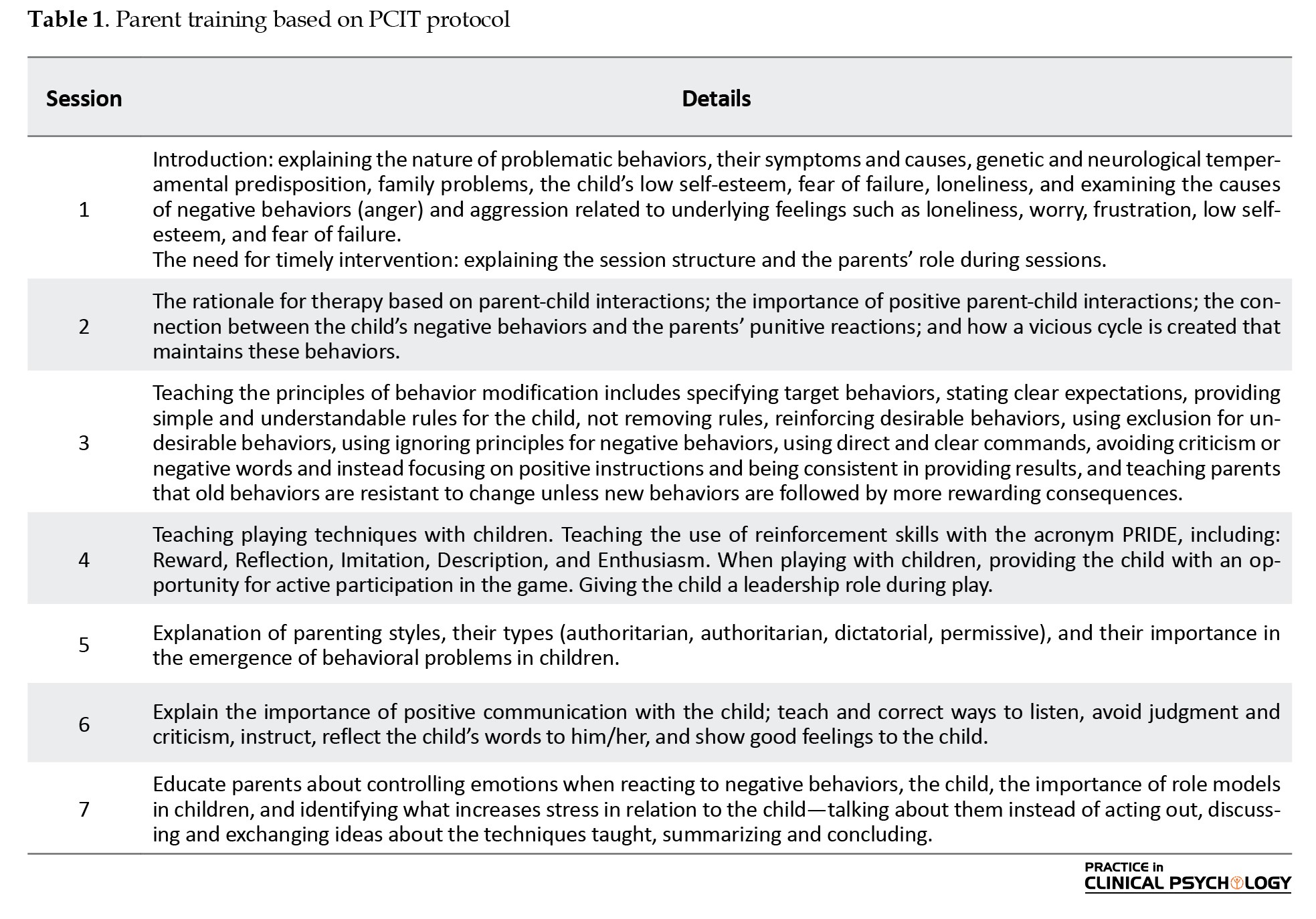
In this study, the training sessions followed the intervention plan of Eyberg et al. (2001), derived from the research of Abbasi and Neshat Doost (2013), across seven 90-minute sessions (Table 1).
Parent management training
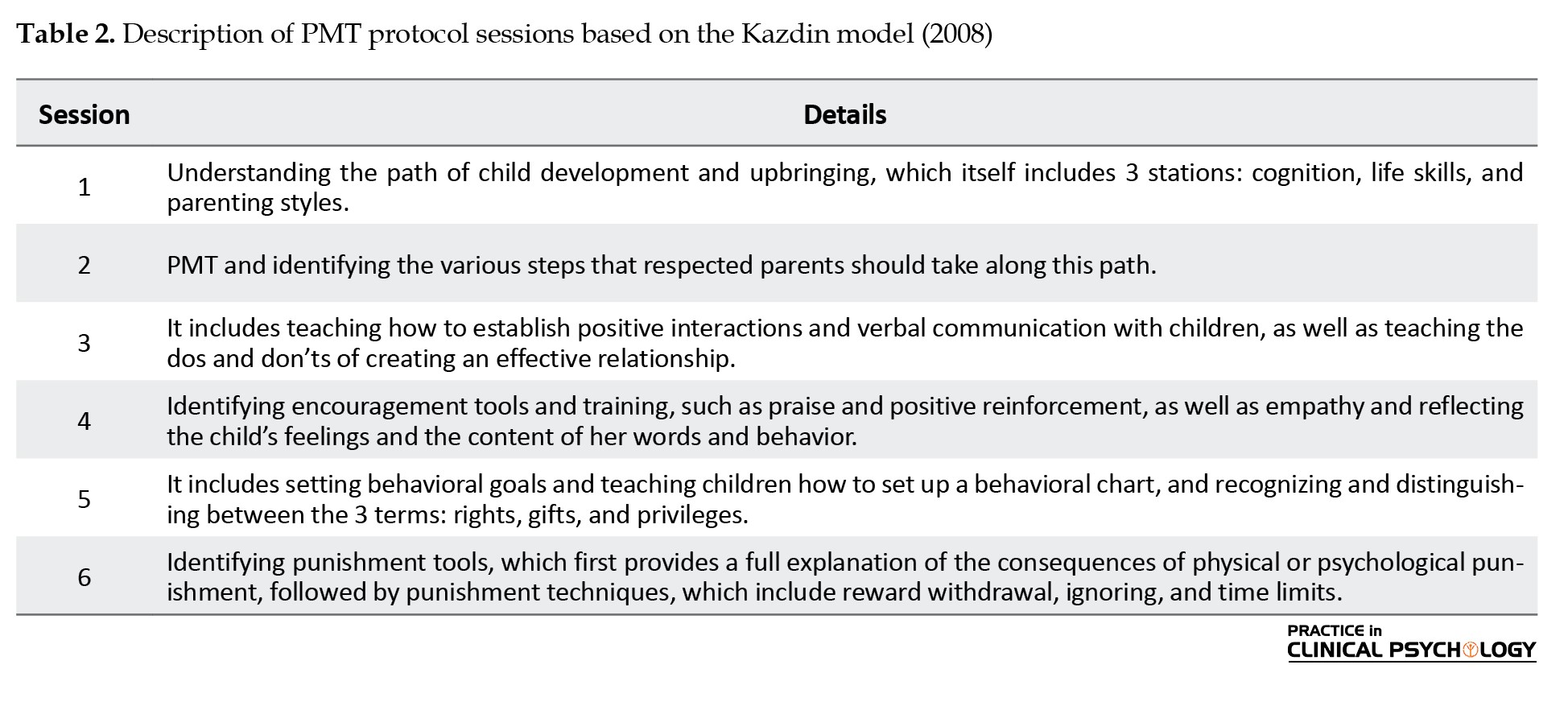
In this study, parent management training (PMT) based on the Kazdin (2017) model will be used. This program consists of six 90-minute sessions conducted once a week. The PMT protocol based on the Kazdin (2017) model was taken from Divargar and Tehrani’s (2023) research (Table 2).
Method of implementation
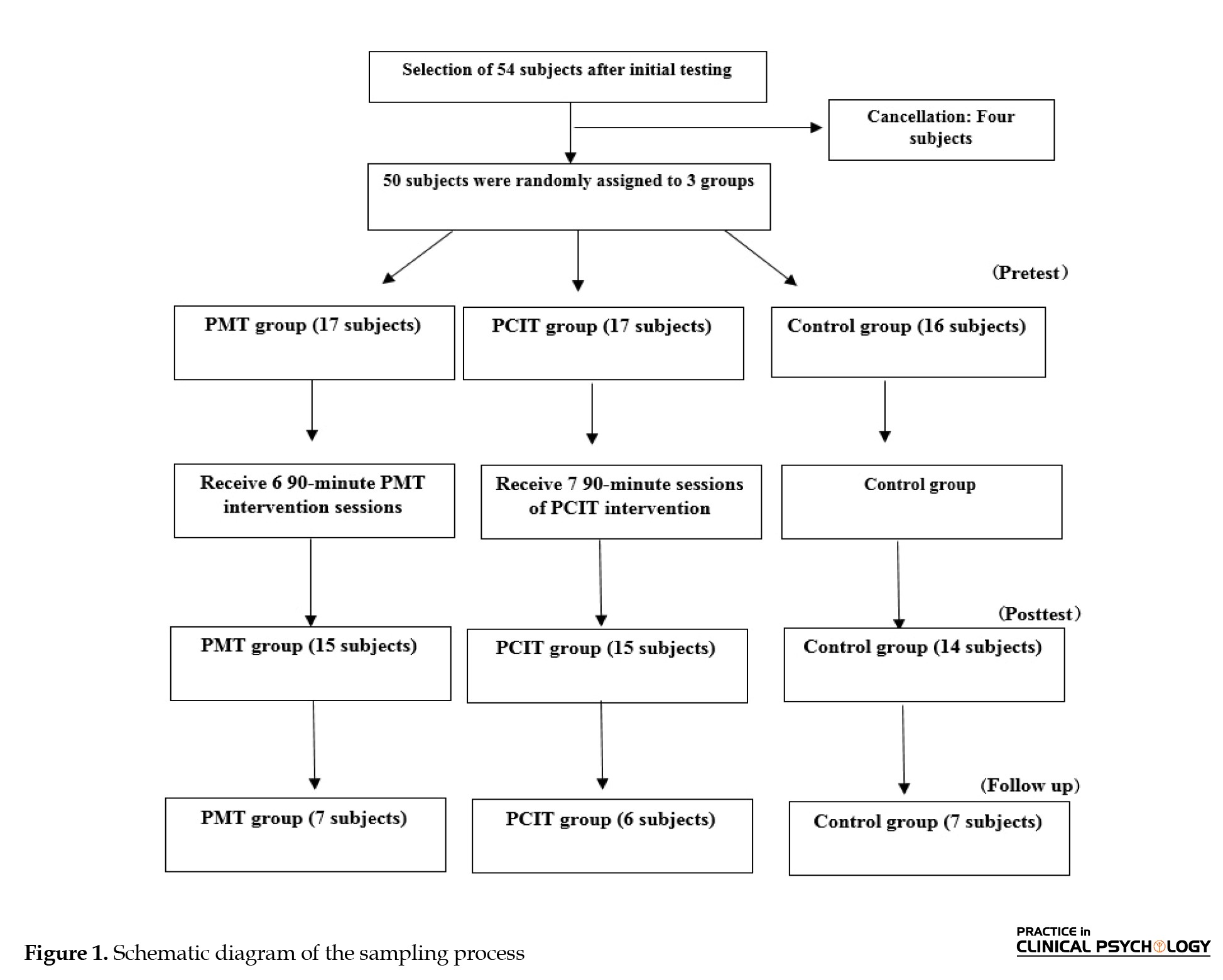
The study used a quasi-experimental pre-test-post-test control-group design. Researchers recruited participants from preschool children and their mothers in the seventh Educational District of Mashhad during the 2025-2026 academic year. For this purpose, researchers selected 54 children with ADHD as a sample based on the inclusion criteria. After selecting the sample subjects in the pre-test stage, all subjects completed the research questionnaires. We established baseline equivalence by matching participants on age and educational level. We then randomly assigned participants in equal numbers to 3 groups: the PCIT intervention group (n=18), the PMT intervention group (n=18), and the control group (n=18). The first test group received the training experiment (PCIT) according to the intervention plan of Eyberg et al. (2001), derived from the research of Abbasi and Neshat Doost (2013), over seven 90-minute sessions. The second test group received a training experiment (PMT) based on the Kazdin model (2008) and Divargar and Tehrani (2023) during six 90-minute sessions. Throughout the intervention phase, the control group continued to receive medication as usual, without exposure to either of the training programs. After the intervention, we collected post-test data by having parents of participants in all 3 study groups complete the research questionnaires under a psychologist’s supervision. We conducted a follow-up period after 2 months (Figure 1).
Children diagnosed with attention-deficit/hyperactivity disorder (ADHD) commonly experience impairments across multiple domains of functioning, including cognitive, behavioral, and social functioning (Keshvari & Soltani, 2026). The disorder is characterized by symptoms such as inattention, hyperactivity, and impulsivity. Recent studies show that preschool children diagnosed with ADHD are more likely to have problems, such as poor executive functioning, learning difficulties, and co-occurring disorders, such as anxiety and depression, compared to their peers (Coghill et al., 2021). In addition, research suggests that early interventions, including behavioral and pharmacological treatments, can improve symptoms and increase these children’s adaptation (Barkley, 2020).
Preschool children diagnosed with ADHD often exhibit behavioral problems that can negatively impact their daily functioning, social relationships, and educational environment. These behaviors include aggression (e.g. fighting or hitting others), disobedience (e.g. refusing to follow instructions from parents or teachers), restlessness (e.g. being unable to sit still or talking nonstop), impulsivity (like doing things without thinking about the consequences), and difficulty following rules (Shah et al., 2019). Recent studies suggest these behaviors often result from deficits in executive functioning, such as self-control, planning, organization, and emotion regulation. Preschool children diagnosed with ADHD may have difficulty controlling their impulses, leading to impulsive and inappropriate behaviors (Sjöwall et al., 2017). Furthermore, these behaviors may be exacerbated by environmental factors, such as parenting style, family conflict, and academic pressures (DuPaul et al., 2020). Behavioral problems not only challenge children but can also create stress and tension in the family and school environment.
Therefore, given the characteristics of preschool children diagnosed with ADHD, the need for effective intervention increases. Over the years, various intervention methods have been used to deal with the behavioral, cognitive, and emotional problems of preschool children diagnosed with ADHD (Ghazaei & Abbas Zadeh, 2024). As a general rule, medication is among the interventions for ADHD, especially for comorbid disorders. However, it is often beneficial on its own but rarely sufficient. Medication is ineffective alone for dysfunctional family functioning, the impact of the disorders on the family, or the misintervention of the child, and it will not address the concerns of parents. In recent years, specialists have emphasized psychological interventions. Some interventions focus on individuals, while others focus on families (Loeber et al., 2000; Bradley, 2003; Loeber et al., 2009).
Targeted behavioral and educational interventions, such as parent management training (PMT) and behavior modification programs, can moderate these behaviors and improve the social and emotional adjustment of preschool children diagnosed with ADHD (Murrihy et al., 2023). Parent management is one non-pharmacological intervention that has received special attention in recent years for improving ADHD symptoms (Rostami et al., 2023). By focusing on changing parental behaviors and improving parent-child interaction, this method helps reduce ADHD symptoms and behavioral problems in children (Yeesunsri et al., 2021).
The therapy sessions include exercises to improve the parent-child relationship. In other words, parents learn effective strategies to manage their child’s behavior (Montanaro et al., 2022). In this training, parents learn how to reinforce their child’s desired behaviors with rewards and encouragement. Parents also practice methods, such as ignoring undesirable behaviors and using mild punishments (Grodberg & Smith, 2022). Comparisons of PMT with other intervention methods in ADHD management show that this training, as a behavioral intervention, can significantly help improve behavioral problems and reduce ADHD symptoms in children. A study by Evans et al (2018) showed that PMT can help parents learn effective strategies for managing their child’s challenging behaviors.
Another effective intervention for preschool children diagnosed with ADHD is parent training based on parent-child interaction therapy (PCIT) (Landreth, 2002). This structured, evidence-based psychological intervention improves parent-child relationships and reduces behavioral problems in children (Mehrvarz et al., 2026). This intervention is one of the most effective interventions for increasing family interactions in children with mental and behavioral disorders (Vess & Campbell, 2022). It is especially effective for children aged 2 to 7 years with behavioral problems such as aggression, disobedience, and externalizing behavioral disorders (such as ADHD) (Allen et al., 2023).
PCIT protocol is designed to reduce children’s behavioral problems such as aggression, disobedience, and attention problems. This therapy is based on behaviorist principles that emphasize positive reinforcement and clear expectations to shape behavior (Bailey et al., 2024). This method helps improve child behavior by teaching parents to use positive techniques such as reinforcing desirable behaviors, setting clear limits, and responding effectively to inappropriate behaviors. A study by Thomas and Zimmer-Gembeck (2012) shows that parent training based on a parent-child play therapy protocol significantly reduces behavioral problems and improves parent-child relationships in children with oppositional defiant disorder. Research also shows that this intervention not only reduces children’s behavioral problems but also lessens parental stress and improves parenting skills (Lieneman et al., 2017). PCIT differs from many parenting programs by integrating both parents and children into sessions and providing live coaching. Another feature of PCIT that sets it apart from other parenting programs is its focus on live coaching (Wallace et al., 2018). Therefore, considering the adverse consequences of ADHD and the extensive effects it has on individual and social life, it is necessary to take basic measures to treat children with this disorder. Of course, effective intervention with an emphasis on indigenous aspects can reduce the problems of affected children.
Recent systematic reviews and meta-analyses have consistently shown that behavioral parent training interventions are among the most effective non-pharmacological interventions for preschool children diagnosed with ADHD and disruptive behavior disorders. Meta-analytic evidence suggests that both PMT and PCIT produce significant clinical improvements in children’s externalizing behaviors, parenting practices, and parent-child relationships. However, these reviews have evaluated each intervention independently rather than directly comparing them within a methodological framework. For example, recent meta-analyses have confirmed the effectiveness of PCIT in reducing disruptive behaviors and improving parent-child interactions, particularly in preschool children with externalizing disorders and ADHD-related symptoms (Klein et al., 2025; Bailey et al., 2024). Similarly, systematic reviews of PMT have reported moderate to large effects on behavioral problems, parenting competence, and family functioning among preschool children diagnosed with ADHD and disruptive behavior disorders (Borgert et al., 2024). However, these reviews consistently highlight considerable heterogeneity across studies in participant characteristics, intervention protocols, outcome measures, and follow-up duration, making indirect comparisons between PCIT and PMT difficult.
From a theoretical perspective, although both interventions are based on social learning theory and behavioral principles, they rely on different mechanisms of therapeutic change. PMT primarily targets parental attachment management, reinforcement strategies, and behavioral consequences to modify child behavior. In contrast, PCIT combines behavioral principles with live parent coaching and attachment-focused interaction techniques that directly improve parent-child relationships. As a result, one cannot infer the superiority of one intervention over another solely from individual efficacy studies because clinical improvements may occur through different psychological pathways.
From a clinical perspective, the lack of direct comparative evidence represents an important gap in the literature. Clinicians are often faced with the practical question of whether to recommend PMT or PCIT as a first-line psychosocial intervention for preschool children diagnosed with ADHD. The available evidence does not clearly indicate which intervention reduces behavioral problems more, maintains gains better during follow-up, or offers greater clinical utility in comparable settings. Therefore, head-to-head randomized comparative studies are needed to generate evidence that can guide clinical decision-making and optimize intervention selection. Accordingly, this study addresses these gaps by directly comparing PCIT and PMT under identical experimental conditions in preschool children diagnosed with ADHD, using identical inclusion criteria, outcome measures, intervention setting, therapist supervision, and follow-up assessment. This design provides stronger evidence on the relative effectiveness of these two widely recommended parent training interventions than previous studies that evaluated each intervention separately.
ADHD-related behavioral problems are increasingly understood within a multidimensional framework involving deficits in executive functioning, inhibitory control, emotional regulation, and dysfunctional parent-child interaction patterns. These mechanisms often contribute to coercive family interactions, inconsistent parenting practices, and persistent disruptive behaviors. From this perspective, behavioral parent-training interventions seek not only to reduce children’s externalizing symptoms but also to modify the family processes that maintain these behaviors. PMT is primarily grounded in social learning theory and operant conditioning, emphasizing changes in parental reinforcement strategies, behavioral contingencies, and consistent discipline practices. Conversely, PCIT combines behavioral principles with attachment theory through therapist-guided parent-child interactions that enhance emotional communication, secure attachment, and self-regulation. Although both interventions aim to improve behavioral functioning, their distinct theoretical foundations suggest that they may influence ADHD-related behaviors through partially different mechanisms. Understanding these differences provides a strong theoretical rationale for directly comparing their clinical effectiveness.
Although both PCIT and PMT have demonstrated effectiveness in improving behavioral outcomes among preschool children diagnosed with ADHD, previous studies have primarily evaluated these interventions independently. Direct head-to-head comparisons conducted under identical methodological conditions are scarce. Although several studies have evaluated PMT and PCIT separately, direct comparative evidence remains limited, particularly among preschool children with ADHD using standardized intervention protocols and follow-up assessments. Therefore, further comparative research is warranted. Consequently, evidence remains insufficient on which intervention provides greater clinical improvement in behavioral problems and whether its effects are sustained over time.
Furthermore, most available evidence comes from Western populations, limiting the generalizability of findings to different cultural contexts such as Iranian families. Therefore, a comparative evaluation of PCIT and PMT using a controlled experimental design is needed to determine their relative effectiveness and inform evidence-based clinical decision-making. Since the goals of both interventions are to emphasize the use of the natural emotional connections between parents and children for intervention, and parents are also considered a suitable substitute for therapists to treat their children’s problems and disorders in the home environment, it is necessary to examine these two interventions under the same conditions to help therapists understand which intervention is the most beneficial in different situations. The present study aimed to compare the effectiveness of parent training based on the PCIT protocol and PMT on behavioral problems in children with ADHD. Therefore, the researcher asked to what extent parent management group program training and parent-child relationship-based group training with ADHD can reduce behavioral problems in children with ADHD.
Materials and Methods
Research design and participants
This study used a quasi-experimental pre-test-post-test control-group design with random allocation of participants to 3 study arms. The study population included parents of children aged 3–7 years diagnosed with ADHD, who attended Psychology and psychiatry clinic in Mashhad. Fifty-four participants meeting the inclusion criteria were enrolled in the study.
Sample size determination
We determined the sample size using an a priori power analysis in G*Power version 3.1. Assuming a significance level of 0.05, 80% power, and a medium expected effect size based on previous studies, we estimated the minimum required sample size. To account for potential participant dropout, we recruited additional participants beyond the minimum required sample size. We enrolled 54 participants meeting the study eligibility criteria using a convenience sampling method. We then randomly assigned them to one of three study arms: the PCIT group (n=18), the PMT group (n=18), and the control group (n=18). After enrollment, parents completed the questionnaires, and we examined and compared the effects of the training methods using a post-test and a 2-month follow-up.
Inclusion criteria
The inclusion criteria were as follows: children aged 3–7 years, a confirmed diagnosis of ADHD according to DSM-5 criteria established by a licensed child psychiatrist or clinical psychologist, stable pharmacological intervention (if prescribed) for at least 4 weeks before enrollment, with no medication changes during the intervention period, living with at least one primary caregiver willing to participate in all intervention sessions, parents able to read and complete study questionnaires, and written informed consent obtained from parents or legal guardians.
Exclusion criteria
The exclusion criteria was as follows: missing more than two intervention sessions.
Research tools
Eyberg child behavior inventory (ECBI)
The Eyberg child behavior inventory (ECBI; Eyberg & Pincus, 1999) assessed children’s behavioral problems as a standardized parent-report measure of disruptive child behavior. The inventory comprises 36 items and evaluates behavioral functioning through 2 subscales: the intensity scale, which assesses the frequency of disruptive behaviors on a 5-point Likert scale ranging from “Never” to “Always,” and the “Problem Scale,” which asks parents to indicate whether each behavior represents a problem for them using a dichotomous response format. This questionnaire has two scores, namely the severity score and the difficulty score (Martinez et al., 2022). The severity score estimates the severity of each of the 36 problems in this questionnaire. The severity score for a problem ranges from 36 to 252. In addition to rating the frequency of each behavior, parents report whether they perceive each behavior as problematic by selecting either “Yes” or “No.” Scores on the “Intensity Scale” are obtained by summing the frequency ratings across the 36 items.
In contrast, scores on the “problem scale” are calculated by counting the total number of affirmative responses, reflecting the extent to which parents identify the behaviors as problematic. This questionnaire has acceptable validity and reliability (Xinyuan et al., 2021). The difficulty score also allows parents to determine the extent to which they evaluate their child’s behaviors as a problem. This score ranges from 0 to 36. Higher scores on this tool’s scales indicate the severity and number of behavioral problems. Conners et al. (2001) reported that ECBI possessed strong psychometric properties, with Cronbach alpha coefficients of 0.95 for the “Intensity Scale” and 0.91 for the “Problem Scale.” The instrument also demonstrated adequate criterion validity. Similarly, psychometric evaluation of the Persian version in a sample of 200 Iranian participants confirmed high internal consistency, yielding Cronbach alpha coefficients of 0.93 for the “Intensity Scale” and 0.92 for the “Problem Scale.” Five psychology professors also reported the inventory’s validity as acceptable after review. Several studies report evidence supporting the inventory’s reliability. Haji Seyedrazi et al. (2012) found significant test-retest reliability coefficients of 0.74 for the “Intensity Scale” and 0.58 for the “Problem Scale” (P<0.01), indicating acceptable temporal stability. Furthermore, Gross et al. (2007) demonstrated strong psychometric performance, reporting test-retest reliability values ranging from 0.86 to 0.88, inter-rater reliability coefficients of 0.79–0.86, and excellent internal consistency (the Cronbach α=0.95).
Therapeutic interventions
Both interventions were delivered by licensed clinical psychologists with specialized training in behavioral interventions for preschool children diagnosed with ADHD. The PCIT therapist had completed formal certification training, whereas the PMT therapist had received advanced training in evidence-based parent management interventions. A senior child psychologist conducted weekly supervision sessions throughout the study. The study monitored intervention fidelity using standardized intervention checklists completed after each session. Additionally, an external supervisor randomly selected 20% of intervention sessions for independent fidelity assessment, demonstrating adherence rates above 90%. We monitored participant adherence through attendance records, and excluded families who attended fewer than 80% of sessions from the final analyses.
Parent training based on the parent-child interaction therapy protocol
In this study, the training sessions followed the intervention plan of Eyberg et al. (2001), derived from the research of Abbasi and Neshat Doost (2013), across seven 90-minute sessions (Table 1).
Parent management training
In this study, parent management training (PMT) based on the Kazdin (2017) model will be used. This program consists of six 90-minute sessions conducted once a week. The PMT protocol based on the Kazdin (2017) model was taken from Divargar and Tehrani’s (2023) research (Table 2).
Method of implementation
The study used a quasi-experimental pre-test-post-test control-group design. Researchers recruited participants from preschool children and their mothers in the seventh Educational District of Mashhad during the 2025-2026 academic year. For this purpose, researchers selected 54 children with ADHD as a sample based on the inclusion criteria. After selecting the sample subjects in the pre-test stage, all subjects completed the research questionnaires. We established baseline equivalence by matching participants on age and educational level. We then randomly assigned participants in equal numbers to 3 groups: the PCIT intervention group (n=18), the PMT intervention group (n=18), and the control group (n=18). The first test group received the training experiment (PCIT) according to the intervention plan of Eyberg et al. (2001), derived from the research of Abbasi and Neshat Doost (2013), over seven 90-minute sessions. The second test group received a training experiment (PMT) based on the Kazdin model (2008) and Divargar and Tehrani (2023) during six 90-minute sessions. Throughout the intervention phase, the control group continued to receive medication as usual, without exposure to either of the training programs. After the intervention, we collected post-test data by having parents of participants in all 3 study groups complete the research questionnaires under a psychologist’s supervision. We conducted a follow-up period after 2 months (Figure 1).
We handled missing data using a per-protocol approach, and the attrition rate was 60%.
Data analysis
We conducted statistical analyses using both descriptive and inferential methods. Descriptive analyses summarized the data using measures of central tendency and distribution, including the mean, standard deviation, skewness, and kurtosis. We presented these results in tables and graphs. After confirming that the assumptions for parametric analyses were met, we performed inferential statistical analyses. We tested the research hypotheses using analysis of covariance (ANCOVA) and repeated-measures analysis of variance (ANOVA) in IBM SPSS Statistics version 24. To compare intervention effectiveness, we used the Bonferroni test. The primary analyses used a mixed repeated-measures ANOVA with 1 within-subject factor (time: pre-test, post-test, and follow-up) and 1 between-subject factor (groups: PCIT, PMT, and control). Bonferroni-adjusted post hoc comparisons were conducted following significant main or interaction effects.
Ethical considerations
The relevant Institutional Ethics Committee approved the study protocol. The researchers obtained written informed consent from all participating parents before data collection. Participants were assured that all information would remain confidential and that they could withdraw at any stage without penalty.
Results
Researchers first matched participants on age and educational level to ensure baseline equivalence, then assigned them to the intervention and control groups. The mean and standard deviation of age in the 3 groups, PCIT, PMT, and control, were 5.8±1.56, 6.1±1.22, and 5.9±1.34 years, respectively. We randomized 54 participants (18 per group). During the study, participants were lost to follow-up because they did not attend post-test or follow-up assessments. Attrition rates differed across the 3 study groups, resulting in unequal sample sizes at follow-up. Consequently, we conducted the final analyses using a per-protocol approach and included only participants with complete outcome data.
Statistical analysis
We performed statistical analyses using SPSS version 24. We compared baseline demographic and clinical characteristics across groups using one-way ANOVA and chi-square tests, as appropriate. We evaluated assumptions of normality, homogeneity of variances (Levene’s test), and sphericity (Mauchly’s test) before conducting the primary analyses.
We conducted the primary outcome analysis using a mixed repeated-measures ANOVA, with time (pre-test, post-test, and follow-up) as the within-subject factor and group (PCIT, PMT, and control) as the between-subject factor. When sphericity assumptions were violated, we applied Greenhouse-Geisser corrections. Bonferroni-adjusted pairwise comparisons were performed for post hoc analyses.
Examining the assumptions of ANOVA with repeated measures
Before conducting repeated-measures ANOVA, we examined its assumptions. We used the Kolmogorov-Smirnov test to assess the normality of the score distribution (Table 3).
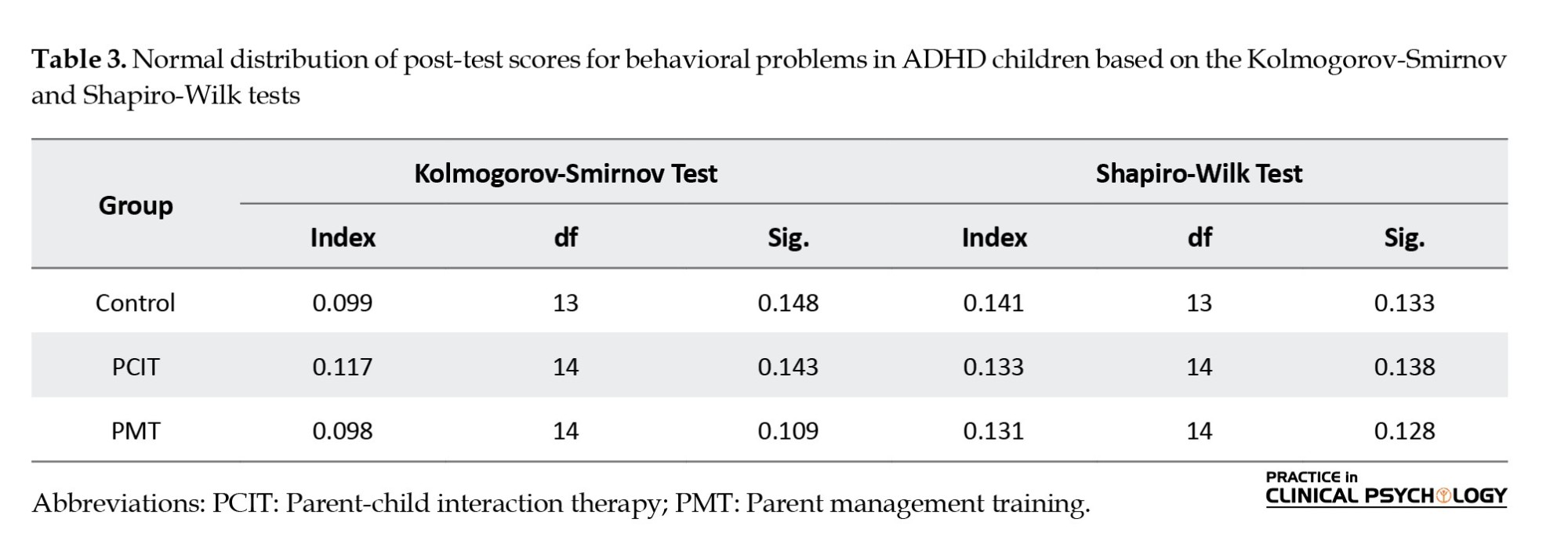
The results showed that the normality assumption was met (P<0.01). As reported in Table 3, the Kolmogorov-Smirnov and Shapiro-Wilk tests were non-significant for all groups (P>0.05), indicating that post-test behavioral problem scores for children with ADHD were approximately normally distributed. Consequently, the normality assumption was met, justifying parametric statistical procedures in subsequent analyses.
Levene’s test (P>0.05) confirmed homogeneity of variances for children’s behavioral problems across groups (Table 4).

Next, we examined the homogeneity of the slopes of the regression line for behavioral problems in children with ADHD; the results are reported in Table 5.
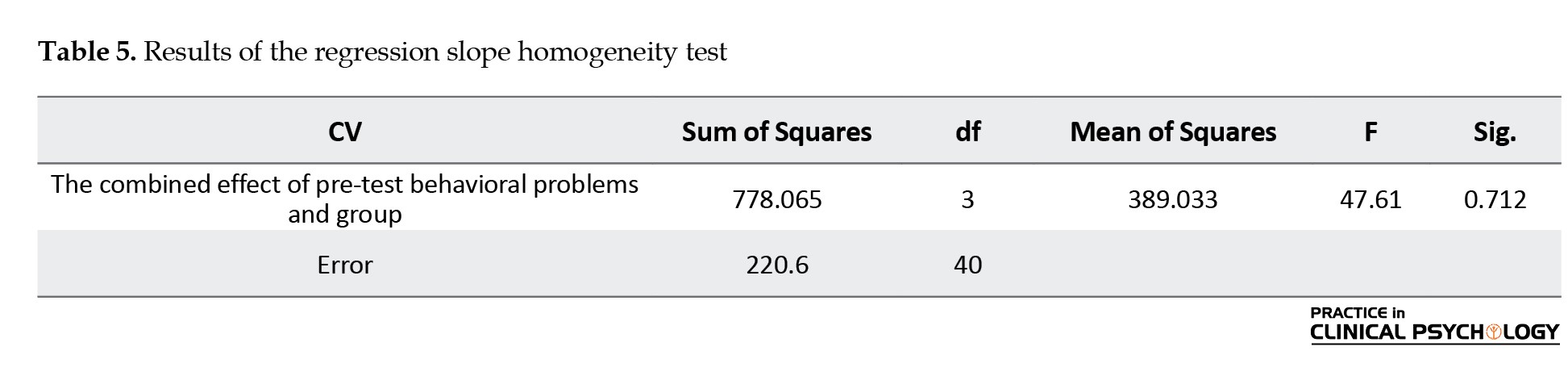
The results showed that the regression slope for behavioral problem scores in children with ADHD was established (P>0.05; F=47.61). Before the covariance analysis, we examined the pre-test and post-test means for each group.
Mauchly’s test of sphericity for the behavioral problems variable showed that the groups’ variance-covariance matrix was homogeneous (Table 6).
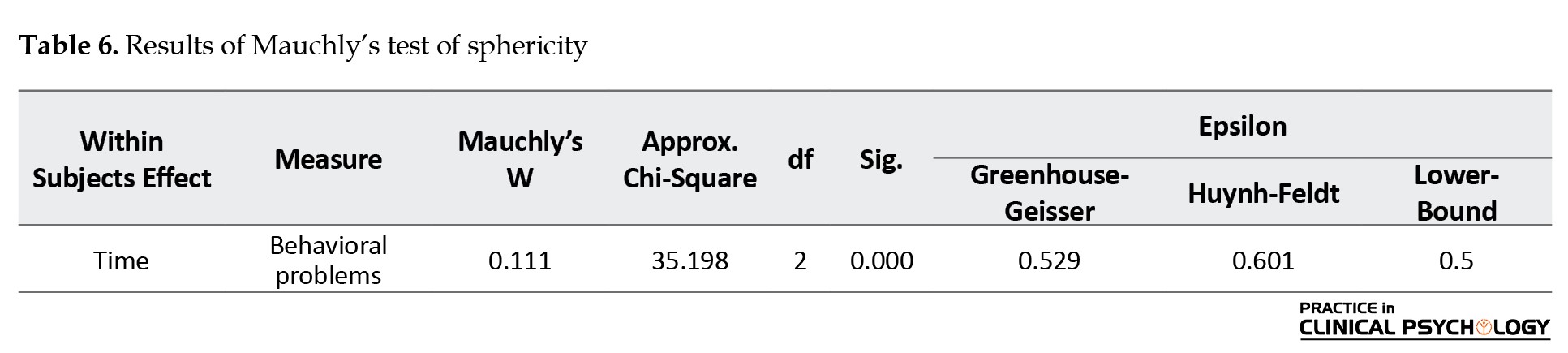
Thus, the necessary conditions were met to conduct the test.
Descriptive statistics
Table 7 shows the mean and standard deviation of the pre-test and post-test in the test and control groups.
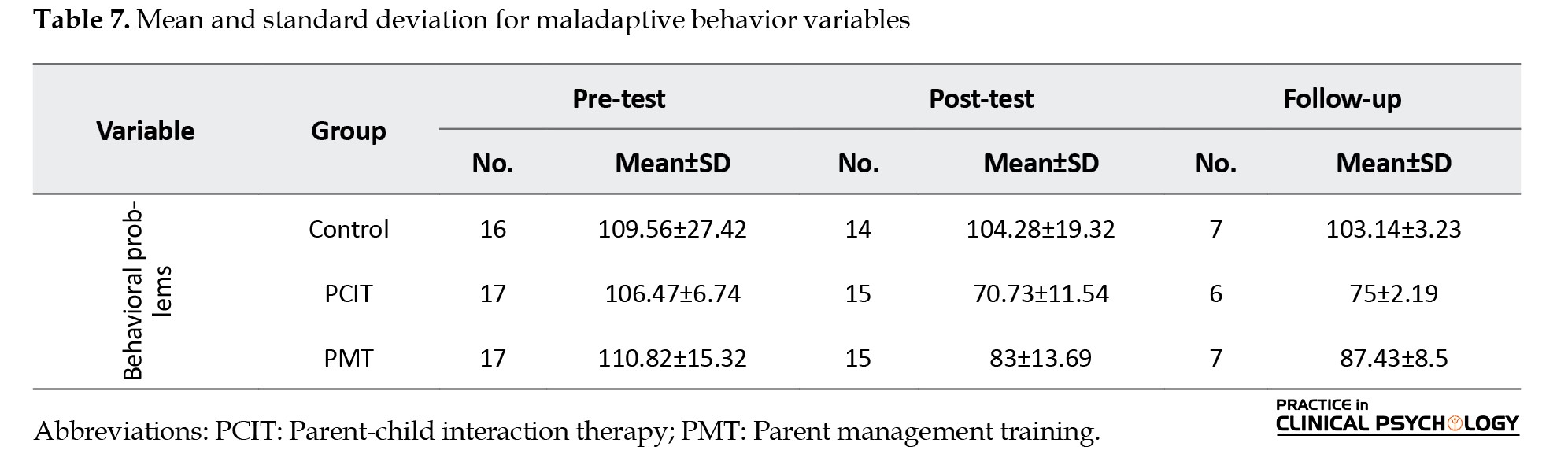
As reported in Table 7, comparing pre-test and post-test mean scores revealed a decline in behavioral problem scores among children with ADHD at post-test. This pattern suggests improved behavioral outcomes following the intervention. After confirming the necessary assumptions of the analysis of covariance, analysis of covariance was used to examine the significance of the decrease in scores.
Intervention effects on behavioral problems
Table 8 presents the repeated-measures analysis of variance to examine within- and between-group effects by separating the dependent variables by research component.
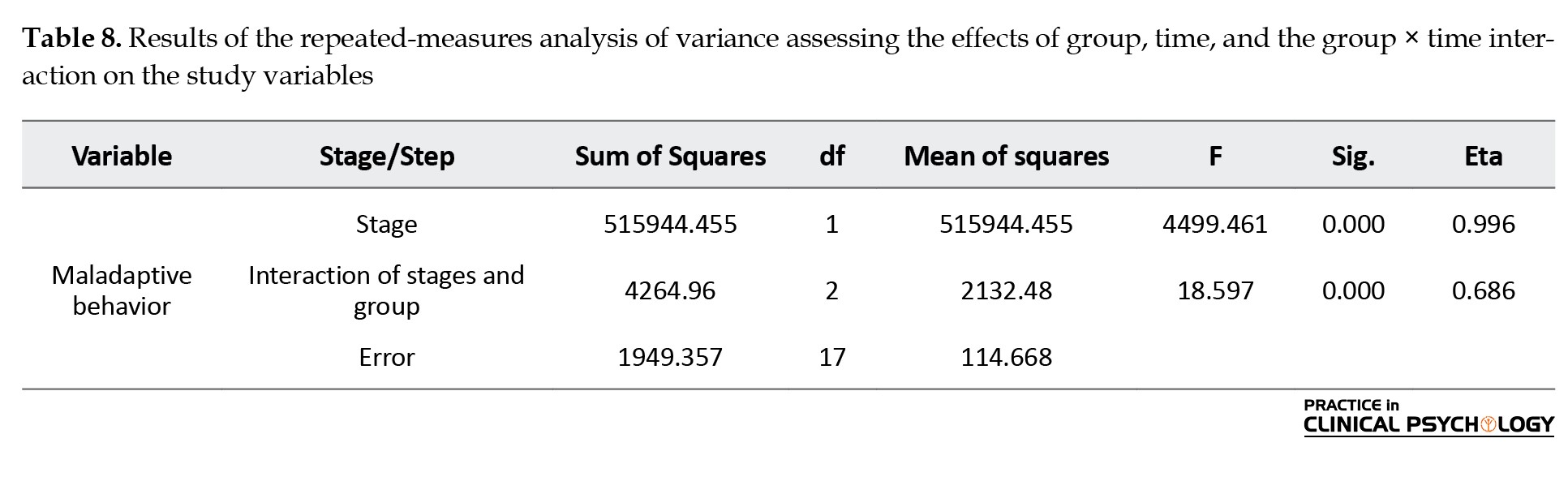
A repeated-measures ANOVA examined within-group and between-group changes in behavioral problems over time. Results indicated a significant main effect of time, F(1, 17)=4499.46, P<0.001, η²=0.996, suggesting significant changes in behavioral problems across the three measurement occasions. The interaction effect between time and group was also statistically significant, F(2, 17)=18.597, P <0.001, η²=0.686, indicating that changes in behavioral problems differed significantly between the experimental and control groups. These findings show that the interventions affected children’s behavioral problems differently over time (pre-test, post-test, and follow-up).
To evaluate differences between the intervention and control groups, we conducted Bonferroni-adjusted post hoc comparisons, and the results are summarized in Tables 7 and 8. The repeated-measures multivariate analysis of variance (MANOVA), using Wilks’ Lambda as the multivariate test statistic, showed significant within-subject effects of time and significant group×time interactions for both dependent variables. However, the between-subject main effect of group was not statistically significant. These findings indicate that participants’ scores changed significantly across the 3 measurement occasions (pre-test, post-test, and follow-up). Furthermore, the significant interaction effect suggests that the trajectory of change over time differed among the study groups. In contrast, the non-significant main effect of group indicates that the groups did not differ in their overall average scores when the repeated measurements were considered collectively.
In the behavioral problems variable, the results presented in Table 9 show that in the pre-test-post-test comparison in the 2 test groups, PCIT and PMT, there are significant changes; that is, the decrease in the mean scores of behavioral problems in the test groups PCIT (pre-test=106 and post-test=65.5) and PMT (pre-test=108 and post-test=85.429) is significant.
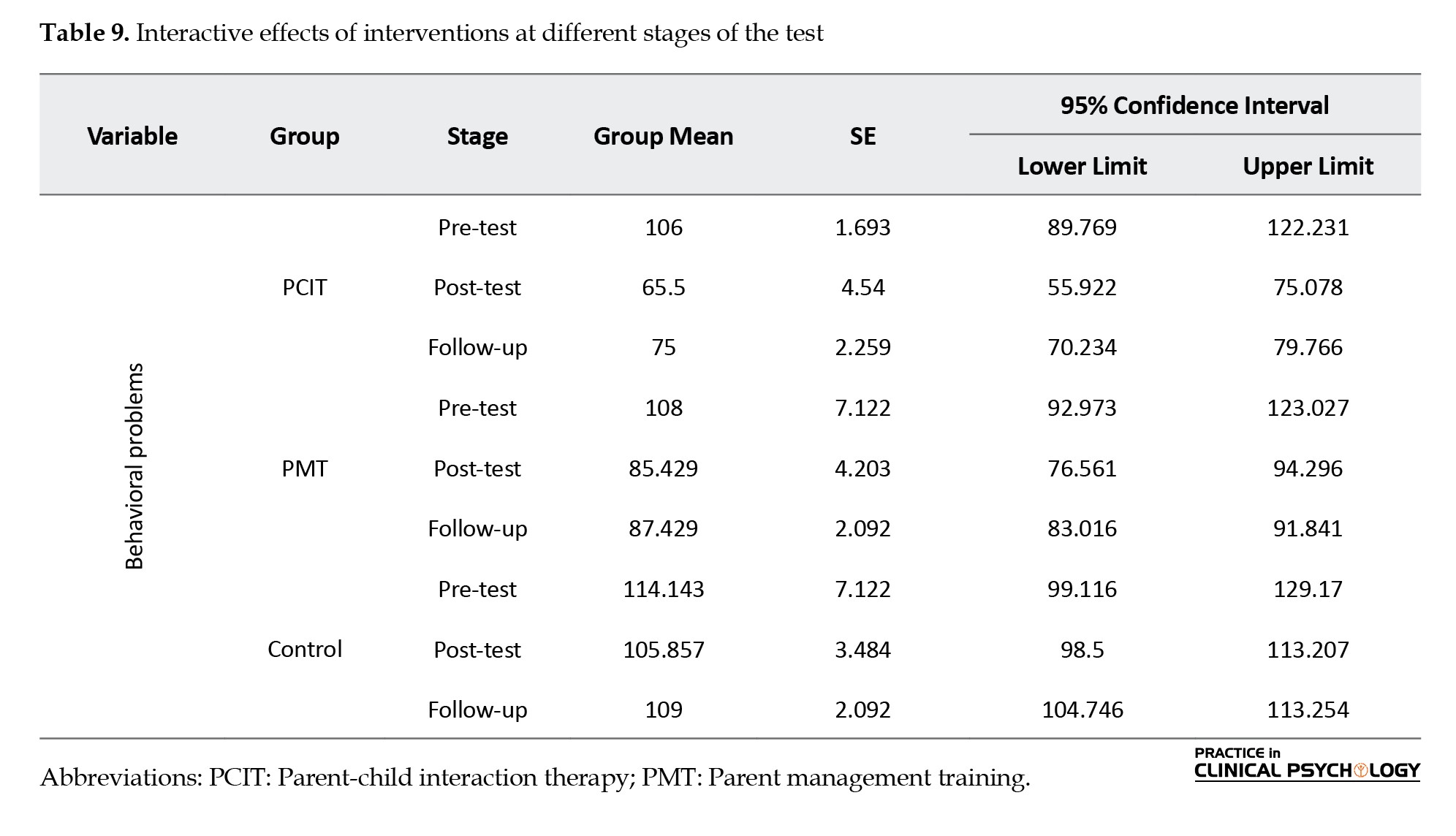
In contrast, the change in scores in the control group (pre-test=114.143 and post-test=92.143) is not significant, and this significant decrease can be attributed to the independent variables (PCIT and PMT). The lack of significant differences at follow-up (PCIT=75; PMT=87.429; control=103.143) indicates that changes in the test groups continued over time.
We performed Bonferroni-adjusted pairwise comparisons of the estimated marginal means to examine further post-intervention differences between the study groups (Table 10).
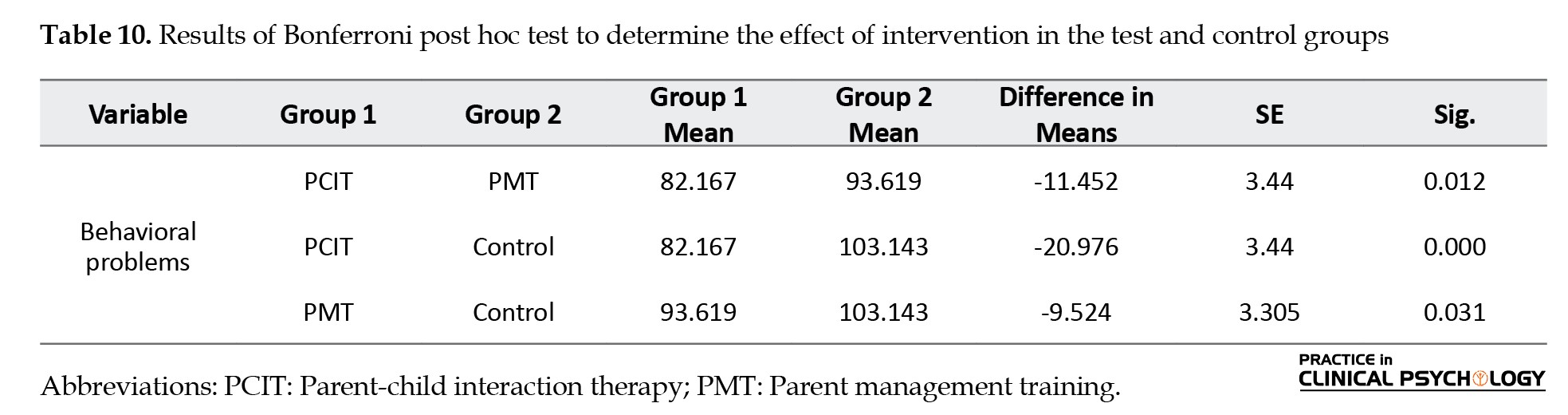
The adjusted mean score for children’s behavioral problems was 93.62 in the PMT group, compared with 82.17 in the PCIT group. Assuming lower scores indicate better behavioral functioning, these findings suggest that PCIT produced greater reductions in behavioral problems than PMT, supporting the study’s primary hypothesis. These results are significant at the 0.001 level based on the pairwise comparison results, meaning both trainings were effective and produced clinical improvement in children’s behavioral problems. The Bonferroni post hoc analysis showed that participants in the PCIT group had significantly greater reductions in children’s behavioral problem scores than those in the PMT group, indicating the PCIT intervention was more effective.
Table 11 reports the results of the simple effects analysis examining within-group changes across the 3 assessment occasions (pre-test, post-test, and follow-up) for the 2 intervention groups and the control group.
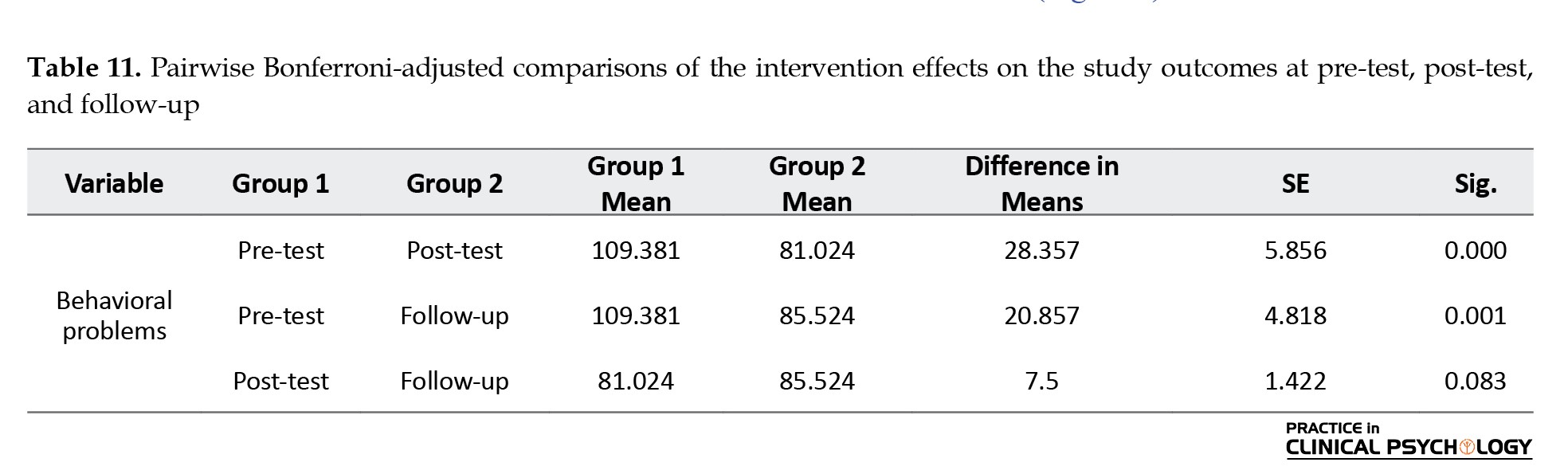
The results showed that both PCIT and PMT interventions similarly improved children’s behavioral problems, but PMT led to a decrease in clinical improvement at follow-up. As presented in the results, pairwise comparisons rvealed significant differences between the pre-test and post-test assessments and between the pre-test and follow-up assessments for all outcome variables (P<0.01). However, we found no significant differences between the post-test and follow-up assessments (P>0.05). These findings suggest that both interventions produced clinically meaningful improvements in children’s behavioral problems and that these improvements remained stable throughout the follow-up period, indicating persistent treatment effects (Figure 2).
Data analysis
We conducted statistical analyses using both descriptive and inferential methods. Descriptive analyses summarized the data using measures of central tendency and distribution, including the mean, standard deviation, skewness, and kurtosis. We presented these results in tables and graphs. After confirming that the assumptions for parametric analyses were met, we performed inferential statistical analyses. We tested the research hypotheses using analysis of covariance (ANCOVA) and repeated-measures analysis of variance (ANOVA) in IBM SPSS Statistics version 24. To compare intervention effectiveness, we used the Bonferroni test. The primary analyses used a mixed repeated-measures ANOVA with 1 within-subject factor (time: pre-test, post-test, and follow-up) and 1 between-subject factor (groups: PCIT, PMT, and control). Bonferroni-adjusted post hoc comparisons were conducted following significant main or interaction effects.
Ethical considerations
The relevant Institutional Ethics Committee approved the study protocol. The researchers obtained written informed consent from all participating parents before data collection. Participants were assured that all information would remain confidential and that they could withdraw at any stage without penalty.
Results
Researchers first matched participants on age and educational level to ensure baseline equivalence, then assigned them to the intervention and control groups. The mean and standard deviation of age in the 3 groups, PCIT, PMT, and control, were 5.8±1.56, 6.1±1.22, and 5.9±1.34 years, respectively. We randomized 54 participants (18 per group). During the study, participants were lost to follow-up because they did not attend post-test or follow-up assessments. Attrition rates differed across the 3 study groups, resulting in unequal sample sizes at follow-up. Consequently, we conducted the final analyses using a per-protocol approach and included only participants with complete outcome data.
Statistical analysis
We performed statistical analyses using SPSS version 24. We compared baseline demographic and clinical characteristics across groups using one-way ANOVA and chi-square tests, as appropriate. We evaluated assumptions of normality, homogeneity of variances (Levene’s test), and sphericity (Mauchly’s test) before conducting the primary analyses.
We conducted the primary outcome analysis using a mixed repeated-measures ANOVA, with time (pre-test, post-test, and follow-up) as the within-subject factor and group (PCIT, PMT, and control) as the between-subject factor. When sphericity assumptions were violated, we applied Greenhouse-Geisser corrections. Bonferroni-adjusted pairwise comparisons were performed for post hoc analyses.
Examining the assumptions of ANOVA with repeated measures
Before conducting repeated-measures ANOVA, we examined its assumptions. We used the Kolmogorov-Smirnov test to assess the normality of the score distribution (Table 3).
The results showed that the normality assumption was met (P<0.01). As reported in Table 3, the Kolmogorov-Smirnov and Shapiro-Wilk tests were non-significant for all groups (P>0.05), indicating that post-test behavioral problem scores for children with ADHD were approximately normally distributed. Consequently, the normality assumption was met, justifying parametric statistical procedures in subsequent analyses.
Levene’s test (P>0.05) confirmed homogeneity of variances for children’s behavioral problems across groups (Table 4).
Next, we examined the homogeneity of the slopes of the regression line for behavioral problems in children with ADHD; the results are reported in Table 5.
The results showed that the regression slope for behavioral problem scores in children with ADHD was established (P>0.05; F=47.61). Before the covariance analysis, we examined the pre-test and post-test means for each group.
Mauchly’s test of sphericity for the behavioral problems variable showed that the groups’ variance-covariance matrix was homogeneous (Table 6).
Thus, the necessary conditions were met to conduct the test.
Descriptive statistics
Table 7 shows the mean and standard deviation of the pre-test and post-test in the test and control groups.
As reported in Table 7, comparing pre-test and post-test mean scores revealed a decline in behavioral problem scores among children with ADHD at post-test. This pattern suggests improved behavioral outcomes following the intervention. After confirming the necessary assumptions of the analysis of covariance, analysis of covariance was used to examine the significance of the decrease in scores.
Intervention effects on behavioral problems
Table 8 presents the repeated-measures analysis of variance to examine within- and between-group effects by separating the dependent variables by research component.
A repeated-measures ANOVA examined within-group and between-group changes in behavioral problems over time. Results indicated a significant main effect of time, F(1, 17)=4499.46, P<0.001, η²=0.996, suggesting significant changes in behavioral problems across the three measurement occasions. The interaction effect between time and group was also statistically significant, F(2, 17)=18.597, P <0.001, η²=0.686, indicating that changes in behavioral problems differed significantly between the experimental and control groups. These findings show that the interventions affected children’s behavioral problems differently over time (pre-test, post-test, and follow-up).
To evaluate differences between the intervention and control groups, we conducted Bonferroni-adjusted post hoc comparisons, and the results are summarized in Tables 7 and 8. The repeated-measures multivariate analysis of variance (MANOVA), using Wilks’ Lambda as the multivariate test statistic, showed significant within-subject effects of time and significant group×time interactions for both dependent variables. However, the between-subject main effect of group was not statistically significant. These findings indicate that participants’ scores changed significantly across the 3 measurement occasions (pre-test, post-test, and follow-up). Furthermore, the significant interaction effect suggests that the trajectory of change over time differed among the study groups. In contrast, the non-significant main effect of group indicates that the groups did not differ in their overall average scores when the repeated measurements were considered collectively.
In the behavioral problems variable, the results presented in Table 9 show that in the pre-test-post-test comparison in the 2 test groups, PCIT and PMT, there are significant changes; that is, the decrease in the mean scores of behavioral problems in the test groups PCIT (pre-test=106 and post-test=65.5) and PMT (pre-test=108 and post-test=85.429) is significant.
In contrast, the change in scores in the control group (pre-test=114.143 and post-test=92.143) is not significant, and this significant decrease can be attributed to the independent variables (PCIT and PMT). The lack of significant differences at follow-up (PCIT=75; PMT=87.429; control=103.143) indicates that changes in the test groups continued over time.
We performed Bonferroni-adjusted pairwise comparisons of the estimated marginal means to examine further post-intervention differences between the study groups (Table 10).
The adjusted mean score for children’s behavioral problems was 93.62 in the PMT group, compared with 82.17 in the PCIT group. Assuming lower scores indicate better behavioral functioning, these findings suggest that PCIT produced greater reductions in behavioral problems than PMT, supporting the study’s primary hypothesis. These results are significant at the 0.001 level based on the pairwise comparison results, meaning both trainings were effective and produced clinical improvement in children’s behavioral problems. The Bonferroni post hoc analysis showed that participants in the PCIT group had significantly greater reductions in children’s behavioral problem scores than those in the PMT group, indicating the PCIT intervention was more effective.
Table 11 reports the results of the simple effects analysis examining within-group changes across the 3 assessment occasions (pre-test, post-test, and follow-up) for the 2 intervention groups and the control group.
The results showed that both PCIT and PMT interventions similarly improved children’s behavioral problems, but PMT led to a decrease in clinical improvement at follow-up. As presented in the results, pairwise comparisons rvealed significant differences between the pre-test and post-test assessments and between the pre-test and follow-up assessments for all outcome variables (P<0.01). However, we found no significant differences between the post-test and follow-up assessments (P>0.05). These findings suggest that both interventions produced clinically meaningful improvements in children’s behavioral problems and that these improvements remained stable throughout the follow-up period, indicating persistent treatment effects (Figure 2).
Discussion
The present study compared the effectiveness of PCIT and PMT in reducing behavioral problems among preschool children diagnosed with ADHD. The findings demonstrated that both interventions produced significant clinical improvements in children’s behavioral problems from pre-test to post-test, and these therapeutic gains were largely maintained at the two-month follow-up. However, children whose parents participated in the PCIT program showed significantly greater clinical improvements than those receiving PMT, suggesting that although both parent-based interventions are effective, PCIT may provide additional therapeutic benefits for preschool children diagnosed with ADHD.
These findings extend the growing body of evidence supporting behavioral parent-training interventions as first-line psychosocial interventions for young preschool children diagnosed with ADHD. Previous systematic reviews and meta-analyses have consistently reported that both PCIT and PMT improve disruptive behaviors, strengthen parenting practices, and enhance parent-child relationships (Sohrabi et al., 2020; Hamidzadeh et al., 2019). However, most previous investigations evaluated these interventions independently, making direct comparisons difficult. By evaluating both interventions under identical methodological conditions, including comparable participant characteristics, intervention settings, assessment procedures, and follow-up evaluations, the present study provides stronger comparative evidence regarding their relative effectiveness. The superior outcomes observed in the PCIT group therefore contribute novel evidence to an area where direct comparative studies remain limited.
PCIT’s greater effectiveness may stem from its unique therapeutic components. Although both PCIT and PMT are grounded in social learning theory and behavioral principles, PCIT incorporates real-time therapist coaching during parent-child interactions, allowing parents to practice and refine newly acquired behavioral management skills immediately. This live coaching format promotes greater intervention fidelity, accelerates parental skill acquisition, and enables therapists to provide immediate corrective feedback. In contrast, traditional PMT primarily relies on psychoeducation, discussion, and home practice, requiring parents to translate therapeutic principles into everyday interactions independently. Consequently, PCIT may facilitate faster, more consistent behavioral change by integrating direct behavioral rehearsal with ongoing professional guidance.
Another plausible mechanism involves clinical improvements in the quality of the parent-child relationship. Preschool children diagnosed with ADHD frequently experience coercive interaction patterns characterized by repeated criticism, conflict, inconsistent discipline, and emotional dysregulation. Such interaction cycles reinforce oppositional and disruptive behaviors while simultaneously increasing parental stress. PCIT directly targets these dysfunctional interaction patterns through child-directed interaction strategies, positive reinforcement, reflective communication, and emotionally responsive parenting. Strengthening attachment security and increasing positive parent–child interactions may reduce children’s emotional reactivity, improve compliance, and facilitate the development of self-regulation (Bradly, 2003). These mechanisms may partly explain why behavioral clinical improvements were larger in the PCIT group than in the PMT group.
The effectiveness of PMT observed in the present study is likewise consistent with contemporary evidence demonstrating that structured parent-management interventions substantially reduce disruptive behaviors in preschool children diagnosed with ADHD. PMT equips parents with practical behavioral management techniques including positive reinforcement, clear behavioral expectations, consistent consequences, strategic ignoring of minor inappropriate behaviors, and effective use of non-physical disciplinary strategies. Through repeated application of these principles, parents become more consistent in responding to child behaviors, thereby reducing environmental contingencies that maintain disruptive behaviors. The significant clinical improvements observed among participants receiving PMT therefore reinforce previous findings indicating that behavioral parent training represents an effective component of comprehensive ADHD management.
The present findings are broadly consistent with recent evidence demonstrating the effectiveness of behavioral parent-training interventions for preschool children diagnosed with ADHD and disruptive behavior disorders. Contemporary meta-analyses have reported moderate-to-large reductions in externalizing behaviors following both PCIT and PMT, accompanied by clinical improvements in parenting competence, parent-child relationships, and family functioning. The present study supports these conclusions while extending previous research by directly comparing the 2 interventions within the same experimental framework. This design minimizes methodological variability from differences in participant characteristics, intervention protocols, therapists, and outcome measures, providing a more reliable comparison of intervention efficacy.
Although both interventions are consistent with previous literature, the greater clinical improvement observed in the PCIT group deserves particular attention. Previous investigations have suggested that the live coaching component of PCIT promotes greater parental engagement, improves intervention adherence, and facilitates immediate correction of ineffective parenting behaviors. These characteristics distinguish PCIT from conventional parent-training programs and may explain its relatively larger effect on behavioral outcomes. Moreover, because preschool children rely heavily on caregiver interactions for emotional and behavioral regulation, interventions that directly modify parent-child interactions may produce broader developmental benefits than approaches focusing primarily on behavioral management strategies alone.
The present findings also differ from previous reports in some ways. While several studies have reported comparable effectiveness across different parent-training approaches, variations in participant age, ADHD severity, comorbid disorders, intervention duration, cultural context, and follow-up period may substantially influence outcomes. The current study included preschool children recruited from specialized clinical settings. It used standardized intervention protocols delivered by trained clinicians, which may have contributed to the relatively robust intervention effects observed. Consequently, differences across studies should be interpreted within the context of methodological heterogeneity rather than as contradictory evidence.
Based on the research findings, intervention processes for behavioral disorders in children and adolescents, which are based on education, management, and implementation by parents in the home environment and in real conditions, have a significant effect on reducing the rate of behavioral disorders in children. This finding is consistent with Holland et al. (2004) and Corni et al. (2014), who found that positive parenting training reduces oppositional defiant disorder. Recent research has also shown that parent training has effects, such as creating healthy relationships, expressing affection, correct interactions, reducing conflicts, tension, and misbehavior in families of children with oppositional defiant disorder (Sanders, Bor, & Morawska, 2008; Jensen-Hart et al., 2012; Mikolajewski et al., 2017; Morgan et al., 2005; Yaghoubi et al., 2025).
This study’s findings are consistent with those of other studies in this field. For example, Pirnia et al. (2017) showed that PCIT reduces interpersonal conflicts (parent-child), aggression, and stubbornness, and also increases acceptance and understanding of each other (Pirnia et al., 2017). In addition, studies by Landreth (2012), Bratton et al. (2014), Barkley (2016), and Azizi (2018), which examined PCIT training, were consistent with this study’s results. Also, research by Saunders (2008), Jensen et al. (2012), and Sohrabi (2020), who used the PMT training method, showed that this method reduces negative parent-child interactions, increases positive interactions and problem-solving, and improves child and parent performance. Our research also had such results (Barkley, 2016; Saunders et al., 2008; Jensen Hart et al., 2012; Sohrabi et al., 2020; Hamidzadeh et al., 2019; Garza et al., 2009; Azizi et al., 2018).
In explaining the results, it can be said that both of these trainings are multifaceted models that present concepts and skills related to reducing negative symptoms (aggression, stubbornness, negative resistance of the child), improving parent-child relationships, increasing appropriate behavior, and acquiring skills in an integrated way within a theoretical framework and applied techniques. Because parents and children influence each other, this skill must be taught to parents, in addition to children, in a clinical setting so they can act as specialists at home (natural environment). This condition builds self-efficacy in the child and parent (Saffariantoosi & Khaleghi, 2024), maintains training effectiveness, supports healthy relationships, and creates appropriate relationship patterns and greater long-term family adaptation and participation.
The present findings corroborate previous research supporting the efficacy of PCIT in improving children’s behavioral functioning. Consistent with studies by Eyberg and Pincus (1999), Eyberg et al. (2008), and Soleimani and Farahani (2024), the current study showed that PCIT effectively reduced both the severity and frequency of behavioral problems. Many children’s behavioral disorders are rooted in negative parent-child interactions. Patterson (1982), Patterson (2002) also refers to this issue in the theory of coercion. Negative parental behaviors such as yelling and threatening cause irresponsible and disobedient behaviors to be reinforced and even lead to more violence.
The therapeutic mechanisms underlying PCIT involve disrupting the coercive interaction patterns that often maintain children’s behavioral problems. By training parents in consistent, positive, and non-punitive parenting practices, the intervention promotes secure parent-child relationships. It enhances parents’ ability to respond effectively to their children’s developmental and emotional needs. Parents learn to reinforce appropriate behaviors through positive attention while reducing reinforcement of disruptive behaviors using evidence-based strategies such as selective attention and planned ignoring. These changes in parenting behavior improve children’s self-regulation, social competence, and behavioral adjustment, resulting in healthier parent–child interactions and long-term reductions in disruptive behaviors. This research background also shows that the parent-child play therapy protocol reduces parenting stress and parental stress (Davidson & Stagnitti, 2021). This study did not address this issue. PCIT is a well-established behavioral intervention that combines cognitive-behavioral principles with operant conditioning techniques to reduce disruptive behaviors in children aged approximately 2–7 years (Thomas et al., 2017). The intervention focuses on improving the parent-child relationship through structured coaching that teaches parents positive interaction strategies. These strategies include behavior-specific praise, reflective responding, emotion reflection, and imitation of the child’s appropriate play behaviors. By strengthening positive parent-child interactions, PCIT enhances parenting competence and facilitates improvements in children’s behavioral and emotional functioning. These skills not only strengthen the child’s self-esteem, but also increase his willingness to cooperate and participate (Lieneman et al., 2017).
On the other hand, this therapy helps reduce children’s behavioral inconsistencies by educating parents on effective disciplinary processes. In this method, parents learn to use clear, consistent commands, express expectations appropriately, and consider logical consequences for the child’s inappropriate behaviors. PMT is grounded in behavioral learning principles and equips parents with practical strategies for managing children’s disruptive behaviors. Core components include consistent discipline, time-out procedures, and response-cost techniques involving the temporary removal of privileges. By improving parenting practices and increasing environmental consistency, PMT aims to enhance children’s self-regulation, behavioral adjustment, and adaptive functioning (Ward et al., 2016).
The comparative analysis demonstrated that both PCIT and PMT significantly improved children’s behavioral problems. However, PCIT produced significantly greater improvements than PMT. In this regard, no research comparing both methods was observed. This result can be explained as follows: parental management training is very similar to the positive parenting method in terms of content, implementation, and target population; parts of their processes overlap, and both teach positive parenting (Kazdin, 2008). In addition, both training programs are based on social learning principles. Parental management training and positive parenting emphasize the actions of parents in response to children’s behavior, in such a way that instead of harsh punishment, they use deprivation and silence; and in response to appropriate child behavior, they use positive reinforcement; as a result, they have a similar effect on improving behavioral problems.
Overall, the findings support the hypothesis that the intervention effectively improved the targeted outcomes. Collectively, the evidence shows a difference in effectiveness between PCIT and PMT in improving children’s behavioral problems, and PCIT was more effective. These results are significant at the 0.001 level based on the paired comparison, meaning both trainings were effective and produced clinical improvement in children’s behavioral problems. Still, the paired-comparison results showed that the PCIT training program was more successful than PMT training and improved children’s behavioral problems more.
The follow-up results indicated that the treatment effects of the PCIT-based parent training program diminished over time, as reflected by a reduction in the clinical improvements observed at post-test. However, this decrease was not significant compared to the post-test.
Regarding PMT, it also resulted in a decrease in clinical improvement in behavioral problems. In this regard, no research was observed. Both parent management and positive parenting programs refer to positive parenting and how parents respond to the child’s behavior, with the difference that some parent management programs emphasize interaction and coordination between parents in the child’s interactions (Shahim et al., 2007). One possible explanation for the slight decline in intervention effects during the follow-up period is the inconsistent implementation of parenting strategies in the home environment. Parents who cannot apply the learned techniques consistently may gradually lose some of the behavioral gains achieved during the intervention. Because the same therapists delivered both intervention groups, therapist-related factors are unlikely to explain these differences. Instead, sustained parental engagement, consistent practice of the acquired skills, and continued adherence to the intervention principles are likely critical to maintaining long-term intervention benefits. Accumulating evidence suggests that PMT is an effective approach for reducing children’s disruptive behaviors.
The intervention focuses on enhancing parents’ behavioral management competencies through structured instruction in positive reinforcement, consistent discipline, and effective communication, thereby improving both child behavior and the quality of parent-child interactions. These trainings typically include strengthening positive parent-child engagement, increasing attention to adaptive behaviors, and improving parent-child communication. In addition, parents learn to give clear, concise instructions to their child, respond to positive behaviors with love and attention, avoid focusing too much on minor negative behaviors, and use non-punitive methods to manage the consequences of behavioral problems (Helander et al., 2024). However, access to PMT is often limited because of limited service availability, cost, and logistical challenges. Unlike traditional child-focused interventions, PCIT emphasizes parents’ central role in the therapeutic process. Under the guidance of trained clinicians, parents learn effective interaction and behavior-management skills, enabling them to serve as primary agents of change and support their children’s long-term emotional and behavioral adjustment (Linville et al., 2024).
Data analysis showed that both PCIT and PMT interventions similarly improved children’s behavioral problems, but PMT led to a decrease in clinical improvement in the follow-up phase. As shown in the results, significant differences were observed between the pre-test and post-test assessments, as well as between the pre-test and follow-up assessments, for all outcome variables (P<0.01). In contrast, we found no statistically significant differences between the post-test and follow-up assessments (P>0.05). These findings indicate that the interventions produced clinically meaningful improvements in maladaptive behaviors among participants in the intervention groups. Furthermore, the absence of significant differences between the post-test and follow-up assessments suggests that these treatment gains were maintained over time, demonstrating the sustained effectiveness of the interventions.
These findings, rather than simply demonstrating that the intervention was effective, suggest that the clinical improvements observed may reflect significant changes in the underlying cognitive and behavioral processes targeted by the intervention. This interpretation aligns with previous studies that reported similar benefits, although differences in participant characteristics, intervention duration, and outcome measures may explain discrepancies between studies. Several mechanisms may explain these findings, including increased cognitive control, improved emotion regulation, and stronger adaptive coping skills. From a clinical perspective, the results support including this intervention in routine practice as a complementary approach to improving patient outcomes. However, further multicenter studies with larger samples and longer follow-up periods are needed to confirm the durability and generalizability of these effects.
Possible mechanisms underlying the findings
Several complementary mechanisms may explain the clinical improvements observed following both interventions. From a behavioral perspective, PCIT and PMT both modify the reinforcement contingencies that maintain disruptive behaviors. Parents learn to increase positive reinforcement for appropriate behaviors while reducing inadvertent reinforcement of undesirable behaviors through greater consistency, predictable consequences, and structured behavioral expectations. According to social learning theory, these changes alter children’s behavioral repertoire by increasing adaptive behaviors and reducing coercive parent-child interaction cycles.
Beyond behavioral learning principles, clinical improvements may also reflect enhanced emotional regulation within the parent-child relationship. Preschool children diagnosed with ADHD frequently experience difficulties regulating emotional responses because of deficits in executive functioning, inhibitory control, and attentional regulation. Parent-training interventions provide caregivers with strategies to respond calmly and consistently during emotionally challenging situations, reducing emotional escalation and promoting adaptive self-regulation in children. Repeated exposure to emotionally supportive interactions may gradually strengthen children’s capacity to tolerate frustration, follow instructions, and regulate impulsive behaviors.
Attachment-related mechanisms may further explain PCIT’s superiority. Unlike conventional parent-training approaches, PCIT deliberately strengthens the emotional quality of parent–child interactions through child-directed play, positive attention, reflective listening, behavioral descriptions, and labeled praise. These experiences foster greater emotional security and increase children’s motivation to cooperate with parental requests. Improved attachment quality may therefore enhance the effectiveness of behavioral management strategies by increasing children’s responsiveness to parental guidance rather than relying solely on external behavioral consequences.
Furthermore, therapist-guided coaching during actual parent-child interactions likely contributes to higher intervention fidelity. Immediate feedback allows therapists to correct maladaptive parenting responses in real time before they become habitual. Consequently, parents may acquire effective behavioral skills more rapidly and implement them more consistently in everyday situations. This process may partly explain the larger intervention effects observed in the PCIT group compared with PMT.
Conclusion
In conclusion, the present study provides evidence that both PMT and PCIT are effective interventions for reducing behavioral problems among preschool children diagnosed with ADHD. However, PCIT demonstrated superior clinical effectiveness, suggesting that interventions combining behavioral management principles with direct parent-child interaction and live therapist coaching may offer additional therapeutic advantages. Rather than simply reducing disruptive behaviors, these interventions appear to strengthen parent-child relationships, enhance parental competence, and promote adaptive behavioral regulation in children. Collectively, the findings support integrating structured parent-training programs into routine clinical practice and provide important comparative evidence that may help clinicians select the most appropriate psychosocial intervention for young preschool children diagnosed with ADHD.
Identifying more efficient intervention methods with larger effect sizes saves time and money. Previous studies have examined the effectiveness of parenting programs as preventive interventions, but they have less often compared the effectiveness of these methods than this study. It seems that both interventions can help as a comprehensive intervention program for behavioral problems in preschool children diagnosed with ADHD. Still, when choosing the type of intervention, more research on behavioral problems is needed; in addition to positive parenting programs, PMT-based interventions to improve behavioral problems also seem necessary, or at least useful. Therefore, these results can support the use of PMT and PCIT to improve behavioral problems in preschool children diagnosed with ADHD, so that by educating them, the emergence, exacerbation, and transformation of symptoms of this disorder into other disorders can be prevented. Also, considering the effectiveness of these two methods in improving behavioral problems of preschool children diagnosed with ADHD in childhood and adolescence, whose rate of referrals to intervention centers is increasing, and because many children in society show traits of preschool children diagnosed with ADHD with less severity. The results showed that teaching these techniques to parents and implementing them at home and in the living environment reduces ADHD symptoms. It seems that today’s intervention approaches should be implemented outside clinical settings and intervention centers and used more in real environments, with parents’ participation, since they play the greatest role and have the most time. The effectiveness of these interventions may lie in the fact that parents are directly involved during the intervention and witness their children’s success.
Clinical implications
The present findings have several important clinical implications for the management of preschool children diagnosed with ADHD. First, the results reinforce current clinical recommendations that behavioral parent-training interventions should be considered first-line psychosocial interventions for young preschool children diagnosed with ADHD, particularly before implementing more intensive psychological interventions. Both PCIT and PMT demonstrated clinically meaningful reductions in behavioral problems, supporting their integration into routine child mental health services.
Second, PCIT’s superior performance suggests that interventions incorporating direct parent-child interaction and live therapist coaching may produce greater clinical improvements in behavioral functioning than parent-focused educational programs alone. This distinction is particularly relevant for clinicians working with families characterized by high levels of parent–child conflict, coercive interaction patterns, or impaired emotional communication. In such cases, interventions that simultaneously strengthen attachment relationships while teaching behavioral management strategies may provide broader therapeutic benefits.
Third, these findings emphasize the importance of active parental involvement throughout intervention. Because behavioral difficulties in young children primarily emerge within family interactions, interventions that empower parents to become effective agents of behavioral change are likely to produce more durable clinical improvements than approaches directed exclusively toward the child. Consequently, incorporating structured parent-training programs into community mental health clinics, pediatric services, and early intervention programs may substantially improve long-term clinical outcomes while reducing the need for more intensive and costly interventions. Finally, the maintenance of intervention gains during follow-up suggests that parents successfully generalized the acquired behavioral management skills beyond the therapeutic setting. Such maintenance is particularly important because ADHD is a chronic neurodevelopmental disorder requiring long-term behavioral support rather than short-term symptom reduction. Therefore, strengthening parental competence may represent one of the most sustainable strategies for improving children’s developmental trajectories.
Strengths of the study
Several methodological strengths should be acknowledged. To our knowledge, this study is among the few investigations directly comparing PCIT and PMT under identical experimental conditions in preschool children diagnosed with ADHD. The inclusion of a control group, standardized intervention protocols, random allocation, and follow-up assessment enhances the internal validity of the findings. Furthermore, therapist supervision and intervention fidelity monitoring increased confidence that both intervention protocols were delivered consistently across participants. These methodological characteristics strengthen the reliability of the observed intervention effects and contribute valuable comparative evidence to the existing literature.
Study limitations
Despite these strengths, several limitations should be considered when interpreting the findings. First, the relatively small sample size may have limited statistical power and reduced the results’ generalizability. Second, participants were recruited through convenience sampling from a limited geographical region, increasing the risk of selection bias and limiting external validity. Third, the authors assessed behavioral outcomes primarily through parent-reported questionnaires. Although the Eyberg child behavior inventory is a well-validated instrument, relying on a single informant may introduce reporting bias. Future studies should incorporate multiple informants, including teachers, clinicians, and independent behavioral observations.
Another limitation concerns the relatively short follow-up period. Although intervention gains were generally maintained over 2 months, longer follow-up assessments are necessary to determine whether behavioral clinical improvements persist throughout later childhood. Additionally, potentially influential variables such as parental mental health, parenting stress, socioeconomic status, ADHD symptom severity, intervention adherence outside therapy sessions, and medication adherence were not examined as possible moderators or mediators of intervention response. Investigating these factors would provide a more comprehensive understanding of the mechanisms responsible for intervention success
Future directions
Future research should prioritize large-scale, multicenter randomized controlled trials that directly compare evidence-based parent-training interventions across diverse cultural and clinical settings. Longer follow-up periods extending 6 to 12 months would provide more robust evidence regarding the durability of intervention effects. Furthermore, integrating objective behavioral assessments, neuropsychological measures of executive functioning, teacher reports, and observational coding of parent-child interactions would strengthen methodological rigor and reduce reliance on parent-report measures alone.
Future investigations should also explore mediating mechanisms underlying behavioral improvement, including changes in parenting self-efficacy, parental emotion regulation, parenting stress, attachment security, and child self-regulation. Identifying these mechanisms may facilitate the development of more personalized interventions and enable clinicians to match families with the intervention approach most likely to produce optimal outcomes.
Ethical Considerations
Compliance with ethical guidelines
Ethical approval of the protocol was obtained from the Research Ethics Committee of Torbat Jam Branch, Islamic Azad University, Torbat Jam, Iran (Code: IR.IAU.TJ.REC.1404.082), and all procedures performed in studies involving human participants were in accordance with the 1964 Helsinki Declaration and its later amendments.
Funding
This research did not receive any specific grant from funding agencies in the public, commercial, or not-for-profit sectors.
Authors' contributions
The authors declared no conflict of interest.
Conflict of interest
All authors contributed equally to the conception and design of the study, data collection and analysis, interpretation of the results, and drafting of the manuscript. Each author approved the final version of the manuscript for submission.
Acknowledgments
We sincerely thank all the parents of the children for their participation in the research.
References
Abbasi, M., Neshat Dost, H. T., & Agha Mohamadian Sher-baf, H. R. (2010). [Effectiveness of parent-child interaction therapy on reduction of symptoms in separation anxiety disorder (Persian)]. Journal of Clinical Psychology, 2(2), 47-57. [Link]
Allen, K., Harrington, J., Quetsch, L. B., Masse, J., Cooke, C., & Paulson, J. F. (2023). Parent-child interaction therapy for children with disruptive behaviors and autism: A randomized clinical trial. Journal of Autism and Developmental Disorders, 53(1), 390-404. [DOI:10.1007/s10803-022-05428-y] [PMID] [PMCID]
Azizi, A., Fatehizade, M., Ahmadi, A., & Jazayeri, R. (2018). Effect of child-parent relationship therapy on parenting stress and empowerment of parents with children with Attention Deficit/Hyperactivity Disorder. Family Counseling and Psychotherapy, 8(1), 27-46. [DOI:10.22034/fcp.2018.60855]
Bailey, B. A., Heaton, S. C., McNeil, C. B., & Nelson, M. M. (2024). Treatment engagement and outcomes in parent-child interaction therapy with mothers with a history of ADHD: A case series. Journal of Indian Association for Child and Adolescent Mental Health, 20(2), 171-176. [DOI:10.1177/09731342241240656]
Barkley, R. A. (2025). The important role of executive functioning and self-regulation in ADHD. Journal of Child Neurology, 113(21), 41-56. [Link]
Borgert, M., Melin, A., Hollander, A. C., & Rahman, S. (2024). Prenatal maternal PTSD as a risk factor for offspring ADHD: A register-based Swedish cohort study of 553 766 children and their mothers. European Psychiatry, 67(1), e22. [DOI:10.1192/j.eurpsy.2024.21] [PMID] [PMCID]
Bradly, S.J. (2003). Affect regulation and the development of psychology. New York: The Guildford Press. [Link]
Bratton, S. C., Swan, A. M., Opiola, K. K., & Landreth, G. L. (2025). Filial therapy: The 10 session child-parent relationship therapy model. In D. A. Crenshaw, A. L. Stewart, & D. C. Ray (Eds.), Play therapy: Theory, Research, and Practice (2nd ed., pp. 133-150). The Guilford Press. [Link]
Coghill, D., Banaschewski, T., Cortese, S., Asherson, P., Brandeis, D., & Buitelaar, J., et al. (2023). The management of ADHD in children and adolescents: Bringing evidence to the clinic: Perspective from the European ADHD Guidelines Group (EAGG). European Child & Adolescent Psychiatry, 32(8), 1337–1361. [DOI:10.1007/s00787-021-01871-x] [PMID] [PMCID]
Conners, C. K., March, J. S., Frances, A., Wells, K. C. & Ross, R. (2001) Treatment of attention deficit hyperactivity disorder: expert consensus guidelines. Journal of Attention Disorders, 4, 7-128. [DOI:10.1177/108705470000401s02]
Corni, F., Giliberti, E., & Fuchs, H. U. (2014). Student teachers writing science stories: A case study. In E-Book Proceedings of the ESERA 2013 Conference: Science Education Research For Evidence-based Teaching and Coherence in Learning. Nicosia, Cyprus, 2012 October 7. [Link]
Davidson, D., & Stagnitti, K. (2021). The process of Learn to Play Therapy with parent-child dyads with children who have autism spectrum disorder. Australian Occupational Therapy Journal, 68(5), 419-433. [DOI:10.1111/1440-1630.12751] [PMID]
Divargar, F., & Mohamad Tehrani, H. (2023). [The effect of parent management training (PMT) on reducing child anxiety and domestic violence against divorced children aged 5-10 years, Darab city (Persian)]. Rooyesh, 12(7), 155-164. [Link]
DuPaul, G. J., Evans, S. W., Mautone, J. A., Owens, J. S., & Power, T. J. (2020). Future directions for psychosocial interventions for children and adolescents with ADHD. Journal of Clinical Child & Adolescent Psychology, 49(1), 134-145. [DOI:10.1080/15374416.2019.1689825] [PMID]
Evans, S. W., Owens, J. S., Wymbs, B. T., & Ray, A. R. (2018). Evidence-based psychosocial treatments for children and adolescents with attention deficit/hyperactivity disorder. Journal of Clinical Child & Adolescent Psychology, 47(2), 157-198. [DOI:10.1080/15374416.2017.1390757] [PMID]
Eyberg, S., & Pincus, D. (1999). Eyberg child behavior inventory and sutter-eyberg student behavior inventory-revised: Professional manual. Odessa: Psychological Assessment Resources. [Link]
Eyberg, S. M., Funderburk, B. W., Hembree-Kigin, T. L., McNeil, C. B., Querido, J. G., & Hood, K. K. (2001). Parent-child interaction therapy with behavior problem children: One- and two-year maintenance of treatment effects in the family. Child & Family Behavior Therapy, 23(4), 1-20. [DOI:10.1300/J019v23n04_01]
Eyberg, S. M., Nelson, M. M., Duke, M., & Boggs, S. R. (2009). Manual for the dyadic parent-child interaction coding system. (3rd Ed). Florida: University of Florida Press. [Link]
Garza, Y., Kinsworthy, S., & Watts, R.E. (2009). Child-parent relationship therapy: A training model for strengthening child-parent relationships. International Journal of Play Therapy, 18, 217-228. [DOI:10.1037/a0017055]
Ghazaei, M., & Abbas Zadeh, F. (2024). Investigating the relationship between sluggish cognitive tempo and quality of life with controlling anxiety, depression, and attention deficit hyperactivity disorder symptoms in Iranian college students. Journal of Practice in Clinical Psychology, 12(2), 179-188. [DOI:10.32598/jpcp.12.2.934.1]
Grodberg, D., & Smith, I. (2022). Scaling parent management training through digital and microlearning approaches. Frontiers in Psychology, 13, 934665. [DOI:10.3389/fpsyg.2022.934665] [PMID] [PMCID]
Gross, D., Fogg, L., Young, M., Ridge, A., Cowell, J., & Sivan, A., et al. (2007). Reliability and validity of the Eyberg Child Behavior Inventory with African-American and Latino parents of young children. Research in Nursing & Health, 30(2), 213-223. [DOI:10.1002/nur.20181] [PMID]
Haji Seyedrazi, H., Azkhosh, M., Tahmasian, K., Bayat, M., Biglarian, A. (2012). [The efficacy of “parenting the strong-willed child” program for mothers’ parenting practices and children’s behavioral problems (Persian)]. Journal of Family Research, 8(4), 373-390. [Link]
Hamidzadeh, N., Kashani-Vahid, L., Moradi, H., Vakili, S., & Irani, A. Effectiveness of EmoGalaxy video game on social skills of children with oppositional defiant disorder. In 2019 International Serious Games Symposium. Tehran, Iran, 2019, December 26. [DOI:10.1109/ISGS49501.2019.9047022]
Helander, M., Asperholm, M., Wetterborg, D., Öst, L. G., Hellner, C., & Herlitz, A., et al. (2024). The efficacy of parent management training with or without involving the child in the treatment among children with clinical levels of disruptive behavior: A meta-analysis. Child Psychiatry & Human Development, 55(1), 164-181. [DOI:10.1007/s10578-022-01367-y] [PMID] [PMCID]
Holland, P. R., Mau, M. K., & Yamamoto, L. G. (2004). Survey of parenting books for advice on the common cold, diarrhea, and otitis media in infants and toddlers. Clinical Pediatrics, 43(7), 647-651. [DOI:10.1177/000992280404300711] [PMID]
Jensen-Hart, S.J., Christensen, J., Dutka, L., & Leishman, J.C. (2012). Child-parent relationship training (CPRT). Enhancing the child-parent relationships for military families. Advances in Social Work, 13(1), 51-66. [DOI:10.18060/1881]
Kazdin, A. E. (2017). Parent management training and problem-solving skills training for child and adolescent conduct problems. In John R. Weisz, Alan E. Kazdin, editors; Evidence-based Psychotherapies for Children and Adolescents. New York: The Guilford Press. [Link]
Keshvari, S., & Soltani, P. (2026). The effect of motor and cognitive games on the social development of children with ADHD: a field-based study. Current Psychology, 45, 842. [DOI:10.1007/s12144-026-09414-w]
Klein, J. L., Allen, H. A., Clibbens, J., Cook, A., Amanatidou, V., & Mavritsaki, E. (2025). Selective visual attention in ADHD: A narrative review. Current Neurology and Neuroscience Reports, 25(1), 51. [DOI:10.1007/s11910-025-01435-5] [PMID] [PMCID]
Landreth, G. L. (2002). Therapeutic limit setting in the play therapy relationship. Professional Psychology, 33(6), 529. [DOI:10.1037/0735-7028.33.6.529]
Lieneman, C. C., Brabson, L. A., Highlander, A., Wallace, N. M., & McNeil, C. B. (2017). Parent-Child Interaction Therapy: Current perspectives. Psychology Research and Behavior Management, 10, 239–256. [DOI:10.2147/PRBM.S91200] [PMID] [PMCID]
Linville, D., Ruff, S., Morgan, K., & Zilberstein, K. (2024). Skills and knowledge therapists need to work with foster youth and families: According to key stakeholders in child welfare. Journal of Marital and Family Therapy, 50(4), 953-974. [DOI:10.1111/jmft.12727]
Loeber, R., Burke, J. D., Lahey, B. B., Winters, A. Z. M. (2000). Oppositional defiant and conduct disorder: A review of the past 10 years, part 1. Journal of the American Academy of Child and Adolescent Psychiatry, 39, 1468-1484. [DOI:10.1097/00004583-200012000-00007] [PMID]
Loeber, R., Burke, J.D., Pardini, D.A. (2009). Perspectives on oppositional defiant disorder, conduct disorder and psychopathic features. journal of child psychology and psychiatry, 50(1-2), 133-142. [DOI:10.1111/j.1469-7610.2008.02011.x] [PMID]
Martinez, K., Chlebowski, C., Roesch, S., et al. (2022). Psychometric assessment of the eyberg child behavior inventory in children with autism in community settings. Journal of Autism and Developmental Disorders, 53(4), 1693–1705. [DOI:10.1007/s10803-022-05427-z] [PMID] [PMCID]
Mehrvarz, F., Abolghasemi, A., Khosrojavid, M., & Hosseinkhanzadeh, A. A. (2026). Comparing the effectiveness of parent-child interaction therapy, cognitive-behavioural therapy, and their combination in adolescents with problematic sexual behaviours. Practice in Clinical Psychology, 14(2), 151-166. [DOI:10.32598/jpcp.14.2.1028.3]
Mikolajewski, A.J., Taylor, J., Iacono, W.G. (2017). Oppositional defiant disorder dimensions: Genetic influences and risk for later psychopathology. Journal of Child Psychology Psychiatry, 58(6), 702-710. [DOI:10.1111/jcpp.12683] [PMID] [PMCID]
Montanaro, F. A. M., Alfieri, P., Caciolo, C., Cumbo, F., Piga, S., & Tartaglia, M., et al. (2022). Neuropsychological features in RASopathies: A pilot study on parent training program involving families of children with Noonan syndrome. American Journal of Medical Genetics, 190(4), 510–519. [DOI:10.1002/ajmg.c.32025] [PMID] [PMCID]
Morgan, J., Robinson, D., & Aldridge, J. (2002). Parenting stress and externalizing child behaviour. Child & Family Social Work, 7(3), 219. [DOI:10.1046/j.1365-2206.2002.00242.x]
Murrihy, R. C., Drysdale, S. A., Dedousis-Wallace, A., Rémond, L., McAloon, J., & Ellis, D. M., et al. (2023). Community-delivered collaborative and proactive solutions and parent management training for oppositional youth: A randomized trial. Behavior Therapy, 54(2), 400-417. [DOI:10.1016/j.beth.2022.10.005] [PMID]
Patterson, G. R., Chamberlain, P., & Reid, J. B. (1982). A comparative evaluation of a parent-training program. Behavior Therapy, 13(5), 638-650. [DOI:10.1016/S0005-7894(82)80021-X]
Patterson, G. R. (2002). The early development of coercive family process. In J. B. Reid, G. R. Patterson, & J. Snyder (Eds.), Antisocial behavior in children and adolescents: A developmental analysis and model for intervention (pp. 25–44). Washington: American Psychological Association. [DOI:10.1037/10468-002]
Pirnia, B., Najafi, E., Lashkari, A., & Saber Majidi, G. (2017). Evaluation of parent-child interaction therapy on anxiety level in pre-elementary school children: a randomized controlled trial. Practice in Clinical Psychology, 5(3), 167-176. [DOI:10.18869/acadpub.jpcp.5.3.167]
Rostami, M., Bakhtiarpour, S., Hafezi, F., & Naderi, F. (2023). Investigating the effectiveness of verbal self-education training on academic procrastination and symptoms of attention deficit/hyperactivity disorder in adolescent boys with attention-deficit/hyperactivity disorder. Practice in Clinical Psychology, 11(2), 141-150. [DOI:10.32598/jpcp.11.2.851.1]
Saffariantoosi, K., & Khaleghi, M. R. (2024). The mediating role of organizational citizenship behavior in the relationship between career self-efficacy and career success among construction project managers in Mashhad. Current Psychology, 43(28), 23971-23984. [DOI:10.1007/s12144-024-06127-w]
Sanders, M.R., Bor, W., & Morawska, A. (2008). Maintenance of treatment gains: a comparison of enhanced, standard, and self-directed triple Positive parenting program. Journal of Abnormal Child Psychology, 35, 983-998. [DOI:10.1007/s10802-007-9148-x] [PMID]
Shahim, S, Mehrangiz, L., & Yousefi, F. 2007. Prevalence of attention deficit/hyperactivity disorder in preschool children. Iranian Journal of Pediatric Diseases, 17(2), 211-216. [Link]
Shah, A., Beitchman, J. A., Silver, C. H., Chung, J. S., Jones, J. C., & Miller, S. M., et al. (2026). The impact of attention-deficit hyperactivity disorder on clinical measures and outcomes following concussion in adolescent athletes. Journal of Child Neurology, 08830738261467646. [DOI:10.1177/08830738261467646]
Sjöwall, D., Bohlin, G., Rydell, A. M., & Thorell, L. B. (2017). Neuropsychological deficits in preschool as predictors of ADHD symptoms and academic achievement in late adolescence. Child Neuropsychology, 23(1), 111-128. [DOI:10.1080/09297049.2015.1063595] [PMID] [PMCID]
Sohrabi, R., AMIR, A. A. S., AHMADI, D. M., & Nasiri, M. (2020). Relationship of mothers' spiritual, social, and mental health and self-efficacy with child development: A path analysis. Journal of Pediatric Perspectives, 8(9), 12117-12129. [Link]
Soleimani, A., & Farahani, H. (2024). Relationship between mothers’ adverse childhood experiences and children’s psychological problems, mediated by mothers’ emotional dysregulation and mental capacity. Iranian Journal of Psychiatry and Clinical Psychology, 30(1), 1-18. [DOI:10.32598/ijpcp.30.4825.1]
Thomas, R., & Zimmer-Gembeck, M. J. (2012). Parent-child interaction therapy: An evidence-based treatment for child maltreatment. Child Maltreatment, 17(3), 253-266. [DOI:10.1177/1077559512459555] [PMID]
Thomas, R., Abell, B., Webb, H. J., Avdagic, E., & Zimmer-Gembeck, M. J. (2017). Parent-child interaction therapy: A meta-analysis. Pediatrics, 140(3), e20170352. [DOI:10.1542/peds.2017-0352] [PMID]
Vess, S. F., & Campbell, J. M. (2022). Parent-child interaction therapy (PCIT) with families of children with autism spectrum disorder. Autism & Developmental Language Impairments, 7, 23969415221140707. [DOI:10.1177/23969415221140707] [PMID] [PMCID]
Yaghoubi, M., Nadalipour, Z., & Abed, N. (2025). Children’s social adaptation with the lens of family tourism: A case of 6 to 10-year-old children in the City of Tehran. International Journal of Tourism, Culture & Spirituality, 8(1), 267-280. [DOI:10.22133/ijtcs.2024.470876.1177]
Yeesunsri, N., Apinuntavech, S., Pornnoppadol, C., & Yongyuan, B. (2021). The effectiveness of parent management training program on self-efficacy and parenting of ADHD children's parents. International Journal of Child Development & Mental Health, 9(1), 11. [Link]
Xinyuan, W., Jinzhu, Z., Shan, H., et al. (2021). Cognitive Behavioral Therapy for Autism Spectrum Disorders: A Systematic Review. Pediatrics, 147(5), e2020049880. [DOI:10.1542/peds.2020-049880] [PMID]
Wallace, N. M., Quetsch, L. B., Robinson, C., McCoy, K., & McNeil, C. B. (2018). Infusing parent-child interaction therapy principles into community-based wraparound services: An evaluation of feasibility, child behavior problems, and staff sense of competence. Children and Youth Services Review, 88, 567-581. [DOI:10.1016/j.childyouth.2018.04.007]
Ward, M.A., Theule, J. & Cheung, K. (2016) Parent–child interaction therapy for child disruptive behaviour disorders: A meta-analysis. Child Youth Care Forum 45, 675–690. [DOI:10.1007/s10566-016-9350-5]
Type of Study: Original Research Article |
Subject:
Family and group therapy
| Rights and permissions | |
 |
This work is licensed under a Creative Commons Attribution-NonCommercial 4.0 International License. |

This is an open access article distributed under the terms of the Creative Commons Attribution-NonCommercial 4.0 (CC-By-NC 4.0), which permits use, distribution, and reproduction in any medium, provided the original work is properly cited and is not used for commercial purposes.
Contact Information