

Volume 14, Issue 4 (Autumn 2026)
Pract Clin Psychol 2026, 14(4): 347-356 |
Back to browse issues page


Download citation:
BibTeX | RIS | EndNote | Medlars | ProCite | Reference Manager | RefWorks
Send citation to:


BibTeX | RIS | EndNote | Medlars | ProCite | Reference Manager | RefWorks
Send citation to:
Asadollah Salmanpoor F, Marashian F S, Safarzadeh S, Hafezi F. Effectiveness of Stress Inoculation and Mindfulness Training on Dysmorphic Concerns and Self-acceptance. Pract Clin Psychol 2026; 14 (4) :347-356
URL: http://jpcp.uswr.ac.ir/article-1-1111-en.html
URL: http://jpcp.uswr.ac.ir/article-1-1111-en.html

1- Department of Psychology, Ahv.C., Islamic Azad University, Ahvaz, Iran.
2- Department of Psychology, Ahv.C., Islamic Azad University, Ahvaz, Iran. ,fsmarashian@iau.ac.ir
2- Department of Psychology, Ahv.C., Islamic Azad University, Ahvaz, Iran. ,
Keywords: Body dysmorphic disorders, Mindfulness, Adolescent, Self-concept, Cognitive behavioral therapy
Full-Text [PDF 602 kb]
(129 Downloads)
| Abstract (HTML) (1122 Views)
Full-Text: (80 Views)
Introduction
Adolescence is a critical developmental epoch characterized by profound biological, psychological, and social transitions. These rapid changes often heighten vulnerabilities to psychological distress, particularly concerning physical appearance and peer acceptance (Krebs et al., 2025). Consequently, an increasing number of adolescents experience elevated dysmorphic concerns, also described in the literature as body image obsessions or preoccupations. These concerns exist on a continuum, ranging from normative appearance dissatisfaction to clinically significant levels that may meet diagnostic criteria for body dysmorphic disorder (BDD), which is characterized by a debilitating preoccupation with nonexistent or slight anomalies in physical appearance, accompanied by repetitive behaviors, significant functional impairment, social withdrawal, and elevated risks of depression and suicidal ideation (Malcolm, 2023; Krebs et al., 2025). In the present study, the target population was operationally defined as female adolescents with elevated dysmorphic concerns, as indicated by scores on the dysmorphic concern questionnaire (DCQ), rather than a formal clinical diagnosis of BDD via structured interview.
A central mechanism driving the persistence of these concerns is the maladaptive metacognitive appraisal of dysmorphic concerns. Metacognition involves the knowledge, processes, and strategies that monitor and control one’s own thinking (Kannis-Dymand et al., 2025). In the context of body image, maladaptive metacognitive appraisals refer to dysfunctional beliefs about the meaning, importance, and controllability of appearance-related intrusive thoughts—such as the conviction that worrying about one’s appearance prevents social rejection or that intrusive thoughts signify real physical defects (Zeinodini et al., 2015; Rabiei et al., 2011). These beliefs contribute to a cognitive-attentional syndrome characterized by prolonged rumination, hypervigilance toward perceived flaws, and repetitive safety-seeking behaviors. Theoretical models emphasize that it is not the intrusive thought itself, but the individual’s appraisal of that thought, that maintains distress and functional impairment (Kannis-Dymand et al., 2025).
Equally significant is the construct of self-acceptance. Rooted in rational emotive behavior therapy, unconditional self-acceptance (USA) posits that an individual’s intrinsic worth should not be contingent upon external achievements, validation, or physical appearance (Chamberlain & Haaga, 2001; Lim et al., 2025). In contrast, conditional self-acceptance ties global self-worth to meeting specific standards, such as perceived physical attractiveness. Adolescents with elevated dysmorphic concerns frequently exhibit high levels of conditional self-acceptance, rendering them vulnerable to sharp declines in self-worth when they perceive appearance-related shortcomings (Popov, 2019; Nastase, 2024). Enhancing unconditional self-acceptance is therefore a key therapeutic target for fostering resilience against sociocultural pressures amplified by social media (Gupta et al., 2023).
To address these intertwined cognitive and emotional difficulties, two interventions have shown particular promise: Stress inoculation training (SIT) and mindfulness skills training (MST). Developed by Meichenbaum, SIT is a structured cognitive-behavioral program that progresses through conceptualization, skills acquisition, and application phases, equipping individuals with coping strategies, such as cognitive restructuring, relaxation techniques, and problem-solving to manage appearance-related stressors (Navidian et al., 2019; Zolfaghary et al., 2024). In parallel, MST cultivates non-judgmental present-moment awareness, cognitive defusion, and self-compassion, encouraging individuals to observe thoughts as transient mental events rather than absolute truths (Dunning et al., 2019; Khoshkerdar & Raeisi, 2020).
Although both approaches have demonstrated efficacy in reducing body image distress and related symptoms in previous studies, several important gaps remain. Most research has examined these interventions in isolation or with adult populations. Direct comparisons between SIT (which emphasizes active cognitive restructuring and stress management) and MST (which prioritizes acceptance and decentering) are scarce, especially in adolescent samples where self-concept is highly malleable. Moreover, few studies have simultaneously investigated their impact on both metacognitive appraisals and dimensions of self-acceptance. Critical synthesis of the literature also reveals inconsistencies: While some studies report strong effects, others note modest or short-lived benefits, underscoring the need for rigorous comparative designs (Bacalhau et al., 2025; Gu & Zhu, 2023; Oliveira et al., 2024).
The present study was designed to address these limitations. It aimed to compare the effectiveness of SIT and MST on metacognitive appraisal of dysmorphic concerns, unconditional self-acceptance, and conditional self-acceptance among female adolescents with elevated body image concerns. Specific hypotheses were as follows: 1) both interventions would produce significant improvements in all three outcome variables compared to a wait-list control group from pre-test to post-test and two-month follow-up, and 2) no significant differences would emerge between SIT and MST. By examining these two theoretically complementary yet distinct approaches, the study contributes to developing evidence-based, developmentally appropriate interventions for a vulnerable population.
Materials and Methods
Study design and participants
This research used a quasi-experimental pre-test-post-test design with a 2-month follow-up, two active intervention arms, and a wait-list control group. Of 112 female high school students initially screened in Ahvaz City, Iran, during the 2025 academic year using the DCQ, we selected 45 eligible participants. Participants were purposively screened and then randomly allocated (using a computerized random number generator and sealed opaque envelopes for allocation concealment) into three equal groups (n=15 each): SIT, MST, and wait-list control.
Inclusion criteria included: Aged 14–18 years, DCQ score indicative of clinical concern (≥9), and written informed consent from both adolescents and legal guardians. Exclusion criteria encompassed concurrent severe psychiatric conditions (e.g. psychosis or major depressive disorder requiring immediate intervention), receipt of concurrent psychological treatment, or absence from more than two intervention sessions. No structured diagnostic interview was conducted to confirm full diagnostic criteria for BDD; therefore, participants were characterized as having elevated dysmorphic concerns rather than a confirmed BDD diagnosis. We collected information on comorbidities via self-report but did not formally assess them.
Because this was a pilot study, we did not conduct a formal a priori power analysis. Post-hoc power calculations for the observed large effect sizes exceeded 0.90. We restricted the sample to females because of the higher prevalence of body image concerns in this group and practical constraints in school settings.
Study instruments
DCQ: The DCQ, developed by Oosthuizen et al. (1998), was used to assess the severity of body image preoccupation. This unidimensional, self-report psychometric tool consists of 7 items rated on a 4-point Likert scale ranging from 0 (not at all) to 3 (much more than most people). Total aggregate scores span from 0 to 21, with higher numerical values reflecting more pronounced body dysmorphic symptomatology and heightened appearance-related anxiety. The DCQ is widely endorsed for its robust construct validity in both clinical and community samples (Oosthuizen et al., 1998). Previous psychometric evaluations in the Persian language have reported excellent internal consistency, with the cronbach α coefficients frequently exceeding 0.78 (Khanjani et al., 2019). In the context of the present study, the reliability of the DCQ was highly satisfactory, yielding a cronbach’s α of 0.81.
Body dysmorphic metacognitive questionnaire (BDMQ): To quantify maladaptive metacognitive appraisals regarding physical appearance, Rabiei et al. (2011) developed and administered the BDMQ. This specialized self-report inventory comprises 31 questions meticulously designed to assess dysfunctional metacognitive beliefs specific to body dysmorphia, such as the perceived necessity of relentless appearance-monitoring and convictions regarding the uncontrollability of aesthetic-centric intrusive thoughts. Participants rated the items on a 5-point Likert scale, yielding a composite score in which higher values indicate severe metacognitive fusion and pervasive cognitive-attentional rumination about perceived bodily defects. This instrument has demonstrated profound sensitivity in detecting cognitive vulnerabilities in dysmorphic populations. Previous Iranian validation studies have established its reliability (α=0.83) (Rabiei et al., 2011). Within the current analytical sample, the BDMQ demonstrated robust internal consistency, yielding a cronbach’s α of 0.86.
Unconditional self-acceptance questionnaire (USAQ): The USAQ measured participants’ intrinsic self-worth, independent of external validation or physical attributes, as conceptualized by Chamberlain and Haaga (2001). This comprehensive inventory comprises 20 items assessed on a 7-point Likert scale, ranging from 1 (almost always untrue) to 7 (almost always true). To mitigate response set biases, specific items are reverse-scored. Total scores range from 20 to 140; higher scores indicate a greater degree of unconditional self-acceptance and emotional resilience (Chamberlain & Haaga, 2001). Persian psychometric adaptations of the USAQ have corroborated its cross-cultural validity, typically reporting alpha coefficients surpassing 0.71 (Moradpour Sheykh Kanloo & Karami, 2025). For this investigation, the USAQ showed excellent internal reliability, with a cronbach α of 0.76. All measures were administered in Persian using previously validated versions.
Study procedure
Trained research assistants conducted screening under the supervision of a licensed clinical psychologist. Following screening, eligible adolescents attended an orientation session. Participants completed baseline measures (pre-test) under standardized conditions. The experimental groups then received their respective interventions, while the control group remained on the wait-list. Posttest assessments occurred immediately after the final session, and follow-up assessments were conducted 2 months later. The two-month follow-up period was chosen to evaluate short-term maintenance of gains while balancing participant retention in a school-based setting. Data were collected using coded identifiers to ensure anonymity.
Intervention programs
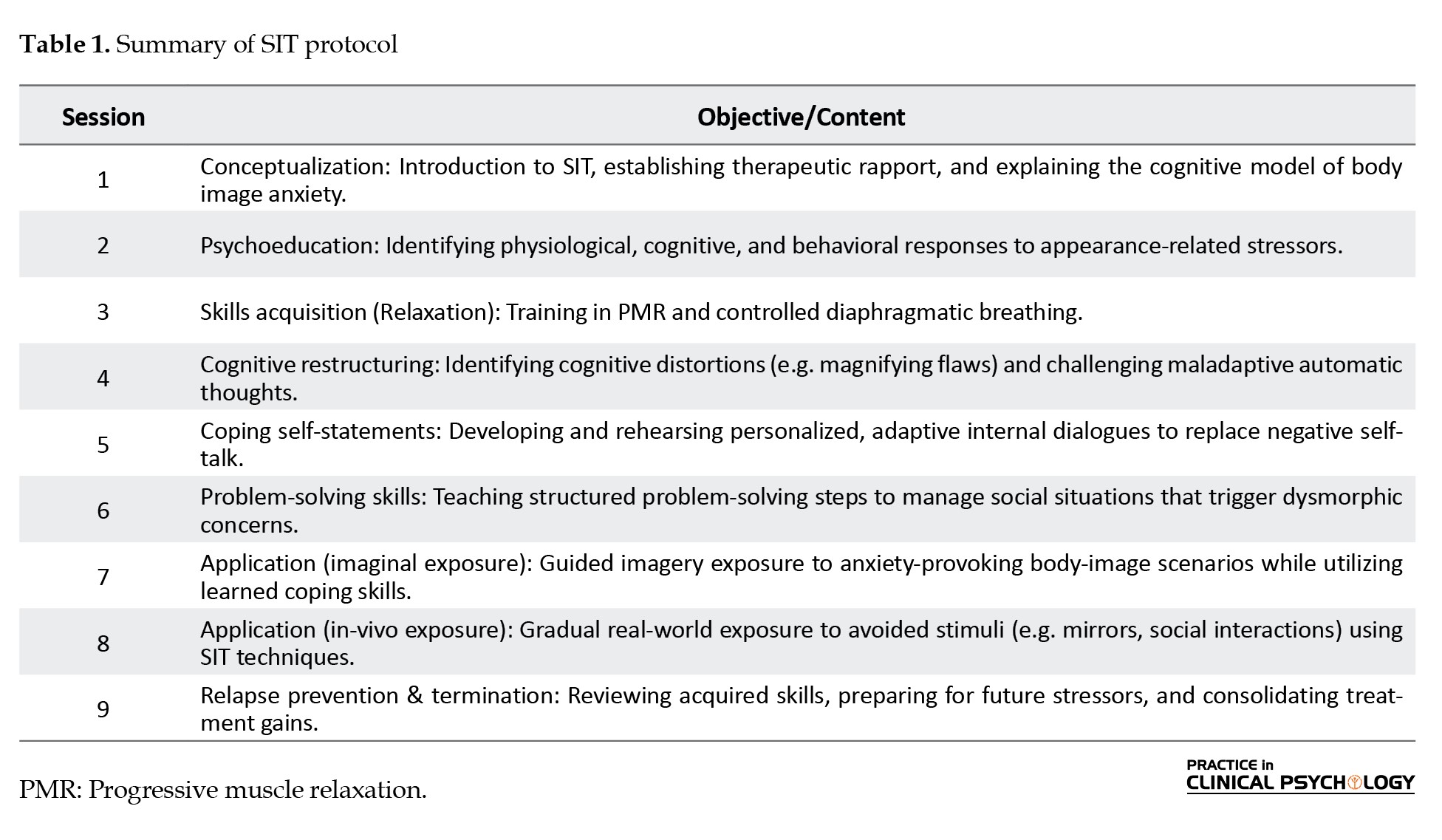
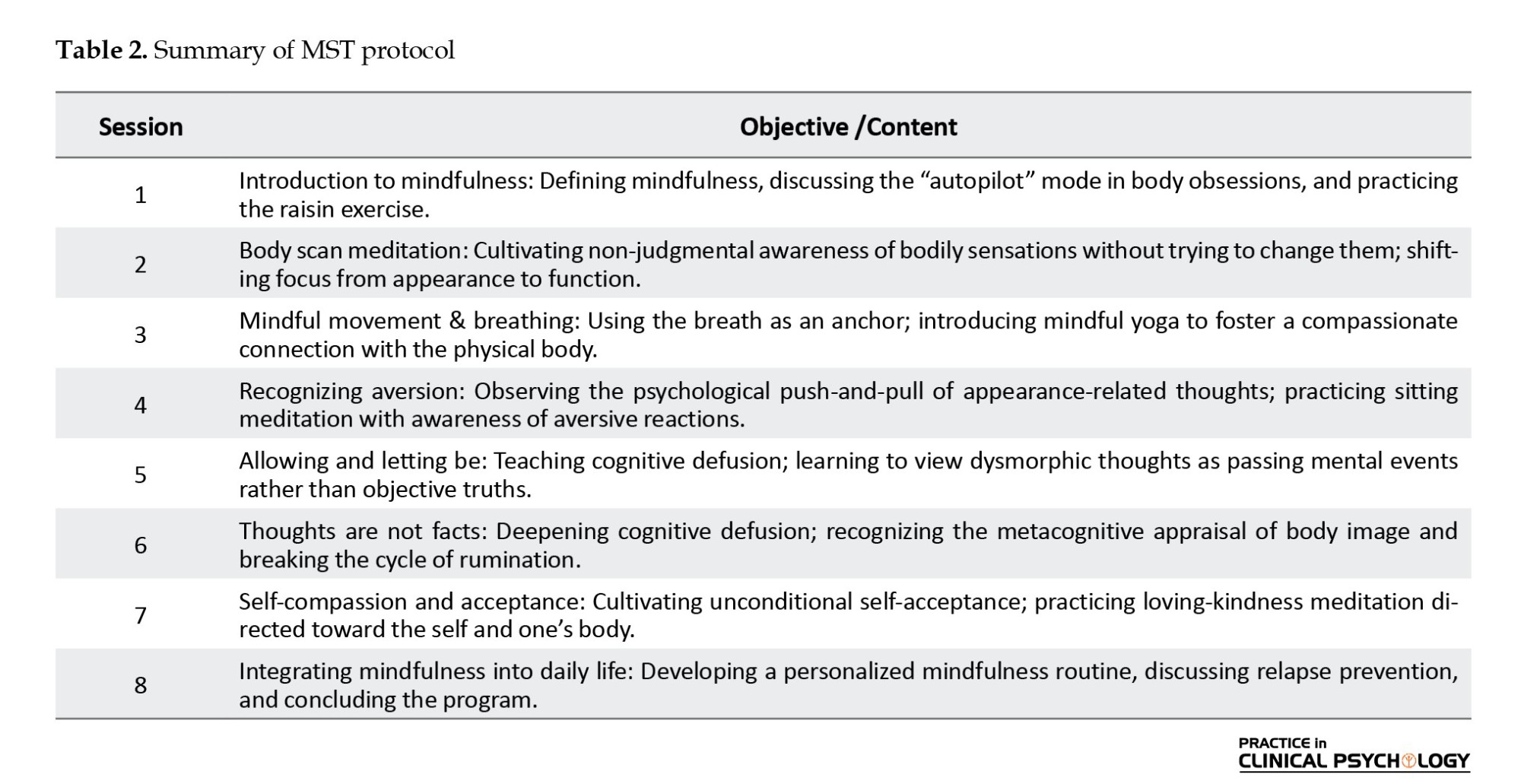
A licensed clinical psychologist with over 10 years of experience in cognitive-behavioral and mindfulness-based therapies delivered both interventions. Treatment fidelity was monitored using standardized session checklists and review of audio recordings by an independent supervisor (adherence rate >90%). The same therapist delivered both SIT and MST to minimize therapist effects. A summary of the intervention sessions is presented in Tables 1 and 2.
Data analysis
Quantitative data were analyzed using SPSS software, version 27. Descriptive statistics (Mean±SD) were computed for all variables. A mixed-design repeated-measures analysis of variance (ANOVA) was used to examine within-subject (time) and between-subject (group) effects and their interaction. Before analysis, assumptions were thoroughly checked: normality (Shapiro-Wilk test), sphericity (Mauchly’s test with Greenhouse-Geisser correction), and homogeneity of variance-covariance matrices (Box’s M test). No missing data were observed. Partial eta-squared (η²) effect sizes and 95% confidence intervals were reported. We applied a Bonferroni correction for multiple comparisons. Because of the small sample size, interpret the results with caution; future studies may benefit from linear mixed models.
Results
Demographic characteristics were comparable across groups. Mean age was 16.74±1.13 years (SIT), 16.81±1.07 years (MST), and 16.20±1.69 years (control). One-way ANOVA confirmed no significant baseline differences in age (P=0.480) or educational grade distribution (P=0.821).
As shown in Table 3, both intervention groups demonstrated substantial improvements.
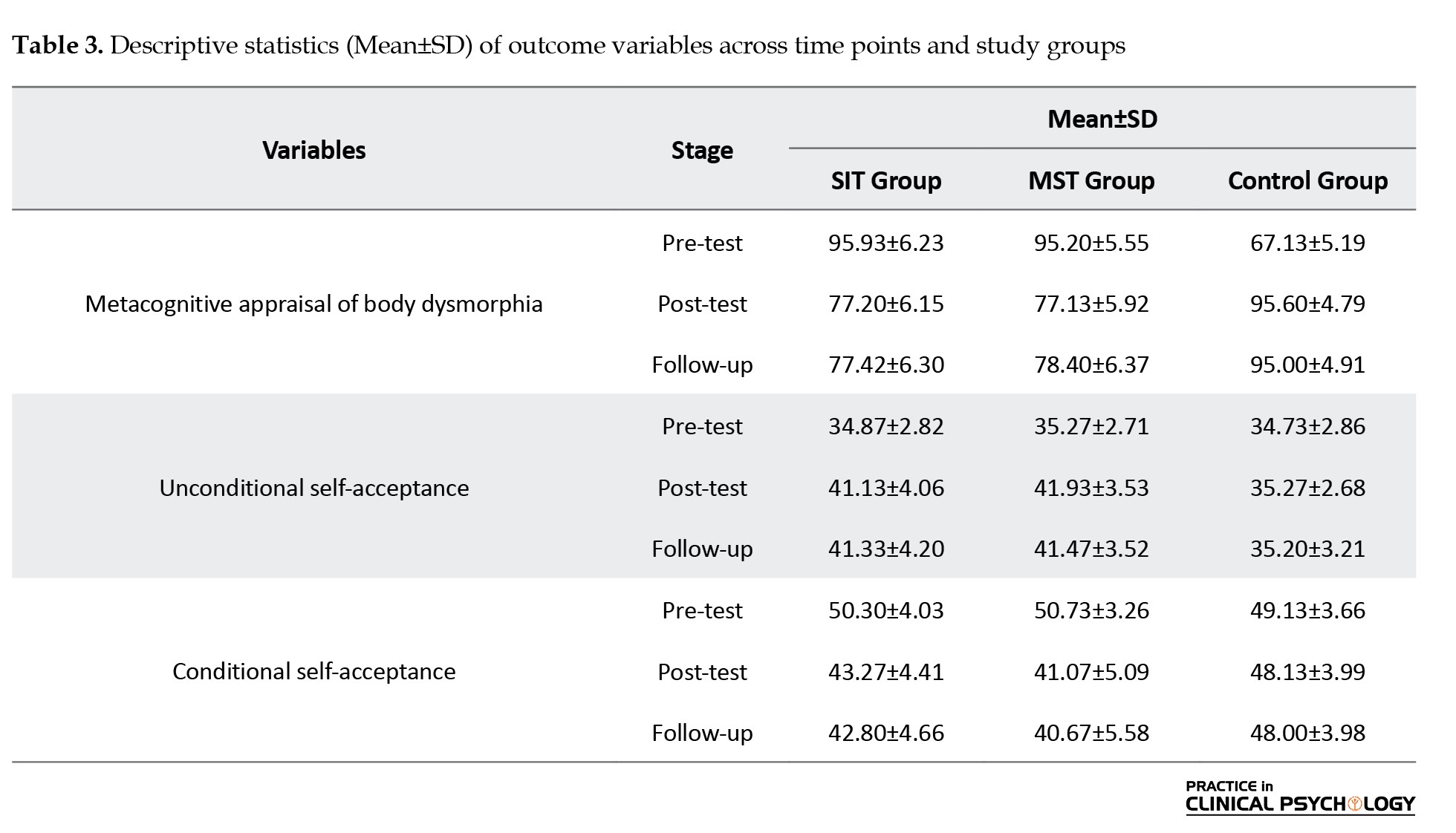
Mean changes were accompanied by 95% confidence intervals and exceeded thresholds for clinical significance based on established reliable change indices for the respective measures.
Although visual inspection of Table 3 suggests lower pretest metacognitive appraisal scores in the control group than in the intervention groups, inferential testing (1-way ANOVA) revealed no statistically significant baseline differences across groups on any outcome variable (P>0.05), supporting overall homogeneity at pretest. Shapiro-Wilk tests confirmed normality, Mauchly’s test indicated sphericity violations for some variables (corrected with Greenhouse-Geisser), and Box’s M test supported homogeneity of variance-covariance matrices (P>0.05). No missing data were present. Observed power for the significant time × group interactions exceeded 0.95.
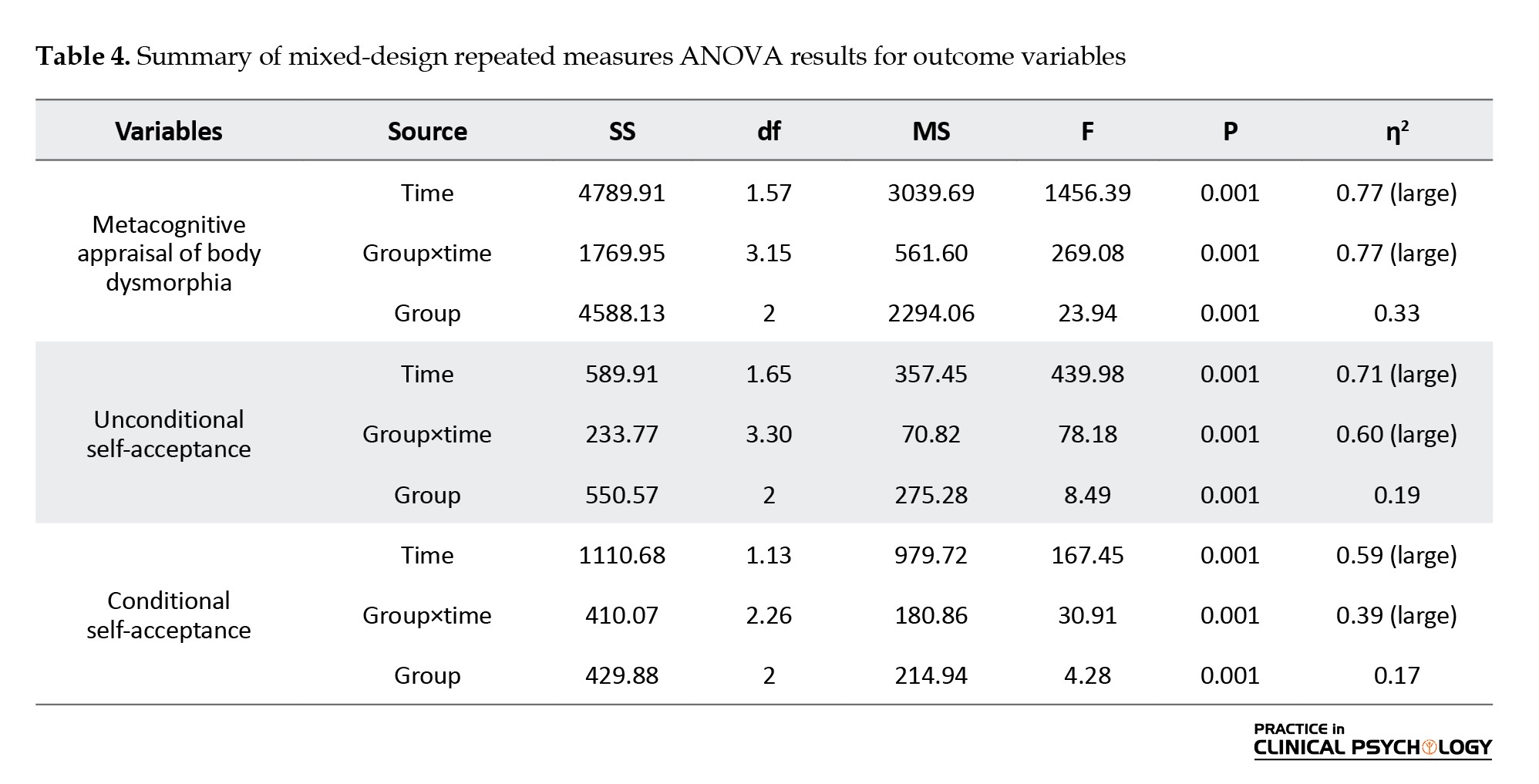
The mixed-design repeated-measures ANOVA revealed statistically significant main effects of time and group, as well as significant time×group interactions for all dependent variables (P<0.001). Large effect sizes were observed (Table 4).
Post-hoc Bonferroni-adjusted comparisons (Table 5) confirmed that both SIT and MST groups showed significant improvements from pretest to posttest and pretest to follow-up (P<0.001), with no significant change between posttest and follow-up. Effect sizes for within-group changes were large (Cohen d>1.2 for most comparisons).
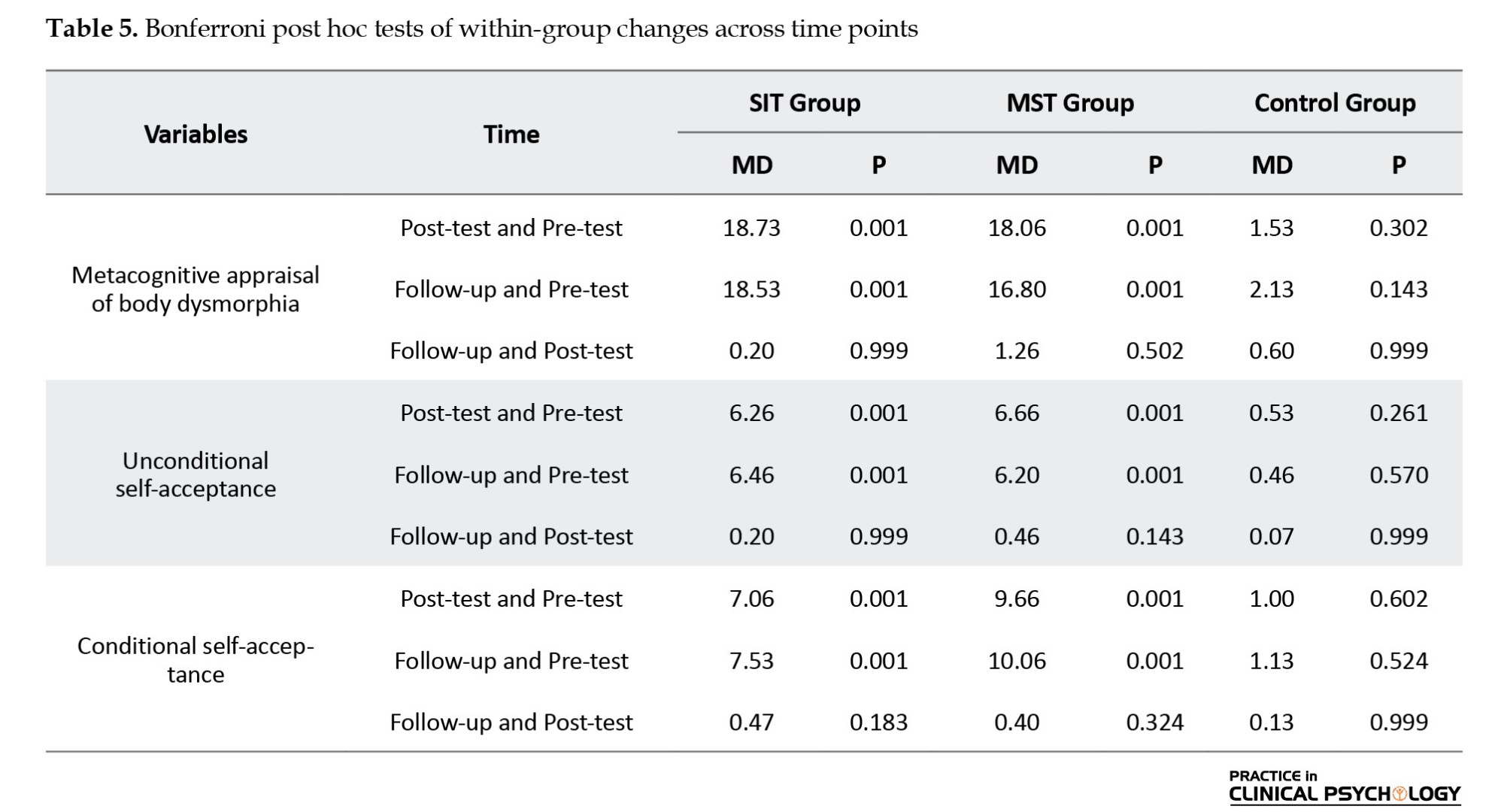
The control group showed no significant changes.
Between-group comparisons (Table 6) indicated no significant differences between SIT and MST at any time point.
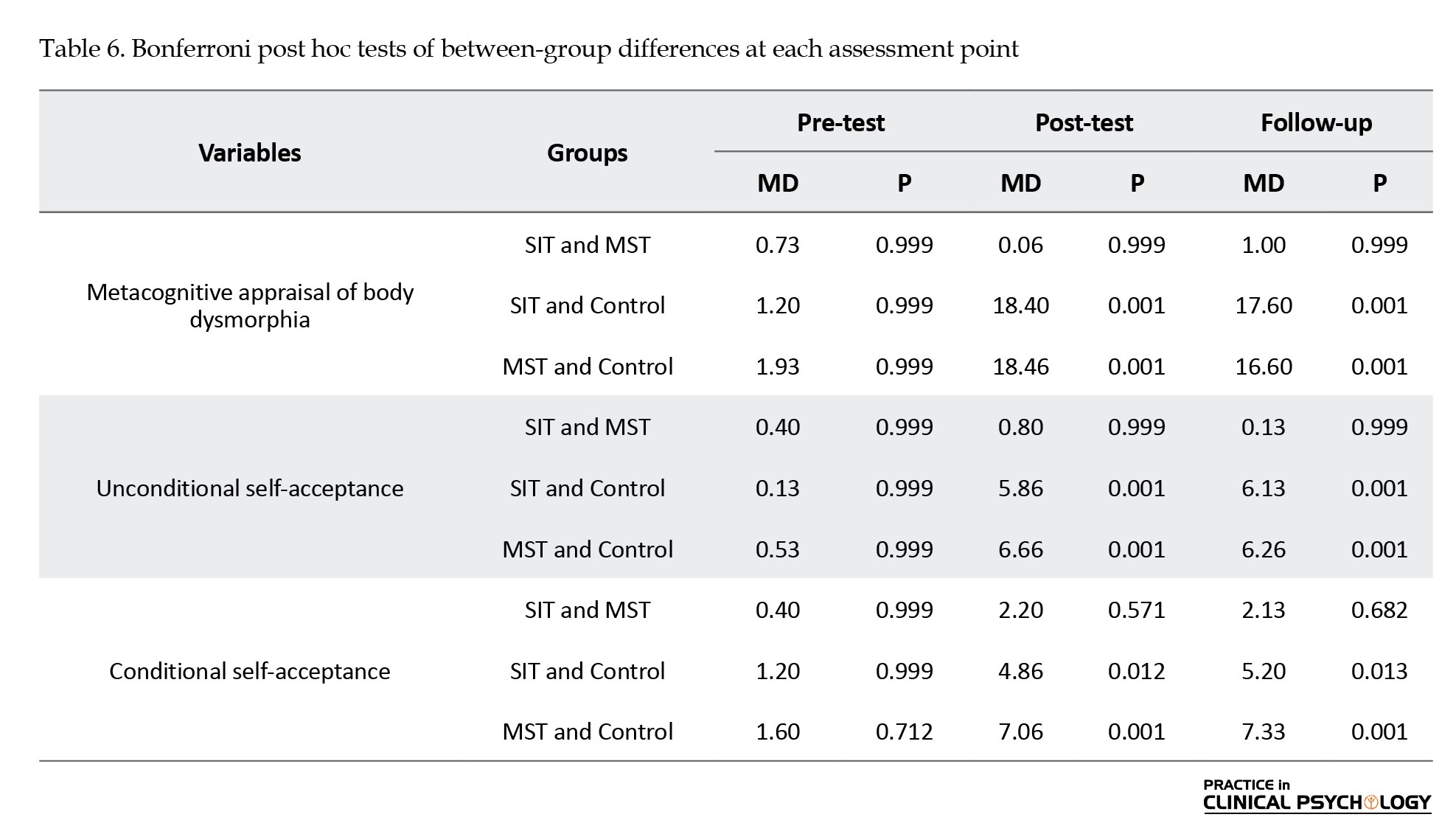
However, both intervention groups differed significantly from the control at posttest and follow-up (P<0.05), with large between-group effect sizes (Cohen d ranging from 1.1 to 2.3) and clinically meaningful differences in scores.
Discussion
The present study aimed to evaluate the effectiveness of SIT and MST on metacognitive appraisal of dysmorphic concerns and dimensions of self-acceptance among female adolescents with elevated body image concerns. Consistent with the study hypotheses, both interventions produced statistically significant improvements with large effect sizes compared to the wait-list control group. These gains were maintained at the two-month follow-up assessment. Notably, no significant differences were observed between the two active treatment conditions at posttest or follow-up.
These results align well with the broader empirical literature on cognitive-behavioral and third-wave interventions for body image disturbances. Previous studies have demonstrated that SIT effectively equips individuals with practical coping skills, including cognitive restructuring and relaxation techniques, to manage appearance-related anxiety and break the cycle of avoidance and rumination (Navidian et al., 2019; Zolfaghary et al., 2024). Similarly, mindfulness-based approaches such as MST have been shown to reduce body image concerns by promoting cognitive defusion and non-judgmental awareness of intrusive thoughts (Dunning et al., 2019; Khoshkerdar & Raeisi, 2020; Gu & Zhu, 2023). The current findings extend this literature by directly comparing the two approaches in an adolescent sample, a developmental stage where self-concept is particularly malleable and vulnerable to sociocultural pressures from social media and peers (Gupta et al., 2023; Lavell et al., 2025).
Theoretically, the comparable efficacy of SIT and MST is noteworthy. SIT operates primarily through active cognitive change processes—identifying and challenging distorted beliefs about appearance and replacing them with adaptive coping statements. In contrast, MST emphasizes acceptance and decentering, encouraging participants to observe dysmorphic thoughts as transient mental events rather than accurate reflections of reality. Despite these mechanistic differences, both pathways appear to converge on modifying maladaptive metacognitive appraisals and enhancing unconditional self-acceptance. This convergence suggests that multiple therapeutic routes can successfully disrupt the cognitive-attentional syndrome that maintains body dysmorphic concerns (Kannis-Dymand et al., 2025). However, because the present study did not conduct mediational analyses, we cannot draw definitive conclusions about the specific mechanisms of change. Future research incorporating process measures and mediation models would help clarify whether cognitive restructuring, cognitive defusion, or a combination of both accounts for the observed improvements.
The improvements in unconditional self-acceptance and corresponding reductions in conditional self-acceptance are particularly encouraging. Adolescents with elevated dysmorphic concerns often base their global self-worth heavily on physical appearance, rendering them susceptible to emotional dysregulation when perceived flaws are activated (Popov, 2019; Nastase, 2024). Both SIT and MST appear to foster a more stable, unconditional sense of self-worth—SIT by building self-efficacy through skill acquisition and MST by cultivating self-compassion and radical acceptance. These shifts are clinically meaningful, as they may buffer against future stressors and reduce the risk of chronic body image difficulties or comorbid conditions such as depression and anxiety.
The lack of significant differences between SIT and MST suggests that both interventions offer viable treatment options for this population. Clinicians may therefore select the approach that best matches the adolescent’s preferences, cognitive style, or treatment goals. For instance, SIT may suit those who prefer structured, skill-based strategies, while MST may appeal to individuals who resonate with acceptance and present-moment awareness practices. This flexibility is advantageous in real-world clinical and school-based settings where treatment engagement and cultural fit are critical.
Overall, the current study makes a significant contribution to the field by providing preliminary comparative data on two promising interventions for a highly prevalent and impairing problem among adolescents. While the findings are encouraging, they must be interpreted within the context of the study’s methodological features. Future research should build upon these results through larger, more diverse samples and more sophisticated designs to further establish the utility of SIT and MST in addressing body image concerns during this vulnerable developmental period.
Several limitations warrant careful consideration. First, the small sample size (n=45) and female-only composition limit statistical power and generalizability. Second, recruitment was restricted to one city in Iran using purposive sampling, reducing representativeness. Third, the study relied on self-report measures without structured diagnostic interviews to confirm BDD or assess comorbidities. Fourth, the wait-list control did not account for nonspecific effects such as therapist attention or group support. Fifth, the study monitored intervention fidelity but did not have multiple observers independently rate it. Finally, the two-month follow-up period, while useful for assessing short-term maintenance, is insufficient to determine long-term efficacy.
Future research should address these limitations by employing larger, more diverse samples, active control conditions, formal diagnostic assessments, longer follow-up periods, and mediational analyses to clarify mechanisms of change.
Conclusion
In conclusion, this study provides preliminary evidence that both SIT and MST can reduce maladaptive metacognitive appraisals of dysmorphic concerns and improve self-acceptance among female adolescents with elevated body image concerns. Treatment gains were maintained at the two-month follow-up, with comparable outcomes observed for both interventions. Nevertheless, given the methodological limitations outlined above—including small sample size, restricted generalizability, and short follow-up—these findings should be considered promising but tentative. Integrating elements of both active cognitive restructuring (SIT) and acceptance-based strategies (MST) into school-based or clinical programs may offer flexible, evidence-informed options for supporting adolescents struggling with body image concerns. Future rigorous trials are needed to strengthen the evidence base and improve access to these interventions.
Ethical Considerations
Compliance with ethical guidelines
This study was approved by the Ethics Committee of Islamic Azad University Ahvaz Branch, Ahvaz, Iran (Code: IR.IAU.AHVAZ.REC.1404.634), and the trial was registered (ID: IRCT20260202068746N1).
Funding
This research did not receive any grant from funding agencies in the public, commercial, or non-profit sectors.
Authors' contributions
All authors contributed equally to the conception and design of the study, data collection and analysis, interpretation of the results, and drafting of the manuscript. Each author approved the final version of the manuscript for submission.
Conflict of interest
The authors declared no conflict of interest.
Acknowledgments
The authors thank the participating female adolescents and the high schools in Ahvaz for their cooperation.
References
Bacalhau, S. P. O. S., Orange, L. G., Correia Junior, M. A. V., Nunes, J. V., Almeida, C. L. A. S., & Coriolano-Marinus, M. W. L. (2025). Mindfulness-based interventions and their relationships with body image and eating behavior in adolescents: A scoping review. Journal of Eating Disorders, 13(1), 77. [DOI:10.1186/s40337-025-01238-6] [PMID]
Chamberlain, J. M., & Haaga, D. A. F. (2001). Unconditional Self-Acceptance and Psychological Health. Journal of Rational-Emotive and Cognitive-Behavior Therapy, 19(3), 163-176. [DOI:10.1023/A:1011189416600]
Dunning, D. L., Griffiths, K., Kuyken, W., Crane, C., Foulkes, L., & Parker, J., et al. (2019). Research Review: The effects of mindfulness-based interventions on cognition and mental health in children and adolescents - a meta-analysis of randomized controlled trials. Journal of Child Psychology and Psychiatry, and Allied Disciplines, 60(3), 244–258. [DOI:10.1111/jcpp.12980] [PMID]
Gu, Y. Q., & Zhu, Y. (2023). A randomized controlled trial of mindfulness-based cognitive therapy for body dysmorphic disorder: Impact on core symptoms, emotion dysregulation, and executive functioning. Journal of Behavior Therapy and Experimental Psychiatry, 81, 101869. [DOI:10.1016/j.jbtep.2023.101869] [PMID]
Gupta, M., Jassi, A., & Krebs, G. (2023). The association between social media use and body dysmorphic symptoms in young people. Frontiers in Psychology, 14, 1231801. [DOI:10.3389/fpsyg.2023.1231801] [PMID]
Kannis-Dymand, L., Rune, K., Mitchell, N., Carter, J. D., Keech, J., & Allen, A., et al. (2025). Metacognitive Beliefs and Body Image: Developing and Validating the Metacognitions About Physical Appearance Questionnaire. Cognitive Therapy and Research, 49(4), 846-862. [DOI:10.1007/s10608-025-10572-7]
Khanjani, S., Foroughi, A. A., & Asmari Bardezard, Y. (2019). The Psychometric Properties of the Persian Version of Dysmorphic Concern Questionnaire. Practice in Clinical Psychology, 7(4), 263-270. [DOI:10.32598/jpcp.7.4.263]
Khoshkerdar, P., & Raeisi, Z. (2020). The effect of mindfulness‐based stress reduction on body image concerns of adolescent girls with dysfunctional eating attitudes. Australian Journal of Psychology, 72(1), 11-19. [DOI:10.1111/ajpy.12265]
Krebs, G., Clark, B. R., Ford, T. J., & Stringaris, A. (2025). Epidemiology of Body Dysmorphic Disorder and Appearance Preoccupation in Youth: Prevalence, Comorbidity and Psychosocial Impairment. Journal of The American Academy of Child and Adolescent Psychiatry, 64(1), 30–40. [DOI:10.1016/j.jaac.2024.01.017] [PMID]
Lavell, C. H., Oar, E. L., & Rapee, R. M. (2025). Peer Relationships and Social Media Use in Adolescents with Body Dysmorphic Disorder. Research on Child and Adolescent Psychopathology, 53(1), 43–55. [DOI:10.1007/s10802-024-01245-2] [PMID]
Lim, J. H., Ahmad, M. B., & Prihadi, K. D. (2025). Examining the role of psychological flexibility and unconditional self-acceptance as mediators in the relationship between new media literacy and psychological wellbeing among Gen Z. Journal of Education and Health Promotion, 14, 155. [DOI:10.4103/jehp.jehp_1077_24] [PMID]
Malcolm, A. (2023). Body Dysmorphic Disorder: Links with Eating Disorders and Gender-Related Factors. In V. B. Patel & V. R. Preedy (Eds.), Eating Disorders (pp. 1305-1326). Cham: Springer. [DOI:10.1007/978-3-031-16691-4_78]
Moradpour Sheykh Kanloo, K., & Karami, A. (2025). [Development of a Model of Feeling the Meaning of Life Based on the Schema of Defects and Shame and Identity Styles with the Mediation of Self-Acceptance in Students: A Descriptive Study (Persian)]. Journal of Rafsanjan University of Medical Sciences, 23(12), 1060-1075. [DOI:10.61186/jrums.23.12.1060]
Nastase, A. V. (2024). Self-Esteem and Unconditional Self-Acceptance. Comparative Study Between Fashion Models and Non-Models. Journal of Neural and Neurological Disorders, 3(3). [DOI:10.58489/2836-8851/022]
Navidian, A., Navaee, M., & Kaykha, H. (2019). Effectiveness of stress inoculation training on occupational stress of midwives in healthcare centers of Zahedan in Health Transformation Plan in 2017. Journal of Education and Health Promotion, 8(1), 66. [DOI:10.4103/jehp.jehp_264_18]
Oliveira, M. F., Coimbra, M., & Ferreira, C. (2024). How does the experience of shame impact body dysmorphic symptomatology? Exploring the role of mindfulness and body image-related cognitive fusion. Current Psychology, 43(15), 13454-13464. [DOI:10.1007/s12144-023-05385-4]
Oosthuizen, P., Lambert, T., & Castle, D. J. (1998). Dysmorphic concern: Prevalence and associations with clinical variables. The Australian and New Zealand journal of psychiatry, 32(1), 129–132. [DOI:10.3109/00048679809062719] [PMID]
Popov, S. (2019). When is Unconditional Self-Acceptance a Better Predictor of Mental Health than Self-Esteem? Journal of Rational-Emotive & Cognitive-Behavior Therapy, 37(3), 251-261. [DOI:10.1007/s10942-018-0310-x]
Rabiei, M., Salahian, A., Bahrami, F., & Palahang, H. (2011). [Construction and Standardization of the Body Dysmorphic Metacognition Questionnaire (Persian)]. Journal of Mazandaran University of Medical Sciences, 21(83), 43-52. [Link]
Zeinodini, Z., Sedighi, S., Baghertork Rahimi, M., Noorbakhsh, S., & Rajezi Esfahani, S. (2015). Dysfunctional Metacognitive Beliefs in Body Dysmorphic Disorder. Global Journal of Health Science, 8(3), 10–16. [DOI:10.5539/gjhs.v8n3p10] [PMID]
Zolfaghary, F., Adib-Rad, H., Nasiri-Amiri, F., Faramarzi, M., Pasha, H., & Gholinia-Ahangar, H. (2024). Effectiveness of computer-based stress inoculation training (SIT) counseling approach on anxiety, depression, and stress of students with premenstrual syndrome. BMC Public Health, 24(1), 555. [DOI:10.1186/s12889-024-18003-0] [PMID]
Adolescence is a critical developmental epoch characterized by profound biological, psychological, and social transitions. These rapid changes often heighten vulnerabilities to psychological distress, particularly concerning physical appearance and peer acceptance (Krebs et al., 2025). Consequently, an increasing number of adolescents experience elevated dysmorphic concerns, also described in the literature as body image obsessions or preoccupations. These concerns exist on a continuum, ranging from normative appearance dissatisfaction to clinically significant levels that may meet diagnostic criteria for body dysmorphic disorder (BDD), which is characterized by a debilitating preoccupation with nonexistent or slight anomalies in physical appearance, accompanied by repetitive behaviors, significant functional impairment, social withdrawal, and elevated risks of depression and suicidal ideation (Malcolm, 2023; Krebs et al., 2025). In the present study, the target population was operationally defined as female adolescents with elevated dysmorphic concerns, as indicated by scores on the dysmorphic concern questionnaire (DCQ), rather than a formal clinical diagnosis of BDD via structured interview.
A central mechanism driving the persistence of these concerns is the maladaptive metacognitive appraisal of dysmorphic concerns. Metacognition involves the knowledge, processes, and strategies that monitor and control one’s own thinking (Kannis-Dymand et al., 2025). In the context of body image, maladaptive metacognitive appraisals refer to dysfunctional beliefs about the meaning, importance, and controllability of appearance-related intrusive thoughts—such as the conviction that worrying about one’s appearance prevents social rejection or that intrusive thoughts signify real physical defects (Zeinodini et al., 2015; Rabiei et al., 2011). These beliefs contribute to a cognitive-attentional syndrome characterized by prolonged rumination, hypervigilance toward perceived flaws, and repetitive safety-seeking behaviors. Theoretical models emphasize that it is not the intrusive thought itself, but the individual’s appraisal of that thought, that maintains distress and functional impairment (Kannis-Dymand et al., 2025).
Equally significant is the construct of self-acceptance. Rooted in rational emotive behavior therapy, unconditional self-acceptance (USA) posits that an individual’s intrinsic worth should not be contingent upon external achievements, validation, or physical appearance (Chamberlain & Haaga, 2001; Lim et al., 2025). In contrast, conditional self-acceptance ties global self-worth to meeting specific standards, such as perceived physical attractiveness. Adolescents with elevated dysmorphic concerns frequently exhibit high levels of conditional self-acceptance, rendering them vulnerable to sharp declines in self-worth when they perceive appearance-related shortcomings (Popov, 2019; Nastase, 2024). Enhancing unconditional self-acceptance is therefore a key therapeutic target for fostering resilience against sociocultural pressures amplified by social media (Gupta et al., 2023).
To address these intertwined cognitive and emotional difficulties, two interventions have shown particular promise: Stress inoculation training (SIT) and mindfulness skills training (MST). Developed by Meichenbaum, SIT is a structured cognitive-behavioral program that progresses through conceptualization, skills acquisition, and application phases, equipping individuals with coping strategies, such as cognitive restructuring, relaxation techniques, and problem-solving to manage appearance-related stressors (Navidian et al., 2019; Zolfaghary et al., 2024). In parallel, MST cultivates non-judgmental present-moment awareness, cognitive defusion, and self-compassion, encouraging individuals to observe thoughts as transient mental events rather than absolute truths (Dunning et al., 2019; Khoshkerdar & Raeisi, 2020).
Although both approaches have demonstrated efficacy in reducing body image distress and related symptoms in previous studies, several important gaps remain. Most research has examined these interventions in isolation or with adult populations. Direct comparisons between SIT (which emphasizes active cognitive restructuring and stress management) and MST (which prioritizes acceptance and decentering) are scarce, especially in adolescent samples where self-concept is highly malleable. Moreover, few studies have simultaneously investigated their impact on both metacognitive appraisals and dimensions of self-acceptance. Critical synthesis of the literature also reveals inconsistencies: While some studies report strong effects, others note modest or short-lived benefits, underscoring the need for rigorous comparative designs (Bacalhau et al., 2025; Gu & Zhu, 2023; Oliveira et al., 2024).
The present study was designed to address these limitations. It aimed to compare the effectiveness of SIT and MST on metacognitive appraisal of dysmorphic concerns, unconditional self-acceptance, and conditional self-acceptance among female adolescents with elevated body image concerns. Specific hypotheses were as follows: 1) both interventions would produce significant improvements in all three outcome variables compared to a wait-list control group from pre-test to post-test and two-month follow-up, and 2) no significant differences would emerge between SIT and MST. By examining these two theoretically complementary yet distinct approaches, the study contributes to developing evidence-based, developmentally appropriate interventions for a vulnerable population.
Materials and Methods
Study design and participants
This research used a quasi-experimental pre-test-post-test design with a 2-month follow-up, two active intervention arms, and a wait-list control group. Of 112 female high school students initially screened in Ahvaz City, Iran, during the 2025 academic year using the DCQ, we selected 45 eligible participants. Participants were purposively screened and then randomly allocated (using a computerized random number generator and sealed opaque envelopes for allocation concealment) into three equal groups (n=15 each): SIT, MST, and wait-list control.
Inclusion criteria included: Aged 14–18 years, DCQ score indicative of clinical concern (≥9), and written informed consent from both adolescents and legal guardians. Exclusion criteria encompassed concurrent severe psychiatric conditions (e.g. psychosis or major depressive disorder requiring immediate intervention), receipt of concurrent psychological treatment, or absence from more than two intervention sessions. No structured diagnostic interview was conducted to confirm full diagnostic criteria for BDD; therefore, participants were characterized as having elevated dysmorphic concerns rather than a confirmed BDD diagnosis. We collected information on comorbidities via self-report but did not formally assess them.
Because this was a pilot study, we did not conduct a formal a priori power analysis. Post-hoc power calculations for the observed large effect sizes exceeded 0.90. We restricted the sample to females because of the higher prevalence of body image concerns in this group and practical constraints in school settings.
Study instruments
DCQ: The DCQ, developed by Oosthuizen et al. (1998), was used to assess the severity of body image preoccupation. This unidimensional, self-report psychometric tool consists of 7 items rated on a 4-point Likert scale ranging from 0 (not at all) to 3 (much more than most people). Total aggregate scores span from 0 to 21, with higher numerical values reflecting more pronounced body dysmorphic symptomatology and heightened appearance-related anxiety. The DCQ is widely endorsed for its robust construct validity in both clinical and community samples (Oosthuizen et al., 1998). Previous psychometric evaluations in the Persian language have reported excellent internal consistency, with the cronbach α coefficients frequently exceeding 0.78 (Khanjani et al., 2019). In the context of the present study, the reliability of the DCQ was highly satisfactory, yielding a cronbach’s α of 0.81.
Body dysmorphic metacognitive questionnaire (BDMQ): To quantify maladaptive metacognitive appraisals regarding physical appearance, Rabiei et al. (2011) developed and administered the BDMQ. This specialized self-report inventory comprises 31 questions meticulously designed to assess dysfunctional metacognitive beliefs specific to body dysmorphia, such as the perceived necessity of relentless appearance-monitoring and convictions regarding the uncontrollability of aesthetic-centric intrusive thoughts. Participants rated the items on a 5-point Likert scale, yielding a composite score in which higher values indicate severe metacognitive fusion and pervasive cognitive-attentional rumination about perceived bodily defects. This instrument has demonstrated profound sensitivity in detecting cognitive vulnerabilities in dysmorphic populations. Previous Iranian validation studies have established its reliability (α=0.83) (Rabiei et al., 2011). Within the current analytical sample, the BDMQ demonstrated robust internal consistency, yielding a cronbach’s α of 0.86.
Unconditional self-acceptance questionnaire (USAQ): The USAQ measured participants’ intrinsic self-worth, independent of external validation or physical attributes, as conceptualized by Chamberlain and Haaga (2001). This comprehensive inventory comprises 20 items assessed on a 7-point Likert scale, ranging from 1 (almost always untrue) to 7 (almost always true). To mitigate response set biases, specific items are reverse-scored. Total scores range from 20 to 140; higher scores indicate a greater degree of unconditional self-acceptance and emotional resilience (Chamberlain & Haaga, 2001). Persian psychometric adaptations of the USAQ have corroborated its cross-cultural validity, typically reporting alpha coefficients surpassing 0.71 (Moradpour Sheykh Kanloo & Karami, 2025). For this investigation, the USAQ showed excellent internal reliability, with a cronbach α of 0.76. All measures were administered in Persian using previously validated versions.
Study procedure
Trained research assistants conducted screening under the supervision of a licensed clinical psychologist. Following screening, eligible adolescents attended an orientation session. Participants completed baseline measures (pre-test) under standardized conditions. The experimental groups then received their respective interventions, while the control group remained on the wait-list. Posttest assessments occurred immediately after the final session, and follow-up assessments were conducted 2 months later. The two-month follow-up period was chosen to evaluate short-term maintenance of gains while balancing participant retention in a school-based setting. Data were collected using coded identifiers to ensure anonymity.
Intervention programs
A licensed clinical psychologist with over 10 years of experience in cognitive-behavioral and mindfulness-based therapies delivered both interventions. Treatment fidelity was monitored using standardized session checklists and review of audio recordings by an independent supervisor (adherence rate >90%). The same therapist delivered both SIT and MST to minimize therapist effects. A summary of the intervention sessions is presented in Tables 1 and 2.
Data analysis
Quantitative data were analyzed using SPSS software, version 27. Descriptive statistics (Mean±SD) were computed for all variables. A mixed-design repeated-measures analysis of variance (ANOVA) was used to examine within-subject (time) and between-subject (group) effects and their interaction. Before analysis, assumptions were thoroughly checked: normality (Shapiro-Wilk test), sphericity (Mauchly’s test with Greenhouse-Geisser correction), and homogeneity of variance-covariance matrices (Box’s M test). No missing data were observed. Partial eta-squared (η²) effect sizes and 95% confidence intervals were reported. We applied a Bonferroni correction for multiple comparisons. Because of the small sample size, interpret the results with caution; future studies may benefit from linear mixed models.
Results
Demographic characteristics were comparable across groups. Mean age was 16.74±1.13 years (SIT), 16.81±1.07 years (MST), and 16.20±1.69 years (control). One-way ANOVA confirmed no significant baseline differences in age (P=0.480) or educational grade distribution (P=0.821).
As shown in Table 3, both intervention groups demonstrated substantial improvements.
Mean changes were accompanied by 95% confidence intervals and exceeded thresholds for clinical significance based on established reliable change indices for the respective measures.
Although visual inspection of Table 3 suggests lower pretest metacognitive appraisal scores in the control group than in the intervention groups, inferential testing (1-way ANOVA) revealed no statistically significant baseline differences across groups on any outcome variable (P>0.05), supporting overall homogeneity at pretest. Shapiro-Wilk tests confirmed normality, Mauchly’s test indicated sphericity violations for some variables (corrected with Greenhouse-Geisser), and Box’s M test supported homogeneity of variance-covariance matrices (P>0.05). No missing data were present. Observed power for the significant time × group interactions exceeded 0.95.
The mixed-design repeated-measures ANOVA revealed statistically significant main effects of time and group, as well as significant time×group interactions for all dependent variables (P<0.001). Large effect sizes were observed (Table 4).
Post-hoc Bonferroni-adjusted comparisons (Table 5) confirmed that both SIT and MST groups showed significant improvements from pretest to posttest and pretest to follow-up (P<0.001), with no significant change between posttest and follow-up. Effect sizes for within-group changes were large (Cohen d>1.2 for most comparisons).
The control group showed no significant changes.
Between-group comparisons (Table 6) indicated no significant differences between SIT and MST at any time point.
However, both intervention groups differed significantly from the control at posttest and follow-up (P<0.05), with large between-group effect sizes (Cohen d ranging from 1.1 to 2.3) and clinically meaningful differences in scores.
Discussion
The present study aimed to evaluate the effectiveness of SIT and MST on metacognitive appraisal of dysmorphic concerns and dimensions of self-acceptance among female adolescents with elevated body image concerns. Consistent with the study hypotheses, both interventions produced statistically significant improvements with large effect sizes compared to the wait-list control group. These gains were maintained at the two-month follow-up assessment. Notably, no significant differences were observed between the two active treatment conditions at posttest or follow-up.
These results align well with the broader empirical literature on cognitive-behavioral and third-wave interventions for body image disturbances. Previous studies have demonstrated that SIT effectively equips individuals with practical coping skills, including cognitive restructuring and relaxation techniques, to manage appearance-related anxiety and break the cycle of avoidance and rumination (Navidian et al., 2019; Zolfaghary et al., 2024). Similarly, mindfulness-based approaches such as MST have been shown to reduce body image concerns by promoting cognitive defusion and non-judgmental awareness of intrusive thoughts (Dunning et al., 2019; Khoshkerdar & Raeisi, 2020; Gu & Zhu, 2023). The current findings extend this literature by directly comparing the two approaches in an adolescent sample, a developmental stage where self-concept is particularly malleable and vulnerable to sociocultural pressures from social media and peers (Gupta et al., 2023; Lavell et al., 2025).
Theoretically, the comparable efficacy of SIT and MST is noteworthy. SIT operates primarily through active cognitive change processes—identifying and challenging distorted beliefs about appearance and replacing them with adaptive coping statements. In contrast, MST emphasizes acceptance and decentering, encouraging participants to observe dysmorphic thoughts as transient mental events rather than accurate reflections of reality. Despite these mechanistic differences, both pathways appear to converge on modifying maladaptive metacognitive appraisals and enhancing unconditional self-acceptance. This convergence suggests that multiple therapeutic routes can successfully disrupt the cognitive-attentional syndrome that maintains body dysmorphic concerns (Kannis-Dymand et al., 2025). However, because the present study did not conduct mediational analyses, we cannot draw definitive conclusions about the specific mechanisms of change. Future research incorporating process measures and mediation models would help clarify whether cognitive restructuring, cognitive defusion, or a combination of both accounts for the observed improvements.
The improvements in unconditional self-acceptance and corresponding reductions in conditional self-acceptance are particularly encouraging. Adolescents with elevated dysmorphic concerns often base their global self-worth heavily on physical appearance, rendering them susceptible to emotional dysregulation when perceived flaws are activated (Popov, 2019; Nastase, 2024). Both SIT and MST appear to foster a more stable, unconditional sense of self-worth—SIT by building self-efficacy through skill acquisition and MST by cultivating self-compassion and radical acceptance. These shifts are clinically meaningful, as they may buffer against future stressors and reduce the risk of chronic body image difficulties or comorbid conditions such as depression and anxiety.
The lack of significant differences between SIT and MST suggests that both interventions offer viable treatment options for this population. Clinicians may therefore select the approach that best matches the adolescent’s preferences, cognitive style, or treatment goals. For instance, SIT may suit those who prefer structured, skill-based strategies, while MST may appeal to individuals who resonate with acceptance and present-moment awareness practices. This flexibility is advantageous in real-world clinical and school-based settings where treatment engagement and cultural fit are critical.
Overall, the current study makes a significant contribution to the field by providing preliminary comparative data on two promising interventions for a highly prevalent and impairing problem among adolescents. While the findings are encouraging, they must be interpreted within the context of the study’s methodological features. Future research should build upon these results through larger, more diverse samples and more sophisticated designs to further establish the utility of SIT and MST in addressing body image concerns during this vulnerable developmental period.
Several limitations warrant careful consideration. First, the small sample size (n=45) and female-only composition limit statistical power and generalizability. Second, recruitment was restricted to one city in Iran using purposive sampling, reducing representativeness. Third, the study relied on self-report measures without structured diagnostic interviews to confirm BDD or assess comorbidities. Fourth, the wait-list control did not account for nonspecific effects such as therapist attention or group support. Fifth, the study monitored intervention fidelity but did not have multiple observers independently rate it. Finally, the two-month follow-up period, while useful for assessing short-term maintenance, is insufficient to determine long-term efficacy.
Future research should address these limitations by employing larger, more diverse samples, active control conditions, formal diagnostic assessments, longer follow-up periods, and mediational analyses to clarify mechanisms of change.
Conclusion
In conclusion, this study provides preliminary evidence that both SIT and MST can reduce maladaptive metacognitive appraisals of dysmorphic concerns and improve self-acceptance among female adolescents with elevated body image concerns. Treatment gains were maintained at the two-month follow-up, with comparable outcomes observed for both interventions. Nevertheless, given the methodological limitations outlined above—including small sample size, restricted generalizability, and short follow-up—these findings should be considered promising but tentative. Integrating elements of both active cognitive restructuring (SIT) and acceptance-based strategies (MST) into school-based or clinical programs may offer flexible, evidence-informed options for supporting adolescents struggling with body image concerns. Future rigorous trials are needed to strengthen the evidence base and improve access to these interventions.
Ethical Considerations
Compliance with ethical guidelines
This study was approved by the Ethics Committee of Islamic Azad University Ahvaz Branch, Ahvaz, Iran (Code: IR.IAU.AHVAZ.REC.1404.634), and the trial was registered (ID: IRCT20260202068746N1).
Funding
This research did not receive any grant from funding agencies in the public, commercial, or non-profit sectors.
Authors' contributions
All authors contributed equally to the conception and design of the study, data collection and analysis, interpretation of the results, and drafting of the manuscript. Each author approved the final version of the manuscript for submission.
Conflict of interest
The authors declared no conflict of interest.
Acknowledgments
The authors thank the participating female adolescents and the high schools in Ahvaz for their cooperation.
References
Bacalhau, S. P. O. S., Orange, L. G., Correia Junior, M. A. V., Nunes, J. V., Almeida, C. L. A. S., & Coriolano-Marinus, M. W. L. (2025). Mindfulness-based interventions and their relationships with body image and eating behavior in adolescents: A scoping review. Journal of Eating Disorders, 13(1), 77. [DOI:10.1186/s40337-025-01238-6] [PMID]
Chamberlain, J. M., & Haaga, D. A. F. (2001). Unconditional Self-Acceptance and Psychological Health. Journal of Rational-Emotive and Cognitive-Behavior Therapy, 19(3), 163-176. [DOI:10.1023/A:1011189416600]
Dunning, D. L., Griffiths, K., Kuyken, W., Crane, C., Foulkes, L., & Parker, J., et al. (2019). Research Review: The effects of mindfulness-based interventions on cognition and mental health in children and adolescents - a meta-analysis of randomized controlled trials. Journal of Child Psychology and Psychiatry, and Allied Disciplines, 60(3), 244–258. [DOI:10.1111/jcpp.12980] [PMID]
Gu, Y. Q., & Zhu, Y. (2023). A randomized controlled trial of mindfulness-based cognitive therapy for body dysmorphic disorder: Impact on core symptoms, emotion dysregulation, and executive functioning. Journal of Behavior Therapy and Experimental Psychiatry, 81, 101869. [DOI:10.1016/j.jbtep.2023.101869] [PMID]
Gupta, M., Jassi, A., & Krebs, G. (2023). The association between social media use and body dysmorphic symptoms in young people. Frontiers in Psychology, 14, 1231801. [DOI:10.3389/fpsyg.2023.1231801] [PMID]
Kannis-Dymand, L., Rune, K., Mitchell, N., Carter, J. D., Keech, J., & Allen, A., et al. (2025). Metacognitive Beliefs and Body Image: Developing and Validating the Metacognitions About Physical Appearance Questionnaire. Cognitive Therapy and Research, 49(4), 846-862. [DOI:10.1007/s10608-025-10572-7]
Khanjani, S., Foroughi, A. A., & Asmari Bardezard, Y. (2019). The Psychometric Properties of the Persian Version of Dysmorphic Concern Questionnaire. Practice in Clinical Psychology, 7(4), 263-270. [DOI:10.32598/jpcp.7.4.263]
Khoshkerdar, P., & Raeisi, Z. (2020). The effect of mindfulness‐based stress reduction on body image concerns of adolescent girls with dysfunctional eating attitudes. Australian Journal of Psychology, 72(1), 11-19. [DOI:10.1111/ajpy.12265]
Krebs, G., Clark, B. R., Ford, T. J., & Stringaris, A. (2025). Epidemiology of Body Dysmorphic Disorder and Appearance Preoccupation in Youth: Prevalence, Comorbidity and Psychosocial Impairment. Journal of The American Academy of Child and Adolescent Psychiatry, 64(1), 30–40. [DOI:10.1016/j.jaac.2024.01.017] [PMID]
Lavell, C. H., Oar, E. L., & Rapee, R. M. (2025). Peer Relationships and Social Media Use in Adolescents with Body Dysmorphic Disorder. Research on Child and Adolescent Psychopathology, 53(1), 43–55. [DOI:10.1007/s10802-024-01245-2] [PMID]
Lim, J. H., Ahmad, M. B., & Prihadi, K. D. (2025). Examining the role of psychological flexibility and unconditional self-acceptance as mediators in the relationship between new media literacy and psychological wellbeing among Gen Z. Journal of Education and Health Promotion, 14, 155. [DOI:10.4103/jehp.jehp_1077_24] [PMID]
Malcolm, A. (2023). Body Dysmorphic Disorder: Links with Eating Disorders and Gender-Related Factors. In V. B. Patel & V. R. Preedy (Eds.), Eating Disorders (pp. 1305-1326). Cham: Springer. [DOI:10.1007/978-3-031-16691-4_78]
Moradpour Sheykh Kanloo, K., & Karami, A. (2025). [Development of a Model of Feeling the Meaning of Life Based on the Schema of Defects and Shame and Identity Styles with the Mediation of Self-Acceptance in Students: A Descriptive Study (Persian)]. Journal of Rafsanjan University of Medical Sciences, 23(12), 1060-1075. [DOI:10.61186/jrums.23.12.1060]
Nastase, A. V. (2024). Self-Esteem and Unconditional Self-Acceptance. Comparative Study Between Fashion Models and Non-Models. Journal of Neural and Neurological Disorders, 3(3). [DOI:10.58489/2836-8851/022]
Navidian, A., Navaee, M., & Kaykha, H. (2019). Effectiveness of stress inoculation training on occupational stress of midwives in healthcare centers of Zahedan in Health Transformation Plan in 2017. Journal of Education and Health Promotion, 8(1), 66. [DOI:10.4103/jehp.jehp_264_18]
Oliveira, M. F., Coimbra, M., & Ferreira, C. (2024). How does the experience of shame impact body dysmorphic symptomatology? Exploring the role of mindfulness and body image-related cognitive fusion. Current Psychology, 43(15), 13454-13464. [DOI:10.1007/s12144-023-05385-4]
Oosthuizen, P., Lambert, T., & Castle, D. J. (1998). Dysmorphic concern: Prevalence and associations with clinical variables. The Australian and New Zealand journal of psychiatry, 32(1), 129–132. [DOI:10.3109/00048679809062719] [PMID]
Popov, S. (2019). When is Unconditional Self-Acceptance a Better Predictor of Mental Health than Self-Esteem? Journal of Rational-Emotive & Cognitive-Behavior Therapy, 37(3), 251-261. [DOI:10.1007/s10942-018-0310-x]
Rabiei, M., Salahian, A., Bahrami, F., & Palahang, H. (2011). [Construction and Standardization of the Body Dysmorphic Metacognition Questionnaire (Persian)]. Journal of Mazandaran University of Medical Sciences, 21(83), 43-52. [Link]
Zeinodini, Z., Sedighi, S., Baghertork Rahimi, M., Noorbakhsh, S., & Rajezi Esfahani, S. (2015). Dysfunctional Metacognitive Beliefs in Body Dysmorphic Disorder. Global Journal of Health Science, 8(3), 10–16. [DOI:10.5539/gjhs.v8n3p10] [PMID]
Zolfaghary, F., Adib-Rad, H., Nasiri-Amiri, F., Faramarzi, M., Pasha, H., & Gholinia-Ahangar, H. (2024). Effectiveness of computer-based stress inoculation training (SIT) counseling approach on anxiety, depression, and stress of students with premenstrual syndrome. BMC Public Health, 24(1), 555. [DOI:10.1186/s12889-024-18003-0] [PMID]
Type of Study: Original Research Article |
Subject:
Cognitive behavioral
| Rights and permissions | |
 |
This work is licensed under a Creative Commons Attribution-NonCommercial 4.0 International License. |

This is an open access article distributed under the terms of the Creative Commons Attribution-NonCommercial 4.0 (CC-By-NC 4.0), which permits use, distribution, and reproduction in any medium, provided the original work is properly cited and is not used for commercial purposes.
Contact Information