

Volume 14, Issue 4 (Autumn 2026)
Pract Clin Psychol 2026, 14(4): 315-326 |
Back to browse issues page




Download citation:
BibTeX | RIS | EndNote | Medlars | ProCite | Reference Manager | RefWorks
Send citation to:


BibTeX | RIS | EndNote | Medlars | ProCite | Reference Manager | RefWorks
Send citation to:
Farnia F, Rahimian-Boogar I. Physical Health, Childhood Trauma and Suicide Risk: Psychosocial Stress and Interpersonal Conflicts as Mediators. Pract Clin Psychol 2026; 14 (4) :315-326
URL: http://jpcp.uswr.ac.ir/article-1-1104-en.html
URL: http://jpcp.uswr.ac.ir/article-1-1104-en.html

1- Department of Clinical Psychology, Faculty of Psychology and Educational Sciences, Semnan University, Semnan, Iran.
2- Department of Clinical Psychology, Faculty of Psychology and Educational Sciences, Semnan University, Semnan, Iran. ,i_rahimian@semnan.ac.ir
2- Department of Clinical Psychology, Faculty of Psychology and Educational Sciences, Semnan University, Semnan, Iran. ,
Full-Text [PDF 1183 kb]
(93 Downloads)
| Abstract (HTML) (916 Views)
Full-Text: (48 Views)
Introduction
According to the most recent estimates from the World Health Organization, approximately one million deaths occur annually due to suicide, rendering it one of the leading causes of mortality worldwide (King et al., 2025). Suicide is a pervasive public health concern that transcends societal, national, cultural, religious, gender, and age boundaries. Its profound and multifaceted impact on families, communities, and healthcare systems underscores the urgent need for comprehensive risk prediction and targeted prevention strategies (Wallace et al., 2025). Therefore, identifying and understanding the multifactorial determinants of suicide risk is an essential prerequisite for reducing its global burden. A substantial body of literature has estab-lished childhood adversity as a robust distal risk factor for suicidal behavior. Various forms of early-life maltreatment, including physical, sexual, and emotional abuse, have been consistently linked to both suicidal ideation and completed suicides (Angelakis et al., 2020; Chalker et al., 2022; Rog-erson et al., 2023). For instance, Park et al. (2021) demonstrated that specific subtypes of childhood adversity, particularly sexual and physical abuse, were significantly associated with increased suicide risk in a population-based study of South Korean adults. Similarly, Wong et al. (2024) verified that emotional trauma independently contributes to the likelihood of suicidal outcomes. In a comprehensive meta-analytic synthesis, Angelakis et al. (2020) further confirmed that childhood maltreatment and sexual abuse were significantly associated with suicide plans among young populations, reinforcing the enduring psychological sequelae of early adversities.
In addition to developmental vulnerabilities, physical health status has emerged as a critical contemporaneous risk factor for suicide (Jin et al., 2019; Rahimian Boogar & Talepasand, 2015; Smith et al., 2023). Employing a structural modeling approach, Black et al. (2019) identified that among 15 physical illnesses, five diseases (spe-cifically kidney disease, HIV, cancer, liver disease, and heart disease) exhibited significant independent associations with suicide mortality. Moreover, chronic conditions, such as diabetes (Silke et al., 2024), acute infectious diseases like COVID-19 (Gunnell et al., 2020), and even dermatological disorders (Rogers et al., 2024) are associat-ed with elevated suicide rates, suggesting that physical illnesses may confer risk through mechanisms of psychological distress and diminished quality of life.
Beyond individual-level factors, interpersonal dynamics constitute another salient domain influencing suicide risk across diverse cultural contexts (Ferro et al., 2024; Lee et al., 2026; Wang et al., 2025). In particular, interpersonal conflicts have been identified as potent proximal precipitants of suicidal behavior. Groh et al. (2024) reported that interpersonal conflicts and perceived aloneness were among the most probable factors associated with multiple suicide attempts in a clinical sample of 228 patients presenting to emergency services. Similarly, research focused on younger populations has consistently highlighted the role of relational discord in precipi-tating suicidal crises (Hébert et al., 2025; Su et al., 2023; Virk et al., 2024). In a study of 127 cases of self-poisoning among individuals aged 22 to 24 years, Su et al. (2023) found that interpersonal conflict was the most frequently cited precipitating factor, surpassing other psychosocial stressors.
Psychosocial stress, often conceptualized as the subjective experience of overwhelming environmental demands, also represents a central pathway linking early adver-sity and health status to suicide risk (Brown et al., 2024; Wu et al., 2022). Flores et al. (2022) demonstrated that psychosocial stressors were strongly associated with suicide risk, with participants reporting prior suicide attempts. More recently, Li et al. (2024) extended these findings to college student populations, revealing signifi-cant associations between cumulative stress exposure and elevated suicide risk. While childhood trauma, physical health, psychosocial stress, and interpersonal conflict each independently contribute to suicide vulnerability, their overlapping and synergistic effects are substantial (Berardelli et al., 2022; Flores et al., 2022; Jones et al., 2024; Oh et al., 2025). This convergence suggests that a more integrative, theory-driven approach is necessary to elucidate the complex mechanisms through which these variables jointly influence suicide risk.
The theoretical underpinning of the present study draws upon the Interpersonal Theory of Suicide (Chu et al., 2017), which posits that suicidal desire emerges from the concurrent experience of thwarted belongingness and perceived burdensomeness, while the capability for suicide develops through habituation to pain and fear. Within this framework, childhood trauma and poor physical health may serve as distal contributors that heighten perceived burdensomeness and reduce belonging-ness. At the same time, psychosocial stress and interpersonal conflicts act as proximal mechanisms that activate these interpersonal states, thereby increasing acute suicide risk. Although prior research has independently documented associations between childhood trauma, physical health, psychosocial stress, interpersonal rela-tionships, and suicide, the integrative pathways linking these constructs have remained inadequately explicated, particularly within non-clinical populations from de-veloping nations. Furthermore, few studies have examined these variables simultaneously within a comprehensive structural equation model grounded in a robust theoretical framework.
To address this critical gap, the present study investigates the direct and indirect associations between childhood trauma, physical health, and suicide risk, with psycho-social stress and interpersonal conflicts serving as parallel mediating mechanisms in an Iranian adult sample. Grounded in the Interpersonal Theory of Suicide and informed by cumulative empirical evidence, we hypothesized that (1) childhood trauma and poorer physical health would be directly and positively associated with higher suicide risk, and (2) these associations would be significantly mediated by elevated psychosocial stress and increased interpersonal conflicts.
Materials and Methods
Design and participants
This investigation employed a cross-sectional descriptive design utilizing structural equation modeling (SEM) to examine the proposed relationships among study vari-ables. We determined the sample size using the participant-to-parameters ratio approach. Because the hypothesized model included 39 free parameters, a minimum sample of 351 participants was deemed necessary to ensure adequate statistical power and model stability (Mertler et al., 2021). To exceed this threshold and account for potential attrition or incomplete data, we recruited 400 participants using a convenience sampling strategy. The final sample comprised 400 adults residing in Tehran and Alborz provinces, Iran, and data were collected between 2022 and 2023. Participants ranged in age from 18 to 50 years (Mean±SD, =36.08±9.24). The sample was predominantly female, consisting of 282 women (70.5%) and 118 men (29.5%). All participants were community-dwelling adults without acute psychiatric diag-noses, recruited through online platforms and community announcements.
The inclusion criteria were defined as follows: (a) aged between 18 and 50 years, (b) ability to read and write in Persian, and (c) access to online platforms for com-pleting the self-report questionnaires. The exclusion criteria comprised (a) unwillingness to participate, (b) provision of incomplete or invalid responses, and (c) pres-ence of acute psychiatric disorders (e.g. current psychotic episode, severe mania, or acute suicidal crisis requiring immediate intervention). Regarding chronic medical conditions, only those in acute or extremely severe phases that prevented effective participation were excluded. We retained participants with stable, well-managed, or non-acute chronic conditions. This decision was made to preserve the full spectrum of physical health variability, consistent with the study’s primary objective of exam-ining the role of physical health status in suicide risk. All exclusion determinations were based on participant self-report and, when available, corroborated by medical records.
Study measures
Childhood trauma
The childhood trauma questionnaire (CTQ) was originally developed by Bernstein et al. (1994) to assess early experiences of injury and maltreatment. Subsequent revisions established the final 28-item short-form version (Bernstein et al., 2003). This instrument evaluates 5 distinct dimensions of childhood adversity: physical neglect, physical abuse, emotional neglect, emotional abuse, and sexual abuse. Items are rated on a 5-point Likert scale ranging from 1 (never) to 5 (always). Seven items (2, 5, 7, 13, 19, 26, and 28) are reverse-scored to minimize response bias. Each subscale yields a total score between 5 and 25, with higher scores indicating greater trauma exposure. In the present study, the CTQ demonstrated excellent internal consistency, with a Cronbach α coefficient of 0.854.
Psychosocial Stress
The Holmes-Rahe Stress Scale (Holmes & Rahe, 1967) was employed to assess psychosocial stress exposure. We selected this instrument for its ability to capture objective life-event experiences-including bereavement, marital changes, and financial difficulties-which represent universal stressors with documented relevance to the Iranian context. Furthermore, its use facilitates direct comparison with prior international studies. The scale comprises 43 life events, each assigned a weighted value reflecting its relative stress impact. Total scores between 150 and 300 indicate a 50% probability of major health deterioration, while higher scores increase the likelihood of illness onset to 80% within the subsequent two years. The original scale demonstrated satisfactory reliability (The Cronbach α=0.79) and validity (The Pearson correlation=0.36) (Holmes & Rahe, 1967). In the current sample, the scale exhibited high internal consistency, with a Cronbach α coefficient of 0.91.
Interpersonal Conflicts
The quality of relationships inventory (QRI) (Pierce et al., 1991) was utilized to assess interpersonal conflict. This instrument evaluates the quality of relationships with significant others, including parents, spouses, and friends. The final version of the QRI consists of 25 items distributed across 3 subscales: Interpersonal conflicts (12 items), perceived social support (7 items), and relationship depth (6 items). Items are rated on a 4-point Likert scale ranging from 1 (none) to 4 (high). Items within the conflict subscale are reverse-scored. A total score of 13 or higher on the conflict subscale corresponds to the top 25th percentile, indicative of high conflict levels. The validity of the QRI has been confirmed by several psychology experts, and its reliability, as measured by the Cronbach α, was reported as 0.78 in the original validation study (Pierce et al., 1991).
Physical health
The 36-item short form health survey (SF-36) was administered to evaluate physical health status (Ware & Sherbourne, 1992). This widely used instrument comprises 36 items assessing 8 health domains, which are aggregated into 2 summary components: Physical health and mental health. For this study, we used only the physical health component, which includes 4 domains: Physical functioning, role limitations due to physical health, bodily pain, and general health perceptions. Total scores range from 0 to 100, with higher scores indicating better physical health. The SF-36 has demonstrated acceptable reliability, with a Cronbach α coefficient of 0.73 in the original validation (Ware & Sherbourne, 1992). In the present study, the physical health component exhibited good internal consistency, with a Cronbach α coefficient of 0.81 in the Iranian population.
Suicide risk
The suicide probability scale (SPS) was employed to assess suicide risk (Cull & Gill, 1988). This 36-item self-report instrument comprises four subscales: hopelessness, suicidal ideation, hostility, and negative self-evaluation. Total scores are interpreted as follows: 75–100 indicates high risk, 50–74 indicates moderate risk, and 25–49 indicates low risk for suicide. The SPS has demonstrated adequate reliability, with a Cronbach α coefficient of 0.82 in the original validation study (Cull & Gill, 1988).
Study procedure
Data collection was conducted on an individual basis over 9 months. To control for potential order effects (ceiling and floor effects), the questionnaires were adminis-tered using a counterbalancing procedure, wherein the presentation order of instruments was systematically varied across participants. The study was conducted in full compliance with established ethical guidelines for research involving human participants. All participants provided written informed consent before enrollment and were explicitly informed of their right to withdraw at any time without consequences. We ensured and maintained the confidentiality of responses throughout the research process. The participants were also informed that a list of mental health helplines and psychological support resources would be provided upon completion of the questionnaires.
Data analysis
All statistical analyses were performed using SPSS software, version 26 and AMOS software, version 24. Descriptive statistics, including means, standard deviations, and bivariate Pearson correlations, summarized sample characteristics and examined preliminary associations among study variables. SEM was employed to test the hypothesized direct and indirect relationships among childhood trauma, physical health, psychosocial stress, interpersonal conflicts, and suicide risk. Model fit was evaluated using multiple indices, including the chi-square to degrees of freedom ratio (CMIN/df), the comparative fit index (CFI), and the root mean square error of approximation (RMSEA). We assessed mediation effects using bootstrap resampling with 95% confidence intervals, consistent with contemporary recommendations for testing indirect effects. Statistical significance was set at P<0.05.
Results
Demographic characteristics
Demographic data encompassing gender, educational attainment, occupational status, marital status, monthly income, medical and psychiatric history, and prior suicide risk were systematically collected from all participants. Regarding medical and psychiatric history, 8.8% of participants reported having a physical illness, while 1.3% reported a psychological illness. Notably, a total of 36 participants (9%) reported a history of prior suicide risk. In terms of occupational status, the sample comprised: 8.0% unemployed individuals, 13.8% students, 61.2% employed individuals (including full-time, part-time, and self-employed), 3.8% retirees, and 13.3% homemakers. Concerning monthly income, 21.0% of participants reported no monthly income, 48.0% reported a monthly income below 8.5 million rials, and 31.0% reported a monthly income exceeding 8.5 million rials. Educational attainment was distributed as follows: diploma (10.5%; n=42), associate degree (34.7%; n=139), bachelor’s degree (40.5%; n=162), master’s degree (11.2%; n=45), and doctoral degree (1.0%; n=4). Only 2.0% of participants had not completed high school. Regarding marital status, 51.5% of participants were single, 44.3% were married, and the remaining participants were divorced, widowed, or widowers.
Descriptive statistics
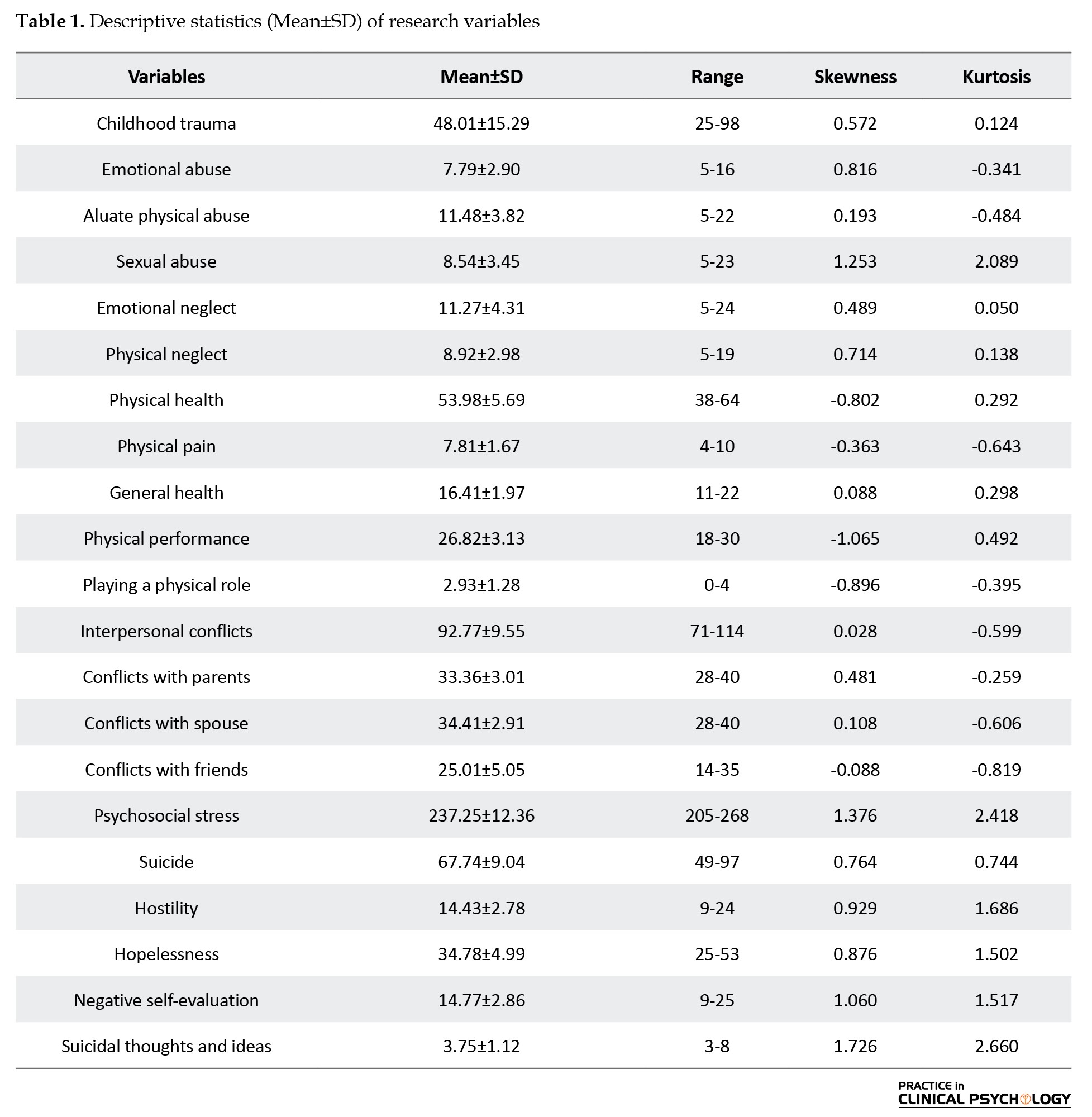
Before testing the hypothesized structural model, we computed descriptive statistics for all study variables. Table 1 presents the means, standard deviations, observed ranges, and indices of skewness and kurtosis for childhood trauma, physical health, psychosocial stress, interpersonal conflicts, and suicide risk.
Statistical assumptions
Before conducting SEM, we rigorously examined the underlying statistical assumptions to ensure the analytic approach was appropriate. The dataset contained no missing responses. Multivariate outliers were assessed using Mahalanobis distance (d²), which revealed no extreme cases. Univariate normality was confirmed, as all variables exhibited skewness values below 3 and kurtosis values below 10, consistent with established thresholds (Mertler et al., 2021). Multivariate normality was further supported by Mardia’s coefficient (4.298) and its associated critical ratio (2.320), both of which fell below the recommended cutoff point of 5 (Mertler et al., 2021). Collectively, these findings indicate that the data did not violate normality assumptions. We evaluated multicollinearity among the study variables using vari-ance inflation factor (VIF) and tolerance values. For the childhood trauma subscales, VIF values ranged from 2.411 to 4.049 (tolerance: 0.247–0.415). For the physical health subscales, VIF values ranged from 1.114 to 1.316 (tolerance: 0.760–0.898). For the interpersonal conflict subscales, VIF values ranged from 1.815 to 2.172 (tolerance: 0.460–0.551). For the suicide risk subscales, VIF values ranged from 1.114 to 1.571 (tolerance: 0.636–0.898). All VIF values were well below the conserva-tive threshold of 10, and all tolerance values exceeded 0.1, indicating no multicollinearity (Mertler et al., 2021).
After confirming these assumptions, we used SEM with maximum likelihood (ML) estimation to test the research hypotheses. Consistent with the two-step approach recommended by Stein et al. (2017), the analysis proceeded in two phases: First, confirmatory factor analysis (CFA) evaluated the measurement model; second, SEM tested the proposed structural relationships among the latent constructs.
Testing the measurement model
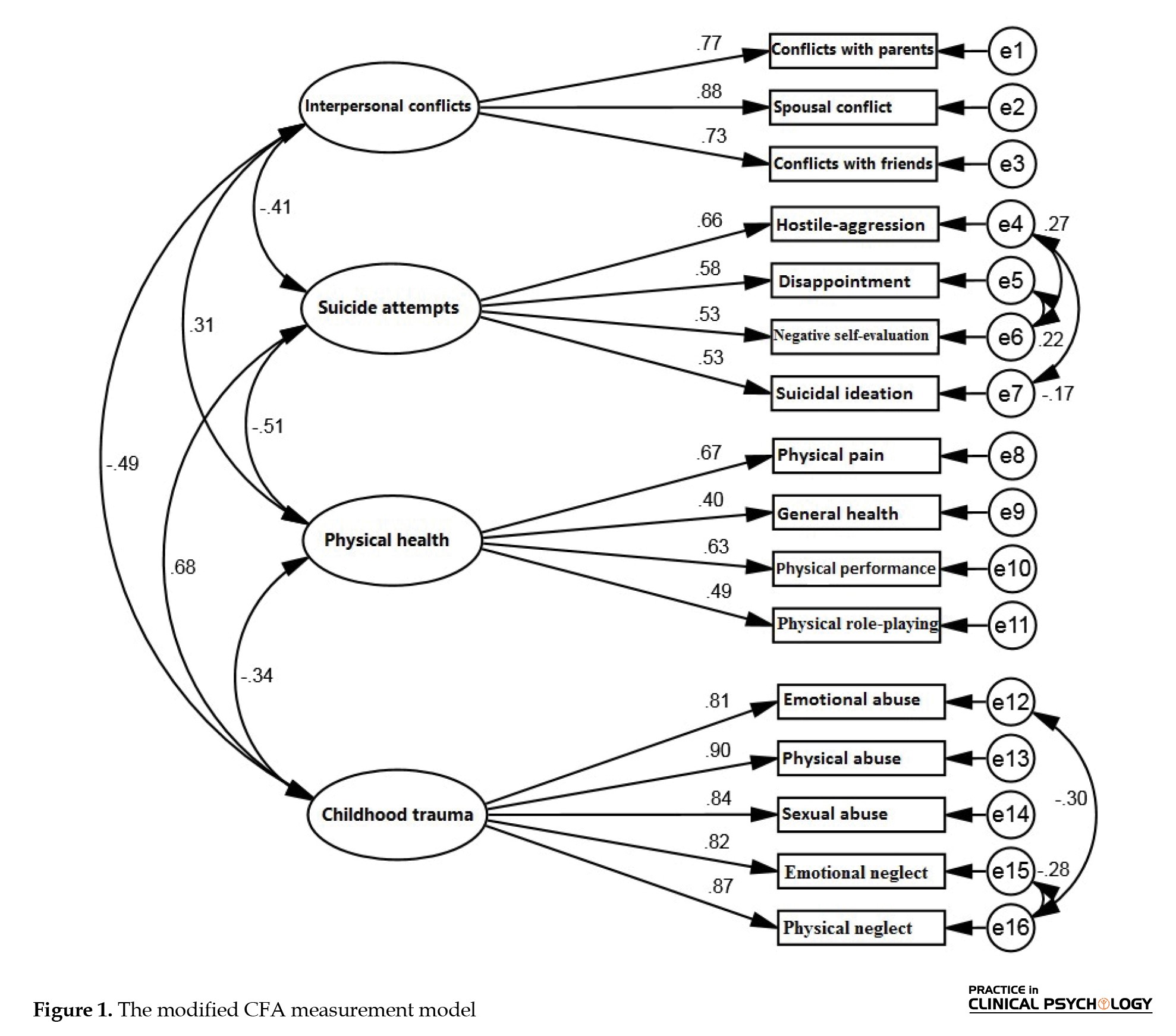
After selecting indicator variables aligned with the hypothesized research model, CFA was conducted for all latent constructs to assess the measurement model’s ade-quacy (Figure 1).
According to the most recent estimates from the World Health Organization, approximately one million deaths occur annually due to suicide, rendering it one of the leading causes of mortality worldwide (King et al., 2025). Suicide is a pervasive public health concern that transcends societal, national, cultural, religious, gender, and age boundaries. Its profound and multifaceted impact on families, communities, and healthcare systems underscores the urgent need for comprehensive risk prediction and targeted prevention strategies (Wallace et al., 2025). Therefore, identifying and understanding the multifactorial determinants of suicide risk is an essential prerequisite for reducing its global burden. A substantial body of literature has estab-lished childhood adversity as a robust distal risk factor for suicidal behavior. Various forms of early-life maltreatment, including physical, sexual, and emotional abuse, have been consistently linked to both suicidal ideation and completed suicides (Angelakis et al., 2020; Chalker et al., 2022; Rog-erson et al., 2023). For instance, Park et al. (2021) demonstrated that specific subtypes of childhood adversity, particularly sexual and physical abuse, were significantly associated with increased suicide risk in a population-based study of South Korean adults. Similarly, Wong et al. (2024) verified that emotional trauma independently contributes to the likelihood of suicidal outcomes. In a comprehensive meta-analytic synthesis, Angelakis et al. (2020) further confirmed that childhood maltreatment and sexual abuse were significantly associated with suicide plans among young populations, reinforcing the enduring psychological sequelae of early adversities.
In addition to developmental vulnerabilities, physical health status has emerged as a critical contemporaneous risk factor for suicide (Jin et al., 2019; Rahimian Boogar & Talepasand, 2015; Smith et al., 2023). Employing a structural modeling approach, Black et al. (2019) identified that among 15 physical illnesses, five diseases (spe-cifically kidney disease, HIV, cancer, liver disease, and heart disease) exhibited significant independent associations with suicide mortality. Moreover, chronic conditions, such as diabetes (Silke et al., 2024), acute infectious diseases like COVID-19 (Gunnell et al., 2020), and even dermatological disorders (Rogers et al., 2024) are associat-ed with elevated suicide rates, suggesting that physical illnesses may confer risk through mechanisms of psychological distress and diminished quality of life.
Beyond individual-level factors, interpersonal dynamics constitute another salient domain influencing suicide risk across diverse cultural contexts (Ferro et al., 2024; Lee et al., 2026; Wang et al., 2025). In particular, interpersonal conflicts have been identified as potent proximal precipitants of suicidal behavior. Groh et al. (2024) reported that interpersonal conflicts and perceived aloneness were among the most probable factors associated with multiple suicide attempts in a clinical sample of 228 patients presenting to emergency services. Similarly, research focused on younger populations has consistently highlighted the role of relational discord in precipi-tating suicidal crises (Hébert et al., 2025; Su et al., 2023; Virk et al., 2024). In a study of 127 cases of self-poisoning among individuals aged 22 to 24 years, Su et al. (2023) found that interpersonal conflict was the most frequently cited precipitating factor, surpassing other psychosocial stressors.
Psychosocial stress, often conceptualized as the subjective experience of overwhelming environmental demands, also represents a central pathway linking early adver-sity and health status to suicide risk (Brown et al., 2024; Wu et al., 2022). Flores et al. (2022) demonstrated that psychosocial stressors were strongly associated with suicide risk, with participants reporting prior suicide attempts. More recently, Li et al. (2024) extended these findings to college student populations, revealing signifi-cant associations between cumulative stress exposure and elevated suicide risk. While childhood trauma, physical health, psychosocial stress, and interpersonal conflict each independently contribute to suicide vulnerability, their overlapping and synergistic effects are substantial (Berardelli et al., 2022; Flores et al., 2022; Jones et al., 2024; Oh et al., 2025). This convergence suggests that a more integrative, theory-driven approach is necessary to elucidate the complex mechanisms through which these variables jointly influence suicide risk.
The theoretical underpinning of the present study draws upon the Interpersonal Theory of Suicide (Chu et al., 2017), which posits that suicidal desire emerges from the concurrent experience of thwarted belongingness and perceived burdensomeness, while the capability for suicide develops through habituation to pain and fear. Within this framework, childhood trauma and poor physical health may serve as distal contributors that heighten perceived burdensomeness and reduce belonging-ness. At the same time, psychosocial stress and interpersonal conflicts act as proximal mechanisms that activate these interpersonal states, thereby increasing acute suicide risk. Although prior research has independently documented associations between childhood trauma, physical health, psychosocial stress, interpersonal rela-tionships, and suicide, the integrative pathways linking these constructs have remained inadequately explicated, particularly within non-clinical populations from de-veloping nations. Furthermore, few studies have examined these variables simultaneously within a comprehensive structural equation model grounded in a robust theoretical framework.
To address this critical gap, the present study investigates the direct and indirect associations between childhood trauma, physical health, and suicide risk, with psycho-social stress and interpersonal conflicts serving as parallel mediating mechanisms in an Iranian adult sample. Grounded in the Interpersonal Theory of Suicide and informed by cumulative empirical evidence, we hypothesized that (1) childhood trauma and poorer physical health would be directly and positively associated with higher suicide risk, and (2) these associations would be significantly mediated by elevated psychosocial stress and increased interpersonal conflicts.
Materials and Methods
Design and participants
This investigation employed a cross-sectional descriptive design utilizing structural equation modeling (SEM) to examine the proposed relationships among study vari-ables. We determined the sample size using the participant-to-parameters ratio approach. Because the hypothesized model included 39 free parameters, a minimum sample of 351 participants was deemed necessary to ensure adequate statistical power and model stability (Mertler et al., 2021). To exceed this threshold and account for potential attrition or incomplete data, we recruited 400 participants using a convenience sampling strategy. The final sample comprised 400 adults residing in Tehran and Alborz provinces, Iran, and data were collected between 2022 and 2023. Participants ranged in age from 18 to 50 years (Mean±SD, =36.08±9.24). The sample was predominantly female, consisting of 282 women (70.5%) and 118 men (29.5%). All participants were community-dwelling adults without acute psychiatric diag-noses, recruited through online platforms and community announcements.
The inclusion criteria were defined as follows: (a) aged between 18 and 50 years, (b) ability to read and write in Persian, and (c) access to online platforms for com-pleting the self-report questionnaires. The exclusion criteria comprised (a) unwillingness to participate, (b) provision of incomplete or invalid responses, and (c) pres-ence of acute psychiatric disorders (e.g. current psychotic episode, severe mania, or acute suicidal crisis requiring immediate intervention). Regarding chronic medical conditions, only those in acute or extremely severe phases that prevented effective participation were excluded. We retained participants with stable, well-managed, or non-acute chronic conditions. This decision was made to preserve the full spectrum of physical health variability, consistent with the study’s primary objective of exam-ining the role of physical health status in suicide risk. All exclusion determinations were based on participant self-report and, when available, corroborated by medical records.
Study measures
Childhood trauma
The childhood trauma questionnaire (CTQ) was originally developed by Bernstein et al. (1994) to assess early experiences of injury and maltreatment. Subsequent revisions established the final 28-item short-form version (Bernstein et al., 2003). This instrument evaluates 5 distinct dimensions of childhood adversity: physical neglect, physical abuse, emotional neglect, emotional abuse, and sexual abuse. Items are rated on a 5-point Likert scale ranging from 1 (never) to 5 (always). Seven items (2, 5, 7, 13, 19, 26, and 28) are reverse-scored to minimize response bias. Each subscale yields a total score between 5 and 25, with higher scores indicating greater trauma exposure. In the present study, the CTQ demonstrated excellent internal consistency, with a Cronbach α coefficient of 0.854.
Psychosocial Stress
The Holmes-Rahe Stress Scale (Holmes & Rahe, 1967) was employed to assess psychosocial stress exposure. We selected this instrument for its ability to capture objective life-event experiences-including bereavement, marital changes, and financial difficulties-which represent universal stressors with documented relevance to the Iranian context. Furthermore, its use facilitates direct comparison with prior international studies. The scale comprises 43 life events, each assigned a weighted value reflecting its relative stress impact. Total scores between 150 and 300 indicate a 50% probability of major health deterioration, while higher scores increase the likelihood of illness onset to 80% within the subsequent two years. The original scale demonstrated satisfactory reliability (The Cronbach α=0.79) and validity (The Pearson correlation=0.36) (Holmes & Rahe, 1967). In the current sample, the scale exhibited high internal consistency, with a Cronbach α coefficient of 0.91.
Interpersonal Conflicts
The quality of relationships inventory (QRI) (Pierce et al., 1991) was utilized to assess interpersonal conflict. This instrument evaluates the quality of relationships with significant others, including parents, spouses, and friends. The final version of the QRI consists of 25 items distributed across 3 subscales: Interpersonal conflicts (12 items), perceived social support (7 items), and relationship depth (6 items). Items are rated on a 4-point Likert scale ranging from 1 (none) to 4 (high). Items within the conflict subscale are reverse-scored. A total score of 13 or higher on the conflict subscale corresponds to the top 25th percentile, indicative of high conflict levels. The validity of the QRI has been confirmed by several psychology experts, and its reliability, as measured by the Cronbach α, was reported as 0.78 in the original validation study (Pierce et al., 1991).
Physical health
The 36-item short form health survey (SF-36) was administered to evaluate physical health status (Ware & Sherbourne, 1992). This widely used instrument comprises 36 items assessing 8 health domains, which are aggregated into 2 summary components: Physical health and mental health. For this study, we used only the physical health component, which includes 4 domains: Physical functioning, role limitations due to physical health, bodily pain, and general health perceptions. Total scores range from 0 to 100, with higher scores indicating better physical health. The SF-36 has demonstrated acceptable reliability, with a Cronbach α coefficient of 0.73 in the original validation (Ware & Sherbourne, 1992). In the present study, the physical health component exhibited good internal consistency, with a Cronbach α coefficient of 0.81 in the Iranian population.
Suicide risk
The suicide probability scale (SPS) was employed to assess suicide risk (Cull & Gill, 1988). This 36-item self-report instrument comprises four subscales: hopelessness, suicidal ideation, hostility, and negative self-evaluation. Total scores are interpreted as follows: 75–100 indicates high risk, 50–74 indicates moderate risk, and 25–49 indicates low risk for suicide. The SPS has demonstrated adequate reliability, with a Cronbach α coefficient of 0.82 in the original validation study (Cull & Gill, 1988).
Study procedure
Data collection was conducted on an individual basis over 9 months. To control for potential order effects (ceiling and floor effects), the questionnaires were adminis-tered using a counterbalancing procedure, wherein the presentation order of instruments was systematically varied across participants. The study was conducted in full compliance with established ethical guidelines for research involving human participants. All participants provided written informed consent before enrollment and were explicitly informed of their right to withdraw at any time without consequences. We ensured and maintained the confidentiality of responses throughout the research process. The participants were also informed that a list of mental health helplines and psychological support resources would be provided upon completion of the questionnaires.
Data analysis
All statistical analyses were performed using SPSS software, version 26 and AMOS software, version 24. Descriptive statistics, including means, standard deviations, and bivariate Pearson correlations, summarized sample characteristics and examined preliminary associations among study variables. SEM was employed to test the hypothesized direct and indirect relationships among childhood trauma, physical health, psychosocial stress, interpersonal conflicts, and suicide risk. Model fit was evaluated using multiple indices, including the chi-square to degrees of freedom ratio (CMIN/df), the comparative fit index (CFI), and the root mean square error of approximation (RMSEA). We assessed mediation effects using bootstrap resampling with 95% confidence intervals, consistent with contemporary recommendations for testing indirect effects. Statistical significance was set at P<0.05.
Results
Demographic characteristics
Demographic data encompassing gender, educational attainment, occupational status, marital status, monthly income, medical and psychiatric history, and prior suicide risk were systematically collected from all participants. Regarding medical and psychiatric history, 8.8% of participants reported having a physical illness, while 1.3% reported a psychological illness. Notably, a total of 36 participants (9%) reported a history of prior suicide risk. In terms of occupational status, the sample comprised: 8.0% unemployed individuals, 13.8% students, 61.2% employed individuals (including full-time, part-time, and self-employed), 3.8% retirees, and 13.3% homemakers. Concerning monthly income, 21.0% of participants reported no monthly income, 48.0% reported a monthly income below 8.5 million rials, and 31.0% reported a monthly income exceeding 8.5 million rials. Educational attainment was distributed as follows: diploma (10.5%; n=42), associate degree (34.7%; n=139), bachelor’s degree (40.5%; n=162), master’s degree (11.2%; n=45), and doctoral degree (1.0%; n=4). Only 2.0% of participants had not completed high school. Regarding marital status, 51.5% of participants were single, 44.3% were married, and the remaining participants were divorced, widowed, or widowers.
Descriptive statistics
Before testing the hypothesized structural model, we computed descriptive statistics for all study variables. Table 1 presents the means, standard deviations, observed ranges, and indices of skewness and kurtosis for childhood trauma, physical health, psychosocial stress, interpersonal conflicts, and suicide risk.
Statistical assumptions
Before conducting SEM, we rigorously examined the underlying statistical assumptions to ensure the analytic approach was appropriate. The dataset contained no missing responses. Multivariate outliers were assessed using Mahalanobis distance (d²), which revealed no extreme cases. Univariate normality was confirmed, as all variables exhibited skewness values below 3 and kurtosis values below 10, consistent with established thresholds (Mertler et al., 2021). Multivariate normality was further supported by Mardia’s coefficient (4.298) and its associated critical ratio (2.320), both of which fell below the recommended cutoff point of 5 (Mertler et al., 2021). Collectively, these findings indicate that the data did not violate normality assumptions. We evaluated multicollinearity among the study variables using vari-ance inflation factor (VIF) and tolerance values. For the childhood trauma subscales, VIF values ranged from 2.411 to 4.049 (tolerance: 0.247–0.415). For the physical health subscales, VIF values ranged from 1.114 to 1.316 (tolerance: 0.760–0.898). For the interpersonal conflict subscales, VIF values ranged from 1.815 to 2.172 (tolerance: 0.460–0.551). For the suicide risk subscales, VIF values ranged from 1.114 to 1.571 (tolerance: 0.636–0.898). All VIF values were well below the conserva-tive threshold of 10, and all tolerance values exceeded 0.1, indicating no multicollinearity (Mertler et al., 2021).
After confirming these assumptions, we used SEM with maximum likelihood (ML) estimation to test the research hypotheses. Consistent with the two-step approach recommended by Stein et al. (2017), the analysis proceeded in two phases: First, confirmatory factor analysis (CFA) evaluated the measurement model; second, SEM tested the proposed structural relationships among the latent constructs.
Testing the measurement model
After selecting indicator variables aligned with the hypothesized research model, CFA was conducted for all latent constructs to assess the measurement model’s ade-quacy (Figure 1).
The initial measurement model demonstrated acceptable fit to the data: CMIN/df=3.863, CFI=0.904, RMSEA=0.085, GFI=0.897, IFI=0.905, PCFI=0.738, and PNFI=0.715. After examining modification indices and implementing theoretically justified adjustments (i.e. correlating error terms within the same latent con-struct), model fit improved substantially: CMIN/df=3.159, CFI=0.920, RMSEA=0.079, GFI=0.910, IFI=0.920, PCFI=0.713, and PNFI=0.691. All standardized factor load-ings exceeded 0.3 and were statistically significant at P<0.001, confirming that each indicator adequately represented its respective latent construct.
Testing the structural model
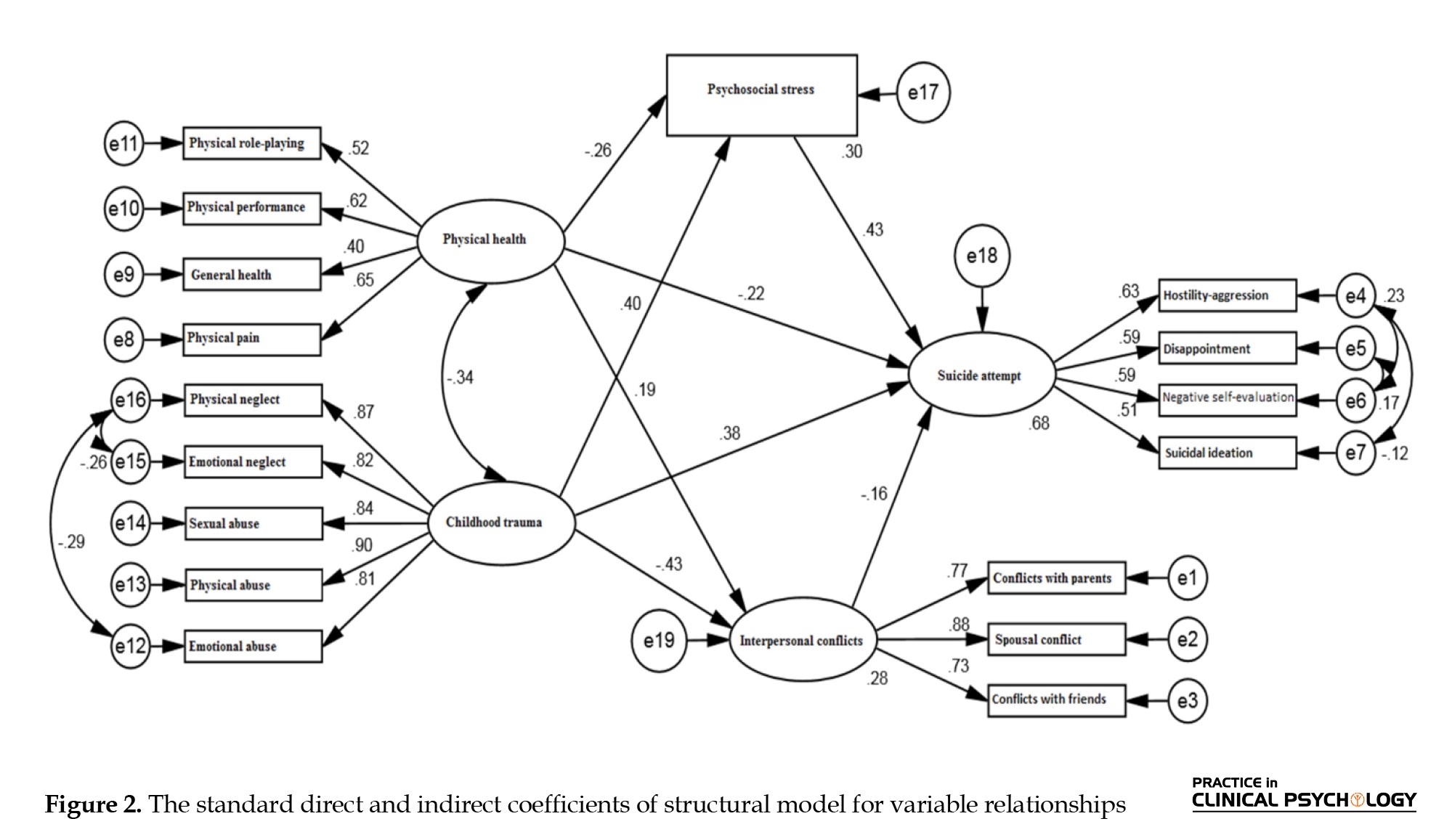
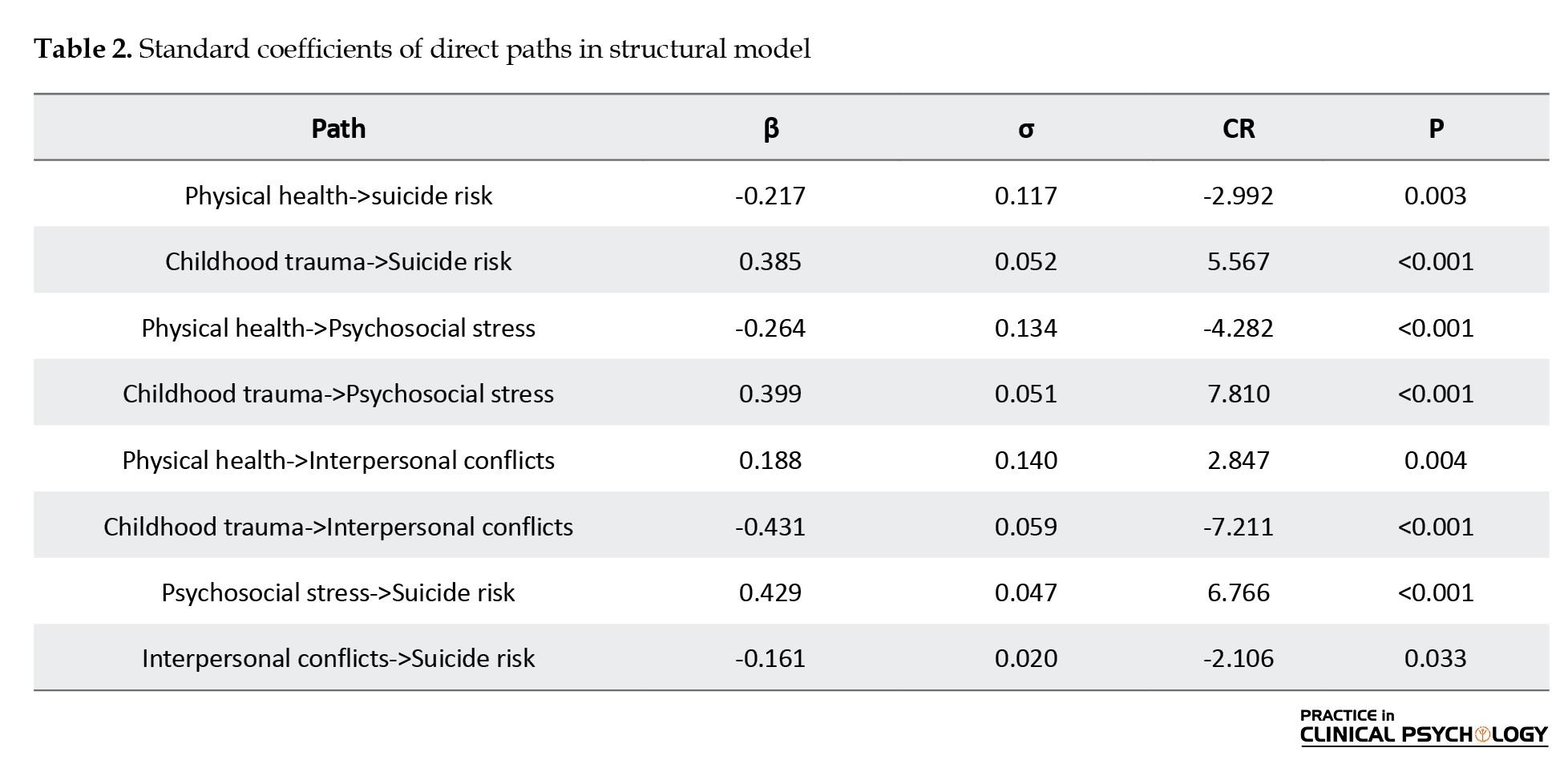
After establishing an adequate measurement model, the structural model was tested to examine the hypothesized direct and indirect relationships among the study constructs. The structural model demonstrated good fit to the data: χ²(106)=371.729, CMIN/df=3.51, RMSEA=0.079, CFI=0.908, GFI=0.908, IFI=0.918, PCFI=0.705, and PNFI=0.683. These fit indices collectively indicate that the hypothesized model adequately represented the underlying covariance structure among the variables. The coefficient of determination (R²) for the endogenous latent variable, suicide risk, was 0.680, accounting for 68.0% of the variance in suicide risk. Furthermore, the proportions of variance explained for the mediating variables were 28.0% for interpersonal conflicts and 30.0% for psychosocial stress. Table 2 presents the standard-ized regression coefficients (β) for all direct paths in the proposed structural model, and Figure 2 provides a visual depiction of these relationships.
Testing the structural model
After establishing an adequate measurement model, the structural model was tested to examine the hypothesized direct and indirect relationships among the study constructs. The structural model demonstrated good fit to the data: χ²(106)=371.729, CMIN/df=3.51, RMSEA=0.079, CFI=0.908, GFI=0.908, IFI=0.918, PCFI=0.705, and PNFI=0.683. These fit indices collectively indicate that the hypothesized model adequately represented the underlying covariance structure among the variables. The coefficient of determination (R²) for the endogenous latent variable, suicide risk, was 0.680, accounting for 68.0% of the variance in suicide risk. Furthermore, the proportions of variance explained for the mediating variables were 28.0% for interpersonal conflicts and 30.0% for psychosocial stress. Table 2 presents the standard-ized regression coefficients (β) for all direct paths in the proposed structural model, and Figure 2 provides a visual depiction of these relationships.
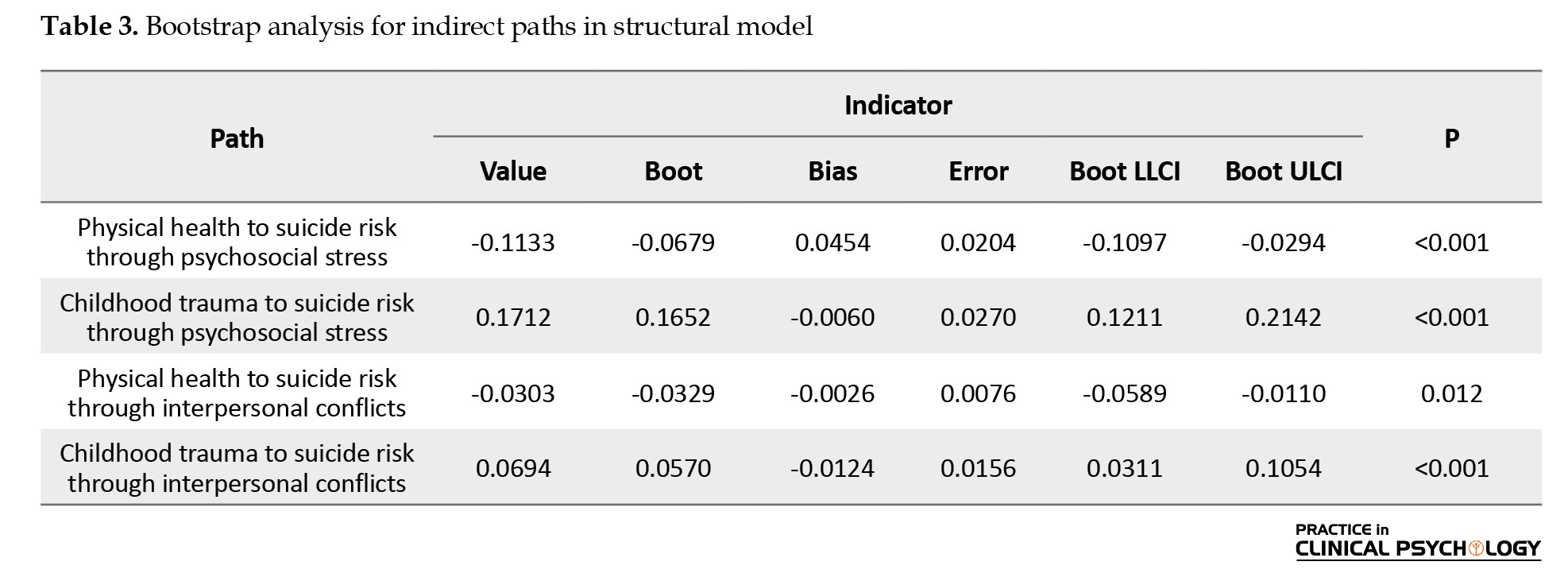
We also examined the significance of the indirect (mediating) effects using bootstrap resampling with 95% confidence intervals. Table 3 summarizes the results of these mediation anal-yses.
Discussion
The present study investigated the direct and indirect associations between physical health, childhood trauma, and suicide risk, with emphasis on the mediating roles of psychosocial stress and interpersonal conflicts in an Iranian adult sample. Grounded in the Interpersonal Theory of Suicide (Chu et al., 2017), the structural model demonstrated good fit, accounting for 68.0% of the variance in suicide risk. Notably, the model included relationships that appear counterintuitive because of scoring directions: higher physical health scores indicate better health (lower risk), higher childhood trauma scores indicate greater adversity, and lower interpersonal conflict scores may paradoxically reflect social isolation rather than healthy functioning. With this interpretive framework, findings confirmed that physical health and child-hood trauma exert significant direct and indirect effects on suicide risk through psychosocial stress and interpersonal conflicts.
Consistent with the first hypothesis, poorer physical health was significantly and directly associated with elevated suicide risk, aligning with prior research documenting heightened vulnerability among individuals with chronic conditions, including kidney disease, HIV, cancer, liver disease, heart disease (Black et al., 2019), diabetes (Silke et al., 2024), and dermatological disorders (Rogers et al., 2024). Multiple mechanisms underpin this association. Chronic physical illness imposes a biopsychosocial burden-prolonged treatment, persistent pain, functional limitations, and fear of non-recovery (Habibi & Rahimian Boogar, 2023)—contributing to diminished quality of life and psychological distress (depression and anxiety), proximal risk factors for suicide. Additionally, as Black et al. (2019) noted, poor physical health is often accompanied by socioeconomic adversities (unemployment, financial strain) that compound hopelessness and perceived burdensomeness-core components of the Interpersonal Theory of Suicide (Chu et al., 2017). Thus, poor physical health functions as a distal vulnerability factor that, through cascading effects on psychological and social functioning, increases suicide risk.
Similarly, childhood trauma exhibited a significant direct positive association with suicide risk, corroborating extensive evidence (Angelakis et al., 2020; Chalker et al., 2022; Park et al., 2021; Rogerson et al., 2023; Wong et al., 2024). Theoretically, early-life maltreatment facilitates the capability for suicide through habituation to pain and reduced death anxiety (Chu et al., 2017). Beyond habituation, childhood trauma impairs self-esteem, attachment security, and emotion regulation (Angelakis et al., 2020), manifesting as perceptual biases in relationships, rejection of social support, and heightened negative emotionality-self-blame, shame, and hopelessness (Park et al., 2021). These maladaptive patterns crystallize into enduring vulnerabilities that predispose individuals to suicidal ideation and behavior. Childhood trauma, by compromising interpersonal functioning and emotional stability, constitutes a critical developmental antecedent to suicide risk across the lifespan.
Psychosocial stress significantly mediated the physical health–suicide relationship, consistent with Black et al. (2019) and Saharia & Ghosh (2024). Chronic medical conditions impose multifaceted stressors-treatment burdens, financial difficulties, social stigma, and existential concerns (Habibi & Rahimian Boogar, 2023)—which overwhelm coping resources, leading to helplessness, hopelessness, and depressive symptomatology. In the context of the Interpersonal Theory of Suicide, such stress-ors amplify perceptions of burdensomeness and thwarted belongingness, increasing suicidal desire (Chu et al., 2017). Psychosocial stress also mediated the childhood trauma–suicide link, aligning with Jones et al. (2024) and Black et al. (2019). Early maltreatment induces neurobiological alterations, including inflammatory responses and HPA axis sensitization, increasing reactivity to adult stressors (Jones et al., 2024). Cognitively, childhood trauma fosters dysfunctional beliefs and maladaptive attributional styles-perceiving the world as threatening and oneself as powerless-predisposing individuals to experience challenges as overwhelming (Wu et al., 2022). This finding suggests that heightened stress vulnerability, compounded by emotional dysregulation and interpersonal difficulties, creates fertile ground for depressive disorders and suicidal ideation.
Interpersonal conflicts significantly mediated the physical health–suicide pathway, corroborating Flores et al. (2022) and Su et al. (2023). Serious physical illness gener-ates distress within family systems, disrupting roles, increasing caregiving burdens, straining resources, escalating conflicts and eroding social support (Flores et al., 2022). Hébert et al. (2025) emphasized that isolation, loneliness, and lack of support drive suicide risk. Persistent physical pain may diminish tolerance for interper-sonal frustration and impair emotion regulation, increasing conflictual interactions and withdrawal (Su et al., 2023). The cycle of conflict and isolation intensifies per-ceived burdensomeness and thwarted belongingness (Chu et al., 2017). Interpersonal conflicts also mediated the childhood trauma–suicide relationship, corroborating Berardelli et al. (2022), Black et al. (2019), and Groh et al. (2024). Exposure to violence in childhood predicts violent relationships in adulthood (Berardelli et al., 2022), through internalization of aggressive conflict models, impaired social information processing, and emotion regulation deficits. Childhood trauma triples the risk of mental disorders, which compromises problem-solving, increases irritability and hostility, and impairs interpersonal functioning, all contributing to heightened conflict (Berardelli et al., 2022). These conflictual relationships serve as proximal triggers for suicidal crises, coupled with underlying vulnerabilities from early adversity.
The findings carry important implications for the Interpersonal Theory of Suicide (Chu et al., 2017), supporting the conceptualization of childhood trauma and poor physical health as distal risk factors operating through proximal mechanisms (psychosocial stress and interpersonal conflicts) to influence suicide risk. By integrating these pathways within a unified model, the study extends the theoretical framework to encompass developmental and health-related precursors. Clinically, the findings underscore the importance of comprehensive, multi-component interventions that address individual risk factors and broader psychosocial contexts. Clinicians should routinely assess psychosocial stress and interpersonal difficulties as modifiable targets. Cognitive-behavioral approaches targeting stress management, emotion regula-tion, and interpersonal skills may reduce suicide risk (Wallace et al., 2025). Family-based interventions reduce conflict and enhance social support that may mitigate relational disruptions. Early identification and intervention for childhood maltreatment, alongside integrated care models addressing physical and mental health needs, may serve as primary prevention strategies.
Conclusion
The present study provides compelling evidence that poor physical health and childhood trauma are significantly associated with elevated suicide risk, both directly and indirectly through the mediating roles of psychosocial stress and interpersonal conflicts. These findings highlight the interconnected nature of developmental, health-related, psychosocial, and relational risk factors in shaping suicide vulnerability, and offer new insights into the pathways through which distal adversities trans-late into proximal risk. The indirect relationship of physical health with suicide via stress and interpersonal conflict has received limited attention in the literature; thus, this research opens new avenues for investigation and encourages researchers and clinicians to consider physical health status, stress management, and conflict resolu-tion skills in suicide prevention programs and protocols. By situating our results within the framework of the Interpersonal Theory of Suicide (Chu et al., 2017), we offer theoretical clarity regarding the mechanisms through which these risk factors operate. The implications for clinical practice are substantial, suggesting that tailored, multifactorial risk reduction programs addressing childhood trauma, physical health, stress, and interpersonal conflicts are warranted in both clinical and non-clinical settings. However, these findings should be interpreted with caution because the study is cross-sectional. So, future longitudinal research is essential to explore causal pathways and develop evidence-based interventions that can effectively reduce the global burden of suicide.
Study limitations
Several methodological limitations warrant consideration when interpreting the present findings. The cross-sectional design precludes causal inferences, and mediation findings are correlational associations that require longitudinal replication through future longitudinal designs or randomized controlled trials. Self-report question-naires, especially suicide assessment, introduce potential response biases (social desirability, recall bias, common method variance), suggesting that future investiga-tions incorporating multi-method assessments (clinical interviews, behavioral observations, and physiological markers) would enhance validity. Generalizability is con-strained by convenience sampling from two Iranian provinces, a predominantly female sample (70.5%), and overrepresentation of educated individuals (85% with an associate degree or higher), restricting applicability to males, less educated populations, and other geographic regions. Several critical variables were not measured, including socioeconomic status, clinical comorbidities (depression, anxiety, psychiatric diagnoses, substance use), and concurrent stressors; the modest magnitude of indirect effects further suggests unmeasured variables may play important roles. The exclusion of acute or severely exacerbated chronic conditions, while methodologi-cally justified, may have attenuated observed associations and limited representation of individuals with the most severe impairments. Finally, physical health relied on self-reported status rather than objective medical diagnoses, indicating that future research incorporating objective health indicators would provide a more compre-hensive understanding of these relationships.
Ethical Considerations
Compliance with ethical guidelines
This study was approved by the Research Ethics Committee of Semnan University of Medical Sciences and Health Services, Semnan, Iran. (Code: IR.SEMUMS.REC.1400.308). All procedures performed were in accordance with the ethical standards of the Institutional Research Committee and the 1964 Helsinki Declaration and its later amendments. We obtained written informed consent from all participants before enrollment. Participants were assured that their responses would be kept confidential and were informed of their right to withdraw from the study at any stage without consequence.
Funding
This research was extracted from a Master’s dissertation of Fatemeh Farnia, approved by the Vice-Chancellor of Education and Graduate Studies at Semnan University, Semnan, Iran.
Authors' contributions
Conceptualization, methodology, formal analysis and supervision: Isaac Rahimian-Boogar; Software, resources, validation, review, editing, and visualization: Fatemeh Farnia and Isaac Rahimian-Boogar; Investigation, data collection, Writing the original draft, and Project administration: Fatemeh Farnia.
Conflict of interest
The authors declared no conflict of interest.
Acknowledgments
The authors express their sincere gratitude to the Vice-Chancellor of Graduate Studies at the university and to all participants who generously contributed their time to this study.
References
Angelakis, I., Austin, J. L., & Gooding, P. (2020). Association of Childhood Maltreatment With Suicide Behaviors Among Young People: A Systematic Review and Meta-analysis. JAMA Network Open, 3(8), e2012563. [DOI:10.1001/jamanetworkopen.2020.12563] [PMID]
Berardelli, I., Sarubbi, S., Rogante, E., Erbuto, D., Giuliani, C., & Lamis, D. A., et al. (2022). Association between Childhood Maltreatment and Suicidal Ideation: A Path Analysis Study. Journal of Clinical Medicine, 11(8), 2179. [DOI:10.3390/jcm11082179] [PMID]
Bernstein, D. P., Stein, J. A., Newcomb, M. D., Walker, E., Pogge, D., & Ahluvalia, T., et al. (2003). Development and validation of a brief screening version of the Childhood Trauma Questionnaire. Child Abuse & Neglect, 27(2), 169-190. [DOI:10.1016/S0145-2134(02)00541-0] [PMID]
Black, J., Bond, M. A., Hawkins, R., & Black, E. (2019). Test of a clinical model of poor physical health and suicide: The role of depression, psychosocial stress, interpersonal conflict, and panic. Journal of Affective Disorders, 257, 404-411. [DOI:10.1016/j.jad.2019.05.079] [PMID]
Brown, S., Tezanos, K. M., & Nugent, N. R. (2024). Childhood Maltreatment, Executive Function, and Suicide Attempts in Adolescents. Child Maltreatment, 29(4), 672-683. [DOI:10.1177/10775595231182047] [PMID]
Chalker, S. A., Parrish, E. M., Cano, M., Kelsven, S., Moore, R. C., & Granholm, E., et al. (2022). Childhood Trauma Associations With the Interpersonal Psychological Theory of Suicide and Social Cognitive Biases in Psychotic Disorders. The Journal of Nervous and Mental Disease, 210(6), 432-438. [DOI:10.1097/NMD.0000000000001462] [PMID]
Chu, C., Buchman-Schmitt, J. M., Stanley, I. H., Hom, M. A., Tucker, R. P., & Hagan, C. R., et al. (2017). The interpersonal theory of suicide: A systematic review and meta-analysis of a decade of cross-national research. Psychological Bulletin, 143(12), 1313–1345. [DOI:10.1037/bul0000123] [PMID]
Cull, J. G., & Gill, W. S. (1988). Suicide probability scale (SPS) manual. Los Angeles: Western Psychological Services. [Link]
Duprey, E. B., Handley, E. D., Wyman, P. A., Ross, A. J., Cerulli, C., & Oshri, A. (2023). Child maltreatment and youth suicide risk: A developmental conceptual model and implications for suicide prevention. Development and Psychopathology, 35(4), 1732-1755. [DOI:10.1017/S0954579422000414] [PMID]
Ferro, M. A., Chan, C. K. Y., Browne, D. T., Colman, I., Dubin, J. A., & Duncan, L. (2024). Suicidal Ideation and Attempts Among Youth With Physical-Mental Comorbidity in Canada: Proposal for an Epidemiological Study. JMIR Research Protocols, 13, e57103. [DOI:10.2196/57103] [PMID]
Flores, J. P., Stuart, E. A., Swartz, K. L., Jallah, N. A., & Wilcox, H. C. (2022). Risk and Protective Factors Associated with Suicidal Thoughts and Behaviors Among Maryland Middle School Students. School Mental Health, 14(4), 1024-1043. [DOI:10.1007/s12310-022-09521-6] [PMID]
Groh, A., Bahlmann, L., Colic, L., Schulz, A., Kastner, U. W., & Polzer, U., et al. (2024). Psychological distress among individuals with a suicide attempt or suicidal ideation and suicide attempts patterns: First two years of the pandemic. Frontiers in Psychiatry, 15, 1366191. [DOI:10.3389/fpsyt.2024.1366191] [PMID]
Gunnell, D., Appleby, L., Arensman, E., Hawton, K., John, A., & Kapur, N., et al. (2020). Suicide risk and prevention during the COVID-19 pandemic. The lancet. Psychiatry, 7(6), 468-471. [DOI:10.1016/S2215-0366(20)30171-1] [PMID]
Habibi, F., & Rahimian Boogar, I. (2023). [The role of physical health and psychological pain in the prediction of suicide attempt: mediating factor of distress tolerance and self-directed aggression (Persian)]. Journal of Psychology, 3(27), 332-342.[Link]
Hébert, M., Tremblay-Perreault, A., & Dassylva, O. (2025). Unveiling Suicidal Risk in Young Child Sexual Abuse Victims: Prevalence and Predictive Markers. Journal of Trauma & Dissociation : The Official Journal of the International Society for the Study of Dissociation (ISSD), 26(5), 646-661. [DOI:10.1080/15299732.2025.2542129] [PMID]
Holmes, T. H., & Rahe, R. H. (1967). The Social Readjustment Rating Scale. Journal of Psychosomatic Research, 11(2), 213-218. [DOI:10.1016/0022-3999(67)90010-4] [PMID]
Jin, S., Liu, Y., Hennessy, D. A., Sun, L., Zang, Y., & Si, M., et al. (2020). Physical illnesses and medically serious suicide attempts in rural China. Crisis, 41(1), 15-23. [DOI:10.1027/0227-5910/a000597] [PMID]
Jones, E. E., Blandl, F., Kreutzer, K. A., Bryan, C. J., Allan, N. P., & Gorka, S. M. (2024). Childhood Adversity and Youth Suicide Risk: The Mediating Role of Intolerance of Uncertainty. Personality and Individual Differences, 216, 112405. [DOI:10.1016/j.paid.2023.112405] [PMID]
King, C. A., Harness, J., Arango, A., & Czyz, E. (2025). Suicide Prevention in Youth. Current Psychiatry Reports, 27(9), 500-508. [DOI:10.1007/s11920-025-01620-w] [PMID]
Lee, H., Jadhav, K., Ripperger, M., Coleman, P. L., Morley, T. J., & Palmer, S. A., et al. (2026). Clinical Note-Extracted Psychosocial Factors for Predicting Suicide Attempt Among ED Patients With Suicidal Ideation. JAMA Network Open, 9(3), e260589. [DOI:10.1001/jamanetworkopen.2026.0589] [PMID]
Li, Y., Chang, T. F., Zhou, Q., Li, K., Baiden, P., & Kaplan, M. S. (2024). Risk and Protective Factors for Suicidal Thoughts and Behaviors Among Asian American Young Adults: A Systematic Review. Healthcare (Basel, Switzerland), 13(1), 18. [DOI:10.3390/healthcare13010018] [PMID]
Mertler, C. A., Vannatta, R. A., & LaVenia, K. N. (2021). Advanced and Multivariate Statistical Methods: Practical application and interpretation. New York, NY: Routledge. [DOI:10.4324/9781003047223]
Oh, S., Banawa, R., Keum, B. T., & Zhou, S. (2025). Suicidal behaviors associated with psychosocial stressors and substance use among a national sample of Asian American college students. Journal of Affective Disorders, 372, 540-547. [DOI:10.1016/j.jad.2024.12.052] [PMID]
Park, C., Park, I. H., Yoo, T., Kim, H., Ryu, S., & Lee, J. Y., et al. (2021). Association between Childhood Trauma and Suicidal Behavior in the General Population. Chonnam Medical Journal, 57(2), 126-131. [DOI:10.4068/cmj.2021.57.2.126] [PMID]
Pierce, G. R., Sarason, I. G., & Sarason, B. R. (1991). General and relationship-based perceptions of social support: Are two constructs better than one?. Journal of Personality and Social Psychology, 61(6), 1028-1039. [DOI:10.1037//0022-3514.61.6.1028] [PMID]
Rahimian Boogar, I., & Talepasand, S. (2015). The Role of Defense Mechanisms, Personality and Demographical Factors on Complicated Grief following Death of a loved one by Cancer. Iranian Journal of Psychiatry, 10(2), 79-85. [PMID]
Rogers, M. L., Richards, J. A., Peterkin, D., Park, J. Y., Astudillo-García, C. I., & Barzilay, S., et al. (2024). Intentions to use mental health and suicide prevention resources among individuals with symptoms of the suicide crisis syndrome and/or suicidal ideation. Suicide & Life-Threatening Behavior, 54(4), 728-740. [DOI:10.1111/sltb.13083] [PMID]
Rogerson, O., Baguley, T., & O’Connor, D. B. (2023). Childhood Trauma and Suicide. Crisis, 44(5), 433-441. [DOI:10.1027/0227-5910/a000886] [PMID]
Saharia, B., & Ghosh, S. (2024). Cross-sectional study on the psychosocial factors, the severity of depression, and coping strategies among patients attempting suicide. Indian Journal of Psychiatry, 66(1), 26-35. [DOI:10.4103/indianjpsychiatry.indianjpsychiatry_199_23] [PMID]
Silke, C., Heary, C., Bunting, B., Devaney, C., Groarke, A., & Major, E., et al. (2024). Examining the relationship between adversity and suicidality and self-harm in Irish adolescents from 2020 to 2022. Journal of Affective Disorders, 349, 234-243. [DOI:10.1016/j.jad.2023.12.065] [PMID]
Smith, L., Shin, J. I., Lee, S., Oh, J. W., López Sánchez, G. F., & Kostev, K., et al. (2023). The association of physical multimorbidity with suicidal ideation and suicide attempts in England: A mediation analysis of influential factors. The International Journal of Social Psychiatry, 69(3), 523-531. [DOI:10.1177/00207640221137993] [PMID]
Stein, C. M., Morris, N. J., Hall, N. B., & Nock, N. L. (2017). Structural Equation Modeling. Methods in Molecular Biology (Clifton, N.J.), 1666, 557-580. [DOI:10.1007/978-1-4939-7274-6_28] [PMID]
Su, Y., Ye, C., Xin, Q., & Si, T. (2023). Major depressive disorder with suicidal ideation or behavior in Chinese population: A scoping review of current evidence on disease assessment, burden, treatment and risk factors. Journal of Affective Disorders, 340, 732-742. [DOI:10.1016/j.jad.2023.08.106] [PMID]
Virk, P., Doan, Q., & Karim, M. E. (2024). Chronic physical conditions and suicidal ideation: A population-level analysis of Canadian school-attending young adults. Journal of Mental Health (Abingdon, England), 33(3), 304-311. [DOI:10.1080/09638237.2023.2245904] [PMID]
Wallace, E. R., McLafferty, M., McHugh, R., Ward, C., McBride, L., & Brady, J., et al. (2025). Mental health disorders, childhood adversities, and recent stressors as risk factors for non-suicidal self-injury, and suicidality among LGBTQA + higher education students. BMC Public Health, 25(1), 2701. [DOI:10.1186/s12889-025-23102-7] [PMID]
Wang, L., Keyworth, C., & O’Connor, D. B. (2025). Effects of childhood trauma on mental health outcomes, suicide risk factors and stress appraisals in adulthood. PloS One, 20(6), e0326120. [DOI:10.1371/journal.pone.0326120] [PMID]
Ware, J. E., Jr, & Sherbourne, C. D. (1992). The MOS 36-item short-form health survey (SF-36). I. Conceptual framework and item selection. Medical Care, 30(6), 473-483. [DOI:10.1097/00005650-199206000-00002] [PMID]
Wong, N. E., Hagan, M. J., & Holley, S. R. (2024). Childhood Maltreatment and Suicidal Thoughts and Behaviors in Young Adults. Crisis, 45(1), 26-32. [DOI:10.1027/0227-5910/a000909] [PMID]
Wu, R., Zhu, H., Wu, M. Y., Wang, G. H., & Jiang, C. L. (2022). Childhood Trauma and Suicide: The Mediating Effect of Stress and Sleep. International Journal of Environmental Research and Public Health, 19(14), 8493. [DOI:10.3390/ijerph19148493] [PMID]
Discussion
The present study investigated the direct and indirect associations between physical health, childhood trauma, and suicide risk, with emphasis on the mediating roles of psychosocial stress and interpersonal conflicts in an Iranian adult sample. Grounded in the Interpersonal Theory of Suicide (Chu et al., 2017), the structural model demonstrated good fit, accounting for 68.0% of the variance in suicide risk. Notably, the model included relationships that appear counterintuitive because of scoring directions: higher physical health scores indicate better health (lower risk), higher childhood trauma scores indicate greater adversity, and lower interpersonal conflict scores may paradoxically reflect social isolation rather than healthy functioning. With this interpretive framework, findings confirmed that physical health and child-hood trauma exert significant direct and indirect effects on suicide risk through psychosocial stress and interpersonal conflicts.
Consistent with the first hypothesis, poorer physical health was significantly and directly associated with elevated suicide risk, aligning with prior research documenting heightened vulnerability among individuals with chronic conditions, including kidney disease, HIV, cancer, liver disease, heart disease (Black et al., 2019), diabetes (Silke et al., 2024), and dermatological disorders (Rogers et al., 2024). Multiple mechanisms underpin this association. Chronic physical illness imposes a biopsychosocial burden-prolonged treatment, persistent pain, functional limitations, and fear of non-recovery (Habibi & Rahimian Boogar, 2023)—contributing to diminished quality of life and psychological distress (depression and anxiety), proximal risk factors for suicide. Additionally, as Black et al. (2019) noted, poor physical health is often accompanied by socioeconomic adversities (unemployment, financial strain) that compound hopelessness and perceived burdensomeness-core components of the Interpersonal Theory of Suicide (Chu et al., 2017). Thus, poor physical health functions as a distal vulnerability factor that, through cascading effects on psychological and social functioning, increases suicide risk.
Similarly, childhood trauma exhibited a significant direct positive association with suicide risk, corroborating extensive evidence (Angelakis et al., 2020; Chalker et al., 2022; Park et al., 2021; Rogerson et al., 2023; Wong et al., 2024). Theoretically, early-life maltreatment facilitates the capability for suicide through habituation to pain and reduced death anxiety (Chu et al., 2017). Beyond habituation, childhood trauma impairs self-esteem, attachment security, and emotion regulation (Angelakis et al., 2020), manifesting as perceptual biases in relationships, rejection of social support, and heightened negative emotionality-self-blame, shame, and hopelessness (Park et al., 2021). These maladaptive patterns crystallize into enduring vulnerabilities that predispose individuals to suicidal ideation and behavior. Childhood trauma, by compromising interpersonal functioning and emotional stability, constitutes a critical developmental antecedent to suicide risk across the lifespan.
Psychosocial stress significantly mediated the physical health–suicide relationship, consistent with Black et al. (2019) and Saharia & Ghosh (2024). Chronic medical conditions impose multifaceted stressors-treatment burdens, financial difficulties, social stigma, and existential concerns (Habibi & Rahimian Boogar, 2023)—which overwhelm coping resources, leading to helplessness, hopelessness, and depressive symptomatology. In the context of the Interpersonal Theory of Suicide, such stress-ors amplify perceptions of burdensomeness and thwarted belongingness, increasing suicidal desire (Chu et al., 2017). Psychosocial stress also mediated the childhood trauma–suicide link, aligning with Jones et al. (2024) and Black et al. (2019). Early maltreatment induces neurobiological alterations, including inflammatory responses and HPA axis sensitization, increasing reactivity to adult stressors (Jones et al., 2024). Cognitively, childhood trauma fosters dysfunctional beliefs and maladaptive attributional styles-perceiving the world as threatening and oneself as powerless-predisposing individuals to experience challenges as overwhelming (Wu et al., 2022). This finding suggests that heightened stress vulnerability, compounded by emotional dysregulation and interpersonal difficulties, creates fertile ground for depressive disorders and suicidal ideation.
Interpersonal conflicts significantly mediated the physical health–suicide pathway, corroborating Flores et al. (2022) and Su et al. (2023). Serious physical illness gener-ates distress within family systems, disrupting roles, increasing caregiving burdens, straining resources, escalating conflicts and eroding social support (Flores et al., 2022). Hébert et al. (2025) emphasized that isolation, loneliness, and lack of support drive suicide risk. Persistent physical pain may diminish tolerance for interper-sonal frustration and impair emotion regulation, increasing conflictual interactions and withdrawal (Su et al., 2023). The cycle of conflict and isolation intensifies per-ceived burdensomeness and thwarted belongingness (Chu et al., 2017). Interpersonal conflicts also mediated the childhood trauma–suicide relationship, corroborating Berardelli et al. (2022), Black et al. (2019), and Groh et al. (2024). Exposure to violence in childhood predicts violent relationships in adulthood (Berardelli et al., 2022), through internalization of aggressive conflict models, impaired social information processing, and emotion regulation deficits. Childhood trauma triples the risk of mental disorders, which compromises problem-solving, increases irritability and hostility, and impairs interpersonal functioning, all contributing to heightened conflict (Berardelli et al., 2022). These conflictual relationships serve as proximal triggers for suicidal crises, coupled with underlying vulnerabilities from early adversity.
The findings carry important implications for the Interpersonal Theory of Suicide (Chu et al., 2017), supporting the conceptualization of childhood trauma and poor physical health as distal risk factors operating through proximal mechanisms (psychosocial stress and interpersonal conflicts) to influence suicide risk. By integrating these pathways within a unified model, the study extends the theoretical framework to encompass developmental and health-related precursors. Clinically, the findings underscore the importance of comprehensive, multi-component interventions that address individual risk factors and broader psychosocial contexts. Clinicians should routinely assess psychosocial stress and interpersonal difficulties as modifiable targets. Cognitive-behavioral approaches targeting stress management, emotion regula-tion, and interpersonal skills may reduce suicide risk (Wallace et al., 2025). Family-based interventions reduce conflict and enhance social support that may mitigate relational disruptions. Early identification and intervention for childhood maltreatment, alongside integrated care models addressing physical and mental health needs, may serve as primary prevention strategies.
Conclusion
The present study provides compelling evidence that poor physical health and childhood trauma are significantly associated with elevated suicide risk, both directly and indirectly through the mediating roles of psychosocial stress and interpersonal conflicts. These findings highlight the interconnected nature of developmental, health-related, psychosocial, and relational risk factors in shaping suicide vulnerability, and offer new insights into the pathways through which distal adversities trans-late into proximal risk. The indirect relationship of physical health with suicide via stress and interpersonal conflict has received limited attention in the literature; thus, this research opens new avenues for investigation and encourages researchers and clinicians to consider physical health status, stress management, and conflict resolu-tion skills in suicide prevention programs and protocols. By situating our results within the framework of the Interpersonal Theory of Suicide (Chu et al., 2017), we offer theoretical clarity regarding the mechanisms through which these risk factors operate. The implications for clinical practice are substantial, suggesting that tailored, multifactorial risk reduction programs addressing childhood trauma, physical health, stress, and interpersonal conflicts are warranted in both clinical and non-clinical settings. However, these findings should be interpreted with caution because the study is cross-sectional. So, future longitudinal research is essential to explore causal pathways and develop evidence-based interventions that can effectively reduce the global burden of suicide.
Study limitations
Several methodological limitations warrant consideration when interpreting the present findings. The cross-sectional design precludes causal inferences, and mediation findings are correlational associations that require longitudinal replication through future longitudinal designs or randomized controlled trials. Self-report question-naires, especially suicide assessment, introduce potential response biases (social desirability, recall bias, common method variance), suggesting that future investiga-tions incorporating multi-method assessments (clinical interviews, behavioral observations, and physiological markers) would enhance validity. Generalizability is con-strained by convenience sampling from two Iranian provinces, a predominantly female sample (70.5%), and overrepresentation of educated individuals (85% with an associate degree or higher), restricting applicability to males, less educated populations, and other geographic regions. Several critical variables were not measured, including socioeconomic status, clinical comorbidities (depression, anxiety, psychiatric diagnoses, substance use), and concurrent stressors; the modest magnitude of indirect effects further suggests unmeasured variables may play important roles. The exclusion of acute or severely exacerbated chronic conditions, while methodologi-cally justified, may have attenuated observed associations and limited representation of individuals with the most severe impairments. Finally, physical health relied on self-reported status rather than objective medical diagnoses, indicating that future research incorporating objective health indicators would provide a more compre-hensive understanding of these relationships.
Ethical Considerations
Compliance with ethical guidelines
This study was approved by the Research Ethics Committee of Semnan University of Medical Sciences and Health Services, Semnan, Iran. (Code: IR.SEMUMS.REC.1400.308). All procedures performed were in accordance with the ethical standards of the Institutional Research Committee and the 1964 Helsinki Declaration and its later amendments. We obtained written informed consent from all participants before enrollment. Participants were assured that their responses would be kept confidential and were informed of their right to withdraw from the study at any stage without consequence.
Funding
This research was extracted from a Master’s dissertation of Fatemeh Farnia, approved by the Vice-Chancellor of Education and Graduate Studies at Semnan University, Semnan, Iran.
Authors' contributions
Conceptualization, methodology, formal analysis and supervision: Isaac Rahimian-Boogar; Software, resources, validation, review, editing, and visualization: Fatemeh Farnia and Isaac Rahimian-Boogar; Investigation, data collection, Writing the original draft, and Project administration: Fatemeh Farnia.
Conflict of interest
The authors declared no conflict of interest.
Acknowledgments
The authors express their sincere gratitude to the Vice-Chancellor of Graduate Studies at the university and to all participants who generously contributed their time to this study.
References
Angelakis, I., Austin, J. L., & Gooding, P. (2020). Association of Childhood Maltreatment With Suicide Behaviors Among Young People: A Systematic Review and Meta-analysis. JAMA Network Open, 3(8), e2012563. [DOI:10.1001/jamanetworkopen.2020.12563] [PMID]
Berardelli, I., Sarubbi, S., Rogante, E., Erbuto, D., Giuliani, C., & Lamis, D. A., et al. (2022). Association between Childhood Maltreatment and Suicidal Ideation: A Path Analysis Study. Journal of Clinical Medicine, 11(8), 2179. [DOI:10.3390/jcm11082179] [PMID]
Bernstein, D. P., Stein, J. A., Newcomb, M. D., Walker, E., Pogge, D., & Ahluvalia, T., et al. (2003). Development and validation of a brief screening version of the Childhood Trauma Questionnaire. Child Abuse & Neglect, 27(2), 169-190. [DOI:10.1016/S0145-2134(02)00541-0] [PMID]
Black, J., Bond, M. A., Hawkins, R., & Black, E. (2019). Test of a clinical model of poor physical health and suicide: The role of depression, psychosocial stress, interpersonal conflict, and panic. Journal of Affective Disorders, 257, 404-411. [DOI:10.1016/j.jad.2019.05.079] [PMID]
Brown, S., Tezanos, K. M., & Nugent, N. R. (2024). Childhood Maltreatment, Executive Function, and Suicide Attempts in Adolescents. Child Maltreatment, 29(4), 672-683. [DOI:10.1177/10775595231182047] [PMID]
Chalker, S. A., Parrish, E. M., Cano, M., Kelsven, S., Moore, R. C., & Granholm, E., et al. (2022). Childhood Trauma Associations With the Interpersonal Psychological Theory of Suicide and Social Cognitive Biases in Psychotic Disorders. The Journal of Nervous and Mental Disease, 210(6), 432-438. [DOI:10.1097/NMD.0000000000001462] [PMID]
Chu, C., Buchman-Schmitt, J. M., Stanley, I. H., Hom, M. A., Tucker, R. P., & Hagan, C. R., et al. (2017). The interpersonal theory of suicide: A systematic review and meta-analysis of a decade of cross-national research. Psychological Bulletin, 143(12), 1313–1345. [DOI:10.1037/bul0000123] [PMID]
Cull, J. G., & Gill, W. S. (1988). Suicide probability scale (SPS) manual. Los Angeles: Western Psychological Services. [Link]
Duprey, E. B., Handley, E. D., Wyman, P. A., Ross, A. J., Cerulli, C., & Oshri, A. (2023). Child maltreatment and youth suicide risk: A developmental conceptual model and implications for suicide prevention. Development and Psychopathology, 35(4), 1732-1755. [DOI:10.1017/S0954579422000414] [PMID]
Ferro, M. A., Chan, C. K. Y., Browne, D. T., Colman, I., Dubin, J. A., & Duncan, L. (2024). Suicidal Ideation and Attempts Among Youth With Physical-Mental Comorbidity in Canada: Proposal for an Epidemiological Study. JMIR Research Protocols, 13, e57103. [DOI:10.2196/57103] [PMID]
Flores, J. P., Stuart, E. A., Swartz, K. L., Jallah, N. A., & Wilcox, H. C. (2022). Risk and Protective Factors Associated with Suicidal Thoughts and Behaviors Among Maryland Middle School Students. School Mental Health, 14(4), 1024-1043. [DOI:10.1007/s12310-022-09521-6] [PMID]
Groh, A., Bahlmann, L., Colic, L., Schulz, A., Kastner, U. W., & Polzer, U., et al. (2024). Psychological distress among individuals with a suicide attempt or suicidal ideation and suicide attempts patterns: First two years of the pandemic. Frontiers in Psychiatry, 15, 1366191. [DOI:10.3389/fpsyt.2024.1366191] [PMID]
Gunnell, D., Appleby, L., Arensman, E., Hawton, K., John, A., & Kapur, N., et al. (2020). Suicide risk and prevention during the COVID-19 pandemic. The lancet. Psychiatry, 7(6), 468-471. [DOI:10.1016/S2215-0366(20)30171-1] [PMID]
Habibi, F., & Rahimian Boogar, I. (2023). [The role of physical health and psychological pain in the prediction of suicide attempt: mediating factor of distress tolerance and self-directed aggression (Persian)]. Journal of Psychology, 3(27), 332-342.[Link]
Hébert, M., Tremblay-Perreault, A., & Dassylva, O. (2025). Unveiling Suicidal Risk in Young Child Sexual Abuse Victims: Prevalence and Predictive Markers. Journal of Trauma & Dissociation : The Official Journal of the International Society for the Study of Dissociation (ISSD), 26(5), 646-661. [DOI:10.1080/15299732.2025.2542129] [PMID]
Holmes, T. H., & Rahe, R. H. (1967). The Social Readjustment Rating Scale. Journal of Psychosomatic Research, 11(2), 213-218. [DOI:10.1016/0022-3999(67)90010-4] [PMID]
Jin, S., Liu, Y., Hennessy, D. A., Sun, L., Zang, Y., & Si, M., et al. (2020). Physical illnesses and medically serious suicide attempts in rural China. Crisis, 41(1), 15-23. [DOI:10.1027/0227-5910/a000597] [PMID]
Jones, E. E., Blandl, F., Kreutzer, K. A., Bryan, C. J., Allan, N. P., & Gorka, S. M. (2024). Childhood Adversity and Youth Suicide Risk: The Mediating Role of Intolerance of Uncertainty. Personality and Individual Differences, 216, 112405. [DOI:10.1016/j.paid.2023.112405] [PMID]
King, C. A., Harness, J., Arango, A., & Czyz, E. (2025). Suicide Prevention in Youth. Current Psychiatry Reports, 27(9), 500-508. [DOI:10.1007/s11920-025-01620-w] [PMID]
Lee, H., Jadhav, K., Ripperger, M., Coleman, P. L., Morley, T. J., & Palmer, S. A., et al. (2026). Clinical Note-Extracted Psychosocial Factors for Predicting Suicide Attempt Among ED Patients With Suicidal Ideation. JAMA Network Open, 9(3), e260589. [DOI:10.1001/jamanetworkopen.2026.0589] [PMID]
Li, Y., Chang, T. F., Zhou, Q., Li, K., Baiden, P., & Kaplan, M. S. (2024). Risk and Protective Factors for Suicidal Thoughts and Behaviors Among Asian American Young Adults: A Systematic Review. Healthcare (Basel, Switzerland), 13(1), 18. [DOI:10.3390/healthcare13010018] [PMID]
Mertler, C. A., Vannatta, R. A., & LaVenia, K. N. (2021). Advanced and Multivariate Statistical Methods: Practical application and interpretation. New York, NY: Routledge. [DOI:10.4324/9781003047223]
Oh, S., Banawa, R., Keum, B. T., & Zhou, S. (2025). Suicidal behaviors associated with psychosocial stressors and substance use among a national sample of Asian American college students. Journal of Affective Disorders, 372, 540-547. [DOI:10.1016/j.jad.2024.12.052] [PMID]
Park, C., Park, I. H., Yoo, T., Kim, H., Ryu, S., & Lee, J. Y., et al. (2021). Association between Childhood Trauma and Suicidal Behavior in the General Population. Chonnam Medical Journal, 57(2), 126-131. [DOI:10.4068/cmj.2021.57.2.126] [PMID]
Pierce, G. R., Sarason, I. G., & Sarason, B. R. (1991). General and relationship-based perceptions of social support: Are two constructs better than one?. Journal of Personality and Social Psychology, 61(6), 1028-1039. [DOI:10.1037//0022-3514.61.6.1028] [PMID]
Rahimian Boogar, I., & Talepasand, S. (2015). The Role of Defense Mechanisms, Personality and Demographical Factors on Complicated Grief following Death of a loved one by Cancer. Iranian Journal of Psychiatry, 10(2), 79-85. [PMID]
Rogers, M. L., Richards, J. A., Peterkin, D., Park, J. Y., Astudillo-García, C. I., & Barzilay, S., et al. (2024). Intentions to use mental health and suicide prevention resources among individuals with symptoms of the suicide crisis syndrome and/or suicidal ideation. Suicide & Life-Threatening Behavior, 54(4), 728-740. [DOI:10.1111/sltb.13083] [PMID]
Rogerson, O., Baguley, T., & O’Connor, D. B. (2023). Childhood Trauma and Suicide. Crisis, 44(5), 433-441. [DOI:10.1027/0227-5910/a000886] [PMID]
Saharia, B., & Ghosh, S. (2024). Cross-sectional study on the psychosocial factors, the severity of depression, and coping strategies among patients attempting suicide. Indian Journal of Psychiatry, 66(1), 26-35. [DOI:10.4103/indianjpsychiatry.indianjpsychiatry_199_23] [PMID]
Silke, C., Heary, C., Bunting, B., Devaney, C., Groarke, A., & Major, E., et al. (2024). Examining the relationship between adversity and suicidality and self-harm in Irish adolescents from 2020 to 2022. Journal of Affective Disorders, 349, 234-243. [DOI:10.1016/j.jad.2023.12.065] [PMID]
Smith, L., Shin, J. I., Lee, S., Oh, J. W., López Sánchez, G. F., & Kostev, K., et al. (2023). The association of physical multimorbidity with suicidal ideation and suicide attempts in England: A mediation analysis of influential factors. The International Journal of Social Psychiatry, 69(3), 523-531. [DOI:10.1177/00207640221137993] [PMID]
Stein, C. M., Morris, N. J., Hall, N. B., & Nock, N. L. (2017). Structural Equation Modeling. Methods in Molecular Biology (Clifton, N.J.), 1666, 557-580. [DOI:10.1007/978-1-4939-7274-6_28] [PMID]
Su, Y., Ye, C., Xin, Q., & Si, T. (2023). Major depressive disorder with suicidal ideation or behavior in Chinese population: A scoping review of current evidence on disease assessment, burden, treatment and risk factors. Journal of Affective Disorders, 340, 732-742. [DOI:10.1016/j.jad.2023.08.106] [PMID]
Virk, P., Doan, Q., & Karim, M. E. (2024). Chronic physical conditions and suicidal ideation: A population-level analysis of Canadian school-attending young adults. Journal of Mental Health (Abingdon, England), 33(3), 304-311. [DOI:10.1080/09638237.2023.2245904] [PMID]
Wallace, E. R., McLafferty, M., McHugh, R., Ward, C., McBride, L., & Brady, J., et al. (2025). Mental health disorders, childhood adversities, and recent stressors as risk factors for non-suicidal self-injury, and suicidality among LGBTQA + higher education students. BMC Public Health, 25(1), 2701. [DOI:10.1186/s12889-025-23102-7] [PMID]
Wang, L., Keyworth, C., & O’Connor, D. B. (2025). Effects of childhood trauma on mental health outcomes, suicide risk factors and stress appraisals in adulthood. PloS One, 20(6), e0326120. [DOI:10.1371/journal.pone.0326120] [PMID]
Ware, J. E., Jr, & Sherbourne, C. D. (1992). The MOS 36-item short-form health survey (SF-36). I. Conceptual framework and item selection. Medical Care, 30(6), 473-483. [DOI:10.1097/00005650-199206000-00002] [PMID]
Wong, N. E., Hagan, M. J., & Holley, S. R. (2024). Childhood Maltreatment and Suicidal Thoughts and Behaviors in Young Adults. Crisis, 45(1), 26-32. [DOI:10.1027/0227-5910/a000909] [PMID]
Wu, R., Zhu, H., Wu, M. Y., Wang, G. H., & Jiang, C. L. (2022). Childhood Trauma and Suicide: The Mediating Effect of Stress and Sleep. International Journal of Environmental Research and Public Health, 19(14), 8493. [DOI:10.3390/ijerph19148493] [PMID]
Type of Study: Original Research Article |
Subject:
Analytical approach
| Rights and permissions | |
 |
This work is licensed under a Creative Commons Attribution-NonCommercial 4.0 International License. |

This is an open access article distributed under the terms of the Creative Commons Attribution-NonCommercial 4.0 (CC-By-NC 4.0), which permits use, distribution, and reproduction in any medium, provided the original work is properly cited and is not used for commercial purposes.
Contact Information