

Volume 14, Issue 3 (Summer 2026)
Pract Clin Psychol 2026, 14(3): 211-224 |
Back to browse issues page



Download citation:
BibTeX | RIS | EndNote | Medlars | ProCite | Reference Manager | RefWorks
Send citation to:


BibTeX | RIS | EndNote | Medlars | ProCite | Reference Manager | RefWorks
Send citation to:
Noroozi Homayoon M, Sadri Damirchi E, Sheykholeslami A, Abbasi V, Lester D. Mediating Role of Spirituality in Perceived Social Support, Resilience and Suicidal Ideation in Adolescents. Pract Clin Psychol 2026; 14 (3) :211-224
URL: http://jpcp.uswr.ac.ir/article-1-1093-en.html
URL: http://jpcp.uswr.ac.ir/article-1-1093-en.html
Mohammadreza Noroozi Homayoon1  , Esmaeil Sadri Damirchi *2 , Ali Sheykholeslami1 , Vahid Abbasi3 , David Lester4
, Esmaeil Sadri Damirchi *2 , Ali Sheykholeslami1 , Vahid Abbasi3 , David Lester4
1- Department of Counseling, Faculty of Educational Sciences and Psychology, University of Mohaghegh Ardabili, Ardabil, Iran.
2- Department of Counseling, Faculty of Educational Sciences and Psychology, University of Mohaghegh Ardabili, Ardabil, Iran ,e.sadri@uma.ac.ir
3- Department of Neurology, School of Medicine, Ardabil University of Medical Sciences, Ardabil, Iran
4- Department of Psychology, School of Social and Behavioral Sciences, Stockton University, Galloway Township, United States.
2- Department of Counseling, Faculty of Educational Sciences and Psychology, University of Mohaghegh Ardabili, Ardabil, Iran ,
3- Department of Neurology, School of Medicine, Ardabil University of Medical Sciences, Ardabil, Iran
4- Department of Psychology, School of Social and Behavioral Sciences, Stockton University, Galloway Township, United States.
Full-Text [PDF 1135 kb]
(79 Downloads)
| Abstract (HTML) (1170 Views)
Materials and Methods
This study employed an analytical–correlational design using structural equation modeling (SEM) within a fundamental research framework. The statistical population consisted of all second-cycle high school students in Ardabil during the 2024–2025 academic year.
Sampling procedure and access to schools: To access the schools, an official letter of introduction was first obtained from the relevant university and submitted to the Department of Education of Ardabil Province. After receiving the necessary approvals, several secondary high schools from different districts of the city were randomly selected, and the data collection schedule was arranged in coordination with school principals. To ensure student cooperation, an informational session was held in each classroom, during which the research objectives, confidentiality of information, and voluntary nature of participation were fully explained. School counselors assisted in identifying students with suicidal ideation (based on initial screening) to increase participation rates. All participating students voluntarily signed written informed consent forms with full awareness of the research process, and there was no coercion to participate. All ethical principles—including obtaining informed consent from students and their parents, maintaining confidentiality of personal information and responses, omitting names and personal identifiers from questionnaires, allowing withdrawal at any stage of the study, and providing feedback on results to schools and counselors for follow-up therapeutic interventions when necessary—were strictly observed.
Sample size justification based on Kline (2016): According to Kline (2016) –a leading reference in SEM –a minimum ratio of 20 cases per free parameter is recommended for stable and reliable parameter estimates. Given the 15 observed variables in the present study, this guideline yields an ideal sample size of 300 participants (15×20=300). However, Kline also notes that for models with moderate complexity and good indicator reliability, a sample size of 200 or more is acceptable Kline (2016). Considering practical constraints in school-based research, a final sample of 270 participants was selected, which exceeds Kline’s minimum threshold and approaches the recommended 20:1 ratio, thereby ensuring adequate statistical power and the stability of SEM estimates. The final sample consisted of 167 girls and 103 boys who exhibited suicidal ideation. During the data collection process, an initial sample of 310 students with suicidal ideation (identified through initial screening) was selected using convenience sampling. Of these, 27 participants (8.7%) were excluded from the study for various reasons, including unwillingness to continue cooperation after initial explanations (n=12), absence on the day of questionnaire administration (n=8), incomplete questionnaire responses (n=5), and failure to obtain written parental consent (n=2). Ultimately, 283 questionnaires were collected. After removing invalid questionnaires and statistical outliers using the Z-test (scores above or below 3 standard deviations), 270 valid questionnaires were included in the final analysis. The final attrition rate was 12.9%, which, according to previous school-based studies (with typical attrition rates ranging from 10% to 20%), is considered acceptable and reasonable.
Inclusion and exclusion criteria: Inclusion criteria were: (a) presence of suicidal ideation based on preliminary screening, (b) willingness to participate in the study, and (c) provision of signed informed consent. Exclusion criteria were: (a) presence of severe psychiatric disorders documented in school records or reported by school counselors, (b) current use of mood-stabilizing psychiatric medications, and (c) incomplete questionnaire responses.
Data analysis: In the proposed structural model, perceived social support and resilience were conceptualized as predictor variables, spirituality was treated as the mediating variable, and suicidal ideation served as the outcome variable. Data analyses involved descriptive statistics (Mean±SD), Pearson correlation coefficients, and SEM to examine direct and indirect relationships among variables. SPSS software, version 27 and AMOS software, version 24 were utilized for statistical analyses.
Instruments
Demographic characteristics
The participants’ demographic characteristics, including age and grade, were collected at the beginning of the questionnaire.
Beck’s suicide ideation questionnaire: This questionnaire was developed by Beck in 1961 and consists of 19 items (Beck et al., 1979). The items assess aspects, such as the wish to die, active and passive suicidal ideation, the duration and frequency of suicidal thoughts, perceived control, suicide-inhibiting factors, and the individual’s readiness to attempt suicide. The 1988 version of Beck’s suicide ideation questionnaire includes five screening items; if responses to these indicate active or passive suicidal ideation, the participant must then complete the remaining 14 items (Beck et al., 1988). The scale is scored on a 3-point Likert scale ranging from 0 to 2. The total score is obtained by summing the item scores and ranges from 0 to 38. Scores 0–5 indicate suicidal ideation, 6–19 indicate suicide readiness, and 20–38 indicate suicidal action. The concurrent validity of the scale was reported to be 0.76, and its reliability using Cronbach’s α was reported to be 0.95 (Yeganeh et al., 2024). In the present study, the reliability of the questionnaire was calculated using Cronbach’s α, yielding a coefficient of 0.76.
Perceived social support scale: This 12-item scale was developed by Zimet et al. in 1988 to measure perceived social support in three areas: family, friends, and significant others. The scale uses a 7-point Likert scale ranging from strongly disagree to strongly agree. Higher scores indicate higher perceived social support. The validity and reliability of this scale have been reported as good (Zimet et al., 1988). In an Iranian study, the Cronbach’s α for the family, friends, and significant others dimensions were 0.86, 0.86, and 0.82, respectively (Basharat, 2007). In the present study, Cronbach’s α was calculated as 0.83.
Resilience scale: The Connor-Davidson resilience scale (CD-RISC), a 25-item scale developed in 2003, measures five components: 1) personal competence, 2) trust in one’s instincts, 3) tolerance of negative affect, 4) spiritual influences, and 5) control. Scoring is based on a 5-point Likert scale (from completely true to completely false). The minimum and maximum scores range from 0 to 100. A higher score indicates higher resilience. The test-retest reliability of this scale was reported as 0.87 (Connor & Davidson, 2003). Convergent validity with the Kobasa Hardiness Scale yielded a correlation of 0.83 (Connor & Davidson, 2003). In a study in Iran, the internal consistency was found to be 0.80, with individual subscale Cronbach’s α ranging from 0.75 to 0.83 (Keyhani et al., 2015). In the present study, Cronbach’s α was calculated as 0.74.
Spirituality assessment scale: The Hall and Edwards spirituality assessment scale (1996) is a self-report tool designed to assess two aspects of spiritual development: awareness of the presence of God (a clear image of God’s presence) and the quality of the relationship with God (listening to the divine voice as an essential part of life) (Hall & Edwards, 2002). This scale consists of 47 items and 6 subscales: awareness, authentic acceptance, hopelessness, magnification, instability, and perception management. The initial version of the scale included 5 subscales (awareness, authentic acceptance, hopelessness, magnification, and instability), and in 2002, Hall and Edwards revised the scale by adding the perception management subscale (Hall & Edwards, 2002). The scale is scored using a 5-point Likert scale, ranging from “strongly agree” to “strongly disagree”, with a minimum score of 47 and a maximum score of 235. Scores between 47 and 110 indicate low spirituality, scores between 110 and 157 indicate moderate spirituality, and scores between 157 and 235 indicate high spirituality. Hall and Edwards reported the following Cronbach’s α coefficients for the subscales: awareness 0.95, hopelessness 0.90, authentic acceptance 0.83, magnification 0.73, instability 0.84, and perception management 0.77, indicating good reliability for the scale (Hall & Edwards, 2002). Maeishat (2016) validated this scale in the Iranian population and reported a Cronbach’s α of 0.78. Additionally, the correlation coefficient between this scale and King’s spiritual intelligence scale was found to be 0.79, indicating high validity in the Iranian context. In the present study, Cronbach’s α was calculated as 0.71.
Results
A total of 270 students participated in the research, of whom 167(62%) were female and 103(38%) were male. Regarding grade level, 50 students (18.5%) were in the 10th grade, 102 students (37.8%) were in the 11th grade, and 118 students (43.7%) were in the 12th grade. This distribution reflects diversity in academic levels and a balanced representation of genders in the selected sample. Descriptive statistics of the study variables are presented in Table 1.
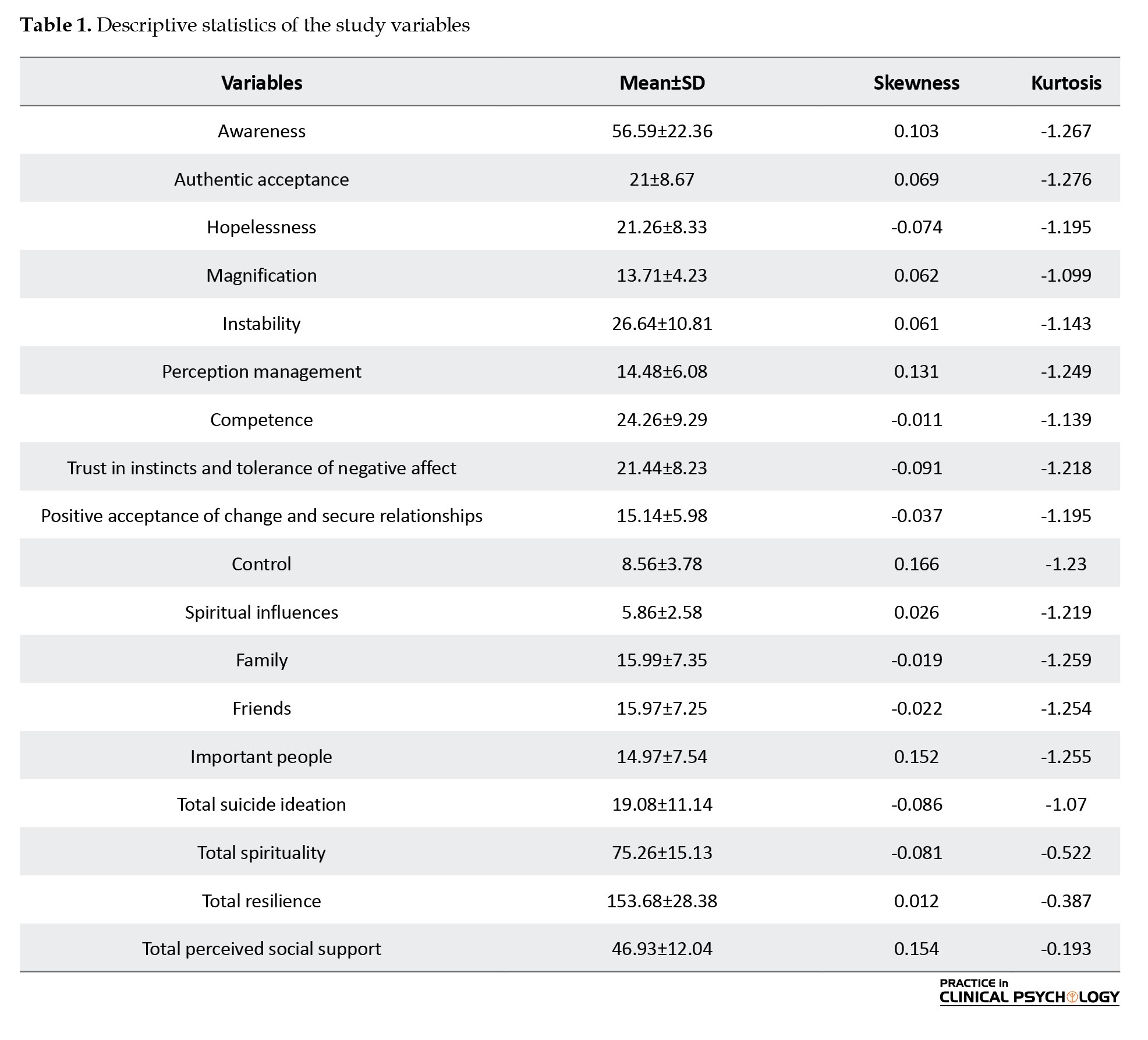
As observed, the skewness and kurtosis indices of the variables ranged between -2 and +2, indicating that the distributions of the variables were approximately normal and suitable for SEM. Prior to data analysis, the assumptions of SEM were examined. Accordingly, the normality of the variables was assessed using the Kolmogorov–Smirnov test, and the results indicated that the distributions of the variables were normal (P>0.05). The SEM analysis was conducted based on the sample correlation matrix (Table 2).
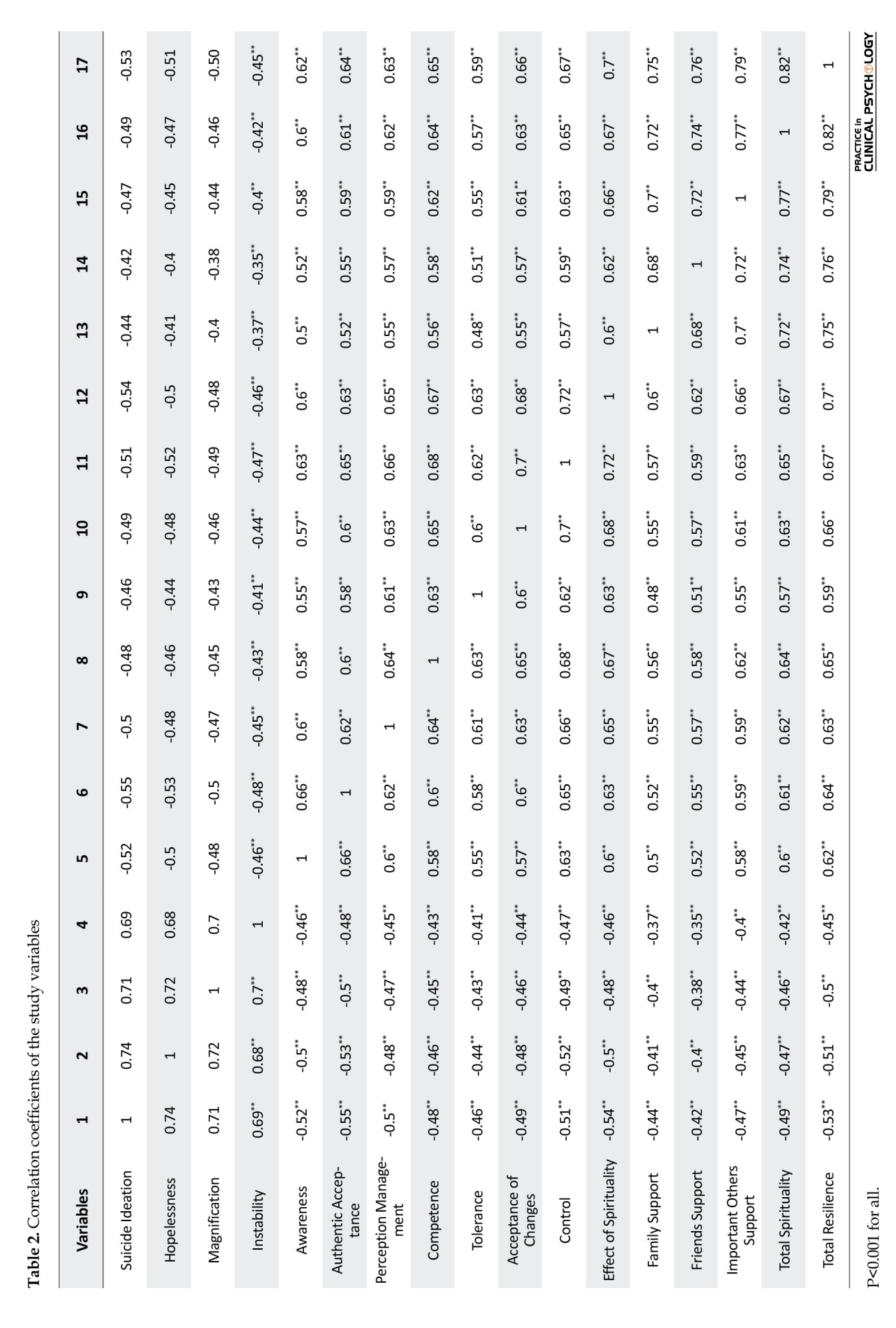
The results of Table 2 indicated a significant correlation among all the study variables.
To examine the assumption of no autocorrelation in the residuals of the research model, the Durbin–Watson statistic was used, and the obtained value was 1.843, which fell within the acceptable range of 1.5 to 2.5; therefore, the assumption of no autocorrelation in the data was confirmed. Furthermore, to test the assumption of multicollinearity among the exogenous variables, the tolerance and variance inflation factor (VIF) indices were employed. The results indicated that this assumption was satisfied, as the tolerance values for all variables were close to 1, and the VIF values for the variables were below the critical threshold of 2. Table 3 presents the fit indices of the research model.
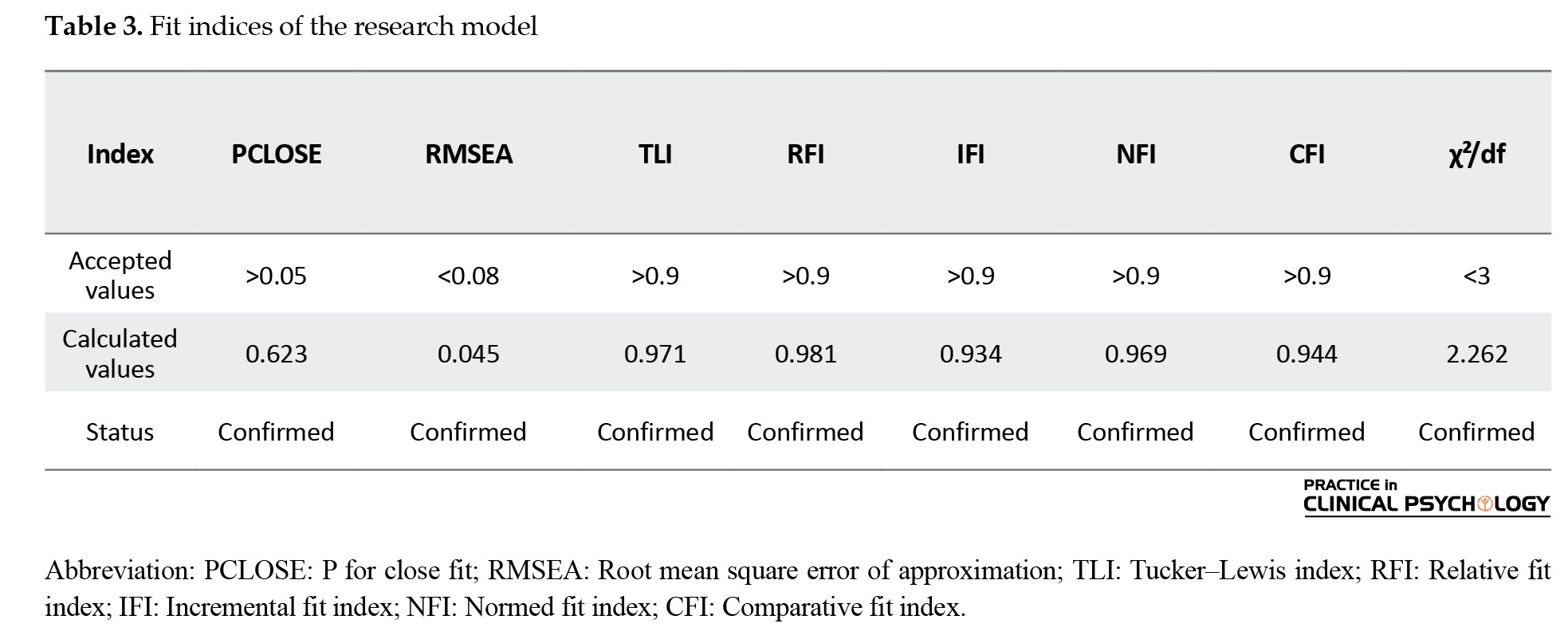
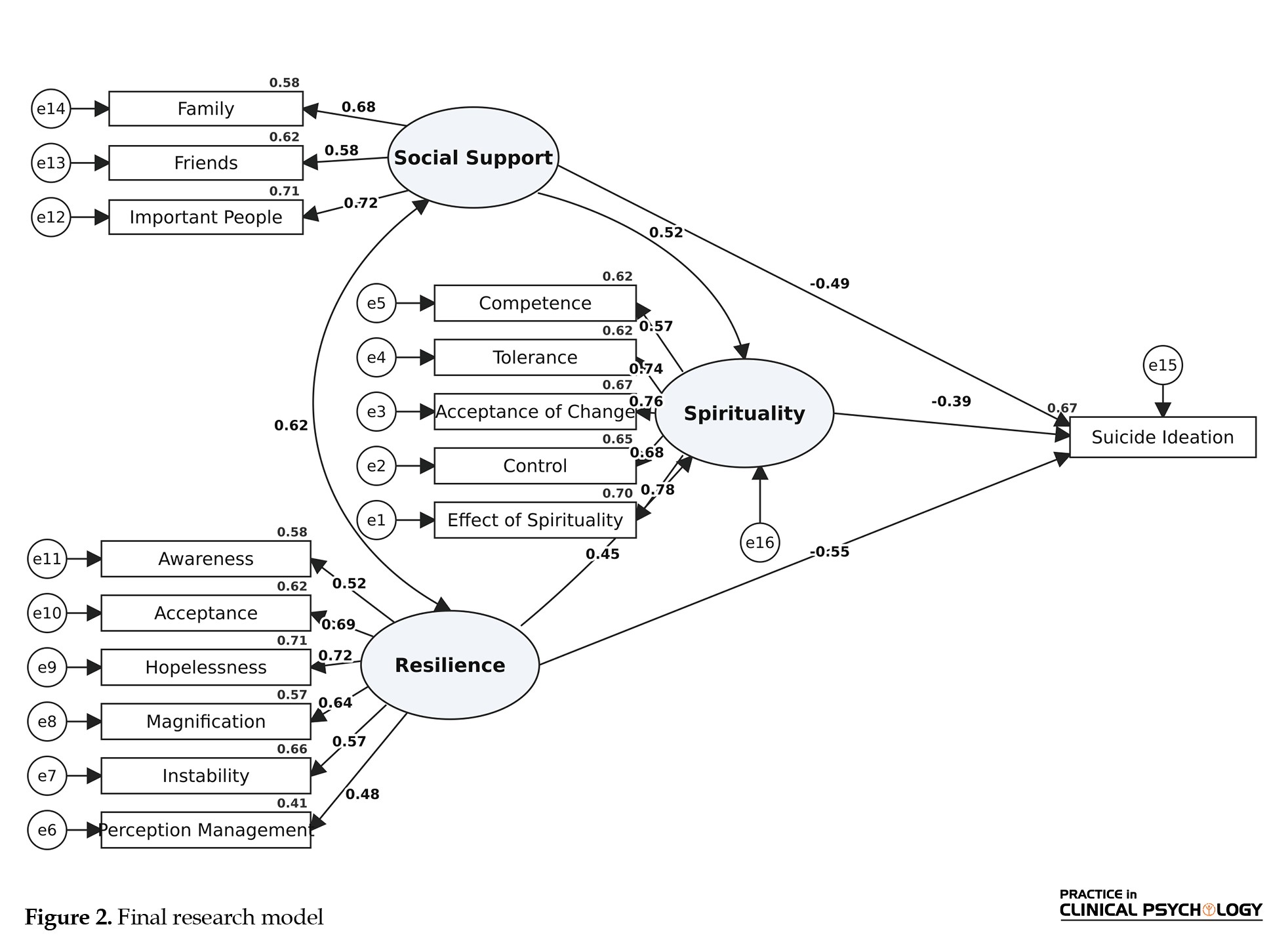
Based on Table 3, the model demonstrated a good fit. The standardized path coefficients of the conceptual model are presented in Figure 2.
Full-Text: (48 Views)
Introduction
Suicidal ideation represents one of the most critical global mental health issues, with potentially devastating consequences for individuals, families, and society (Noroozi Homayoon et al., 2025a). According to the World Health Organization (WHO), nearly 800,000 people die by suicide annually, and adolescents are considered especially vulnerable, showing higher prevalence rates (Hatami Nejad et al., 2024). In Iran, studies indicate that between 15% and 21% of students, particularly girls, have reported experiencing suicidal ideation (Heidari et al., 2024). The considerable prevalence of suicidal thoughts during adolescence—a developmental period characterized by profound psychological, emotional, and social changes—poses serious challenges for health and education systems. The onset of such ideation is generally shaped by a complex interaction of individual, psychological, and environmental factors (Lewis et al., 2025). Identifying these determinants is therefore essential for effective prevention and the development of tailored interventions (Bakken & Malone, 2024). Accordingly, exploring the psychological correlates of suicidal ideation in female students offers valuable insights into this phenomenon and contributes to reducing its harmful effects (Meena et al., 2024).
Suicidal ideation includes thoughts of ending one’s life, which may range from brief considerations to elaborate planning, and it is widely regarded as a critical indicator of mental health (van Ballegooijen et al., 2025). Beck’s cognitive model (1979) attributes such ideation to the interaction of negative schemas, cognitive distortions, and hopelessness, often intensified by traumatic experiences (Li et al., 2024). Lester’s theory explains suicide as the result of the interaction between psychological stress and unmet fundamental needs, emphasizing that inadequate social support and misalignment with personal values heighten suicide risk (Lester, 2024b). Female students exposed to childhood trauma may experience more severe suicidal ideation due to psychological consequences, such as guilt, shame, and reduced self-worth (Liu et al., 2024). Psychological frameworks highlight that early trauma fosters negative self-perceptions and worldviews, thereby elevating suicide risk (Hatami Nejad et al., 2025). This concern is particularly salient during adolescence, when developmental transitions and social pressures are at their peak (Lester, 2024a).
One of the variables proposed in the current study to have a positive relationship with suicidal ideation is perceived social support. In this regard, perceived social support is recognized as a fundamental factor in reducing the risk of suicidal ideation in adolescents (Cao et al., 2024). This support originates from various sources, such as family, friends, teachers, and other members of the adolescent’s social network, and helps them cope with emotional distress and psychological pressures by providing a sense of security and belonging (Harahap et al., 2024; Noroozi Homayoon et al., 2024; Noroozi Homayoon et al., 2025b). In times of crisis and stress, such as academic difficulties or social pressures, perceived social support acts as a protective factor, reducing anxiety and emotional tension, which are often precursors to suicidal thoughts (Azpiazu et al., 2024). This support provides adolescents with emotional backing, enabling them to face challenges more effectively and resist negative thoughts that could lead to suicidal ideation (Rueger & Johnson, 2024). Furthermore, it can enhance adolescents’ self-esteem and confidence, influencing their ability to manage emotional pain and reduce the likelihood of suicidal thoughts (Petersen et al., 2023). Several studies have shown that adolescents with stronger social support are less likely to experience suicidal ideation and are better equipped to handle the emotional turmoil associated with difficult life events (Adjei et al., 2024). In other words, social support functions not only as an emotional backup but also as a significant buffer against the development of suicidal thoughts, playing a crucial role in the emotional and psychological well-being of adolescents. Research also supports the association between perceived social support and a reduction in suicidal ideation (Yu et al., 2024).
The second variable hypothesized in this study to have a positive and significant relationship with suicidal ideation is resilience. Resilience, as one of the most important protective psychological constructs, refers to an individual’s ability to effectively adapt to challenging situations, recover psychological functioning after stress, and return to emotional balance (Monie et al., 2025; Noroozi Homayoon et al., 2025a). This construct not only strengthens the capacity to cope with problems but also acts as a deterrent against severe psychological outcomes, including suicidal ideation (Despotović et al., 2025). Adolescents with higher resilience exhibit greater ability to maintain emotional stability and utilize adaptive strategies when faced with failure, academic pressure, family conflicts, or social stress (Padır et al., 2025). One of the enhancing factors of resilience is the use of cognitive emotion regulation, because when adolescents can adjust their cognitive appraisals and manage negative emotions through cognitive reframing, acceptance, or reinterpreting experiences, the likelihood of falling into a cycle of negative thoughts and hopelessness decreases. Conversely, weakness in these strategies can increase vulnerability to intense emotions, hopelessness, and ultimately suicidal ideation (Hatami Nejad et al., 2025; Hatami Nejad et al., 2024; Hatami Nejad et al., 2025; Noroozi Homayoon et al., 2025b; Noroozi Homayoon et al., 2023; Noroozi Homayoon et al., 2024; Noroozi Homayoon Homayoon et al., 2024). Overall, resilience is a key protective factor in suicide prevention, and its connection with cognitive emotion regulation suggests that interventions strengthening cognitive-emotional skills can play a significant role in reducing the suicide ideation among adolescents (Basu et al., 2025; Flinn et al.; Herry et al., 2025; Yang, 2025).
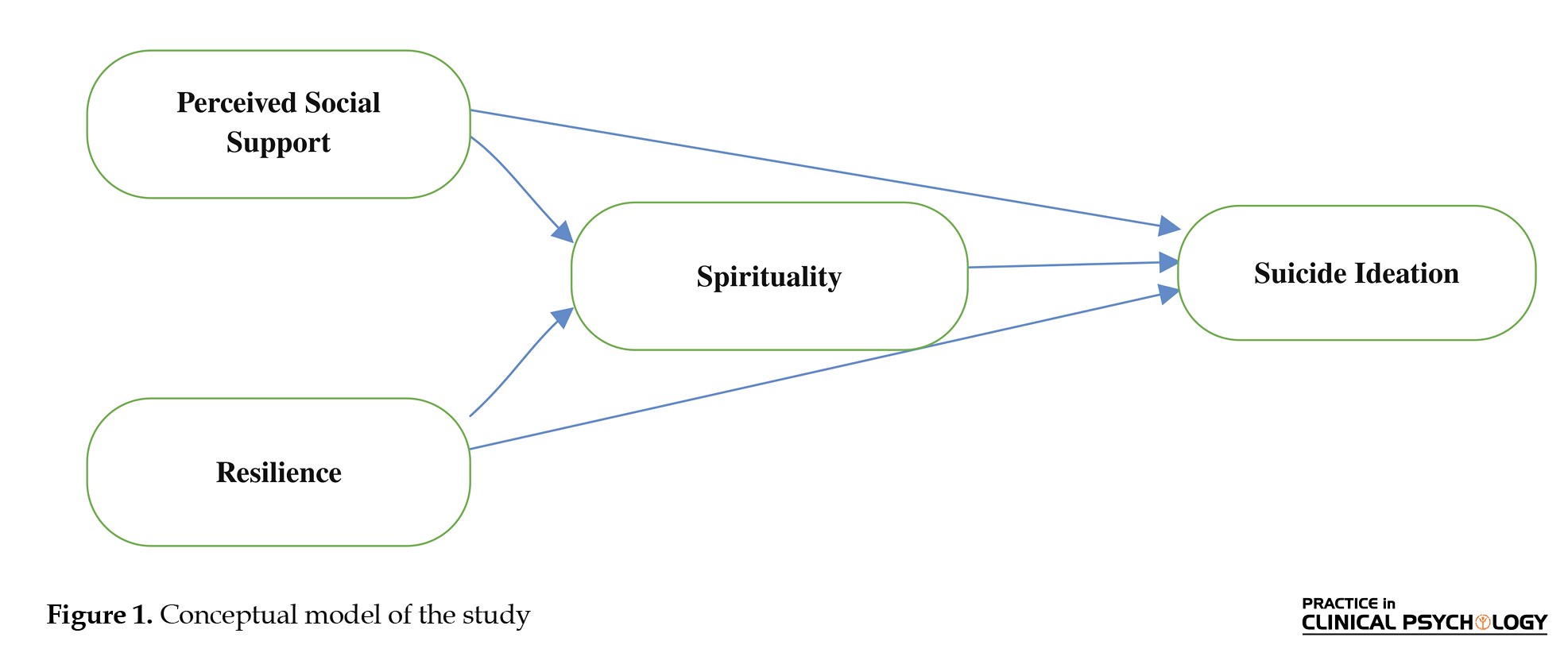
Also, spirituality, in theoretical frameworks of psychology, spirituality is recognized as an internal source of meaning, hope, and psychological coherence that helps individuals cope with difficult situations (Nagy et al., 2024). According to meaning-making and humanistic approaches, spiritual experiences allow individuals to perceive their lives as purposeful, understandable, and valuable, directly reducing psychological distress and feelings of emptiness (Obregon et al., 2024). In this context, spirituality operates as a protective factor by enhancing hope, self-efficacy, acceptance, and inner reliance, all of which make it a significant factor in reducing emotional and cognitive struggles associated with suicidal ideation (Cousin et al., 2024). In relation to suicidal ideation, spirituality helps provide a framework for finding meaning in suffering, reducing existential loneliness, and increasing hope, thus significantly decreasing the likelihood of suicidal thoughts (Amiri et al., 2024; Currier et al., 2025; Euseche & Muñoz-García, 2025; Ghahramani et al., 2024; van den Brink et al., 2024). Moreover, spirituality can act as a mediating variable; that is, perceived social support can enhance spiritual connection and a sense of existential value, which in turn boosts resilience (Chen et al., 2023; Mohammadi et al., 2024; Novakov, 2024). The importance and necessity of this study lie in the increasing prevalence of suicidal ideation among adolescents and its negative impact on their mental health. Given that adolescents undergo significant emotional and cognitive changes, social support, resilience, and spirituality are key factors in preventing suicidal thoughts. This study examined the relationships between these factors and the role of spirituality as a mediating variable in enhancing resilience and reducing suicidal ideation, which can serve as a basis for preventive and supportive interventions in this area. The conceptual model of the study is presented in Figure 1.
Suicidal ideation represents one of the most critical global mental health issues, with potentially devastating consequences for individuals, families, and society (Noroozi Homayoon et al., 2025a). According to the World Health Organization (WHO), nearly 800,000 people die by suicide annually, and adolescents are considered especially vulnerable, showing higher prevalence rates (Hatami Nejad et al., 2024). In Iran, studies indicate that between 15% and 21% of students, particularly girls, have reported experiencing suicidal ideation (Heidari et al., 2024). The considerable prevalence of suicidal thoughts during adolescence—a developmental period characterized by profound psychological, emotional, and social changes—poses serious challenges for health and education systems. The onset of such ideation is generally shaped by a complex interaction of individual, psychological, and environmental factors (Lewis et al., 2025). Identifying these determinants is therefore essential for effective prevention and the development of tailored interventions (Bakken & Malone, 2024). Accordingly, exploring the psychological correlates of suicidal ideation in female students offers valuable insights into this phenomenon and contributes to reducing its harmful effects (Meena et al., 2024).
Suicidal ideation includes thoughts of ending one’s life, which may range from brief considerations to elaborate planning, and it is widely regarded as a critical indicator of mental health (van Ballegooijen et al., 2025). Beck’s cognitive model (1979) attributes such ideation to the interaction of negative schemas, cognitive distortions, and hopelessness, often intensified by traumatic experiences (Li et al., 2024). Lester’s theory explains suicide as the result of the interaction between psychological stress and unmet fundamental needs, emphasizing that inadequate social support and misalignment with personal values heighten suicide risk (Lester, 2024b). Female students exposed to childhood trauma may experience more severe suicidal ideation due to psychological consequences, such as guilt, shame, and reduced self-worth (Liu et al., 2024). Psychological frameworks highlight that early trauma fosters negative self-perceptions and worldviews, thereby elevating suicide risk (Hatami Nejad et al., 2025). This concern is particularly salient during adolescence, when developmental transitions and social pressures are at their peak (Lester, 2024a).
One of the variables proposed in the current study to have a positive relationship with suicidal ideation is perceived social support. In this regard, perceived social support is recognized as a fundamental factor in reducing the risk of suicidal ideation in adolescents (Cao et al., 2024). This support originates from various sources, such as family, friends, teachers, and other members of the adolescent’s social network, and helps them cope with emotional distress and psychological pressures by providing a sense of security and belonging (Harahap et al., 2024; Noroozi Homayoon et al., 2024; Noroozi Homayoon et al., 2025b). In times of crisis and stress, such as academic difficulties or social pressures, perceived social support acts as a protective factor, reducing anxiety and emotional tension, which are often precursors to suicidal thoughts (Azpiazu et al., 2024). This support provides adolescents with emotional backing, enabling them to face challenges more effectively and resist negative thoughts that could lead to suicidal ideation (Rueger & Johnson, 2024). Furthermore, it can enhance adolescents’ self-esteem and confidence, influencing their ability to manage emotional pain and reduce the likelihood of suicidal thoughts (Petersen et al., 2023). Several studies have shown that adolescents with stronger social support are less likely to experience suicidal ideation and are better equipped to handle the emotional turmoil associated with difficult life events (Adjei et al., 2024). In other words, social support functions not only as an emotional backup but also as a significant buffer against the development of suicidal thoughts, playing a crucial role in the emotional and psychological well-being of adolescents. Research also supports the association between perceived social support and a reduction in suicidal ideation (Yu et al., 2024).
The second variable hypothesized in this study to have a positive and significant relationship with suicidal ideation is resilience. Resilience, as one of the most important protective psychological constructs, refers to an individual’s ability to effectively adapt to challenging situations, recover psychological functioning after stress, and return to emotional balance (Monie et al., 2025; Noroozi Homayoon et al., 2025a). This construct not only strengthens the capacity to cope with problems but also acts as a deterrent against severe psychological outcomes, including suicidal ideation (Despotović et al., 2025). Adolescents with higher resilience exhibit greater ability to maintain emotional stability and utilize adaptive strategies when faced with failure, academic pressure, family conflicts, or social stress (Padır et al., 2025). One of the enhancing factors of resilience is the use of cognitive emotion regulation, because when adolescents can adjust their cognitive appraisals and manage negative emotions through cognitive reframing, acceptance, or reinterpreting experiences, the likelihood of falling into a cycle of negative thoughts and hopelessness decreases. Conversely, weakness in these strategies can increase vulnerability to intense emotions, hopelessness, and ultimately suicidal ideation (Hatami Nejad et al., 2025; Hatami Nejad et al., 2024; Hatami Nejad et al., 2025; Noroozi Homayoon et al., 2025b; Noroozi Homayoon et al., 2023; Noroozi Homayoon et al., 2024; Noroozi Homayoon Homayoon et al., 2024). Overall, resilience is a key protective factor in suicide prevention, and its connection with cognitive emotion regulation suggests that interventions strengthening cognitive-emotional skills can play a significant role in reducing the suicide ideation among adolescents (Basu et al., 2025; Flinn et al.; Herry et al., 2025; Yang, 2025).
Also, spirituality, in theoretical frameworks of psychology, spirituality is recognized as an internal source of meaning, hope, and psychological coherence that helps individuals cope with difficult situations (Nagy et al., 2024). According to meaning-making and humanistic approaches, spiritual experiences allow individuals to perceive their lives as purposeful, understandable, and valuable, directly reducing psychological distress and feelings of emptiness (Obregon et al., 2024). In this context, spirituality operates as a protective factor by enhancing hope, self-efficacy, acceptance, and inner reliance, all of which make it a significant factor in reducing emotional and cognitive struggles associated with suicidal ideation (Cousin et al., 2024). In relation to suicidal ideation, spirituality helps provide a framework for finding meaning in suffering, reducing existential loneliness, and increasing hope, thus significantly decreasing the likelihood of suicidal thoughts (Amiri et al., 2024; Currier et al., 2025; Euseche & Muñoz-García, 2025; Ghahramani et al., 2024; van den Brink et al., 2024). Moreover, spirituality can act as a mediating variable; that is, perceived social support can enhance spiritual connection and a sense of existential value, which in turn boosts resilience (Chen et al., 2023; Mohammadi et al., 2024; Novakov, 2024). The importance and necessity of this study lie in the increasing prevalence of suicidal ideation among adolescents and its negative impact on their mental health. Given that adolescents undergo significant emotional and cognitive changes, social support, resilience, and spirituality are key factors in preventing suicidal thoughts. This study examined the relationships between these factors and the role of spirituality as a mediating variable in enhancing resilience and reducing suicidal ideation, which can serve as a basis for preventive and supportive interventions in this area. The conceptual model of the study is presented in Figure 1.
Materials and Methods
This study employed an analytical–correlational design using structural equation modeling (SEM) within a fundamental research framework. The statistical population consisted of all second-cycle high school students in Ardabil during the 2024–2025 academic year.
Sampling procedure and access to schools: To access the schools, an official letter of introduction was first obtained from the relevant university and submitted to the Department of Education of Ardabil Province. After receiving the necessary approvals, several secondary high schools from different districts of the city were randomly selected, and the data collection schedule was arranged in coordination with school principals. To ensure student cooperation, an informational session was held in each classroom, during which the research objectives, confidentiality of information, and voluntary nature of participation were fully explained. School counselors assisted in identifying students with suicidal ideation (based on initial screening) to increase participation rates. All participating students voluntarily signed written informed consent forms with full awareness of the research process, and there was no coercion to participate. All ethical principles—including obtaining informed consent from students and their parents, maintaining confidentiality of personal information and responses, omitting names and personal identifiers from questionnaires, allowing withdrawal at any stage of the study, and providing feedback on results to schools and counselors for follow-up therapeutic interventions when necessary—were strictly observed.
Sample size justification based on Kline (2016): According to Kline (2016) –a leading reference in SEM –a minimum ratio of 20 cases per free parameter is recommended for stable and reliable parameter estimates. Given the 15 observed variables in the present study, this guideline yields an ideal sample size of 300 participants (15×20=300). However, Kline also notes that for models with moderate complexity and good indicator reliability, a sample size of 200 or more is acceptable Kline (2016). Considering practical constraints in school-based research, a final sample of 270 participants was selected, which exceeds Kline’s minimum threshold and approaches the recommended 20:1 ratio, thereby ensuring adequate statistical power and the stability of SEM estimates. The final sample consisted of 167 girls and 103 boys who exhibited suicidal ideation. During the data collection process, an initial sample of 310 students with suicidal ideation (identified through initial screening) was selected using convenience sampling. Of these, 27 participants (8.7%) were excluded from the study for various reasons, including unwillingness to continue cooperation after initial explanations (n=12), absence on the day of questionnaire administration (n=8), incomplete questionnaire responses (n=5), and failure to obtain written parental consent (n=2). Ultimately, 283 questionnaires were collected. After removing invalid questionnaires and statistical outliers using the Z-test (scores above or below 3 standard deviations), 270 valid questionnaires were included in the final analysis. The final attrition rate was 12.9%, which, according to previous school-based studies (with typical attrition rates ranging from 10% to 20%), is considered acceptable and reasonable.
Inclusion and exclusion criteria: Inclusion criteria were: (a) presence of suicidal ideation based on preliminary screening, (b) willingness to participate in the study, and (c) provision of signed informed consent. Exclusion criteria were: (a) presence of severe psychiatric disorders documented in school records or reported by school counselors, (b) current use of mood-stabilizing psychiatric medications, and (c) incomplete questionnaire responses.
Data analysis: In the proposed structural model, perceived social support and resilience were conceptualized as predictor variables, spirituality was treated as the mediating variable, and suicidal ideation served as the outcome variable. Data analyses involved descriptive statistics (Mean±SD), Pearson correlation coefficients, and SEM to examine direct and indirect relationships among variables. SPSS software, version 27 and AMOS software, version 24 were utilized for statistical analyses.
Instruments
Demographic characteristics
The participants’ demographic characteristics, including age and grade, were collected at the beginning of the questionnaire.
Beck’s suicide ideation questionnaire: This questionnaire was developed by Beck in 1961 and consists of 19 items (Beck et al., 1979). The items assess aspects, such as the wish to die, active and passive suicidal ideation, the duration and frequency of suicidal thoughts, perceived control, suicide-inhibiting factors, and the individual’s readiness to attempt suicide. The 1988 version of Beck’s suicide ideation questionnaire includes five screening items; if responses to these indicate active or passive suicidal ideation, the participant must then complete the remaining 14 items (Beck et al., 1988). The scale is scored on a 3-point Likert scale ranging from 0 to 2. The total score is obtained by summing the item scores and ranges from 0 to 38. Scores 0–5 indicate suicidal ideation, 6–19 indicate suicide readiness, and 20–38 indicate suicidal action. The concurrent validity of the scale was reported to be 0.76, and its reliability using Cronbach’s α was reported to be 0.95 (Yeganeh et al., 2024). In the present study, the reliability of the questionnaire was calculated using Cronbach’s α, yielding a coefficient of 0.76.
Perceived social support scale: This 12-item scale was developed by Zimet et al. in 1988 to measure perceived social support in three areas: family, friends, and significant others. The scale uses a 7-point Likert scale ranging from strongly disagree to strongly agree. Higher scores indicate higher perceived social support. The validity and reliability of this scale have been reported as good (Zimet et al., 1988). In an Iranian study, the Cronbach’s α for the family, friends, and significant others dimensions were 0.86, 0.86, and 0.82, respectively (Basharat, 2007). In the present study, Cronbach’s α was calculated as 0.83.
Resilience scale: The Connor-Davidson resilience scale (CD-RISC), a 25-item scale developed in 2003, measures five components: 1) personal competence, 2) trust in one’s instincts, 3) tolerance of negative affect, 4) spiritual influences, and 5) control. Scoring is based on a 5-point Likert scale (from completely true to completely false). The minimum and maximum scores range from 0 to 100. A higher score indicates higher resilience. The test-retest reliability of this scale was reported as 0.87 (Connor & Davidson, 2003). Convergent validity with the Kobasa Hardiness Scale yielded a correlation of 0.83 (Connor & Davidson, 2003). In a study in Iran, the internal consistency was found to be 0.80, with individual subscale Cronbach’s α ranging from 0.75 to 0.83 (Keyhani et al., 2015). In the present study, Cronbach’s α was calculated as 0.74.
Spirituality assessment scale: The Hall and Edwards spirituality assessment scale (1996) is a self-report tool designed to assess two aspects of spiritual development: awareness of the presence of God (a clear image of God’s presence) and the quality of the relationship with God (listening to the divine voice as an essential part of life) (Hall & Edwards, 2002). This scale consists of 47 items and 6 subscales: awareness, authentic acceptance, hopelessness, magnification, instability, and perception management. The initial version of the scale included 5 subscales (awareness, authentic acceptance, hopelessness, magnification, and instability), and in 2002, Hall and Edwards revised the scale by adding the perception management subscale (Hall & Edwards, 2002). The scale is scored using a 5-point Likert scale, ranging from “strongly agree” to “strongly disagree”, with a minimum score of 47 and a maximum score of 235. Scores between 47 and 110 indicate low spirituality, scores between 110 and 157 indicate moderate spirituality, and scores between 157 and 235 indicate high spirituality. Hall and Edwards reported the following Cronbach’s α coefficients for the subscales: awareness 0.95, hopelessness 0.90, authentic acceptance 0.83, magnification 0.73, instability 0.84, and perception management 0.77, indicating good reliability for the scale (Hall & Edwards, 2002). Maeishat (2016) validated this scale in the Iranian population and reported a Cronbach’s α of 0.78. Additionally, the correlation coefficient between this scale and King’s spiritual intelligence scale was found to be 0.79, indicating high validity in the Iranian context. In the present study, Cronbach’s α was calculated as 0.71.
Results
A total of 270 students participated in the research, of whom 167(62%) were female and 103(38%) were male. Regarding grade level, 50 students (18.5%) were in the 10th grade, 102 students (37.8%) were in the 11th grade, and 118 students (43.7%) were in the 12th grade. This distribution reflects diversity in academic levels and a balanced representation of genders in the selected sample. Descriptive statistics of the study variables are presented in Table 1.
As observed, the skewness and kurtosis indices of the variables ranged between -2 and +2, indicating that the distributions of the variables were approximately normal and suitable for SEM. Prior to data analysis, the assumptions of SEM were examined. Accordingly, the normality of the variables was assessed using the Kolmogorov–Smirnov test, and the results indicated that the distributions of the variables were normal (P>0.05). The SEM analysis was conducted based on the sample correlation matrix (Table 2).
The results of Table 2 indicated a significant correlation among all the study variables.
To examine the assumption of no autocorrelation in the residuals of the research model, the Durbin–Watson statistic was used, and the obtained value was 1.843, which fell within the acceptable range of 1.5 to 2.5; therefore, the assumption of no autocorrelation in the data was confirmed. Furthermore, to test the assumption of multicollinearity among the exogenous variables, the tolerance and variance inflation factor (VIF) indices were employed. The results indicated that this assumption was satisfied, as the tolerance values for all variables were close to 1, and the VIF values for the variables were below the critical threshold of 2. Table 3 presents the fit indices of the research model.
Based on Table 3, the model demonstrated a good fit. The standardized path coefficients of the conceptual model are presented in Figure 2.
Table 4 presents the direct effects among the study variables.
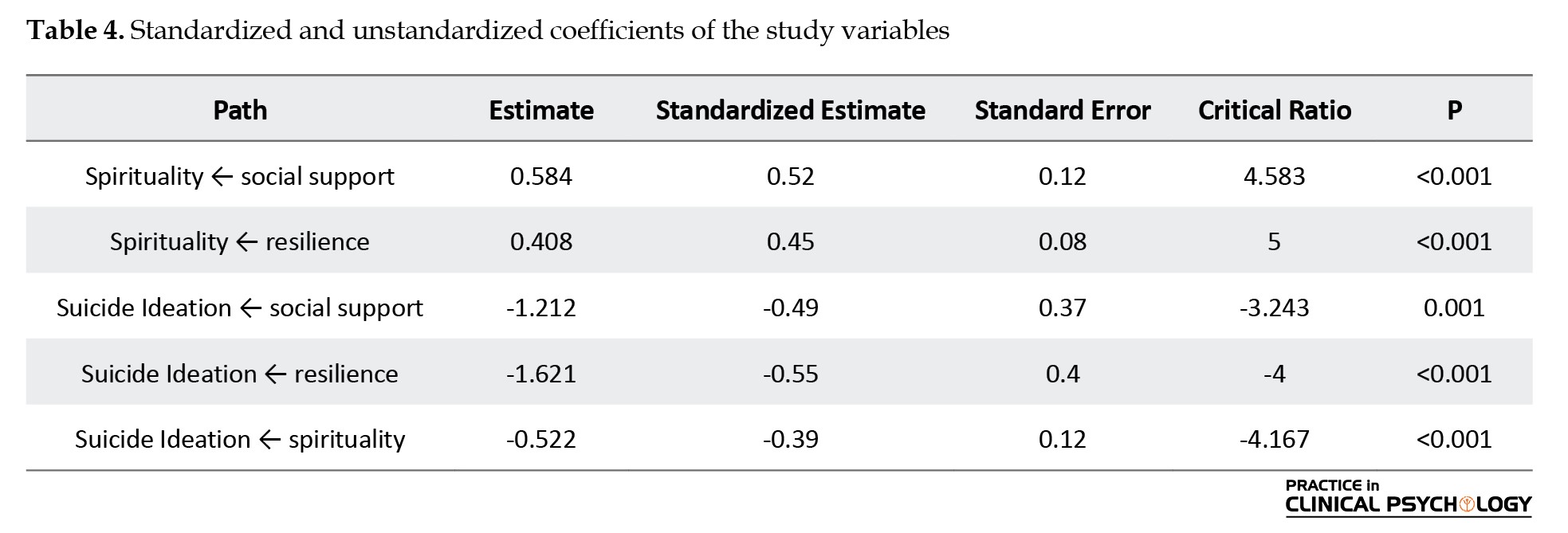
Table 4 presents the standardized and unstandardized coefficients of the variables. The results indicated significant relationships between the variables. Spirituality was positively influenced by both social support (estimate=0.584, P<0.001) and resilience (estimate=0.408, P<0.001). In contrast, suicide ideation was negatively predicted by both social support (estimate=-1.212, P=0.001) and resilience (estimate=-1.621, P<0.001), as well as spirituality (estimate=-0.522, P<0.001).
To examine the significance of the mediating role of spirituality in the relationship between perceived social support and resilience and suicidal ideation in adolescents, a bootstrap method with 2000 resamples was employed.
The indirect effects through spirituality in predicting suicidal ideation were significant. Specifically, perceived social support had a significant negative indirect effect (-0.028) on suicidal ideation through increasing spirituality, while resilience also demonstrated a significant negative indirect effect (-0.038) on suicidal ideation through spirituality. These findings suggest that both perceived social support and resilience reduced suicidal ideation by enhancing spirituality, with the significance levels indicating that the effects are robust and reliable.
Discussion
The present study assessed the mediating role of spirituality in the relationship between perceived social support and resilience and suicidal ideation in adolescents. The results of first hypothesis revealed that perceived social support had a significant negative relationship with suicidal ideation. This finding is consistent with the results of Harahap et al. (2024), Noroozi Homayoon Homayoon et al. (2024), and Hatami Nejad et al. (2025). Perceived social support functions as a critical protective factor against suicidal ideation. Social support, derived from various sources, such as family, friends, teachers, and other members of an adolescent’s social network, strengthens feelings of security, belonging, and self-worth. When adolescents receive sufficient social support, it helps mitigate psychological distress by providing emotional backing, thereby facilitating their ability to cope with life challenges effectively. This support fosters a sense of belonging and value, which can counter feelings of isolation and hopelessness—key precursors to suicidal thoughts. Specifically, family and peer support, as primary sources of social support, enable adolescents to cope with social pressures and personal crises more effectively, buffering them from the negative effects of stress. This finding also underscores the significance of social support in enhancing resilience, which, in turn, contributes to reducing suicidal ideation. Moreover, the results suggest that the quality and availability of social support should be considered in both preventive and therapeutic interventions for adolescents at risk of suicidal thoughts. Therefore, these findings emphasize the essential role of perceived social support in mitigating the risk of suicidal ideation and highlight the need for targeted interventions that enhance social support networks for adolescents. The bootstrap results of the indirect effects in the research model are shown in Table 5.
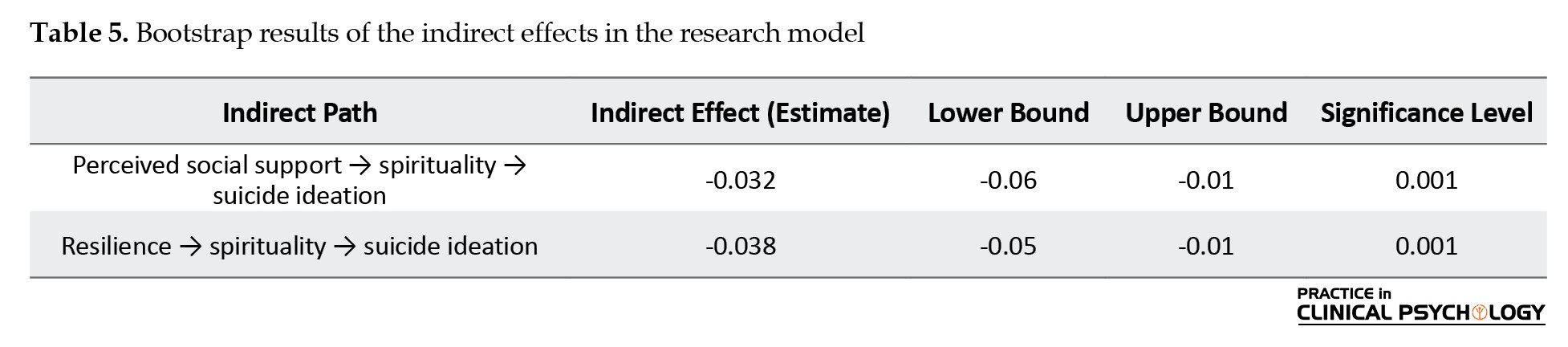
As presented in Table 5, the results of the second hypothesis also revealed that resilience has a significant negative relationship with suicidal ideation.. This finding is consistent with the results of Basu et al. (2025), Flinn et al. (2025), Herry et al. (2025), and Yang (2025). Resilience plays a protective role against suicidal ideation by helping individuals cope with stress and adversity in adaptive ways. Resilience, defined as the ability to bounce back from difficult situations and adapt positively to challenges, enables adolescents to manage emotional distress without resorting to maladaptive behaviors, such as suicidal thoughts. When adolescents possess higher levels of resilience, they are better equipped to process negative emotions, utilize coping strategies effectively, and maintain a sense of hope despite difficulties. This ability to manage and recover from stress can reduce the feelings of helplessness and hopelessness, which are often precursors to suicidal ideation. Furthermore, resilient individuals are more likely to engage in problem-solving behaviors, seek support when needed, and maintain a positive outlook on life, all of which can act as protective factors against suicidal thoughts. Therefore, enhancing resilience in adolescents through targeted interventions may be an effective strategy to reduce suicidal ideation, making it an essential focus for both prevention and therapeutic efforts. This finding underscores the importance of fostering resilience in adolescents as a critical factor in suicide prevention.
The results of the third hypothesis also revealed that spirituality, both as a mediating variable and directly, had a significant negative relationship with suicidal ideation. This finding aligns with the results of Amiri et al. (2024), Currier et al. (2025), Euseche and Muñoz-García (2025), Ghahramani et al. (2024), van den Brink et al. (2024), Chen et al. (2023), Mohammadi et al. (2024), and (Novakov, 2024). Spirituality serves as a protective factor against suicidal ideation by providing individuals with a sense of purpose, meaning, and hope. As a mediating variable, spirituality can buffer the impact of stressors and negative life events on mental health by fostering positive coping mechanisms. Spirituality encourages individuals to find meaning in their experiences and build resilience in the face of adversity, which can reduce feelings of hopelessness and despair—key contributors to suicidal thoughts. Furthermore, spirituality may provide a strong support system, promoting a sense of connection to others and to a higher power, which helps individuals manage psychological distress. Consequently, interventions that enhance spirituality may serve as an effective approach to reduce suicidal ideation, particularly among vulnerable populations, such as adolescents. The limitations of this study include the use of convenience sampling, demographic constraints within the study population, and the absence of cultural and social factors influencing suicidal ideation. Additionally, due to the cross-sectional design, causal relationships cannot be conclusively inferred. Furthermore, the model does not show the difference between girls and boys in the rate of suicidal thoughts, and it would have been better if this difference had been analyzed and presented. Future research suggestions include examining the impact of interventions based on social support and spirituality on reducing suicidal ideation across different age groups and cultural contexts. Furthermore, future studies should explore other mediating factors, such as psychological competencies and personality traits. At a practical level, this study suggests the implementation of interventions aimed at enhancing resilience and social support as a preventive approach to reduce suicidal ideation among adolescents, which could be applied in educational and counseling settings.
Conclusion
Perceived social support, resilience, and spirituality are significantly associated with suicidal ideation in adolescents. These factors can play a direct and indirect protective role in reducing suicidal thoughts. Strengthening these factors could be considered an effective strategy in preventing suicidal ideation in adolescents.
Ethical Considerations
Compliance with ethical guidelines
This study was approved by the Research Ethics Committee of the University of Mohaghegh Ardabili, Ardabil, Iran (Code: IR.UMA.REC.1405.013). All procedures performed in this study involving human participants were in accordance with the ethical standards of the institutional research committee and with the 1964 Helsinki declaration and its later amendments. Prior to participation, written informed consent was obtained from all students and their legal guardians after they were fully informed about the study’s objectives, procedures, confidentiality, and their right to withdraw from the study at any time without any consequences.
Funding
This study was conducted at the University of Mohaghegh Ardabili, Ardabil, Iran, and received no financial support.
Authors' contributions
Conceptualization, review and editing: Mohammadreza Noroozi Homayoon, Esmaeil Sadri Damirchi, Ali Sheykholeslami, Vahid Abbasi, David Lester; Methodology, data collection, data analysis, and writing the original draft: Mohammadreza Noroozi Homayoon; Supervision and project administration: Mohammadreza Noroozi Homayoon, Esmaeil Sadri Damirchi, Ali Sheykholeslami, Vahid Abbasi, and David Lester.
Conflict of interest
The authors declared no conflict of interest.
Acknowledgments
The authors sincerely express their gratitude to all the participating students and the Research Deputy of the University of Mohaghegh Ardabili, Ardabil, Iran.
References
Adjei, N., Jonsson, K. R., Straatmann, V. S., Bellevia, A., Yaya, S., & McGovern, R., et al. (2024). How does family support mitigate the impact of childhood adversity on adolescent mental health? The European Journal of Public Health, 34(Supplement_3), ckae144.112. [DOI:10.1093/eurpub/ckae144.112] [PMCID]
Amiri, S., Mohtashami, J., Memaryan, N., & Vasli, P. (2024). Spiritual needs of people with suicidal ideation: A qualitative study. Current Psychology, 43(2), 1359-1368. [DOI:10.1007/s12144-023-04424-4]
Azpiazu, L., Antonio-Aguirre, I., Izar-de-la-Funte, I., & Fernández-Lasarte, O. (2024). School adjustment in adolescence explained by social support, resilience and positive affect. European Journal of Psychology of Education, 39, 3709-3728. [DOI:10.1007/s10212-023-00785-3]
Bakken, N. W., & Malone, S. E. (2024). Depression, self-injury, and suicidal ideation: An examination of the risk factors and psychosocial correlates among female college students. Deviant Behavior, 45(1), 95-109. [DOI:10.1080/01639625.2023.2238238]
Basu, T., Dangwal, P., & Deokar, M. (2025). Suicidal Ideation and Resilience Among Orphan and Non-orphan Adolescents in the Indian City of Pune. Annals of Neurosciences, 09727531241312733. Advance online publication. [DOI:10.1177/09727531241312733] [PMID]
Beck, A. T., Kovacs, M., & Weissman, A. (1979). Assessment of suicidal intention: The scale for suicide ideation. Journal of Consulting and Clinical Psychology, 47(2), 343-352. [DOI:10.1037/0022-006X.47.2.343] [PMID]
Beck, A. T., Steer, R. A., & Ranieri, W. F. (1988). Scale for suicide ideation: Psychometric properties of a self-report version. Journal of Clinical Psychology, 44(4), 499-505. [DOI:10.1002/1097-4679(198807)44:4%3C499::aid-jclp2270440404%3E3.0.co;2-6] [PMID]
Besharat, M. A. (2019). Multidimensional scale of perceived social support: questionnaire, instruction and scoring. Journal of Developmental Psychology: Iranian Psychologists, 16(60), 447–449. [DOI:10.22054/jem.2025.82349.3576]
Cao, F., Li, J., Xin, W., & Cai, N. (2024). Impact of social support on the resilience of youth: mediating effects of coping styles. Frontiers in Public Health, 12, 1331813. [DOI:10.3389/fpubh.2024.1331813] [PMID]
Chen, C., Sun, X., Liu, Z., Jiao, M., Wei, W., & Hu, Y. (2023). The relationship between resilience and quality of life in advanced cancer survivors: Multiple mediating effects of social support and spirituality. Frontiers in Public Health, 11, 1207097.[DOI:10.3389/fpubh.2023.1207097] [PMID]
Connor, K. M., & Davidson, J. R. T. (2003). Development of a new resilience scale: The Connor-Davidson resilience scale (CD-RISC). Depression and Anxiety, 18(2), 76-82. [DOI:10.1002/da.10113] [PMID]
Cousin, L., Braithwaite, D., Anton, S., Zhang, Z., Lee, J. H., & Leewenburgh, C., et al. (2024). A pilot study of a gratitude journaling intervention to enhance spiritual well-being and exercise self-efficacy in Black breast cancer survivors. BMC Psychiatry, 24(1), 931. [DOI:10.1186/s12888-024-06362-2] [PMID]
Currier, J. M., Foster, J. D., vanOyen Witvliet, C., Abernethy, A. D., Root Luna, L. M., & VanHarn, K., et al. (2025). Reasons for living, spirituality and suicidal ideation among adults in a spiritually integrated inpatient programme. Clinical Psychology & Psychotherapy, 32(4), e70127. [DOI:10.1002/cpp.70127] [PMID]
Despotović, M. M., Ignjatović Ristić, D., Banković, D., Milovanović, D., Stepanović, Ž., & Despotović, M., et al. (2025). Suicidality, resilience and burnout in a population of oncology nurses. Scientific Reports, 15(1), 3251. [DOI:10.1038/s41598-025-87677-2] [PMID]
Euseche, M., & Muñoz-García, A. (2025). An exploration of spirituality, religion, and suicidal ideation among colombian adolescents. Omega, 90(4), 1650–1665. [DOI:10.1177/00302228221125968] [PMID]
Flinn, C., Ungar, M., Deschênes, S., & Nearchou, F. (2026). Resilience and trajectories of depressive symptoms and suicidal ideation in the context of exposure to acne: Findings from the Lifelines Cohort Study. Journal of Health Psychology, 31(4), 1609–1626. [DOI:10.1177/13591053251375318] [PMID]
Ghahramani, M., Memaryan, N., Ghahari, S., & Malakouti, K. (2024). When spirituality fades: A qualitative exploration of spiritual deficiencies in suicide ideation and attempt. Mental Health, Religion & Culture, 27(6), 571-592. [DOI:10.1080/13674676.2024.2431708]
Hall, T. W., & Edwards, K. J. (2002). The spiritual assessment inventory: A theistic model and measure for assessing spiritual development. Journal for the Scientific Study of Religion, 41(2), 341-357. [DOI:10.1111/1468-5906.00121]
Harahap, A. P., Adi, M. S., Sriatmi, A., & Purnami, C. T. (2024). Exploring perinatal mental health in Indonesia: A mixed-method study in Mataram, West Nusa Tenggara. Narra J, 4(1), e667. [DOI:10.52225/narra.v4i1.667] [PMID]
Hatami Nejad, M., Sadeghi, M., Sadri Damirchi, E., & Noroozi Homayoon, M. (2025). Examining the influence of alexithymia, gender, and age on drug use among iranian students: the mediating role of emotion regulation difficulties. Scientific Reports, 15(1), 3650. [DOI:10.1038/s41598-025-87394-w] [PMID]
Hatami Nejad, M., Sadri Damirchi, E., Akhavi Samarein, Z., Jafari Moradlo, M., & Noroozi Homayoon, M. (2024). Comparing the effectiveness of narrative therapy and emotion focused therapy on primary maladaptive schemas, impulsivity and depression in students with suicidal thoughts. Journal of Psychological Studies, 20(3), 7-23. [DOI:10.22051/psy.2024.47061.2955]
Hatami Nejad, M., Sadri Damirchi, E., Sadeghi, M., & Noroozi Homayoon, M. (2025). Developing a model of experiential avoidance based on childhood trauma and victimization, mediated by insecure attachment styles. European Journal of Trauma & Dissociation, 9(1), 100513. [DOI:10.1016/j.ejtd.2025.100513]
Heidari, M. E., Irvani, S. S. N., Pourhoseingholi, M. A., Takhtegahi, M. M., Beyranvand, R., & Mardanparvar, H., et al. (2024). Prevalence of depressive symptoms and suicidal behaviors among Iranian high school students: A systematic review and meta-analysis. Journal of Affective Disorders, 346, 9–20. [DOI:10.1016/j.jad.2023.10.060] [PMID]
Herry, E., Dyar, C., Bettin, E., Mereish, E. H., Galupo, M. P., & Feinstein, B. A. (2025). From rejection by others to affirmation of self: Understanding the dynamics of cissexism-based stress, resilience factors, and suicidal ideation among bi+ transgender and gender diverse adults. Psychology of Sexual Orientation and Gender Diversity, 10.1037/sgd0000852. [DOI:10.1037/sgd0000852] [PMID]
Keyhani, M., Taghvaei, D., Rajabi, A., & Amirpour, B. (2015). Internal consistency and confirmatory factor analysis of the Connor-Davidson resilience scale (CD-RISC) among nursing female. Iranian Journal of Medical Education, 14(10), 857–865. [Link]
Kline, R. B. (2016). Principles and practice of structural equation modeling (4th ed.). New York, NY: Guilford Press. [Link]
Lester, D. (2024a). A review of research on suicide in 1998. Suicide Studies, 5(2), 2-63. [Link]
Lester, D. (2024b). Toward a new theory of suicide. Suicide Studies, 5(1), 2-90. [Link]
Lewis, C. P., Klimes-Dougan, B., Croarkin, P. E., & Cullen, K. R. (2025). Understanding the emergence of suicidal thoughts and behaviors in adolescence from a brain and behavioral developmental perspective. Neuropsychopharmacology, 51(1), 259–272. [DOI:10.1038/s41386-025-02168-2] [PMID]
Li, S., Luo, H., Huang, F., Wang, Y., & Siu Fai Yip, P. (2024). Associations between meaning in life and suicidal ideation in young people: A systematic review and meta-analysis. Children and Youth Services Review, 158, 107477. [DOI:10.1016/j.childyouth.2024.107477]
Liu, Y., Fang, Y., Chen, Y., Qin, F., Li, X., & Feng, R., et al. (2024). Relationship between childhood trauma and non-suicidal self-injury in high school students: the mediating role of the stress perception and the moderating role of teacher-student relationship. BMC Psychology, 12(1), 379. [DOI:10.1186/s40359-024-01883-7] [PMID]
Maeishat, M. (2016). [Psychometric properties of the Hall and Edwards spirituality assessment inventory and its relationship with spiritual intelligence in adults (Persian)] MSc thesis, Tehran: Islamic Azad University, Central Tehran Branch.
Meena, R., Gunasundari, B., Omana, J., Sripriya, N., Yamini, G., & Revathi, K. (2024). Mental Health and Suicide Risk Among College Students: A Detailed Exploration of Contributing Factors. Paper presented at In 2024 15th International Conference on Computing Communication and Networking Technologies (ICCCNT), Kamand, India, 24-28 June 2024. [DOI:10.1109/ICCCNT61001.2024.10724071]
Mohammadi, S., Kazemi, M., & Afrashteh, M. Y. (2024). [Mediating Role of Resilience in the Relationship Between Religiosity and Psychological Well-being in Iranian older adults (Persian)]. Salmand: Iranian Journal of Ageing, 19(2), 176-189. [DOI:10.32598/sija.2023.3023.2]
Monie, S. W., Gustafsson, M., Önnered, S., & Guruvita, K. (2025). Renewable and integrated energy system resilience - A review and generic resilience index. Renewable and Sustainable Energy Reviews, 215, 115554. [DOI:10.1016/j.rser.2025.115554]
Nagy, D. S., Isaic, A., Motofelea, A. C., Popovici, D. I., Diaconescu, R. G., & Negru, S. M. (2024). The Role of Spirituality and Religion in Improving Quality of Life and Coping Mechanisms in Cancer Patients. Healthcare (Basel, Switzerland), 12(23), 2349. [DOI:10.3390/healthcare12232349] [PMID]
Noroozi Homayoon, M., Akhavi Samarein, Z., Sadeghi, M., Hatami Nejad, M., & Jafari Moradlo, M. (2025a). Comparing the efficacy of emotion-focused therapy and transcranial direct current stimulation on impulsivity, emotion regulation, and suicidal ideation in young people with borderline personality disorder. Journal of Research in Psychopathology, 6(1), 33–42. [DOI:10.22098/jrp.2024.14488.1221]
Noroozi Homayoon, M., Akhavi Samarein, Z., Sadeghi, M., Hatami Nejad, M., & Jafari Moradlo, M. (2025b). Comparing the efficacy of emotion-focused therapy and transcranial direct current stimulation on impulsivity, emotional regulation, and suicidal ideation in young people with borderline personality disorder. Journal of Research in Psychopathology, 6(1), –. DOI:0.22098/jrp.2024.14488.1221]
Noroozi Homayoon, M., Almasi, M., Sadri Damirchi, E., & Hatami Nejad, M. (2023). Comparing the effectiveness of transcranial direct current stimulation and repeated transcranial magnetic stimulation treatment on working memory, impulsivity and self-harm behaviors in people with borderline personality. Neuropsychology, 8(31), 1–19. [DOI:10.30473/clpsy.2023.65222.1678]
Noroozi Homayoon, M., Hatami Nejad, M., & Sadri Damichi, E. (2024). The effectiveness of psychodrama group therapy and cognitive behavioral play therapy on executive functions (working memory, response inhibition, cognitive flexibility and emotional self regulation) in male students with social anxiety disorder. Neuropsychology, 9(35), 1–17. [DOI:10.30473/clpsy.2024.68482.1710]
Noroozi Homayoon, M., Hatami Nejad, M., Sadri Damirchi, E., & sadeghi, m. (2024). Comparing the effectiveness of emotion regulation training and transcranial direct current stimulation on improving executive functions and impulsivity in male students with attention deficit hyperactivity disorder. Neuropsychology, 10(37). [DOI:10.30473/clpsy.2024.71022.1742]
Noroozi Homayoon, M., Nasiri, A., Sadri Damirchi, E., & Narimani, M. (2025). The comparison of the effectiveness of emotional cognitive regulation training and transcranial direct current stimulation on resilience, cognitive flexibility, and rumination in older women with major depressive disorder. Aging Psychology, 11(1), 42–21. [DOI:10.22126/jap.2025.11478.1821]
Noroozi Homayoon, M., Sadeghi, M., Sadri Damirchi, Esmaeil, & Hatami Nejad, M. (2024). The relationship between sense of coherence and perceived social support with resilience: the mediating role of adaptive cognitive-emotional regulation strategies in older adults. Aging Psychology, 10(4), 427–405. [DOI:10.22126/jap.2025.11026.1801]
Noroozi Homayoon, M., Sadri Damirchi, E., Sadeghi, M., & Hatami Nejad, M. (2025). The structural relationships of perceived social support with craving in substance-dependent individuals undergoing methadone maintenance treatment: the mediating role of anxiety sensitivity. Research on Addiction, 18(74), 85–106. [DOI:10.22034/eti.18.74.8]
Novakov, I. (2024). A closer look into the correlates of spiritual well-being in women with breast cancer: the mediating role of social support. Spiritual Psychology and Counseling, 9(2), 113-132. [DOI:10.37898/spiritualpc.1405539]
Obregon, S. L., Lopes, L. F. D., Silva, W. V. d., Silva, D. J. C. d., Castro, B. L. G. d., & Kuhn, N., et al. (2024). The influence of spirituality in the relationship between religiosity and work engagement: a perspective on social responsibility. Social Responsibility Journal, 20(10), 1909-1934. [DOI:10.1108/srj-01-2024-0043]
Padır, M. A., Doğrusever, C., Tansel, B., & Vangölü, M. S. (2025). Equipping Police officers with resources: Perceived control of internal states and suicide tendencies among Turkish Police officers, unraveling the serial mediating roles of resilience and depression. Current Psychology, 44(11), 10482-10493. [DOI:10.1007/s12144-025-07891-z]
Petersen, K. J., Qualter, P., Humphrey, N., Damsgaard, M. T., & Madsen, K. R. (2023). With a little help from my friends: Profiles of perceived social support and their associations with adolescent mental health. Journal of Child and Family Studies, 32(11), 3430–3446. [DOI: 10.1007/s10826-023-02677-y]
Rueger, S., & Johnson, L. (2024). Social support. In W. Troop-Gordon & E. W. Neblett, Jr. (Eds.), Encyclopedia of Adolescence (Second Edition) (pp. 540-555). New York: Academic Press. [DOI:10.1016/B978-0-323-96023-6.00092-0]
van Ballegooijen, W., Rawee, J., Palantza, C., Miguel, C., Harrer, M., & Cristea, I., et al. (2025). Suicidal ideation and suicide attempts after direct or indirect psychotherapy: A systematic review and meta-analysis. JAMA Psychiatry, 82(1), 31-37. [DOI:10.1001/jamapsychiatry.2024.2854] [PMID]
van den Brink, B., Roodnat, R., Rippe, R. C. A., Cherniak, A. D., van Lieshout, K., & Helder, S. G., et al. (2024). Religiosity, spirituality, meaning-making, and suicidality in psychiatric patients and suicide attempters: a systematic review and meta-analysis. Harvard Review of Psychiatry, 32(6), 195–206.[DOI:10.1097/hrp.0000000000000409] [PMID]
Yang, Y. (2025). Suicidal ideation among US adolescents during the COVID-19 pandemic: Exploring individual, interpersonal, and community-level resilience factors. Public Health, 242, 199-205. [DOI:10.1016/j.puhe.2025.03.009] [PMID]
Yeganeh, R., Bagheri Fard, R., Zamani Samani, F., & Rajaeizadeh, M. (2024). [Structural relationships of insecure attachment and feeling of shame with suicidal thoughts of people with depressive symptoms: the mediating role of emotion dysregulation (Persian)]. Iranian Journal of Psychiatric Nursing, 12(5), 25-38. [DOI:10.22034/ijpn.12.5.25]
Yu, L., Wu, X., Zhang, Q., & Sun, B. (2024). Social support and social adjustment among Chinese secondary school students: the mediating roles of subjective well-being and psychological resilience. Psychology Research and Behavior Management, 17, 3455–3471. [DOI:10.2147/prbm.S477608] [PMID]
Zimet, G. D., Dahlem, N. W., Zimet, S. G., & Farley, G. K. (1988). The multidimensional scale of perceived social support. Journal of Personality Assessment, 52(1), 30-41. [DOI:10.1207/s15327752jpa5201_2]
Table 4 presents the standardized and unstandardized coefficients of the variables. The results indicated significant relationships between the variables. Spirituality was positively influenced by both social support (estimate=0.584, P<0.001) and resilience (estimate=0.408, P<0.001). In contrast, suicide ideation was negatively predicted by both social support (estimate=-1.212, P=0.001) and resilience (estimate=-1.621, P<0.001), as well as spirituality (estimate=-0.522, P<0.001).
To examine the significance of the mediating role of spirituality in the relationship between perceived social support and resilience and suicidal ideation in adolescents, a bootstrap method with 2000 resamples was employed.
The indirect effects through spirituality in predicting suicidal ideation were significant. Specifically, perceived social support had a significant negative indirect effect (-0.028) on suicidal ideation through increasing spirituality, while resilience also demonstrated a significant negative indirect effect (-0.038) on suicidal ideation through spirituality. These findings suggest that both perceived social support and resilience reduced suicidal ideation by enhancing spirituality, with the significance levels indicating that the effects are robust and reliable.
Discussion
The present study assessed the mediating role of spirituality in the relationship between perceived social support and resilience and suicidal ideation in adolescents. The results of first hypothesis revealed that perceived social support had a significant negative relationship with suicidal ideation. This finding is consistent with the results of Harahap et al. (2024), Noroozi Homayoon Homayoon et al. (2024), and Hatami Nejad et al. (2025). Perceived social support functions as a critical protective factor against suicidal ideation. Social support, derived from various sources, such as family, friends, teachers, and other members of an adolescent’s social network, strengthens feelings of security, belonging, and self-worth. When adolescents receive sufficient social support, it helps mitigate psychological distress by providing emotional backing, thereby facilitating their ability to cope with life challenges effectively. This support fosters a sense of belonging and value, which can counter feelings of isolation and hopelessness—key precursors to suicidal thoughts. Specifically, family and peer support, as primary sources of social support, enable adolescents to cope with social pressures and personal crises more effectively, buffering them from the negative effects of stress. This finding also underscores the significance of social support in enhancing resilience, which, in turn, contributes to reducing suicidal ideation. Moreover, the results suggest that the quality and availability of social support should be considered in both preventive and therapeutic interventions for adolescents at risk of suicidal thoughts. Therefore, these findings emphasize the essential role of perceived social support in mitigating the risk of suicidal ideation and highlight the need for targeted interventions that enhance social support networks for adolescents. The bootstrap results of the indirect effects in the research model are shown in Table 5.
As presented in Table 5, the results of the second hypothesis also revealed that resilience has a significant negative relationship with suicidal ideation.. This finding is consistent with the results of Basu et al. (2025), Flinn et al. (2025), Herry et al. (2025), and Yang (2025). Resilience plays a protective role against suicidal ideation by helping individuals cope with stress and adversity in adaptive ways. Resilience, defined as the ability to bounce back from difficult situations and adapt positively to challenges, enables adolescents to manage emotional distress without resorting to maladaptive behaviors, such as suicidal thoughts. When adolescents possess higher levels of resilience, they are better equipped to process negative emotions, utilize coping strategies effectively, and maintain a sense of hope despite difficulties. This ability to manage and recover from stress can reduce the feelings of helplessness and hopelessness, which are often precursors to suicidal ideation. Furthermore, resilient individuals are more likely to engage in problem-solving behaviors, seek support when needed, and maintain a positive outlook on life, all of which can act as protective factors against suicidal thoughts. Therefore, enhancing resilience in adolescents through targeted interventions may be an effective strategy to reduce suicidal ideation, making it an essential focus for both prevention and therapeutic efforts. This finding underscores the importance of fostering resilience in adolescents as a critical factor in suicide prevention.
The results of the third hypothesis also revealed that spirituality, both as a mediating variable and directly, had a significant negative relationship with suicidal ideation. This finding aligns with the results of Amiri et al. (2024), Currier et al. (2025), Euseche and Muñoz-García (2025), Ghahramani et al. (2024), van den Brink et al. (2024), Chen et al. (2023), Mohammadi et al. (2024), and (Novakov, 2024). Spirituality serves as a protective factor against suicidal ideation by providing individuals with a sense of purpose, meaning, and hope. As a mediating variable, spirituality can buffer the impact of stressors and negative life events on mental health by fostering positive coping mechanisms. Spirituality encourages individuals to find meaning in their experiences and build resilience in the face of adversity, which can reduce feelings of hopelessness and despair—key contributors to suicidal thoughts. Furthermore, spirituality may provide a strong support system, promoting a sense of connection to others and to a higher power, which helps individuals manage psychological distress. Consequently, interventions that enhance spirituality may serve as an effective approach to reduce suicidal ideation, particularly among vulnerable populations, such as adolescents. The limitations of this study include the use of convenience sampling, demographic constraints within the study population, and the absence of cultural and social factors influencing suicidal ideation. Additionally, due to the cross-sectional design, causal relationships cannot be conclusively inferred. Furthermore, the model does not show the difference between girls and boys in the rate of suicidal thoughts, and it would have been better if this difference had been analyzed and presented. Future research suggestions include examining the impact of interventions based on social support and spirituality on reducing suicidal ideation across different age groups and cultural contexts. Furthermore, future studies should explore other mediating factors, such as psychological competencies and personality traits. At a practical level, this study suggests the implementation of interventions aimed at enhancing resilience and social support as a preventive approach to reduce suicidal ideation among adolescents, which could be applied in educational and counseling settings.
Conclusion
Perceived social support, resilience, and spirituality are significantly associated with suicidal ideation in adolescents. These factors can play a direct and indirect protective role in reducing suicidal thoughts. Strengthening these factors could be considered an effective strategy in preventing suicidal ideation in adolescents.
Ethical Considerations
Compliance with ethical guidelines
This study was approved by the Research Ethics Committee of the University of Mohaghegh Ardabili, Ardabil, Iran (Code: IR.UMA.REC.1405.013). All procedures performed in this study involving human participants were in accordance with the ethical standards of the institutional research committee and with the 1964 Helsinki declaration and its later amendments. Prior to participation, written informed consent was obtained from all students and their legal guardians after they were fully informed about the study’s objectives, procedures, confidentiality, and their right to withdraw from the study at any time without any consequences.
Funding
This study was conducted at the University of Mohaghegh Ardabili, Ardabil, Iran, and received no financial support.
Authors' contributions
Conceptualization, review and editing: Mohammadreza Noroozi Homayoon, Esmaeil Sadri Damirchi, Ali Sheykholeslami, Vahid Abbasi, David Lester; Methodology, data collection, data analysis, and writing the original draft: Mohammadreza Noroozi Homayoon; Supervision and project administration: Mohammadreza Noroozi Homayoon, Esmaeil Sadri Damirchi, Ali Sheykholeslami, Vahid Abbasi, and David Lester.
Conflict of interest
The authors declared no conflict of interest.
Acknowledgments
The authors sincerely express their gratitude to all the participating students and the Research Deputy of the University of Mohaghegh Ardabili, Ardabil, Iran.
References
Adjei, N., Jonsson, K. R., Straatmann, V. S., Bellevia, A., Yaya, S., & McGovern, R., et al. (2024). How does family support mitigate the impact of childhood adversity on adolescent mental health? The European Journal of Public Health, 34(Supplement_3), ckae144.112. [DOI:10.1093/eurpub/ckae144.112] [PMCID]
Amiri, S., Mohtashami, J., Memaryan, N., & Vasli, P. (2024). Spiritual needs of people with suicidal ideation: A qualitative study. Current Psychology, 43(2), 1359-1368. [DOI:10.1007/s12144-023-04424-4]
Azpiazu, L., Antonio-Aguirre, I., Izar-de-la-Funte, I., & Fernández-Lasarte, O. (2024). School adjustment in adolescence explained by social support, resilience and positive affect. European Journal of Psychology of Education, 39, 3709-3728. [DOI:10.1007/s10212-023-00785-3]
Bakken, N. W., & Malone, S. E. (2024). Depression, self-injury, and suicidal ideation: An examination of the risk factors and psychosocial correlates among female college students. Deviant Behavior, 45(1), 95-109. [DOI:10.1080/01639625.2023.2238238]
Basu, T., Dangwal, P., & Deokar, M. (2025). Suicidal Ideation and Resilience Among Orphan and Non-orphan Adolescents in the Indian City of Pune. Annals of Neurosciences, 09727531241312733. Advance online publication. [DOI:10.1177/09727531241312733] [PMID]
Beck, A. T., Kovacs, M., & Weissman, A. (1979). Assessment of suicidal intention: The scale for suicide ideation. Journal of Consulting and Clinical Psychology, 47(2), 343-352. [DOI:10.1037/0022-006X.47.2.343] [PMID]
Beck, A. T., Steer, R. A., & Ranieri, W. F. (1988). Scale for suicide ideation: Psychometric properties of a self-report version. Journal of Clinical Psychology, 44(4), 499-505. [DOI:10.1002/1097-4679(198807)44:4%3C499::aid-jclp2270440404%3E3.0.co;2-6] [PMID]
Besharat, M. A. (2019). Multidimensional scale of perceived social support: questionnaire, instruction and scoring. Journal of Developmental Psychology: Iranian Psychologists, 16(60), 447–449. [DOI:10.22054/jem.2025.82349.3576]
Cao, F., Li, J., Xin, W., & Cai, N. (2024). Impact of social support on the resilience of youth: mediating effects of coping styles. Frontiers in Public Health, 12, 1331813. [DOI:10.3389/fpubh.2024.1331813] [PMID]
Chen, C., Sun, X., Liu, Z., Jiao, M., Wei, W., & Hu, Y. (2023). The relationship between resilience and quality of life in advanced cancer survivors: Multiple mediating effects of social support and spirituality. Frontiers in Public Health, 11, 1207097.[DOI:10.3389/fpubh.2023.1207097] [PMID]
Connor, K. M., & Davidson, J. R. T. (2003). Development of a new resilience scale: The Connor-Davidson resilience scale (CD-RISC). Depression and Anxiety, 18(2), 76-82. [DOI:10.1002/da.10113] [PMID]
Cousin, L., Braithwaite, D., Anton, S., Zhang, Z., Lee, J. H., & Leewenburgh, C., et al. (2024). A pilot study of a gratitude journaling intervention to enhance spiritual well-being and exercise self-efficacy in Black breast cancer survivors. BMC Psychiatry, 24(1), 931. [DOI:10.1186/s12888-024-06362-2] [PMID]
Currier, J. M., Foster, J. D., vanOyen Witvliet, C., Abernethy, A. D., Root Luna, L. M., & VanHarn, K., et al. (2025). Reasons for living, spirituality and suicidal ideation among adults in a spiritually integrated inpatient programme. Clinical Psychology & Psychotherapy, 32(4), e70127. [DOI:10.1002/cpp.70127] [PMID]
Despotović, M. M., Ignjatović Ristić, D., Banković, D., Milovanović, D., Stepanović, Ž., & Despotović, M., et al. (2025). Suicidality, resilience and burnout in a population of oncology nurses. Scientific Reports, 15(1), 3251. [DOI:10.1038/s41598-025-87677-2] [PMID]
Euseche, M., & Muñoz-García, A. (2025). An exploration of spirituality, religion, and suicidal ideation among colombian adolescents. Omega, 90(4), 1650–1665. [DOI:10.1177/00302228221125968] [PMID]
Flinn, C., Ungar, M., Deschênes, S., & Nearchou, F. (2026). Resilience and trajectories of depressive symptoms and suicidal ideation in the context of exposure to acne: Findings from the Lifelines Cohort Study. Journal of Health Psychology, 31(4), 1609–1626. [DOI:10.1177/13591053251375318] [PMID]
Ghahramani, M., Memaryan, N., Ghahari, S., & Malakouti, K. (2024). When spirituality fades: A qualitative exploration of spiritual deficiencies in suicide ideation and attempt. Mental Health, Religion & Culture, 27(6), 571-592. [DOI:10.1080/13674676.2024.2431708]
Hall, T. W., & Edwards, K. J. (2002). The spiritual assessment inventory: A theistic model and measure for assessing spiritual development. Journal for the Scientific Study of Religion, 41(2), 341-357. [DOI:10.1111/1468-5906.00121]
Harahap, A. P., Adi, M. S., Sriatmi, A., & Purnami, C. T. (2024). Exploring perinatal mental health in Indonesia: A mixed-method study in Mataram, West Nusa Tenggara. Narra J, 4(1), e667. [DOI:10.52225/narra.v4i1.667] [PMID]
Hatami Nejad, M., Sadeghi, M., Sadri Damirchi, E., & Noroozi Homayoon, M. (2025). Examining the influence of alexithymia, gender, and age on drug use among iranian students: the mediating role of emotion regulation difficulties. Scientific Reports, 15(1), 3650. [DOI:10.1038/s41598-025-87394-w] [PMID]
Hatami Nejad, M., Sadri Damirchi, E., Akhavi Samarein, Z., Jafari Moradlo, M., & Noroozi Homayoon, M. (2024). Comparing the effectiveness of narrative therapy and emotion focused therapy on primary maladaptive schemas, impulsivity and depression in students with suicidal thoughts. Journal of Psychological Studies, 20(3), 7-23. [DOI:10.22051/psy.2024.47061.2955]
Hatami Nejad, M., Sadri Damirchi, E., Sadeghi, M., & Noroozi Homayoon, M. (2025). Developing a model of experiential avoidance based on childhood trauma and victimization, mediated by insecure attachment styles. European Journal of Trauma & Dissociation, 9(1), 100513. [DOI:10.1016/j.ejtd.2025.100513]
Heidari, M. E., Irvani, S. S. N., Pourhoseingholi, M. A., Takhtegahi, M. M., Beyranvand, R., & Mardanparvar, H., et al. (2024). Prevalence of depressive symptoms and suicidal behaviors among Iranian high school students: A systematic review and meta-analysis. Journal of Affective Disorders, 346, 9–20. [DOI:10.1016/j.jad.2023.10.060] [PMID]
Herry, E., Dyar, C., Bettin, E., Mereish, E. H., Galupo, M. P., & Feinstein, B. A. (2025). From rejection by others to affirmation of self: Understanding the dynamics of cissexism-based stress, resilience factors, and suicidal ideation among bi+ transgender and gender diverse adults. Psychology of Sexual Orientation and Gender Diversity, 10.1037/sgd0000852. [DOI:10.1037/sgd0000852] [PMID]
Keyhani, M., Taghvaei, D., Rajabi, A., & Amirpour, B. (2015). Internal consistency and confirmatory factor analysis of the Connor-Davidson resilience scale (CD-RISC) among nursing female. Iranian Journal of Medical Education, 14(10), 857–865. [Link]
Kline, R. B. (2016). Principles and practice of structural equation modeling (4th ed.). New York, NY: Guilford Press. [Link]
Lester, D. (2024a). A review of research on suicide in 1998. Suicide Studies, 5(2), 2-63. [Link]
Lester, D. (2024b). Toward a new theory of suicide. Suicide Studies, 5(1), 2-90. [Link]
Lewis, C. P., Klimes-Dougan, B., Croarkin, P. E., & Cullen, K. R. (2025). Understanding the emergence of suicidal thoughts and behaviors in adolescence from a brain and behavioral developmental perspective. Neuropsychopharmacology, 51(1), 259–272. [DOI:10.1038/s41386-025-02168-2] [PMID]
Li, S., Luo, H., Huang, F., Wang, Y., & Siu Fai Yip, P. (2024). Associations between meaning in life and suicidal ideation in young people: A systematic review and meta-analysis. Children and Youth Services Review, 158, 107477. [DOI:10.1016/j.childyouth.2024.107477]
Liu, Y., Fang, Y., Chen, Y., Qin, F., Li, X., & Feng, R., et al. (2024). Relationship between childhood trauma and non-suicidal self-injury in high school students: the mediating role of the stress perception and the moderating role of teacher-student relationship. BMC Psychology, 12(1), 379. [DOI:10.1186/s40359-024-01883-7] [PMID]
Maeishat, M. (2016). [Psychometric properties of the Hall and Edwards spirituality assessment inventory and its relationship with spiritual intelligence in adults (Persian)] MSc thesis, Tehran: Islamic Azad University, Central Tehran Branch.
Meena, R., Gunasundari, B., Omana, J., Sripriya, N., Yamini, G., & Revathi, K. (2024). Mental Health and Suicide Risk Among College Students: A Detailed Exploration of Contributing Factors. Paper presented at In 2024 15th International Conference on Computing Communication and Networking Technologies (ICCCNT), Kamand, India, 24-28 June 2024. [DOI:10.1109/ICCCNT61001.2024.10724071]
Mohammadi, S., Kazemi, M., & Afrashteh, M. Y. (2024). [Mediating Role of Resilience in the Relationship Between Religiosity and Psychological Well-being in Iranian older adults (Persian)]. Salmand: Iranian Journal of Ageing, 19(2), 176-189. [DOI:10.32598/sija.2023.3023.2]
Monie, S. W., Gustafsson, M., Önnered, S., & Guruvita, K. (2025). Renewable and integrated energy system resilience - A review and generic resilience index. Renewable and Sustainable Energy Reviews, 215, 115554. [DOI:10.1016/j.rser.2025.115554]
Nagy, D. S., Isaic, A., Motofelea, A. C., Popovici, D. I., Diaconescu, R. G., & Negru, S. M. (2024). The Role of Spirituality and Religion in Improving Quality of Life and Coping Mechanisms in Cancer Patients. Healthcare (Basel, Switzerland), 12(23), 2349. [DOI:10.3390/healthcare12232349] [PMID]
Noroozi Homayoon, M., Akhavi Samarein, Z., Sadeghi, M., Hatami Nejad, M., & Jafari Moradlo, M. (2025a). Comparing the efficacy of emotion-focused therapy and transcranial direct current stimulation on impulsivity, emotion regulation, and suicidal ideation in young people with borderline personality disorder. Journal of Research in Psychopathology, 6(1), 33–42. [DOI:10.22098/jrp.2024.14488.1221]
Noroozi Homayoon, M., Akhavi Samarein, Z., Sadeghi, M., Hatami Nejad, M., & Jafari Moradlo, M. (2025b). Comparing the efficacy of emotion-focused therapy and transcranial direct current stimulation on impulsivity, emotional regulation, and suicidal ideation in young people with borderline personality disorder. Journal of Research in Psychopathology, 6(1), –. DOI:0.22098/jrp.2024.14488.1221]
Noroozi Homayoon, M., Almasi, M., Sadri Damirchi, E., & Hatami Nejad, M. (2023). Comparing the effectiveness of transcranial direct current stimulation and repeated transcranial magnetic stimulation treatment on working memory, impulsivity and self-harm behaviors in people with borderline personality. Neuropsychology, 8(31), 1–19. [DOI:10.30473/clpsy.2023.65222.1678]
Noroozi Homayoon, M., Hatami Nejad, M., & Sadri Damichi, E. (2024). The effectiveness of psychodrama group therapy and cognitive behavioral play therapy on executive functions (working memory, response inhibition, cognitive flexibility and emotional self regulation) in male students with social anxiety disorder. Neuropsychology, 9(35), 1–17. [DOI:10.30473/clpsy.2024.68482.1710]
Noroozi Homayoon, M., Hatami Nejad, M., Sadri Damirchi, E., & sadeghi, m. (2024). Comparing the effectiveness of emotion regulation training and transcranial direct current stimulation on improving executive functions and impulsivity in male students with attention deficit hyperactivity disorder. Neuropsychology, 10(37). [DOI:10.30473/clpsy.2024.71022.1742]
Noroozi Homayoon, M., Nasiri, A., Sadri Damirchi, E., & Narimani, M. (2025). The comparison of the effectiveness of emotional cognitive regulation training and transcranial direct current stimulation on resilience, cognitive flexibility, and rumination in older women with major depressive disorder. Aging Psychology, 11(1), 42–21. [DOI:10.22126/jap.2025.11478.1821]
Noroozi Homayoon, M., Sadeghi, M., Sadri Damirchi, Esmaeil, & Hatami Nejad, M. (2024). The relationship between sense of coherence and perceived social support with resilience: the mediating role of adaptive cognitive-emotional regulation strategies in older adults. Aging Psychology, 10(4), 427–405. [DOI:10.22126/jap.2025.11026.1801]
Noroozi Homayoon, M., Sadri Damirchi, E., Sadeghi, M., & Hatami Nejad, M. (2025). The structural relationships of perceived social support with craving in substance-dependent individuals undergoing methadone maintenance treatment: the mediating role of anxiety sensitivity. Research on Addiction, 18(74), 85–106. [DOI:10.22034/eti.18.74.8]
Novakov, I. (2024). A closer look into the correlates of spiritual well-being in women with breast cancer: the mediating role of social support. Spiritual Psychology and Counseling, 9(2), 113-132. [DOI:10.37898/spiritualpc.1405539]
Obregon, S. L., Lopes, L. F. D., Silva, W. V. d., Silva, D. J. C. d., Castro, B. L. G. d., & Kuhn, N., et al. (2024). The influence of spirituality in the relationship between religiosity and work engagement: a perspective on social responsibility. Social Responsibility Journal, 20(10), 1909-1934. [DOI:10.1108/srj-01-2024-0043]
Padır, M. A., Doğrusever, C., Tansel, B., & Vangölü, M. S. (2025). Equipping Police officers with resources: Perceived control of internal states and suicide tendencies among Turkish Police officers, unraveling the serial mediating roles of resilience and depression. Current Psychology, 44(11), 10482-10493. [DOI:10.1007/s12144-025-07891-z]
Petersen, K. J., Qualter, P., Humphrey, N., Damsgaard, M. T., & Madsen, K. R. (2023). With a little help from my friends: Profiles of perceived social support and their associations with adolescent mental health. Journal of Child and Family Studies, 32(11), 3430–3446. [DOI: 10.1007/s10826-023-02677-y]
Rueger, S., & Johnson, L. (2024). Social support. In W. Troop-Gordon & E. W. Neblett, Jr. (Eds.), Encyclopedia of Adolescence (Second Edition) (pp. 540-555). New York: Academic Press. [DOI:10.1016/B978-0-323-96023-6.00092-0]
van Ballegooijen, W., Rawee, J., Palantza, C., Miguel, C., Harrer, M., & Cristea, I., et al. (2025). Suicidal ideation and suicide attempts after direct or indirect psychotherapy: A systematic review and meta-analysis. JAMA Psychiatry, 82(1), 31-37. [DOI:10.1001/jamapsychiatry.2024.2854] [PMID]
van den Brink, B., Roodnat, R., Rippe, R. C. A., Cherniak, A. D., van Lieshout, K., & Helder, S. G., et al. (2024). Religiosity, spirituality, meaning-making, and suicidality in psychiatric patients and suicide attempters: a systematic review and meta-analysis. Harvard Review of Psychiatry, 32(6), 195–206.[DOI:10.1097/hrp.0000000000000409] [PMID]
Yang, Y. (2025). Suicidal ideation among US adolescents during the COVID-19 pandemic: Exploring individual, interpersonal, and community-level resilience factors. Public Health, 242, 199-205. [DOI:10.1016/j.puhe.2025.03.009] [PMID]
Yeganeh, R., Bagheri Fard, R., Zamani Samani, F., & Rajaeizadeh, M. (2024). [Structural relationships of insecure attachment and feeling of shame with suicidal thoughts of people with depressive symptoms: the mediating role of emotion dysregulation (Persian)]. Iranian Journal of Psychiatric Nursing, 12(5), 25-38. [DOI:10.22034/ijpn.12.5.25]
Yu, L., Wu, X., Zhang, Q., & Sun, B. (2024). Social support and social adjustment among Chinese secondary school students: the mediating roles of subjective well-being and psychological resilience. Psychology Research and Behavior Management, 17, 3455–3471. [DOI:10.2147/prbm.S477608] [PMID]
Zimet, G. D., Dahlem, N. W., Zimet, S. G., & Farley, G. K. (1988). The multidimensional scale of perceived social support. Journal of Personality Assessment, 52(1), 30-41. [DOI:10.1207/s15327752jpa5201_2]
Type of Study: Original Research Article |
Subject:
Analytical approach
| Rights and permissions | |
 |
This work is licensed under a Creative Commons Attribution-NonCommercial 4.0 International License. |

This is an open access article distributed under the terms of the Creative Commons Attribution-NonCommercial 4.0 (CC-By-NC 4.0), which permits use, distribution, and reproduction in any medium, provided the original work is properly cited and is not used for commercial purposes.
Contact Information