

Volume 14, Issue 3 (Summer 2026)
Pract Clin Psychol 2026, 14(3): 259-270 |
Back to browse issues page




Download citation:
BibTeX | RIS | EndNote | Medlars | ProCite | Reference Manager | RefWorks
Send citation to:


BibTeX | RIS | EndNote | Medlars | ProCite | Reference Manager | RefWorks
Send citation to:
Bahrambeyk A, Khanjani M S, Jafari P, Bidehendi Yarandi R. Comparison of Family Communication Patterns and Emotional Atmosphere in Multiple Sclerosis and Healthy Families. Pract Clin Psychol 2026; 14 (3) :259-270
URL: http://jpcp.uswr.ac.ir/article-1-1090-en.html
URL: http://jpcp.uswr.ac.ir/article-1-1090-en.html

1- Department of Counseling, School of Behavioral Sciences and Mental Health, University of Social Welfare and Rehabilitation Sciences, Tehran, Iran
2- Department of Counseling, School of Behavioral Sciences and Mental Health, University of Social Welfare and Rehabilitation Sciences, Tehran, Iran ,sa.khanjani@uswr.ac.ir
3- Department of Biostatistics and Epidemiology, School of Social Health, University of Social Welfare and Rehabilitation Sciences, Tehran, Iran.
2- Department of Counseling, School of Behavioral Sciences and Mental Health, University of Social Welfare and Rehabilitation Sciences, Tehran, Iran ,
3- Department of Biostatistics and Epidemiology, School of Social Health, University of Social Welfare and Rehabilitation Sciences, Tehran, Iran.
Full-Text [PDF 583 kb]
(72 Downloads)
| Abstract (HTML) (1111 Views)
Full-Text: (48 Views)
Introduction
Multiple sclerosis (MS) is one of the most pervasive and disabling chronic diseases of the central nervous system, primarily affecting young adults. Unlike many other chronic conditions, the unpredictable trajectory of MS, coupled with its profound sensory, motor, and cognitive impairments, places a unique and protracted burden on the family system (Christopoulos et al., 2020). Because full recovery is generally not expected, patients must cope with physical and psychological limitations for many years, necessitating consistent care and support within the family context (Brown & Veinot, 2020).
As the primary theoretical framework guiding this study, we draw upon family communication patterns theory (FCPT) integrated within the broader family systems theory. Grounded in this framework, the diagnosis of a chronic illness in one member inherently disrupts the equilibrium of the entire family unit, demanding systemic adaptation. To manage this disruption and create a shared social reality, families rely on specific communication structures (Koerner & Fitzpatrick, 2002; Rolland, 1994). These communication patterns dictate how family members interact and express their emotions and needs, primarily categorized into conversation orientation (emphasizing open, respectful dialogue) and conformity orientation (emphasizing obedience and structural hierarchy) (Fitzpatrick, 2004). Concurrently, the family emotional atmosphere encompasses the quality of emotional bonds, trust, and psychological security, which directly impacts the mental health and adjustment of all members, particularly the patient (Kapetanovic & Skoog, 2021).
A critical synthesis of the extant literature reveals a dichotomy in family adaptation to chronic neurological conditions. While some families succumb to systemic disruption characterized by a tense emotional atmosphere, social withdrawal, and rigid conformity (Buchanan & Hatcher, 2010; Di Tella et al., 2021; Tayarani-najaran et al., 2023), others cultivate resilience through open, conversation-oriented communication, thereby fostering a supportive and positive emotional atmosphere (Rezaii & Haghayegh, 2022; Thomson et al., 2022).
Despite these insights, there remains a conspicuous paucity of empirical research systematically comparing the communication patterns and emotional atmosphere of families living with MS against healthy control families. Understanding the specific interactive and emotional differences between these groups is imperative for guiding targeted psychosocial interventions. Therefore, the present study aimed to compare the components of FCPT (conversation and conformity orientation) and the family emotional atmosphere between families with an MS patient and healthy families. Based on this rationale, the following hypotheses are proposed: 1) Families with MS patients exhibit lower conversation orientation compared to healthy families, while no significant difference is expected regarding conformity orientation between the two groups. 2) Families with MS patients demonstrate a more negative family emotional atmosphere compared to healthy families.
Materials and Methods
Statistical population, sample, and research procedure
The present study utilized a cross-sectional comparative design. The statistical population consisted of two groups: individuals diagnosed with MS and healthy individuals. The study sample included 80 participants (40 MS patients and 40 healthy individuals). The sample size was determined based on a standard sample size formula and in reference to a similar study (Qaemi-Moghadam, 2019), which initially yielded approximately 30 participants per group (assuming a 5% type I error and 80% statistical power). Following consultation with a statistical advisor, the sample size was increased to 40 participants per group to enhance the precision of the analysis and account for potential dropout.
MS participants were recruited through the Iranian MS Association (Tehran) and the Rafideh Rehabilitation Hospital in Tehran, where the MS diagnosis was formally verified via registered medical records. While specific clinical parameters, such as disease severity (e.g. EDSS scores) and current treatment regimens were not recorded, all participating patients were in a stable condition capable of independently completing the assessments. Sampling for the healthy group was conducted using convenience sampling. Although recruitment channels differed, potential mode effects were mitigated as both groups completed identical online questionnaires. To ensure data security, all data were deleted from transmission platforms after being transferred to a separate memory storage. Efforts were made to match the two groups on demographic variables, such as age, gender, and education; however, due to limited access to fully comparable samples, complete matching was not achieved. Therefore, adjusted regression was used to control for these covariates a priori to reduce potential bias. After providing participants with explanations regarding the study objectives and data confidentiality, electronic informed consent was obtained. Questionnaires were administered to both groups via an online form on the Porsline platform, and responses were collected remotely. To address potential common-method bias arising from self-report measures, participants were assured of complete anonymity, and standardized instruments with distinct response formats were utilized.
Inclusion and exclusion criteria
For the MS group, the main inclusion criteria were a confirmed diagnosis of MS for at least one year, age between 18 and 35 years, a minimum of five years of formal education (completion of primary school), living with parents, absence of other chronic diseases, ability to use a smartphone or tablet, and completion of an informed consent form. For the healthy group, inclusion criteria included no chronic disease in the participant or first-degree family members living with them, age between 18 and 35 years, a minimum of five years of formal education, living with parents, informed consent, and access to electronic devices. Exclusion criteria for both groups consisted of incomplete or invalid questionnaire responses, as well as any self-reported history of severe psychiatric comorbidities (e.g. schizophrenia, bipolar disorder), which could independently confound family communication and emotional dynamics.
Research tools
To collect data, a demographic questionnaire was used to record variables, such as participants’ gender, age, and educational level, along with two standardized instruments. For both scales, the culturally adapted Persian versions were utilized, relying on previous Iranian validation studies that confirmed their psychometric properties in the local population.
Family communication patterns scale
The original version of this scale was developed in the 1980s by Fitzpatrick and Ritchie, demonstrating acceptable reliability with Cronbach’s α coefficients reported as 0.87 for conversation orientation and 0.79 for conformity orientation. However, due to some limitations, a revised version was developed by Koerner and Fitzpatrick in 2004, which was used in the present study. The revised version contains 26 items scored on a five-point Likert scale (1=“strongly disagree” to 5=“strongly agree”) and assesses conversation orientation (15 items) and conformity orientation (11 items). Higher scores indicate a greater tendency toward that communication style. Psychometric evaluations of the revised scale indicate good structural validity, with Cronbach’s α coefficients ranging from 0.84 to 0.92 (Koerner & Fitzpatrick, 2004). In a study conducted in Iran by Tajalli and Zarnaghash (2017), the reliability of the Persian version of this inventory was confirmed using the Cronbach’s α method, with coefficients reported as 0.93 for conversation orientation and 0.89 for conformity orientation.
Family emotional atmosphere questionnaire (FEAQ)
This questionnaire, designed by Frasier in 1964, consists of 16 items rated on a five-point Likert scale and 8 two-item subscales. It measures dimensions, such as affection, nurturing, approval, shared experiences, gift-giving, encouragement, trust, and sense of security. Higher scores indicate a more positive, supportive, and satisfying family environment. Content validity of this instrument has been reported at approximately 80%, and its reliability in the original study was 0.82 (Frasier, 1964). Similarly, the cross-cultural validity and internal consistency of the Persian version have been confirmed in Iranian studies; for instance, Shahmardi et al. (2022) reported a high Cronbach’s α reliability of 0.88 for this questionnaire in an Iranian sample.
Research procedure
After designing the study and obtaining the required ethical approvals (specifically, the study protocol was approved by the Ethics Committee of the University of Social Welfare and Rehabilitation Sciences, the research process was initiated. In the first stage, in collaboration with the Iranian MS Association, Rafideh Rehabilitation Hospital, and through social media, a call for participation was announced for the target population, including eligible MS patients and healthy individuals. The sampling and data collection phase was specifically conducted during a two-week period from late June to early July 2025. Volunteers were initially screened based on the inclusion criteria. Complete information regarding the study objectives and procedures was provided, and the voluntary nature of participation and confidentiality of information were emphasized. Electronic informed consent was then obtained from participants, and links to the online questionnaires were sent via the Porsline platform to both groups. Participants completed the questionnaires remotely (online), and the collected data were securely stored and prepared for statistical analysis. Data analysis was conducted at two levels: Descriptive and inferential statistics. Initially, demographic differences were tested using chi-square (χ²) tests. For inferential statistics, adjusted regression was applied to control and match demographic variables (dummy-coded for the group variable). Before the main analysis, statistical assumptions were rigorously verified; normality was assessed via the Kolmogorov–Smirnov test and Normal Q-Q plots, while multicollinearity was checked using variance inflation factor (VIF) values. Then, to compare the main variables between the two groups, both adjusted regression and independent t-tests were conducted. To ensure a robust interpretation of the clinical magnitude, Cohen’s d effect sizes were computed for all primary outcomes. All statistical analyses were performed using SPSS version 26.
Results
In Table 1, the frequencies of participants’ gender, age, and education level are presented in order.
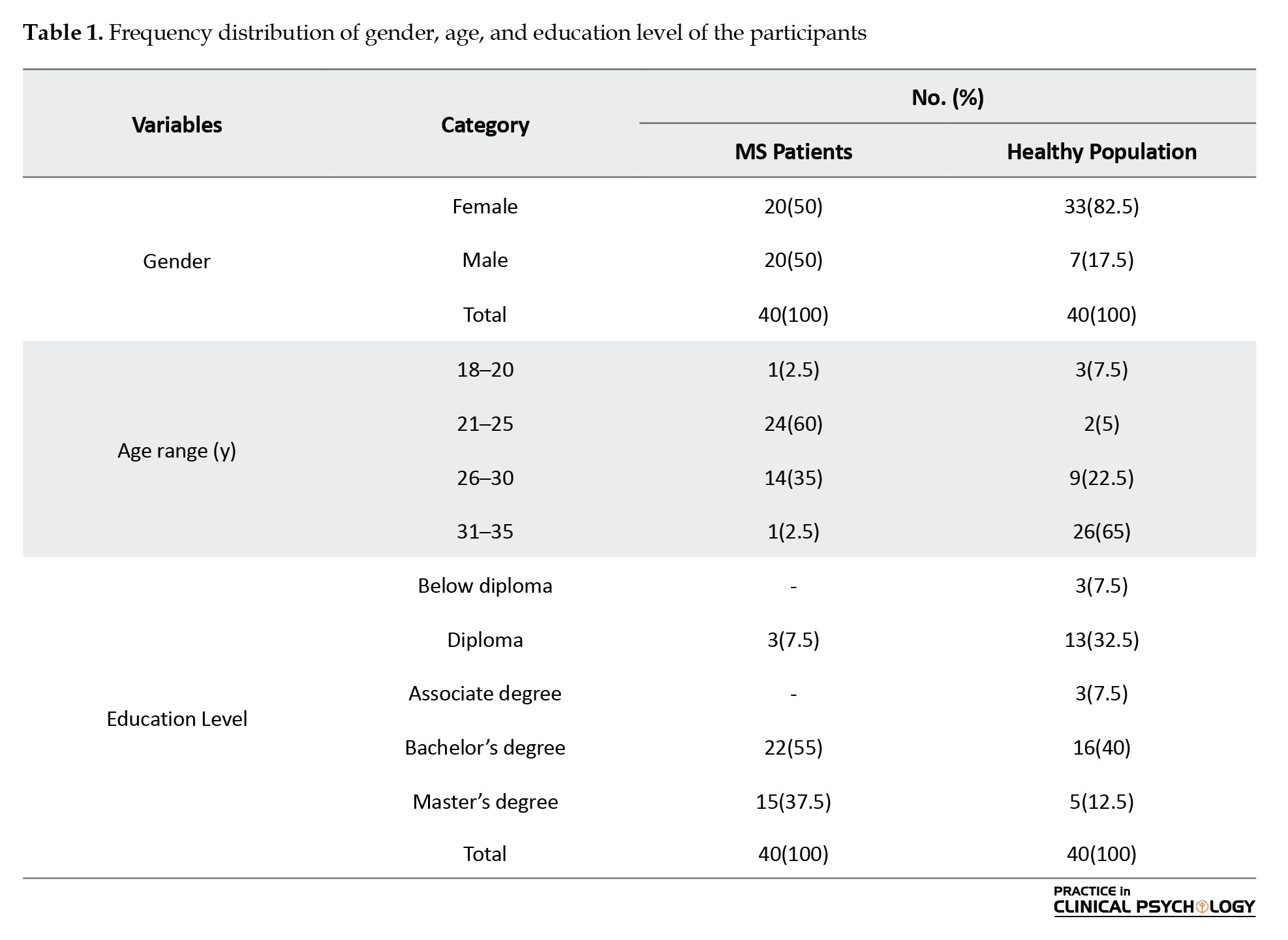
Since the two groups appeared to differ on three demographic variables (gender, age, and education), adjusted regression analysis was used to address this issue. In this method, the mentioned variables were included as control variables in the regression model, allowing the comparative results between the two groups to be analyzed without being influenced by demographic differences. In other words, this statistical approach helps examine observed group differences while accounting for and adjusting the effects of demographic variables. Adjusted regression is an effective method for controlling confounding factors and provides more accurate estimates of the effects of the main research variables (Fitzmaurice, 2006).
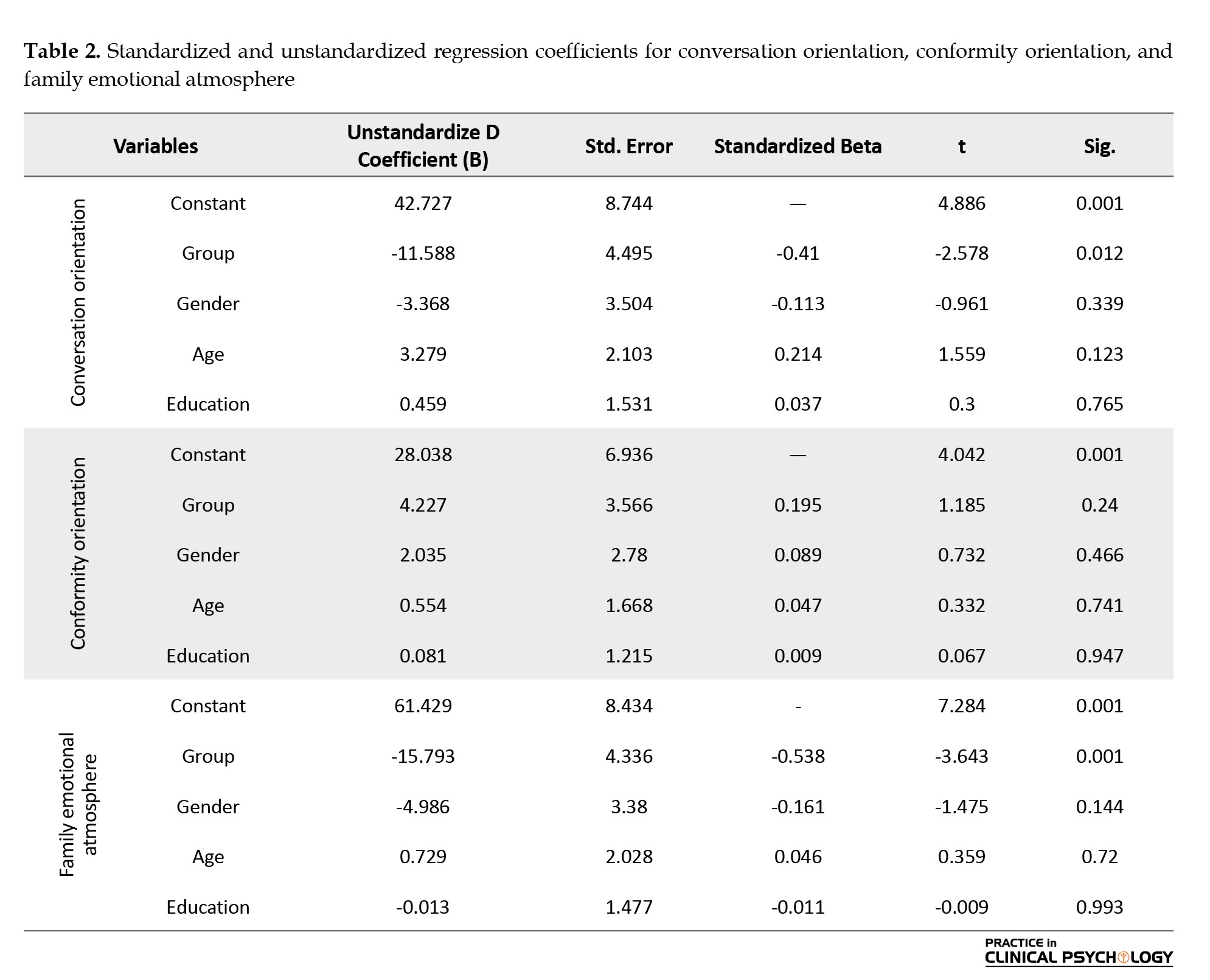
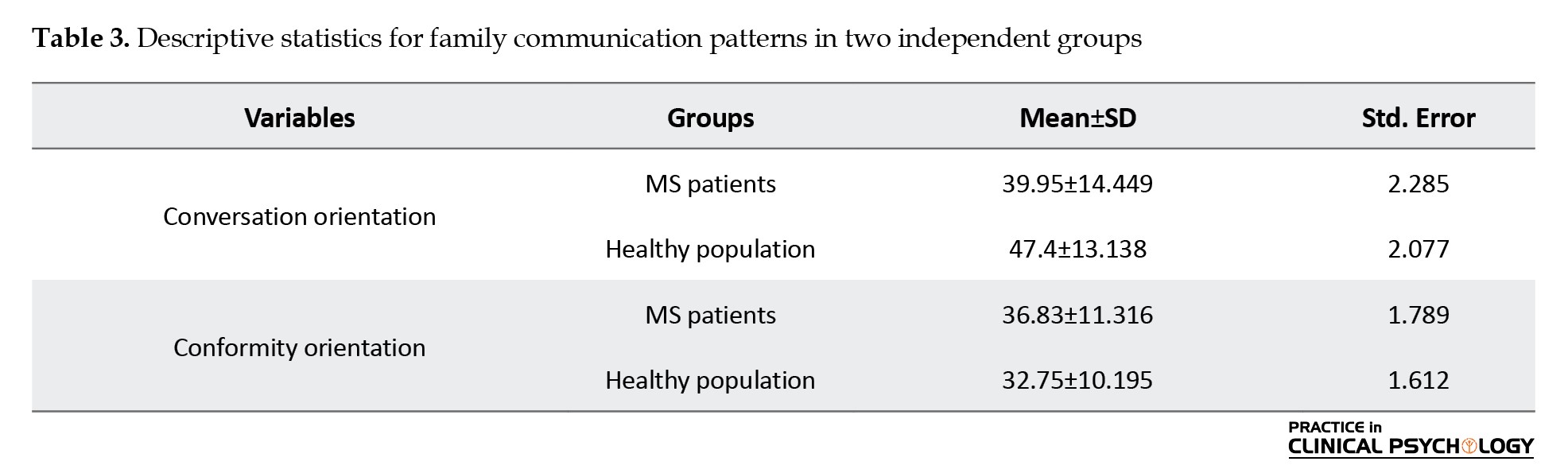
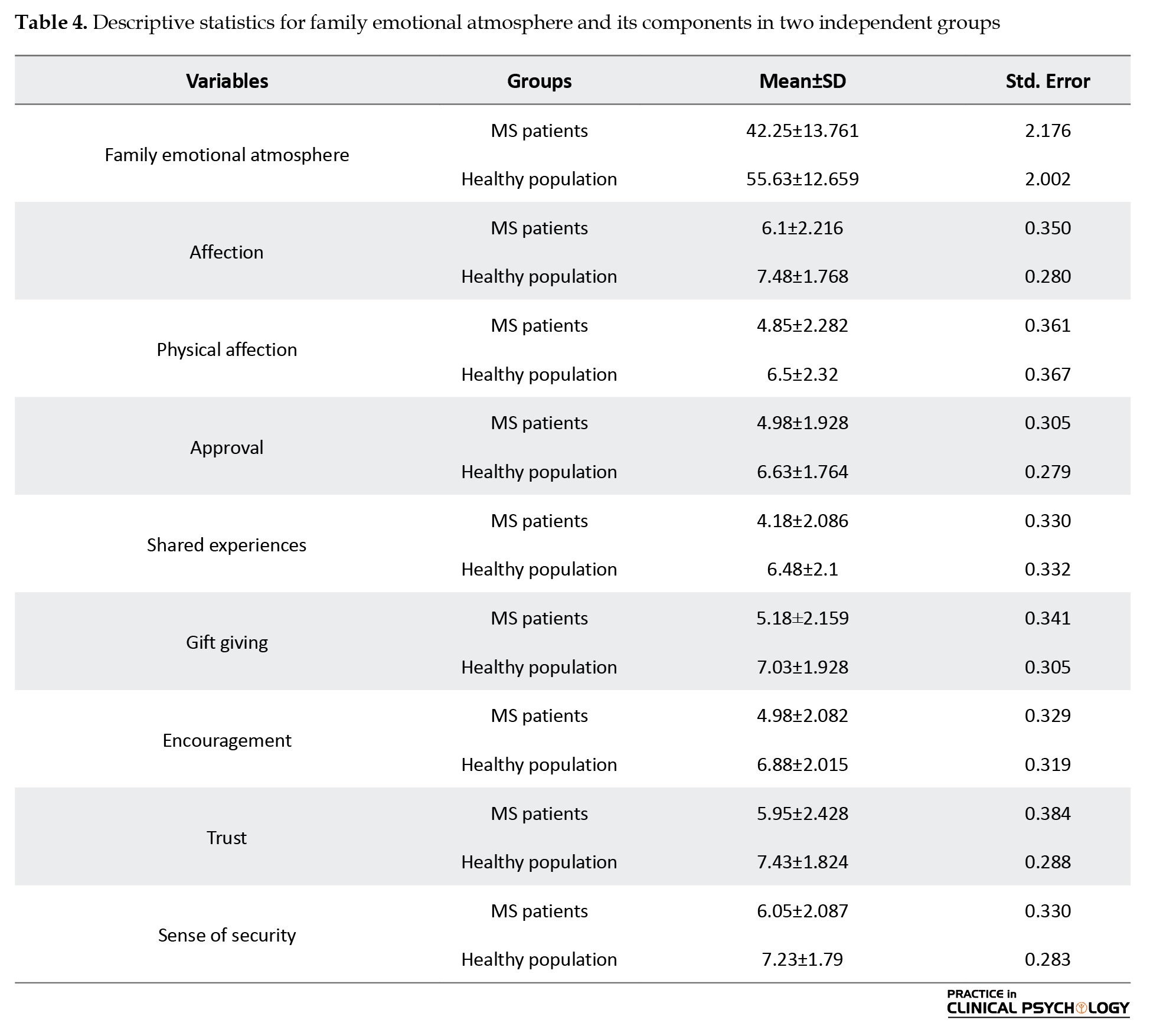
Prior to conducting the primary analyses, potential demographic differences between the MS patients and the healthy population were formally tested using chi-square (χ²) tests. The results confirmed significant baseline differences between the two groups regarding gender (χ²(1)=9.45, P=0.002), age range (χ²(3)=43.82, P<0.001), and education level (χ²(4)=18.19, P=0.001). Because these demographic variables showed initial differences, their inclusion as covariates in the adjusted regression model was highly justified to control for potential confounding effects. Furthermore, the assumptions of multiple regression were carefully checked. In addition to the Kolmogorov–Smirnov test, visual diagnostics using normal Q-Q plots confirmed the assumption of normality. The assumption of no multicollinearity was also met, as VIF values for all predictors were well below the conservative threshold of 3.0, indicating no problematic collinearity among the demographic variables. The regression models demonstrated adequate goodness-of-fit in explaining the variance of the dependent variables. For the regression analysis, the categorical “group” variable was systematically dummy-coded as 0 = healthy population and 1=MS patients. Finally, while adjusted regression was utilized to control for covariates (Table 2), descriptive statistics are presented in Tables 3 and 4, and unadjusted independent t-tests were also reported to provide raw mean comparisons (Tables 5 and 6).
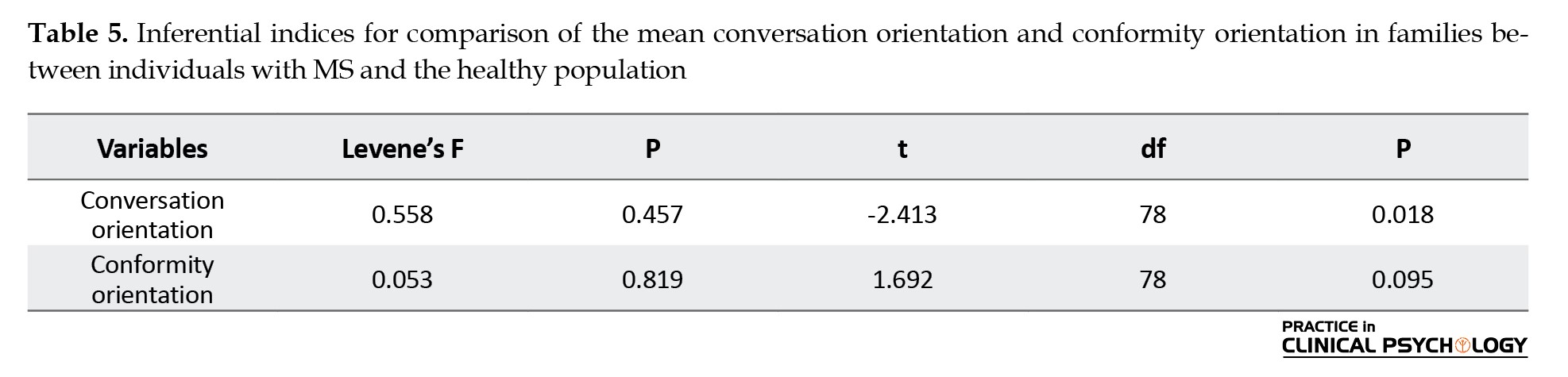
To mitigate the risk of type I error inflation from conducting multiple unadjusted comparisons and to provide a more robust interpretation, Cohen’s d effect sizes were computed. The unadjusted differences between the healthy and MS groups demonstrated a large effect size for the family emotional atmosphere (d=1.01) and a moderate effect size for the conversation orientation (d=0.54), underscoring the practical magnitude and clinical relevance of these disparities beyond P-values alone.
Based on Table 2, the effect of the group on conversation orientation was significant (β=-0.41, P<0.05), indicating a significant adjusted difference between the two groups. In contrast, the effect of the group on conformity orientation was not significant (β=0.195, P>0.05), suggesting no significant difference between the two groups in this regard. Additionally, the effect of the group on family emotional atmosphere was significant (β=-0.538, P<0.05), indicating a significant difference between the groups for this variable. According to the results of the adjusted regression analysis, among the three main research variables, conversation orientation and family emotional atmosphere showed significant differences between the groups, whereas conformity orientation did not. The persistence of a significant group effect in the regression model after controlling for confounding variables, such as age, gender, and education indicates that these variables did not act as confounders. Therefore, the non-significance of a single variable does not weaken the overall findings. Given that the majority of research variables were confirmed and the applied statistical method was appropriate, no additional sampling was necessary, and the findings possess sufficient scientific validity (Fitzmaurice, 2006). In the descriptive results, Table 3 shows that the mean score of conversation orientation was higher in the healthy group than in the MS group. The same table indicates that the mean score of conformity orientation was lower in the healthy group compared to the MS group. Table 4 shows that the mean of family emotional atmosphere and its components was higher in the healthy group than in the MS group. Furthermore, the Kolmogorov–Smirnov test was used to examine the normality of the data distribution, and the significance level for all variables was above 0.05; therefore, the distribution of the research variables was normal.
Based on the data presented in Table 5, it can be concluded that there was a significant difference in family conversation orientation between individuals with MS and the healthy population. The mean score of conversation orientation in families of individuals with MS was lower than that of the healthy group. Furthermore, there was no significant difference in family conformity orientation between individuals with MS and the healthy population.
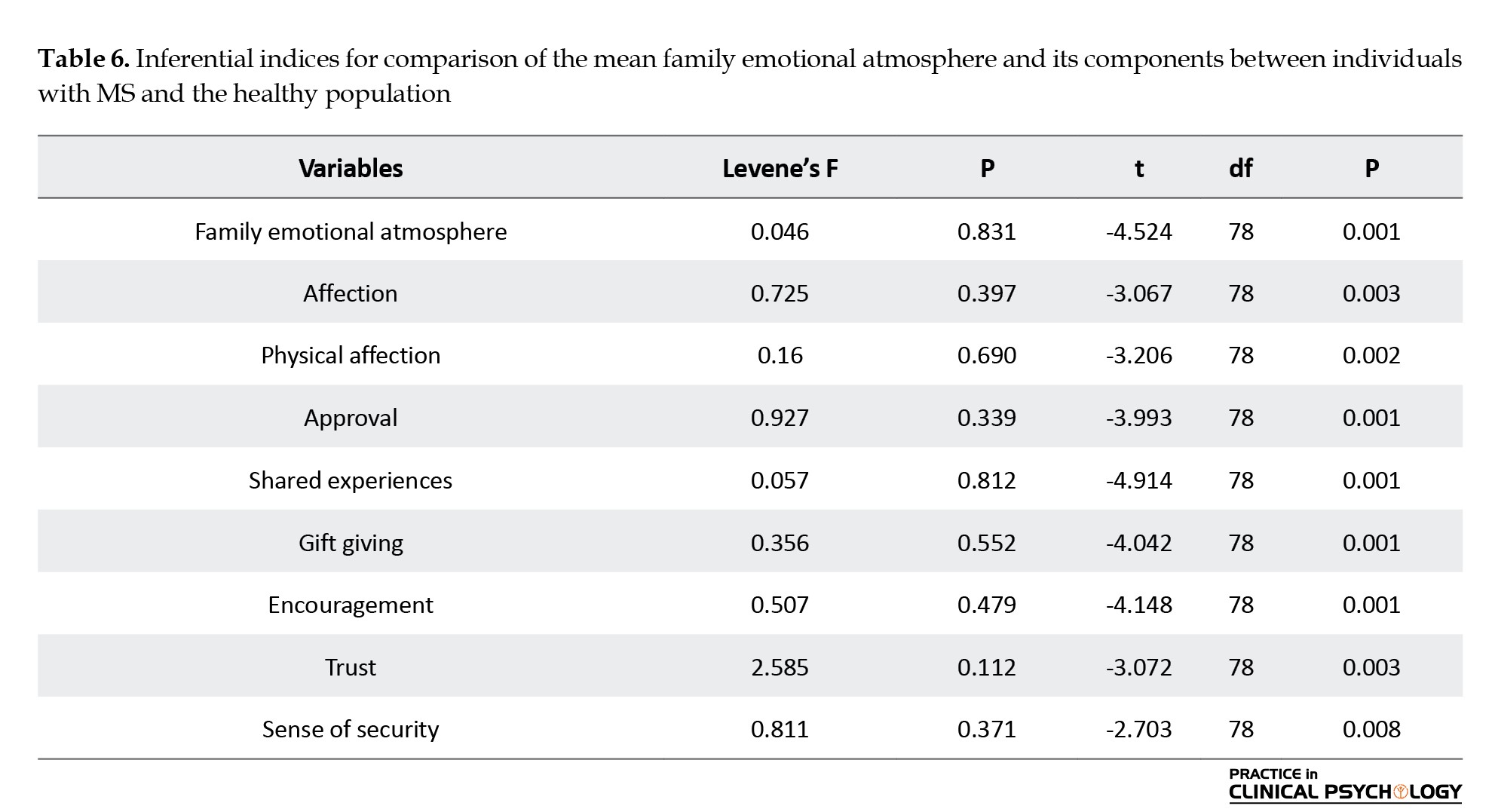
Based on the data presented in Table 6, family emotional atmosphere and its components differed significantly between families of individuals with MS and the healthy population. The mean scores of family emotional atmosphere and its components in families with a member affected by MS were lower than those in the healthy group.
Discussion
The main objective of the present study was to compare FCP and family emotional atmosphere between families of individuals with MS and healthy families. The results indicated that there is a significant difference in conversation orientation between families of individuals with MS and the healthy population. The mean score of conversation orientation in families of individuals with MS was lower than that of the healthy group. Beyond statistical significance, this difference demonstrated a moderate effect size (d=0.54), highlighting its clinical relevance. In explaining this finding, viewed through the lens of FCPT, it can be suggested that reduced conversation in families with a member affected by MS may stem from chronic stress, treatment- and financial-related concerns, and shifts in family roles. According to FCPT, severe systemic stressors can disrupt a family’s open communication atmosphere. Family members involved in caregiving, particularly in advanced stages of the disease, often experience physical and psychological fatigue, which may decrease motivation for intimate and constructive interactions (Benini et al., 2023). Moreover, fear of upsetting one another may lead individuals to suppress their emotions, and this lack of emotional transparency can reduce effective communication. Feelings of isolation, depression, and limited knowledge of appropriate communication skills in challenging circumstances may further restrict family interactions (Hunter et al., 2021). Furthermore, alternative explanations, such as unmeasured variations in disease severity, duration of illness, or socioeconomic status could also independently influence these communication dynamics.
Similarly, in the study conducted by Tayarani-najaran et al. which compared communication patterns in families of patients with bipolar mood disorder and healthy individuals, there was a significant difference in conversation orientation between the two groups. This cross-study comparison is methodologically justified, as both MS and bipolar disorder are chronic conditions characterized by unpredictable trajectories that impose comparable systemic and emotional burdens on the family unit. Healthy individuals demonstrated a greater tendency toward active listening, clear emotional expression, and more effective conflict management, whereas families of patients with bipolar disorder faced challenges in these areas (Tayarani-najaran et al., 2023).
The results of the present study also showed that there was no significant difference in conformity orientation between families of individuals with MS and the healthy population. Although the mean conformity orientation score was slightly higher in families of individuals with MS, this difference was not statistically significant. The lack of a significant difference in conformity orientation may be explained by factors, such as family cohesion, the need for mutual support, and adherence to traditional norms. When facing a chronic illness, families often emphasize coordination and compliance with collective decisions to manage the situation more effectively.
Additionally, social and cultural support systems may play an important role in preserving shared values and reducing conflict. These factors may have contributed to maintaining similar levels of conformity orientation in both groups (Wheeler et al., 2022). Treder-Rochna indicated that conformity patterns in families of individuals with MS were very weak (Treder-Rochna, 2023). The discrepancy between these findings and the present study may be attributed to cultural differences between the societies examined. In many Western cultures, individualism and the tendency toward intellectual and personal independence are generally more emphasized, and individuals are encouraged from an early age to develop and express their own viewpoints and decisions. This orientation may lead to lower levels of conformity within families, as members may be less inclined to unquestioningly accept shared family values and beliefs (Steckermeier, 2021).
The comparison of family emotional atmosphere between the two studied groups showed that family emotional atmosphere and its components differ significantly, with lower levels reported in families of individuals with MS. Notably, this finding revealed a large effect size (d=1.01), indicating a profound clinical significance. This substantial magnitude suggests that the emotional toll of MS extends far beyond mere statistical differences, deeply altering the lived experience of the family. Furthermore, the mean levels of affection, physical nurturing, approval, shared experiences, gift-giving, encouragement, trust, and sense of security were lower in families of individuals with MS compared to the healthy group. Differences in the emotional atmosphere of families with a member affected by MS may stem from factors, such as psychological insecurity resulting from the unpredictability of the disease, reduced positive interactions and family leisure activities, feelings of guilt and excessive responsibility, and limitations in social relationships. These factors may increase stress and tension within the family and consequently reduce the quality of emotional relationships (Raimo et al., 2021).
The results of the study conducted by Holden et al. indicated that there was no significant difference in family emotional atmosphere between families of individuals with MS and healthy families, which is not consistent with the findings of the present study (Holden et al., 2023). This discrepancy requires a more analytical interpretation rather than attributing it solely to coping styles. This inconsistency may stem from variations in the clinical profiles of the samples. For instance, families in Holden’s study might have experienced a longer duration since diagnosis, allowing for systemic adaptation and resilience-building over time. Alternatively, differences in the availability of robust socioeconomic support systems or variations in disease severity could buffer the emotional atmosphere, preventing the deterioration observed in our sample (Ponzio et al., 2024).
Clinical implications and limitations
The profound clinical significance of these findings highlights the necessity for targeted family-based interventions. Rather than focusing solely on the patient, psychological care should encompass the entire family system. Psychoeducational programs and systemic family therapy are highly recommended to enhance communication skills, foster emotional transparency, and equip family members with adaptive coping strategies for managing chronic stress. Despite these insights, several methodological limitations must be acknowledged. First, the cross-sectional design of this study restricts the ability to draw definitive causal inferences regarding the impact of MS on family dynamics over time. Second, reliance on self-report questionnaires may introduce social desirability and common-method biases. Future research should employ longitudinal designs and incorporate multi-method data collection (e.g. qualitative interviews or observational methods) to gain a more comprehensive understanding of these family dynamics.
Conclusion
The findings of this study indicate that families with a member affected by MS face greater challenges in certain communicative and emotional aspects compared to healthy families. The psychological pressures associated with the chronic and unpredictable nature of the disease appear to reduce intimate interactions and weaken the emotional atmosphere within these families. Additionally, increased responsibilities, anxiety, and feelings of insecurity may contribute to decreased dialogue and expressions of affection among family members. However, no significant difference was observed in conformity orientation, which may be related to the role of family cohesion and the necessity for coordination during challenging circumstances. To better understand the role of chronic illness in shaping family communication and emotional atmosphere, it is suggested that future comparisons be conducted between families of individuals with MS and those affected by other chronic diseases, strictly controlling for disease severity and socioeconomic factors.
Ethical Considerations
Compliance with ethical guidelines
This study was approved by the Ethics Committee of the University of Welfare and Rehabilitation Sciences, Tehran, Iran (Code: IR.USWR.REC.1403.162). Participants took part voluntarily and provided informed consent. All participants were aware of the study’s objectives, and their information was kept confidential.
Funding
This study is based on the master’s thesis of Alireza Bahrambeyk, approved by University of Social Welfare and Rehabilitation Sciences, Tehran, Iran.
Authors' contributions
All authors contributed equally to the conception and design of the study, data collection and analysis, interpretation of the results, and drafting of the manuscript. Each author approved the final version of the manuscript for submission.
Conflict of interest
The authors declared no conflict of interest.
Acknowledgments
Hereby, gratitude and appreciation are extended to the officials of Rafideh Rehabilitation Hospital and the Iranian MS Society for their cooperation in conducting this study.
References
Benini, S., Pellegrini, E., Descovich, C., & Lugaresi, A. (2023). Burden and resources in caregivers of people with multiple sclerosis: A qualitative study. Plos One, 18(4), e0265297. [DOI:10.1371/journal.pone.0265297] [PMID]
Brown, L., & Veinot, T. (2020). All in the family: A descriptive analysis of family network change in families managing chronic illness. Proceedings of the Association for Information Science and Technology, 57(1), e247. [DOI:10.1002/pra2.247]
Buchanan, R. J., Minden, S. L., Chakravorty, B. J., Hatcher, W., Tyry, T., & Vollmer, T. (2019). A pilot study of young adults with multiple sclerosis: Demographic, disease, treatment, and psychosocial characteristics. Disability and Health Journal, 3(4), 262-270. [DOI:10.1016/j.dhjo.2009.09.003] [PMID]
Christopoulos, A. L., Poulios, A., Pavlopoulos, V. (2020). The relationship between dimensions of mental health and alexithymia in multiple sclerosis patients. Multiple Sclerosis and Related Disorders, 46, 102525. [DOI:10.1016/j.msard.2020.102525] [PMID]
Di Tella, M., Perutelli, V., Miele, G., Lavorgna, L., Bonavita, S., & De Mercanti, S. F., et al. (2021). Family functioning and multiple sclerosis: study protocol of a multicentric Italian project. Frontiers in Psychology, 12, 668010. [DOI:10.3389/fpsyg.2021.668010] [PMID]
Fitzpatrick, M. A. (2004). Family communication patterns theory: Observations on its development and application. Journal of Family Communication, 14(4), 167-179. [DOI:10.1080/15267431.2004.9670129]
Fitzmaurice, G. (2006). Confounding: Regression adjustment. Nutrition (Burbank, Los Angeles County, Calif.), 22(5), 581–583. [DOI:10.1016/j.nut.2006.02.004] [PMID]
Frasier, S. D., Hilburn, J. M., & Smith, F. G. (1970). Effect of adolescence on the serum growth hormone response to hypoglycemia. The Journal of Pediatrics, 77(3), 465–467. [DOI:10.1016/s0022-3476(70)80019-1] [PMID]
Holden, C., Hewitt, P., & Tams, R. (2023). Striving to limit the impact: parenting an adult child who has multiple sclerosis-a grounded theory study. International Journal of MS Care, 25(6), 259–265. [DOI:10.7224/1537-2073.2021-053] [PMID]
Hunter, R., Parry, B., & Thomas, C. (2021). Fears for the future: A qualitative exploration of the experiences of individuals living with multiple sclerosis, and its impact upon the family from the perspective of the person with MS. British Journal of Health Psychology, 26(2), 464–481. [PMID]
Kapetanovic, S., & Skoog, T. (2021). The Role of the Family’s Emotional Climate in the Links between parent-adolescent communication and adolescent psychosocial functioning. Research on Child and Adolescent Psychopathology, 49(2), 141–154. [DOI:10.1007/s10802-020-00705-9] [PMID]
Koerner, A. F., & Fitzpatrick, M. A. (2002). Toward a theory of family communication. Communication Theory, 12(1), 70-91. [DOI:10.1111/j.1468-2885.2002.tb00260.x]
Ponzio, M., Tacchino, A., Verri, A., Battaglia, M. A., Brichetto, G., & Podda, J. (2024). Profile and burden of the family caregiver: the caring experience in multiple sclerosis. An observational study. BMC Psychology, 12(1), 173. [DOI:10.1186/s40359-024-01678-w] [PMID]
Qaemi-Moghadam, H. (2019). [Comparison of neuroticism, psychological flexibility and marital quality in individuals with multiple sclerosis and non-MS individuals in Qom, Iran (Persian)] [MA thesis]. Malayer (Iran): Malayer University; 2025. [Link]
Raimo, S., Santangelo, G., & Trojano, L. (2021). The emotional disorders associated with multiple sclerosis. Handbook of Clinical Neurology, 183, 197–220. [DOI:10.1016/B978-0-12-822290-4.00009-8] [PMID]
Rolland, J. S. (1994). Families, illness, and disability: An integrative treatment model. New York: Basic Books. [Link]
Rezaii, E., & Haghayegh, S. A. (2022). [Structural modeling of relationship between disease stigma and social anxiety by considering the mediating role of family function in patients with epilepsy (Persian)]. Razi Journal of Medical Sciences, 29(5), 1-15. [Link]
Shahmardi, S., Pourebrahim, T., & Hoobi, M. B. (2022). The role of family emotional atmosphere and attachment styles in alexithymia of married people. Journal of Client-centered Nursing Care, 8(4), 273-280. [DOI:10.32598/JCCNC.8.4.449.1]
Steckermeier, L. C. (2021). The value of autonomy for the good life. An empirical investigation of autonomy and life satisfaction in Europe. Social Indicators Research, 154(2), 693-723. [DOI:10.1007/S11205-020-02565-8]
Tajalli, F., & Zarnaghash, M. (2017). Effect of family communication patterns on internet addiction. Journal of Practice in Clinical Psychology, 5(3), 159-166. [DOI:10.18869/acadpub.jpcp.5.3.159]
Tayarani-najaran, F., Mashhadi, A., Bigdeli, I. & Soltanifar, A. (2024). [Impairments in patterns of communication and functions in family of adolescents with bipolar disorder (Persian)]. Research in Clinical Psychology and Counseling, 13(2), 21-40. [DOI:10.22067/tpccp.2024.81679.1478]
Thomson, M. D., Wilson-Genderson, M., & Siminoff, L. A. (2024). Cancer patient and caregiver communication about economic concerns and the effect on patient and caregiver partners’ perceptions of family functioning. Journal of Cancer Survivorship : Research and Practice, 18(3), 941–949. [DOI:10.1007/s11764-023-01341-0] [PMID]
Treder-Rochna, N. (2023). Marital life and family adjustment to multiple sclerosis. Journal of Panpl Family, 6(12), 39-44. [DOI:10.24425/ppb.2020.133771]
Wheeler, M., Blaze, V., Blaze, K., & Daisley, A. (2022). A family-based intervention supporting communication and adjustment in a family living with multiple sclerosis. The Neuropsychologist, 1(13), 41-47. [DOI:10.53841/bpsneur.2022.1.13.41]
Multiple sclerosis (MS) is one of the most pervasive and disabling chronic diseases of the central nervous system, primarily affecting young adults. Unlike many other chronic conditions, the unpredictable trajectory of MS, coupled with its profound sensory, motor, and cognitive impairments, places a unique and protracted burden on the family system (Christopoulos et al., 2020). Because full recovery is generally not expected, patients must cope with physical and psychological limitations for many years, necessitating consistent care and support within the family context (Brown & Veinot, 2020).
As the primary theoretical framework guiding this study, we draw upon family communication patterns theory (FCPT) integrated within the broader family systems theory. Grounded in this framework, the diagnosis of a chronic illness in one member inherently disrupts the equilibrium of the entire family unit, demanding systemic adaptation. To manage this disruption and create a shared social reality, families rely on specific communication structures (Koerner & Fitzpatrick, 2002; Rolland, 1994). These communication patterns dictate how family members interact and express their emotions and needs, primarily categorized into conversation orientation (emphasizing open, respectful dialogue) and conformity orientation (emphasizing obedience and structural hierarchy) (Fitzpatrick, 2004). Concurrently, the family emotional atmosphere encompasses the quality of emotional bonds, trust, and psychological security, which directly impacts the mental health and adjustment of all members, particularly the patient (Kapetanovic & Skoog, 2021).
A critical synthesis of the extant literature reveals a dichotomy in family adaptation to chronic neurological conditions. While some families succumb to systemic disruption characterized by a tense emotional atmosphere, social withdrawal, and rigid conformity (Buchanan & Hatcher, 2010; Di Tella et al., 2021; Tayarani-najaran et al., 2023), others cultivate resilience through open, conversation-oriented communication, thereby fostering a supportive and positive emotional atmosphere (Rezaii & Haghayegh, 2022; Thomson et al., 2022).
Despite these insights, there remains a conspicuous paucity of empirical research systematically comparing the communication patterns and emotional atmosphere of families living with MS against healthy control families. Understanding the specific interactive and emotional differences between these groups is imperative for guiding targeted psychosocial interventions. Therefore, the present study aimed to compare the components of FCPT (conversation and conformity orientation) and the family emotional atmosphere between families with an MS patient and healthy families. Based on this rationale, the following hypotheses are proposed: 1) Families with MS patients exhibit lower conversation orientation compared to healthy families, while no significant difference is expected regarding conformity orientation between the two groups. 2) Families with MS patients demonstrate a more negative family emotional atmosphere compared to healthy families.
Materials and Methods
Statistical population, sample, and research procedure
The present study utilized a cross-sectional comparative design. The statistical population consisted of two groups: individuals diagnosed with MS and healthy individuals. The study sample included 80 participants (40 MS patients and 40 healthy individuals). The sample size was determined based on a standard sample size formula and in reference to a similar study (Qaemi-Moghadam, 2019), which initially yielded approximately 30 participants per group (assuming a 5% type I error and 80% statistical power). Following consultation with a statistical advisor, the sample size was increased to 40 participants per group to enhance the precision of the analysis and account for potential dropout.
MS participants were recruited through the Iranian MS Association (Tehran) and the Rafideh Rehabilitation Hospital in Tehran, where the MS diagnosis was formally verified via registered medical records. While specific clinical parameters, such as disease severity (e.g. EDSS scores) and current treatment regimens were not recorded, all participating patients were in a stable condition capable of independently completing the assessments. Sampling for the healthy group was conducted using convenience sampling. Although recruitment channels differed, potential mode effects were mitigated as both groups completed identical online questionnaires. To ensure data security, all data were deleted from transmission platforms after being transferred to a separate memory storage. Efforts were made to match the two groups on demographic variables, such as age, gender, and education; however, due to limited access to fully comparable samples, complete matching was not achieved. Therefore, adjusted regression was used to control for these covariates a priori to reduce potential bias. After providing participants with explanations regarding the study objectives and data confidentiality, electronic informed consent was obtained. Questionnaires were administered to both groups via an online form on the Porsline platform, and responses were collected remotely. To address potential common-method bias arising from self-report measures, participants were assured of complete anonymity, and standardized instruments with distinct response formats were utilized.
Inclusion and exclusion criteria
For the MS group, the main inclusion criteria were a confirmed diagnosis of MS for at least one year, age between 18 and 35 years, a minimum of five years of formal education (completion of primary school), living with parents, absence of other chronic diseases, ability to use a smartphone or tablet, and completion of an informed consent form. For the healthy group, inclusion criteria included no chronic disease in the participant or first-degree family members living with them, age between 18 and 35 years, a minimum of five years of formal education, living with parents, informed consent, and access to electronic devices. Exclusion criteria for both groups consisted of incomplete or invalid questionnaire responses, as well as any self-reported history of severe psychiatric comorbidities (e.g. schizophrenia, bipolar disorder), which could independently confound family communication and emotional dynamics.
Research tools
To collect data, a demographic questionnaire was used to record variables, such as participants’ gender, age, and educational level, along with two standardized instruments. For both scales, the culturally adapted Persian versions were utilized, relying on previous Iranian validation studies that confirmed their psychometric properties in the local population.
Family communication patterns scale
The original version of this scale was developed in the 1980s by Fitzpatrick and Ritchie, demonstrating acceptable reliability with Cronbach’s α coefficients reported as 0.87 for conversation orientation and 0.79 for conformity orientation. However, due to some limitations, a revised version was developed by Koerner and Fitzpatrick in 2004, which was used in the present study. The revised version contains 26 items scored on a five-point Likert scale (1=“strongly disagree” to 5=“strongly agree”) and assesses conversation orientation (15 items) and conformity orientation (11 items). Higher scores indicate a greater tendency toward that communication style. Psychometric evaluations of the revised scale indicate good structural validity, with Cronbach’s α coefficients ranging from 0.84 to 0.92 (Koerner & Fitzpatrick, 2004). In a study conducted in Iran by Tajalli and Zarnaghash (2017), the reliability of the Persian version of this inventory was confirmed using the Cronbach’s α method, with coefficients reported as 0.93 for conversation orientation and 0.89 for conformity orientation.
Family emotional atmosphere questionnaire (FEAQ)
This questionnaire, designed by Frasier in 1964, consists of 16 items rated on a five-point Likert scale and 8 two-item subscales. It measures dimensions, such as affection, nurturing, approval, shared experiences, gift-giving, encouragement, trust, and sense of security. Higher scores indicate a more positive, supportive, and satisfying family environment. Content validity of this instrument has been reported at approximately 80%, and its reliability in the original study was 0.82 (Frasier, 1964). Similarly, the cross-cultural validity and internal consistency of the Persian version have been confirmed in Iranian studies; for instance, Shahmardi et al. (2022) reported a high Cronbach’s α reliability of 0.88 for this questionnaire in an Iranian sample.
Research procedure
After designing the study and obtaining the required ethical approvals (specifically, the study protocol was approved by the Ethics Committee of the University of Social Welfare and Rehabilitation Sciences, the research process was initiated. In the first stage, in collaboration with the Iranian MS Association, Rafideh Rehabilitation Hospital, and through social media, a call for participation was announced for the target population, including eligible MS patients and healthy individuals. The sampling and data collection phase was specifically conducted during a two-week period from late June to early July 2025. Volunteers were initially screened based on the inclusion criteria. Complete information regarding the study objectives and procedures was provided, and the voluntary nature of participation and confidentiality of information were emphasized. Electronic informed consent was then obtained from participants, and links to the online questionnaires were sent via the Porsline platform to both groups. Participants completed the questionnaires remotely (online), and the collected data were securely stored and prepared for statistical analysis. Data analysis was conducted at two levels: Descriptive and inferential statistics. Initially, demographic differences were tested using chi-square (χ²) tests. For inferential statistics, adjusted regression was applied to control and match demographic variables (dummy-coded for the group variable). Before the main analysis, statistical assumptions were rigorously verified; normality was assessed via the Kolmogorov–Smirnov test and Normal Q-Q plots, while multicollinearity was checked using variance inflation factor (VIF) values. Then, to compare the main variables between the two groups, both adjusted regression and independent t-tests were conducted. To ensure a robust interpretation of the clinical magnitude, Cohen’s d effect sizes were computed for all primary outcomes. All statistical analyses were performed using SPSS version 26.
Results
In Table 1, the frequencies of participants’ gender, age, and education level are presented in order.
Since the two groups appeared to differ on three demographic variables (gender, age, and education), adjusted regression analysis was used to address this issue. In this method, the mentioned variables were included as control variables in the regression model, allowing the comparative results between the two groups to be analyzed without being influenced by demographic differences. In other words, this statistical approach helps examine observed group differences while accounting for and adjusting the effects of demographic variables. Adjusted regression is an effective method for controlling confounding factors and provides more accurate estimates of the effects of the main research variables (Fitzmaurice, 2006).
Prior to conducting the primary analyses, potential demographic differences between the MS patients and the healthy population were formally tested using chi-square (χ²) tests. The results confirmed significant baseline differences between the two groups regarding gender (χ²(1)=9.45, P=0.002), age range (χ²(3)=43.82, P<0.001), and education level (χ²(4)=18.19, P=0.001). Because these demographic variables showed initial differences, their inclusion as covariates in the adjusted regression model was highly justified to control for potential confounding effects. Furthermore, the assumptions of multiple regression were carefully checked. In addition to the Kolmogorov–Smirnov test, visual diagnostics using normal Q-Q plots confirmed the assumption of normality. The assumption of no multicollinearity was also met, as VIF values for all predictors were well below the conservative threshold of 3.0, indicating no problematic collinearity among the demographic variables. The regression models demonstrated adequate goodness-of-fit in explaining the variance of the dependent variables. For the regression analysis, the categorical “group” variable was systematically dummy-coded as 0 = healthy population and 1=MS patients. Finally, while adjusted regression was utilized to control for covariates (Table 2), descriptive statistics are presented in Tables 3 and 4, and unadjusted independent t-tests were also reported to provide raw mean comparisons (Tables 5 and 6).
To mitigate the risk of type I error inflation from conducting multiple unadjusted comparisons and to provide a more robust interpretation, Cohen’s d effect sizes were computed. The unadjusted differences between the healthy and MS groups demonstrated a large effect size for the family emotional atmosphere (d=1.01) and a moderate effect size for the conversation orientation (d=0.54), underscoring the practical magnitude and clinical relevance of these disparities beyond P-values alone.
Based on Table 2, the effect of the group on conversation orientation was significant (β=-0.41, P<0.05), indicating a significant adjusted difference between the two groups. In contrast, the effect of the group on conformity orientation was not significant (β=0.195, P>0.05), suggesting no significant difference between the two groups in this regard. Additionally, the effect of the group on family emotional atmosphere was significant (β=-0.538, P<0.05), indicating a significant difference between the groups for this variable. According to the results of the adjusted regression analysis, among the three main research variables, conversation orientation and family emotional atmosphere showed significant differences between the groups, whereas conformity orientation did not. The persistence of a significant group effect in the regression model after controlling for confounding variables, such as age, gender, and education indicates that these variables did not act as confounders. Therefore, the non-significance of a single variable does not weaken the overall findings. Given that the majority of research variables were confirmed and the applied statistical method was appropriate, no additional sampling was necessary, and the findings possess sufficient scientific validity (Fitzmaurice, 2006). In the descriptive results, Table 3 shows that the mean score of conversation orientation was higher in the healthy group than in the MS group. The same table indicates that the mean score of conformity orientation was lower in the healthy group compared to the MS group. Table 4 shows that the mean of family emotional atmosphere and its components was higher in the healthy group than in the MS group. Furthermore, the Kolmogorov–Smirnov test was used to examine the normality of the data distribution, and the significance level for all variables was above 0.05; therefore, the distribution of the research variables was normal.
Based on the data presented in Table 5, it can be concluded that there was a significant difference in family conversation orientation between individuals with MS and the healthy population. The mean score of conversation orientation in families of individuals with MS was lower than that of the healthy group. Furthermore, there was no significant difference in family conformity orientation between individuals with MS and the healthy population.
Based on the data presented in Table 6, family emotional atmosphere and its components differed significantly between families of individuals with MS and the healthy population. The mean scores of family emotional atmosphere and its components in families with a member affected by MS were lower than those in the healthy group.
Discussion
The main objective of the present study was to compare FCP and family emotional atmosphere between families of individuals with MS and healthy families. The results indicated that there is a significant difference in conversation orientation between families of individuals with MS and the healthy population. The mean score of conversation orientation in families of individuals with MS was lower than that of the healthy group. Beyond statistical significance, this difference demonstrated a moderate effect size (d=0.54), highlighting its clinical relevance. In explaining this finding, viewed through the lens of FCPT, it can be suggested that reduced conversation in families with a member affected by MS may stem from chronic stress, treatment- and financial-related concerns, and shifts in family roles. According to FCPT, severe systemic stressors can disrupt a family’s open communication atmosphere. Family members involved in caregiving, particularly in advanced stages of the disease, often experience physical and psychological fatigue, which may decrease motivation for intimate and constructive interactions (Benini et al., 2023). Moreover, fear of upsetting one another may lead individuals to suppress their emotions, and this lack of emotional transparency can reduce effective communication. Feelings of isolation, depression, and limited knowledge of appropriate communication skills in challenging circumstances may further restrict family interactions (Hunter et al., 2021). Furthermore, alternative explanations, such as unmeasured variations in disease severity, duration of illness, or socioeconomic status could also independently influence these communication dynamics.
Similarly, in the study conducted by Tayarani-najaran et al. which compared communication patterns in families of patients with bipolar mood disorder and healthy individuals, there was a significant difference in conversation orientation between the two groups. This cross-study comparison is methodologically justified, as both MS and bipolar disorder are chronic conditions characterized by unpredictable trajectories that impose comparable systemic and emotional burdens on the family unit. Healthy individuals demonstrated a greater tendency toward active listening, clear emotional expression, and more effective conflict management, whereas families of patients with bipolar disorder faced challenges in these areas (Tayarani-najaran et al., 2023).
The results of the present study also showed that there was no significant difference in conformity orientation between families of individuals with MS and the healthy population. Although the mean conformity orientation score was slightly higher in families of individuals with MS, this difference was not statistically significant. The lack of a significant difference in conformity orientation may be explained by factors, such as family cohesion, the need for mutual support, and adherence to traditional norms. When facing a chronic illness, families often emphasize coordination and compliance with collective decisions to manage the situation more effectively.
Additionally, social and cultural support systems may play an important role in preserving shared values and reducing conflict. These factors may have contributed to maintaining similar levels of conformity orientation in both groups (Wheeler et al., 2022). Treder-Rochna indicated that conformity patterns in families of individuals with MS were very weak (Treder-Rochna, 2023). The discrepancy between these findings and the present study may be attributed to cultural differences between the societies examined. In many Western cultures, individualism and the tendency toward intellectual and personal independence are generally more emphasized, and individuals are encouraged from an early age to develop and express their own viewpoints and decisions. This orientation may lead to lower levels of conformity within families, as members may be less inclined to unquestioningly accept shared family values and beliefs (Steckermeier, 2021).
The comparison of family emotional atmosphere between the two studied groups showed that family emotional atmosphere and its components differ significantly, with lower levels reported in families of individuals with MS. Notably, this finding revealed a large effect size (d=1.01), indicating a profound clinical significance. This substantial magnitude suggests that the emotional toll of MS extends far beyond mere statistical differences, deeply altering the lived experience of the family. Furthermore, the mean levels of affection, physical nurturing, approval, shared experiences, gift-giving, encouragement, trust, and sense of security were lower in families of individuals with MS compared to the healthy group. Differences in the emotional atmosphere of families with a member affected by MS may stem from factors, such as psychological insecurity resulting from the unpredictability of the disease, reduced positive interactions and family leisure activities, feelings of guilt and excessive responsibility, and limitations in social relationships. These factors may increase stress and tension within the family and consequently reduce the quality of emotional relationships (Raimo et al., 2021).
The results of the study conducted by Holden et al. indicated that there was no significant difference in family emotional atmosphere between families of individuals with MS and healthy families, which is not consistent with the findings of the present study (Holden et al., 2023). This discrepancy requires a more analytical interpretation rather than attributing it solely to coping styles. This inconsistency may stem from variations in the clinical profiles of the samples. For instance, families in Holden’s study might have experienced a longer duration since diagnosis, allowing for systemic adaptation and resilience-building over time. Alternatively, differences in the availability of robust socioeconomic support systems or variations in disease severity could buffer the emotional atmosphere, preventing the deterioration observed in our sample (Ponzio et al., 2024).
Clinical implications and limitations
The profound clinical significance of these findings highlights the necessity for targeted family-based interventions. Rather than focusing solely on the patient, psychological care should encompass the entire family system. Psychoeducational programs and systemic family therapy are highly recommended to enhance communication skills, foster emotional transparency, and equip family members with adaptive coping strategies for managing chronic stress. Despite these insights, several methodological limitations must be acknowledged. First, the cross-sectional design of this study restricts the ability to draw definitive causal inferences regarding the impact of MS on family dynamics over time. Second, reliance on self-report questionnaires may introduce social desirability and common-method biases. Future research should employ longitudinal designs and incorporate multi-method data collection (e.g. qualitative interviews or observational methods) to gain a more comprehensive understanding of these family dynamics.
Conclusion
The findings of this study indicate that families with a member affected by MS face greater challenges in certain communicative and emotional aspects compared to healthy families. The psychological pressures associated with the chronic and unpredictable nature of the disease appear to reduce intimate interactions and weaken the emotional atmosphere within these families. Additionally, increased responsibilities, anxiety, and feelings of insecurity may contribute to decreased dialogue and expressions of affection among family members. However, no significant difference was observed in conformity orientation, which may be related to the role of family cohesion and the necessity for coordination during challenging circumstances. To better understand the role of chronic illness in shaping family communication and emotional atmosphere, it is suggested that future comparisons be conducted between families of individuals with MS and those affected by other chronic diseases, strictly controlling for disease severity and socioeconomic factors.
Ethical Considerations
Compliance with ethical guidelines
This study was approved by the Ethics Committee of the University of Welfare and Rehabilitation Sciences, Tehran, Iran (Code: IR.USWR.REC.1403.162). Participants took part voluntarily and provided informed consent. All participants were aware of the study’s objectives, and their information was kept confidential.
Funding
This study is based on the master’s thesis of Alireza Bahrambeyk, approved by University of Social Welfare and Rehabilitation Sciences, Tehran, Iran.
Authors' contributions
All authors contributed equally to the conception and design of the study, data collection and analysis, interpretation of the results, and drafting of the manuscript. Each author approved the final version of the manuscript for submission.
Conflict of interest
The authors declared no conflict of interest.
Acknowledgments
Hereby, gratitude and appreciation are extended to the officials of Rafideh Rehabilitation Hospital and the Iranian MS Society for their cooperation in conducting this study.
References
Benini, S., Pellegrini, E., Descovich, C., & Lugaresi, A. (2023). Burden and resources in caregivers of people with multiple sclerosis: A qualitative study. Plos One, 18(4), e0265297. [DOI:10.1371/journal.pone.0265297] [PMID]
Brown, L., & Veinot, T. (2020). All in the family: A descriptive analysis of family network change in families managing chronic illness. Proceedings of the Association for Information Science and Technology, 57(1), e247. [DOI:10.1002/pra2.247]
Buchanan, R. J., Minden, S. L., Chakravorty, B. J., Hatcher, W., Tyry, T., & Vollmer, T. (2019). A pilot study of young adults with multiple sclerosis: Demographic, disease, treatment, and psychosocial characteristics. Disability and Health Journal, 3(4), 262-270. [DOI:10.1016/j.dhjo.2009.09.003] [PMID]
Christopoulos, A. L., Poulios, A., Pavlopoulos, V. (2020). The relationship between dimensions of mental health and alexithymia in multiple sclerosis patients. Multiple Sclerosis and Related Disorders, 46, 102525. [DOI:10.1016/j.msard.2020.102525] [PMID]
Di Tella, M., Perutelli, V., Miele, G., Lavorgna, L., Bonavita, S., & De Mercanti, S. F., et al. (2021). Family functioning and multiple sclerosis: study protocol of a multicentric Italian project. Frontiers in Psychology, 12, 668010. [DOI:10.3389/fpsyg.2021.668010] [PMID]
Fitzpatrick, M. A. (2004). Family communication patterns theory: Observations on its development and application. Journal of Family Communication, 14(4), 167-179. [DOI:10.1080/15267431.2004.9670129]
Fitzmaurice, G. (2006). Confounding: Regression adjustment. Nutrition (Burbank, Los Angeles County, Calif.), 22(5), 581–583. [DOI:10.1016/j.nut.2006.02.004] [PMID]
Frasier, S. D., Hilburn, J. M., & Smith, F. G. (1970). Effect of adolescence on the serum growth hormone response to hypoglycemia. The Journal of Pediatrics, 77(3), 465–467. [DOI:10.1016/s0022-3476(70)80019-1] [PMID]
Holden, C., Hewitt, P., & Tams, R. (2023). Striving to limit the impact: parenting an adult child who has multiple sclerosis-a grounded theory study. International Journal of MS Care, 25(6), 259–265. [DOI:10.7224/1537-2073.2021-053] [PMID]
Hunter, R., Parry, B., & Thomas, C. (2021). Fears for the future: A qualitative exploration of the experiences of individuals living with multiple sclerosis, and its impact upon the family from the perspective of the person with MS. British Journal of Health Psychology, 26(2), 464–481. [PMID]
Kapetanovic, S., & Skoog, T. (2021). The Role of the Family’s Emotional Climate in the Links between parent-adolescent communication and adolescent psychosocial functioning. Research on Child and Adolescent Psychopathology, 49(2), 141–154. [DOI:10.1007/s10802-020-00705-9] [PMID]
Koerner, A. F., & Fitzpatrick, M. A. (2002). Toward a theory of family communication. Communication Theory, 12(1), 70-91. [DOI:10.1111/j.1468-2885.2002.tb00260.x]
Ponzio, M., Tacchino, A., Verri, A., Battaglia, M. A., Brichetto, G., & Podda, J. (2024). Profile and burden of the family caregiver: the caring experience in multiple sclerosis. An observational study. BMC Psychology, 12(1), 173. [DOI:10.1186/s40359-024-01678-w] [PMID]
Qaemi-Moghadam, H. (2019). [Comparison of neuroticism, psychological flexibility and marital quality in individuals with multiple sclerosis and non-MS individuals in Qom, Iran (Persian)] [MA thesis]. Malayer (Iran): Malayer University; 2025. [Link]
Raimo, S., Santangelo, G., & Trojano, L. (2021). The emotional disorders associated with multiple sclerosis. Handbook of Clinical Neurology, 183, 197–220. [DOI:10.1016/B978-0-12-822290-4.00009-8] [PMID]
Rolland, J. S. (1994). Families, illness, and disability: An integrative treatment model. New York: Basic Books. [Link]
Rezaii, E., & Haghayegh, S. A. (2022). [Structural modeling of relationship between disease stigma and social anxiety by considering the mediating role of family function in patients with epilepsy (Persian)]. Razi Journal of Medical Sciences, 29(5), 1-15. [Link]
Shahmardi, S., Pourebrahim, T., & Hoobi, M. B. (2022). The role of family emotional atmosphere and attachment styles in alexithymia of married people. Journal of Client-centered Nursing Care, 8(4), 273-280. [DOI:10.32598/JCCNC.8.4.449.1]
Steckermeier, L. C. (2021). The value of autonomy for the good life. An empirical investigation of autonomy and life satisfaction in Europe. Social Indicators Research, 154(2), 693-723. [DOI:10.1007/S11205-020-02565-8]
Tajalli, F., & Zarnaghash, M. (2017). Effect of family communication patterns on internet addiction. Journal of Practice in Clinical Psychology, 5(3), 159-166. [DOI:10.18869/acadpub.jpcp.5.3.159]
Tayarani-najaran, F., Mashhadi, A., Bigdeli, I. & Soltanifar, A. (2024). [Impairments in patterns of communication and functions in family of adolescents with bipolar disorder (Persian)]. Research in Clinical Psychology and Counseling, 13(2), 21-40. [DOI:10.22067/tpccp.2024.81679.1478]
Thomson, M. D., Wilson-Genderson, M., & Siminoff, L. A. (2024). Cancer patient and caregiver communication about economic concerns and the effect on patient and caregiver partners’ perceptions of family functioning. Journal of Cancer Survivorship : Research and Practice, 18(3), 941–949. [DOI:10.1007/s11764-023-01341-0] [PMID]
Treder-Rochna, N. (2023). Marital life and family adjustment to multiple sclerosis. Journal of Panpl Family, 6(12), 39-44. [DOI:10.24425/ppb.2020.133771]
Wheeler, M., Blaze, V., Blaze, K., & Daisley, A. (2022). A family-based intervention supporting communication and adjustment in a family living with multiple sclerosis. The Neuropsychologist, 1(13), 41-47. [DOI:10.53841/bpsneur.2022.1.13.41]
Type of Study: Original Research Article |
Subject:
Rehabilitation
| Rights and permissions | |
 |
This work is licensed under a Creative Commons Attribution-NonCommercial 4.0 International License. |

This is an open access article distributed under the terms of the Creative Commons Attribution-NonCommercial 4.0 (CC-By-NC 4.0), which permits use, distribution, and reproduction in any medium, provided the original work is properly cited and is not used for commercial purposes.
Contact Information