

Volume 14, Issue 3 (Summer 2026)
Pract Clin Psychol 2026, 14(3): 249-258 |
Back to browse issues page



Download citation:
BibTeX | RIS | EndNote | Medlars | ProCite | Reference Manager | RefWorks
Send citation to:


BibTeX | RIS | EndNote | Medlars | ProCite | Reference Manager | RefWorks
Send citation to:
Saadaat M, Yaghubi H, Rasoolzadeh Tabatabaei S K, Okhravi N, GilanPour M. A Text-based Support Package for Adolescents at Risk of Suicide: A Feasibility Study. Pract Clin Psychol 2026; 14 (3) :249-258
URL: http://jpcp.uswr.ac.ir/article-1-1087-en.html
URL: http://jpcp.uswr.ac.ir/article-1-1087-en.html
Mohammad Saadaat *1  , Hamid Yaghubi2 , Seyed Kazem Rasoolzadeh Tabatabaei3 , Neda Okhravi4, Maryam GilanPour5
, Hamid Yaghubi2 , Seyed Kazem Rasoolzadeh Tabatabaei3 , Neda Okhravi4, Maryam GilanPour5
1- Department of Psychology, Faculty of Education & Psychology, Ferdowsi University of Mashhad, Mashhad, Iran. , Msaadaat@mail.um.ac.ir
2- Department of Clinical Psychology, Faculty of Humanities, Shahed University,Tehran, Iran.
3- Department of Clinical Psychology, Faculty of Education & Psychology, Ferdowsi University of Mashhad, Mashhad, Iran.
4- Health Deputy, Mashhad University of Medical Sciences, Mashhad, Iran.
5- Worker House University of Applied Science and Technology, Tehran, Iran.
2- Department of Clinical Psychology, Faculty of Humanities, Shahed University,Tehran, Iran.
3- Department of Clinical Psychology, Faculty of Education & Psychology, Ferdowsi University of Mashhad, Mashhad, Iran.
4- Health Deputy, Mashhad University of Medical Sciences, Mashhad, Iran.
5- Worker House University of Applied Science and Technology, Tehran, Iran.
Keywords: Adolescent suicide attempt, Suicide prevention, Text-based intervention, Suicidal ideation, Adolescent mental health
Full-Text [PDF 585 kb]
(65 Downloads)
| Abstract (HTML) (1307 Views)
Full-Text: (45 Views)
Introduction
Suicide prevention among adolescents is considered one of the primary priorities of mental health systems worldwide. Suicide is the second leading cause of death among individuals aged 15 to 29 globally, claiming the lives of over 720,000 people annually—a significant portion of whom are adolescents (World Health Organization [WHO], 2025). Adolescence is a particularly vulnerable developmental period due to emotional changes, social pressures, and identity formation, all of which increase susceptibility to suicidal ideation and behavior(s). Therefore, developing effective preventive interventions that can identify and support at-risk adolescents in a timely manner is a critical public health necessity.
Given the multifactorial and complex nature of adolescent suicide, preventive interventions must simultaneously address the psychological, social, and interpersonal dimensions of this phenomenon (O’Connor & Nock, 2014). Adolescents facing family conflicts, emotional issues, or financial stressors often lack adequate access to mental health services or show reluctance to engage in direct therapeutic methods (Mann et al., 2021). In such contexts, designing simple, accessible, low-cost, and evidence-based psychological tools presents a promising approach to enhance resilience and reduce suicidal ideation in adolescents (Hetrick et al., 2017). Studies have shown that self-help interventions can effectively reduce symptoms of depression and suicidal ideation, particularly when they are designed in an indirect manner and in a language suited to adolescents (Bull et al., 2020).
In many low- and middle-income countries, including Iran, the infrastructure for delivering mental health services to adolescents faces serious challenges—such as a lack of qualified professionals, the social stigma associated with seeing a psychologist, and high treatment costs (Malakouti et al., 2009). These limitations often leave at-risk adolescents without effective psychological support. Furthermore, most existing interventions in Iran are therapeutic rather than preventive and are commonly delivered face-to-face in clinical settings, which are not accessible to all adolescents (Sharifi et al., 2016). In this context, the development of alternative interventions that can be used in home or educational environments—without requiring extensive infrastructure—may help bridge service gaps and contribute to reducing adolescent suicide rates (Naslund et al., 2017).
In recent years, the development of low-cost, non-invasive, and community-based interventions—especially for at-risk adolescents—has gained attention among mental health researchers. For instance, supportive text- or letter-based interventions, designed in the form of brief, empathic, and motivational messages, have shown promising results in reducing feelings of isolation, increasing hope, and lowering suicidal ideation in various countries (Milner et al., 2015; Motto & Bostrom, 2001). Additionally, there is evidence that simple but structured interventions can play a significant preventive role by activating adolescents’ internal resources, reducing social stigma, and enhancing perceived support (Armitage, 2021; Hetrick et al., 2017). These approaches, particularly in contexts with limited access to professional services, are highly feasible and can serve as either complements to or replacements for traditional therapeutic interventions.
A review of preventive interventions indicates that using simple and accessible tools—such as letter writing or messaging—can be effective in reducing suicidal behaviors. One of the earliest and most influential studies in this area was conducted by Motto and Bostrom in 2001 in the United States. In this study, individuals with a history of suicide attempts received supportive letters over a five-year period, and the results showed a significant reduction in suicide rates (Motto & Bostrom, 2001). In the educational context, the “reconnecting youth” program in U.S. high schools focused on life skills training and social support, playing a key role in decreasing suicidal ideation and strengthening social bonds among vulnerable adolescents (Eggert & Herting, 1991). In Australia, Milner et al. found that brief contact interventions—such as SMS or telephone follow-ups after hospital discharge—were particularly effective for at-risk adolescents (Milner et al., 2015). Another pilot study in Australia, titled “ITS-Y,” examined supportive interpersonal text messaging from therapists to adolescents recently discharged from psychiatric services. This approach proved effective in reducing feelings of rejection and fostering meaningful connections (Robinson et al., 2016). These studies collectively highlight that written or message-based interventions—especially those that are interpersonal, consistent, and support-oriented—can play a significant role in adolescent mental health prevention strategies.
Although brief-contact interventions, such as postcards, telephone follow-ups, and text-message programs have demonstrated potential benefits in suicide prevention, their effectiveness varies considerably across settings, and most rely on generic, non-therapeutic messages. Text-based expressive interventions show promise for emotional processing, yet few have been culturally adapted or integrated into post–suicide attempt care in low-resource contexts. The Pure Farm package aims to address these gaps by combining structured writing tasks with culturally grounded content.
Given the urgent need for culturally adapted, feasible, and targeted interventions for suicide prevention among adolescents, a text-based preventive package with psychological content has been designed. The aim is to foster indirect and sustained engagement with adolescents who have a history of suicide attempts. By focusing on four frequently reported psychological themes in adolescents lived experiences, this package seeks to facilitate the recovery of hope, connection, and capability through a simple, empathic, and gradual approach. The present study aimed to assess the feasibility of implementing this package within clinical settings for at-risk adolescents. Accordingly, the central research question is: Is the implementation of a text-based support package for adolescents with a history of suicide attempts feasible and acceptable in terms of receipt, engagement, and participant interaction?
Theoretical framework of the text-based intervention package (Pure Farm)
The design of the present psychological package was grounded in theoretical approaches related to adolescent suicide, principles of supportive psychotherapy, and clinical evidence derived from the analysis of adolescents lived experiences. The choice of the name Pure Farm is also inspired by Persian culture and literature. The title originated from a verse by Jalal al-Din Mohammad Balkhi (Rumi):
In this earth, in this earth, in this Pure Farm, Let it sown nothing but the seed of love and kindness.
This symbolic phrase portrays the package as a metaphorical space for sowing the seeds of love, hope, and psychological healing in the wounded soil of the adolescent’s inner world. In psychological contexts, the use of metaphors and symbols is recognized as an effective strategy for enhancing comprehension, emotional connection, and acceptance of interventions, particularly among adolescents (Lakey & Orehek, 2011).
From a theoretical perspective, the content of the package is based on an integration of three core approaches: First, the interpersonal theory of suicide (Joiner, 2005), which emphasizes the roles of thwarted belongingness, perceived burdensomeness, and acquired capability for suicide in the emergence of suicidal ideation and behaviors (Joiner, 2005). Second, hope therapy, which focuses on increasing hope for the future, goal-setting, and finding meaning in life as key factors in reducing suicidal tendencies (Lopez et al., 2000). Third, the principles of self-help interventions, especially in the form of brief, empathetic, and continuous written messages, which can be implemented even in low-resource settings without requiring face-to-face contact (Motto & Bostrom, 2001).
The analysis of narratives from adolescents with a history of suicide attempts revealed four recurring themes in their lived experiences: conflict with parents, conflict with romantic partners, financial stress, and sense of hopelessness. These themes form the foundational structure of the package content. The intervention consists of a set of four supportive letters, each addressing one of the identified challenges, accompanied by an audio file designed for relaxation. The main objective is to foster a sense of being understood, rebuild hope, and strengthen psychological resilience in adolescents.
The letters are crafted in a way that supports adolescents in reconnecting with themselves, their families, their communities, and their future—without subjecting them to direct confrontation or external judgment. The use of simple language, a warm tone, and indirect yet continuous messaging are key features of this intervention’s design. Each letter also includes a recommendation to speak with a trusted individual, allowing the adolescent to benefit from interpersonal support when ready.
This package is intended for adolescents who have attempted suicide or are currently experiencing active suicidal ideation. When such thoughts re-emerge, the adolescent is encouraged to select and read the letter that corresponds to the triggering challenge—one of the four identified domains. The accompanying audio file is designed based on cognitive therapy principles and focuses on physical relaxation, aiming to reduce tension and support emotional regulation.
Theoretical and clinical basis of letters contents
The selection of letter content in the Pure Farm package was informed by a tripartite framework encompassing clinical observation, empirical literature, and theoretical grounding. Within this framework, four central psychosocial domains—conflict with a romantic partner, parent–child relational challenges, financial stress, and a pervasive sense of hopelessness—were identified. These thematic areas were derived from recurring patterns observed in clinical evidence (Jobes et al., 2018; Joiner, 2005), substantiated by findings from empirical studies in the field of suicidology (Beautrais, 2000; Canetto & Sakinofsky, 1998; Kleiman & Liu, 2013), and aligned with established theoretical perspectives on psychological distress and resilience.
Clinical evidence
The utilization of clinical evidence in development psychological interventions holds a well-established position within the evidence-based psychology approaches. As highlighted by Kazdin (2008) and Spring (2007), data obtained through the therapeutic process and direct client encounters can alongside empirically evidence and theoretical frameworks serve as a valid foundation for developing effective interventions.
In line with this approach, the clinical analysis in the present study was based on a review of 331 case files of adolescents who were referred to the Shoq-e-Zendegi Judicial and Supportive Complex in Mashhad between 2024 and 2025 due to suicide attempts. Descriptive analysis of the data revealed that conflict with parents, reported in 129 cases (39%), was the most frequent reason cited for the suicide decision. This was followed by conflict with a romantic partner (80 cases, 24%) and financial stress (57 cases, 17.2%). Additionally, sense of hopelessness was reported in 38 cases (11.5%), particularly among adolescents living apart from their parents. Other reported reasons included rape, unknown reasons, and miscellaneous unclassified factors.
These findings clearly indicate that four primary themes—conflict with parents, conflict with a romantic partner, financial stress, and hopelessness—appear repeatedly and meaningfully in the clinical narratives of adolescents who attempted suicide. These recurring patterns underscore the rationale for focusing the Pure Farm intervention package on these four core themes.
Empirical studies
The selection of content for the Pure Farm intervention package was grounded in robust empirical evidence from contemporary studies in adolescent suicide psychology. Research has consistently shown that interpersonal conflicts—particularly within close relationships, such as those with parents and romantic partners—are among the strongest predictors of suicidal ideation and behavior in adolescents. A study found that 76.1% of adolescents had experienced at least one type of family-related problem, which was significantly associated with increased risk of depression, self-harm, and suicide attempts (Swedo et al., 2024). In addition, hopelessness has been identified as a key factor contributing to suicidal ideation among adolescents. Studies indicate that in moments when adolescents report heightened levels of hopelessness, there is a corresponding increase in suicidal ideation (Hutchinson et al., 2025). Moreover, financial stress within the family has been recognized as another critical risk factor. Another study revealed that financial stress contributes to adolescent suicidal ideation by increasing depressive symptoms and weakening parent-child bonds (Yang et al., 2023). Accordingly, the four themes addressed in the Pure Farm letters—conflict with parents, challenges in romantic relationships, financial stress, and hopelessness—are strongly supported by empirical findings and reflect current scientific understanding in the field.
Theoretical perspectives
To theoretically justify the selection of the four main themes addressed in the Pure Farm package, four influential and widely recognized theories in suicide psychology were considered.
First, Joiner’s interpersonal theory of suicide posits two central constructs underlying suicidal ideation: thwarted belongingness and perceived burdensomeness (Joiner, 2005). Interpersonal conflicts with parents or romantic partners may foster feelings of rejection and isolation, contributing to a lack of belonging. Meanwhile, financial pressure and the inability to support one’s family can intensify the perception of being a burden. Collectively, this theory offers a compelling explanation of the social-emotional despair that underlies suicidal ideation.
Second, Beck’s cognitive theory of suicide emphasizes the role of cognitive distortions and hopelessness. According to this model, suicidal ideation and depressive symptoms arise when individuals view themselves, the world, and the future through a distorted, negative lens (Beck et al., 1979). Experiencing interpersonal conflict, financial stress, and a sense of helplessness may reinforce maladaptive core beliefs and cognitive hopelessness—one of the key themes in the Pure Farm package.
Third, the stress-diathesis model (also referred to as the stressful life events theory) highlights the interaction between environmental stressors—such as economic hardship or relational discord—and individual vulnerabilities, including psychological or biological predispositions (Mann, 2003). When these external stressors co-occur with a lack of coping skills or pre-existing mental health conditions, the risk of suicidal behavior increases.
Finally, the integrated motivational–volitional (IMV) model by Rory O’Connor, one of the most current and frequently cited theoretical frameworks in suicidology, provides a comprehensive structure encompassing three phases: pre-motivational, motivational, and volitional (O’Connor, 2011). In the motivational phase, which accounts for the emergence of suicidal ideation, interpersonal stressors (e.g. parental or partner conflict), chronic psychological pressures (e.g. financial hardship), and a profound sense of hopelessness are central. Crucial constructs, such as “entrapment” and “perceived lack of escape” play a decisive role in forming suicidal motivation. Accordingly, the four themes included in the Pure Farm intervention are strongly aligned with this model and are thus theoretically robust and evidence-informed.
In feasibility studies, feasibility typically refers to the extent to which a proposed intervention is acceptable, appropriate, and implementable within a given service context. Core dimensions often include acceptability, suitability, practicality, resource requirements, and potential for integration into existing care systems. These dimensions guided the assessment framework used in the present study.
Materials and Methods
This study employed a descriptive–survey design with a quantitative approach, aiming to assess the feasibility of the “Pure Farm” text-based package for adolescents with suicidal ideation or a history of suicide attempt, from the perspectives of mental health professionals and intervention hotline social workers. Sampling was conducted using a purposive strategy.
Participants
The study participants consisted of two groups. The first group comprised mental health professionals (4 psychiatrists, 4 clinical psychologists, and 3 others including 2 social workers and 1 epidemiologist), totaling 11 participants. These individuals were university faculty members with at least eight years of experience working with individuals at risk for suicide and expressed willingness to participate in the study. To complement the professionals’ perspectives, feasibility was also assessed from the standpoint of intervention hotline social workers. The second group included 18 social workers engaged in post–suicide attempt intervention.
Measures
Two instruments were employed to evaluate feasibility: Feasibility scale for psychological packages (Shalani et al., 2021). This scale consists of 50 items across six core domains (acceptability and appropriateness, applicability and demand, integrity, adaptability, resources and implement ability, and generalizability). Responses are rated on a 5-point Likert scale (1=very low to 5=very high). Scores above 3 indicate favorable feasibility of the intervention. The scale has demonstrated strong psychometric properties. Shalani et al. (2021) reported content validity indices (CVI ranging from 0.83 to 1; CVR up to 1) and excellent internal consistency (Cronbach’s α=0.95), supporting its validity and reliability. In the present sample, internal consistency of the Shalani feasibility Scale was acceptable, with a Cronbach’s α of 0.84.
WHO mental health intervention feasibility checklist (WHO, 2010)
This checklist includes nine items rated on a 5-point Likert scale (1=strongly disagree to 5=strongly agree) and one final yes/no question regarding the overall feasibility of implementation. Its domains cover acceptability, cultural appropriateness, practicality, resource requirements, and scalability. The tool was developed to assess the feasibility and practicality of mental health and psychosocial interventions at early stages of development. Its main objective is to identify strengths and weaknesses of proposed interventions before large-scale implementation, ensuring contextual and cultural fit. The checklist is based on the WHO operational guide for assessing feasibility and implementation of mental health interventions and forms part of the mhGAP (Mental Health Gap Action Program) framework (World Health Organization, 2010).
Procedure
The “Pure Farm” text-based package, consisting of four intervention letters and an introductory guide, was provided to participants in either digital or printed format. Mental health professionals were asked to review the package and complete the Shalani scale, while intervention hotline social workers completed the WHO feasibility checklist.
Data analysis
Data were analyzed using both descriptive and inferential statistics. For the Shalani scale, Mean±SD were calculated for each subscale and total score. One-way analysis of variance (ANOVA) with Tukey post-hoc tests was conducted to compare feasibility ratings across professional subgroups (psychiatrists, psychologists, and others). For the WHO checklist, Mean±SD, and percentages of agreement (ratings of 4 or 5) were computed. Responses to the yes/no item were reported as frequencies and percentages. Given the small subgroup sizes, the ANOVA results should be interpreted as exploratory.
Results
The feasibility of the Pure Farm package was examined using two instruments: the Shalani feasibility scale and WHO feasibility checklist. The Shalani scale was completed by 11 experts, including four psychiatrists, four clinical psychologists, and three participants categorized as “other” (two social workers and one epidemiologist). The means and standard deviations of the subscales are presented in Table 1.
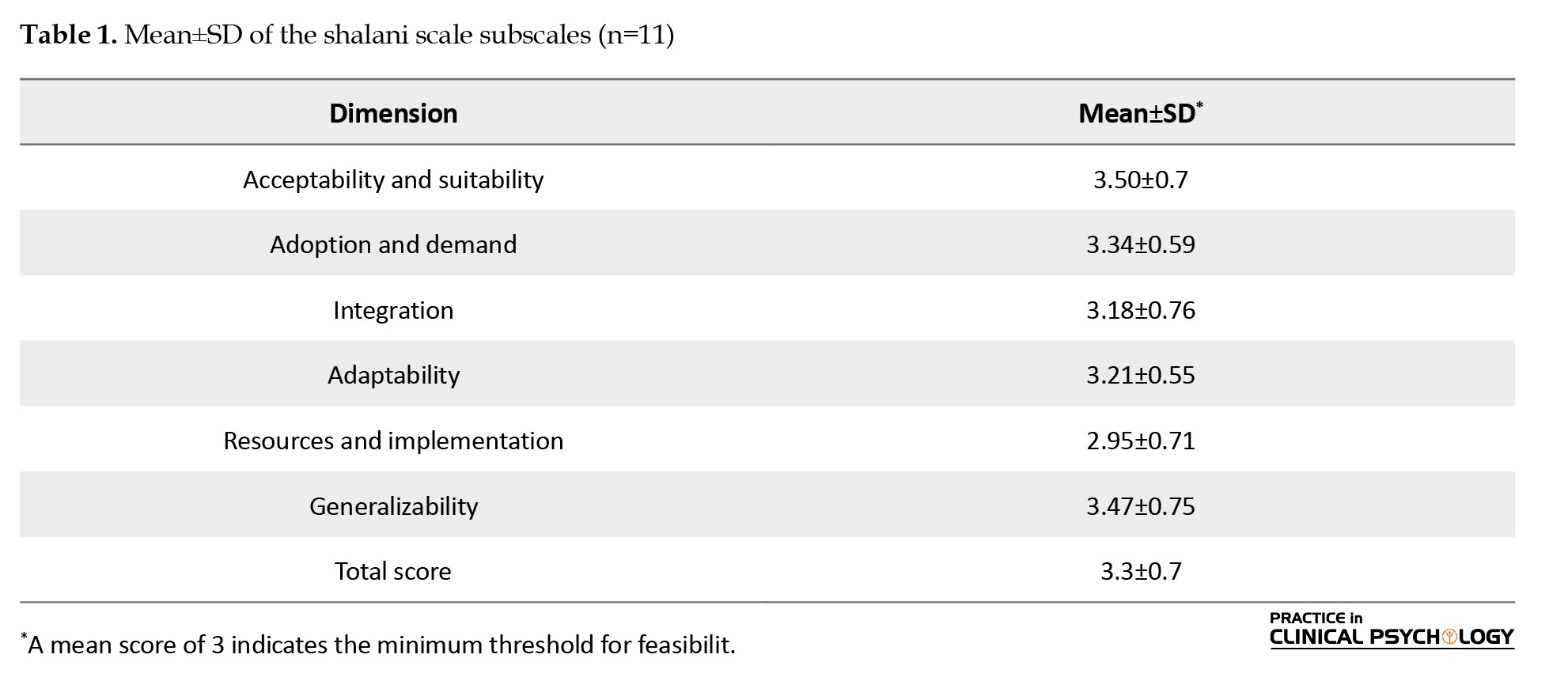
Overall, the results indicated that the package was evaluated as moderately to highly feasible by the experts. The highest ratings were observed for acceptability and suitability (M=3.5) and generalizability (M=3.47), while resources and implementation received the lowest rating (M=2.95). To examine differences in the total feasibility score across the three professional groups (psychiatrists, psychologists, and others), a one-way ANOVA was performed. There was a significant difference among the groups (F2, 8=70.54, P<0.001, Table 2).
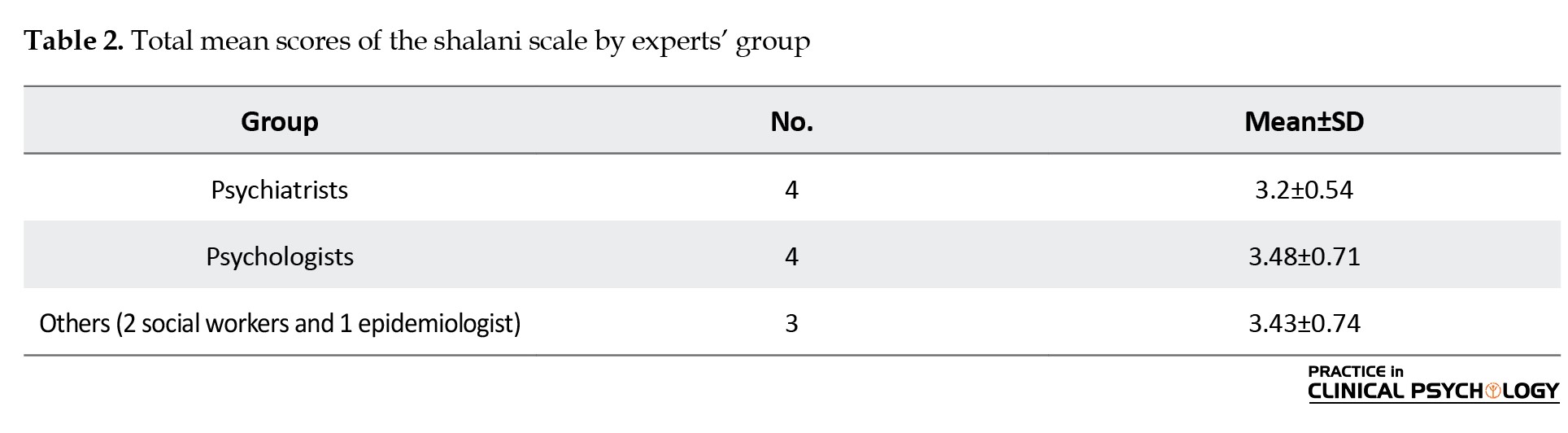
These subgroup analyses should be interpreted with caution and considered exploratory due to the small purposive sample (n=29) and the limited number of participants within each professional subgroup, which reduces statistical power and limits generalizability of the findings.
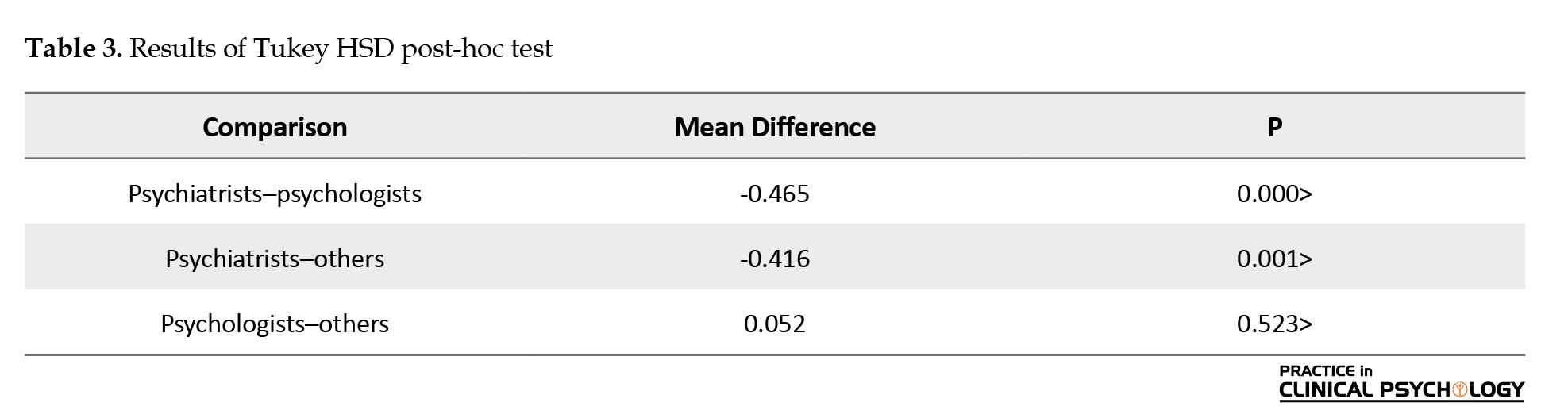
Post-hoc analyses using the Tukey HSD test indicated that psychiatrists scored significantly lower than both psychologists (P<0.001) and the “other” group (P<0.001), while no significant difference was observed between psychologists and the “other” group (P=0.523). Detailed results are provided in Table 3.
In summary, the experts rated the package as acceptable and feasible, though psychiatrists showed a more cautious attitude compared to the other groups.
Feasibility assessment based on the WHO feasibility checklist
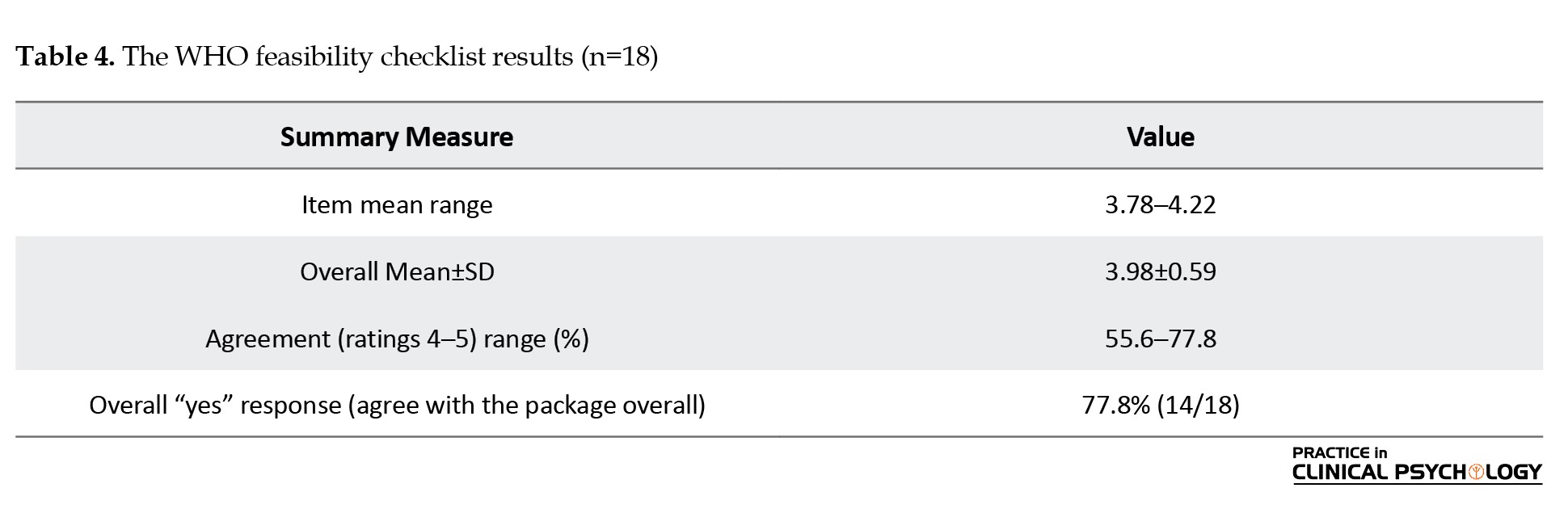
To further explore feasibility from the perspective of hotline intervention providers, 18 social workers who work directly with adolescents following suicide attempts completed a nine-item feasibility checklist. The results showed that item means ranged from 3.78 to 4.22, with an overall Mean±SD of 3.98±0.59, indicating a positive and favorable evaluation of the package. The proportion of participants selecting “agree” or “strongly agree” (ratings of 4 or 5 on the Likert scale) ranged from 55.6% to 77.8% across items. In addition, a single yes/no item asked whether the respondents agreed with the package overall; 77.8% (14 out of 18) responded “yes.” The overall results are summarized in Table 4.
Overall, these findings showed that the package was perceived as acceptable and feasible by both experts and hotline social workers, although meaningful differences in attitudes emerged between professional groups.
Discussion
The present study aimed to assess the feasibility of the Pure Farm text-based intervention package for adolescents with suicidal ideation or history of suicide attempts, from the perspectives of mental health professionals and social workers involved in hotline intervention. Results obtained from two instruments—the Shalani scale and the WHO feasibility checklist—indicated that the package was rated as acceptable in terms of acceptability and suitability and generalizability, and was considered feasible to implement by most participants.
Higher mean scores in acceptability and suitability and generalizability suggest that the package aligns well with the needs of at-risk adolescents and can be applied in diverse settings. This finding is consistent with previous studies on narrative and text-based interventions that have emphasized the importance of cultural adaptation and acceptance by the target population (Niles et al., 2014; Robertson et al., 2021; Shalani et al., 2021).
Conversely, the dimension of resources and implementation received the lowest mean score, possibly reflecting concerns about operational constraints, such as time, workforce, and infrastructure. Similar studies have identified limited resources and the need for facilitator training as key challenges to implementing innovative interventions (WHO Team, 2021). Therefore, although the package is content-wise acceptable, its successful implementation will depend on adequate resources and specialized facilitator training.
ANOVA and post-hoc analyses showed that psychiatrists demonstrated more cautious feasibility evaluations toward the feasibility of the package than psychologists and social workers. This difference may stem from the dominant biomedical orientation of psychiatry, which emphasizes pharmacological and structured clinical interventions, whereas psychologists and social workers, due to their experience in psychotherapy and fieldwork, may exhibit greater adaptability and openness toward text-based approaches. Similar findings have been reported internationally, highlighting how professional background can influence evaluations of novel interventions (Chu et al., 2015).
Additionally, results from the WHO checklist completed by social workers in hotline intervention revealed that mean scores on all items were above the midpoint, and more than two-thirds of respondents agreed with implementing the package. This is particularly meaningful, as this group works directly with at-risk adolescents, and their views can reflect real-world challenges and opportunities for implementation. The high percentage of agreement on the overall item (77.8%) further underscores the strong potential for adoption and demand in real-world contexts.
Limitations and recommendations
Given the limited sample size and the absence of data from adolescents who directly received the intervention, future studies are recommended to examine the feasibility of the package from the perspective of its primary target audience (adolescents and their families). Moreover, evaluating the effectiveness of the package through quasi-experimental or experimental designs is advised in order to determine whether the intervention leads to measurable clinical outcomes, such as reductions in suicidal ideation or improvements in help-seeking behaviors. The findings of the present study may therefore serve as an initial step toward the development and systematic testing of text-based interventions for adolescent suicide prevention in Iran.
Conclusion
The findings of this study indicate that the “Pure Farm” text-based intervention package was evaluated by mental health professionals and social workers as acceptable, culturally appropriate, and potentially applicable in practice. The particularly positive evaluation from hotline social workers—who directly engage with adolescents at risk—suggests that the package may have practical relevance in real-world community support settings. Although psychiatrists expressed more cautious attitudes than psychologists and social workers, this difference may reflect variations in professional perspectives regarding risk management and clinical responsibility in suicide prevention contexts.
These results should be interpreted with caution. The feasibility ratings were based on self-reported professional judgments, which may be influenced by response biases, such as social desirability or professional optimism toward innovative interventions. In addition, the Shalani feasibility scale primarily captures subjective perceptions of usability and applicability rather than objective clinical effectiveness, which may limit the scope of interpretation. Furthermore, because the intervention package was culturally developed within the Iranian context, its acceptability and perceived applicability may be influenced by local cultural and service-delivery conditions, which could limit generalizability to other settings.
Taken together, the findings provide preliminary feasibility evidence suggesting that narrative-based and culturally informed text-based interventions, such as “Pure Farm” may have potential for further development and evaluation. However, these results should be considered an early step that informs subsequent research rather than evidence of readiness for large-scale system integration.
Ethical Considerations
Compliance with ethical guidelines
This study was approved by the Research Ethics Committee of Ferdowsi University of Mashhad, Mashhad, Iran (Code: IR.UM.REC.1404.473).
Funding
This research did not receive any grant from funding agencies in the public, commercial, or non-profit sectors.
Authors' contributions
All authors contributed equally to the conception and design of the study, data collection and analysis, interpretation of the results and drafting of the manuscript. Each author approved the final version of the manuscript for submission.
Conflict of interest
The authors declared no conflict of interest.
Acknowledgments
This study was supported by the NGO Raviyaan-e-Omid-e-Zendegi, an organization dedicated to suicide prevention. The authors gratefully acknowledge their guidance and support throughout the research process.
References
Armitage, R. (2021). Bullying in children: Impact on child health. BMJ Paediatrics Open, 5(1), e000939. [DOI:10.1136/bmjpo-2020-000939] [PMID]
Beautrais, A. L. (2000). Risk factors for suicide and attempted suicide among young people. The Australian and New Zealand Journal of Psychiatry, 34(3), 420-436. [DOI:10.1080/j.1440-1614.2000.00691.x] [PMID]
Beck, A. T., Kovacs, M., & Weissman, A. (1979). Assessment of suicidal intention: The scale for suicide ideation. Journal of Consulting and Clinical Psychology, 47(2), 343–352. [Link]
Bull, F. C., Al-Ansari, S. S., Biddle, S., Borodulin, K., Buman, M. P., & Cardon, G., et al. (2020). World Health Organization 2020 guidelines on physical activity and sedentary behaviour. British Journal of Sports Medicine, 54(24), 1451-1462. [DOI:10.1136/bjsports-2020-102955] [PMID]
Canetto, S. S., & Sakinofsky, I. (1998). The gender paradox in suicide. Suicide & Life-Threatening Behavior, 28(1), 1-23. [DOI:10.1111/j.1943-278X.1998.tb00622.x]
Chu, C., Klein, K. M., Buchman-Schmitt, J. M., Hom, M. A., Hagan, C. R., & Joiner, T. E. (2015). Routinized assessment of suicide risk in clinical practice: An empirically informed update. Journal of Clinical Psychology, 71(12), 1186–1200. [DOI:10.1002/jclp.22210]
Eggert, L. L., & Herting, J. R. (1991). Preventing Teenage Drug Abuse: Exploratory Effects of Network Social Support: Exploratory Effects of Network Social Support. Youth & Society, 22(4), 482-524. [DOI:10.1177/0044118X91022004004]
Hetrick, S. E., Goodall, J., Yuen, H. P., Davey, C. G., Parker, A. G., & Robinson, J., al. (2017). Comprehensive online self-monitoring to support clinicians manage risk of suicide in youth depression. Crisis, 38(3), 147-157. [DOI:10.1027/0227-5910/a000422] [PMID]
Hutchinson, E., Scott, L., Choukas-Bradley, S., & Silk, J. (2025). Interpersonal risk factors for suicide in daily life among young people: A review of intensive longitudinal studies. Development and Psychopathology, 37(4), 2196–2216. [DOI:10.1017/S0954579424001810] [PMID]
Jobes, D. A., Piehl, B. M., & Chalker, S. A. (2018). A collaborative approach to working with the suicidal mind. In M. Pompili (Ed.), Phenomenology of suicide: Unlocking the suicidal mind (pp. 187-201). Cham: Springer. [DOI:10.1007/978-3-319-47976-7_11]
Joiner, T. (2005). Why people die by suicide. Cambridge (MA): Harvard University Press. [Link]
Kazdin, A. E. (2008). Evidence-based treatment and practice: New opportunities to bridge clinical research and practice, enhance the knowledge base, and improve patient care. The American Psychologist, 63(3), 146–159.[DOI:10.1037/0003-066X.63.3.146] [PMID]
Kleiman, E. M., & Liu, R. T. (2013). Social support as a protective factor in suicide: Findings from two nationally representative samples. Journal of Affective Disorders, 150(2), 540-545. [DOI:10.1016/j.jad.2013.01.033] [PMID]
Lakey, B., & Orehek, E. (2011). Relational regulation theory: A new approach to explain the link between perceived social support and mental health. Psychological Review, 118(3), 482-495. [DOI:10.1037/a0023477] [PMID]
Lopez, S. J., Floyd, R. K., Ulven, J. C., & Snyder, C. R. (2000). Hope therapy: Helping clients build a house of hope. In C. R. Snyder (Ed.), Handbook of hope: Theory, measures, and applications (pp. 123–150). Massachusetts: Academic Press. [DOI:10.1016/B978-012654050-5/50009-9]
Malakouti, S. K., Nojomi, M., Bolhari, J., Hakimshooshtari, M., Poshtmashhadi, M., & De Leo, D. (2009). Prevalence of suicide thoughts, plans and attempts in a community sample from Karaj, Iran. Community Mental Health Journal, 45(1), 37–41. [DOI:10.1007/s10597-008-9173-4] [PMID]
Mann, J. J., Michel, C. A., & Auerbach, R. P. (2021). Improving suicide prevention through evidence-based strategies: A systematic review. American Journal of Psychiatry, 178(7), 611-624. [DOI:10.1176/appi.ajp.2020.20060864] [PMID]
Mann, J. J. (2003). Neurobiology of suicidal behaviour. Nature Reviews Neuroscience, 4(10), 819–828. [DOI:10.1038/nrn1220]
Milner, A. J., Niven, H., & LaMontagne, A. D. (2015). Occupational class differences in suicide: Evidence of changes over time and during the global financial crisis in Australia. BMC Psychiatry, 15, 223. [DOI:10.1186/s12888-015-0608-5] [PMID]
Motto, J. A., & Bostrom, A. G. (2001). a randomized controlled trial of postcrisis suicide prevention. Psychiatric Services, 52(6), 828-833. [DOI:10.1176/appi.ps.52.6.828] [PMID]
Naslund, J. A., Aschbrenner, K. A., Kim, S. J., McHugo, G. J., Unützer, J., & Bartels, S. J., et al. (2017). Health behavior models for informing digital technology interventions for individuals with mental illness. Psychiatric Rehabilitation Journal, 40(3), 325-335. [DOI:10.1037/prj0000246] [PMID]
Niles, A. N., Haltom, K. E. B., Mulvenna, C. M., Lieberman, M. D., & Stanton, A. L. (2014). Randomized controlled trial of expressive writing for psychological and physical health: The moderating role of emotional expressivity. Anxiety, Stress, & Coping, 27(1), 1–17. [DOI:10.1080/10615806.2013.802308]
O’Connor, R. C., & Nock, M. K. (2014). The psychology of suicidal behaviour. The Lancet Psychiatry, 1(1), 73-85. [DOI:10.1016/S2215-0366(14)70222-6] [PMID]
O’Connor, R. C. (2011). The Integrated Motivational-Volitional Model of Suicidal Behavior. Crisis, 32(6), 295–298. [DOI:10.1027/0227-5910/a000120]
Robertson, S. M., Short, S. D., Sawyer, L., & Sweazy, S. (2021). Randomized controlled trial assessing the efficacy of expressive writing in reducing anxiety in first-year college students: The role of linguistic features. Psychology & Health, 36(9), 1041–1065. [DOI:10.1080/08870446.2020.1827146]
Robinson, J., Hetrick, S., Cox, G., Bendall, S., Yuen, H. P., & Yung, A., et al. (2016). Can an I nternet‐based intervention reduce suicidal ideation, depression and hopelessness among secondary school students: Results from a pilot study. Early Intervention in Psychiatry, 10(1), 28-35. [DOI:10.1111/eip.12137] [PMID]
Shalani, B., Azadfallah, P., & Hojjatollah, F. (2023). Developing a scale for assessing feasibility of psychoeducational and psychotherapy protocols: A guide for researchers. Quaterly of Applied Psychology, 17(4), 17-37. [DOI:10.48308/apsy.2021.224241.1190]
Sharifi, V., Mojtabai, R., Shahrivar, Z., Alaghband-Rad, J., Zarafshan, H., & Wissow, L. (2016). Child and adolescent mental health care in Iran: Current status and future directions. Archives of Iranian Medicine, 19(11), 797-804. [PMID]
Spring, B. (2007). Evidence‐based practice in clinical psychology: What it is, why it matters; what you need to know. Journal of Clinical Psychology, 63(7), 611-631. [DOI:10.1002/jclp.20373] [PMID]
Swedo, E. A., Pampati, S., Anderson, K. N., Thorne, E., McKinnon, I. I., & Brener, N. D., et al. (2024). Adverse childhood experiences and health conditions and risk behaviors among high school students - youth risk behavior survey, United States, 2023. MMWR Supplements, 73(4), 39–50. [DOI:10.15585/mmwr.su7304a5] [PMID]
WHO. (2025). Suicide. Geneva: WHO. [Link]
WHO. (2010). mhGAP intervention guide for mental, neurological and substance use disorders in non-specialized health settings: Version 1.0. Genva: World Health Organization. [Link]
WHO Team. (2021). Implementation research toolkit: Mental health interventions in low- and middle-income countries. Genva: World Health Organization. [Link]
Yang, Q., Zhang, W., Wu, H., Huang, B., Zhang, C., & Niu, G. (2023). The association between perceived family financial stress and adolescent suicide ideation: A moderated mediation model. Behavioral Sciences, 13(11), 948. [DOI:10.3390/bs13110948] [PMID]
Suicide prevention among adolescents is considered one of the primary priorities of mental health systems worldwide. Suicide is the second leading cause of death among individuals aged 15 to 29 globally, claiming the lives of over 720,000 people annually—a significant portion of whom are adolescents (World Health Organization [WHO], 2025). Adolescence is a particularly vulnerable developmental period due to emotional changes, social pressures, and identity formation, all of which increase susceptibility to suicidal ideation and behavior(s). Therefore, developing effective preventive interventions that can identify and support at-risk adolescents in a timely manner is a critical public health necessity.
Given the multifactorial and complex nature of adolescent suicide, preventive interventions must simultaneously address the psychological, social, and interpersonal dimensions of this phenomenon (O’Connor & Nock, 2014). Adolescents facing family conflicts, emotional issues, or financial stressors often lack adequate access to mental health services or show reluctance to engage in direct therapeutic methods (Mann et al., 2021). In such contexts, designing simple, accessible, low-cost, and evidence-based psychological tools presents a promising approach to enhance resilience and reduce suicidal ideation in adolescents (Hetrick et al., 2017). Studies have shown that self-help interventions can effectively reduce symptoms of depression and suicidal ideation, particularly when they are designed in an indirect manner and in a language suited to adolescents (Bull et al., 2020).
In many low- and middle-income countries, including Iran, the infrastructure for delivering mental health services to adolescents faces serious challenges—such as a lack of qualified professionals, the social stigma associated with seeing a psychologist, and high treatment costs (Malakouti et al., 2009). These limitations often leave at-risk adolescents without effective psychological support. Furthermore, most existing interventions in Iran are therapeutic rather than preventive and are commonly delivered face-to-face in clinical settings, which are not accessible to all adolescents (Sharifi et al., 2016). In this context, the development of alternative interventions that can be used in home or educational environments—without requiring extensive infrastructure—may help bridge service gaps and contribute to reducing adolescent suicide rates (Naslund et al., 2017).
In recent years, the development of low-cost, non-invasive, and community-based interventions—especially for at-risk adolescents—has gained attention among mental health researchers. For instance, supportive text- or letter-based interventions, designed in the form of brief, empathic, and motivational messages, have shown promising results in reducing feelings of isolation, increasing hope, and lowering suicidal ideation in various countries (Milner et al., 2015; Motto & Bostrom, 2001). Additionally, there is evidence that simple but structured interventions can play a significant preventive role by activating adolescents’ internal resources, reducing social stigma, and enhancing perceived support (Armitage, 2021; Hetrick et al., 2017). These approaches, particularly in contexts with limited access to professional services, are highly feasible and can serve as either complements to or replacements for traditional therapeutic interventions.
A review of preventive interventions indicates that using simple and accessible tools—such as letter writing or messaging—can be effective in reducing suicidal behaviors. One of the earliest and most influential studies in this area was conducted by Motto and Bostrom in 2001 in the United States. In this study, individuals with a history of suicide attempts received supportive letters over a five-year period, and the results showed a significant reduction in suicide rates (Motto & Bostrom, 2001). In the educational context, the “reconnecting youth” program in U.S. high schools focused on life skills training and social support, playing a key role in decreasing suicidal ideation and strengthening social bonds among vulnerable adolescents (Eggert & Herting, 1991). In Australia, Milner et al. found that brief contact interventions—such as SMS or telephone follow-ups after hospital discharge—were particularly effective for at-risk adolescents (Milner et al., 2015). Another pilot study in Australia, titled “ITS-Y,” examined supportive interpersonal text messaging from therapists to adolescents recently discharged from psychiatric services. This approach proved effective in reducing feelings of rejection and fostering meaningful connections (Robinson et al., 2016). These studies collectively highlight that written or message-based interventions—especially those that are interpersonal, consistent, and support-oriented—can play a significant role in adolescent mental health prevention strategies.
Although brief-contact interventions, such as postcards, telephone follow-ups, and text-message programs have demonstrated potential benefits in suicide prevention, their effectiveness varies considerably across settings, and most rely on generic, non-therapeutic messages. Text-based expressive interventions show promise for emotional processing, yet few have been culturally adapted or integrated into post–suicide attempt care in low-resource contexts. The Pure Farm package aims to address these gaps by combining structured writing tasks with culturally grounded content.
Given the urgent need for culturally adapted, feasible, and targeted interventions for suicide prevention among adolescents, a text-based preventive package with psychological content has been designed. The aim is to foster indirect and sustained engagement with adolescents who have a history of suicide attempts. By focusing on four frequently reported psychological themes in adolescents lived experiences, this package seeks to facilitate the recovery of hope, connection, and capability through a simple, empathic, and gradual approach. The present study aimed to assess the feasibility of implementing this package within clinical settings for at-risk adolescents. Accordingly, the central research question is: Is the implementation of a text-based support package for adolescents with a history of suicide attempts feasible and acceptable in terms of receipt, engagement, and participant interaction?
Theoretical framework of the text-based intervention package (Pure Farm)
The design of the present psychological package was grounded in theoretical approaches related to adolescent suicide, principles of supportive psychotherapy, and clinical evidence derived from the analysis of adolescents lived experiences. The choice of the name Pure Farm is also inspired by Persian culture and literature. The title originated from a verse by Jalal al-Din Mohammad Balkhi (Rumi):
In this earth, in this earth, in this Pure Farm, Let it sown nothing but the seed of love and kindness.
This symbolic phrase portrays the package as a metaphorical space for sowing the seeds of love, hope, and psychological healing in the wounded soil of the adolescent’s inner world. In psychological contexts, the use of metaphors and symbols is recognized as an effective strategy for enhancing comprehension, emotional connection, and acceptance of interventions, particularly among adolescents (Lakey & Orehek, 2011).
From a theoretical perspective, the content of the package is based on an integration of three core approaches: First, the interpersonal theory of suicide (Joiner, 2005), which emphasizes the roles of thwarted belongingness, perceived burdensomeness, and acquired capability for suicide in the emergence of suicidal ideation and behaviors (Joiner, 2005). Second, hope therapy, which focuses on increasing hope for the future, goal-setting, and finding meaning in life as key factors in reducing suicidal tendencies (Lopez et al., 2000). Third, the principles of self-help interventions, especially in the form of brief, empathetic, and continuous written messages, which can be implemented even in low-resource settings without requiring face-to-face contact (Motto & Bostrom, 2001).
The analysis of narratives from adolescents with a history of suicide attempts revealed four recurring themes in their lived experiences: conflict with parents, conflict with romantic partners, financial stress, and sense of hopelessness. These themes form the foundational structure of the package content. The intervention consists of a set of four supportive letters, each addressing one of the identified challenges, accompanied by an audio file designed for relaxation. The main objective is to foster a sense of being understood, rebuild hope, and strengthen psychological resilience in adolescents.
The letters are crafted in a way that supports adolescents in reconnecting with themselves, their families, their communities, and their future—without subjecting them to direct confrontation or external judgment. The use of simple language, a warm tone, and indirect yet continuous messaging are key features of this intervention’s design. Each letter also includes a recommendation to speak with a trusted individual, allowing the adolescent to benefit from interpersonal support when ready.
This package is intended for adolescents who have attempted suicide or are currently experiencing active suicidal ideation. When such thoughts re-emerge, the adolescent is encouraged to select and read the letter that corresponds to the triggering challenge—one of the four identified domains. The accompanying audio file is designed based on cognitive therapy principles and focuses on physical relaxation, aiming to reduce tension and support emotional regulation.
Theoretical and clinical basis of letters contents
The selection of letter content in the Pure Farm package was informed by a tripartite framework encompassing clinical observation, empirical literature, and theoretical grounding. Within this framework, four central psychosocial domains—conflict with a romantic partner, parent–child relational challenges, financial stress, and a pervasive sense of hopelessness—were identified. These thematic areas were derived from recurring patterns observed in clinical evidence (Jobes et al., 2018; Joiner, 2005), substantiated by findings from empirical studies in the field of suicidology (Beautrais, 2000; Canetto & Sakinofsky, 1998; Kleiman & Liu, 2013), and aligned with established theoretical perspectives on psychological distress and resilience.
Clinical evidence
The utilization of clinical evidence in development psychological interventions holds a well-established position within the evidence-based psychology approaches. As highlighted by Kazdin (2008) and Spring (2007), data obtained through the therapeutic process and direct client encounters can alongside empirically evidence and theoretical frameworks serve as a valid foundation for developing effective interventions.
In line with this approach, the clinical analysis in the present study was based on a review of 331 case files of adolescents who were referred to the Shoq-e-Zendegi Judicial and Supportive Complex in Mashhad between 2024 and 2025 due to suicide attempts. Descriptive analysis of the data revealed that conflict with parents, reported in 129 cases (39%), was the most frequent reason cited for the suicide decision. This was followed by conflict with a romantic partner (80 cases, 24%) and financial stress (57 cases, 17.2%). Additionally, sense of hopelessness was reported in 38 cases (11.5%), particularly among adolescents living apart from their parents. Other reported reasons included rape, unknown reasons, and miscellaneous unclassified factors.
These findings clearly indicate that four primary themes—conflict with parents, conflict with a romantic partner, financial stress, and hopelessness—appear repeatedly and meaningfully in the clinical narratives of adolescents who attempted suicide. These recurring patterns underscore the rationale for focusing the Pure Farm intervention package on these four core themes.
Empirical studies
The selection of content for the Pure Farm intervention package was grounded in robust empirical evidence from contemporary studies in adolescent suicide psychology. Research has consistently shown that interpersonal conflicts—particularly within close relationships, such as those with parents and romantic partners—are among the strongest predictors of suicidal ideation and behavior in adolescents. A study found that 76.1% of adolescents had experienced at least one type of family-related problem, which was significantly associated with increased risk of depression, self-harm, and suicide attempts (Swedo et al., 2024). In addition, hopelessness has been identified as a key factor contributing to suicidal ideation among adolescents. Studies indicate that in moments when adolescents report heightened levels of hopelessness, there is a corresponding increase in suicidal ideation (Hutchinson et al., 2025). Moreover, financial stress within the family has been recognized as another critical risk factor. Another study revealed that financial stress contributes to adolescent suicidal ideation by increasing depressive symptoms and weakening parent-child bonds (Yang et al., 2023). Accordingly, the four themes addressed in the Pure Farm letters—conflict with parents, challenges in romantic relationships, financial stress, and hopelessness—are strongly supported by empirical findings and reflect current scientific understanding in the field.
Theoretical perspectives
To theoretically justify the selection of the four main themes addressed in the Pure Farm package, four influential and widely recognized theories in suicide psychology were considered.
First, Joiner’s interpersonal theory of suicide posits two central constructs underlying suicidal ideation: thwarted belongingness and perceived burdensomeness (Joiner, 2005). Interpersonal conflicts with parents or romantic partners may foster feelings of rejection and isolation, contributing to a lack of belonging. Meanwhile, financial pressure and the inability to support one’s family can intensify the perception of being a burden. Collectively, this theory offers a compelling explanation of the social-emotional despair that underlies suicidal ideation.
Second, Beck’s cognitive theory of suicide emphasizes the role of cognitive distortions and hopelessness. According to this model, suicidal ideation and depressive symptoms arise when individuals view themselves, the world, and the future through a distorted, negative lens (Beck et al., 1979). Experiencing interpersonal conflict, financial stress, and a sense of helplessness may reinforce maladaptive core beliefs and cognitive hopelessness—one of the key themes in the Pure Farm package.
Third, the stress-diathesis model (also referred to as the stressful life events theory) highlights the interaction between environmental stressors—such as economic hardship or relational discord—and individual vulnerabilities, including psychological or biological predispositions (Mann, 2003). When these external stressors co-occur with a lack of coping skills or pre-existing mental health conditions, the risk of suicidal behavior increases.
Finally, the integrated motivational–volitional (IMV) model by Rory O’Connor, one of the most current and frequently cited theoretical frameworks in suicidology, provides a comprehensive structure encompassing three phases: pre-motivational, motivational, and volitional (O’Connor, 2011). In the motivational phase, which accounts for the emergence of suicidal ideation, interpersonal stressors (e.g. parental or partner conflict), chronic psychological pressures (e.g. financial hardship), and a profound sense of hopelessness are central. Crucial constructs, such as “entrapment” and “perceived lack of escape” play a decisive role in forming suicidal motivation. Accordingly, the four themes included in the Pure Farm intervention are strongly aligned with this model and are thus theoretically robust and evidence-informed.
In feasibility studies, feasibility typically refers to the extent to which a proposed intervention is acceptable, appropriate, and implementable within a given service context. Core dimensions often include acceptability, suitability, practicality, resource requirements, and potential for integration into existing care systems. These dimensions guided the assessment framework used in the present study.
Materials and Methods
This study employed a descriptive–survey design with a quantitative approach, aiming to assess the feasibility of the “Pure Farm” text-based package for adolescents with suicidal ideation or a history of suicide attempt, from the perspectives of mental health professionals and intervention hotline social workers. Sampling was conducted using a purposive strategy.
Participants
The study participants consisted of two groups. The first group comprised mental health professionals (4 psychiatrists, 4 clinical psychologists, and 3 others including 2 social workers and 1 epidemiologist), totaling 11 participants. These individuals were university faculty members with at least eight years of experience working with individuals at risk for suicide and expressed willingness to participate in the study. To complement the professionals’ perspectives, feasibility was also assessed from the standpoint of intervention hotline social workers. The second group included 18 social workers engaged in post–suicide attempt intervention.
Measures
Two instruments were employed to evaluate feasibility: Feasibility scale for psychological packages (Shalani et al., 2021). This scale consists of 50 items across six core domains (acceptability and appropriateness, applicability and demand, integrity, adaptability, resources and implement ability, and generalizability). Responses are rated on a 5-point Likert scale (1=very low to 5=very high). Scores above 3 indicate favorable feasibility of the intervention. The scale has demonstrated strong psychometric properties. Shalani et al. (2021) reported content validity indices (CVI ranging from 0.83 to 1; CVR up to 1) and excellent internal consistency (Cronbach’s α=0.95), supporting its validity and reliability. In the present sample, internal consistency of the Shalani feasibility Scale was acceptable, with a Cronbach’s α of 0.84.
WHO mental health intervention feasibility checklist (WHO, 2010)
This checklist includes nine items rated on a 5-point Likert scale (1=strongly disagree to 5=strongly agree) and one final yes/no question regarding the overall feasibility of implementation. Its domains cover acceptability, cultural appropriateness, practicality, resource requirements, and scalability. The tool was developed to assess the feasibility and practicality of mental health and psychosocial interventions at early stages of development. Its main objective is to identify strengths and weaknesses of proposed interventions before large-scale implementation, ensuring contextual and cultural fit. The checklist is based on the WHO operational guide for assessing feasibility and implementation of mental health interventions and forms part of the mhGAP (Mental Health Gap Action Program) framework (World Health Organization, 2010).
Procedure
The “Pure Farm” text-based package, consisting of four intervention letters and an introductory guide, was provided to participants in either digital or printed format. Mental health professionals were asked to review the package and complete the Shalani scale, while intervention hotline social workers completed the WHO feasibility checklist.
Data analysis
Data were analyzed using both descriptive and inferential statistics. For the Shalani scale, Mean±SD were calculated for each subscale and total score. One-way analysis of variance (ANOVA) with Tukey post-hoc tests was conducted to compare feasibility ratings across professional subgroups (psychiatrists, psychologists, and others). For the WHO checklist, Mean±SD, and percentages of agreement (ratings of 4 or 5) were computed. Responses to the yes/no item were reported as frequencies and percentages. Given the small subgroup sizes, the ANOVA results should be interpreted as exploratory.
Results
The feasibility of the Pure Farm package was examined using two instruments: the Shalani feasibility scale and WHO feasibility checklist. The Shalani scale was completed by 11 experts, including four psychiatrists, four clinical psychologists, and three participants categorized as “other” (two social workers and one epidemiologist). The means and standard deviations of the subscales are presented in Table 1.
Overall, the results indicated that the package was evaluated as moderately to highly feasible by the experts. The highest ratings were observed for acceptability and suitability (M=3.5) and generalizability (M=3.47), while resources and implementation received the lowest rating (M=2.95). To examine differences in the total feasibility score across the three professional groups (psychiatrists, psychologists, and others), a one-way ANOVA was performed. There was a significant difference among the groups (F2, 8=70.54, P<0.001, Table 2).
These subgroup analyses should be interpreted with caution and considered exploratory due to the small purposive sample (n=29) and the limited number of participants within each professional subgroup, which reduces statistical power and limits generalizability of the findings.
Post-hoc analyses using the Tukey HSD test indicated that psychiatrists scored significantly lower than both psychologists (P<0.001) and the “other” group (P<0.001), while no significant difference was observed between psychologists and the “other” group (P=0.523). Detailed results are provided in Table 3.
In summary, the experts rated the package as acceptable and feasible, though psychiatrists showed a more cautious attitude compared to the other groups.
Feasibility assessment based on the WHO feasibility checklist
To further explore feasibility from the perspective of hotline intervention providers, 18 social workers who work directly with adolescents following suicide attempts completed a nine-item feasibility checklist. The results showed that item means ranged from 3.78 to 4.22, with an overall Mean±SD of 3.98±0.59, indicating a positive and favorable evaluation of the package. The proportion of participants selecting “agree” or “strongly agree” (ratings of 4 or 5 on the Likert scale) ranged from 55.6% to 77.8% across items. In addition, a single yes/no item asked whether the respondents agreed with the package overall; 77.8% (14 out of 18) responded “yes.” The overall results are summarized in Table 4.
Overall, these findings showed that the package was perceived as acceptable and feasible by both experts and hotline social workers, although meaningful differences in attitudes emerged between professional groups.
Discussion
The present study aimed to assess the feasibility of the Pure Farm text-based intervention package for adolescents with suicidal ideation or history of suicide attempts, from the perspectives of mental health professionals and social workers involved in hotline intervention. Results obtained from two instruments—the Shalani scale and the WHO feasibility checklist—indicated that the package was rated as acceptable in terms of acceptability and suitability and generalizability, and was considered feasible to implement by most participants.
Higher mean scores in acceptability and suitability and generalizability suggest that the package aligns well with the needs of at-risk adolescents and can be applied in diverse settings. This finding is consistent with previous studies on narrative and text-based interventions that have emphasized the importance of cultural adaptation and acceptance by the target population (Niles et al., 2014; Robertson et al., 2021; Shalani et al., 2021).
Conversely, the dimension of resources and implementation received the lowest mean score, possibly reflecting concerns about operational constraints, such as time, workforce, and infrastructure. Similar studies have identified limited resources and the need for facilitator training as key challenges to implementing innovative interventions (WHO Team, 2021). Therefore, although the package is content-wise acceptable, its successful implementation will depend on adequate resources and specialized facilitator training.
ANOVA and post-hoc analyses showed that psychiatrists demonstrated more cautious feasibility evaluations toward the feasibility of the package than psychologists and social workers. This difference may stem from the dominant biomedical orientation of psychiatry, which emphasizes pharmacological and structured clinical interventions, whereas psychologists and social workers, due to their experience in psychotherapy and fieldwork, may exhibit greater adaptability and openness toward text-based approaches. Similar findings have been reported internationally, highlighting how professional background can influence evaluations of novel interventions (Chu et al., 2015).
Additionally, results from the WHO checklist completed by social workers in hotline intervention revealed that mean scores on all items were above the midpoint, and more than two-thirds of respondents agreed with implementing the package. This is particularly meaningful, as this group works directly with at-risk adolescents, and their views can reflect real-world challenges and opportunities for implementation. The high percentage of agreement on the overall item (77.8%) further underscores the strong potential for adoption and demand in real-world contexts.
Limitations and recommendations
Given the limited sample size and the absence of data from adolescents who directly received the intervention, future studies are recommended to examine the feasibility of the package from the perspective of its primary target audience (adolescents and their families). Moreover, evaluating the effectiveness of the package through quasi-experimental or experimental designs is advised in order to determine whether the intervention leads to measurable clinical outcomes, such as reductions in suicidal ideation or improvements in help-seeking behaviors. The findings of the present study may therefore serve as an initial step toward the development and systematic testing of text-based interventions for adolescent suicide prevention in Iran.
Conclusion
The findings of this study indicate that the “Pure Farm” text-based intervention package was evaluated by mental health professionals and social workers as acceptable, culturally appropriate, and potentially applicable in practice. The particularly positive evaluation from hotline social workers—who directly engage with adolescents at risk—suggests that the package may have practical relevance in real-world community support settings. Although psychiatrists expressed more cautious attitudes than psychologists and social workers, this difference may reflect variations in professional perspectives regarding risk management and clinical responsibility in suicide prevention contexts.
These results should be interpreted with caution. The feasibility ratings were based on self-reported professional judgments, which may be influenced by response biases, such as social desirability or professional optimism toward innovative interventions. In addition, the Shalani feasibility scale primarily captures subjective perceptions of usability and applicability rather than objective clinical effectiveness, which may limit the scope of interpretation. Furthermore, because the intervention package was culturally developed within the Iranian context, its acceptability and perceived applicability may be influenced by local cultural and service-delivery conditions, which could limit generalizability to other settings.
Taken together, the findings provide preliminary feasibility evidence suggesting that narrative-based and culturally informed text-based interventions, such as “Pure Farm” may have potential for further development and evaluation. However, these results should be considered an early step that informs subsequent research rather than evidence of readiness for large-scale system integration.
Ethical Considerations
Compliance with ethical guidelines
This study was approved by the Research Ethics Committee of Ferdowsi University of Mashhad, Mashhad, Iran (Code: IR.UM.REC.1404.473).
Funding
This research did not receive any grant from funding agencies in the public, commercial, or non-profit sectors.
Authors' contributions
All authors contributed equally to the conception and design of the study, data collection and analysis, interpretation of the results and drafting of the manuscript. Each author approved the final version of the manuscript for submission.
Conflict of interest
The authors declared no conflict of interest.
Acknowledgments
This study was supported by the NGO Raviyaan-e-Omid-e-Zendegi, an organization dedicated to suicide prevention. The authors gratefully acknowledge their guidance and support throughout the research process.
References
Armitage, R. (2021). Bullying in children: Impact on child health. BMJ Paediatrics Open, 5(1), e000939. [DOI:10.1136/bmjpo-2020-000939] [PMID]
Beautrais, A. L. (2000). Risk factors for suicide and attempted suicide among young people. The Australian and New Zealand Journal of Psychiatry, 34(3), 420-436. [DOI:10.1080/j.1440-1614.2000.00691.x] [PMID]
Beck, A. T., Kovacs, M., & Weissman, A. (1979). Assessment of suicidal intention: The scale for suicide ideation. Journal of Consulting and Clinical Psychology, 47(2), 343–352. [Link]
Bull, F. C., Al-Ansari, S. S., Biddle, S., Borodulin, K., Buman, M. P., & Cardon, G., et al. (2020). World Health Organization 2020 guidelines on physical activity and sedentary behaviour. British Journal of Sports Medicine, 54(24), 1451-1462. [DOI:10.1136/bjsports-2020-102955] [PMID]
Canetto, S. S., & Sakinofsky, I. (1998). The gender paradox in suicide. Suicide & Life-Threatening Behavior, 28(1), 1-23. [DOI:10.1111/j.1943-278X.1998.tb00622.x]
Chu, C., Klein, K. M., Buchman-Schmitt, J. M., Hom, M. A., Hagan, C. R., & Joiner, T. E. (2015). Routinized assessment of suicide risk in clinical practice: An empirically informed update. Journal of Clinical Psychology, 71(12), 1186–1200. [DOI:10.1002/jclp.22210]
Eggert, L. L., & Herting, J. R. (1991). Preventing Teenage Drug Abuse: Exploratory Effects of Network Social Support: Exploratory Effects of Network Social Support. Youth & Society, 22(4), 482-524. [DOI:10.1177/0044118X91022004004]
Hetrick, S. E., Goodall, J., Yuen, H. P., Davey, C. G., Parker, A. G., & Robinson, J., al. (2017). Comprehensive online self-monitoring to support clinicians manage risk of suicide in youth depression. Crisis, 38(3), 147-157. [DOI:10.1027/0227-5910/a000422] [PMID]
Hutchinson, E., Scott, L., Choukas-Bradley, S., & Silk, J. (2025). Interpersonal risk factors for suicide in daily life among young people: A review of intensive longitudinal studies. Development and Psychopathology, 37(4), 2196–2216. [DOI:10.1017/S0954579424001810] [PMID]
Jobes, D. A., Piehl, B. M., & Chalker, S. A. (2018). A collaborative approach to working with the suicidal mind. In M. Pompili (Ed.), Phenomenology of suicide: Unlocking the suicidal mind (pp. 187-201). Cham: Springer. [DOI:10.1007/978-3-319-47976-7_11]
Joiner, T. (2005). Why people die by suicide. Cambridge (MA): Harvard University Press. [Link]
Kazdin, A. E. (2008). Evidence-based treatment and practice: New opportunities to bridge clinical research and practice, enhance the knowledge base, and improve patient care. The American Psychologist, 63(3), 146–159.[DOI:10.1037/0003-066X.63.3.146] [PMID]
Kleiman, E. M., & Liu, R. T. (2013). Social support as a protective factor in suicide: Findings from two nationally representative samples. Journal of Affective Disorders, 150(2), 540-545. [DOI:10.1016/j.jad.2013.01.033] [PMID]
Lakey, B., & Orehek, E. (2011). Relational regulation theory: A new approach to explain the link between perceived social support and mental health. Psychological Review, 118(3), 482-495. [DOI:10.1037/a0023477] [PMID]
Lopez, S. J., Floyd, R. K., Ulven, J. C., & Snyder, C. R. (2000). Hope therapy: Helping clients build a house of hope. In C. R. Snyder (Ed.), Handbook of hope: Theory, measures, and applications (pp. 123–150). Massachusetts: Academic Press. [DOI:10.1016/B978-012654050-5/50009-9]
Malakouti, S. K., Nojomi, M., Bolhari, J., Hakimshooshtari, M., Poshtmashhadi, M., & De Leo, D. (2009). Prevalence of suicide thoughts, plans and attempts in a community sample from Karaj, Iran. Community Mental Health Journal, 45(1), 37–41. [DOI:10.1007/s10597-008-9173-4] [PMID]
Mann, J. J., Michel, C. A., & Auerbach, R. P. (2021). Improving suicide prevention through evidence-based strategies: A systematic review. American Journal of Psychiatry, 178(7), 611-624. [DOI:10.1176/appi.ajp.2020.20060864] [PMID]
Mann, J. J. (2003). Neurobiology of suicidal behaviour. Nature Reviews Neuroscience, 4(10), 819–828. [DOI:10.1038/nrn1220]
Milner, A. J., Niven, H., & LaMontagne, A. D. (2015). Occupational class differences in suicide: Evidence of changes over time and during the global financial crisis in Australia. BMC Psychiatry, 15, 223. [DOI:10.1186/s12888-015-0608-5] [PMID]
Motto, J. A., & Bostrom, A. G. (2001). a randomized controlled trial of postcrisis suicide prevention. Psychiatric Services, 52(6), 828-833. [DOI:10.1176/appi.ps.52.6.828] [PMID]
Naslund, J. A., Aschbrenner, K. A., Kim, S. J., McHugo, G. J., Unützer, J., & Bartels, S. J., et al. (2017). Health behavior models for informing digital technology interventions for individuals with mental illness. Psychiatric Rehabilitation Journal, 40(3), 325-335. [DOI:10.1037/prj0000246] [PMID]
Niles, A. N., Haltom, K. E. B., Mulvenna, C. M., Lieberman, M. D., & Stanton, A. L. (2014). Randomized controlled trial of expressive writing for psychological and physical health: The moderating role of emotional expressivity. Anxiety, Stress, & Coping, 27(1), 1–17. [DOI:10.1080/10615806.2013.802308]
O’Connor, R. C., & Nock, M. K. (2014). The psychology of suicidal behaviour. The Lancet Psychiatry, 1(1), 73-85. [DOI:10.1016/S2215-0366(14)70222-6] [PMID]
O’Connor, R. C. (2011). The Integrated Motivational-Volitional Model of Suicidal Behavior. Crisis, 32(6), 295–298. [DOI:10.1027/0227-5910/a000120]
Robertson, S. M., Short, S. D., Sawyer, L., & Sweazy, S. (2021). Randomized controlled trial assessing the efficacy of expressive writing in reducing anxiety in first-year college students: The role of linguistic features. Psychology & Health, 36(9), 1041–1065. [DOI:10.1080/08870446.2020.1827146]
Robinson, J., Hetrick, S., Cox, G., Bendall, S., Yuen, H. P., & Yung, A., et al. (2016). Can an I nternet‐based intervention reduce suicidal ideation, depression and hopelessness among secondary school students: Results from a pilot study. Early Intervention in Psychiatry, 10(1), 28-35. [DOI:10.1111/eip.12137] [PMID]
Shalani, B., Azadfallah, P., & Hojjatollah, F. (2023). Developing a scale for assessing feasibility of psychoeducational and psychotherapy protocols: A guide for researchers. Quaterly of Applied Psychology, 17(4), 17-37. [DOI:10.48308/apsy.2021.224241.1190]
Sharifi, V., Mojtabai, R., Shahrivar, Z., Alaghband-Rad, J., Zarafshan, H., & Wissow, L. (2016). Child and adolescent mental health care in Iran: Current status and future directions. Archives of Iranian Medicine, 19(11), 797-804. [PMID]
Spring, B. (2007). Evidence‐based practice in clinical psychology: What it is, why it matters; what you need to know. Journal of Clinical Psychology, 63(7), 611-631. [DOI:10.1002/jclp.20373] [PMID]
Swedo, E. A., Pampati, S., Anderson, K. N., Thorne, E., McKinnon, I. I., & Brener, N. D., et al. (2024). Adverse childhood experiences and health conditions and risk behaviors among high school students - youth risk behavior survey, United States, 2023. MMWR Supplements, 73(4), 39–50. [DOI:10.15585/mmwr.su7304a5] [PMID]
WHO. (2025). Suicide. Geneva: WHO. [Link]
WHO. (2010). mhGAP intervention guide for mental, neurological and substance use disorders in non-specialized health settings: Version 1.0. Genva: World Health Organization. [Link]
WHO Team. (2021). Implementation research toolkit: Mental health interventions in low- and middle-income countries. Genva: World Health Organization. [Link]
Yang, Q., Zhang, W., Wu, H., Huang, B., Zhang, C., & Niu, G. (2023). The association between perceived family financial stress and adolescent suicide ideation: A moderated mediation model. Behavioral Sciences, 13(11), 948. [DOI:10.3390/bs13110948] [PMID]
Type of Study: Original Research Article |
Subject:
Cognitive behavioral
| Rights and permissions | |
 |
This work is licensed under a Creative Commons Attribution-NonCommercial 4.0 International License. |

This is an open access article distributed under the terms of the Creative Commons Attribution-NonCommercial 4.0 (CC-By-NC 4.0), which permits use, distribution, and reproduction in any medium, provided the original work is properly cited and is not used for commercial purposes.
Contact Information