

Volume 14, Issue 3 (Summer 2026)
Pract Clin Psychol 2026, 14(3): 233-248 |
Back to browse issues page




Download citation:
BibTeX | RIS | EndNote | Medlars | ProCite | Reference Manager | RefWorks
Send citation to:


BibTeX | RIS | EndNote | Medlars | ProCite | Reference Manager | RefWorks
Send citation to:
Kordmirza Nikoozadeh E, Abbasi M, Rahmanian M. Comparing the Effectiveness of Mindfulness-based Intervention and Self-compassion-based Intervention in Reducing Perceived Stress and Body Mass Index and Promoting Lifestyle in Obese Women. Pract Clin Psychol 2026; 14 (3) :233-248
URL: http://jpcp.uswr.ac.ir/article-1-1082-en.html
URL: http://jpcp.uswr.ac.ir/article-1-1082-en.html

1- Department of Psychology, Payame Noor University, Tehran, Iran. , kordmirza@pnu.ac.ir
2- Department of Psychology, Payame Noor University, Tehran, Iran.
2- Department of Psychology, Payame Noor University, Tehran, Iran.
Full-Text [PDF 690 kb]
(86 Downloads)
| Abstract (HTML) (1326 Views)
Full-Text: (46 Views)
Introduction
Obesity, as one of the public health crises of the 21st century, not only affects the physiological aspect but also the psychological, social, and economic aspects. It is associated with chronic diseases, including type 2 diabetes, heart disease, high blood pressure, and metabolic disorders. Global statistics show that the prevalence of obesity in women is significantly higher than in men, and this gender difference is rooted in numerous hormonal, psychological, social, and cultural factors (Shah et al., 2020; Shao et al., 2025). Obesity in women can lead to psychological disorders, such as depression, anxiety, and negative effects on their lifestyle (Pedersen et al., 2025). The prevalence of obesity in Iran has also been on the rise. According to available statistics, more than half of adults are overweight or obese. This trend is especially significant among women and has brought more negative consequences (Tavallaei et al., 2024). In Canada, about one-third of adults are obese (Statistics Canada, 2025). The financial burden of obesity in Canada is estimated at $27.6 billion by 2023; this figure includes reduced tax revenues due to decreased job productivity and increased health care costs and government payments for disability and social benefits (Obesity Canada, 2025). Body mass index (BMI) is a standard measure of weight status and obesity. According to the definition of the World Health Organization, a BMI ≥30 is considered obesity (World Health Organization [WHO], 2025). Evidence suggests that losing even 5–10% of body weight in obese individuals can significantly reduce the risk of obesity-related diseases and improve overall health status (Carraça et al., 2021).
Several factors, including social and cultural pressures, changes in dietary patterns, and decreased physical activity, can contribute to obesity. Studies have shown that the inability to manage chronic stress effectively can lead to increased appetite, cravings for high-calorie foods, and ultimately weight gain through physiological mechanisms, such as increased secretion of cortisol (the stress hormone). On the other hand, obesity and overweight themselves can be a significant source of stress, which increases the need for effective stress management strategies (Herzog et al., 2022). Several studies have shown that obese women who fail to manage their stress experience higher levels of perceived stress compared to normal-weight women, and this inability is associated with several negative outcomes, such as eating disorders, depression, and reduced self-esteem. Therefore, training in stress management skills can play a key role in improving the situation of obese women (Ridout et al., 2021). Stress management not only regulates physiological and behavioral changes associated with obesity, but can also strengthen the immune system, increase a person’s ability to manage health-related behaviors, and ultimately positively affect lifestyle (Klatzkin et al., 2019). Obese women often face forced lifestyle changes, including restrictions on daily activities, changes in social patterns, modification of eating habits, and the need to redefine life priorities (Mats Brännström et al., 2023). These lifestyle changes can negatively affect self-esteem, feelings of self-efficacy, and overall life satisfaction (Doherty, 2022). Studies have shown that obese women experience greater lifestyle changes compared to obese men, highlighting the importance of considering specific interventions to improve the lifestyle of this group. Improving the lifestyle of obese women can help increase their motivation to adhere to a healthy diet and, as a result, achieve greater success in weight control. A healthy lifestyle can act as a protective factor against the physical and psychological complications of obesity (Braun et al., 2022).
Traditional weight management approaches, which have focused mainly on diet regimen and increased physical activity, although have shown positive results in the short term, are associated with high weight regain rates and psychological complications in the long term. These limitations highlight the need for more comprehensive and sustainable approaches that consider not only the physical aspects but also the psychological and behavioral dimensions of obesity (Sosa-Cordobés et al., 2023). In this regard, interventions based on mindfulness and self-compassion have been proposed as new and promising approaches.
Rooted in Buddhist meditation traditions, mindfulness is defined as the ability to be fully present in the present moment, without judgment, and with full acceptance of inner experiences. This approach helps individuals identify and change automatic and destructive patterns by becoming more aware of their feelings, thoughts, and behaviors (Raja-Khan et al., 2017). Studies have shown that mindfulness can be effective in managing obesity and related problems through different mechanisms. Mindfulness helps people become more aware of their hunger and fullness cues, recognize emotional eating patterns, and reduce automatic eating behaviors. Mindfulness is associated with reduced stress, better emotional regulation, increased self-control, and improved body image, all of which can contribute to weight management (Haidar et al., 2024). Mindfulness can improve quality of life by increasing self-acceptance, reducing self-blame, and increasing the ability to cope with challenges (Fisher et al., 2023). Evidence-based research shows that mindfulness interventions have a positive effect on reducing emotional eating, improving sleep quality, reducing cortisol levels, and ultimately, weight loss (Lattimore, 2019). Self-compassion is a concept that includes kindness to oneself, an understanding of common human suffering, and an awareness of one’s acceptance of painful experiences. This approach can be replaced with self-criticism and harsh self-judgment. Self-compassion-based intervention (SCBI) is an effective and beneficial method, especially for women who often struggle with feelings of shame, guilt, and worthlessness (Carter et al., 2020). SCBI includes exercises to cultivate a compassionate attitude toward oneself, acceptance of mistakes and failures as part of the common human experience, and balanced awareness of negative emotions without suppressing or exaggerating them (Braun et al., 2022). Self-compassion can be particularly beneficial in the context of obesity, as many obese individuals experience intense self-criticism, feelings of shame, and internalized stigma. By replacing self-criticism with kindness to oneself, it can break the vicious cycle of self-blame, stress, emotional eating, and weight gain (Alipor et al., 2023). These interventions not only affect physical indicators, such as weight and BMI, but also improve individuals’ overall lifestyle, psychological functioning, and general well-being (Haley et al., 2024).
Comparing the effects of SCBI and mindfulness-based intervention (MBI) on perceived stress, BMI, and lifestyle among obese individuals has received limited empirical attention, despite its potential to provide valuable insights into the mechanisms of change and clinical applicability of these approaches. Differences in the theoretical foundations and therapeutic emphases of SCBI and MBI may lead to differential outcomes across psychological and behavioral domains. Understanding whether such differences exist can assist health professionals in selecting more appropriate intervention strategies tailored to individuals’ needs. Therefore, the present study aimed to compare the effectiveness of MBI and SCBI on perceived stress, BMI, and lifestyle among obese Iranian-Canadian women. It was hypothesized that:
There is a significant overall difference between SCBI and MBI in their effectiveness on perceived stress, BMI, and lifestyle among obese women.
There is a significant difference between SCBI and MBI in reducing the perceived stress of obese women. There is a significant difference between SCBI and MBI in improving the BMI of obese women. There is a significant difference between SCBI and MBI in promoting the lifestyle of obese women.
Materials and Methods
Study design and participants
This is a quasi-experimental study with a pre-test–post-test design. The study population consisted of Iranian-Canadian obese women who were referred to the Family Counselling Services Center in Toronto, Canada, in 2024. In the initial stage of sampling, 120 women volunteered through purposive sampling after preliminary screening and meeting the inclusion criteria. Following the application of exclusion criteria, 60 participants completed the pre-test and were included in the study, while the remaining individuals were excluded from further participation.
Sample size was calculated using G*Power software, version 3.1. Considering a univariate analysis of covariance with two groups, one covariate, a significance level of α=0.05, and a large effect size (F=0.40), in line with previous intervention studies in clinical and psychological research, the minimum required sample size was estimated to be 34 (17 per group) to achieve a statistical power of 0.80. To account for potential sample dropout rate and increase statistical reliability, 40 participants (20 per group) were included in the final analyses.
Inclusion criteria were age between 25 and 65 years, BMI >30 kg/m2 (obesity), Iranian-Canadian ethnicity, willingness to participate in the study, and provision of written informed consent. The recruitment targeted Persian-speaking immigrants residing in Toronto. Exclusion criteria included the presence of chronic medical conditions or severe psychiatric disorders, use of medications affecting body weight, withdrawal from the study, or irregular attendance at intervention sessions. Participants were allocated to two experimental groups, MBI and SCBI, and a control group (n=20 per group) using the block randomization to ensure balanced group sizes throughout the allocation process. In this method, participants were assigned within small, predefined blocks, with each block containing an equal number of allocations to each study group. The block size was defined as a multiple of the number of study groups, and all possible balanced allocation sequences within each block were generated. Blocks were then randomly selected, and participants were assigned to groups according to this sequence. Participants in the first experimental group received MBI, those in the second experimental group received SCBI, while the control group did not receive any intervention during the study period.
Instruments
All groups were assessed before the intervention (pre-test) and after the intervention (post-test) using the lifestyle questionnaire (LSQ) and the perceived stress scale (PSS). All assessments were administered in Persian, as participants were Iranian-Canadian women with sufficient proficiency in the Persian language for reading and comprehension. The Persian versions of the instruments were selected to ensure linguistic clarity and cultural relevance. The LSQ, developed by Lali et al. (2012) in Persian, consists of 70 items measuring 10 domains, including physical health, sports and fitness, weight management and nutrition, disease prevention, psychological health, spiritual health, social health, avoidance of drugs and substance use, accident prevention, and environmental health. Items are rated on a 6-point Likert scale ranging from 1 (completely disagree) to 6 (completely agree), and total scores are obtained by summing the scores of the domains. In the present study, internal consistency of the LSQ was examined using Cronbach’s α coefficient. The results indicated good to excellent reliability across domains, with alpha values of 0.88 for physical health, 0.89 for sports and fitness, 0.86 for weight management and nutrition, 0.83 for disease prevention, 0.88 for psychological health, 0.83 for spiritual health, 0.81 for social health, 0.76 for avoidance of drugs and substance use, 0.85 for accident prevention, and 0.81 for environmental health. The Cronbach’s α coefficient for the total LSQ score was 0.87, indicating satisfactory internal consistency. The PSS, developed by Cohen et al. (1983), consists of 14 items rated on a 4-point Likert scale from 0 (never) to 4 (very often), with total scores ranging from 0 to 56, where higher scores indicate greater perceived stress. In the present study, the internal consistency of the Persian version of the PSS was assessed using Cronbach’s α, yielding a coefficient of 0.87, which reflects good reliability. Both instruments have been previously validated in Iranian populations and demonstrated acceptable psychometric properties. Although formal cross-cultural validation was not conducted specifically for Iranian-Canadian samples, the use of standardized Persian versions was considered appropriate given the shared linguistic and cultural background of the participants. This limitation has been acknowledged in the interpretation of the findings.
Both the LSQ and PSS were administered in Persian language, since the participants’ primary language was Persian. The use of Persian versions was therefore intended to maximize linguistic clarity and reduce measurement error associated with second-language administration.
Interventions
The SCBI protocol included an 8-session self-compassion training program (Khoraminejad et al., 2021), each session lasting 90 minutes over 8 months, and was designed based on Snyder’s hope theory. Table 1 summarizes the session contents.
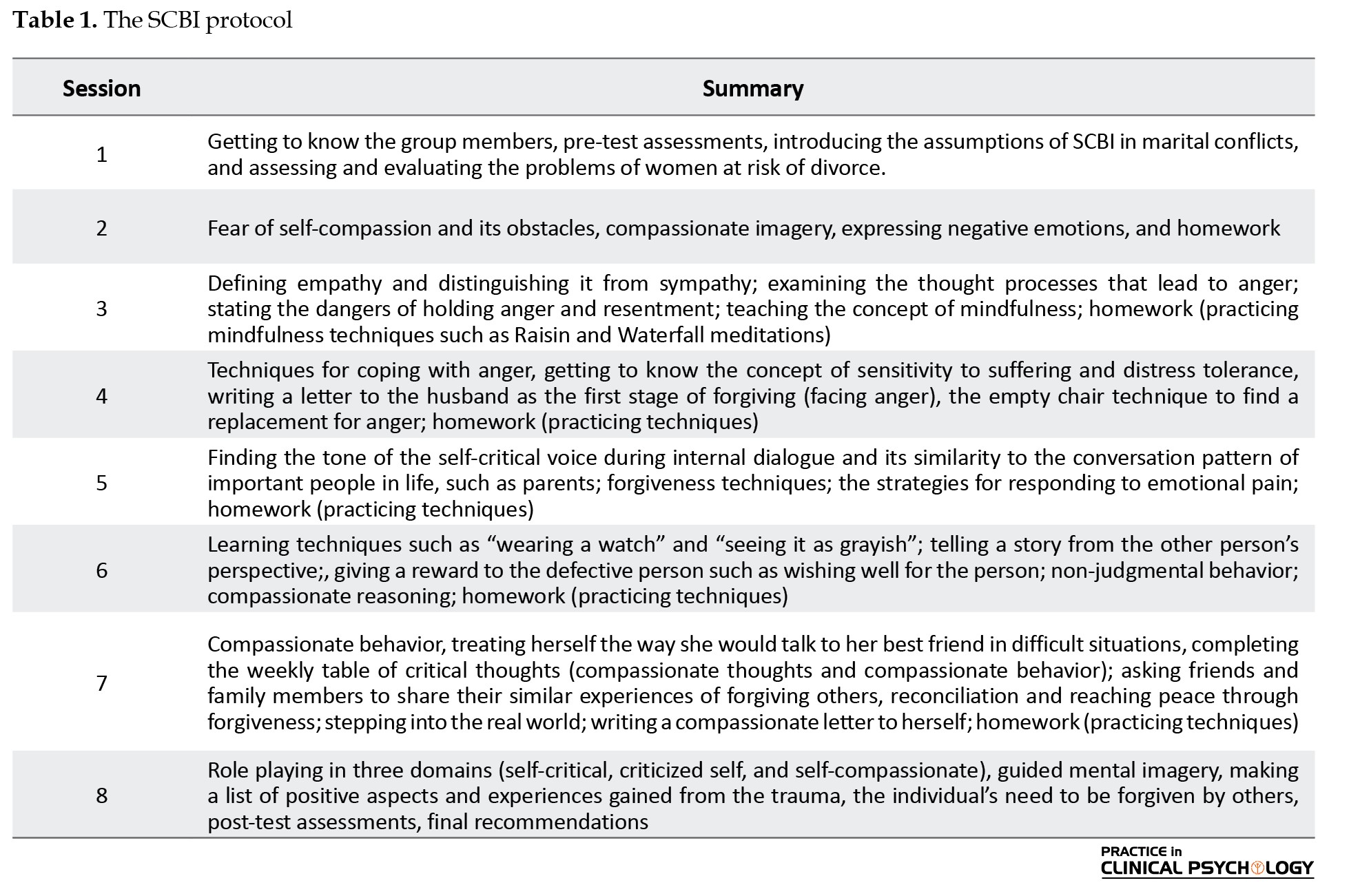
The protocol used in this study was originally developed by Poorhejazi et al. (2021) for couples in marital conflict. This explains why some marital-related terms appear in the session content. However, in the present study, all content, examples, exercises, and homework were fully adapted for obesity‑related issues. The version implemented in this research focused exclusively on stress management, emotional eating, body‑image shame, self‑criticism, and motivation for lifestyle change. No marital‑conflict content was delivered to participants. Also, the adapted protocol is based on Snyder’s Hope Theory which provides agency (goal-directed motivation) and pathways (ability to generate strategies). Together, these two frameworks created a strong foundation for behavior change in women with obesity by combining goal‑directed motivation (hope), emotional safety and self-regulation (self-compassion). This integration aligns directly with the aims of improving stress, BMI, and lifestyle. The MBI protocol (Kabat-Zinn et al., 1992) was implemented in 8 sessions, each lasting 1-1.5 hours, as outlined in Table 2.
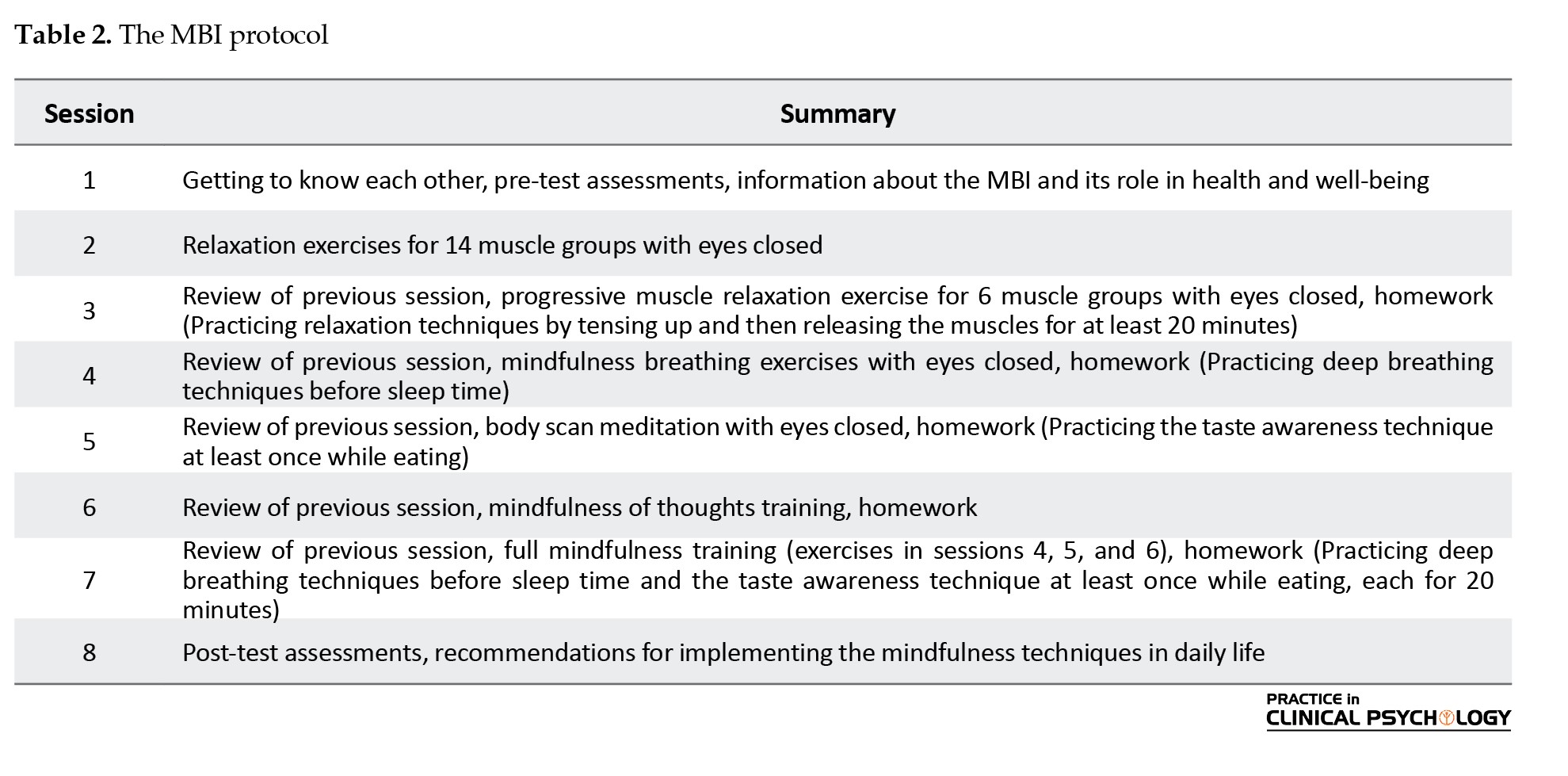
The interventions were delivered approximately once every three weeks. This format was intentionally designed to allow gradual integration of mindfulness, self-compassion practices, and lifestyle modifications into participants’ daily routines. Between sessions, participants were instructed to practice mindfulness and self-compassion exercises independently and to implement lifestyle changes related to physical activity and dietary awareness. When needed, participants were allowed brief individual contact with the therapist for clarification and support. In addition to in-session activities, both intervention programs incorporated structured home practice assignments aimed at reinforcing skill acquisition and promoting continued behavioral change. Participants were encouraged to maintain these practices throughout the post-intervention period.
In this study, it was assumed that MBI and SCBI influence BMI indirectly through their effects on psychological and behavioral processes. Mindfulness enhances present‑moment awareness, reduces emotional eating, and strengthens self-regulation in daily health behaviors. Self-compassion reduces shame, self-criticism, and avoidance, factors that often maintain maladaptive eating patterns, and promotes adaptive coping, persistence, and engagement in health-promoting routines. Together, these mechanisms support healthier lifestyle patterns by decreasing emotional eating, improving stress management, increasing adherence to nutritional and physical‑activity recommendations, and enhancing responsiveness to bodily cues. Within this framework, BMI change is conceptualized as a behaviorally mediated outcome, emerging from sustained improvements in self-regulation and lifestyle consistency rather than from any direct physiological effect of the psychological interventions themselves.
The control group did not receive any intervention during the study period. However, to ensure ethical standards and reduce attrition, control participants were placed on a waitlist and were offered the same intervention free of charge at Toronto Family Counselling Services after completion of the post-test assessments. No attention-control or placebo activities were implemented. Outcome assessments were conducted one month after completion of the final session in order to evaluate short-term maintenance of intervention effects.
To ensure methodological rigor and intervention fidelity, several monitoring procedures were implemented throughout the study. First, both interventions were delivered using standardized, manual-based protocols, and the facilitator adhered strictly to the prescribed structure and sequence of each session. Second, the one who delivered the interventions had formal training in both mindfulness-based and self–compassion–based approaches and followed a predefined session guide to maintain consistency across participants. Third, after each session, the facilitator completed a fidelity adherence checklist documenting whether all required components, exercises, and discussions were delivered as intended. Fourth, the intervention process was reviewed during a meeting with an experienced certified clinical supervisor to ensure adherence, address deviations, and maintain treatment integrity. Finally, participant attendance, engagement, and completion of homework assignments were systematically recorded to verify adequate exposure to the intervention. Together, these procedures ensured that both treatment conditions were implemented consistently and in accordance with their respective protocols.
Data analysis
The main objective of the present study was to compare the effectiveness of two interventions, MBI and SCBI, on lifestyle, perceived stress, and BMI in obese women. To address the research hypotheses, a quasi-experimental pre-test–post-test design was employed. First, descriptive statistics, including mean, standard deviation, and frequency distributions, were computed to summarize the data. Inferential statistical analyses were conducted using multivariate and univariate analyses of covariance (MANCOVA and ANCOVA). The primary rationale for using ANCOVA is the presence of an important covariate, namely the pre-test score. Although participants were measured at two time points (pre- and post-intervention), ANCOVA allows statistical control of baseline differences between groups by including pre-test scores as a covariate. This procedure increases the precision and statistical power of the analysis by removing variance attributable to the pre-test from the error term, thus allowing a clearer estimation of the intervention effect. In other words, analyses of covariance (ANCOVA) directly addresses the question of whether, after controlling for initial scores, significant differences exist between groups at post-test. Initially, a multivariate analysis of covariance (MANCOVA) was conducted as a preliminary, omnibus analysis. This approach was chosen because the three main dependent variables—perceived stress, lifestyle scores, and BMI—are theoretically related. MANCOVA assesses the overall effect of the intervention on the combination of dependent variables simultaneously, while controlling for Type I error associated with conducting multiple univariate tests. Subsequently, based on the results of the MANCOVA assumptions, univariate ANCOVA were performed separately for each dependent variable to investigate the specific effect of the intervention. In addition, a post-hoc power analysis was conducted using G*Power software to assess the adequacy of statistical power given the sample size and observed effect sizes. The results indicated sufficient power to detect medium to large effects. This limitation for detecting small effects has been acknowledged in the interpretation of the findings.
Preliminary assumptions for covariance analysis
Normality of residuals was assessed using Shapiro-Wilk tests, indicating approximate normality for BMI (W=0.978–0.934, P=0.908–0.181), perceived stress (W=0.97–0.918, P=0.792–0.091), and lifestyle (W=0.923–0.91, P=0.115–0.064) across all groups. Homogeneity of variances was evaluated with Levene’s test and was met for BMI (F=3.328, P=0.143) and lifestyle (F=1.556, P=0.220) but slightly violated for perceived stress (F=13.289, P<0.001); however, given equal group sizes and the robustness of ANCOVA to moderate violations, analyses were considered reliable. Homogeneity of variance-covariance matrices was confirmed using Boxs M test (M=9.387, P=0.731). Regression slope homogeneity was also assessed to verify that the relationship between pre-test scores and post-test scores was consistent across groups; all interactions were non-significant (P>0.05) except for pre-test lifestyle×group (F=3.819, P=0.029), suggesting some variability in intervention effects depending on baseline lifestyle. Such violations may arise from multicollinearity among covariates, which can increase parameter estimate instability. To address these concerns and ensure reliable interpretation, subsequent analyses were conducted using univariate ANCOVA for each dependent variable separately, including the corresponding pre-test score as a covariate, which preserves statistical accuracy while allowing a clearer estimation of intervention effects.
Results
Descriptive statistics of the study variables
Most of the participants were in the age group of 24-31 years (about 33%), while the minority were in the age group of 56-63 years (about 11%). Table 3 shows the frequency distribution and percentage of BMI among the women in three groups in the pre-test and post-test phases.
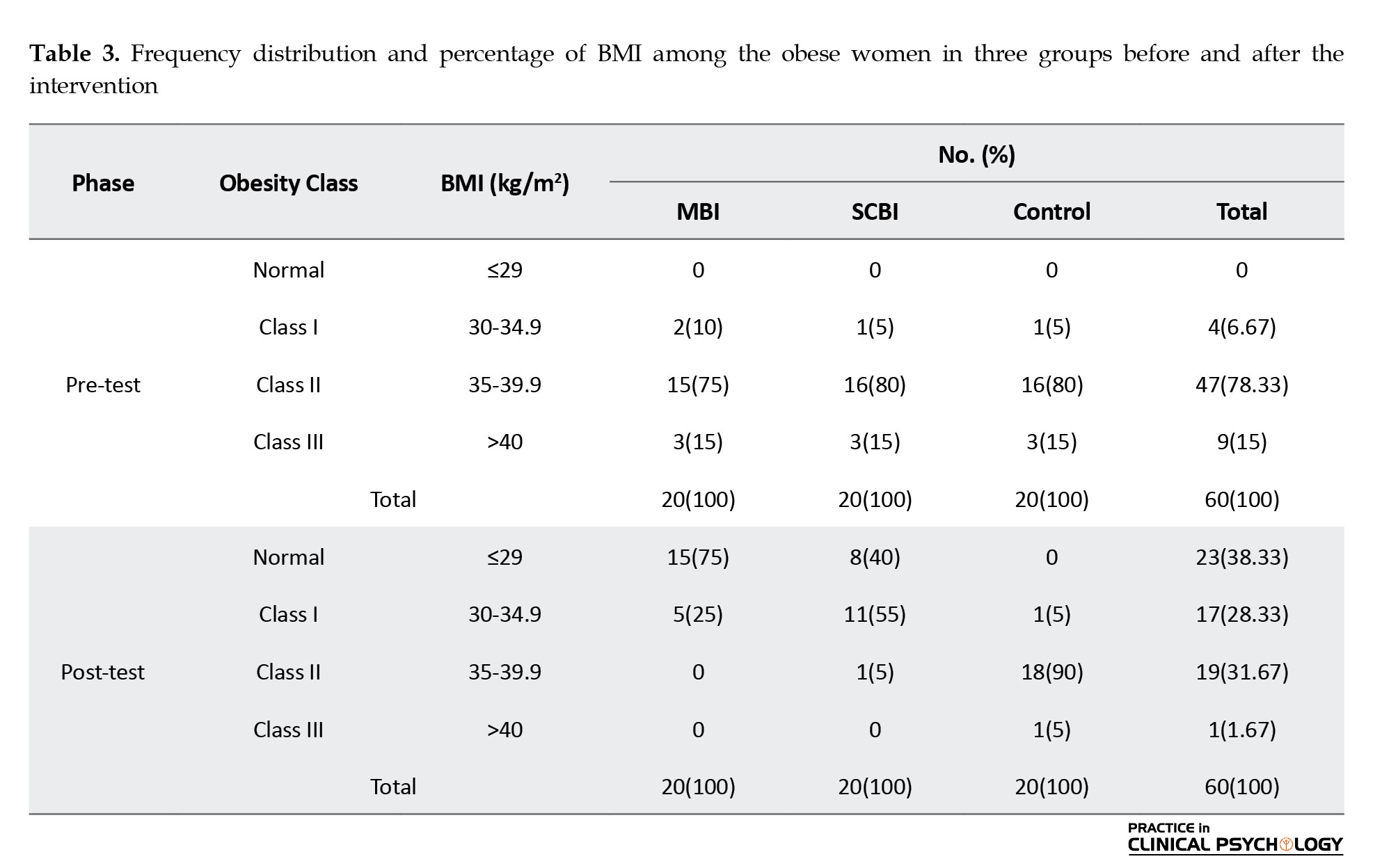
In the pre-test phase, the majority (78.33%) had class II obesity (BMI=35-39.9 kg/m2) and the minority (6.67%) had class I obesity (BMI=30-34.9 kg/m2). In the post-test phase, the MBI group experienced the greatest change; 75% moved into the normal range, the remaining 25% were in the class I obesity category, and none were in the class II or III obesity categories. In the SCBI group, 40% were in the normal range and 55% in the class I obesity category, while only 5% remained in the class II obesity category, and no one was in the class III obesity category. In the control group, 90% were still in the class II obesity category and 5% in the class III range; only 5% moved to the class I obesity range, and no one entered the normal BMI range.
Table 4 shows the frequency distribution and percentage of perceived stress severity based on the PSS score among the women in three groups in the pre-test and post-test phases.
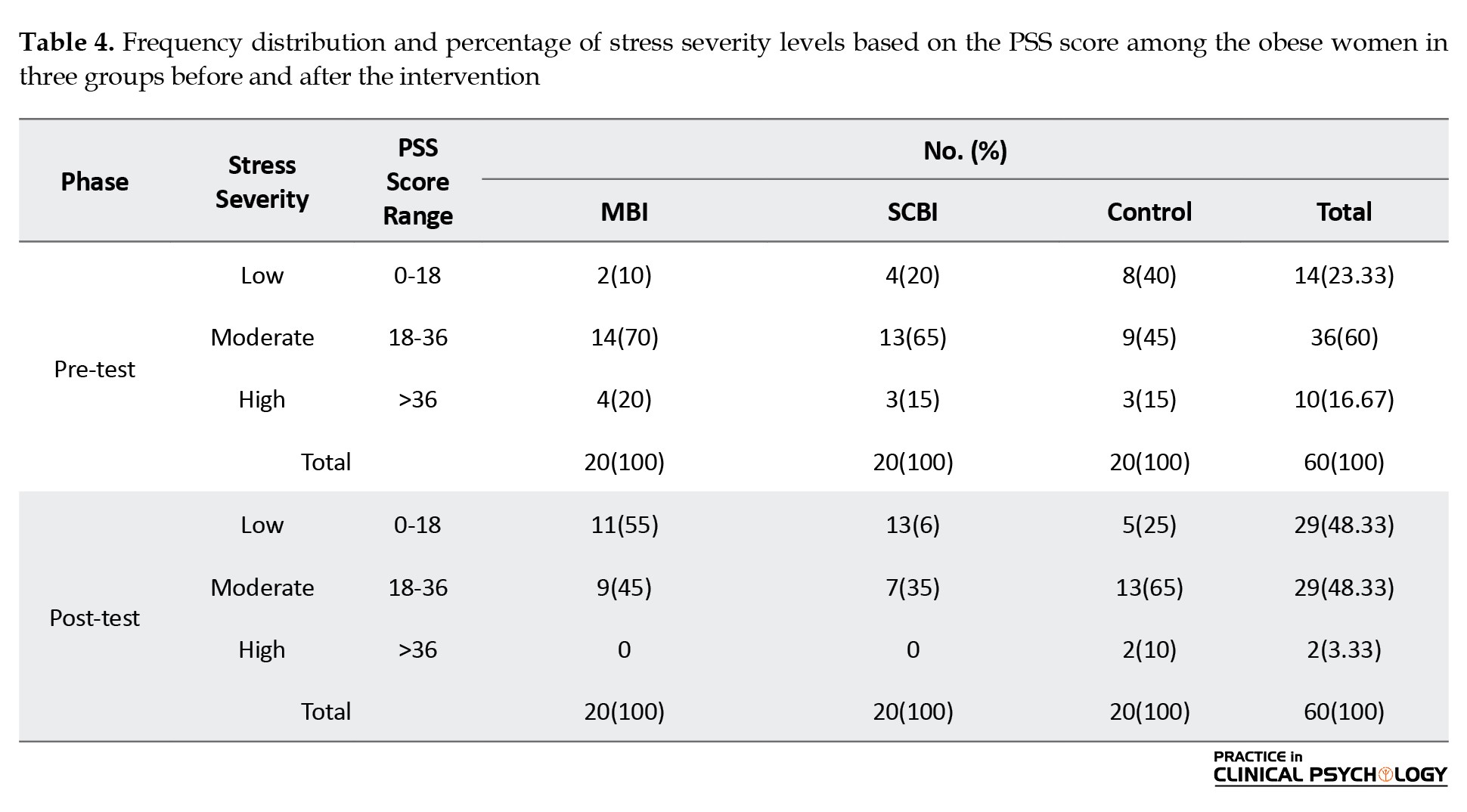
In the pre-test phase, most women (60%) had moderate stress severity (70% in the MBI group, 65% in the SCBI group, 45% in the control group). After the interventions, significant changes were observed in the intervention groups. In the MBI group, the percentage of women with high stress decreased from 20% to 0%, while the percentage with low stress increased from 10% to 55%. In the SCBI group, the percentage of women with high stress dropped from 15% to zero, while the percentage of women with low stress increased from 20% to 65%. In the control group, the percentage of women with high stress decreased from 15% to 10%, while the percentage of women with moderate stress increased from 45% to 65%.
Table 5 shows the frequency distribution and percentage of lifestyle levels based on the LSQ score among the women in three groups in the pre-test and post-test phases.
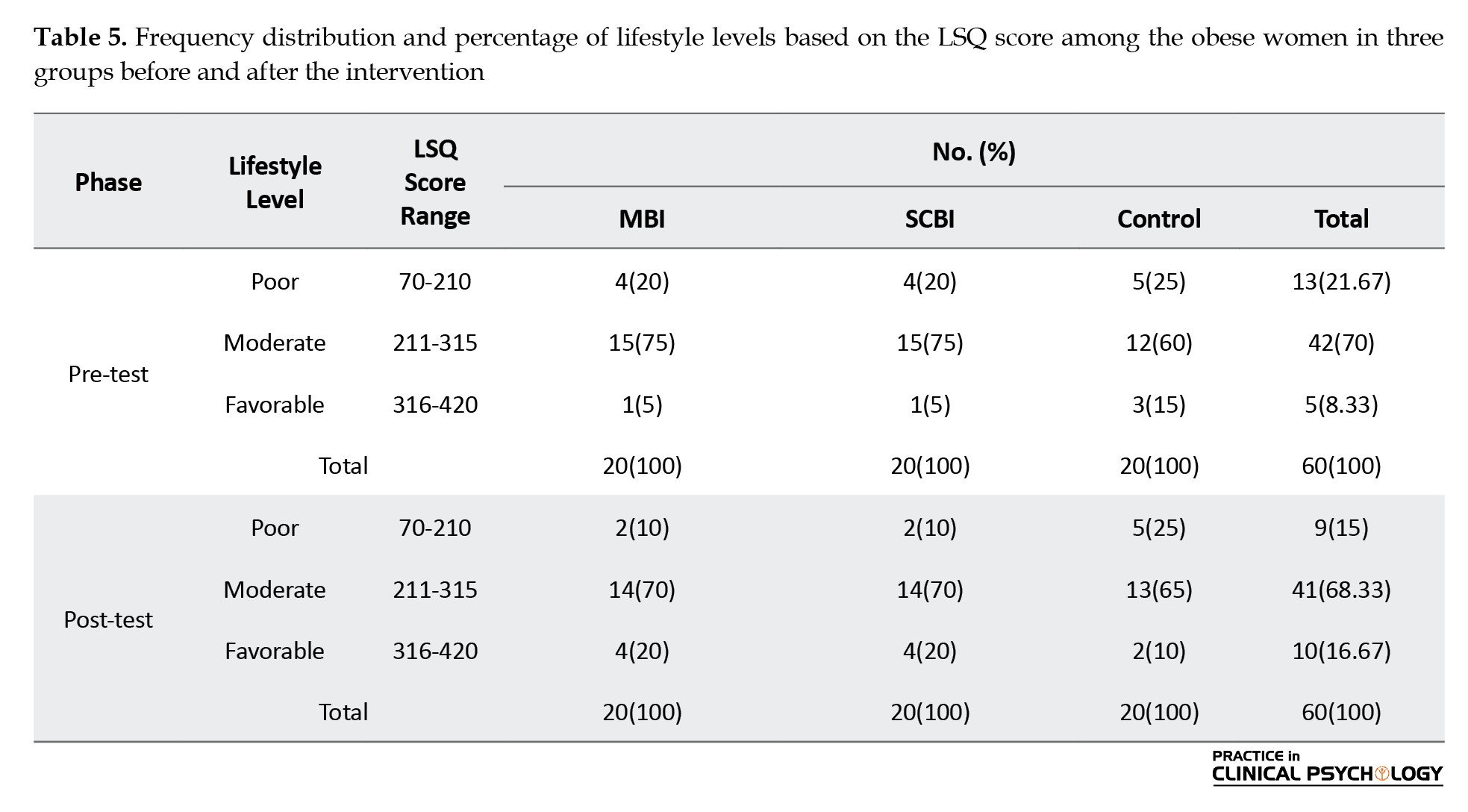
In the pre-test phase, the majority of women in the MBI group (75%) had a moderate lifestyle, while 20% had a poor lifestyle, and only 5% had a favorable lifestyle. The lifestyle levels in the SCBI group had a distribution similar to that of the MBI group. In the control group, the majority (60%) had a moderate lifestyle, while 25% had a poor lifestyle and 15% had a favorable lifestyle (15%), which is higher than that in the intervention groups. After the intervention, the percentage of women with a favorable lifestyle in the MBI group increased from 5% to 20%; the percentage of women with a poor lifestyle decreased from 20% to 10%; while the percentage of women with a moderate lifestyle remained almost constant (from 75% to 70%). In the SCBI group, the percentage of women with a favorable lifestyle increased from 5% to 20%, and the percentage of women with a poor lifestyle decreased from 20% to 10%.
Table 6 presents the mean scores of three study variables in the pre-test and post-test phases for the three study groups.
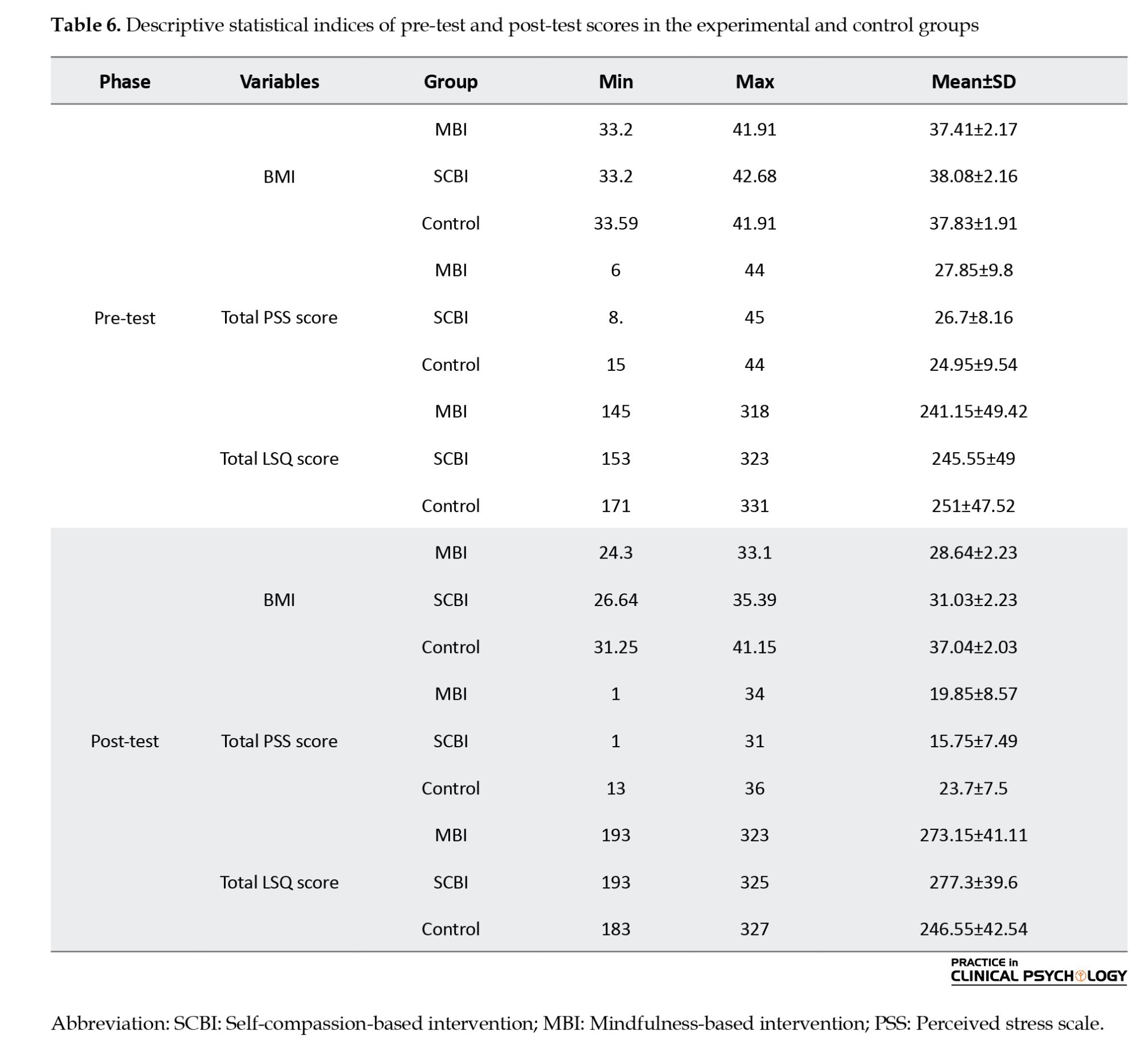
After the intervention, the BMI of the MBI group decreased from 37.41 to 28.64, and the BMI of the SCBI group decreased from 38.08 to 31.03. The control group showed a slight decrease from 37.83 to 37.04. Regarding the total PSS score, the MTT group showed a decline from 27.85 to 19.85. In the SCBI group, it decreased from 26.7 to 15.75. In the control group, it showed a slight decrease from 24.95 to 23.70. Regarding the total LSQ score, the MTT group showed an increase from 15.241 to 15.273, and the SCBI group showed an increase from 245.55 to 277.3. The control group showed a slight decrease from 251 to 246.55.
Preliminary assumptions for covariance analysis
Normality of residuals was assessed using Shapiro-Wilk tests, indicating approximate normality for BMI (W=0.978–0.934, P=0.908–0.181), perceived stress (W= 0.97–0.918, P=0.792–0.091), and lifestyle (W=0.923–0.91, P=0.115–0.064) across all groups. Homogeneity of variances was evaluated with Levene’s test and was met for BMI (F=3.328, P=0.143) and lifestyle (F=1.556, P=0.220) but slightly violated for perceived stress (F=13.289, P<0.001); however, given equal group sizes and the robustness of MANCOVA to moderate violations, analyses were considered reliable. Homogeneity of variance-covariance matrices was confirmed using Box’s M test (M=9.387, P=0.731). Regression slope homogeneity was also assessed to verify that the relationship between pre-test scores and post-test scores was consistent across groups; all interactions were non-significant (P>0.05) except for pre-test lifestyle×group (F=3.819, P=0.029), suggesting some variability in intervention effects depending on baseline lifestyle. Such violations may arise from multicollinearity among covariates, which can increase parameter estimate instability. To address these concerns and ensure reliable interpretation, subsequent analyses were conducted using univariate ANCOVA for each dependent variable separately, including the corresponding pre-test score as a covariate, which preserves statistical accuracy while allowing a clearer estimation of intervention effects.
To examine the normality assumption of residuals for the univariate ANCOVA, the Shapiro–Wilk test was applied to the post-test scores of the dependent variables across the intervention groups. For perceived stress, the results of the Shapiro–Wilk test indicated that the distribution of post-test scores was approximately normal in both intervention groups. Specifically, the Shapiro–Wilk statistic was W=0.918 (P=0.091) for the MBI group and W=0.97 (P=0.762) for the SCBI group. Regarding BMI, the Shapiro–Wilk test results also supported the normality assumption for post-test scores in both groups. The test statistic was W=0.978 (P=0.908) for the MBI group and W=0.974 (P=0.843) for the SCBI group. Similarly, for lifestyle scores, the Shapiro–Wilk test demonstrated that post-test scores were normally distributed in both intervention groups. The Shapiro–Wilk statistic was W=0.918 (P=0.091) for the MBI group and W=0.923 (P=0.115) for the SCBI group. Overall, as the Shapiro–Wilk test was non-significant for all dependent variables across both intervention groups (P>0.05), the assumption of normality of residuals was satisfied. Therefore, the use of parametric procedures, including univariate ANCOVA, was considered appropriate and statistically reliable.
To examine the assumption of homogeneity of error variances for the univariate ANCOVA, Levene’s test was conducted on the post-test scores of the dependent variables across the intervention groups. For perceived stress, the results of Levene’s test indicated that the assumption of homogeneity of variances was satisfied. Specifically, Levene’s test was non-significant (F1, 38=0.181, P=0.673), suggesting that the error variances of post-test perceived stress scores were equal across the mindfulness-based and SCBI groups. In contrast, for BMI, Levene’s test revealed a statistically significant result (F1, 38=5.896, P=0.020), indicating a violation of the homogeneity of variances assumption for post-test BMI scores. Nevertheless, given the equal sample sizes across the intervention groups and the well-documented robustness of ANCOVA to moderate violations of this assumption, the results were considered reliable and interpretable (Tabachnick & Fidell, 2019). Regarding lifestyle scores, Levene’s test was non-significant (F1, 38=0.088, P=0.768), supporting the assumption of homogeneity of variances for post-test lifestyle scores across the two intervention groups. Overall, except for BMI, the homogeneity of variances assumption was met for all dependent variables. Given the balanced group sizes and the robustness of ANCOVA procedures, the analyses were deemed appropriate for all study outcomes.
Assessment of the study hypotheses
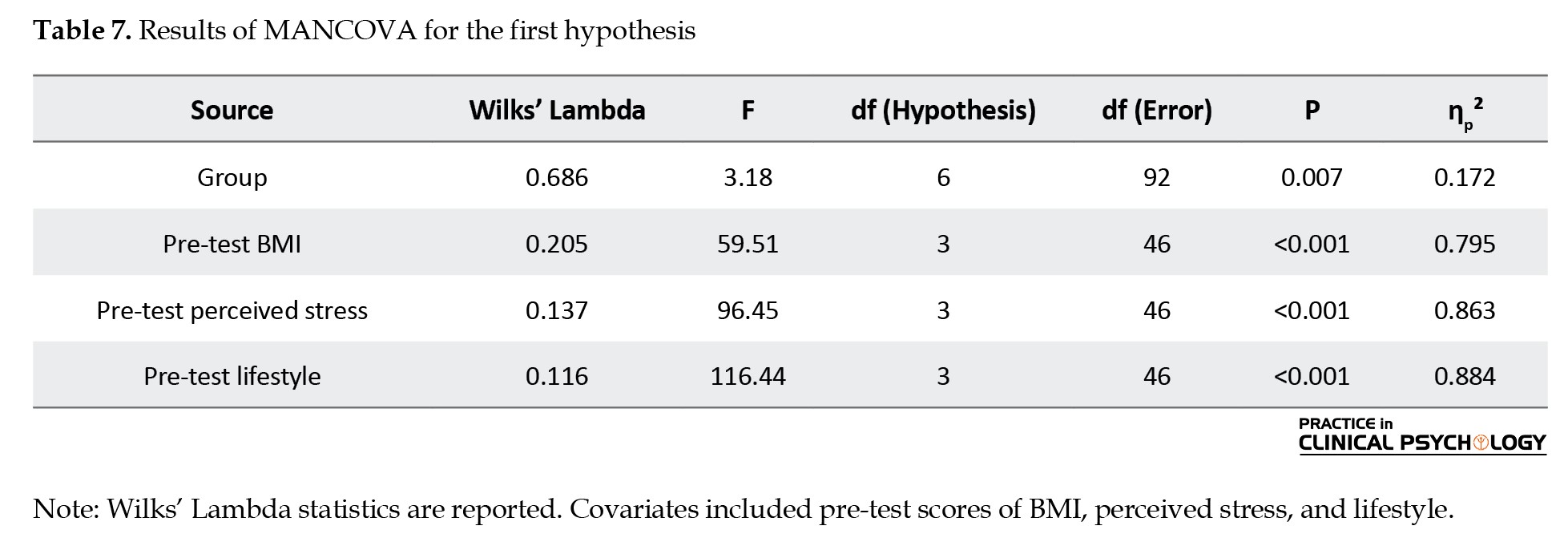
To examine the overall difference between SCBI and MBI on perceived stress, BMI, and lifestyle, a MANCOVA was conducted, controlling for the corresponding pre-test scores. The results of the Wilks’ Lambda test indicated a significant multivariate effect of group on the combined dependent variables (Wilks’ Lambda=0.686, F6, 92=3.18, P=0.007, η²=0.172). This finding suggests a significant overall difference between the intervention groups in terms of perceived stress, BMI, and lifestyle after controlling for baseline differences. Further examination of the covariates showed that pre-test BMI (Wilks’ Lambda=0.205, η²=0.795), pre-test perceived stress (Wilks’ Lambda=0.137, η²=0.863), and pre-test lifestyle scores (Wilks’ Lambda=0.116, η²=0.884) had significant multivariate effects on the post-test outcomes (P<0.001). Overall, these results support the study hypothesis, indicating that SCBI and MBI differ significantly in their combined effectiveness on perceived stress, BMI, and lifestyle among obese women (Table 7).
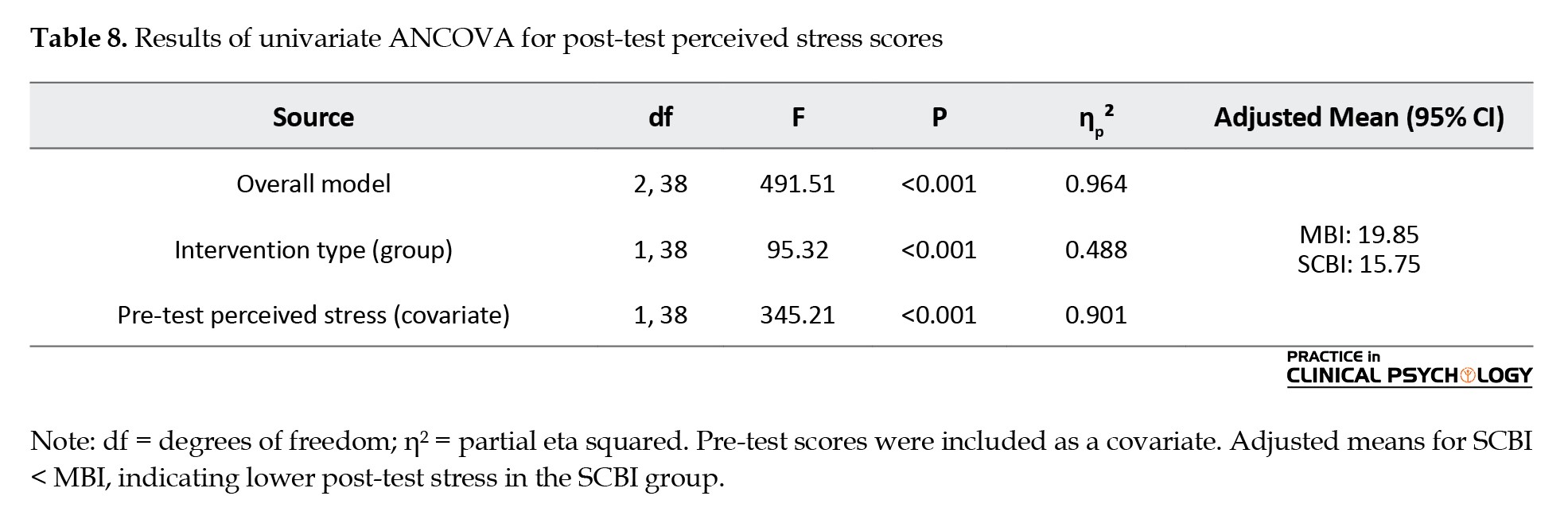
To examine the difference between SCBI and MBI in reducing perceived stress, a univariate ANCOVA was performed. Post-test perceived stress scores were used as the dependent variable, intervention type as the independent variable, and pre-test perceived stress scores as the covariate. The overall model was highly significant, F2, 38=491.51, P<0.001, explaining 96.4% of the variance in post-test scores (ηp²=0.964). Controlling for baseline stress, the effect of intervention type was statistically significant, F1, 38=95.32, P<0.001, with a large effect size (ηp²=0.488). Adjusted mean scores (95% CI) indicated that participants in the SCBI group (15.75±2.24) reported lower perceived stress at post-test than those in the MBI group (19.85±2.79), confirming that SCBI was more effective in reducing perceived stress among obese women (Table 8).
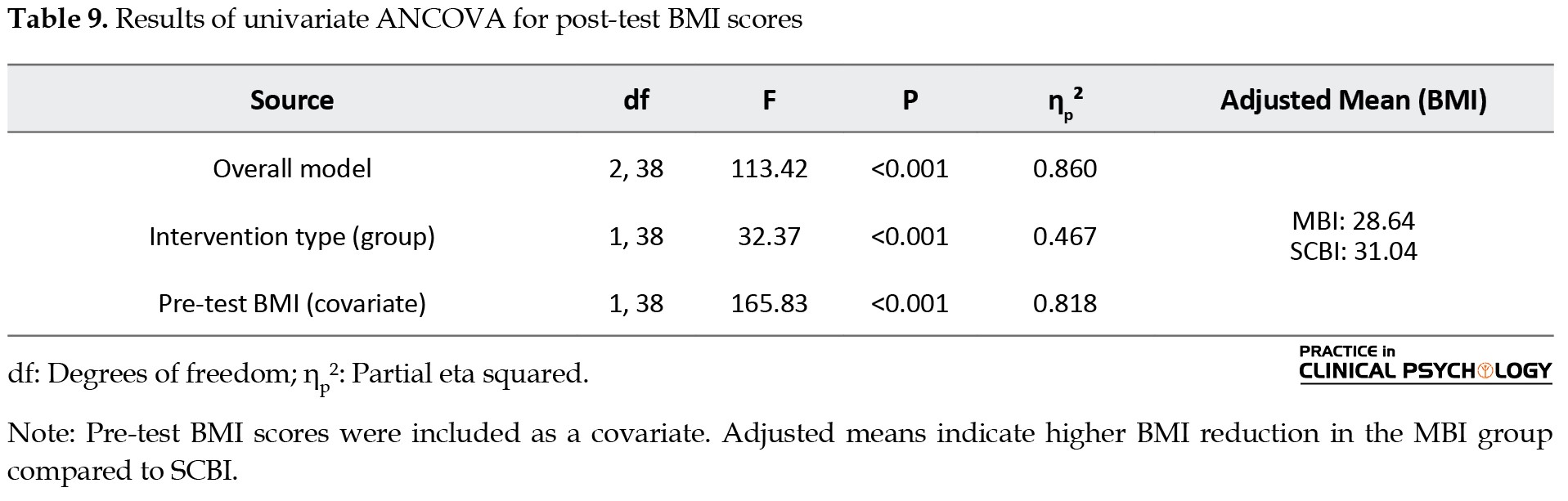
To examine whether there was a significant difference between SCBI and MBI in improving BMI, a univariate ANCOVA was conducted. Post-test BMI scores were used as the dependent variable, intervention type as the independent variable, and pre-test BMI scores as the covariate. The overall model was significant, F2, 38=113.419, P<0.001, explaining 86.0% of the variance in post-test BMI scores (ηp²=0.860). After controlling for baseline BMI, the effect of intervention type was statistically significant, F1, 38=32.366, P<0.001, with a large effect size (ηp²=0.467). Adjusted mean comparisons (95% CI) indicated that participants in the MBI group had a lower post-test BMI (28.64±2.23) compared to those in the SCBI group (31.04±2.32), demonstrating a significant difference between interventions. These results support the hypothesis that MBI and SCBI differ in their effectiveness on BMI, with MBI showing greater improvements in post-test BMI among obese women (Table 9).
To examine whether there was a significant difference between SCBI and MBI in promoting lifestyle, a univariate ANCOVA was conducted, with post-test lifestyle scores as the dependent variable, intervention type as the independent variable, and pre-test lifestyle scores as the covariate. The overall model was significant, F2, 38=66.27, P<0.001, explaining 78.2% of the variance in post-test lifestyle scores (ηp²=0.782). After controlling for baseline lifestyle scores, the effect of intervention type was not statistically significant, F(1, 38)=0.025, P=0.875, with a negligible effect size (ηp²=0.001). Adjusted mean comparisons indicated that the post-test lifestyle scores were very similar between the SCBI and MBI groups. These findings suggest that, after controlling for pre-test lifestyle, there was no significant difference between SCBI and MBI in improving lifestyle among obese women (Table 10).
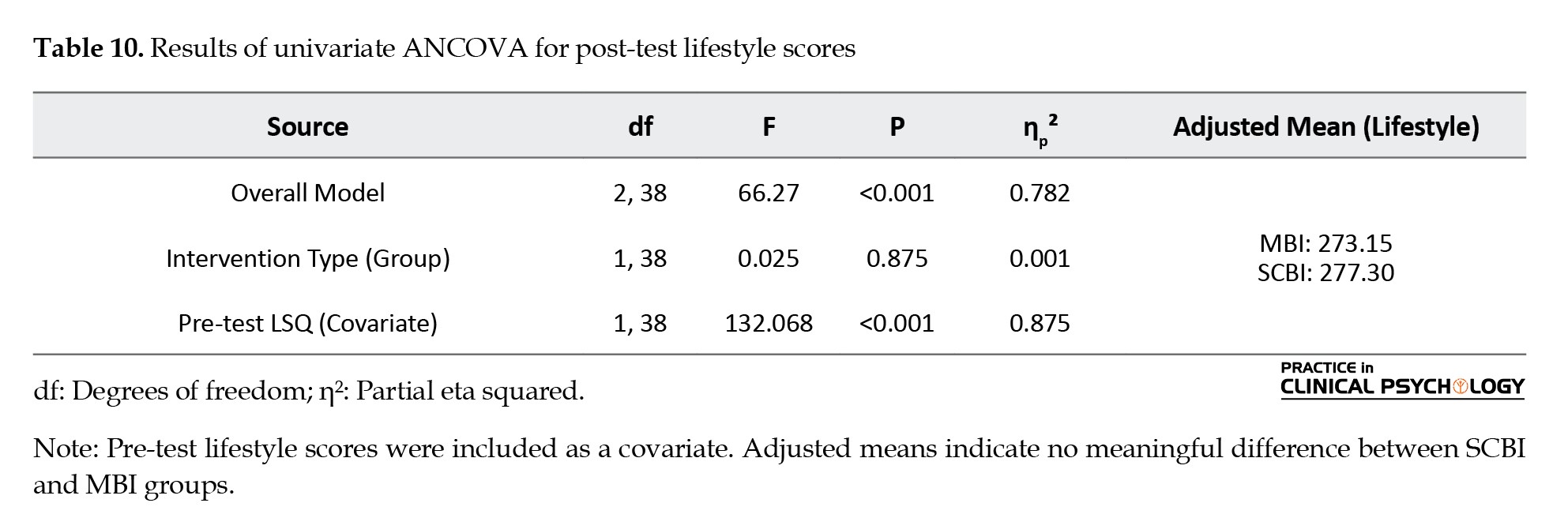
The pre-test lifestyle score was a strong and significant predictor of post-test lifestyle (F1, 38=132.068, P<0.001, ηp²=0.875), explaining 87.5% of the variance.
Discussion
The present study aimed to compare the effects of MBI and SCBI on perceived stress, BMI, and lifestyle of Iranian-Canadian women with obesity. Overall, the findings demonstrated that both interventions produced significant improvements in these psychological, behavioral, and physical domains, while revealing significant differences between their effectiveness.
Consistent with the first hypothesis, the multivariate findings indicated a significant overall difference between MBI and SCBI in their combined effects on perceived stress, BMI, and lifestyle after controlling for baseline scores. These results suggest that MBI and SCBI can simultaneously influence mental health, health-related behaviors, and physical outcomes in obese women. This multidimensional impact highlights the complementary role of psychological treatments alongside medical and behavioral approaches in obesity management. The findings are in line with the results of previous studies demonstrating the beneficial effects of mindfulness- and self-compassion on weight-related outcomes and psychological well-being (Aoun et al., 2025; Shan et al., 2025; Haley et al., 2024).
Regarding the second hypothesis, the results showed a significant difference between SCBI and MBI in reducing perceived stress, with SCBI demonstrating superior effectiveness. This finding suggests that interventions emphasizing self-kindness, acceptance of emotional experiences, and reduction of self-criticism may be particularly beneficial for obese women, who often experience elevated levels of body-related shame and internalized stigma. By fostering a supportive and nonjudgmental internal environment, SCBI may enhance psychological resilience and reduce stress more effectively than mindfulness alone. This result is consistent with the results of prior findings indicating that self-compassion-based approaches reduce psychological distress, body shame, and weight stigma (Forbes et al., 2020; Haley et al., 2024). It also aligns with studies showing that self-compassion facilitates adaptive coping in populations exposed to chronic social and emotional stressors (Braun et al., 2022). Together, these findings suggest that SCBI may be particularly well-suited for stress-focused interventions among obese women.
Regarding the third hypothesis, the results showed a significant difference between SCBI and MBI in reducing BMI, where participants receiving MBI experienced greater improvements compared to those receiving SCBI. This pattern may be explained by the specific mechanisms emphasized in mindfulness-based approaches, such as heightened awareness of bodily sensations, improved recognition of hunger and satiety cues, and reductions in emotional and automatic eating behaviors. These findings are consistent with the results of previous studies demonstrating that MBIs, particularly those incorporating mindful eating components, are effective in improving eating regulation and weight outcomes (Brenton-Peters et al., 2022; Kao et al., 2024; Aoun et al., 2025). While self-compassion has been associated with healthier eating attitudes and reduced self-criticism, mindfulness may exert a more direct influence on weight-related behaviors, thereby leading to greater BMI reduction.
With respect to the last hypothesis, no significant difference was observed between MBI and SCBI in overall lifestyle improvement after controlling for baseline scores. This finding suggests that both interventions were similarly effective in promoting healthier lifestyles, and that changes in lifestyle were strongly influenced by participants’ initial status. Lifestyle is a multidimensional construct shaped by psychological, social, environmental, and economic factors, and therefore may require longer intervention periods or multimodal approaches to produce differential effects. These domain-specific findings support the notion that MBI and SCBI operate through distinct yet complementary mechanisms. Mindfulness primarily enhances present-moment awareness and behavioral regulation, whereas self-compassion fosters emotional safety and acceptance, particularly in socially sensitive contexts. This distinction is consistent with previous theoretical and empirical work emphasizing the functional differentiation between these two approaches (Ashori et al., 2024; Shokoohi-Nejad et al., 2022).
Although immigration status was not assessed and was not a focus of the present study, certain cultural characteristics common among Persian‑speaking immigrants may help contextualize the differential effects of MBI and SCBI. Mindfulness practices emphasize present‑moment awareness, non‑reactivity, and behavioral regulation skills that directly address emotional eating and stress‑driven lifestyle patterns. These practices also resonate with longstanding contemplative and spiritual traditions familiar in Persian culture, which may enhance acceptance and engagement. In contrast, self‑compassion practices require explicit self‑kindness and the reduction of shame and self‑criticism, which may be more challenging in cultural contexts where modesty norms and body‑related shame are more pronounced.
Taken together, the present study adds insights to the existing literature by demonstrating that while both MBI and SCBI are effective interventions for obese women, they yield different profiles of benefits across psychological and physical outcomes. From a clinical perspective, these findings suggest that intervention selection and personalization may be optimized by aligning treatment approaches with individuals’ primary needs, such as stress regulation, weight management, or social functioning. From a theoretical standpoint, the results contribute to a more nuanced understanding of how mindfulness and self-compassion interventions exert their effects, supporting integrative models that view these approaches as complementary rather than competing. Future research may benefit from examining combined or sequential interventions and from exploring long-term effects through follow-up assessments.
Future studies should explore technology‑enhanced delivery formats that can increase accessibility and long‑term engagement. Hybrid online programs, combining brief in‑person sessions with structured virtual components, may offer a flexible and cost‑effective approach for women with obesity. In addition, app‑based MBI and SCBI—featuring guided practices, daily prompts, and adherence tracking—can support continuous practice beyond formal sessions. Evaluating the effectiveness, usability, and cultural adaptability of such digital or blended models represents an important direction for advancing psychological interventions targeting lifestyle and weight‑related outcomes.
Conclusion
Both MBI and SCBI demonstrated significant positive effects on BMI, perceived stress, and lifestyle among obese women. However, the pattern of effectiveness differed between the two approaches. SCBI was more effective in reducing perceived stress, whereas MBI led to greater reductions in BMI. No significant difference was observed between the two interventions in overall lifestyle improvement, indicating that both approaches are similarly effective in promoting healthier lifestyles.
These findings highlight the importance of addressing psychological and emotional processes in obesity management and support the use of psychosomatic and integrative treatment approaches. The differential effects observed suggest that mindfulness and self-compassion interventions may serve complementary roles, with mindfulness being more directly related to behavioral regulation and weight-related outcomes, and self-compassion being particularly beneficial for stress reduction. Therefore, incorporating mindfulness- and self-compassion-based components into obesity treatment programs, tailored to the specific clinical needs of women, may enhance the effectiveness of psychological interventions in obesity management.
Limitations
Several limitations of the present study should be acknowledged. The sample size was relatively small (20 per group). Although large effect sizes were observed for key outcomes, psychological constructs, such as perceived stress and lifestyle are inherently variable, and the study may have been underpowered to detect subtler between-group differences, particularly for multidimensional outcomes, such as lifestyle. A priori power analysis was not conducted at the design stage, which limits certainty regarding the adequacy of the sample size. Future studies should employ formal power calculations and larger samples to improve statistical precision and robustness. Also, no follow-up assessments were conducted. Given that sustained changes in BMI and lifestyle typically require longer periods to consolidate, the absence of a follow-up phase limits conclusions regarding the durability of treatment effects. Longitudinal studies with follow-up periods of 3, 6, and 12 months are therefore strongly recommended. Moreover, the participants were selected from Iranian-Canadian women living in Toronto, which restricts the generalizability of the findings to all women in Canada or other countries. Moreover, although Persian versions of the questionnaires were used, cultural adaptability was not formally assessed. Cultural and immigration-related factors may influence the interpretation of questionnaire items and responsiveness to psychological interventions, and future research should explicitly address cross-cultural measurements.
We used self-report instruments, which are subject to response biases, such as social desirability and recall bias. While self-report measures are common in psychological research, incorporating objective or biological indicators (e.g. cortisol levels, heart rate variability, sleep patterns, or objectively measured physical activity) would strengthen the validity of future findings. Also, the confounding variables, such as dietary intake, physical activity outside the intervention sessions, and social support were not fully controlled. Although random assignment was used, unmeasured lifestyle-related factors may have contributed to changes in BMI and lifestyle outcomes. Future studies should consider monitoring or statistically controlling these variables.
Another limitation of the present study is related to the interpretation of BMI outcomes. Although meaningful reductions in BMI were observed, the study design does not allow for precise attribution of these changes solely to the psychological interventions. Participants were encouraged to complete structured home-based assignments between sessions and had access to individualized guidance from the trained supervisor whenever questions arose, which effectively extended the behavioral engagement period beyond the eight supervised sessions. However, adherence to these between-session practices was not objectively monitored, limiting the ability to determine the extent to which continued practice contributed to weight-related outcomes. In addition, BMI was assessed after a delayed post‑intervention interval, increasing the likelihood that external factors—such as independent dietary changes, increased physical activity, or concurrent medical or nutritional treatments—may have influenced weight trajectories. Future research should incorporate objective adherence measures, systematically track concurrent weight‑management behaviors, and include multiple follow-up assessments to better differentiate immediate, delayed, and sustained effects of psychological interventions on BMI.
Finally, the control group did not receive an active or attention-matched intervention. As a result, nonspecific factors, such as therapist attention or expectancy effects cannot be ruled out. The use of waitlist controls with clearly defined delayed-treatment procedures or attention-control conditions is recommended in future trials to strengthen internal validity.
Ethical Considerations
Compliance with ethical guidelines
All procedures adhered to institutional and international ethical guidelines for research involving human participants. Informed consent was obtained from all participants prior to data collection, and participation was voluntary with the option to withdraw at any time. To ensure confidentiality, all data were coded and accessible only to the research team. All therapeutic and clinical services implemented were provided free of charge at the Family Counselling Services Center in Toronto.
Funding
This study was extracted from the PhD dissertation of Masoomeh Abbasi, approved by the Department of Psychology, Faculty of Educational Science and Psychology, Payame Noor University, Tehran, Iran. This research did not receive any grant from funding agencies in the public, commercial, or non-profit sectors.
Authors' contributions
All authors contributed equally to the conception and design of the study, data collection and analysis, interception of the results and drafting of the manuscript. Each author approved the final version of the manuscript for submission.
Conflict of interest
The authors declared no conflict of interest.
Acknowledgements
We sincerely thank all participants for their valuable time, cooperation, and contribution to this study.
References
Alipour, G., Abolghasemi, A., & Akbari, B. (2023). [The effectiveness of the combined treatment of self-compassion and lifestyle on the core belief of eating, self-criticism and weight self-efficacy in obese women (Persian)]. Rooyesh-e-Ravanshenasi Journal, 12(5), 63–74. [Link]
Aoun, A., Ghoussoub, C., Farsoun, C., Al Mallah, A., Ayoub, F., & Trezia, N., et al. (2025). Examining the Efficacy of Mindfulness-Based Interventions in Treating Obesity, Obesity-Related Eating Disorders, and Diabetes Mellitus. Journal of The American Nutrition Association, 44(4), 292–305. [DOI:10.1080/27697061.2024.2428290] [PMID]
Ashori, A., Ahmadian, H., & Homayonfar, S. (2024). [Efficacy of mindfulness-based cognitive therapy on the quality of life and perceived stress of people with coronary heart disease (Persian)]. Journal of Applied Psychological Research, 1-15. [DOI:10.22059/japr.2024.360100.644637]
Braun, T. D., Olson, K., Panza, E., Lillis, J., Schumacher, L., & Abrantes, A. M., et al. (2022). Internalized weight stigma in women with class III obesity: A randomized controlled trial of a virtual lifestyle modification intervention followed by a mindful self‐compassion intervention. Obesity Science & Practice, 8(6), 816-827. [DOI:10.1002/osp4.616] [PMID]
Brenton-Peters, J. M., Consedine, N. S., Cavadino, A., Roy, R., & Serlachius, A. S. (2022). Investigating the effect of an online self-compassion for weight management (SC4WM) intervention on self-compassion, eating behaviour, physical activity and body weight in adults seeking to manage weight: Protocol for a randomised controlled trial. BMJ Open, 12(2), e056174. [DOI:10.1136/bmjopen-2021-056174] [PMID]
Carraça, E., Encantado, J., Battista, F., Beaulieu, K., Blundell, J., & Busetto, L., et al. (2021). Effective behavior change techniques to promote physical activity in adults with overweight or obesity: A systematic review and meta‐analysis. Obesity Reviews, 22(S4), e13258. [DOI:10.1111/obr.13258] [PMID]
Carter, A., Gilbert, P., & Kirby, J. N. (2020). Compassion‐focused therapy for body weight shame: A mixed methods pilot trial. Clinical Psychology & Psychotherapy, 28(1), 93-108. [DOI:10.1002/cpp.2488] [PMID]
Cohen, S., Kamarck, T., & Mermelstein, R. (1983). A global measure of perceived stress. Journal of Health and Social Behavior, 24(4), 385-396. [DOI:10.2307/2136404] [PMID]
Doherty, A. M. (2022). Psychological Interventions to Improve Diabetes Self-Management. Frontiers in Clinical Diabetes and Healthcare, 3, 931125. [DOI:10.3389/fcdhc.2022.931125] [PMID]
Fisher, V., Li, W. W., & Malabu, U. (2023). The effectiveness of mindfulness‐based stress reduction (MBSR) on the mental health, HbA1C, and mindfulness of diabetes patients: A systematic review and meta‐analysis of randomised controlled trials. Applied Psychology: Health and Well-Being, 15(4), 1733-1749. [DOI:10.1111/aphw.12441] [PMID]
Forbes, Y. N., Moffitt, R. L., Van Bokkel, M., & Donovan, C. L. (2020). Unburdening the weight of stigma: Findings from a compassion-focused group program for women with overweight and obesity. Journal of Cognitive Psychotherapy, 34(4), 336-357. [DOI:10.1891/JCPSY-D-20-00015] [PMID]
Haidar, A., Kalantzis, M., Nallajerla, M., Vela, A., Adler, S. R., & Burnett-Zeigler, I. (2024). A qualitative examination of perceptions of mindfulness among Arab, Middle Eastern, and North African Americans: Implications for cultural adaptation of mindfulness-based interventions. Global Advances in Integrative Medicine and Health, 13, 1–13. [DOI:10.1177/27536130241247074]
Haley, E. N., Dolbier, C. L., Campbell, L. C., Carels, R. A., & Braciszewski, J. M. (2025). Brief self-compassion intervention for women of higher weight and internalized weight bias: A randomized pilot study. International Journal of Behavioral Medicine, 32(2), 293-307. [DOI:10.1007/s12529-024-10297-z] [PMID]
Herzog, N. K., Sherrard, A., Kemmerley, T. C., & Tan, C. C. (2022). The associations among psychological distress, stressors of the COVID-19 pandemic, and disinhibited eating of parents of three- to five-year-old children. Eating Behaviors, 46, 101654. [DOI:10.1016/j.eatbeh.2022.101654] [PMID]
Kabat-Zinn, J., Massion, A. O., Kristeller, J., Peterson, L. G., Fletcher, K. E., & Pbert, L., et al. (1992). Effectiveness of a meditation-based stress reduction program in the treatment of anxiety disorders. The American Journal of Psychiatry, 149(7), 936–943. [DOI:10.1176/ajp.149.7.936] [PMID]
Kao, T. A., Ling, J., Alanazi, M., Atwa, A., & Liu, S. (2025). Effects of mindfulness‐based interventions on obesogenic eating behaviors: A systematic review and meta‐analysis. Obesity Reviews, 26(3), e13860. [DOI:10.1111/obr.13860] [PMID]
Khoraminejad, P., Khalatbari, J., & Seirafi, M. R. (2021). Comparison of the effectiveness of acceptance and commitment-based therapy and compassion-focused therapy on the quality of life of mothers with gestational diabetes. Razavi Journal of Medicine, 9(1), 47-56. [DOI:10.30483/rijm.2021.254151.1006]
Klatzkin, R. R., Baldassaro, A., & Rashid, S. (2019). Physiological responses to acute stress and the drive to eat: The impact of perceived life stress. Appetite, 133, 393-399. [DOI:10.1016/j.appet.2018.11.019] [PMID]
Lali, M., Abedi, A., & Kajbaf, M. B. (2012). [Construction and Validation of the Lifestyle Questionnaire (LSQ) (Persian)]. Psychological Research, 15(1), 64-80. [Link]
Lattimore, P. (2019). Mindfulness-based emotional eating awareness training: Taking the emotional out of eating. Eating and Weight Disorders: EWD, 25(3), 649-657. [DOI:10.1007/s40519-019-00667-y] [PMID]
Brännström, M., Racowsky, C., Carbonnel, M., Wu, J., Gargiulo, A., & Adashi, E. Y., et al. (2023). Uterus transplantation: From research, through human trials and into the future. Human Reproduction Update, 29(5), 521–544. [DOI:10.1093/humupd/dmad012] [PMID]
Obesity Canada. (2024). Cost of inaction in treating obesity. Alberta: Obesity Canada. [Link]
Pedersen, S. D., Manjoo, P., Dash, S., Jain, A., Pearce, N., & Poddar, M. (2025). Pharmacotherapy for obesity management in adults: 2025 clinical practice guideline update. CMAJ: Canadian Medical Association Journal = Journal de l'Association Medicale Canadienne, 197(27), E797–E809. [DOI:10.1503/cmaj.250502] [PMID]
Poorhejazi, M., Khalatbari, J., Ghorban Shiroudi, S., & Khodabakhshi-Koolaee, A. (2021). The effectiveness of a unified protocol for the family therapy on emotional divorce and marital boredom in women with marital conflict. Practice in Clinical Psychology, 9(1), 71–80. [DOI:10.32598/jpcp.9.1.747.1]
Raja-Khan, N., Agito, K., Shah, J., Stetter, C. M., Gustafson, T. S., & Socolow, H., et al. (2017). Mindfulness-based stress reduction in women with overweight or obesity: A randomized clinical trial. Obesity, 25(8), 1349-1359. [DOI:10.1002/oby.21910] [PMID]
Ridout, S. J., Ridout, K. K., Kole, J., Fitzgerald, K. L., Donaldson, A. A., & Alverson, B. (2021). Comparision of eating of eating disorder characteristics and depression comorbidity in adolescent males and females: An observational study. Psychiatry Research, 296, 113650. [DOI:10.1016/j.psychres.2020.113650] [PMID]
Shah, B., Tombeau Cost, K., Fuller, A., Birken, C. S., & Anderson, L. N. (2020). Sex and gender differences in childhood obesity: contributing to the research agenda. BMJ Nutrition, Prevention & Health, 3(2), 387-390. [DOI:10.1136/bmjnph-2020-000074] [PMID]
Shan, R., Shao, S., Li, L. D., Zhang, D., Chen, J., & Xiao, W., et al. (2025). Mindfulness-based interventions for improvement of lifestyle behaviors and body mass index in children with overweight or obesity: A systematic review and meta-analysis. European Journal of Pediatrics, 184(2), 132. [DOI:10.1007/s00431-024-05958-w] [PMID]
Shokoohi Nejad, N., Bayat, M. R., & Zanganeh Motlagh, F. (2022). [Comparing the effectiveness of cognitive therapy based on mindfulness and compassion therapy on automatic negative thoughts, psychological symptoms, pain intensity, and quality of life in patients with fibromyalgia (Persian)]. Journal of Arak University of Medical Sciences, 25(1), 156-173. [DOI:10.32598/jams.25.1.6744.1]
Sosa-Cordobés, E., Ramos-Pichardo, J. D., Sánchez-Ramos, J. L., García-Padilla, F. M., Fernández-Martínez, E., & Garrido-Fernández, A. (2022). How effective are mindfulness-based interventions for reducing stress and weight? A systematic review and meta-analysis. International Journal of Environmental Research and Public Health, 20(1), 446. [DOI:10.3390/ijerph20010446] [PMID]
Statistics Canada. (2025). Health reports. Ottawa: Statistics Canada. [Link]
Tabachnick, B. G., Fidell, L. S., & Ullman, J. B. (2019). Using multivariate statistics. Boston: Pearson. [Link]
Tavallaei, M., Hesaraki, M., Seyhoon, M., Tahvilian, N., & Hosseinzadeh M. (2024). [The effectiveness of treatment based on acceptance and commitment therapy on psychological capital, weight and fat mass in obese women (Persian)]. Toloo-e-Behdasht, 23(4), 15-30. [DOI:10.18502/tbj.v23i4.17044]
WHO. (2025). Obesity. Geneva: World Health Organization. [Link]
Obesity, as one of the public health crises of the 21st century, not only affects the physiological aspect but also the psychological, social, and economic aspects. It is associated with chronic diseases, including type 2 diabetes, heart disease, high blood pressure, and metabolic disorders. Global statistics show that the prevalence of obesity in women is significantly higher than in men, and this gender difference is rooted in numerous hormonal, psychological, social, and cultural factors (Shah et al., 2020; Shao et al., 2025). Obesity in women can lead to psychological disorders, such as depression, anxiety, and negative effects on their lifestyle (Pedersen et al., 2025). The prevalence of obesity in Iran has also been on the rise. According to available statistics, more than half of adults are overweight or obese. This trend is especially significant among women and has brought more negative consequences (Tavallaei et al., 2024). In Canada, about one-third of adults are obese (Statistics Canada, 2025). The financial burden of obesity in Canada is estimated at $27.6 billion by 2023; this figure includes reduced tax revenues due to decreased job productivity and increased health care costs and government payments for disability and social benefits (Obesity Canada, 2025). Body mass index (BMI) is a standard measure of weight status and obesity. According to the definition of the World Health Organization, a BMI ≥30 is considered obesity (World Health Organization [WHO], 2025). Evidence suggests that losing even 5–10% of body weight in obese individuals can significantly reduce the risk of obesity-related diseases and improve overall health status (Carraça et al., 2021).
Several factors, including social and cultural pressures, changes in dietary patterns, and decreased physical activity, can contribute to obesity. Studies have shown that the inability to manage chronic stress effectively can lead to increased appetite, cravings for high-calorie foods, and ultimately weight gain through physiological mechanisms, such as increased secretion of cortisol (the stress hormone). On the other hand, obesity and overweight themselves can be a significant source of stress, which increases the need for effective stress management strategies (Herzog et al., 2022). Several studies have shown that obese women who fail to manage their stress experience higher levels of perceived stress compared to normal-weight women, and this inability is associated with several negative outcomes, such as eating disorders, depression, and reduced self-esteem. Therefore, training in stress management skills can play a key role in improving the situation of obese women (Ridout et al., 2021). Stress management not only regulates physiological and behavioral changes associated with obesity, but can also strengthen the immune system, increase a person’s ability to manage health-related behaviors, and ultimately positively affect lifestyle (Klatzkin et al., 2019). Obese women often face forced lifestyle changes, including restrictions on daily activities, changes in social patterns, modification of eating habits, and the need to redefine life priorities (Mats Brännström et al., 2023). These lifestyle changes can negatively affect self-esteem, feelings of self-efficacy, and overall life satisfaction (Doherty, 2022). Studies have shown that obese women experience greater lifestyle changes compared to obese men, highlighting the importance of considering specific interventions to improve the lifestyle of this group. Improving the lifestyle of obese women can help increase their motivation to adhere to a healthy diet and, as a result, achieve greater success in weight control. A healthy lifestyle can act as a protective factor against the physical and psychological complications of obesity (Braun et al., 2022).
Traditional weight management approaches, which have focused mainly on diet regimen and increased physical activity, although have shown positive results in the short term, are associated with high weight regain rates and psychological complications in the long term. These limitations highlight the need for more comprehensive and sustainable approaches that consider not only the physical aspects but also the psychological and behavioral dimensions of obesity (Sosa-Cordobés et al., 2023). In this regard, interventions based on mindfulness and self-compassion have been proposed as new and promising approaches.
Rooted in Buddhist meditation traditions, mindfulness is defined as the ability to be fully present in the present moment, without judgment, and with full acceptance of inner experiences. This approach helps individuals identify and change automatic and destructive patterns by becoming more aware of their feelings, thoughts, and behaviors (Raja-Khan et al., 2017). Studies have shown that mindfulness can be effective in managing obesity and related problems through different mechanisms. Mindfulness helps people become more aware of their hunger and fullness cues, recognize emotional eating patterns, and reduce automatic eating behaviors. Mindfulness is associated with reduced stress, better emotional regulation, increased self-control, and improved body image, all of which can contribute to weight management (Haidar et al., 2024). Mindfulness can improve quality of life by increasing self-acceptance, reducing self-blame, and increasing the ability to cope with challenges (Fisher et al., 2023). Evidence-based research shows that mindfulness interventions have a positive effect on reducing emotional eating, improving sleep quality, reducing cortisol levels, and ultimately, weight loss (Lattimore, 2019). Self-compassion is a concept that includes kindness to oneself, an understanding of common human suffering, and an awareness of one’s acceptance of painful experiences. This approach can be replaced with self-criticism and harsh self-judgment. Self-compassion-based intervention (SCBI) is an effective and beneficial method, especially for women who often struggle with feelings of shame, guilt, and worthlessness (Carter et al., 2020). SCBI includes exercises to cultivate a compassionate attitude toward oneself, acceptance of mistakes and failures as part of the common human experience, and balanced awareness of negative emotions without suppressing or exaggerating them (Braun et al., 2022). Self-compassion can be particularly beneficial in the context of obesity, as many obese individuals experience intense self-criticism, feelings of shame, and internalized stigma. By replacing self-criticism with kindness to oneself, it can break the vicious cycle of self-blame, stress, emotional eating, and weight gain (Alipor et al., 2023). These interventions not only affect physical indicators, such as weight and BMI, but also improve individuals’ overall lifestyle, psychological functioning, and general well-being (Haley et al., 2024).
Comparing the effects of SCBI and mindfulness-based intervention (MBI) on perceived stress, BMI, and lifestyle among obese individuals has received limited empirical attention, despite its potential to provide valuable insights into the mechanisms of change and clinical applicability of these approaches. Differences in the theoretical foundations and therapeutic emphases of SCBI and MBI may lead to differential outcomes across psychological and behavioral domains. Understanding whether such differences exist can assist health professionals in selecting more appropriate intervention strategies tailored to individuals’ needs. Therefore, the present study aimed to compare the effectiveness of MBI and SCBI on perceived stress, BMI, and lifestyle among obese Iranian-Canadian women. It was hypothesized that:
There is a significant overall difference between SCBI and MBI in their effectiveness on perceived stress, BMI, and lifestyle among obese women.
There is a significant difference between SCBI and MBI in reducing the perceived stress of obese women. There is a significant difference between SCBI and MBI in improving the BMI of obese women. There is a significant difference between SCBI and MBI in promoting the lifestyle of obese women.
Materials and Methods
Study design and participants
This is a quasi-experimental study with a pre-test–post-test design. The study population consisted of Iranian-Canadian obese women who were referred to the Family Counselling Services Center in Toronto, Canada, in 2024. In the initial stage of sampling, 120 women volunteered through purposive sampling after preliminary screening and meeting the inclusion criteria. Following the application of exclusion criteria, 60 participants completed the pre-test and were included in the study, while the remaining individuals were excluded from further participation.
Sample size was calculated using G*Power software, version 3.1. Considering a univariate analysis of covariance with two groups, one covariate, a significance level of α=0.05, and a large effect size (F=0.40), in line with previous intervention studies in clinical and psychological research, the minimum required sample size was estimated to be 34 (17 per group) to achieve a statistical power of 0.80. To account for potential sample dropout rate and increase statistical reliability, 40 participants (20 per group) were included in the final analyses.
Inclusion criteria were age between 25 and 65 years, BMI >30 kg/m2 (obesity), Iranian-Canadian ethnicity, willingness to participate in the study, and provision of written informed consent. The recruitment targeted Persian-speaking immigrants residing in Toronto. Exclusion criteria included the presence of chronic medical conditions or severe psychiatric disorders, use of medications affecting body weight, withdrawal from the study, or irregular attendance at intervention sessions. Participants were allocated to two experimental groups, MBI and SCBI, and a control group (n=20 per group) using the block randomization to ensure balanced group sizes throughout the allocation process. In this method, participants were assigned within small, predefined blocks, with each block containing an equal number of allocations to each study group. The block size was defined as a multiple of the number of study groups, and all possible balanced allocation sequences within each block were generated. Blocks were then randomly selected, and participants were assigned to groups according to this sequence. Participants in the first experimental group received MBI, those in the second experimental group received SCBI, while the control group did not receive any intervention during the study period.
Instruments
All groups were assessed before the intervention (pre-test) and after the intervention (post-test) using the lifestyle questionnaire (LSQ) and the perceived stress scale (PSS). All assessments were administered in Persian, as participants were Iranian-Canadian women with sufficient proficiency in the Persian language for reading and comprehension. The Persian versions of the instruments were selected to ensure linguistic clarity and cultural relevance. The LSQ, developed by Lali et al. (2012) in Persian, consists of 70 items measuring 10 domains, including physical health, sports and fitness, weight management and nutrition, disease prevention, psychological health, spiritual health, social health, avoidance of drugs and substance use, accident prevention, and environmental health. Items are rated on a 6-point Likert scale ranging from 1 (completely disagree) to 6 (completely agree), and total scores are obtained by summing the scores of the domains. In the present study, internal consistency of the LSQ was examined using Cronbach’s α coefficient. The results indicated good to excellent reliability across domains, with alpha values of 0.88 for physical health, 0.89 for sports and fitness, 0.86 for weight management and nutrition, 0.83 for disease prevention, 0.88 for psychological health, 0.83 for spiritual health, 0.81 for social health, 0.76 for avoidance of drugs and substance use, 0.85 for accident prevention, and 0.81 for environmental health. The Cronbach’s α coefficient for the total LSQ score was 0.87, indicating satisfactory internal consistency. The PSS, developed by Cohen et al. (1983), consists of 14 items rated on a 4-point Likert scale from 0 (never) to 4 (very often), with total scores ranging from 0 to 56, where higher scores indicate greater perceived stress. In the present study, the internal consistency of the Persian version of the PSS was assessed using Cronbach’s α, yielding a coefficient of 0.87, which reflects good reliability. Both instruments have been previously validated in Iranian populations and demonstrated acceptable psychometric properties. Although formal cross-cultural validation was not conducted specifically for Iranian-Canadian samples, the use of standardized Persian versions was considered appropriate given the shared linguistic and cultural background of the participants. This limitation has been acknowledged in the interpretation of the findings.
Both the LSQ and PSS were administered in Persian language, since the participants’ primary language was Persian. The use of Persian versions was therefore intended to maximize linguistic clarity and reduce measurement error associated with second-language administration.
Interventions
The SCBI protocol included an 8-session self-compassion training program (Khoraminejad et al., 2021), each session lasting 90 minutes over 8 months, and was designed based on Snyder’s hope theory. Table 1 summarizes the session contents.
The protocol used in this study was originally developed by Poorhejazi et al. (2021) for couples in marital conflict. This explains why some marital-related terms appear in the session content. However, in the present study, all content, examples, exercises, and homework were fully adapted for obesity‑related issues. The version implemented in this research focused exclusively on stress management, emotional eating, body‑image shame, self‑criticism, and motivation for lifestyle change. No marital‑conflict content was delivered to participants. Also, the adapted protocol is based on Snyder’s Hope Theory which provides agency (goal-directed motivation) and pathways (ability to generate strategies). Together, these two frameworks created a strong foundation for behavior change in women with obesity by combining goal‑directed motivation (hope), emotional safety and self-regulation (self-compassion). This integration aligns directly with the aims of improving stress, BMI, and lifestyle. The MBI protocol (Kabat-Zinn et al., 1992) was implemented in 8 sessions, each lasting 1-1.5 hours, as outlined in Table 2.
The interventions were delivered approximately once every three weeks. This format was intentionally designed to allow gradual integration of mindfulness, self-compassion practices, and lifestyle modifications into participants’ daily routines. Between sessions, participants were instructed to practice mindfulness and self-compassion exercises independently and to implement lifestyle changes related to physical activity and dietary awareness. When needed, participants were allowed brief individual contact with the therapist for clarification and support. In addition to in-session activities, both intervention programs incorporated structured home practice assignments aimed at reinforcing skill acquisition and promoting continued behavioral change. Participants were encouraged to maintain these practices throughout the post-intervention period.
In this study, it was assumed that MBI and SCBI influence BMI indirectly through their effects on psychological and behavioral processes. Mindfulness enhances present‑moment awareness, reduces emotional eating, and strengthens self-regulation in daily health behaviors. Self-compassion reduces shame, self-criticism, and avoidance, factors that often maintain maladaptive eating patterns, and promotes adaptive coping, persistence, and engagement in health-promoting routines. Together, these mechanisms support healthier lifestyle patterns by decreasing emotional eating, improving stress management, increasing adherence to nutritional and physical‑activity recommendations, and enhancing responsiveness to bodily cues. Within this framework, BMI change is conceptualized as a behaviorally mediated outcome, emerging from sustained improvements in self-regulation and lifestyle consistency rather than from any direct physiological effect of the psychological interventions themselves.
The control group did not receive any intervention during the study period. However, to ensure ethical standards and reduce attrition, control participants were placed on a waitlist and were offered the same intervention free of charge at Toronto Family Counselling Services after completion of the post-test assessments. No attention-control or placebo activities were implemented. Outcome assessments were conducted one month after completion of the final session in order to evaluate short-term maintenance of intervention effects.
To ensure methodological rigor and intervention fidelity, several monitoring procedures were implemented throughout the study. First, both interventions were delivered using standardized, manual-based protocols, and the facilitator adhered strictly to the prescribed structure and sequence of each session. Second, the one who delivered the interventions had formal training in both mindfulness-based and self–compassion–based approaches and followed a predefined session guide to maintain consistency across participants. Third, after each session, the facilitator completed a fidelity adherence checklist documenting whether all required components, exercises, and discussions were delivered as intended. Fourth, the intervention process was reviewed during a meeting with an experienced certified clinical supervisor to ensure adherence, address deviations, and maintain treatment integrity. Finally, participant attendance, engagement, and completion of homework assignments were systematically recorded to verify adequate exposure to the intervention. Together, these procedures ensured that both treatment conditions were implemented consistently and in accordance with their respective protocols.
Data analysis
The main objective of the present study was to compare the effectiveness of two interventions, MBI and SCBI, on lifestyle, perceived stress, and BMI in obese women. To address the research hypotheses, a quasi-experimental pre-test–post-test design was employed. First, descriptive statistics, including mean, standard deviation, and frequency distributions, were computed to summarize the data. Inferential statistical analyses were conducted using multivariate and univariate analyses of covariance (MANCOVA and ANCOVA). The primary rationale for using ANCOVA is the presence of an important covariate, namely the pre-test score. Although participants were measured at two time points (pre- and post-intervention), ANCOVA allows statistical control of baseline differences between groups by including pre-test scores as a covariate. This procedure increases the precision and statistical power of the analysis by removing variance attributable to the pre-test from the error term, thus allowing a clearer estimation of the intervention effect. In other words, analyses of covariance (ANCOVA) directly addresses the question of whether, after controlling for initial scores, significant differences exist between groups at post-test. Initially, a multivariate analysis of covariance (MANCOVA) was conducted as a preliminary, omnibus analysis. This approach was chosen because the three main dependent variables—perceived stress, lifestyle scores, and BMI—are theoretically related. MANCOVA assesses the overall effect of the intervention on the combination of dependent variables simultaneously, while controlling for Type I error associated with conducting multiple univariate tests. Subsequently, based on the results of the MANCOVA assumptions, univariate ANCOVA were performed separately for each dependent variable to investigate the specific effect of the intervention. In addition, a post-hoc power analysis was conducted using G*Power software to assess the adequacy of statistical power given the sample size and observed effect sizes. The results indicated sufficient power to detect medium to large effects. This limitation for detecting small effects has been acknowledged in the interpretation of the findings.
Preliminary assumptions for covariance analysis
Normality of residuals was assessed using Shapiro-Wilk tests, indicating approximate normality for BMI (W=0.978–0.934, P=0.908–0.181), perceived stress (W=0.97–0.918, P=0.792–0.091), and lifestyle (W=0.923–0.91, P=0.115–0.064) across all groups. Homogeneity of variances was evaluated with Levene’s test and was met for BMI (F=3.328, P=0.143) and lifestyle (F=1.556, P=0.220) but slightly violated for perceived stress (F=13.289, P<0.001); however, given equal group sizes and the robustness of ANCOVA to moderate violations, analyses were considered reliable. Homogeneity of variance-covariance matrices was confirmed using Boxs M test (M=9.387, P=0.731). Regression slope homogeneity was also assessed to verify that the relationship between pre-test scores and post-test scores was consistent across groups; all interactions were non-significant (P>0.05) except for pre-test lifestyle×group (F=3.819, P=0.029), suggesting some variability in intervention effects depending on baseline lifestyle. Such violations may arise from multicollinearity among covariates, which can increase parameter estimate instability. To address these concerns and ensure reliable interpretation, subsequent analyses were conducted using univariate ANCOVA for each dependent variable separately, including the corresponding pre-test score as a covariate, which preserves statistical accuracy while allowing a clearer estimation of intervention effects.
Results
Descriptive statistics of the study variables
Most of the participants were in the age group of 24-31 years (about 33%), while the minority were in the age group of 56-63 years (about 11%). Table 3 shows the frequency distribution and percentage of BMI among the women in three groups in the pre-test and post-test phases.
In the pre-test phase, the majority (78.33%) had class II obesity (BMI=35-39.9 kg/m2) and the minority (6.67%) had class I obesity (BMI=30-34.9 kg/m2). In the post-test phase, the MBI group experienced the greatest change; 75% moved into the normal range, the remaining 25% were in the class I obesity category, and none were in the class II or III obesity categories. In the SCBI group, 40% were in the normal range and 55% in the class I obesity category, while only 5% remained in the class II obesity category, and no one was in the class III obesity category. In the control group, 90% were still in the class II obesity category and 5% in the class III range; only 5% moved to the class I obesity range, and no one entered the normal BMI range.
Table 4 shows the frequency distribution and percentage of perceived stress severity based on the PSS score among the women in three groups in the pre-test and post-test phases.
In the pre-test phase, most women (60%) had moderate stress severity (70% in the MBI group, 65% in the SCBI group, 45% in the control group). After the interventions, significant changes were observed in the intervention groups. In the MBI group, the percentage of women with high stress decreased from 20% to 0%, while the percentage with low stress increased from 10% to 55%. In the SCBI group, the percentage of women with high stress dropped from 15% to zero, while the percentage of women with low stress increased from 20% to 65%. In the control group, the percentage of women with high stress decreased from 15% to 10%, while the percentage of women with moderate stress increased from 45% to 65%.
Table 5 shows the frequency distribution and percentage of lifestyle levels based on the LSQ score among the women in three groups in the pre-test and post-test phases.
In the pre-test phase, the majority of women in the MBI group (75%) had a moderate lifestyle, while 20% had a poor lifestyle, and only 5% had a favorable lifestyle. The lifestyle levels in the SCBI group had a distribution similar to that of the MBI group. In the control group, the majority (60%) had a moderate lifestyle, while 25% had a poor lifestyle and 15% had a favorable lifestyle (15%), which is higher than that in the intervention groups. After the intervention, the percentage of women with a favorable lifestyle in the MBI group increased from 5% to 20%; the percentage of women with a poor lifestyle decreased from 20% to 10%; while the percentage of women with a moderate lifestyle remained almost constant (from 75% to 70%). In the SCBI group, the percentage of women with a favorable lifestyle increased from 5% to 20%, and the percentage of women with a poor lifestyle decreased from 20% to 10%.
Table 6 presents the mean scores of three study variables in the pre-test and post-test phases for the three study groups.
After the intervention, the BMI of the MBI group decreased from 37.41 to 28.64, and the BMI of the SCBI group decreased from 38.08 to 31.03. The control group showed a slight decrease from 37.83 to 37.04. Regarding the total PSS score, the MTT group showed a decline from 27.85 to 19.85. In the SCBI group, it decreased from 26.7 to 15.75. In the control group, it showed a slight decrease from 24.95 to 23.70. Regarding the total LSQ score, the MTT group showed an increase from 15.241 to 15.273, and the SCBI group showed an increase from 245.55 to 277.3. The control group showed a slight decrease from 251 to 246.55.
Preliminary assumptions for covariance analysis
Normality of residuals was assessed using Shapiro-Wilk tests, indicating approximate normality for BMI (W=0.978–0.934, P=0.908–0.181), perceived stress (W= 0.97–0.918, P=0.792–0.091), and lifestyle (W=0.923–0.91, P=0.115–0.064) across all groups. Homogeneity of variances was evaluated with Levene’s test and was met for BMI (F=3.328, P=0.143) and lifestyle (F=1.556, P=0.220) but slightly violated for perceived stress (F=13.289, P<0.001); however, given equal group sizes and the robustness of MANCOVA to moderate violations, analyses were considered reliable. Homogeneity of variance-covariance matrices was confirmed using Box’s M test (M=9.387, P=0.731). Regression slope homogeneity was also assessed to verify that the relationship between pre-test scores and post-test scores was consistent across groups; all interactions were non-significant (P>0.05) except for pre-test lifestyle×group (F=3.819, P=0.029), suggesting some variability in intervention effects depending on baseline lifestyle. Such violations may arise from multicollinearity among covariates, which can increase parameter estimate instability. To address these concerns and ensure reliable interpretation, subsequent analyses were conducted using univariate ANCOVA for each dependent variable separately, including the corresponding pre-test score as a covariate, which preserves statistical accuracy while allowing a clearer estimation of intervention effects.
To examine the normality assumption of residuals for the univariate ANCOVA, the Shapiro–Wilk test was applied to the post-test scores of the dependent variables across the intervention groups. For perceived stress, the results of the Shapiro–Wilk test indicated that the distribution of post-test scores was approximately normal in both intervention groups. Specifically, the Shapiro–Wilk statistic was W=0.918 (P=0.091) for the MBI group and W=0.97 (P=0.762) for the SCBI group. Regarding BMI, the Shapiro–Wilk test results also supported the normality assumption for post-test scores in both groups. The test statistic was W=0.978 (P=0.908) for the MBI group and W=0.974 (P=0.843) for the SCBI group. Similarly, for lifestyle scores, the Shapiro–Wilk test demonstrated that post-test scores were normally distributed in both intervention groups. The Shapiro–Wilk statistic was W=0.918 (P=0.091) for the MBI group and W=0.923 (P=0.115) for the SCBI group. Overall, as the Shapiro–Wilk test was non-significant for all dependent variables across both intervention groups (P>0.05), the assumption of normality of residuals was satisfied. Therefore, the use of parametric procedures, including univariate ANCOVA, was considered appropriate and statistically reliable.
To examine the assumption of homogeneity of error variances for the univariate ANCOVA, Levene’s test was conducted on the post-test scores of the dependent variables across the intervention groups. For perceived stress, the results of Levene’s test indicated that the assumption of homogeneity of variances was satisfied. Specifically, Levene’s test was non-significant (F1, 38=0.181, P=0.673), suggesting that the error variances of post-test perceived stress scores were equal across the mindfulness-based and SCBI groups. In contrast, for BMI, Levene’s test revealed a statistically significant result (F1, 38=5.896, P=0.020), indicating a violation of the homogeneity of variances assumption for post-test BMI scores. Nevertheless, given the equal sample sizes across the intervention groups and the well-documented robustness of ANCOVA to moderate violations of this assumption, the results were considered reliable and interpretable (Tabachnick & Fidell, 2019). Regarding lifestyle scores, Levene’s test was non-significant (F1, 38=0.088, P=0.768), supporting the assumption of homogeneity of variances for post-test lifestyle scores across the two intervention groups. Overall, except for BMI, the homogeneity of variances assumption was met for all dependent variables. Given the balanced group sizes and the robustness of ANCOVA procedures, the analyses were deemed appropriate for all study outcomes.
Assessment of the study hypotheses
To examine the overall difference between SCBI and MBI on perceived stress, BMI, and lifestyle, a MANCOVA was conducted, controlling for the corresponding pre-test scores. The results of the Wilks’ Lambda test indicated a significant multivariate effect of group on the combined dependent variables (Wilks’ Lambda=0.686, F6, 92=3.18, P=0.007, η²=0.172). This finding suggests a significant overall difference between the intervention groups in terms of perceived stress, BMI, and lifestyle after controlling for baseline differences. Further examination of the covariates showed that pre-test BMI (Wilks’ Lambda=0.205, η²=0.795), pre-test perceived stress (Wilks’ Lambda=0.137, η²=0.863), and pre-test lifestyle scores (Wilks’ Lambda=0.116, η²=0.884) had significant multivariate effects on the post-test outcomes (P<0.001). Overall, these results support the study hypothesis, indicating that SCBI and MBI differ significantly in their combined effectiveness on perceived stress, BMI, and lifestyle among obese women (Table 7).
To examine the difference between SCBI and MBI in reducing perceived stress, a univariate ANCOVA was performed. Post-test perceived stress scores were used as the dependent variable, intervention type as the independent variable, and pre-test perceived stress scores as the covariate. The overall model was highly significant, F2, 38=491.51, P<0.001, explaining 96.4% of the variance in post-test scores (ηp²=0.964). Controlling for baseline stress, the effect of intervention type was statistically significant, F1, 38=95.32, P<0.001, with a large effect size (ηp²=0.488). Adjusted mean scores (95% CI) indicated that participants in the SCBI group (15.75±2.24) reported lower perceived stress at post-test than those in the MBI group (19.85±2.79), confirming that SCBI was more effective in reducing perceived stress among obese women (Table 8).
To examine whether there was a significant difference between SCBI and MBI in improving BMI, a univariate ANCOVA was conducted. Post-test BMI scores were used as the dependent variable, intervention type as the independent variable, and pre-test BMI scores as the covariate. The overall model was significant, F2, 38=113.419, P<0.001, explaining 86.0% of the variance in post-test BMI scores (ηp²=0.860). After controlling for baseline BMI, the effect of intervention type was statistically significant, F1, 38=32.366, P<0.001, with a large effect size (ηp²=0.467). Adjusted mean comparisons (95% CI) indicated that participants in the MBI group had a lower post-test BMI (28.64±2.23) compared to those in the SCBI group (31.04±2.32), demonstrating a significant difference between interventions. These results support the hypothesis that MBI and SCBI differ in their effectiveness on BMI, with MBI showing greater improvements in post-test BMI among obese women (Table 9).
To examine whether there was a significant difference between SCBI and MBI in promoting lifestyle, a univariate ANCOVA was conducted, with post-test lifestyle scores as the dependent variable, intervention type as the independent variable, and pre-test lifestyle scores as the covariate. The overall model was significant, F2, 38=66.27, P<0.001, explaining 78.2% of the variance in post-test lifestyle scores (ηp²=0.782). After controlling for baseline lifestyle scores, the effect of intervention type was not statistically significant, F(1, 38)=0.025, P=0.875, with a negligible effect size (ηp²=0.001). Adjusted mean comparisons indicated that the post-test lifestyle scores were very similar between the SCBI and MBI groups. These findings suggest that, after controlling for pre-test lifestyle, there was no significant difference between SCBI and MBI in improving lifestyle among obese women (Table 10).
The pre-test lifestyle score was a strong and significant predictor of post-test lifestyle (F1, 38=132.068, P<0.001, ηp²=0.875), explaining 87.5% of the variance.
Discussion
The present study aimed to compare the effects of MBI and SCBI on perceived stress, BMI, and lifestyle of Iranian-Canadian women with obesity. Overall, the findings demonstrated that both interventions produced significant improvements in these psychological, behavioral, and physical domains, while revealing significant differences between their effectiveness.
Consistent with the first hypothesis, the multivariate findings indicated a significant overall difference between MBI and SCBI in their combined effects on perceived stress, BMI, and lifestyle after controlling for baseline scores. These results suggest that MBI and SCBI can simultaneously influence mental health, health-related behaviors, and physical outcomes in obese women. This multidimensional impact highlights the complementary role of psychological treatments alongside medical and behavioral approaches in obesity management. The findings are in line with the results of previous studies demonstrating the beneficial effects of mindfulness- and self-compassion on weight-related outcomes and psychological well-being (Aoun et al., 2025; Shan et al., 2025; Haley et al., 2024).
Regarding the second hypothesis, the results showed a significant difference between SCBI and MBI in reducing perceived stress, with SCBI demonstrating superior effectiveness. This finding suggests that interventions emphasizing self-kindness, acceptance of emotional experiences, and reduction of self-criticism may be particularly beneficial for obese women, who often experience elevated levels of body-related shame and internalized stigma. By fostering a supportive and nonjudgmental internal environment, SCBI may enhance psychological resilience and reduce stress more effectively than mindfulness alone. This result is consistent with the results of prior findings indicating that self-compassion-based approaches reduce psychological distress, body shame, and weight stigma (Forbes et al., 2020; Haley et al., 2024). It also aligns with studies showing that self-compassion facilitates adaptive coping in populations exposed to chronic social and emotional stressors (Braun et al., 2022). Together, these findings suggest that SCBI may be particularly well-suited for stress-focused interventions among obese women.
Regarding the third hypothesis, the results showed a significant difference between SCBI and MBI in reducing BMI, where participants receiving MBI experienced greater improvements compared to those receiving SCBI. This pattern may be explained by the specific mechanisms emphasized in mindfulness-based approaches, such as heightened awareness of bodily sensations, improved recognition of hunger and satiety cues, and reductions in emotional and automatic eating behaviors. These findings are consistent with the results of previous studies demonstrating that MBIs, particularly those incorporating mindful eating components, are effective in improving eating regulation and weight outcomes (Brenton-Peters et al., 2022; Kao et al., 2024; Aoun et al., 2025). While self-compassion has been associated with healthier eating attitudes and reduced self-criticism, mindfulness may exert a more direct influence on weight-related behaviors, thereby leading to greater BMI reduction.
With respect to the last hypothesis, no significant difference was observed between MBI and SCBI in overall lifestyle improvement after controlling for baseline scores. This finding suggests that both interventions were similarly effective in promoting healthier lifestyles, and that changes in lifestyle were strongly influenced by participants’ initial status. Lifestyle is a multidimensional construct shaped by psychological, social, environmental, and economic factors, and therefore may require longer intervention periods or multimodal approaches to produce differential effects. These domain-specific findings support the notion that MBI and SCBI operate through distinct yet complementary mechanisms. Mindfulness primarily enhances present-moment awareness and behavioral regulation, whereas self-compassion fosters emotional safety and acceptance, particularly in socially sensitive contexts. This distinction is consistent with previous theoretical and empirical work emphasizing the functional differentiation between these two approaches (Ashori et al., 2024; Shokoohi-Nejad et al., 2022).
Although immigration status was not assessed and was not a focus of the present study, certain cultural characteristics common among Persian‑speaking immigrants may help contextualize the differential effects of MBI and SCBI. Mindfulness practices emphasize present‑moment awareness, non‑reactivity, and behavioral regulation skills that directly address emotional eating and stress‑driven lifestyle patterns. These practices also resonate with longstanding contemplative and spiritual traditions familiar in Persian culture, which may enhance acceptance and engagement. In contrast, self‑compassion practices require explicit self‑kindness and the reduction of shame and self‑criticism, which may be more challenging in cultural contexts where modesty norms and body‑related shame are more pronounced.
Taken together, the present study adds insights to the existing literature by demonstrating that while both MBI and SCBI are effective interventions for obese women, they yield different profiles of benefits across psychological and physical outcomes. From a clinical perspective, these findings suggest that intervention selection and personalization may be optimized by aligning treatment approaches with individuals’ primary needs, such as stress regulation, weight management, or social functioning. From a theoretical standpoint, the results contribute to a more nuanced understanding of how mindfulness and self-compassion interventions exert their effects, supporting integrative models that view these approaches as complementary rather than competing. Future research may benefit from examining combined or sequential interventions and from exploring long-term effects through follow-up assessments.
Future studies should explore technology‑enhanced delivery formats that can increase accessibility and long‑term engagement. Hybrid online programs, combining brief in‑person sessions with structured virtual components, may offer a flexible and cost‑effective approach for women with obesity. In addition, app‑based MBI and SCBI—featuring guided practices, daily prompts, and adherence tracking—can support continuous practice beyond formal sessions. Evaluating the effectiveness, usability, and cultural adaptability of such digital or blended models represents an important direction for advancing psychological interventions targeting lifestyle and weight‑related outcomes.
Conclusion
Both MBI and SCBI demonstrated significant positive effects on BMI, perceived stress, and lifestyle among obese women. However, the pattern of effectiveness differed between the two approaches. SCBI was more effective in reducing perceived stress, whereas MBI led to greater reductions in BMI. No significant difference was observed between the two interventions in overall lifestyle improvement, indicating that both approaches are similarly effective in promoting healthier lifestyles.
These findings highlight the importance of addressing psychological and emotional processes in obesity management and support the use of psychosomatic and integrative treatment approaches. The differential effects observed suggest that mindfulness and self-compassion interventions may serve complementary roles, with mindfulness being more directly related to behavioral regulation and weight-related outcomes, and self-compassion being particularly beneficial for stress reduction. Therefore, incorporating mindfulness- and self-compassion-based components into obesity treatment programs, tailored to the specific clinical needs of women, may enhance the effectiveness of psychological interventions in obesity management.
Limitations
Several limitations of the present study should be acknowledged. The sample size was relatively small (20 per group). Although large effect sizes were observed for key outcomes, psychological constructs, such as perceived stress and lifestyle are inherently variable, and the study may have been underpowered to detect subtler between-group differences, particularly for multidimensional outcomes, such as lifestyle. A priori power analysis was not conducted at the design stage, which limits certainty regarding the adequacy of the sample size. Future studies should employ formal power calculations and larger samples to improve statistical precision and robustness. Also, no follow-up assessments were conducted. Given that sustained changes in BMI and lifestyle typically require longer periods to consolidate, the absence of a follow-up phase limits conclusions regarding the durability of treatment effects. Longitudinal studies with follow-up periods of 3, 6, and 12 months are therefore strongly recommended. Moreover, the participants were selected from Iranian-Canadian women living in Toronto, which restricts the generalizability of the findings to all women in Canada or other countries. Moreover, although Persian versions of the questionnaires were used, cultural adaptability was not formally assessed. Cultural and immigration-related factors may influence the interpretation of questionnaire items and responsiveness to psychological interventions, and future research should explicitly address cross-cultural measurements.
We used self-report instruments, which are subject to response biases, such as social desirability and recall bias. While self-report measures are common in psychological research, incorporating objective or biological indicators (e.g. cortisol levels, heart rate variability, sleep patterns, or objectively measured physical activity) would strengthen the validity of future findings. Also, the confounding variables, such as dietary intake, physical activity outside the intervention sessions, and social support were not fully controlled. Although random assignment was used, unmeasured lifestyle-related factors may have contributed to changes in BMI and lifestyle outcomes. Future studies should consider monitoring or statistically controlling these variables.
Another limitation of the present study is related to the interpretation of BMI outcomes. Although meaningful reductions in BMI were observed, the study design does not allow for precise attribution of these changes solely to the psychological interventions. Participants were encouraged to complete structured home-based assignments between sessions and had access to individualized guidance from the trained supervisor whenever questions arose, which effectively extended the behavioral engagement period beyond the eight supervised sessions. However, adherence to these between-session practices was not objectively monitored, limiting the ability to determine the extent to which continued practice contributed to weight-related outcomes. In addition, BMI was assessed after a delayed post‑intervention interval, increasing the likelihood that external factors—such as independent dietary changes, increased physical activity, or concurrent medical or nutritional treatments—may have influenced weight trajectories. Future research should incorporate objective adherence measures, systematically track concurrent weight‑management behaviors, and include multiple follow-up assessments to better differentiate immediate, delayed, and sustained effects of psychological interventions on BMI.
Finally, the control group did not receive an active or attention-matched intervention. As a result, nonspecific factors, such as therapist attention or expectancy effects cannot be ruled out. The use of waitlist controls with clearly defined delayed-treatment procedures or attention-control conditions is recommended in future trials to strengthen internal validity.
Ethical Considerations
Compliance with ethical guidelines
All procedures adhered to institutional and international ethical guidelines for research involving human participants. Informed consent was obtained from all participants prior to data collection, and participation was voluntary with the option to withdraw at any time. To ensure confidentiality, all data were coded and accessible only to the research team. All therapeutic and clinical services implemented were provided free of charge at the Family Counselling Services Center in Toronto.
Funding
This study was extracted from the PhD dissertation of Masoomeh Abbasi, approved by the Department of Psychology, Faculty of Educational Science and Psychology, Payame Noor University, Tehran, Iran. This research did not receive any grant from funding agencies in the public, commercial, or non-profit sectors.
Authors' contributions
All authors contributed equally to the conception and design of the study, data collection and analysis, interception of the results and drafting of the manuscript. Each author approved the final version of the manuscript for submission.
Conflict of interest
The authors declared no conflict of interest.
Acknowledgements
We sincerely thank all participants for their valuable time, cooperation, and contribution to this study.
References
Alipour, G., Abolghasemi, A., & Akbari, B. (2023). [The effectiveness of the combined treatment of self-compassion and lifestyle on the core belief of eating, self-criticism and weight self-efficacy in obese women (Persian)]. Rooyesh-e-Ravanshenasi Journal, 12(5), 63–74. [Link]
Aoun, A., Ghoussoub, C., Farsoun, C., Al Mallah, A., Ayoub, F., & Trezia, N., et al. (2025). Examining the Efficacy of Mindfulness-Based Interventions in Treating Obesity, Obesity-Related Eating Disorders, and Diabetes Mellitus. Journal of The American Nutrition Association, 44(4), 292–305. [DOI:10.1080/27697061.2024.2428290] [PMID]
Ashori, A., Ahmadian, H., & Homayonfar, S. (2024). [Efficacy of mindfulness-based cognitive therapy on the quality of life and perceived stress of people with coronary heart disease (Persian)]. Journal of Applied Psychological Research, 1-15. [DOI:10.22059/japr.2024.360100.644637]
Braun, T. D., Olson, K., Panza, E., Lillis, J., Schumacher, L., & Abrantes, A. M., et al. (2022). Internalized weight stigma in women with class III obesity: A randomized controlled trial of a virtual lifestyle modification intervention followed by a mindful self‐compassion intervention. Obesity Science & Practice, 8(6), 816-827. [DOI:10.1002/osp4.616] [PMID]
Brenton-Peters, J. M., Consedine, N. S., Cavadino, A., Roy, R., & Serlachius, A. S. (2022). Investigating the effect of an online self-compassion for weight management (SC4WM) intervention on self-compassion, eating behaviour, physical activity and body weight in adults seeking to manage weight: Protocol for a randomised controlled trial. BMJ Open, 12(2), e056174. [DOI:10.1136/bmjopen-2021-056174] [PMID]
Carraça, E., Encantado, J., Battista, F., Beaulieu, K., Blundell, J., & Busetto, L., et al. (2021). Effective behavior change techniques to promote physical activity in adults with overweight or obesity: A systematic review and meta‐analysis. Obesity Reviews, 22(S4), e13258. [DOI:10.1111/obr.13258] [PMID]
Carter, A., Gilbert, P., & Kirby, J. N. (2020). Compassion‐focused therapy for body weight shame: A mixed methods pilot trial. Clinical Psychology & Psychotherapy, 28(1), 93-108. [DOI:10.1002/cpp.2488] [PMID]
Cohen, S., Kamarck, T., & Mermelstein, R. (1983). A global measure of perceived stress. Journal of Health and Social Behavior, 24(4), 385-396. [DOI:10.2307/2136404] [PMID]
Doherty, A. M. (2022). Psychological Interventions to Improve Diabetes Self-Management. Frontiers in Clinical Diabetes and Healthcare, 3, 931125. [DOI:10.3389/fcdhc.2022.931125] [PMID]
Fisher, V., Li, W. W., & Malabu, U. (2023). The effectiveness of mindfulness‐based stress reduction (MBSR) on the mental health, HbA1C, and mindfulness of diabetes patients: A systematic review and meta‐analysis of randomised controlled trials. Applied Psychology: Health and Well-Being, 15(4), 1733-1749. [DOI:10.1111/aphw.12441] [PMID]
Forbes, Y. N., Moffitt, R. L., Van Bokkel, M., & Donovan, C. L. (2020). Unburdening the weight of stigma: Findings from a compassion-focused group program for women with overweight and obesity. Journal of Cognitive Psychotherapy, 34(4), 336-357. [DOI:10.1891/JCPSY-D-20-00015] [PMID]
Haidar, A., Kalantzis, M., Nallajerla, M., Vela, A., Adler, S. R., & Burnett-Zeigler, I. (2024). A qualitative examination of perceptions of mindfulness among Arab, Middle Eastern, and North African Americans: Implications for cultural adaptation of mindfulness-based interventions. Global Advances in Integrative Medicine and Health, 13, 1–13. [DOI:10.1177/27536130241247074]
Haley, E. N., Dolbier, C. L., Campbell, L. C., Carels, R. A., & Braciszewski, J. M. (2025). Brief self-compassion intervention for women of higher weight and internalized weight bias: A randomized pilot study. International Journal of Behavioral Medicine, 32(2), 293-307. [DOI:10.1007/s12529-024-10297-z] [PMID]
Herzog, N. K., Sherrard, A., Kemmerley, T. C., & Tan, C. C. (2022). The associations among psychological distress, stressors of the COVID-19 pandemic, and disinhibited eating of parents of three- to five-year-old children. Eating Behaviors, 46, 101654. [DOI:10.1016/j.eatbeh.2022.101654] [PMID]
Kabat-Zinn, J., Massion, A. O., Kristeller, J., Peterson, L. G., Fletcher, K. E., & Pbert, L., et al. (1992). Effectiveness of a meditation-based stress reduction program in the treatment of anxiety disorders. The American Journal of Psychiatry, 149(7), 936–943. [DOI:10.1176/ajp.149.7.936] [PMID]
Kao, T. A., Ling, J., Alanazi, M., Atwa, A., & Liu, S. (2025). Effects of mindfulness‐based interventions on obesogenic eating behaviors: A systematic review and meta‐analysis. Obesity Reviews, 26(3), e13860. [DOI:10.1111/obr.13860] [PMID]
Khoraminejad, P., Khalatbari, J., & Seirafi, M. R. (2021). Comparison of the effectiveness of acceptance and commitment-based therapy and compassion-focused therapy on the quality of life of mothers with gestational diabetes. Razavi Journal of Medicine, 9(1), 47-56. [DOI:10.30483/rijm.2021.254151.1006]
Klatzkin, R. R., Baldassaro, A., & Rashid, S. (2019). Physiological responses to acute stress and the drive to eat: The impact of perceived life stress. Appetite, 133, 393-399. [DOI:10.1016/j.appet.2018.11.019] [PMID]
Lali, M., Abedi, A., & Kajbaf, M. B. (2012). [Construction and Validation of the Lifestyle Questionnaire (LSQ) (Persian)]. Psychological Research, 15(1), 64-80. [Link]
Lattimore, P. (2019). Mindfulness-based emotional eating awareness training: Taking the emotional out of eating. Eating and Weight Disorders: EWD, 25(3), 649-657. [DOI:10.1007/s40519-019-00667-y] [PMID]
Brännström, M., Racowsky, C., Carbonnel, M., Wu, J., Gargiulo, A., & Adashi, E. Y., et al. (2023). Uterus transplantation: From research, through human trials and into the future. Human Reproduction Update, 29(5), 521–544. [DOI:10.1093/humupd/dmad012] [PMID]
Obesity Canada. (2024). Cost of inaction in treating obesity. Alberta: Obesity Canada. [Link]
Pedersen, S. D., Manjoo, P., Dash, S., Jain, A., Pearce, N., & Poddar, M. (2025). Pharmacotherapy for obesity management in adults: 2025 clinical practice guideline update. CMAJ: Canadian Medical Association Journal = Journal de l'Association Medicale Canadienne, 197(27), E797–E809. [DOI:10.1503/cmaj.250502] [PMID]
Poorhejazi, M., Khalatbari, J., Ghorban Shiroudi, S., & Khodabakhshi-Koolaee, A. (2021). The effectiveness of a unified protocol for the family therapy on emotional divorce and marital boredom in women with marital conflict. Practice in Clinical Psychology, 9(1), 71–80. [DOI:10.32598/jpcp.9.1.747.1]
Raja-Khan, N., Agito, K., Shah, J., Stetter, C. M., Gustafson, T. S., & Socolow, H., et al. (2017). Mindfulness-based stress reduction in women with overweight or obesity: A randomized clinical trial. Obesity, 25(8), 1349-1359. [DOI:10.1002/oby.21910] [PMID]
Ridout, S. J., Ridout, K. K., Kole, J., Fitzgerald, K. L., Donaldson, A. A., & Alverson, B. (2021). Comparision of eating of eating disorder characteristics and depression comorbidity in adolescent males and females: An observational study. Psychiatry Research, 296, 113650. [DOI:10.1016/j.psychres.2020.113650] [PMID]
Shah, B., Tombeau Cost, K., Fuller, A., Birken, C. S., & Anderson, L. N. (2020). Sex and gender differences in childhood obesity: contributing to the research agenda. BMJ Nutrition, Prevention & Health, 3(2), 387-390. [DOI:10.1136/bmjnph-2020-000074] [PMID]
Shan, R., Shao, S., Li, L. D., Zhang, D., Chen, J., & Xiao, W., et al. (2025). Mindfulness-based interventions for improvement of lifestyle behaviors and body mass index in children with overweight or obesity: A systematic review and meta-analysis. European Journal of Pediatrics, 184(2), 132. [DOI:10.1007/s00431-024-05958-w] [PMID]
Shokoohi Nejad, N., Bayat, M. R., & Zanganeh Motlagh, F. (2022). [Comparing the effectiveness of cognitive therapy based on mindfulness and compassion therapy on automatic negative thoughts, psychological symptoms, pain intensity, and quality of life in patients with fibromyalgia (Persian)]. Journal of Arak University of Medical Sciences, 25(1), 156-173. [DOI:10.32598/jams.25.1.6744.1]
Sosa-Cordobés, E., Ramos-Pichardo, J. D., Sánchez-Ramos, J. L., García-Padilla, F. M., Fernández-Martínez, E., & Garrido-Fernández, A. (2022). How effective are mindfulness-based interventions for reducing stress and weight? A systematic review and meta-analysis. International Journal of Environmental Research and Public Health, 20(1), 446. [DOI:10.3390/ijerph20010446] [PMID]
Statistics Canada. (2025). Health reports. Ottawa: Statistics Canada. [Link]
Tabachnick, B. G., Fidell, L. S., & Ullman, J. B. (2019). Using multivariate statistics. Boston: Pearson. [Link]
Tavallaei, M., Hesaraki, M., Seyhoon, M., Tahvilian, N., & Hosseinzadeh M. (2024). [The effectiveness of treatment based on acceptance and commitment therapy on psychological capital, weight and fat mass in obese women (Persian)]. Toloo-e-Behdasht, 23(4), 15-30. [DOI:10.18502/tbj.v23i4.17044]
WHO. (2025). Obesity. Geneva: World Health Organization. [Link]
Type of Study: Original Research Article |
Subject:
Cognitive behavioral
| Rights and permissions | |
 |
This work is licensed under a Creative Commons Attribution-NonCommercial 4.0 International License. |

This is an open access article distributed under the terms of the Creative Commons Attribution-NonCommercial 4.0 (CC-By-NC 4.0), which permits use, distribution, and reproduction in any medium, provided the original work is properly cited and is not used for commercial purposes.
Contact Information