

Volume 14, Issue 2 (Spring 2026)
Pract Clin Psychol 2026, 14(2): 113-126 |
Back to browse issues page




Download citation:
BibTeX | RIS | EndNote | Medlars | ProCite | Reference Manager | RefWorks
Send citation to:


BibTeX | RIS | EndNote | Medlars | ProCite | Reference Manager | RefWorks
Send citation to:
Besharat M A, Amirebrahimi A, Moghaddamzadeh A, Rajaei F. Difficulties in Emotion Regulation and Rumination Mediate the Relationship Between Narcissism and Suicidal Ideation. Pract Clin Psychol 2026; 14 (2) :113-126
URL: http://jpcp.uswr.ac.ir/article-1-1057-en.html
URL: http://jpcp.uswr.ac.ir/article-1-1057-en.html

1- Department of Psychology, Faculty of Psychology and Education, University of Tehran, Tehran, Iran. , besharat@ut.ac.ir
2- Department of Psychology, Faculty of Psychology and Education, University of Tehran, Tehran, Iran.
2- Department of Psychology, Faculty of Psychology and Education, University of Tehran, Tehran, Iran.
Keywords: Pathological narcissism, Grandiose narcissism (GN), Vulnerable narcissism (VN), Emotion regulation, Rumination, Suicidal ideation (SI)
Full-Text [PDF 680 kb]
(236 Downloads)
| Abstract (HTML) (1476 Views)
Full-Text: (230 Views)
Introduction
Suicidal ideation (SI) refers to a variety of thoughts, desires, and concerns related to suicide and death (Obegi, 2018). More precisely, SI can be defined as planning suicide without carrying it out (O’Carroll et al., 1996). Descriptions of self-destructive behaviors and attempts to end life are usually marked by intentionality, motivations, and various consequences, such as seeking attention, relieving emotional pain, and self-punishment (Dammann & Gerisch, 2005). There is a relationship between pathological narcissism and suicide, so that among personality disorders, narcissistic personality disorder has one of the strongest associations with suicide after borderline personality disorder (Ansell et al., 2015). Pathological narcissism and narcissistic personality disorder can be considered risk factors for SI among youth, adults, and older adults (Pincus et al., 2015).
The ability to maintain a positive view of oneself is considered a main characteristic of narcissism (Cain et al., 2008). According to its phenotype, narcissism has two main manifestations: grandiose and vulnerable (Pincus & Lukowitsky, 2010). Grandiose narcissism (GN) is characterized by dominance, interpersonal exploitation, constant striving for personal advancement, and unawareness of the impact of these behaviors on others. In vulnerable narcissism (VN), when grandiose expectations are met with failure and frustration, a state of explosive anger and hostility appears, with the difference that these feelings are often preceded by humiliation and sadness. In this expression of narcissism, grandiose fantasies and claims are hidden beneath shyness, attention seeking, fear of others’ negative evaluation, social avoidance, and emotional detachment (Dickinson & Pincus, 2005).
Narcissism has extensive intrapersonal and interpersonal consequences and is a predictor of symptoms of depression (Shen, 2023), anxiety (Brailovskaia et al., 2021), eating disorders especially bulimia nervosa (Lashinger, 2021), and suicide (Williams et al., 2021). The present study examines the relationship between narcissism and SI. A key question is whether this relationship is direct or whether other psychological variables mediate the relationship between narcissism and SI.
Among other issues investigated in the present research is to examine the possible mediating role of difficulties in emotion regulation (DERS) in the relationship between narcissism and SI. Emotional management is considered as a set of internal and external processes through which individuals monitor, evaluate and adjust the implicit and underlying processes of emotion (Gross, 1998). DERS are defined as maladaptive emotional responses that are the result of ineffective understanding, reaction, and management of emotions (Mennin et al., 2007).
Baumeister (1990) which makes self-awareness painful. Awareness of the self’s inadequacies generates negative affect, and the individual therefore desires to escape from self-awareness and the associated affect. The person tries to achieve a state of cognitive deconstruction (constricted temporal focus, concrete thinking, immediate or proximal goals, cognitive rigidity, and rejection of meaning views self-destruction as a coping strategy to avoid psychological and emotional pain. The negative emotions resulting from not achieving the standards considered for oneself and being unable to apply more constructive strategies to cope with these negative emotions may lead individuals to perceive suicide as the only solution. In the cry of pain theory, Williams et al. (2021) consider suicide to be the result of a sense of failure and being trapped, both of which lead to the expectation of a sense of insecurity. Klonsky and May (2015), in their theory of self-destruction, emphasized the importance of emotional and psychological pain in suicide. According to their theory, the combination of pain and hopelessness may lead to the emergence of SI, which can be exacerbated by the lack of social support.
The role of rumination in the relationship between narcissism and SI is another issue examined in this study. This was another subject investigated in this study. In light of the presented theoretical foundations, particularly the role of rumination as a maladaptive cognitive strategy in emotion regulation, this study aims to investigate its mediating role in the relationship between narcissism and SI. As indicated, rumination has not only been identified as a key mechanism in perpetuating negative emotions, such as shame and anger, in individuals with narcissism (Krizan & Johar, 2015), but can also be considered an inefficient emotion regulation strategy that has received less attention in current models. Although the role of general DERS is well-established in the relationship between narcissism and suicidal thoughts, evidence suggests that rumination, as a specific form of passive and repetitive emotional processing, can explain a direct and unique pathway in this relationship (Fatfouta et al., 2015). Therefore, by adding the variable of rumination to the model, this study seeks to provide a more comprehensive understanding of the cognitive-emotional mechanisms underlying the relationship between narcissism and SI, demonstrating how an excessive and uncontrollable focus on negative emotions can intensify this relationship. Rumination can be described as a process of repetitive negative thinking (Smith & Alloy, 2009). VN is related to a pessimistic attitude towards the past as well as a bias in recalling unpleasant memories, and in this way leads to intrapersonal consequences, such as negative emotions, decreased self-esteem and life satisfaction, as well as interpersonal consequences, such as anger and hostility (Zajenkowski et al., 2021). Maladaptive rumination, which is often experienced as unwanted thoughts, while reducing positive affect and psychological resilience, does not help to solve the problem (Nolen-Hoeksema et al., 2008). Brooding is a type of maladaptive rumination that usually requires contrasting the present state with a not accomplished perfect state (Treynor et al., 2003). Therefore, it is possible that a narcissistic person may resort to rumination as a cognitive approach when coping disappointment and failure to achieve grandiose fantasies. Rumination is also one of the correlates of depression (Wisco & Harp, 2021), which can be related to the consequences of depression, including SI and self-destructive behaviors (Chiang et al., 2022). Hence, another issue investigated in the present research was the possible intervening function of rumination between narcissism and SI.
Briefly, this research examined the association between narcissism and SI, as well as the intervening function of deficits in management of emotions and rumination in the relationship between narcissism and SI. Although in some recent studies, the role of narcissism as a determinant variable for self-destruction (Sprio et al., 2021) and also the mediating role of some psychological variables and narcissism (Chiang et al., 2022; Zajenkowski et al., 2021) have been examined, the mediating role of rumination alone or along with deficits in affect management in association between narcissism and SI has not received much attention and there is an obvious research gap in this area. According to the available evidence in the area of research variables, the following hypotheses were tested: 1) There is a relationship between GN and VN with SI; 2) There is a relationship between GN and VN with rumination; 3) Emotion regulation deficits and rumination play an intervening function between GN and VN with SI.
Materials and Methods
Research design
The statistical population of this research included all undergraduate and graduate students at public universities in Tehran Province, Iran, who were enrolled during the 2023–2024 academic year. To control for the potential confounding effects of general psychological distress and its core components, all potential participants were initially screened using the depression, anxiety, and stress scales (DASS-21) (Lovibond & Lovibond, 1995). Individuals who scored above the established clinical cutoff points on both the depression and anxiety subscales were excluded from the final sample (Sahebi et al., 2005). This methodological rigor helps to distinguish the unique contributions of narcissistic traits from the effects of co-occurring mood and anxiety symptoms. Convenience sampling was used, and the questionnaires were completed in person. Five hundred students participated in the present study. Due to incomplete responses, 37 students were excluded from the statistical analyses. Consequently, the final sample consisted of 463 students (232 girls, 231 boys). The Mean±SD age was 22.83±2.31) years, with ages ranging from 18 to 28.
Ethical considerations
Before participants filled out the questionnaires, they were given written information about the study’s aims, instructions for completing the forms, and ethical considerations, such as informed consent and data confidentiality. Confidentiality was ensured, and participants were informed that their data would be used solely for research purposes. Researchers visited campuses, classes, and dormitories of public universities in Tehran Province, and all participants completed the questionnaires voluntarily.
Measures
The brief-pathological narcissism inventory (B-PNI) (Schoenleber et al., 2015) is a 28-item self-report questionnaire used to assess GN and VN. This questionnaire has demonstrated good internal consistency and includes all major components of the original Pathological Narcissism Inventory (Pincus et al., 2009). In addition, its factor structure shows strong correspondence with that of the original version. This questionnaire has been standardized in the Iranian population. Hassanzadeh et al. (2019) reported Cronbach’s α coefficients of 0.87 for the total scale, 0.87 for the GN subscale, and 0.77 for the VN subscale.
The DERS scale DERS (Gratz & Roemer, 2004) there is a need for comprehensive measures that adequately assess DERS among adults. This paper (a is a 36-item self-report measure that assesses different aspects of emotion regulation difficulties. The psychometric properties of this scale and its Persian version have been confirmed in clinical and non-clinical samples (Besharat, 2018; Gratz & Roemer, 2004) few studies have examined emotion dysregulation in BPD. This study extends extant research by providing an experimental investigation of emotion dysregulation among outpatients with BPD. Specifically, this study modified an experimental measure of distress tolerance to examine differences between outpatients with BPD (n=17).
The ruminative response scale (RRS) (Nolen-Hoeksema & Morrow, 1991) is a 22-item subscale of the response styles questionnaire (RSQ) (Nolen-Hoeksema & Morrow, 1991). The RRS measures individuals’ ruminative responses to depressed mood. The psychometric properties of the RRS and its Persian version have been confirmed (Bagherinezhad et al., 2010; Nolen-Hoeksema & Morrow, 1991) the relationship between rumination, depression and anxity in a sample of Iraian students was investigated. Participants (n=119; 63% female).
The Beck suicidal ideation (SI) inventory (BSSI) (Beck et al., 1979) is a 19-item questionnaire designed to measure the severity of suicidal thoughts, behaviors, and plans on a 3-point scale ranging from 0 to 2. This scale assesses domains such as the wish to die, passive and active suicidal desire, the duration and frequency of SI, perceived self-control, the individual’s level of readiness to engage in suicidal behavior, and protective factors against suicide. This questionnaire has been standardized in Iranian adolescent and adult samples. Alizadeh Birjandi et al. (2021) reported a Cronbach’s α coefficient of 0.95 for this instrument and a concurrent validity coefficient of 0.76 with the depression scale and the general health questionnaire.
Statistical analysis
Data were analyzed using SPSS software, version 26 and AMOS software, version 24. Following initial data screening for missing values and outliers, descriptive statistics were computed for all study variables. To examine the hypothesized mediation model, path analysis was performed using structural equation modeling. The analysis tested both the direct effects of pathological narcissism on SI and the indirect effects mediated by emotion regulation deficits and rumination.
Model fit was evaluated using multiple indices: Chi-square/degrees of freedom (χ²/df) with a ratio below 3 indicating acceptable fit, Comparative Fit Index (CFI) and Tucker-Lewis Index (TLI) with values above 0.90 indicating acceptable fit, and Root Mean Square Error of Approximation (RMSEA) with values below 0.08 indicating reasonable fit. Bootstrapping with 5000 resamples and 95% bias-corrected CIs was employed to test the significance of the indirect effects.
Results
The initial analysis explored the relationships between the facets of GN and SI. The correlational findings, presented in Table 1, reveal a nuanced pattern. A significant, positive correlation was observed between the overall score of GN and SI (r=0.15, P<0.01). However, disaggregating this overall score into its specific components provides critical insights. The significant association was primarily driven by the grandiose fantasy subscale (r=0.16, P<0.01), which captures a reliance on fantasies of unlimited success and power to maintain self-esteem, and the self-sacrificing self-enhancement subscale (r=0.12, P<0.01), which reflects a self-image built on a perception of oneself as exceptionally altruistic. In contrast, the exploitativeness subscale, which measures a willingness to manipulate and take advantage of others, was not significantly correlated with SI (r=0.06, P>0.05). This divergence suggests that the internal, fantasy-based, and ostensibly prosocial aspects of GN may pose a greater risk for suicidal thoughts than its overtly antagonistic and interpersonal features. The intercorrelations among the GN subscales were all positive and significant, as expected within the construct.
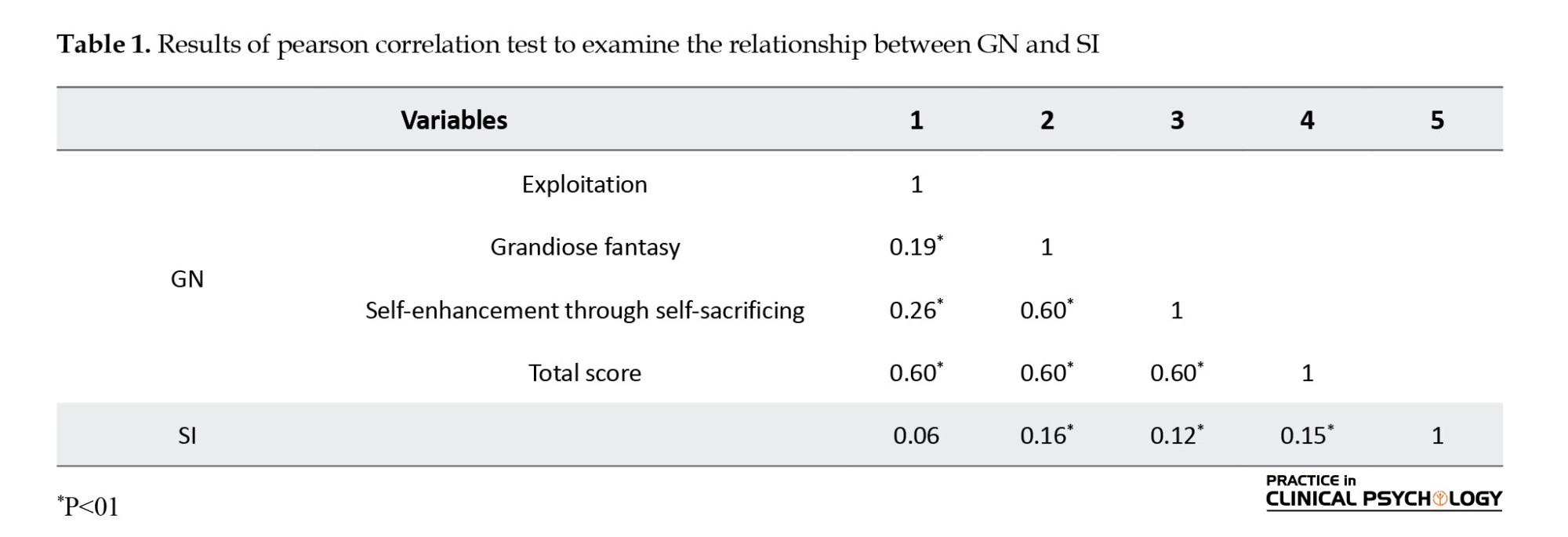
The relationship between VN and SI showed a distinct and more pervasive pattern compared to its grandiose counterpart. As detailed in Table 2, the total score for VN demonstrated a significant positive correlation with SI (r=0.19, P<0.01). Crucially, and unlike GN, each facet of VN independently demonstrated a significant association with increased suicidal thoughts. This includes contingent self-esteem (r=0.20, P<0.01), where self-worth is unstable and dependent on external validation; hiding the self (r=0.12, P<0.01), reflecting a tendency to conceal one’s true self due to fear of rejection; entitlement rage (r=0.14, P<0.01), characterized by anger and frustration when one’s sense of entitlement is not met; and devaluation (r=0.20, P<0.01), the tendency to dismiss others as inferior. The consistency of these correlations across all subscales underscores that the core features of VN, encompassing profound emotional dysregulation, interpersonal hypersensitivity, and a fragile, externally reliant self-concept, are uniformly and robustly linked to the risk of SI. The strong intercorrelations among the VN subscales further reaffirm that they collectively represent a cohesive, yet multifaceted, pathological construct.
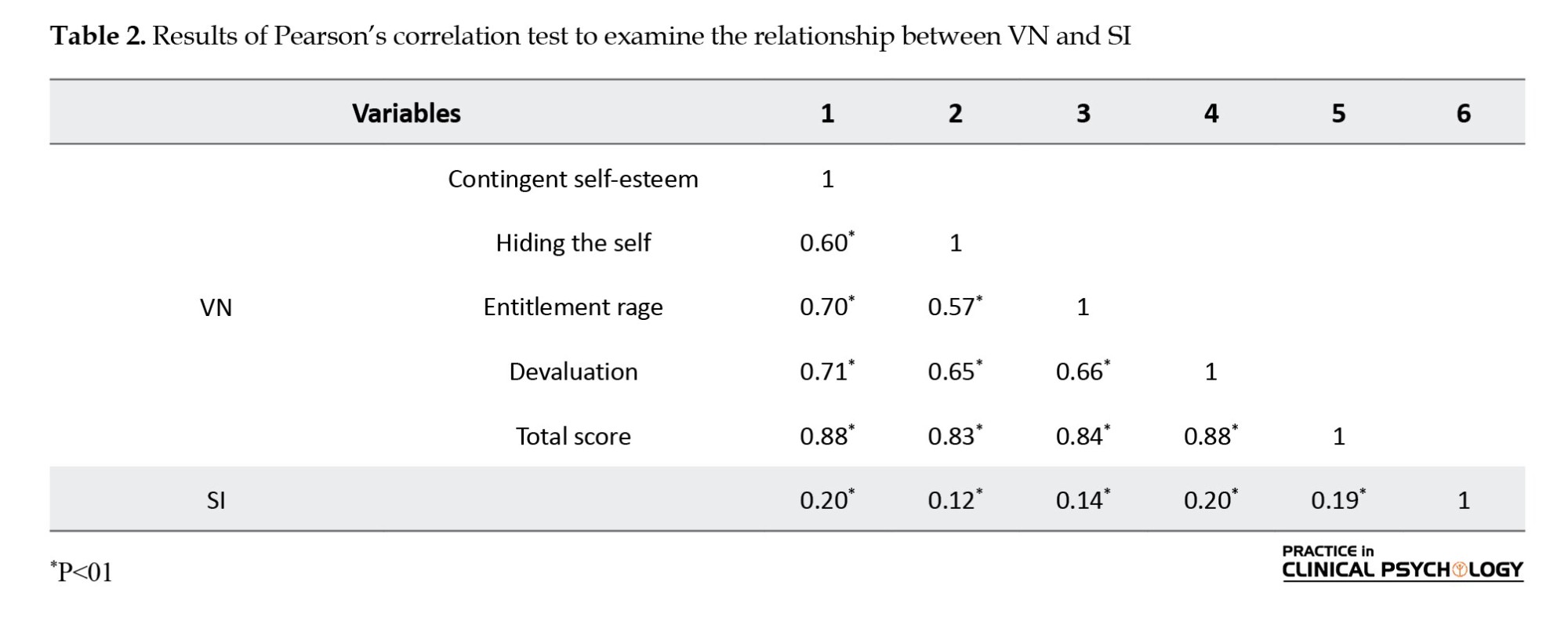
The relationship between GN and rumination was also examined, revealing a complex pattern that further differentiates its internal cognitive processes from its external interpersonal behaviors. As summarized in Table 3, the total score for GN showed a significant positive correlation with the overall tendency to ruminate (r=0.40, P<0.01). However, a detailed analysis of the subscales provides a more nuanced understanding. The grandiose fantasy and self-sacrificing self-enhancement subscales demonstrated strong, significant correlations with all facets of rumination, including brooding (self-focused), symptom-focused rumination, and reflection on the causes and consequences of negative events. This suggests that individuals who rely on internal fantasies of superiority or a self-image of exceptional altruism are particularly susceptible to pervasive, repetitive negative thought cycles.
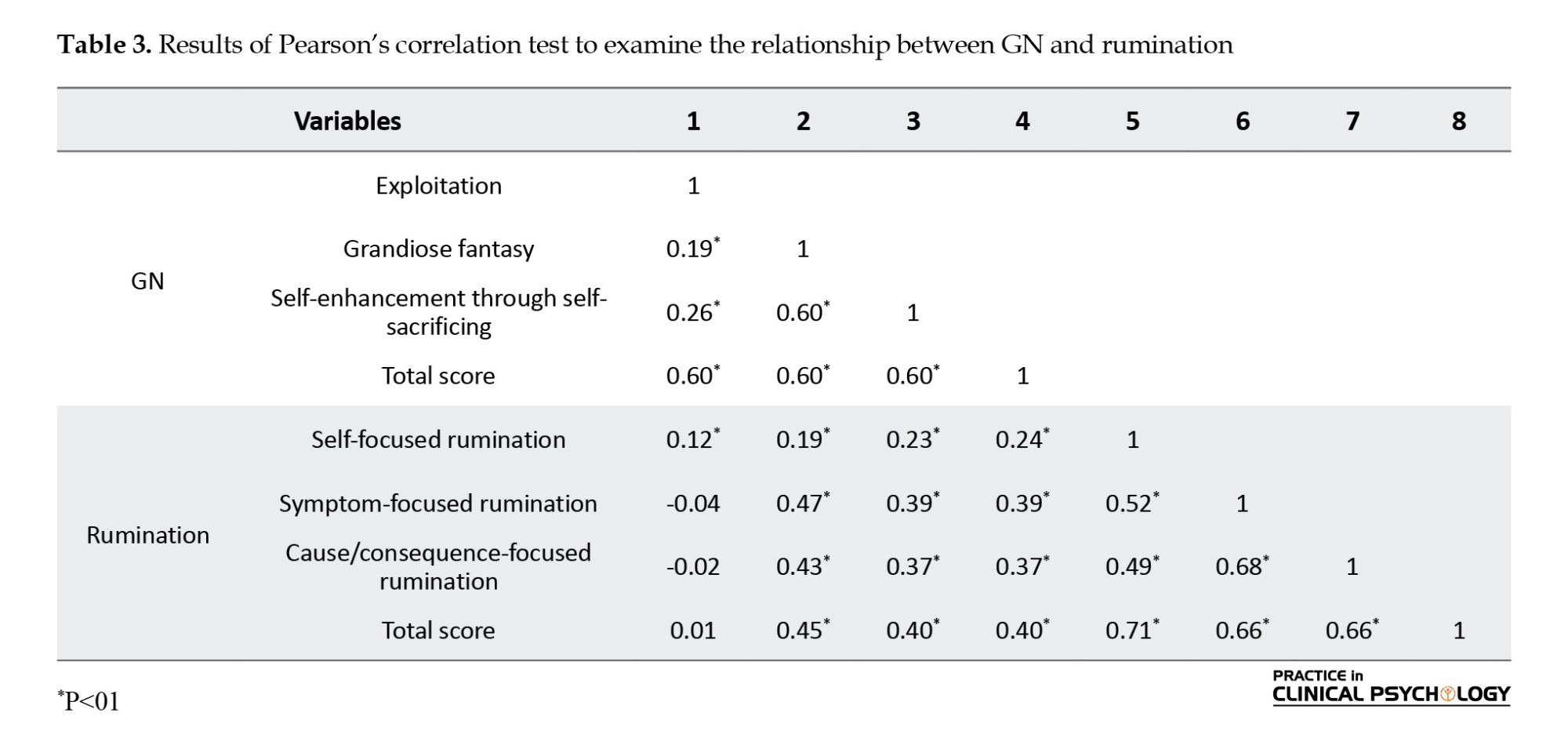
In stark contrast, the exploitativeness subscale showed a markedly different profile. It was only weakly correlated with self-focused rumination and demonstrated no significant relationship with symptom-focused rumination, cause/consequence-focused rumination, or the total rumination score. This clear divergence indicates that the antagonistic, interpersonally manipulative aspect of GN is largely independent of the internal, passive cognitive process of rumination. While fantasy-oriented, and ostensibly prosocial grandiose individual may be prone to dwelling on negative thoughts, exploitative tendencies appear cognitively focused outward on manipulating their environment rather than inward on their distress.
The relationship between VN and rumination was robust and pervasive, underscoring the deeply ingrained negative cognitive patterns associated with this personality style. As detailed in Table 4, the total score for VN demonstrated a significant and moderate positive correlation with overall rumination (r=0.48, P<0.01). Crucially, and unlike the more selective pattern seen with GN, all subscales of VN were significantly and positively correlated with all subscales of rumination (P<0.01). This indicates that the entire constellation of vulnerable narcissistic traits, from unstable self-esteem and social avoidance to entitled anger and devaluation of others, is intrinsically linked to a repetitive and passive focus on negative thoughts and feelings.
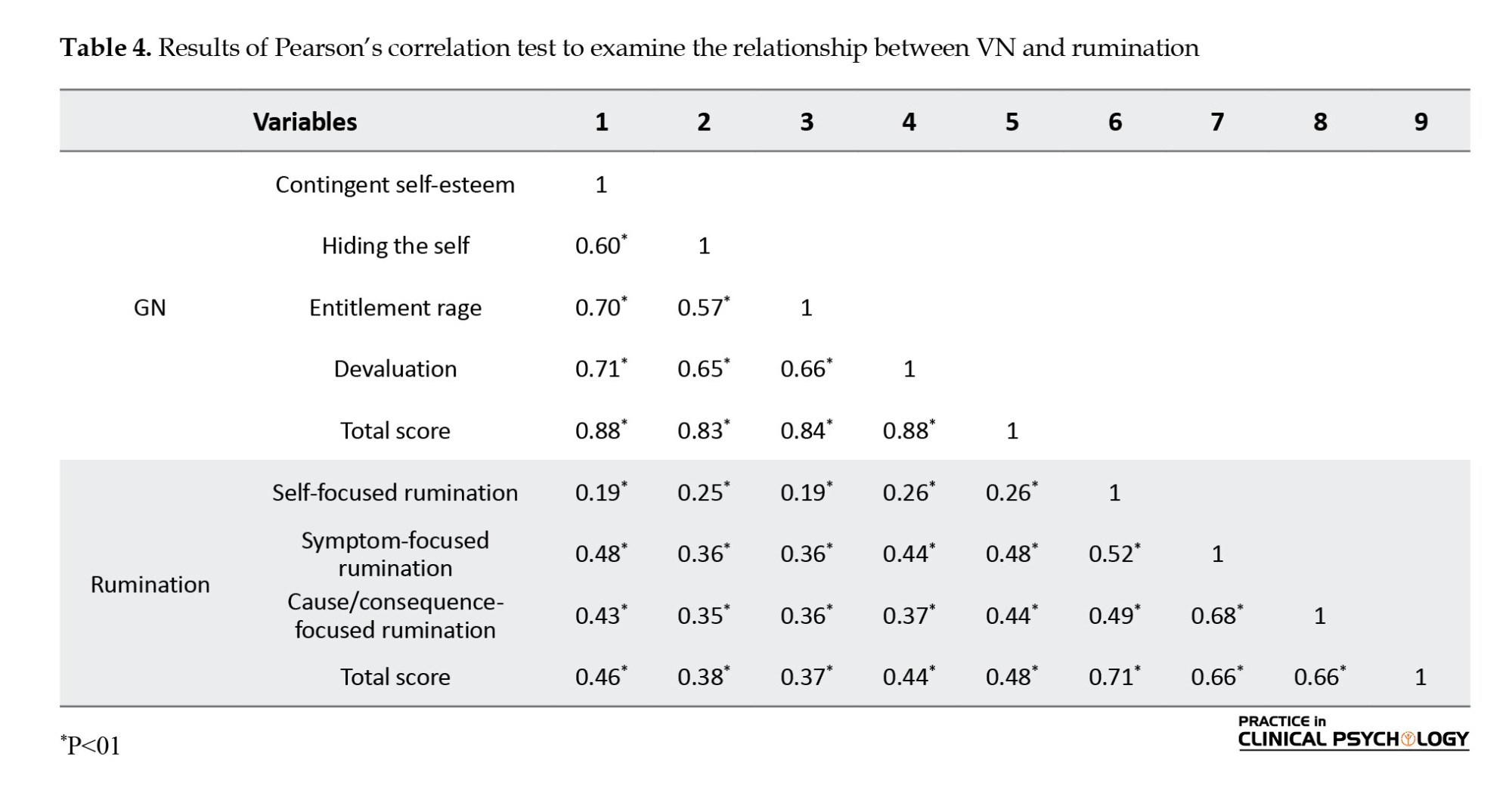
Notably, the strength of these correlations varied, providing insight into the core mechanisms. The contingent self-esteem and devaluation subscales showed the strongest associations with symptom-focused rumination (r=0.48 and r=0.44, respectively), suggesting that the intense emotional distress stemming from a fragile sense of self and a dismissive view of others is closely tied to a ruminative focus on the symptoms of that distress. This consistent, across-the-board pattern illustrates how individuals with vulnerable narcissistic traits are trapped in a cycle of negative self-referential thinking, where hypersensitivity to internal states and external slights fuels a relentless cognitive process likely maintaining and intensifying psychological pain.
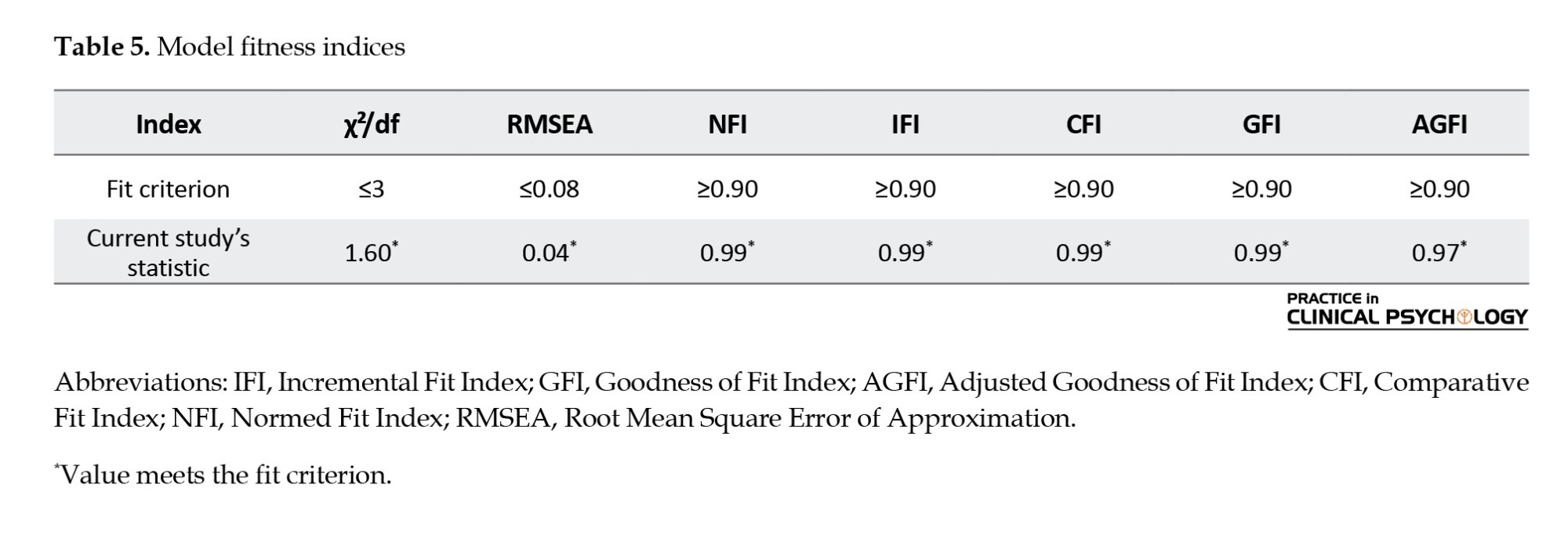
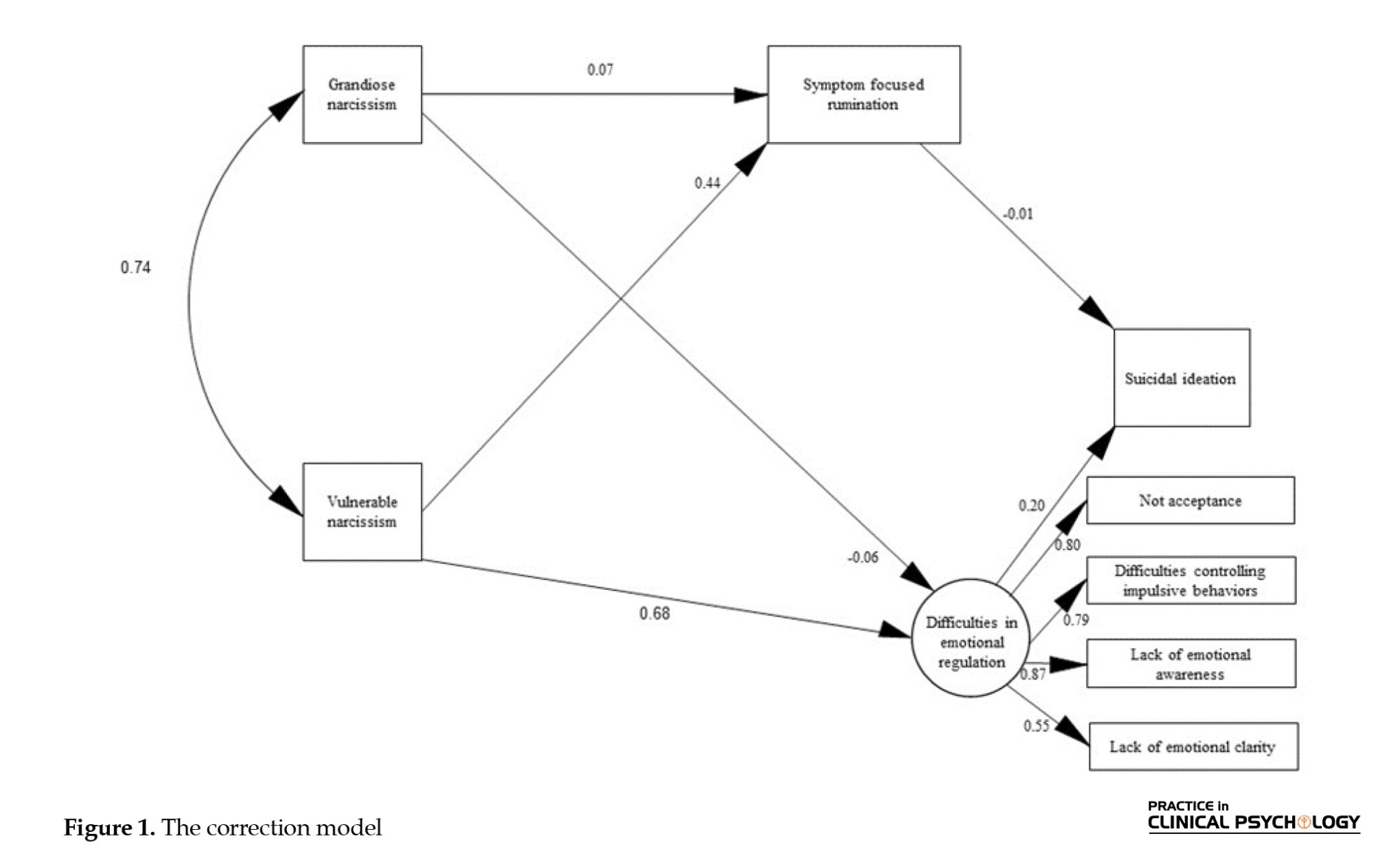
To investigate the third research hypothesis, path analysis was conducted using AMOS software, version 24. A prerequisite for inclusion in the path analysis is the existence of significant relationships between the mediating variables and the exogenous and endogenous variables of the model. The results indicated that two subscales of DERS—difficulty in performing purposeful behaviors (r=0.07, P>0.05) and restricted approach to strategies (r=0.08, P>0.05)—as well as two subscales of rumination—self-focused rumination (r=0.04, P>0.05) and cause/consequence-focused rumination (r=0.05, P>0.05) did not yield significant correlations with the endogenous variable (SI). Therefore, these subscales were excluded from the research model. Furthermore, due to the absence of significant direct paths, certain exogenous variables and their direct paths to SI were removed from the model. The chi-square to degrees of freedom ratio (χ²/df) of less than 3 indicates an acceptable model fit. The value obtained in the present study was 1.60, indicating a good model fit. Furthermore, values of incremental fit index (IFI), CFI, goodness of fit index (GFI), and adjusted GFI (AGFI) equal to or higher than 0.90 indicate a desirable model fit. In the present study, all four indices were above 0.90, demonstrating desirable model fit. The RMSEA was 0.04, falling below the threshold of .08 for desirable fit. Overall, as presented in Table 5 and Figure 1, the fit indices show that the final model achieved an excellent level of fit.
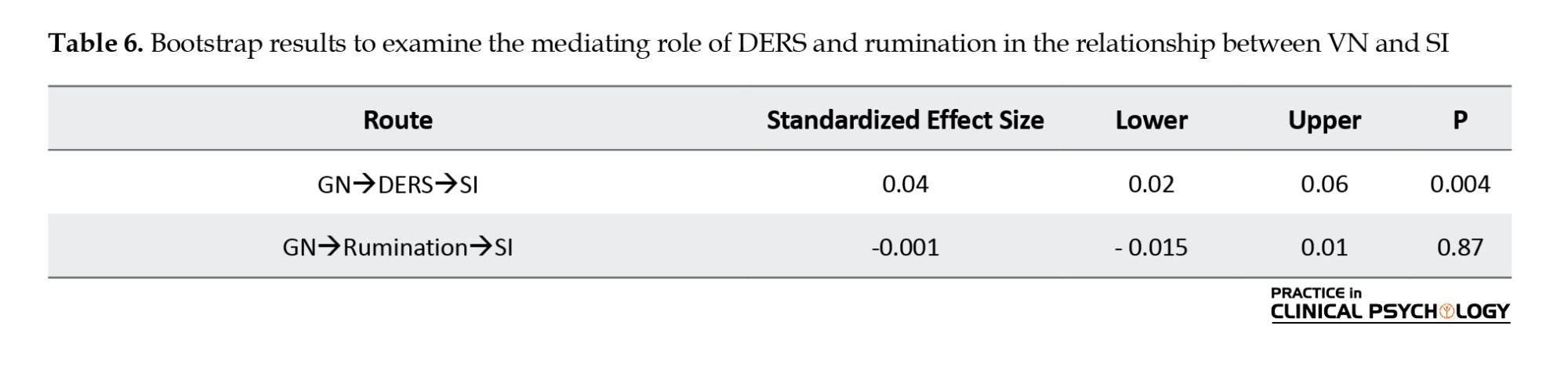
The core objective of this study was to examine the mediating pathways through which pathological narcissism might lead to SI. The bootstrap analysis for VN, presented in Table 6, revealed a critical and specific mechanism. A significant indirect effect of VN on SI was found through DERS (standardized indirect effect = 0.04, P = 0.004). The 95% bias-corrected confidence interval (CI) for this pathway (95% CI, 0.02%, 0.06%) did not contain zero, thus confirming the significance of this mediation. This finding indicates that the relationship between vulnerable narcissistic traits and suicidal thoughts is not merely direct; rather, a substantial part is mediated by the individual’s inability to effectively manage their emotional distress. The fragile self-structure and hypersensitivity characteristic of VN appear to translate into SI specifically through the pathway of emotional dysregulation.
In contrast, the indirect effect of VN on SI through rumination was non-significant (P=0.87), with a CI that contained zero (95% CI, -0.015%, 0.01%). This indicates that the persistent, repetitive negative thinking associated with VN does not, in itself, serve as a significant statistical pathway to suicidal thoughts in this model. This key distinction suggests that for individuals high in VN, it is the failure to manage the emotional consequences of their negative thoughts and experiences, rather than rumination alone, that elevates the risk of suicidality.
The mediating pathways for GN presented a fundamentally different pattern from those of its vulnerable counterpart. As detailed in Table 7, the bootstrap analysis revealed that neither DERS nor rumination served as significant mediators in the relationship between GN and SI. The indirect effect through DERS was non-significant (standardized indirect effect=-0.004, P=0.27), with a (95% CI, -0.02%, 0.002%) that contained zero. Similarly, the indirect effect through rumination was non-significant (standardized indirect effect=0.001, P=0.79), with a (95% CI , -0.005%, 0.002%) that contained zero.
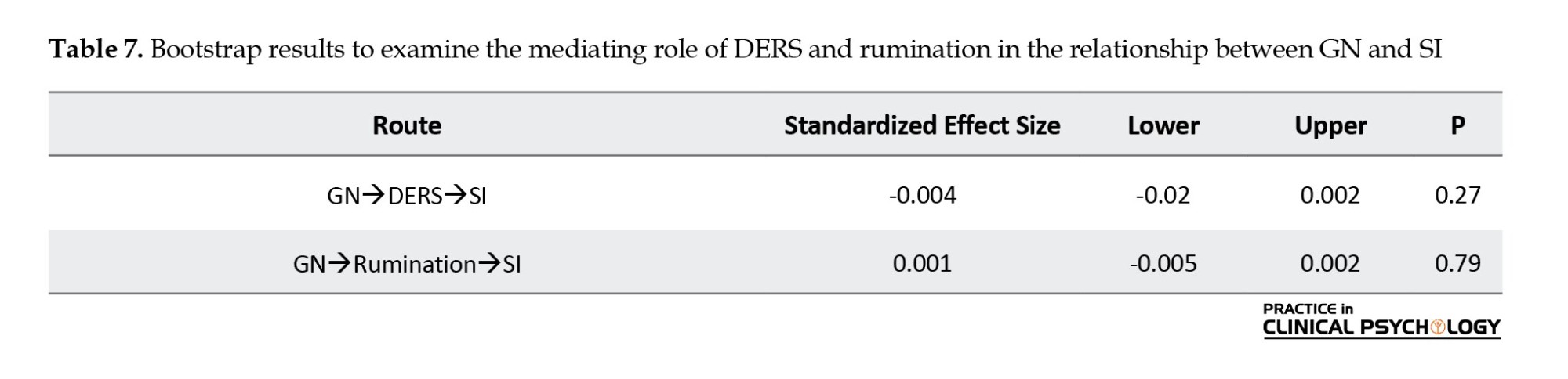
These null findings are highly informative. They indicate that the modest direct correlation observed between GN and SI is not explained by the internalizing mechanisms of emotional dysregulation or repetitive negative thinking that characterize the VN pathway. This reinforces the conceptualization of GN as an externally-oriented personality structure. Individuals with prominent grandiose traits may not internalize distress in a way that translates into SI through these specific psychological channels; instead, their limited risk may be driven by other factors, such as externalizing behaviors (e.g. aggression, substance use) or a catastrophic reaction to a profound narcissistic injury that shatters their grandiose facade, mechanisms not captured in the present model.
Discussion
The findings of the present research revealed a significant correlation between GN and SI. This finding is inconsistent with some previous studies (Sprio et al., 2021) and consistent with others (Jaksic et al., 2017). One possibility for these inconsistencies is that suicidality consists of various components, such as SI, suicide risk, and self-destructive behaviors (Rogier et al., 2024). This inconsistency is also evident in the relationship between GN and SI. Studies examining the relationship between GN and SI in different cultural contexts and societies have yielded inconsistent results, suggesting the possible influence of the cultural and social context on this relationship. In a cross-cultural study (Brailovskaia et al., 2021) grandiose (overt, it has been shown that in Chinese students, imposing narcissism is associated with suicidal thoughts, and depression plays an intermediary role between GN and suicidal thoughts; however, this relationship was not observed in German students. Additionally, GN has been found to be associated with suicidal thoughts in elderly men. Grandiose narcissistic older men may experience narcissistic injury in the face of retirement and the challenges of old age (Heisel et al., 2022). The results of some studies (Pincus & Lukowitsky, 2010) indicate that narcissistic states fluctuate across situations, reflecting individual differences in the expression of narcissism. Grandiose and vulnerable narcissistic states can be observed as two expressions of momentary fluctuations.
Findings of the present research also revealed a significantly positive correlation between VN and SI, consistent with most previous findings (Jaksic et al., 2017; Sprio et al., 2021). To explain this finding, it should be noted that individuals with VN, despite maintaining a distant attitude towards others, still remain involved in grandiose fantasies of overcoming others. When these fantasies do not align with their experiences, they may suffer from various negative psychological consequences (Pincus & Lukowitsky, 2010). Vulnerable narcissists attempt to avoid the negative emotions associated with failure, such as shame, pain, and jealousy (Kealy & Rasmussen, 2012). Vulnerable narcissists’ sensitivity to criticism can lead to avoidance of social relations (Pincus et al., 2009).
Considering this issue and in explaining the relationship between VN and SI, Joiner et al. (2009) point of view concerning suicide can be used. According to this theory, SI results from a combination of feeling burdened by others (perceived burdensomeness) and social alienation (thwarted belongingness). Withdrawal from interpersonal relationships and the feeling of social alienation among individuals with narcissistic traits may contribute to SI. This relationship can be explained based on what Klonsky and May (2015) proposed about suicide; according to which two factors of pain and despair lead to SI. According to this theory, when pain—whether physical, psychological, or interpersonal—subsides, or when there is hope that it will decrease over time or through adaptive efforts, suicidal thoughts give way to more futureoriented ones. When the pain intensifies rather than relieves, individuals become overwhelmed with belonging to loved ones, and values that provide them with a sense of meaning and purpose, but if the feeling of pain is stronger than the feeling of belonging, passive SI intensify and turn into active SI. Finally, the capacity to commit suicide may emerge. Temperamental preparations, such as high genetic pain threshold and low fear of death, are also effective in creating this capacity. In short, according to this theory, SI is caused by the combination of emotional pain and despair, and disturbed interpersonal communication can make this relationship stronger. According to this theory, it is possible that the pain caused by psychological conflicts and withdrawal and as a result the lack of feeling of belonging in VN leads to SI. Vulnerable narcissists usually withdraw from interpersonal relationships when faced with negative emotions caused by criticism (Pincus et al., 2009). The results of most previous studies (Green & Charles, 2019) show that social withdrawal is a common interpersonal pattern among individuals with VN.
Findings of the present research revealed significantly positive correlations between GN and rumination and between VN and rumination. Previous research suggests that a sense of narcissistic entitlement can lead to rumination when it conflicts with external reality (Krizan & Johar, 2015). Brooding is a form of maladaptive rumination that usually compares one’s present state with an incomplete, perfect state (Treynor et al., 2003). Therefore, individuals with narcissistic traits may engage in rumination as a cognitive strategy when confronted with frustrations or failure to achieve their grandiose fantasies. Individuals with vulnerable narcissistic traits tend to have a negative view of their past (Zajenkowski et al., 2021), often characterized by a focus on adverse events (Zimbardo & Boyd, 1999).
The mediating role in the relationship between VN and SI was supported only for DERS but not for rumination, while no mediating effects were found in the relationship between GN and SI. It can be stated that GN is less correlated with internalizing problems, such as depression and SI, and on the contrary, tends to externalize more (Russ et al., 2008). Therefore, even when individuals with high levels of GN experience difficulties in regulating negative emotions, they tend to externalize emotions, such as anger, rather than direct them inward in ways that may increase vulnerability to SI. GN is also characterized by dominance and aggression in interpersonal relationships (Miller et al., 2011). Grandiose narcissists are usually unconcerned with others (Gabbard, 1989). These individuals tend to deny and minimize their deficiencies to maintain an overemphasized and indeed breakable sense of self (Gabbard, 1989). This conceptualization of GN justifies the fact that although these individuals report interpersonal problems regarding their domineering behavior, they are less likely to report their internal distress and suffering in their relationships (Dickinson & Pincus, 2005). This explanation may also account for the lack of a mediating role of rumination in the relationship between GN and SI. Although the results of the present study indicate the relationship between GN and rumination, individuals with grandiose narcissistic traits may prefer expressing their emotions in interpersonal contexts to alleviate them. It should also be taken into account that in the current study, GN showed the strongest relationship with self-focused rumination.
Concerning VN, it can be pointed out that suicidal behaviors in VN are the result of the threat of the narcissist’s sense of importance and superiority, leading to ego injuries, and subsequent self-directed anger and aggression (Ronningstam & Maltsberger, 1998). Events that threaten narcissism can lead to suicide by triggering feelings and emotions, such as anger, feeling alone and useless, and particularly shame, prompting the individual to seek escape from these emotions (Ronningstam et al., 2008). DERS can exacerbate this process, as an impaired capacity to recognize and process emotions, coupled with insufficient mental organization, can lead to intolerance and dysregulation of intense emotions like anger and shame, thereby increasing vulnerability to self-destructive behaviors (Ronningstam & Maltsberger, 1998). In particular, the difficulty in regulating negative emotional experiences, rather than the mere experience of negative emotions, that may act as a mediating variable between VN and SI. Baumeister (1990) conceptualized suicide as an escape from unbearable emotional and psychological pain, particularly pain stemming from a perceived failure to meet important personal standards. This theory also states that when individuals lack the ability and capacity to use coping strategies and skills, suicide appears as an escape from this emotional pain. Consequently, a vulnerable narcissist, when confronted with a failure to meet personal standards, experiencing intense distressing emotions, and lacking adaptive emotion regulation strategies, may perceive suicide as the sole means of alleviating this overwhelming negative affect.
Conclusion
The findings indicate that narcissism, especially its vulnerable expression, has a significantly positive correlation with SI, and DERS play a significant mediating role in this relationship. The results also indicated that the VN is more strongly associated with negative psychological consequences, including SI and DERS, than the GN. However, the findings also suggest that the two expressions of pathological narcissism fluctuate together and are not entirely distinct constructs.
This study’s findings carry significant theoretical and practical implications. Theoretically, they strengthen the distinction between grandiose and VN by demonstrating that the pathway to SI is uniquely mediated by emotion dysregulation for the vulnerable expression, thereby refining existing models of suicide risk in personality pathology. Practically, this underscores the critical need for clinical assessments to differentiate between different types of narcissistic traits. For prevention and intervention, these results suggest that programs targeting at-risk individuals with vulnerable narcissistic traits should prioritize building concrete emotion regulation skills to reduce suicide risk, rather than focusing solely on cognitive rumination.
Limitations of the study
The current study has several limitations that should be considered when interpreting its findings:
Limited generalizability due to sample characteristics: Because the sample was restricted to public university students in Tehran Province, the findings may not generalize to non-student adults, diverse socioeconomic groups, or populations outside this geographic region. The sample’s demographic homogeneity may restrict the external validity of the findings.
Lack of clinical participants: The study utilized a non-clinical, general population sample. Consequently, the findings may not be applicable to clinical populations, particularly individuals diagnosed with pathological narcissism or severe SI, who may exhibit different psychological mechanisms or symptom severity.
Non-random sampling method: The use of a convenience sampling method, rather than random sampling, may introduce selection bias and further limit the generalizability of the results. This approach increases the risk of sampling error and reduces the likelihood that the sample fully represents the broader student population.
Cross-sectional and correlational design: As a cross-sectional and correlational study, the research design precludes causal inferences regarding the relationships between pathological narcissism, emotion regulation deficits, rumination, and SI. Longitudinal or experimental designs would be required to establish causality.
Self-report data and potential biases: The reliance on self-report measures may be subject to several biases, including social desirability bias, recall bias, or current mood effects. These factors could influence the accuracy of participants’ responses and potentially confound the observed relationships between variables.
Ethical Considerations
Compliance with ethical guidelines
The present study was approved by the Ethics Commission of the University of Tehran, Tehran, Iran (Code: IR.UT.PSYEDU.REC. 1403.088).
Funding
This research did not receive any grant from funding agencies in the public, commercial, or non-profit sectors.
Authors' contributions
Investigation: Mohammad Ali Besharat and Ali Amirebrahimi; Supervision: Mohammad Ali Besharat; Writing the original draft: Ali Amirebrahimi; Formal analysis and data collection: Ali Moghaddamzadeh; Project administration: Ali Amirebrahimi and Fatemeh Rajaei; Conceptualization, review and editing: All authors.
Conflict of interest
The authors declared no conflicts of interest.
Acknowledgments
The authors thank the students for their participation and the volunteers and staff for their valuable assistance in the study.
References
Suicidal ideation (SI) refers to a variety of thoughts, desires, and concerns related to suicide and death (Obegi, 2018). More precisely, SI can be defined as planning suicide without carrying it out (O’Carroll et al., 1996). Descriptions of self-destructive behaviors and attempts to end life are usually marked by intentionality, motivations, and various consequences, such as seeking attention, relieving emotional pain, and self-punishment (Dammann & Gerisch, 2005). There is a relationship between pathological narcissism and suicide, so that among personality disorders, narcissistic personality disorder has one of the strongest associations with suicide after borderline personality disorder (Ansell et al., 2015). Pathological narcissism and narcissistic personality disorder can be considered risk factors for SI among youth, adults, and older adults (Pincus et al., 2015).
The ability to maintain a positive view of oneself is considered a main characteristic of narcissism (Cain et al., 2008). According to its phenotype, narcissism has two main manifestations: grandiose and vulnerable (Pincus & Lukowitsky, 2010). Grandiose narcissism (GN) is characterized by dominance, interpersonal exploitation, constant striving for personal advancement, and unawareness of the impact of these behaviors on others. In vulnerable narcissism (VN), when grandiose expectations are met with failure and frustration, a state of explosive anger and hostility appears, with the difference that these feelings are often preceded by humiliation and sadness. In this expression of narcissism, grandiose fantasies and claims are hidden beneath shyness, attention seeking, fear of others’ negative evaluation, social avoidance, and emotional detachment (Dickinson & Pincus, 2005).
Narcissism has extensive intrapersonal and interpersonal consequences and is a predictor of symptoms of depression (Shen, 2023), anxiety (Brailovskaia et al., 2021), eating disorders especially bulimia nervosa (Lashinger, 2021), and suicide (Williams et al., 2021). The present study examines the relationship between narcissism and SI. A key question is whether this relationship is direct or whether other psychological variables mediate the relationship between narcissism and SI.
Among other issues investigated in the present research is to examine the possible mediating role of difficulties in emotion regulation (DERS) in the relationship between narcissism and SI. Emotional management is considered as a set of internal and external processes through which individuals monitor, evaluate and adjust the implicit and underlying processes of emotion (Gross, 1998). DERS are defined as maladaptive emotional responses that are the result of ineffective understanding, reaction, and management of emotions (Mennin et al., 2007).
Baumeister (1990) which makes self-awareness painful. Awareness of the self’s inadequacies generates negative affect, and the individual therefore desires to escape from self-awareness and the associated affect. The person tries to achieve a state of cognitive deconstruction (constricted temporal focus, concrete thinking, immediate or proximal goals, cognitive rigidity, and rejection of meaning views self-destruction as a coping strategy to avoid psychological and emotional pain. The negative emotions resulting from not achieving the standards considered for oneself and being unable to apply more constructive strategies to cope with these negative emotions may lead individuals to perceive suicide as the only solution. In the cry of pain theory, Williams et al. (2021) consider suicide to be the result of a sense of failure and being trapped, both of which lead to the expectation of a sense of insecurity. Klonsky and May (2015), in their theory of self-destruction, emphasized the importance of emotional and psychological pain in suicide. According to their theory, the combination of pain and hopelessness may lead to the emergence of SI, which can be exacerbated by the lack of social support.
The role of rumination in the relationship between narcissism and SI is another issue examined in this study. This was another subject investigated in this study. In light of the presented theoretical foundations, particularly the role of rumination as a maladaptive cognitive strategy in emotion regulation, this study aims to investigate its mediating role in the relationship between narcissism and SI. As indicated, rumination has not only been identified as a key mechanism in perpetuating negative emotions, such as shame and anger, in individuals with narcissism (Krizan & Johar, 2015), but can also be considered an inefficient emotion regulation strategy that has received less attention in current models. Although the role of general DERS is well-established in the relationship between narcissism and suicidal thoughts, evidence suggests that rumination, as a specific form of passive and repetitive emotional processing, can explain a direct and unique pathway in this relationship (Fatfouta et al., 2015). Therefore, by adding the variable of rumination to the model, this study seeks to provide a more comprehensive understanding of the cognitive-emotional mechanisms underlying the relationship between narcissism and SI, demonstrating how an excessive and uncontrollable focus on negative emotions can intensify this relationship. Rumination can be described as a process of repetitive negative thinking (Smith & Alloy, 2009). VN is related to a pessimistic attitude towards the past as well as a bias in recalling unpleasant memories, and in this way leads to intrapersonal consequences, such as negative emotions, decreased self-esteem and life satisfaction, as well as interpersonal consequences, such as anger and hostility (Zajenkowski et al., 2021). Maladaptive rumination, which is often experienced as unwanted thoughts, while reducing positive affect and psychological resilience, does not help to solve the problem (Nolen-Hoeksema et al., 2008). Brooding is a type of maladaptive rumination that usually requires contrasting the present state with a not accomplished perfect state (Treynor et al., 2003). Therefore, it is possible that a narcissistic person may resort to rumination as a cognitive approach when coping disappointment and failure to achieve grandiose fantasies. Rumination is also one of the correlates of depression (Wisco & Harp, 2021), which can be related to the consequences of depression, including SI and self-destructive behaviors (Chiang et al., 2022). Hence, another issue investigated in the present research was the possible intervening function of rumination between narcissism and SI.
Briefly, this research examined the association between narcissism and SI, as well as the intervening function of deficits in management of emotions and rumination in the relationship between narcissism and SI. Although in some recent studies, the role of narcissism as a determinant variable for self-destruction (Sprio et al., 2021) and also the mediating role of some psychological variables and narcissism (Chiang et al., 2022; Zajenkowski et al., 2021) have been examined, the mediating role of rumination alone or along with deficits in affect management in association between narcissism and SI has not received much attention and there is an obvious research gap in this area. According to the available evidence in the area of research variables, the following hypotheses were tested: 1) There is a relationship between GN and VN with SI; 2) There is a relationship between GN and VN with rumination; 3) Emotion regulation deficits and rumination play an intervening function between GN and VN with SI.
Materials and Methods
Research design
The statistical population of this research included all undergraduate and graduate students at public universities in Tehran Province, Iran, who were enrolled during the 2023–2024 academic year. To control for the potential confounding effects of general psychological distress and its core components, all potential participants were initially screened using the depression, anxiety, and stress scales (DASS-21) (Lovibond & Lovibond, 1995). Individuals who scored above the established clinical cutoff points on both the depression and anxiety subscales were excluded from the final sample (Sahebi et al., 2005). This methodological rigor helps to distinguish the unique contributions of narcissistic traits from the effects of co-occurring mood and anxiety symptoms. Convenience sampling was used, and the questionnaires were completed in person. Five hundred students participated in the present study. Due to incomplete responses, 37 students were excluded from the statistical analyses. Consequently, the final sample consisted of 463 students (232 girls, 231 boys). The Mean±SD age was 22.83±2.31) years, with ages ranging from 18 to 28.
Ethical considerations
Before participants filled out the questionnaires, they were given written information about the study’s aims, instructions for completing the forms, and ethical considerations, such as informed consent and data confidentiality. Confidentiality was ensured, and participants were informed that their data would be used solely for research purposes. Researchers visited campuses, classes, and dormitories of public universities in Tehran Province, and all participants completed the questionnaires voluntarily.
Measures
The brief-pathological narcissism inventory (B-PNI) (Schoenleber et al., 2015) is a 28-item self-report questionnaire used to assess GN and VN. This questionnaire has demonstrated good internal consistency and includes all major components of the original Pathological Narcissism Inventory (Pincus et al., 2009). In addition, its factor structure shows strong correspondence with that of the original version. This questionnaire has been standardized in the Iranian population. Hassanzadeh et al. (2019) reported Cronbach’s α coefficients of 0.87 for the total scale, 0.87 for the GN subscale, and 0.77 for the VN subscale.
The DERS scale DERS (Gratz & Roemer, 2004) there is a need for comprehensive measures that adequately assess DERS among adults. This paper (a is a 36-item self-report measure that assesses different aspects of emotion regulation difficulties. The psychometric properties of this scale and its Persian version have been confirmed in clinical and non-clinical samples (Besharat, 2018; Gratz & Roemer, 2004) few studies have examined emotion dysregulation in BPD. This study extends extant research by providing an experimental investigation of emotion dysregulation among outpatients with BPD. Specifically, this study modified an experimental measure of distress tolerance to examine differences between outpatients with BPD (n=17).
The ruminative response scale (RRS) (Nolen-Hoeksema & Morrow, 1991) is a 22-item subscale of the response styles questionnaire (RSQ) (Nolen-Hoeksema & Morrow, 1991). The RRS measures individuals’ ruminative responses to depressed mood. The psychometric properties of the RRS and its Persian version have been confirmed (Bagherinezhad et al., 2010; Nolen-Hoeksema & Morrow, 1991) the relationship between rumination, depression and anxity in a sample of Iraian students was investigated. Participants (n=119; 63% female).
The Beck suicidal ideation (SI) inventory (BSSI) (Beck et al., 1979) is a 19-item questionnaire designed to measure the severity of suicidal thoughts, behaviors, and plans on a 3-point scale ranging from 0 to 2. This scale assesses domains such as the wish to die, passive and active suicidal desire, the duration and frequency of SI, perceived self-control, the individual’s level of readiness to engage in suicidal behavior, and protective factors against suicide. This questionnaire has been standardized in Iranian adolescent and adult samples. Alizadeh Birjandi et al. (2021) reported a Cronbach’s α coefficient of 0.95 for this instrument and a concurrent validity coefficient of 0.76 with the depression scale and the general health questionnaire.
Statistical analysis
Data were analyzed using SPSS software, version 26 and AMOS software, version 24. Following initial data screening for missing values and outliers, descriptive statistics were computed for all study variables. To examine the hypothesized mediation model, path analysis was performed using structural equation modeling. The analysis tested both the direct effects of pathological narcissism on SI and the indirect effects mediated by emotion regulation deficits and rumination.
Model fit was evaluated using multiple indices: Chi-square/degrees of freedom (χ²/df) with a ratio below 3 indicating acceptable fit, Comparative Fit Index (CFI) and Tucker-Lewis Index (TLI) with values above 0.90 indicating acceptable fit, and Root Mean Square Error of Approximation (RMSEA) with values below 0.08 indicating reasonable fit. Bootstrapping with 5000 resamples and 95% bias-corrected CIs was employed to test the significance of the indirect effects.
Results
The initial analysis explored the relationships between the facets of GN and SI. The correlational findings, presented in Table 1, reveal a nuanced pattern. A significant, positive correlation was observed between the overall score of GN and SI (r=0.15, P<0.01). However, disaggregating this overall score into its specific components provides critical insights. The significant association was primarily driven by the grandiose fantasy subscale (r=0.16, P<0.01), which captures a reliance on fantasies of unlimited success and power to maintain self-esteem, and the self-sacrificing self-enhancement subscale (r=0.12, P<0.01), which reflects a self-image built on a perception of oneself as exceptionally altruistic. In contrast, the exploitativeness subscale, which measures a willingness to manipulate and take advantage of others, was not significantly correlated with SI (r=0.06, P>0.05). This divergence suggests that the internal, fantasy-based, and ostensibly prosocial aspects of GN may pose a greater risk for suicidal thoughts than its overtly antagonistic and interpersonal features. The intercorrelations among the GN subscales were all positive and significant, as expected within the construct.
The relationship between VN and SI showed a distinct and more pervasive pattern compared to its grandiose counterpart. As detailed in Table 2, the total score for VN demonstrated a significant positive correlation with SI (r=0.19, P<0.01). Crucially, and unlike GN, each facet of VN independently demonstrated a significant association with increased suicidal thoughts. This includes contingent self-esteem (r=0.20, P<0.01), where self-worth is unstable and dependent on external validation; hiding the self (r=0.12, P<0.01), reflecting a tendency to conceal one’s true self due to fear of rejection; entitlement rage (r=0.14, P<0.01), characterized by anger and frustration when one’s sense of entitlement is not met; and devaluation (r=0.20, P<0.01), the tendency to dismiss others as inferior. The consistency of these correlations across all subscales underscores that the core features of VN, encompassing profound emotional dysregulation, interpersonal hypersensitivity, and a fragile, externally reliant self-concept, are uniformly and robustly linked to the risk of SI. The strong intercorrelations among the VN subscales further reaffirm that they collectively represent a cohesive, yet multifaceted, pathological construct.
The relationship between GN and rumination was also examined, revealing a complex pattern that further differentiates its internal cognitive processes from its external interpersonal behaviors. As summarized in Table 3, the total score for GN showed a significant positive correlation with the overall tendency to ruminate (r=0.40, P<0.01). However, a detailed analysis of the subscales provides a more nuanced understanding. The grandiose fantasy and self-sacrificing self-enhancement subscales demonstrated strong, significant correlations with all facets of rumination, including brooding (self-focused), symptom-focused rumination, and reflection on the causes and consequences of negative events. This suggests that individuals who rely on internal fantasies of superiority or a self-image of exceptional altruism are particularly susceptible to pervasive, repetitive negative thought cycles.
In stark contrast, the exploitativeness subscale showed a markedly different profile. It was only weakly correlated with self-focused rumination and demonstrated no significant relationship with symptom-focused rumination, cause/consequence-focused rumination, or the total rumination score. This clear divergence indicates that the antagonistic, interpersonally manipulative aspect of GN is largely independent of the internal, passive cognitive process of rumination. While fantasy-oriented, and ostensibly prosocial grandiose individual may be prone to dwelling on negative thoughts, exploitative tendencies appear cognitively focused outward on manipulating their environment rather than inward on their distress.
The relationship between VN and rumination was robust and pervasive, underscoring the deeply ingrained negative cognitive patterns associated with this personality style. As detailed in Table 4, the total score for VN demonstrated a significant and moderate positive correlation with overall rumination (r=0.48, P<0.01). Crucially, and unlike the more selective pattern seen with GN, all subscales of VN were significantly and positively correlated with all subscales of rumination (P<0.01). This indicates that the entire constellation of vulnerable narcissistic traits, from unstable self-esteem and social avoidance to entitled anger and devaluation of others, is intrinsically linked to a repetitive and passive focus on negative thoughts and feelings.
Notably, the strength of these correlations varied, providing insight into the core mechanisms. The contingent self-esteem and devaluation subscales showed the strongest associations with symptom-focused rumination (r=0.48 and r=0.44, respectively), suggesting that the intense emotional distress stemming from a fragile sense of self and a dismissive view of others is closely tied to a ruminative focus on the symptoms of that distress. This consistent, across-the-board pattern illustrates how individuals with vulnerable narcissistic traits are trapped in a cycle of negative self-referential thinking, where hypersensitivity to internal states and external slights fuels a relentless cognitive process likely maintaining and intensifying psychological pain.
To investigate the third research hypothesis, path analysis was conducted using AMOS software, version 24. A prerequisite for inclusion in the path analysis is the existence of significant relationships between the mediating variables and the exogenous and endogenous variables of the model. The results indicated that two subscales of DERS—difficulty in performing purposeful behaviors (r=0.07, P>0.05) and restricted approach to strategies (r=0.08, P>0.05)—as well as two subscales of rumination—self-focused rumination (r=0.04, P>0.05) and cause/consequence-focused rumination (r=0.05, P>0.05) did not yield significant correlations with the endogenous variable (SI). Therefore, these subscales were excluded from the research model. Furthermore, due to the absence of significant direct paths, certain exogenous variables and their direct paths to SI were removed from the model. The chi-square to degrees of freedom ratio (χ²/df) of less than 3 indicates an acceptable model fit. The value obtained in the present study was 1.60, indicating a good model fit. Furthermore, values of incremental fit index (IFI), CFI, goodness of fit index (GFI), and adjusted GFI (AGFI) equal to or higher than 0.90 indicate a desirable model fit. In the present study, all four indices were above 0.90, demonstrating desirable model fit. The RMSEA was 0.04, falling below the threshold of .08 for desirable fit. Overall, as presented in Table 5 and Figure 1, the fit indices show that the final model achieved an excellent level of fit.
The core objective of this study was to examine the mediating pathways through which pathological narcissism might lead to SI. The bootstrap analysis for VN, presented in Table 6, revealed a critical and specific mechanism. A significant indirect effect of VN on SI was found through DERS (standardized indirect effect = 0.04, P = 0.004). The 95% bias-corrected confidence interval (CI) for this pathway (95% CI, 0.02%, 0.06%) did not contain zero, thus confirming the significance of this mediation. This finding indicates that the relationship between vulnerable narcissistic traits and suicidal thoughts is not merely direct; rather, a substantial part is mediated by the individual’s inability to effectively manage their emotional distress. The fragile self-structure and hypersensitivity characteristic of VN appear to translate into SI specifically through the pathway of emotional dysregulation.
In contrast, the indirect effect of VN on SI through rumination was non-significant (P=0.87), with a CI that contained zero (95% CI, -0.015%, 0.01%). This indicates that the persistent, repetitive negative thinking associated with VN does not, in itself, serve as a significant statistical pathway to suicidal thoughts in this model. This key distinction suggests that for individuals high in VN, it is the failure to manage the emotional consequences of their negative thoughts and experiences, rather than rumination alone, that elevates the risk of suicidality.
The mediating pathways for GN presented a fundamentally different pattern from those of its vulnerable counterpart. As detailed in Table 7, the bootstrap analysis revealed that neither DERS nor rumination served as significant mediators in the relationship between GN and SI. The indirect effect through DERS was non-significant (standardized indirect effect=-0.004, P=0.27), with a (95% CI, -0.02%, 0.002%) that contained zero. Similarly, the indirect effect through rumination was non-significant (standardized indirect effect=0.001, P=0.79), with a (95% CI , -0.005%, 0.002%) that contained zero.
These null findings are highly informative. They indicate that the modest direct correlation observed between GN and SI is not explained by the internalizing mechanisms of emotional dysregulation or repetitive negative thinking that characterize the VN pathway. This reinforces the conceptualization of GN as an externally-oriented personality structure. Individuals with prominent grandiose traits may not internalize distress in a way that translates into SI through these specific psychological channels; instead, their limited risk may be driven by other factors, such as externalizing behaviors (e.g. aggression, substance use) or a catastrophic reaction to a profound narcissistic injury that shatters their grandiose facade, mechanisms not captured in the present model.
Discussion
The findings of the present research revealed a significant correlation between GN and SI. This finding is inconsistent with some previous studies (Sprio et al., 2021) and consistent with others (Jaksic et al., 2017). One possibility for these inconsistencies is that suicidality consists of various components, such as SI, suicide risk, and self-destructive behaviors (Rogier et al., 2024). This inconsistency is also evident in the relationship between GN and SI. Studies examining the relationship between GN and SI in different cultural contexts and societies have yielded inconsistent results, suggesting the possible influence of the cultural and social context on this relationship. In a cross-cultural study (Brailovskaia et al., 2021) grandiose (overt, it has been shown that in Chinese students, imposing narcissism is associated with suicidal thoughts, and depression plays an intermediary role between GN and suicidal thoughts; however, this relationship was not observed in German students. Additionally, GN has been found to be associated with suicidal thoughts in elderly men. Grandiose narcissistic older men may experience narcissistic injury in the face of retirement and the challenges of old age (Heisel et al., 2022). The results of some studies (Pincus & Lukowitsky, 2010) indicate that narcissistic states fluctuate across situations, reflecting individual differences in the expression of narcissism. Grandiose and vulnerable narcissistic states can be observed as two expressions of momentary fluctuations.
Findings of the present research also revealed a significantly positive correlation between VN and SI, consistent with most previous findings (Jaksic et al., 2017; Sprio et al., 2021). To explain this finding, it should be noted that individuals with VN, despite maintaining a distant attitude towards others, still remain involved in grandiose fantasies of overcoming others. When these fantasies do not align with their experiences, they may suffer from various negative psychological consequences (Pincus & Lukowitsky, 2010). Vulnerable narcissists attempt to avoid the negative emotions associated with failure, such as shame, pain, and jealousy (Kealy & Rasmussen, 2012). Vulnerable narcissists’ sensitivity to criticism can lead to avoidance of social relations (Pincus et al., 2009).
Considering this issue and in explaining the relationship between VN and SI, Joiner et al. (2009) point of view concerning suicide can be used. According to this theory, SI results from a combination of feeling burdened by others (perceived burdensomeness) and social alienation (thwarted belongingness). Withdrawal from interpersonal relationships and the feeling of social alienation among individuals with narcissistic traits may contribute to SI. This relationship can be explained based on what Klonsky and May (2015) proposed about suicide; according to which two factors of pain and despair lead to SI. According to this theory, when pain—whether physical, psychological, or interpersonal—subsides, or when there is hope that it will decrease over time or through adaptive efforts, suicidal thoughts give way to more futureoriented ones. When the pain intensifies rather than relieves, individuals become overwhelmed with belonging to loved ones, and values that provide them with a sense of meaning and purpose, but if the feeling of pain is stronger than the feeling of belonging, passive SI intensify and turn into active SI. Finally, the capacity to commit suicide may emerge. Temperamental preparations, such as high genetic pain threshold and low fear of death, are also effective in creating this capacity. In short, according to this theory, SI is caused by the combination of emotional pain and despair, and disturbed interpersonal communication can make this relationship stronger. According to this theory, it is possible that the pain caused by psychological conflicts and withdrawal and as a result the lack of feeling of belonging in VN leads to SI. Vulnerable narcissists usually withdraw from interpersonal relationships when faced with negative emotions caused by criticism (Pincus et al., 2009). The results of most previous studies (Green & Charles, 2019) show that social withdrawal is a common interpersonal pattern among individuals with VN.
Findings of the present research revealed significantly positive correlations between GN and rumination and between VN and rumination. Previous research suggests that a sense of narcissistic entitlement can lead to rumination when it conflicts with external reality (Krizan & Johar, 2015). Brooding is a form of maladaptive rumination that usually compares one’s present state with an incomplete, perfect state (Treynor et al., 2003). Therefore, individuals with narcissistic traits may engage in rumination as a cognitive strategy when confronted with frustrations or failure to achieve their grandiose fantasies. Individuals with vulnerable narcissistic traits tend to have a negative view of their past (Zajenkowski et al., 2021), often characterized by a focus on adverse events (Zimbardo & Boyd, 1999).
The mediating role in the relationship between VN and SI was supported only for DERS but not for rumination, while no mediating effects were found in the relationship between GN and SI. It can be stated that GN is less correlated with internalizing problems, such as depression and SI, and on the contrary, tends to externalize more (Russ et al., 2008). Therefore, even when individuals with high levels of GN experience difficulties in regulating negative emotions, they tend to externalize emotions, such as anger, rather than direct them inward in ways that may increase vulnerability to SI. GN is also characterized by dominance and aggression in interpersonal relationships (Miller et al., 2011). Grandiose narcissists are usually unconcerned with others (Gabbard, 1989). These individuals tend to deny and minimize their deficiencies to maintain an overemphasized and indeed breakable sense of self (Gabbard, 1989). This conceptualization of GN justifies the fact that although these individuals report interpersonal problems regarding their domineering behavior, they are less likely to report their internal distress and suffering in their relationships (Dickinson & Pincus, 2005). This explanation may also account for the lack of a mediating role of rumination in the relationship between GN and SI. Although the results of the present study indicate the relationship between GN and rumination, individuals with grandiose narcissistic traits may prefer expressing their emotions in interpersonal contexts to alleviate them. It should also be taken into account that in the current study, GN showed the strongest relationship with self-focused rumination.
Concerning VN, it can be pointed out that suicidal behaviors in VN are the result of the threat of the narcissist’s sense of importance and superiority, leading to ego injuries, and subsequent self-directed anger and aggression (Ronningstam & Maltsberger, 1998). Events that threaten narcissism can lead to suicide by triggering feelings and emotions, such as anger, feeling alone and useless, and particularly shame, prompting the individual to seek escape from these emotions (Ronningstam et al., 2008). DERS can exacerbate this process, as an impaired capacity to recognize and process emotions, coupled with insufficient mental organization, can lead to intolerance and dysregulation of intense emotions like anger and shame, thereby increasing vulnerability to self-destructive behaviors (Ronningstam & Maltsberger, 1998). In particular, the difficulty in regulating negative emotional experiences, rather than the mere experience of negative emotions, that may act as a mediating variable between VN and SI. Baumeister (1990) conceptualized suicide as an escape from unbearable emotional and psychological pain, particularly pain stemming from a perceived failure to meet important personal standards. This theory also states that when individuals lack the ability and capacity to use coping strategies and skills, suicide appears as an escape from this emotional pain. Consequently, a vulnerable narcissist, when confronted with a failure to meet personal standards, experiencing intense distressing emotions, and lacking adaptive emotion regulation strategies, may perceive suicide as the sole means of alleviating this overwhelming negative affect.
Conclusion
The findings indicate that narcissism, especially its vulnerable expression, has a significantly positive correlation with SI, and DERS play a significant mediating role in this relationship. The results also indicated that the VN is more strongly associated with negative psychological consequences, including SI and DERS, than the GN. However, the findings also suggest that the two expressions of pathological narcissism fluctuate together and are not entirely distinct constructs.
This study’s findings carry significant theoretical and practical implications. Theoretically, they strengthen the distinction between grandiose and VN by demonstrating that the pathway to SI is uniquely mediated by emotion dysregulation for the vulnerable expression, thereby refining existing models of suicide risk in personality pathology. Practically, this underscores the critical need for clinical assessments to differentiate between different types of narcissistic traits. For prevention and intervention, these results suggest that programs targeting at-risk individuals with vulnerable narcissistic traits should prioritize building concrete emotion regulation skills to reduce suicide risk, rather than focusing solely on cognitive rumination.
Limitations of the study
The current study has several limitations that should be considered when interpreting its findings:
Limited generalizability due to sample characteristics: Because the sample was restricted to public university students in Tehran Province, the findings may not generalize to non-student adults, diverse socioeconomic groups, or populations outside this geographic region. The sample’s demographic homogeneity may restrict the external validity of the findings.
Lack of clinical participants: The study utilized a non-clinical, general population sample. Consequently, the findings may not be applicable to clinical populations, particularly individuals diagnosed with pathological narcissism or severe SI, who may exhibit different psychological mechanisms or symptom severity.
Non-random sampling method: The use of a convenience sampling method, rather than random sampling, may introduce selection bias and further limit the generalizability of the results. This approach increases the risk of sampling error and reduces the likelihood that the sample fully represents the broader student population.
Cross-sectional and correlational design: As a cross-sectional and correlational study, the research design precludes causal inferences regarding the relationships between pathological narcissism, emotion regulation deficits, rumination, and SI. Longitudinal or experimental designs would be required to establish causality.
Self-report data and potential biases: The reliance on self-report measures may be subject to several biases, including social desirability bias, recall bias, or current mood effects. These factors could influence the accuracy of participants’ responses and potentially confound the observed relationships between variables.
Ethical Considerations
Compliance with ethical guidelines
The present study was approved by the Ethics Commission of the University of Tehran, Tehran, Iran (Code: IR.UT.PSYEDU.REC. 1403.088).
Funding
This research did not receive any grant from funding agencies in the public, commercial, or non-profit sectors.
Authors' contributions
Investigation: Mohammad Ali Besharat and Ali Amirebrahimi; Supervision: Mohammad Ali Besharat; Writing the original draft: Ali Amirebrahimi; Formal analysis and data collection: Ali Moghaddamzadeh; Project administration: Ali Amirebrahimi and Fatemeh Rajaei; Conceptualization, review and editing: All authors.
Conflict of interest
The authors declared no conflicts of interest.
Acknowledgments
The authors thank the students for their participation and the volunteers and staff for their valuable assistance in the study.
References
Alizadeh Birjandi, Z., Janbozorgi, M., Rasoolzadeh Tabatabaee, S. K., & Fathi Ashtiani, A. (2021). The factor structure, reliability, and validity of the persian version of the suicidal desire scale based on interpersonal suicide theory (IPTS) in Iranian students. Research in Clinical Psychology and Counseling, 11(1), 101. [DOI:10.22067/tpccp.2021.36567.0]
Ansell, E. B., Wright, A. G. C., Markowitz, J. C., Sanislow, C. A., Hopwood, C. J., Zanarini, M. C., et al. (2015). Personality disorder risk factors for suicide attempts over 10 years of follow-up. Personality Disorders: Theory, Research, and Treatment, 6(2), 161-167. [DOI:10.1037/per0000089] [PMID]
Bagherinezhad, M., Salehi Fadardi, J., & Tabatabayi, S. M. (2010). The relationship between rumination and depression in a sample of Iranian student. Research in Clinical Psychology and Counseling, 11(1):1. [DOI:10.22067/IJAP.V11I1.6910]
Baumeister, R. F. (1990). Suicide as escape from self. Psychological Review, 97(1), 90-113. [DOI:10.1037/0033-295X.97.1.90] [PMID]
Beck, A. T., Kovacs, M., & Weissman, A. (1979). Assessment of suicidal intention: The Scale for Suicide Ideation. Journal of Consulting and Clinical Psychology, 47(2), 343-352. [DOI:10.1037//0022-006X.47.2.343] [PMID]
Besharat MA. Difficulties in emotion regulation scale. Thought & Behavior in Clinical Psychology, 12(47), 89-92. [Link]
Brailovskaia, J., Teismann, T., Zhang, X. C., & Margraf, J. (2021). Grandiose narcissism, depression and suicide ideation in Chinese and German students. Current Psychology, 40(8), 3922-3930. [DOI:10.1007/S12144-019-00355-1/METRICS]
Cain, N. M., Pincus, A. L., & Ansell, E. B. (2008). Narcissism at the crossroads: Phenotypic description of pathological narcissism across clinical theory, social/personality psychology, and psychiatric diagnosis. Clinical Psychology Review, 28(4), 638-656. [DOI:10.1016/j.cpr.2007.09.006] [PMID]
Chiang, Y. H., Ma, Y. C., Lin, Y. C., Jiang, J. L., Wu, M. H., & Chiang, K. C. (2022). The Relationship between Depressive Symptoms, Rumination, and Suicide Ideation in Patients with Depression. International Journal of Environmental Research and Public Health, 19(21), 14492. [DOI:10.3390/IJERPH192114492] [PMID]
Dammann, G., & Gerisch, B. (2005). Narcissistic personality disorders and suicidal behaviour. A psychodynamic perspective on treatment difficulties. Schweizer Archiv Fur Neurologie Und Psychiatrie, 156(6), 299-309. [DOI:10.4414/SANP.2005.01625]
Dickinson, K. A., & Pincus, A. L. (2005). Interpersonal Analysis of Grandiose and Vulnerable Narcissism. Journal of Personality Disorders, 17(3), 188-207. [DOI:10.1521/pedi.17.3.188.22146] [PMID]
Fatfouta, R., Gerlach, T. M., Schröder-Abé, M., & Merkl, A. (2015). Narcissism and lack of interpersonal forgiveness: The mediating role of state anger, state rumination, and state empathy. Personality and Individual Differences, 75, 36-40. [DOI:10.1016/j.paid.2014.10.051]
Gabbard, G. O. (1989). Two subtypes of narcissistic personality disorder. Bulletin of the Menninger Clinic, 53(6), 527-532. [Link]
Gratz, K. L., & Roemer, L. (2004). Multidimensional assessment of emotion regulation and dysregulation: Development, factor structure, and initial validation of the difficulties in emotion regulation scale. Journal of Psychopathology and Behavioral Assessment, 26(1), 41-54. [DOI:10.1023/B:JOBA.0000007455.08539.94]
Green, A., & Charles, K. (2019). Voicing the victims of narcissistic partners: A qualitative analysis of responses to narcissistic injury and self-esteem regulation. Sage Open, 9(2), 2158244019846693. [DOI:10.1177/2158244019846693]
Gross, J. J. (1998). The emerging field of emotion regulation: An integrative review. Review of General Psychology, 2(3), 271-299. [DOI:10.1037/1089-2680.2.3.271]
Hassanzadeh, F., Akhani, A., & Asgharanjad, A. A. (2019). Examining the psychometric properties of the short version of the pathological narcissism inventory. Journal of Neyshabur University of Medical Sciences, 8(1), 77-87. [Link]
Heisel, M., Flett, G., & Links, P. (2022). Is narcissistic personality associated with suicide ideation in middle-aged and older men? Innovation in Aging, 6(Suppl. 1), 372-372. [DOI:10.1093/geroni/igac059.1471]
Jaksic, N., Marcinko, D., Skocic Hanzek, M., Rebernjak, B., & Ogrodniczuk, J. S. (2017). Experience of shame mediates the relationship between pathological narcissism and suicidal ideation in psychiatric outpatients. Journal of Clinical Psychology, 73(12), 1670-1681. [DOI:10.1002/jclp.22472] [PMID]
Joiner, T. E., Van Orden, K. A., Witte, T. K., Selby, E. A., Ribeiro, J. D., Lewis, R., et al. (2009). Main Predictions of the Interpersonal-Psychological Theory of Suicidal Behavior: Empirical Tests in Two Samples of Young Adults. Journal of Abnormal Psychology, 118(3), 634-646. [DOI:10.1037/a0016500] [PMID]
Kealy, D., & Rasmussen, B. (2012). Veiled and vulnerable: The other side of grandiose narcissism. Clinical Social Work Journal, 40(3), 356-365. [DOI:10.1007/s10615-011-0370-1]
Klonsky, E., & May, A. M. (2015). The three-step theory (3ST): A new theory of suicide rooted in the “ideation-to-action” Framework. International Journal of Cognitive Therapy, 8(2), 114-129. [DOI:10.1521/ijct.2015.8.2.114]
Krizan, Z., & Johar, O. (2015). Narcissistic rage revisited. Journal of Personality and Social Psychology, 108(5), 784-801. [DOI:10.1037/pspp0000013] [PMID]
Lashinger, K. (2021). A review: Examining narcissism in eating disorders: The relationship between two types of eating disorders-anorexia nervosa and bulimia nervosa-and two forms of narcissism. The Pegasus Review: UCF Undergraduate Research Journal, 13(2), 1-12. [Link]
Pincus, A., Roche, M. J., & Good, E. W. (2015). Narcissistic personality disorder and pathological narcissism. In P. H. Blaney, R. F. Krueger & T. Millon (Eds.), Oxford textbook of psychopathology (pp. 791-813). Oxford: Oxford University Press. [Link]
Mennin, D. S., Holaway, R. M., Fresco, D. M., Moore, M. T., & Heimberg, R. G. (2007). Delineating components of emotion and its dysregulation in anxiety and mood psychopathology. Behavior Therapy, 38(3), 284-302. [DOI:10.1016/j.beth.2006.09.001] [PMID]
Miller, J. D., Hoffman, B. J., Gaughan, E. T., Gentile, B., Maples, J., & Keith Campbell, W. (2011). Grandiose and vulnerable narcissism: A nomological network Analysis. Journal of Personality, 79(5), 1013-1042. [DOI:10.1111/j.1467-6494.2010.00711.x] [PMID]
Nolen-Hoeksema, S., & Morrow, J. (1991). A prospective study of depression and posttraumatic stress symptoms after a natural disaster: The 1989 loma prieta earthquake. Journal of Personality and Social Psychology, 61(1), 115-121. [DOI:10.1037//0022-3514.61.1.115] [PMID]
Nolen-Hoeksema, S., Wisco, B. E., & Lyubomirsky, S. (2008). Rethinking rumination. Perspectives in Psychological Science, 3(5), 400-424. [DOI:10.1111/j.1745-6924.2008.00088.x] [PMID]
O’Carroll, P. W., Berman, A. L., Maris, R. W., Moscicki, E. K., Tanney, B. L., & Silverman, M. M. (1996). Beyond the tower of babel: a nomenclature for suicidology. Suicide and Life-Threatening Behavior, 26(3), 237-252. [DOI:10.1111/J.1943-278X.1996.TB00609.X] [PMID]
Obegi, J. H. (2018). Rethinking suicidal behavior disorder. Crisis, 40(3), 209-219. [DOI:10.1027/0227-5910/a000543] [PMID]
Pincus, A. L., Ansell, E. B., Pimentel, C. A., Cain, N. M., Wright, A. G. C., & Levy, K. N. (2009). Initial construction and validation of the pathological narcissism inventory. Psychological Assessment, 21(3), 365-379. [DOI:10.1037/a0016530] [PMID]
Pincus, A. L., & Lukowitsky, M. R. (2010). Pathological narcissism and narcissistic personality disorder. Annual Review of Clinical Psychology, 6(6), 421-446. [DOI:10.1146/annurev.clinpsy.121208.131215] [PMID]
Rogier, G., Chiorri, C., Zobel, S. B., Muzi, S., Pace, C. S., & Cheung, M. W. L., et al. (2024). The multifaceted role of emotion regulation in suicidality: systematic reviews and meta-analytic evidence. Psychological Bulletin, 150(1), 45-81. [DOI:10.1037/bul0000415] [PMID]
Ronningstam, E., & Maltsberger, J. T. (1998). Pathological narcissism and sudden suicide-related collapse. Suicide and Life-Threatening Behavior, 28(3), 261-271. [DOI:10.1111/j.1943-278X.1998.tb00856.x] [PMID]
Ronningstam, E., Weinberg, I., & Maltsberger, J. T. (2008). Eleven deaths of Mr. K.: Contributing factors to suicide in narcissistic personalities. Psychiatry, 71(2), 169–182. [DOI:10.1521/psyc.2008.71.2.169] [PMID]
Russ, E., Shedler, J., Bradley, R., & Westen, D. (2008). Refining the construct of narcissistic personality disorder: Diagnostic criteria and subtypes. American Journal of Psychiatry, 165(11), 1473-1481. [DOI:10.1176/appi.ajp.2008.07030376] [PMID]
Sahebi, A., Asghari, M. J., & Salari, R. S. (2005). Validation of depression anxiety and stress scale (DASS-21) for an Iranian population. Journal of Developmental Psychology Iranian Psychologists, 36-54. [Link]
Schoenleber, M., Roche, M. J., Wetzel, E., Pincus, A. L., & Roberts, B. W. (2015). Development of a brief version of the pathological narcissism inventory. Psychological Assessment, 27(4), 1520-1526. [DOI:10.1037/pas0000158] [PMID]
Shen, K. (2023). The dark triad and depressive symptoms among chinese adolescents: moderated mediation models of age and emotion regulation strategies. Current Psychology, 42(35), 30949-30958. [DOI:10.1007/s12144-022-04132-5] [PMID]
Smith, J. M., & Alloy, L. B. (2009). A roadmap to rumination: A review of the definition, assessment, and conceptualization of this multifaceted construct. Clinical Psychology Review, 29(2), 116-128. [DOI:10.1016/j.cpr.2008.10.003] [PMID]
Sprio, V., Madeddu, F., & Calati, R. (2021). Can narcissism be considered a risk factor for suicidal thoughts and behaviors? A systematic review of the literature. European Psychiatry, 64(S1), S582-S582. [DOI:10.1192/j.eurpsy.2021.1553]
Treynor, W., Gonzalez, R., & Nolen-Hoeksema, S. (2003). Rumination reconsidered: A psychometric analysis. Cognitive Therapy and Research, 27(3), 247-259. [DOI:10.1023/A:1023910315561]
Williams, R., Casini, M. P., Moselli, M., Frattini, C., & Ronningstam, E. (2021). The Road from Pathological Narcissism to Suicidality in Adolescence: An Empirical Study. International Journal of Environmental Research and Public Health, 18(18), 9761. [DOI:10.3390/ijerph18189761] [PMID]
Wisco, B. E., & Harp, D. R. (2021). Rumination as a mechanism of the association between interpretation bias and depression symptoms: A longitudinal investigation. Journal of Experimental Psychopathology, 12(2), 20438087211015233.[DOI:10.1177/20438087211015233]
Zajenkowski, M., Rogoza, R., Maciantowicz, O., Witowska, J., & Jonason, P. K. (2021). Narcissus locked in the past: Vulnerable narcissism and the negative views of the past. Journal of Research in Personality, 93, 104123. [DOI:10.1016/j.jrp.2021.104123]
Zimbardo, P. G., & Boyd, J. N. (1999). Putting time in perspective: A valid, reliable individual-differences metric. Journal of Personality and Social Psychology, 77(6), 1271-1288. [DOI:10.1037/0022-3514.77.6.1271]
Type of Study: Original Research Article |
Subject:
Psychiatry
| Rights and permissions | |
 |
This work is licensed under a Creative Commons Attribution-NonCommercial 4.0 International License. |

This is an open access article distributed under the terms of the Creative Commons Attribution-NonCommercial 4.0 (CC-By-NC 4.0), which permits use, distribution, and reproduction in any medium, provided the original work is properly cited and is not used for commercial purposes.
Contact Information